Rippling is the best access management software for retail stores because one employee record drives hiring, app access and device setup, so a new store hire is ready on day one. Okta is the pick for shops with a mixed app stack, while Microsoft Entra ID fits stores already on Microsoft 365.
How we make this list: we compare pricing pages, product documentation and public user reviews, then re-check every price before each update. No product paid for a place. Disclosure.
Rippling starts at $8 a user a month and provisions apps and devices from one HR record.
Okta starts at $6 a user a month with the deepest SSO catalogue here.
Microsoft Entra ID P1 costs $7 a user a month and is free in basic form with Microsoft 365.
Cisco Duo is free for up to ten users, with Essentials from $3 a user a month.
CyberArk is the cheapest paid start at $2 a user a month, while Auth0 fits stores with customer login too.
What should retail stores look for in access management software?
Retail access is a hiring problem, not just a security problem. Stores onboard seasonal staff fast, and every day a new hire waits for logins is a day the shop floor is short-staffed.
Start with joiners, movers and leavers. The tools that win here create accounts when HR hires someone and remove them the day someone leaves, without a ticket to IT.
Single sign-on is the baseline, not the feature. Every tool here offers SSO and MFA, so the choice comes down to directory, device management and how much admin work each hire creates.
Shared logins are the retail reality. Till systems, back-office apps and supplier portals often share logins across a shift, and a password vault handles that better than SSO alone. Our identity and access management guide compares the wider category.
The 9 best access management software for retail stores
01
Rippling
4.7/5on G2 (15,239 reviews, checked Nov 2026)
Starts at$8/user/mo
Best access management software for retail stores overall
Cheapest planCore, $8/user/mo
Base feeYes, monthly
SSO and MFAYes
App integrations650+
rippling.com
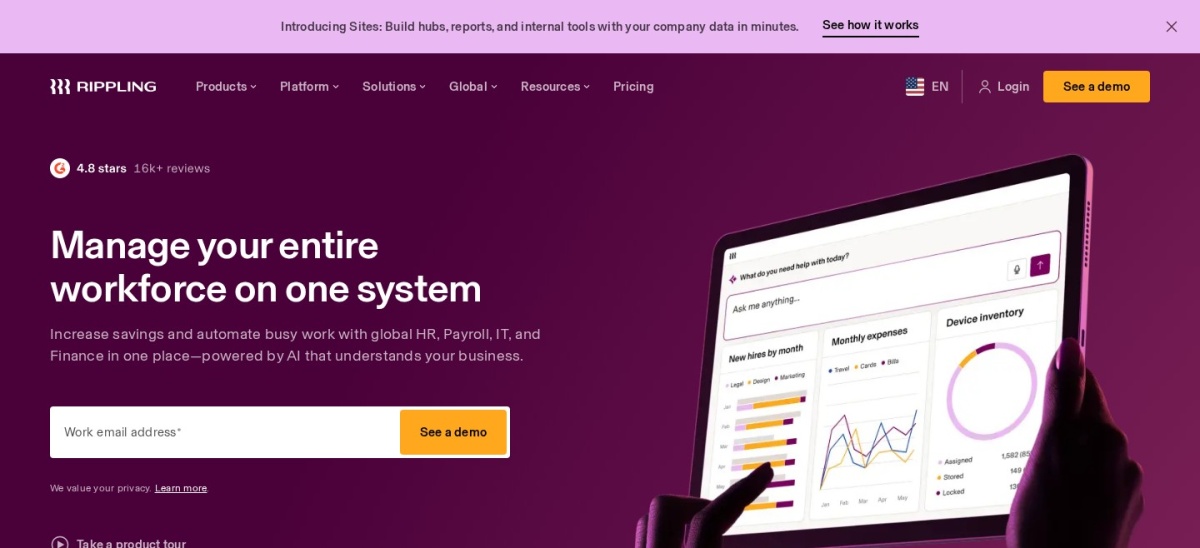
Rippling homepage, captured Nov 2026.
Rippling is a workforce platform where one employee record drives HR, payroll, IT and access. When HR hires, moves or ends a worker, Rippling provisions or removes app access and devices from the same change, and it lists more than six hundred ready integrations.
The trade off is price structure. Core starts at $8 a user a month plus a monthly base fee, and identity is only one part of a much wider platform. It suits retail chains that onboard staff often and want hiring to drive access automatically.
Okta is a workforce identity platform built around single sign-on, multi-factor authentication and a central directory. The Starter plan costs $6 a user a month and includes SSO, Universal Directory and five automated Workflows, with a free trial to start.
The trade off is the step up. Adaptive MFA and Lifecycle Management are add-ons on Starter, and the fuller Essentials plan costs $17 a user a month. It suits stores running many different apps that need the deepest SSO catalogue.
Microsoft Entra ID is the identity layer for Microsoft 365, with single sign-on, MFA and Conditional Access built in. The free edition comes with Microsoft 365, and the P1 plan costs $7 a user a month after a July 2026 rise from $6, adding Conditional Access and Identity Protection.
The trade off is the Microsoft lock-in. Entra ID is at its best inside a Microsoft shop, and stores running Google Workspace or mixed stacks get less from it. It suits retail chains that already pay for Microsoft 365 and want identity without a second vendor.
JumpCloud is a cloud directory that combines identity, access and device management in one console. The SSO package costs $11 a user a month billed yearly and covers SSO, MFA and a password manager, with device management from $9 a user a month billed yearly.
The trade off is price and packaging. JumpCloud is the most expensive per-user tool in the top four here, and its pricing page shows packages rather than a simple list. It suits stores with mixed devices that want one directory for Windows, Mac and Linux.
Cisco Duo is a focused access security platform built around MFA and device trust. The free plan covers up to ten users with strong MFA, and Essentials costs $3 a user a month with SSO, phishing-resistant MFA and unlimited applications.
The trade off is scope. Duo layers onto an existing directory rather than replacing it, so a store still needs a directory somewhere else. It suits small stores that want strong MFA and SSO for very little money.
What we like
Free for up to ten users
Phishing-resistant MFA on Essentials
Rated 4.5 out of 5 from 634 G2 reviews
30-day free trial
Watch out for
Needs a directory elsewhere, it does not replace one
Narrower than Okta or Rippling
Advantage adds risk-based auth at $6 a userVisit duo.com
06
1Password
4.6/5on G2 (1,810 reviews, checked Nov 2026)
Starts at$7.99/user/mo
Best for shared logins at the till
Cheapest planBusiness, $7.99/user/mo
Shared vaultsYes, with permissions
SSOYes, on Business
Audit logsYes
1password.com
1Password homepage, captured Nov 2026.
1Password is a password manager that gives every store a shared vault for till logins, supplier portals and back-office accounts. The Business plan costs just under $8 a user a month billed annually and adds SSO, admin controls and audit logs on top of the vault.
The trade off is that it is a vault first. 1Password secures shared credentials brilliantly, but it does not provision accounts or run a directory like Rippling or Okta. It suits stores where shared logins are the daily reality.
What we like
Best shared vaults for store logins
SSO included on Business
Rated 4.6 out of 5 from 1,810 G2 reviews
Audit logs for every vault access
Watch out for
Does not provision accounts or run a directory
Business price is per user, so large teams pay more
OneLogin is a single sign-on and MFA platform for mid-market teams, with password vaulting and one-click termination to stop access from dormant accounts. Reviewers praise its ease of use and its ability to consolidate many logins into one, with strong support scores on G2.
The trade off is price clarity. Published figures for OneLogin conflict, with G2 listing plans from $4 to $8 a user a month, so we list it as Custom. It suits retail groups that want simple SSO without the wider platforms here.
What we like
Simple SSO with strong ease-of-use scores
One-click termination for leavers
Password vaulting included
Rated 4.4 out of 5 from 290 G2 reviews
Watch out for
Published prices conflict, so we list it as Custom
CyberArk Workforce Identity homepage, captured Nov 2026.
CyberArk Workforce Identity is a workforce identity platform that extends privileged access management into workforce sign-in, with SSO, MFA and adaptive access. Its SSO plan starts at $2 a user a month, the lowest entry price in this list, and it scores well for support and ease of doing business on G2.
The trade off is breadth. CyberArk is strongest where privileged access matters, and a small store may find its wider platform more than it needs. It suits retail groups that want cheap SSO with a privileged-access vendor behind it.
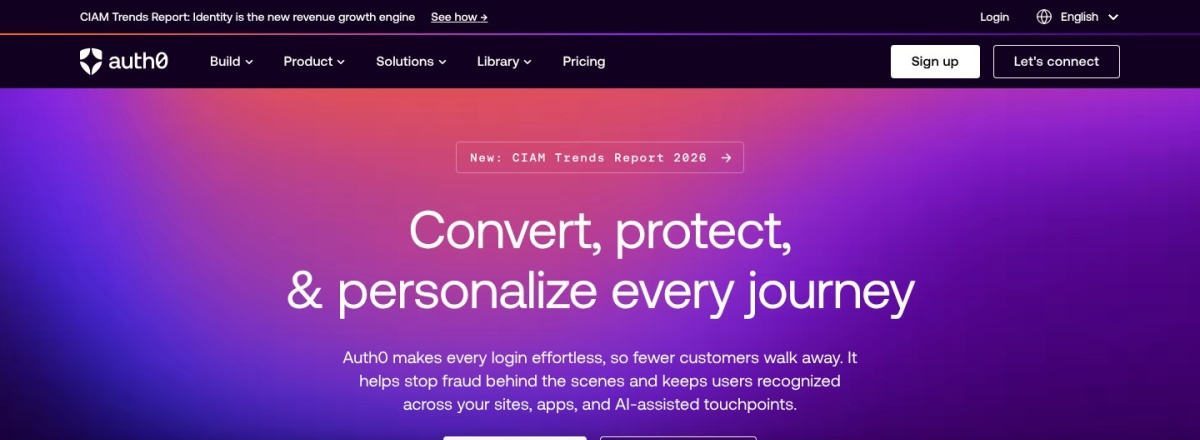
Auth0 is a customer identity platform for login, sign-up and social login on websites and apps. Its Essentials plan costs $35 a month for up to five hundred monthly active users, with MFA and social connections included, and a free tier covers smaller volumes.
The trade off is focus. Auth0 is built for customer-facing login, not workforce access, so a store would run it beside a workforce tool rather than instead of one. It suits retailers with an online store or loyalty app as well as physical shops.
Automate account creation first. When HR marks a hire as started, Rippling and Okta can create app accounts, assign groups and send login details without anyone filing a ticket.
Automate leavers second. A store that forgets to remove a departed employee leaves a live login behind, and that is the most common access failure in retail.
How we chose
We started from the identity platforms most often used by multi-store retailers, then kept the ones with a live G2 rating and a real small-team plan.
Prices come from each vendor's pricing page, checked on 30 November 2026. Rippling, Okta, Duo and CyberArk publish their prices; Microsoft Entra ID, JumpCloud, 1Password and Auth0 figures were confirmed against vendor pages and November 2026 vendor reads.
We left out tools with no review profile on G2, Capterra or Trustpilot. No vendor paid for a place, and we do not claim hands-on testing for this list.
How to choose access management software for a retail store
Start with how your store hires, then check which apps your staff actually open every day.
Map how hiring works in your stores. If head office hires and stores onboard, an HR-driven tool such as Rippling saves the most admin time.
List the apps every role opens. Till systems, stock tools, payroll and supplier portals each need access, and the list decides whether SSO alone is enough.
Check the free tier before you pay. Duo is free for ten users and Entra ID has a free edition, so a single small store may not need a paid plan at all.
Test onboarding with a real new hire. Create a hire, watch the accounts appear, then remove them and check every login is gone the same day.
FAQ
What is the best access management software for retail stores in 2026?
Rippling is the best access management software for retail stores because one employee record drives app access, devices and payroll, so a new store hire is ready on day one. Okta fits shops with many apps, and Microsoft Entra ID fits stores already on Microsoft 365.
How much does access management software cost for a retail store?
Prices here run from $2 a user a month for CyberArk to $11 a user a month for JumpCloud, with Rippling from $8 and Okta from $6. A store with twenty staff pays $40 to $220 a month depending on the tool, plus any base fee.
Is there free access management software for retail stores?
Yes, with limits. Cisco Duo is free for up to ten users, Microsoft Entra ID has a free edition with Microsoft 365, and Auth0 has a free tier for customer login. All three charge once you pass the free limits.
Rippling or Okta: which is better for a retail store?
Rippling is better when hiring drives access, because one HR record provisions apps and devices automatically. Okta is better when the store already runs many different apps and needs the deepest SSO catalogue. Rippling costs $8 a user a month, while Okta starts at $6.
Do retail stores need MFA for every employee?
Yes, for anyone with access to back-office systems, supplier portals or customer data. Duo Essentials adds MFA and SSO from $3 a user a month, and most tools here include MFA on their entry plans.
Can access management software handle shared store logins?
Yes, but SSO alone does not solve shared logins. A password vault such as 1Password stores shared till and supplier logins in one vault with permissions, while SSO covers the apps that support individual logins.
SaaS SEO and WordPress specialist with about 8 years of experience. Rakib compares WordPress plugins, themes, hosting and software using public pricing, documentation and user reviews. See how we rank.