Intruder is the best DAST tool for cloud platforms, which makes it the top pick for teams running AWS, Azure and Google Cloud, from $299 a month. Burp Suite Professional suits manual testing best, while StackHawk puts DAST inside developer pipelines.
How we make this list: we compare pricing pages, product documentation and public user reviews, then re-check every price before each update. No product paid for a place. Disclosure.
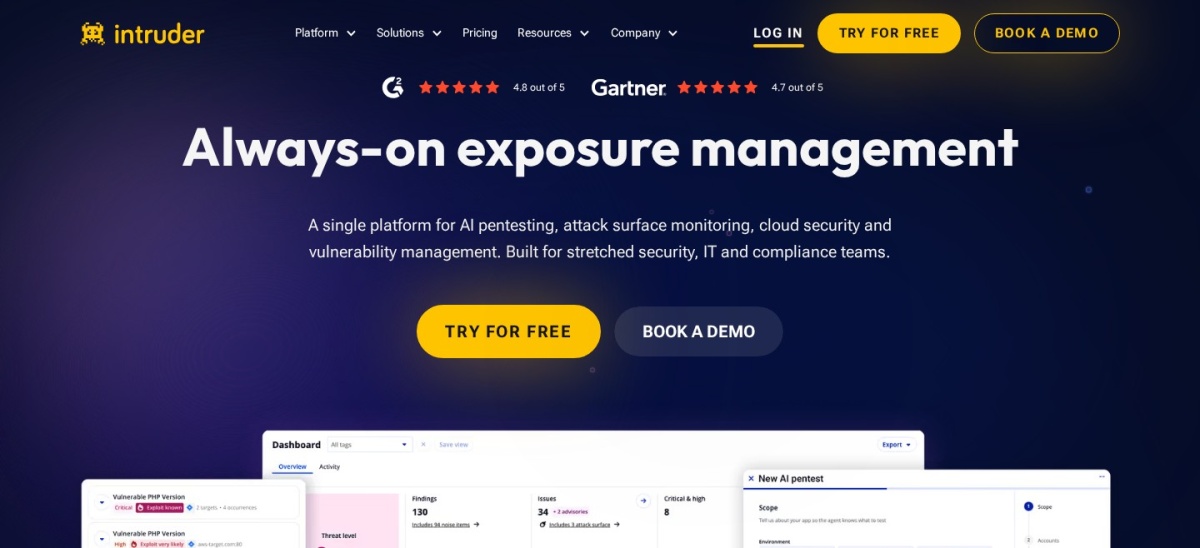
Intruder leads for cloud teams, rated 4.8 out of 5 on G2 from 209 reviews, with web app scanning on the Cloud plan at $299 a month.
Burp Suite Professional is the top pick for testers at 4.8 out of 5 from 129 reviews, at $499 a user a year.
StackHawk is the clearest-priced developer tool at $10 a person a month, with findings in pull requests.
OWASP ZAP is free and open source, with 4.7 out of 5 on G2, but only 14 reviews and a need for tuning.
Six of the nine tools sell by quote, so budget extra time for sales conversations if you shortlist the enterprise scanners.
Which DAST tool is best for cloud platforms?
Start with where your apps run. A team on AWS, Azure and Google Cloud needs a scanner that syncs with cloud accounts, while a team with one web app needs depth on that app first.
False positives decide whether developers trust the tool. Invicti and Acunetix use proof-based scanning to confirm flaws before reporting them, while ZAP and Checkmarx need more tuning and triage.
Price by target, user or scan volume before you choose. Burp Suite charges per user, StackHawk per person, Acunetix per target and Bright Security per scan, so the same tool can be cheap for one team and expensive for another.
Cloud coverage is the tiebreaker here. Intruder and Qualys WAS share the cloud asset inventory, so findings land next to the servers they belong to instead of in a separate report.
Intruder is a cloud platform for continuous vulnerability scanning across infrastructure, web apps, APIs and cloud accounts from one dashboard. Its Cloud plan adds weekly scans, cloud sync for AWS, Azure and Google Cloud, and web application scanning, with findings written in plain language.
The trade off is price. The Cloud plan costs $299 a month, and the price is a base fee plus a small fee per target, so large estates pay more. It suits lean teams that want continuous cloud and web scanning without running a scanner themselves.
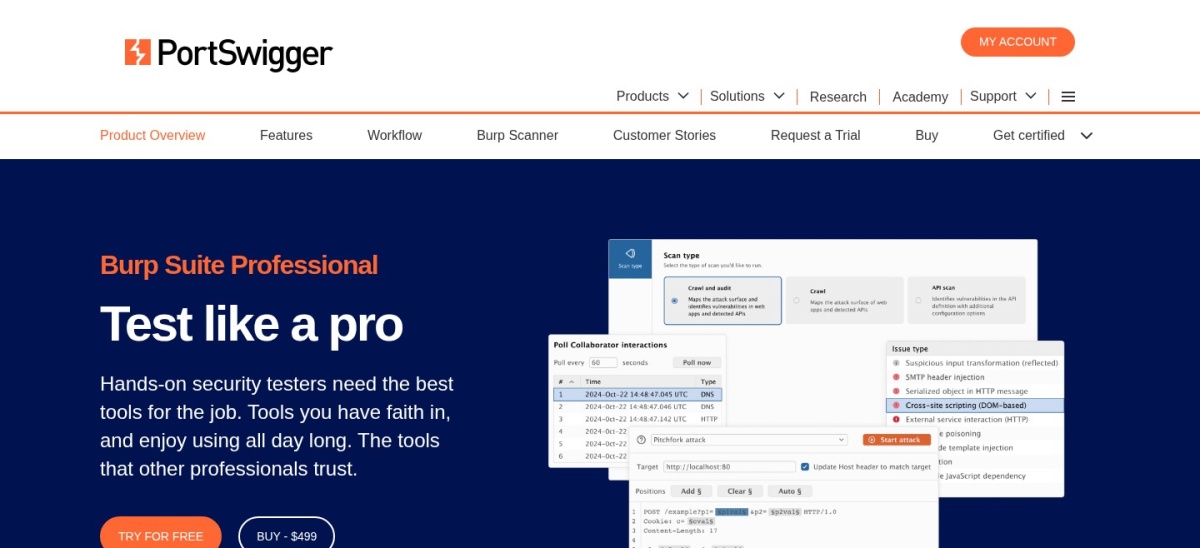
Burp Suite Professional homepage, captured Nov 2026.
Burp Suite Professional is the tool most penetration testers reach for first. Its proxy, repeater, intruder and scanner work together for manual testing of web applications and APIs, and the extension store adds capabilities for almost every niche.
The trade off is price and skill. Professional costs $499 a user a year, a figure from October 2026 guides since the vendor buy page shows no price, and the tool assumes the tester knows what they are doing. It suits security teams that confirm scanner findings by hand.
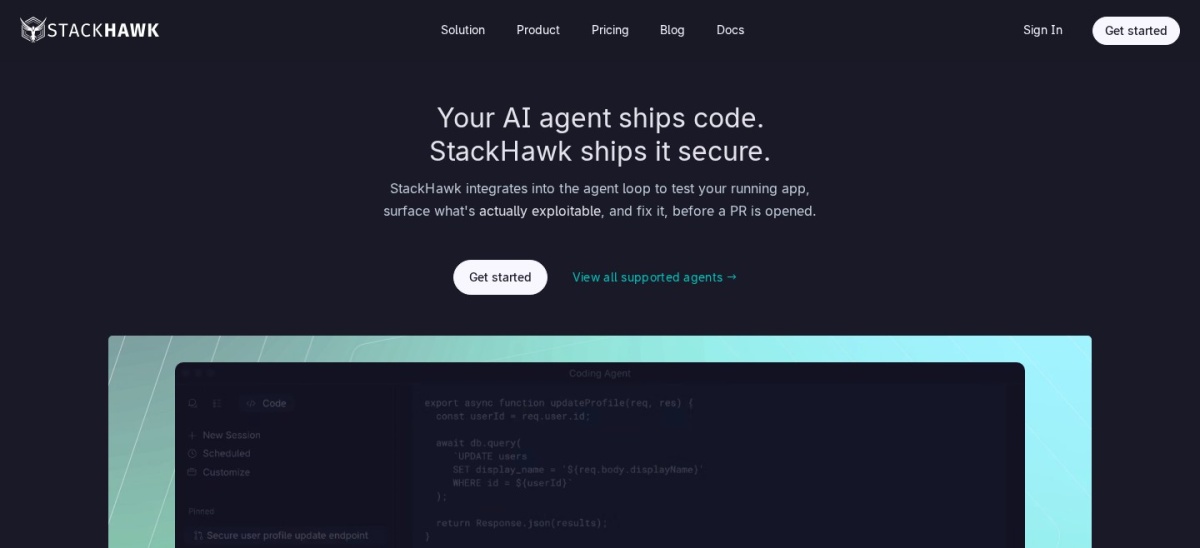
StackHawk is a developer-first DAST platform built around ZAP that puts scanning inside CI/CD pipelines, with findings in pull requests instead of PDFs. It holds 4.6 out of 5 on G2 from 68 reviews and charges a clear $10 per person a month.
The trade off is depth. StackHawk is built around ZAP, so its API security detection is limited and it suits application scanning more than deep manual testing. It suits developer-led teams that want DAST in every pull request.
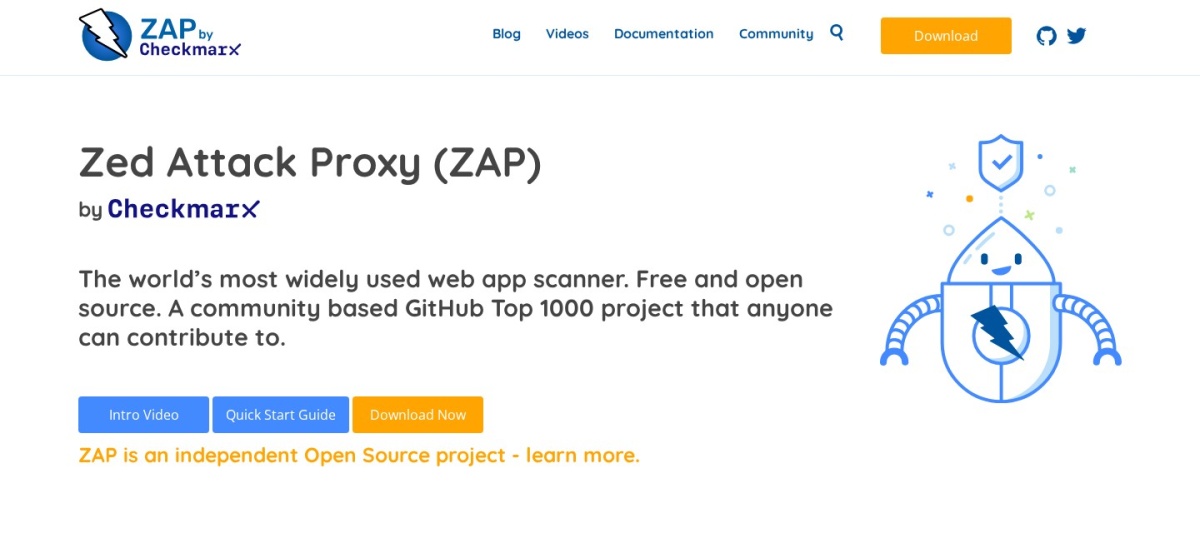
OWASP ZAP is the open-source standard for dynamic testing, maintained by a global community under the OWASP umbrella. It spiders and scans web applications, finds common vulnerabilities, and plugs into CI pipelines through its API and automation framework.
The trade off is the thin review base and the tuning. Fourteen G2 reviews is the smallest base in this list, and ZAP needs in-house expertise and tuning for complex applications. It suits teams with more engineers than budget that want DAST in every build.
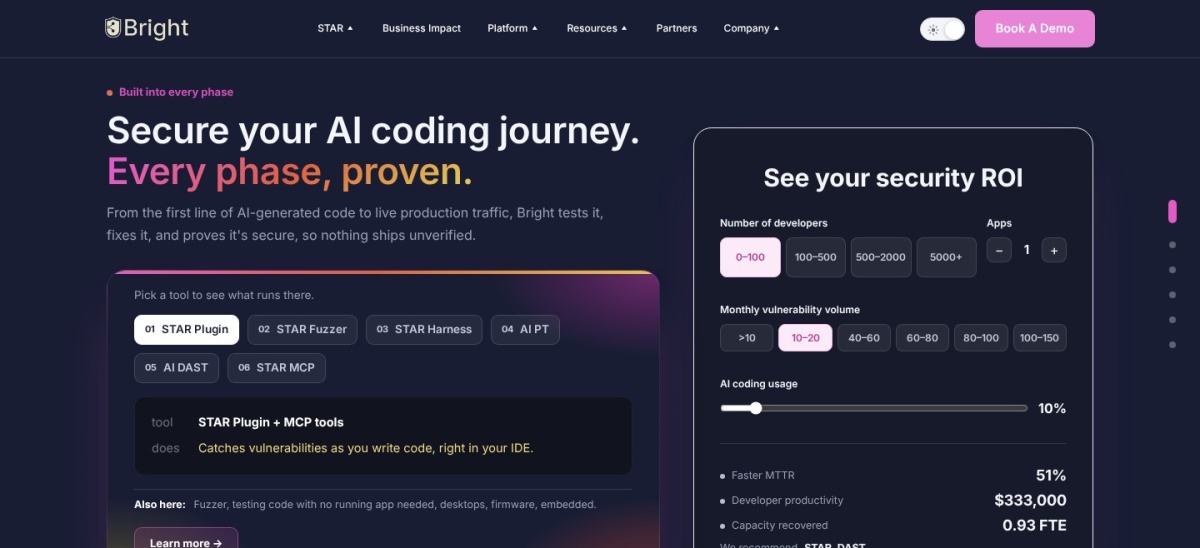
Bright Security is a developer-led DAST platform rebuilt for how software ships now: APIs, single-page apps and fast release cycles, with AI-powered test generation that adapts to each application. It holds 4.7 out of 5 on G2 from 29 reviews and covers the OWASP LLM Top 10 for AI apps.
The trade off is the thin base and the price model. Twenty-nine G2 reviews is a small sample, and Bright sells per scan with no published price list. It suits mid-size teams building AI-powered applications that need LLM security coverage.
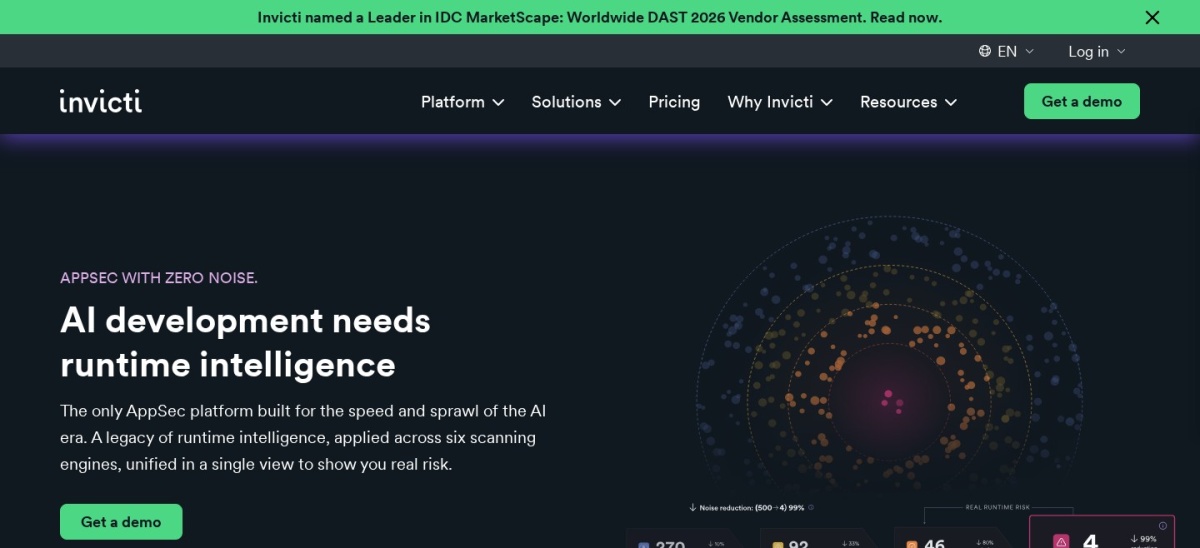
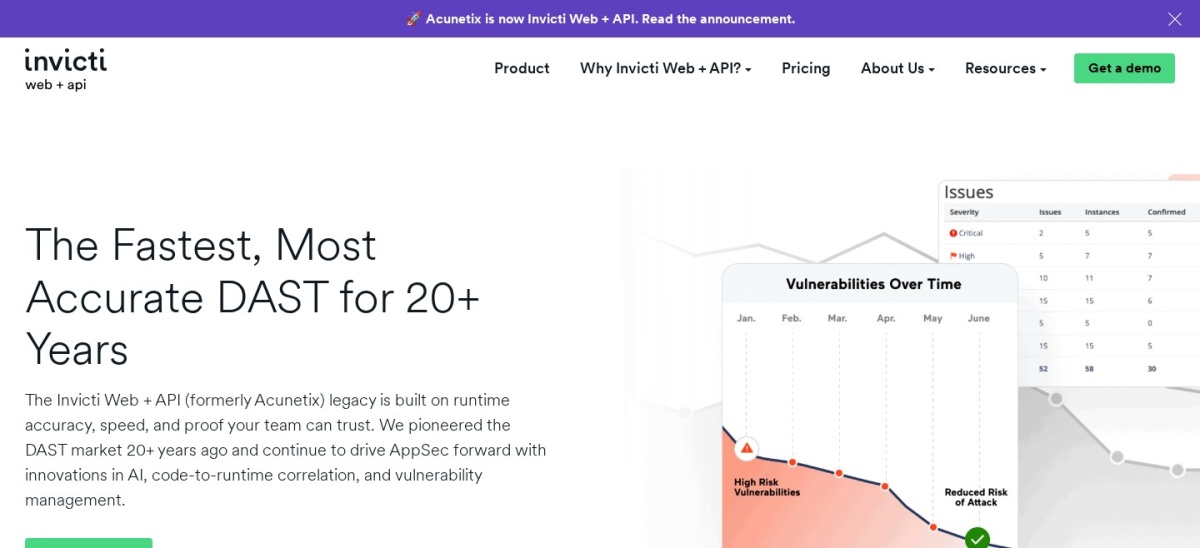
Invicti is built for organisations scanning many applications and needing results developers can trust. Formerly Netsparker, its proof-based scanning attempts to confirm vulnerabilities safely, which cuts the false positives that waste developer time.
The trade off is price and scale. Invicti is quote-based and enterprise-grade, with implementation services reported as a significant extra cost for large programs. It suits large estates with hundreds of applications and JavaScript-heavy sites.
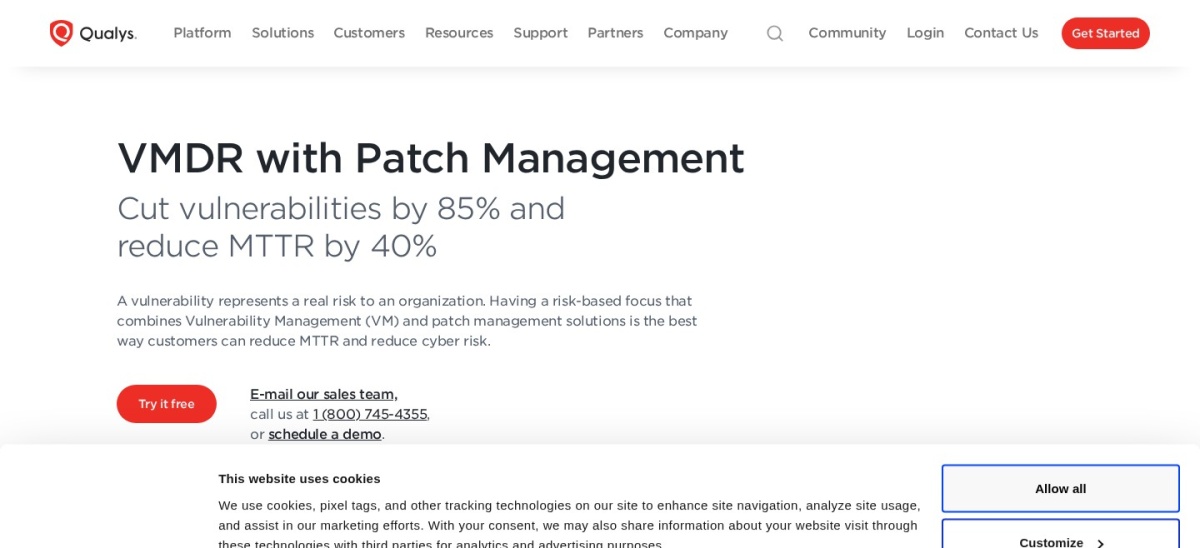
Qualys WAS is the DAST module of the Qualys cloud platform, sharing the same asset inventory and reporting as Qualys VMDR. It holds 4.5 out of 5 on G2 from 21 reviews and suits teams already using Qualys for vulnerability management.
The trade off is the thin base and the ecosystem lock-in. Twenty-one G2 reviews is a small sample, and WAS makes most sense inside a Qualys contract. It suits Qualys customers extending vulnerability management to web applications.
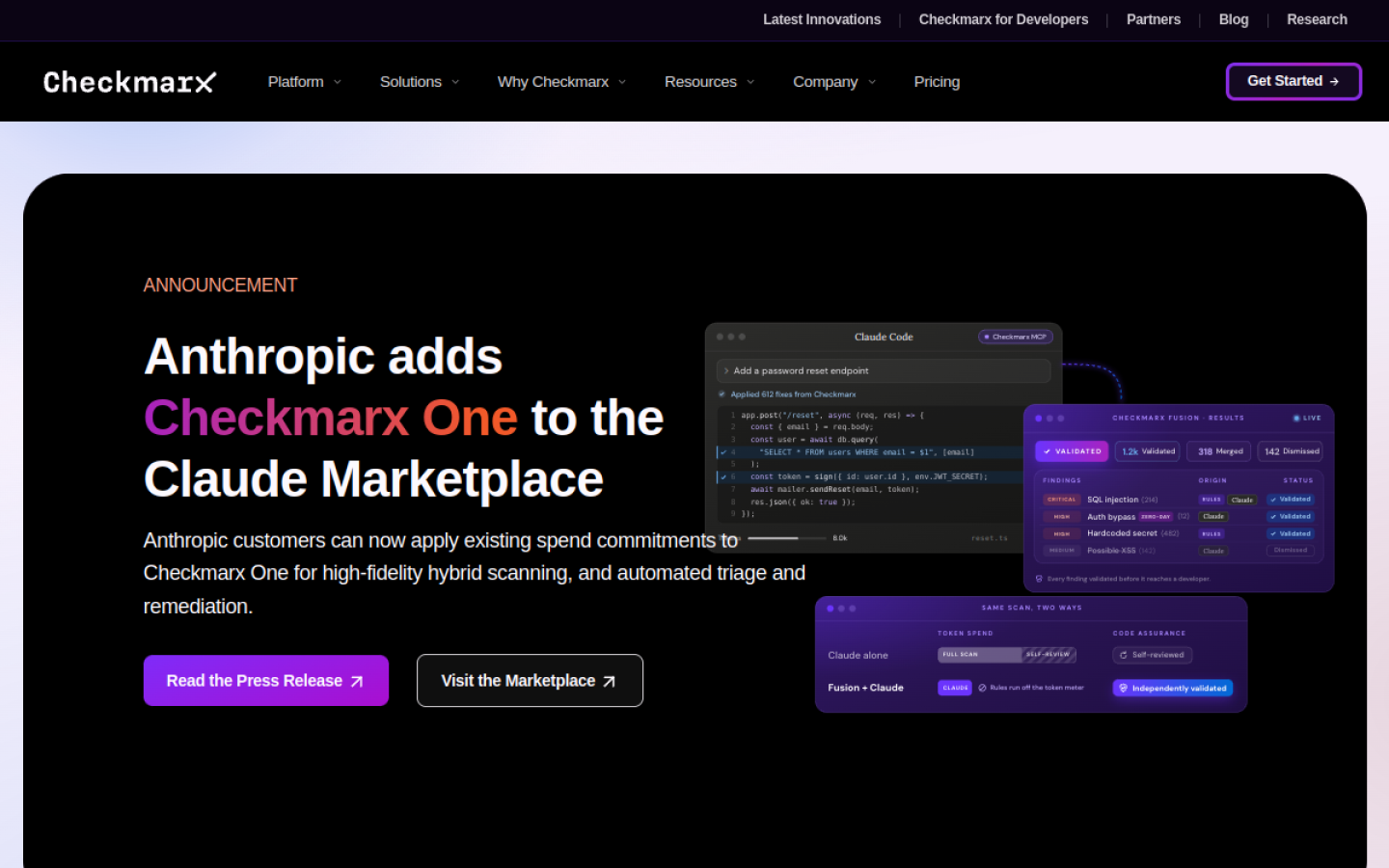
Checkmarx DAST is part of the Checkmarx One application security platform, which combines SAST, SCA, API security and DAST with AI remediation. It holds 4.2 out of 5 on G2 from 35 reviews and suits enterprises that already run Checkmarx for static analysis.
The trade off is complexity and price. Checkmarx One is quote-only with enterprise deal sizes, and reviewers cite complexity and false positives on the DAST side. It suits large enterprises that want one AppSec platform rather than point tools.
Acunetix is a standalone automated scanner for web applications that covers a wide range of flaws and handles modern web technologies. Owned by Invicti, it holds 4.1 out of 5 on G2 from 105 reviews and suits mid-size teams that want automated depth without a manual testing practice.
The trade off is per-target pricing. Acunetix prices by the number of scanned targets, so teams with hundreds of microservices should compare it against per-seat options like StackHawk. It suits teams with a handful of applications to scan deeply.
Cloud scanners run on a schedule and report continuously. Intruder, Qualys WAS and StackHawk fit teams that want findings without a tester in the loop.
Manual tools need a skilled tester but find what scanners miss. Burp Suite Professional is the standard here, with a proxy, repeater and intruder in one toolkit.
Most cloud teams need both. Run a cloud scanner every week, then bring in manual testing for major releases and high-risk applications.
How we chose
We started from the DAST tools most often named for cloud-hosted applications in 2026 comparisons, then kept the nine with a verifiable G2 rating and a published price or a stated quote model.
Prices come from each vendor's pricing page, checked on 29 November 2026. StackHawk Wingman at $10 per user a month was confirmed on its pricing page today. Intruder and Burp Suite show no prices on their pages, so their figures rest on November 2026 guides. Ratings come from G2 on the same day.
We left out tools with no verifiable rating and pure SAST tools with no dynamic scanning. No vendor paid for a place, and we do not claim hands-on testing for this list.
How to choose a DAST tool for cloud platforms
Start with where your applications run, then match the scanner to that estate.
List your cloud accounts and apps. A scanner that syncs with AWS, Azure and Google Cloud saves hours over one that needs manual target lists.
Decide who reads the findings. Developer-first tools put results in pull requests, while enterprise scanners produce reports for security teams.
Compare prices at your real target count. Per-user, per-target and per-scan pricing diverge fast, so price the plan at the number of apps you actually scan.
Trial the scanner on one real app. Most tools here offer a free tier or trial, so run one application through two finalists and compare false positives.
FAQ
Which DAST tool is best for cloud platforms in 2026?
Intruder is the best DAST tool for cloud platforms. It scans infrastructure, web apps, APIs and cloud accounts from one dashboard, syncs with AWS, Azure and Google Cloud, and is rated 4.8 out of 5 from 209 G2 reviews.
How much does Intruder cost?
Intruder Cloud costs $299 a month, priced as a base fee plus a small fee per target. A free plan covers basic monitoring, and a 14-day trial includes the full Cloud plan with 5 targets.
Is there a free DAST tool for cloud platforms?
Yes. OWASP ZAP is free and open source, and Intruder and Burp Suite both offer free tiers. ZAP suits teams with in-house expertise, while the free tiers cap scans and targets.
What is the cheapest DAST tool here?
OWASP ZAP is free, and StackHawk is the cheapest paid tool at $10 per person a month. Burp Suite Professional costs $499 per user a year, while six tools in this list sell by quote only.
Which DAST tool is best for developers?
StackHawk suits developers best, with findings inside pull requests and CI integrations for GitHub, GitLab and Jenkins. Bright Security is the better pick for teams building AI-powered applications.
Intruder vs Burp Suite: which fits cloud teams better?
Intruder fits cloud teams better, with continuous scanning and cloud account sync built in. Burp Suite wins for manual penetration testing, where a tester drives the proxy, repeater and scanner by hand.
SaaS SEO and WordPress specialist with about 8 years of experience. Rakib compares WordPress plugins, themes, hosting and software using public pricing, documentation and user reviews. See how we rank.