Assembled leads WFM software for real time SLA visibility, with real-time adherence monitoring on every plan from 25 dollars per agent per month. NICE IEX and Genesys Cloud CX follow for teams that need intraday simulation and enterprise-grade forecasting.
How we make this list: we compare pricing pages, product documentation and public user reviews, then re-check every price before each update. No product paid for a place. Disclosure.
Assembled leads with real-time adherence monitoring on every plan, from $25 per agent a month plus a platform fee.
NICE IEX is the cheapest way into live intraday management at $20 per agent a month, with simulation built in.
Genesys Cloud CX needs the CX 3 tier at $155 a user a month for full workforce engagement.
Talkdesk and Playvox both hide WFM behind higher tiers or a custom quote, so check the plan before you buy.
Zendesk WFM is the simplest add-on for Zendesk shops, but its G2 review base is only 30 reviews.
What should WFM software for real-time SLA visibility show you?
Real-time SLA visibility means seeing the queue, the staffed agents and the service level on one screen while there is still time to fix it. A dashboard that updates every few minutes is not real time. You need live adherence, live queue depth and a forecast for the next hour, so a supervisor can move breaks, pull in overtime or open a new channel before the SLA breaks.
The number that matters most is adherence: the share of scheduled time agents actually spend in the state the plan expects. When adherence slips, the SLA follows within the hour. The best tools in this list flag the gap as it happens and suggest the fix, instead of reporting it in tomorrow's recap.
Forecasting decides whether the live view is calm or chaos. A plan built on last week's volumes will miss a surge, and no dashboard can staff a shift that was never scheduled. Look for tools that reforecast intraday and show the staffing gap in agent numbers, not just percentages.
SLA targets differ by channel, and the tool should know it. Voice might need 80 percent of calls answered in 20 seconds, chat might need first response in a minute, and email might allow a day. A single blended service level hides the channel that is failing, so buy a tool that tracks each channel against its own target.
The 9 best WFM software for real time SLA visibility
01
Assembled
4.6/5on G2 (179 reviews, checked Nov 2026)
Starts at$25/agent/mo
Best for live SLA alerts
Cheapest planCore, $25 per agent a month
Real-time adherenceOn every plan
AI Copilot$35 per agent a month
ImplementationLive in about a month
assembled.com
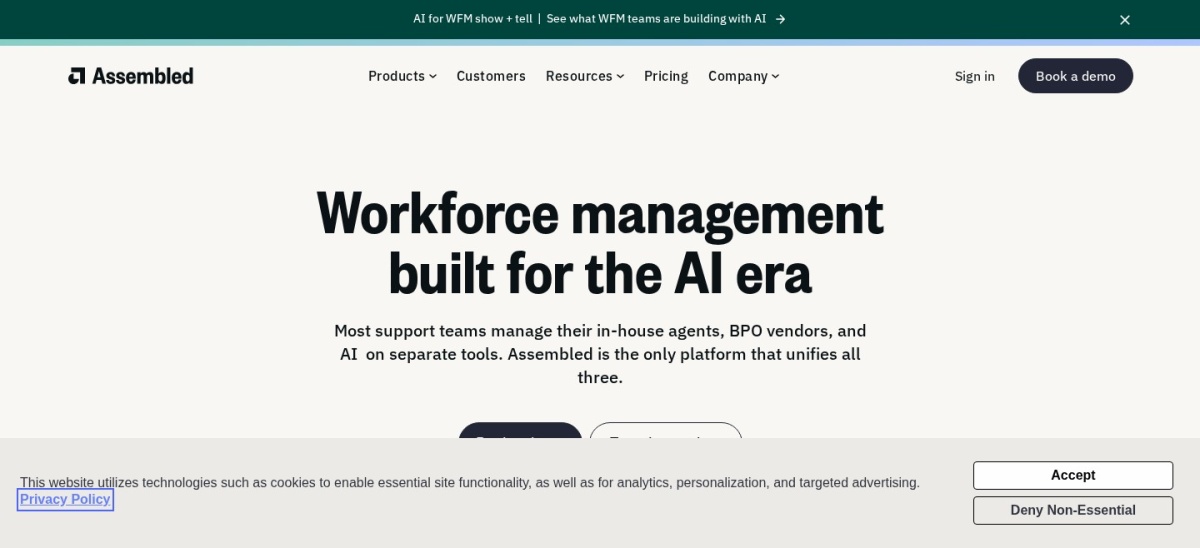
Assembled homepage, captured Nov 2026.
Assembled is the only tool here built from the ground up for support teams that live or die by the SLA. Its Core plan includes real-time adherence monitoring, staffing analytics and automated intraday management, and the vendor's own pricing page calls the plans SLA-proof. Forecasting is machine-learning based, schedules generate with one click, and the same screen covers in-house agents, BPO vendors and AI agents.
The trade off is the unpublished platform fee on top of the per-agent price, so the $25 headline is not the full bill. There is no free plan and no published trial length, and the AI Agents product is billed per conversation at $0.65, which needs its own budget line. Small teams may find the enterprise polish more than they need.
What we like
Real-time adherence monitoring on every plan
Machine-learning forecasting and one-click schedules
Covers in-house, BPO and AI agents on one screen
Live in about a month, faster than legacy WFM
Watch out for
Platform fee is unpublished, so the real cost needs a quote
No free plan
AI Agents billed per conversation on top of seats
Paid plans add AI scheduling, forecasting and white-glove onboarding.Visit assembled.com
02
NICE IEX Workforce Management
4.3/5on G2 (90 reviews, checked Nov 2026)
Starts at$20/agent/mo
Best for intraday simulation
Cheapest planIEX, $20 per agent a month
Forecasting45+ algorithms with AI Best Pick
Integrations350+
IntradaySimulation and what-if planning
nice.com
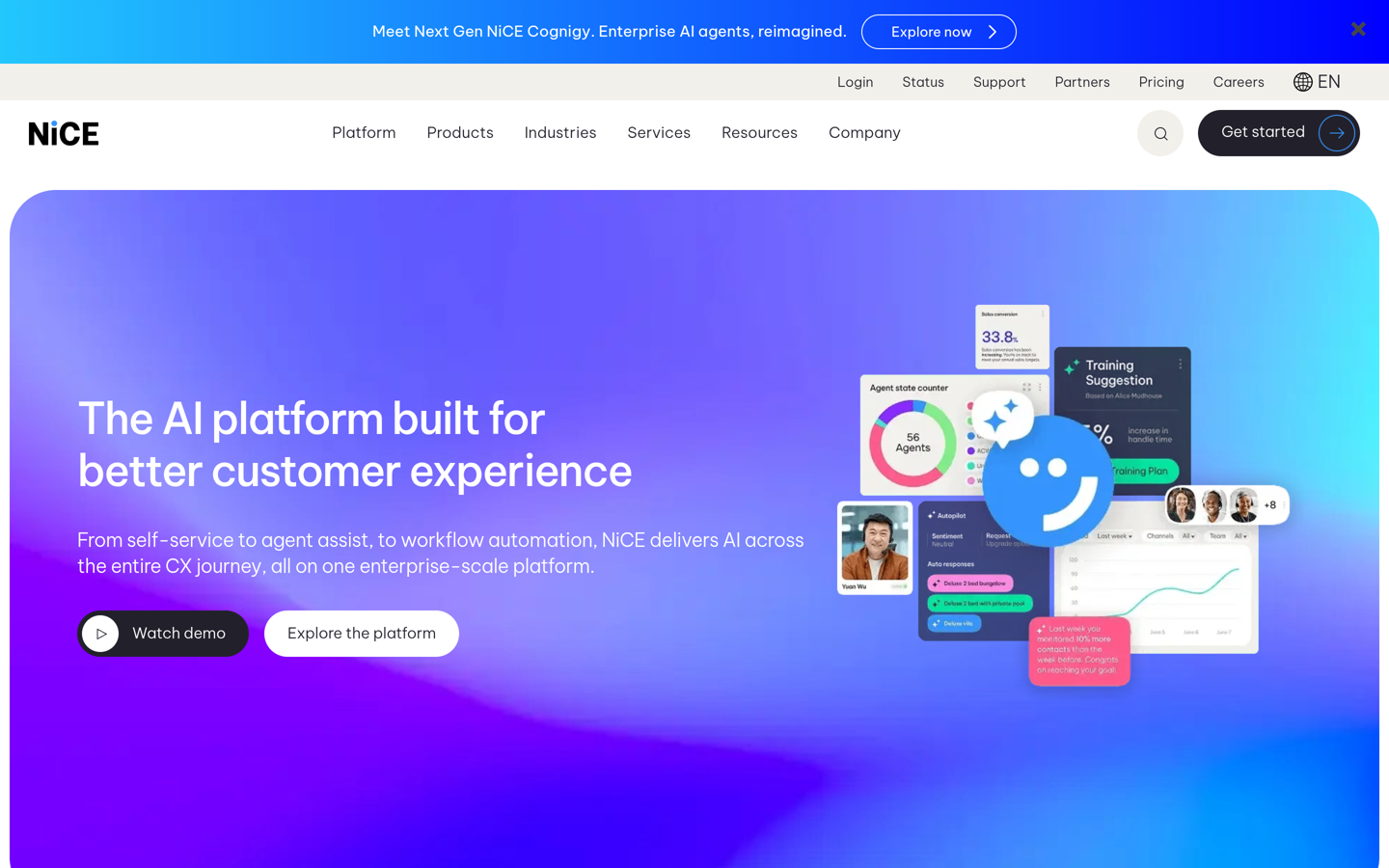
NICE IEX Workforce Management homepage, captured Nov 2026.
NICE IEX Workforce Management is the forecasting heavyweight of this list, with more than 45 algorithms and an AI Best Pick that chooses the one that fits each queue. Intraday management includes simulation, so a supervisor can test moving a break or adding an agent and see the service level effect before committing. It plugs into 350-plus systems, which is why large contact centers keep it when they change phone platforms.
The trade off is that the $20 rate is the standalone IEX add-on; inside the NICE CXone suites, workforce management starts on the Core tier at $169 per agent a month. Leave tracking is mostly manual, and the learning curve is steep for teams without a dedicated WFM analyst. Implementation takes longer than the modern tools here.
What we like
45-plus forecasting algorithms with AI Best Pick
Intraday simulation shows the effect before you act
350-plus integrations
Proven at enterprise scale
Watch out for
WFM inside CXone suites starts at $169 per agent a month
Steep learning curve
Leave tracking is mostly manual
Higher tiers add deeper automation and dedicated support.Visit nice.com
03
Genesys Cloud CX
4.4/5on G2 (1,580 reviews, checked Nov 2026)
Starts at$155/user/mo
Best for enterprise WFM
Cheapest WFM planCX 3, $155 per user a month
Entry tierCX 1, $75 per user a month
Minimum commitment$2,000 a month
WEM add-on$40 to $65 per user a month
genesys.com
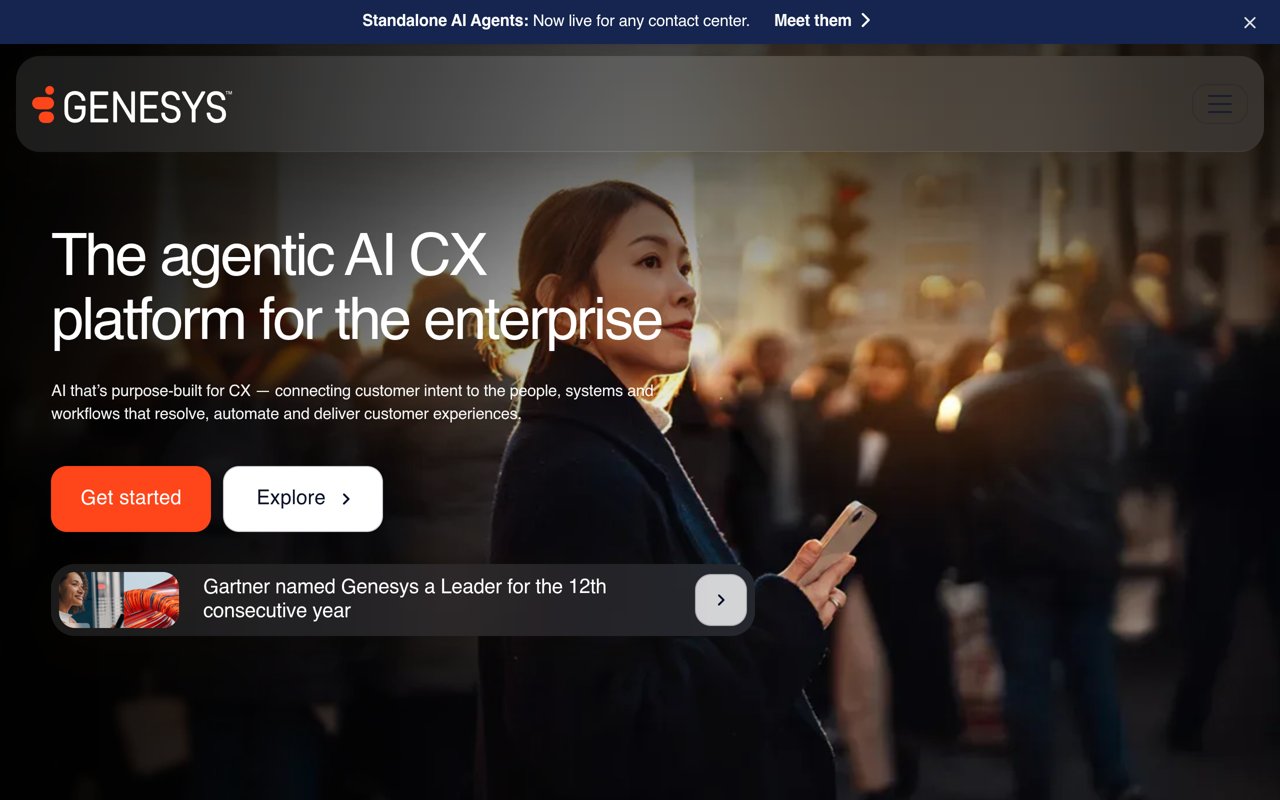
Genesys Cloud CX homepage, captured Nov 2026.
Genesys Cloud CX is the enterprise default for workforce engagement, and the WFM depth shows it: forecasting, scheduling, adherence and quality sit in the same platform as the contact center itself. The catch is the tier: CX 1 at $75 and CX 2 at $115 a user a month do not include WFM, so real-time SLA visibility starts on CX 3 at $155. CX 4 at $240 adds predictive engagement on top.
The trade off is price and commitment. A $2,000 monthly minimum puts it out of reach for small teams, and the per-user cost climbs fast at scale. The platform is broad enough that WFM configuration can feel buried inside the wider CX suite. Teams that only need scheduling will find cheaper tools above.
Calabrio ONE is a full workforce engagement suite: forecasting and scheduling, quality management, analytics and real-time adherence in one product. It suits mid-market contact centers that want one vendor for the whole WEM stack instead of stitching tools together. In late 2025 Calabrio merged into Verint, and the product now operates inside the Verint platform, with a refreshed look under the Calabrio by Verint name from November 2026.
The trade off is that pricing is quote-only, so there is no published entry point to budget against. The merger also means the roadmap now follows Verint's platform, and buyers should confirm which Calabrio ONE modules stay standalone. Support quality varies by deployment size, and smaller teams report slower onboarding.
ComplianceBanking, health and government templates
ScopeMulti-site and multi-channel
verint.com
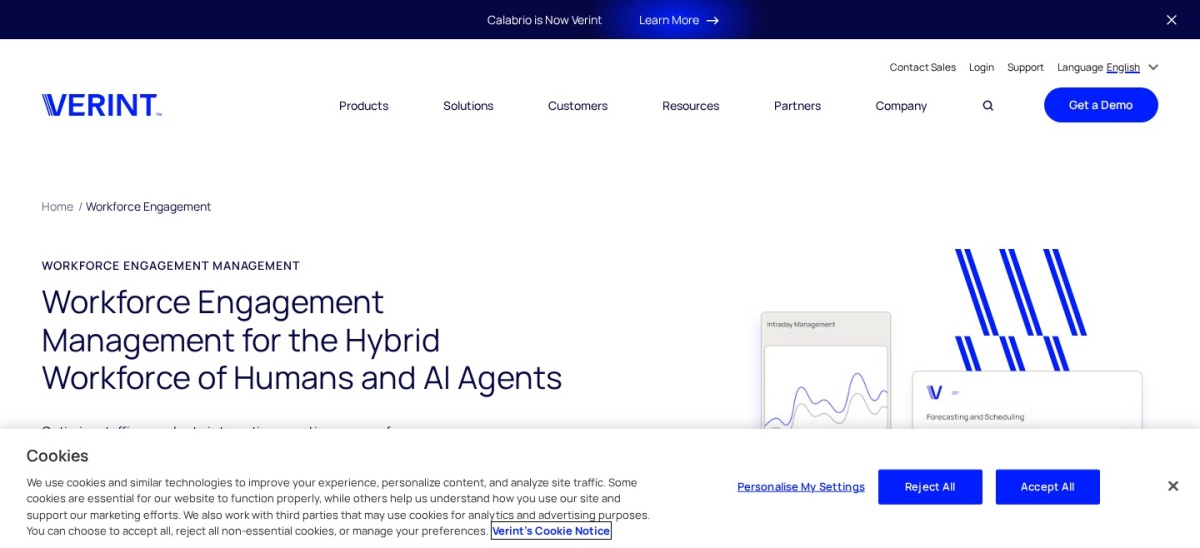
Verint Workforce Management homepage, captured Nov 2026.
Verint Workforce Management is the enterprise choice for regulated, multi-site operations, with AI-driven forecasting, compliance templates for banking, health and government, and scheduling across sites and channels. It now includes the Calabrio ONE products after the late-2025 merger, so buyers get one of the broadest WEM portfolios in this list. Third-party pricing guides put entry deals around $1,500 a month.
The trade off is that everything is quote-only, and the platform assumes a dedicated WFM team to run it. Implementation is a project, not a signup, and the breadth that helps enterprises can overwhelm a 50-seat center. Smaller teams should look at Assembled or Playvox first.
What we like
AI-driven forecasting at enterprise scale
Compliance templates for regulated industries
Multi-site and multi-channel scheduling
Now includes the Calabrio ONE portfolio
Watch out for
Quote-only pricing
Needs a dedicated WFM team
Implementation is a project, not a signup
Enterprise tiers add deeper AI and dedicated support.Visit verint.com
06
Talkdesk
4.4/5on G2 (2,514 reviews, checked Nov 2026)
Starts at$85/user/mo
Best for AI-led contact centers
Cheapest planDigital Essentials, $85 a user a month
WFM tierElite, $165 a user a month
Minimum term3 years on published tiers
AI CopilotQuote-only add-on
talkdesk.com
Talkdesk homepage, captured Nov 2026.
Talkdesk is an AI-first contact center platform, and its workforce management lives on the Elite tier at $165 a user a month. The cheapest published plan, Digital Essentials at $85, covers digital channels only, with no voice and no WFM. Elite adds the full WFM suite plus AI Copilot options, so buyers who want SLA visibility inside Talkdesk should budget for Elite from the start.
The trade off is the 3-year minimum term on the published tiers, which locks teams in before they know whether the AI features pay off. The AI Copilot add-on is quote-only, and voice costs extra below Elite. Talkdesk suits teams already committed to its platform; as a standalone WFM buy, the cheaper tools above win.
What we like
AI-first platform with strong automation
WFM, QA and coaching in one suite
Large G2 review base at 2,514 reviews
Named a leader in the 2026 Gartner Magic Quadrant for CCaaS
Playvox is a suite that combines workforce management, quality assurance, coaching and gamification in one place, which makes it the best pick here for teams that improve SLA by coaching agents rather than just rescheduling them. Starter tiers run $15, $30 and $40 a user a month, and the platform holds the highest G2 rating in this list at 4.8. It is now a NICE company, and sales run through NICE.
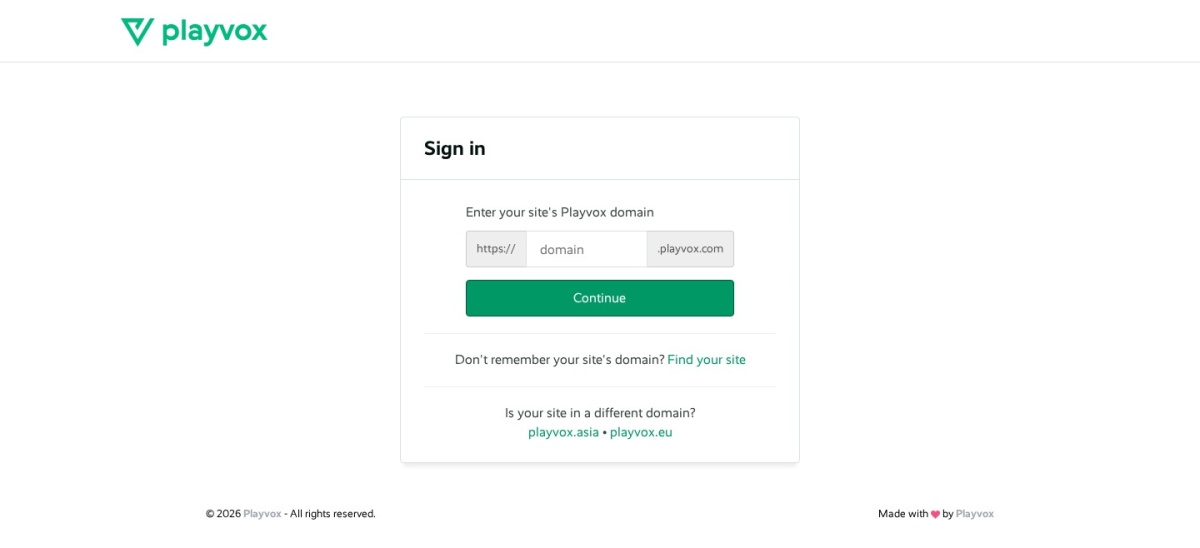
The trade off is that the WFM module itself is a custom quote, so the $15 Starter price does not buy workforce management. Onboarding fees of $3,000 to $7,000 are reported, and the homepage now loads as a sign-in portal, which says something about where new buyers are directed. Confirm the WFM price in writing before signing.
What we like
Highest G2 rating here at 4.8
WFM, QA, coaching and gamification in one suite
Lowest published entry price at $15 a user a month
Strong for coaching-led SLA improvement
Watch out for
WFM module is a custom quote
Onboarding fees of $3,000 to $7,000 reported
Now sold through NICE, homepage is a sign-in portal
Five9 is a full contact center platform that lets buyers choose their workforce engagement vendor: its own WEM, Verint or Calabrio. That flexibility is rare, and it matters for SLA visibility because the WFM tool can match the operation instead of the other way round. Digital starts at $119 a seat a month and core voice at $159, with higher bundles adding full workforce engagement.
The trade off is the 50-seat minimum on every plan, which rules out small teams, and per-concurrent-user pricing that needs careful modelling. The full workforce engagement bundles are quote-only, so the published seat price is only the starting point. G2 lists Five9 at 4.2, though some reads still show 4.1.
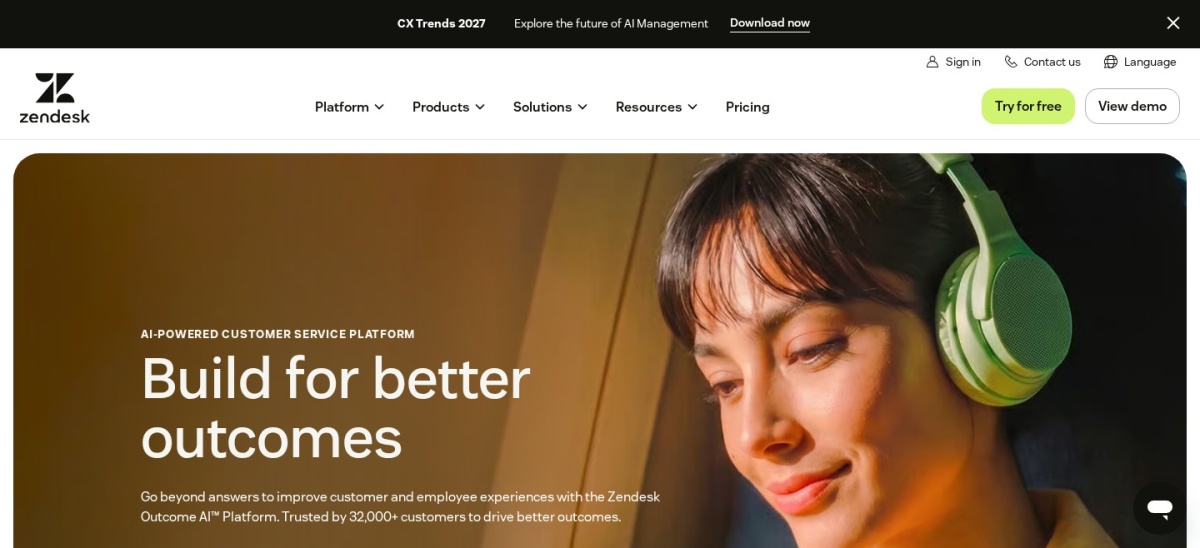
Zendesk Workforce Management homepage, captured Nov 2026.
Zendesk Workforce Management is a $50-per-agent-a-month bundle that adds forecasting, scheduling and real-time adherence inside the agent workspace Zendesk teams already use. It includes quality assurance, and the adherence view sits next to the tickets, so supervisors see the SLA risk without switching tools. For teams already on Zendesk, it is the shortest path to live SLA visibility.
The trade off is that the bundle needs Suite Team at $55 an agent a month underneath, so the real cost is $105 an agent, and it must be bought for every agent on the account. The G2 review base is only 30 reviews, the smallest here, so the 4.3 rating carries less weight than the others. Standalone WFM buyers should look elsewhere.
What we like
Lives inside the Zendesk agent workspace
Includes QA and real-time adherence
Shortest path to SLA visibility for Zendesk shops
Simple per-agent bundle price
Watch out for
Needs Suite Team underneath, so the real cost is $105 an agent
Service level is the headline, but it is a lagging number: it tells you the last interval failed, not that the next one will. Pair it with adherence, which shows whether agents are in the state the plan expects right now, and with occupancy, which shows how much of the hour is actually productive. Together the three say whether the SLA is safe, at risk, or already lost.
Shrinkage is the silent killer. Breaks, training, sick leave and after-call work all eat scheduled time, and a plan that ignores them will look staffed while the queue grows. The tools in this list forecast shrinkage, but only the ones with intraday reforecasting adjust for it live. Ask any vendor how their forecast handles an unplanned absence at 10am.
Set the target before you buy the tool. Voice might need 80 percent of calls answered in 20 seconds, chat might need a first response inside a minute, and email might allow a working day. A tool that cannot track each channel against its own target will report a blended average that hides the channel failing.
How we chose
We started from the workforce management tools contact center buyers actually shortlist, then kept the nine with a G2 rating, a published price or a confirmed quote-only model, and a homepage we could capture. Every tool here shows live adherence or intraday management, because a WFM tool without a real-time view cannot protect an SLA.
Prices come from vendor pricing pages opened in November 2026 or from the vendor's own pricing listings. Assembled's $25 Core plan was read on its pricing page on 30 November 2026. Genesys and NICE IEX prices rest on multiple November 2026 reads of the vendor pages, and Talkdesk, Playvox and Five9 figures come from the same month. No vendor paid for a place, and we do not claim hands-on testing for this list.
Ratings are G2 scores with review counts from November 2026. Zendesk WFM has only 30 reviews, so its 4.3 carries less weight than Five9's 625 or Genesys's 1,580. Where a tool hides WFM behind a higher tier or a custom quote, we say so in the body instead of hiding it in the ladder.
How to choose WFM software for real-time SLA visibility
Start with the SLA target your customers actually feel, then check the tool against it.
Write down the SLA for each channel. Voice, chat and email need different targets, and a tool that blends them into one number will hide the failing channel. Set the numbers first, then ask each vendor to show the dashboard tracking them live.
Check whether WFM is in the tier you would buy. Genesys needs CX 3, Talkdesk needs Elite and Playvox quotes WFM separately. Ask for the WFM price in writing before you sign, and add any required base plan underneath.
Test the intraday view, not the forecast. Forecasts are easy to demo. Ask to see live adherence, a queue going red, and the reforecast after an unplanned absence. If the tool cannot show the fix in the moment, it cannot protect the SLA.
Count the true cost per agent. Add the platform fee, the base plan underneath and any onboarding fee. Assembled adds an unpublished platform fee, Playvox reports $3,000 to $7,000 onboarding, and Zendesk WFM needs Suite Team underneath.
FAQ
What is the best WFM software for real-time SLA visibility?
Assembled is the best overall pick, with real-time adherence monitoring on every plan from $25 per agent a month. NICE IEX suits teams that want intraday simulation at $20 an agent a month, and Genesys Cloud CX fits enterprises that need full workforce engagement on CX 3.
How much does WFM software for real-time SLA visibility cost?
Entry prices run from $15 a user a month for Playvox Starter to $155 a user a month for Genesys CX 3, with Assembled at $25 and NICE IEX at $20 per agent a month. Calabrio ONE and Verint are quote-only, and several tools add a platform fee or a required base plan underneath.
What is real-time adherence in WFM software?
Real-time adherence compares what agents are actually doing against what the schedule says they should be doing, minute by minute. When an agent runs long on after-call work or takes an unscheduled break, the dashboard flags it so a supervisor can act before the service level slips.
Do I need a separate WFM tool if I already use Zendesk?
Not necessarily. Zendesk Workforce Management adds forecasting, scheduling and real-time adherence inside the agent workspace for $50 per agent a month, but it needs Suite Team underneath and must be bought for every agent. Standalone tools like Assembled give deeper forecasting for a similar price.
What SLA metrics should a WFM dashboard show?
Service level, adherence, occupancy and shrinkage, tracked per channel against its own target. Service level alone is a lagging number. Adherence and occupancy show the risk live, and shrinkage explains why a plan that looked staffed still missed the target.
Is Calabrio ONE still a separate product?
Calabrio ONE merged into Verint in late 2025 and now operates inside the Verint platform, with a refreshed Calabrio by Verint look from November 2026. It is still sold as a suite, but buyers should confirm which modules stay standalone and get the price in writing, since pricing is quote-only.
SaaS SEO and WordPress specialist with about 8 years of experience. Rakib compares WordPress plugins, themes, hosting and software using public pricing, documentation and user reviews. See how we rank.