Best Call Center Software in 2026: 9 Tools Compared
WLWPLegible EditorsLast verified 24 Nov 2026How we rank12 min read
★ Short answer
Aircall is the best call center software for most support and sales teams, with simple cloud calling, deep CRM integrations and a 3-licence minimum, rated highly on G2 from more than 1,600 reviews. Pick CloudTalk when your team calls many countries and Dialpad when you want AI transcription and live coaching built in.
How we make this list: we compare pricing pages, product documentation and public user reviews, then re-check every price before each update. No product paid for a place. Disclosure.
Aircall leads for support and sales teams, at $30 a licence a month with deep CRM integrations.
CloudTalk is the cheapest entry at $25 a user a month, with numbers in more than 160 countries.
Dialpad is the AI pick, with transcription, summaries and live coaching from $89 a user a month.
Genesys, Talkdesk, NICE CXone and Five9 are enterprise platforms, priced from $75 to $119 a user a month.
JustCall is the SMS pick, combining calling and texting from $29 a user a month.
What call center software should cover
Call center software covers two different jobs. Cloud phone systems give small teams queues, IVR and recording, while contact-center platforms add omnichannel routing, workforce management and quality tools for large teams.
The core features are routing, queues, IVR, call recording and CRM integration. Enterprise tools add workforce management, quality management and AI across every channel.
Prices run from $25 to $119 per user a month at the entry tier, and top tiers reach $240 or more. Telecom usage, AI charges and implementation can add to the subscription bill.
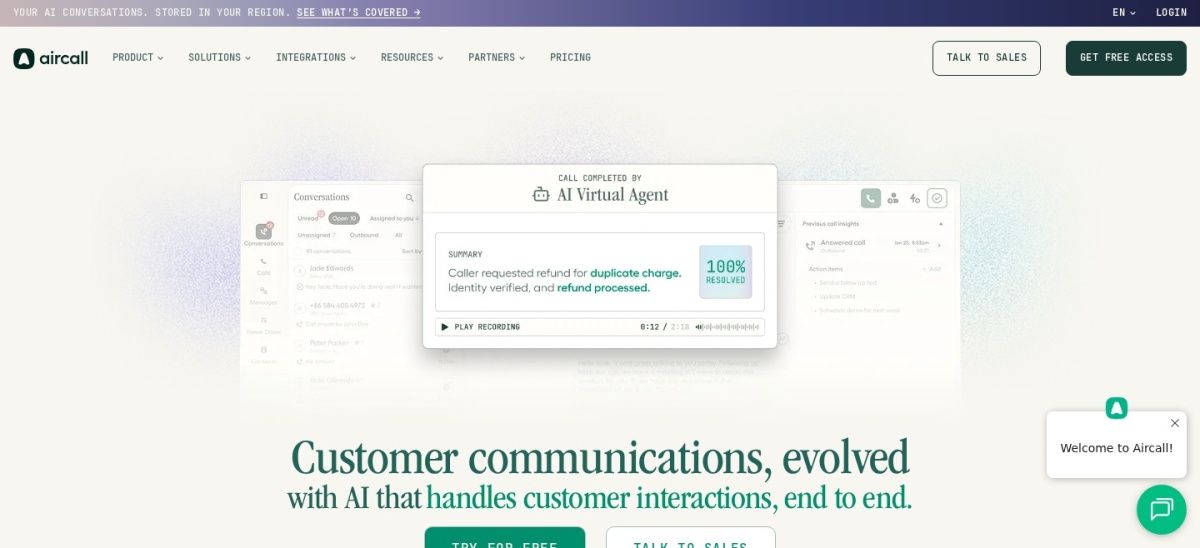
Aircall is a cloud phone system for support and sales teams of 3 to 100 agents. It covers queues, IVR, call recording and SMS, with more than 100 integrations including Salesforce, HubSpot and Zendesk, and every call is logged automatically.
The trade off is the seat minimum and the dialer. Essentials costs $30 a license a month billed annually with a 3-license minimum, so a solo user pays $90 a month, and the power dialer only exists on Professional at $50. It suits teams that live in a helpdesk or CRM and want every call logged without effort.
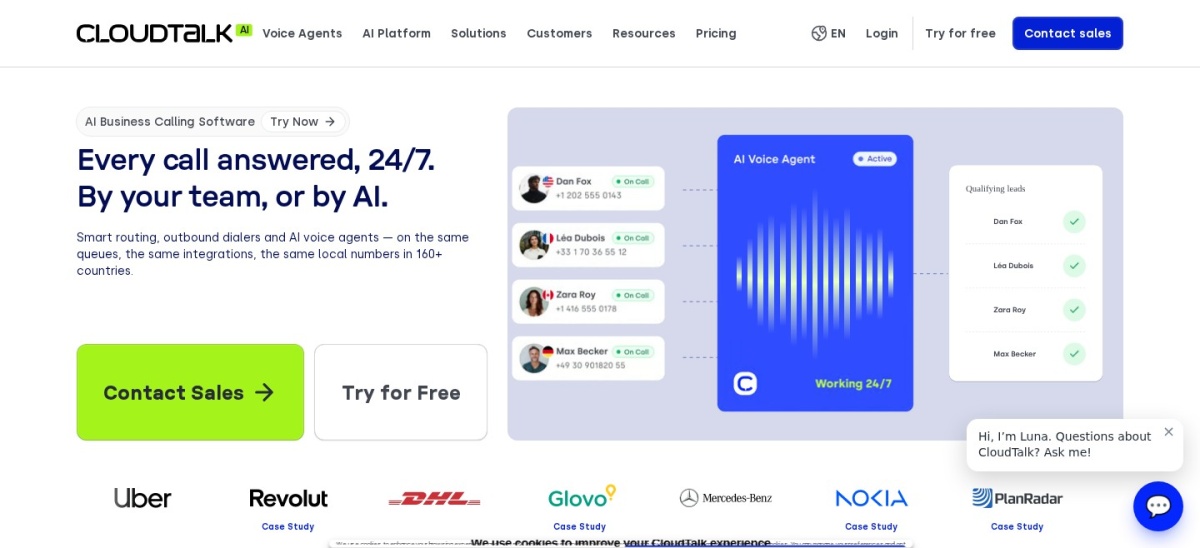
CloudTalk is a cloud phone system for small and mid-sized voice-first teams. It covers call queues, the visual Call Flow Designer, smart routing and numbers in more than 160 countries, with AI voice agents and conversation intelligence as add-ons.
The trade off is the IVR tier and the US fee. Starter costs $25 a user a month billed annually with a one-seat minimum, but IVR starts on Essential at $29, and US customers pay an 11% fee. It suits teams that call many countries and want fast setup without a seat minimum.
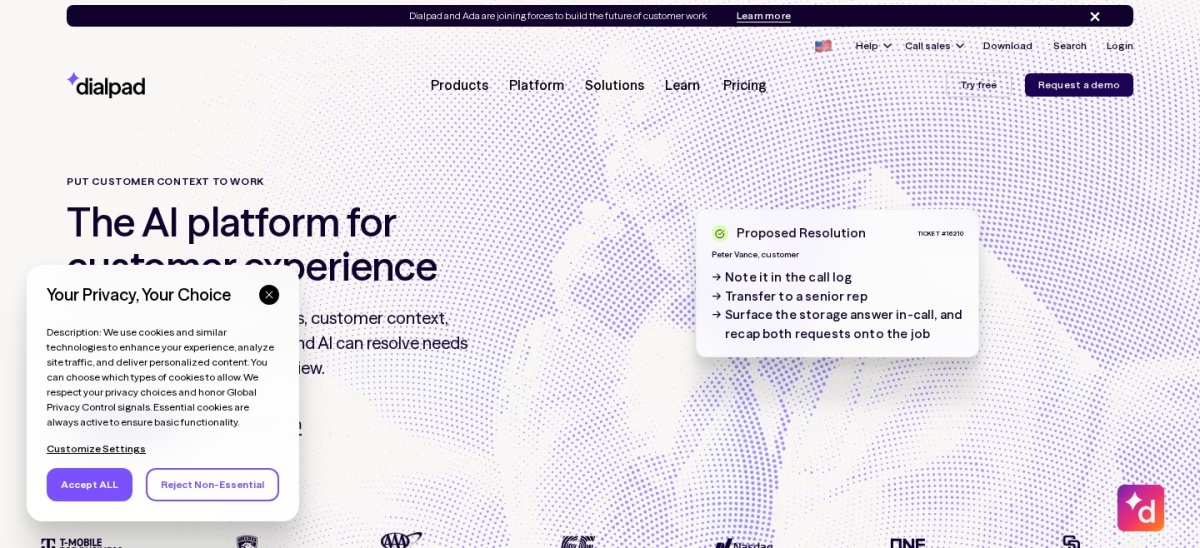
Dialpad is an AI-native voice platform with a real contact-center tier. Every call on a paid plan is transcribed in real time, with summaries, action items and live coaching prompts while the call is still running.
The trade off is the price gap. The Connect phone plan starts at $15 a user a month, but the contact center starts at $89 a user a month billed annually for Essentials, with Live Coach and quality management from $119. It suits mid-size support teams that want quality and workforce tools in one product.
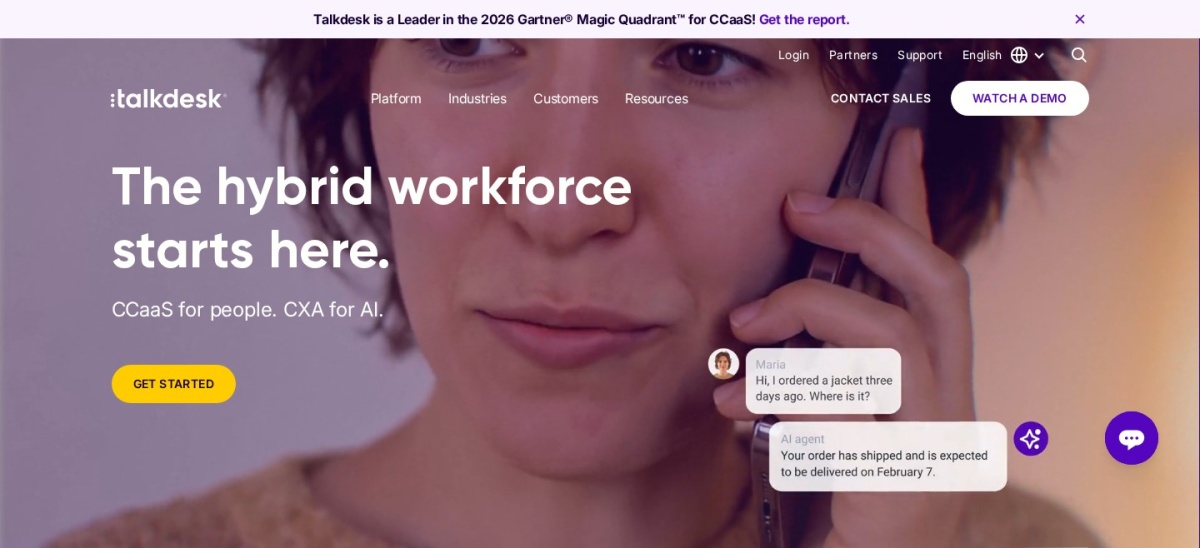
Talkdesk is a contact-center platform for mid-market and enterprise teams that want industry-specific editions with strong AI automation. It covers voice and digital channels, with AI agents, automation and analytics across the stack.
The trade off is price and complexity. Voice Essentials costs $105 a user a month, with both voice and digital from the Elite tier, and small teams may find it complex. It suits mid-market and enterprise teams that want fast CCaaS deployment with industry editions.
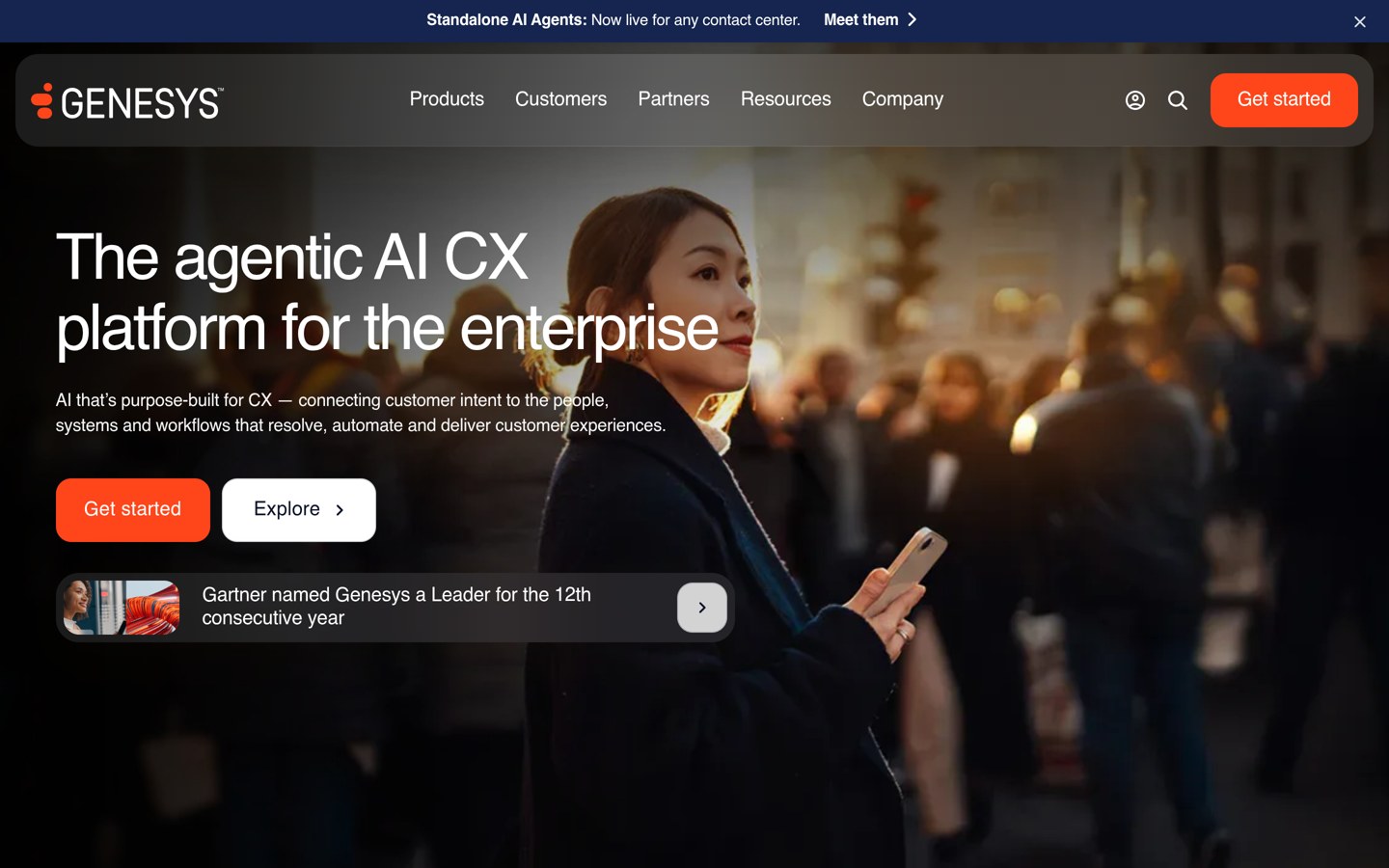
Genesys Cloud CX is the enterprise omnichannel platform for large global teams. It combines voice, digital channels, workforce engagement management and CX analytics in one system, with deep routing and compliance coverage.
The trade off is scale and cost. CX 1 costs $75 a user a month billed annually for voice only, with voice and digital from CX 2, and implementation takes weeks. It suits large enterprises that need deep workforce management alongside omnichannel routing.
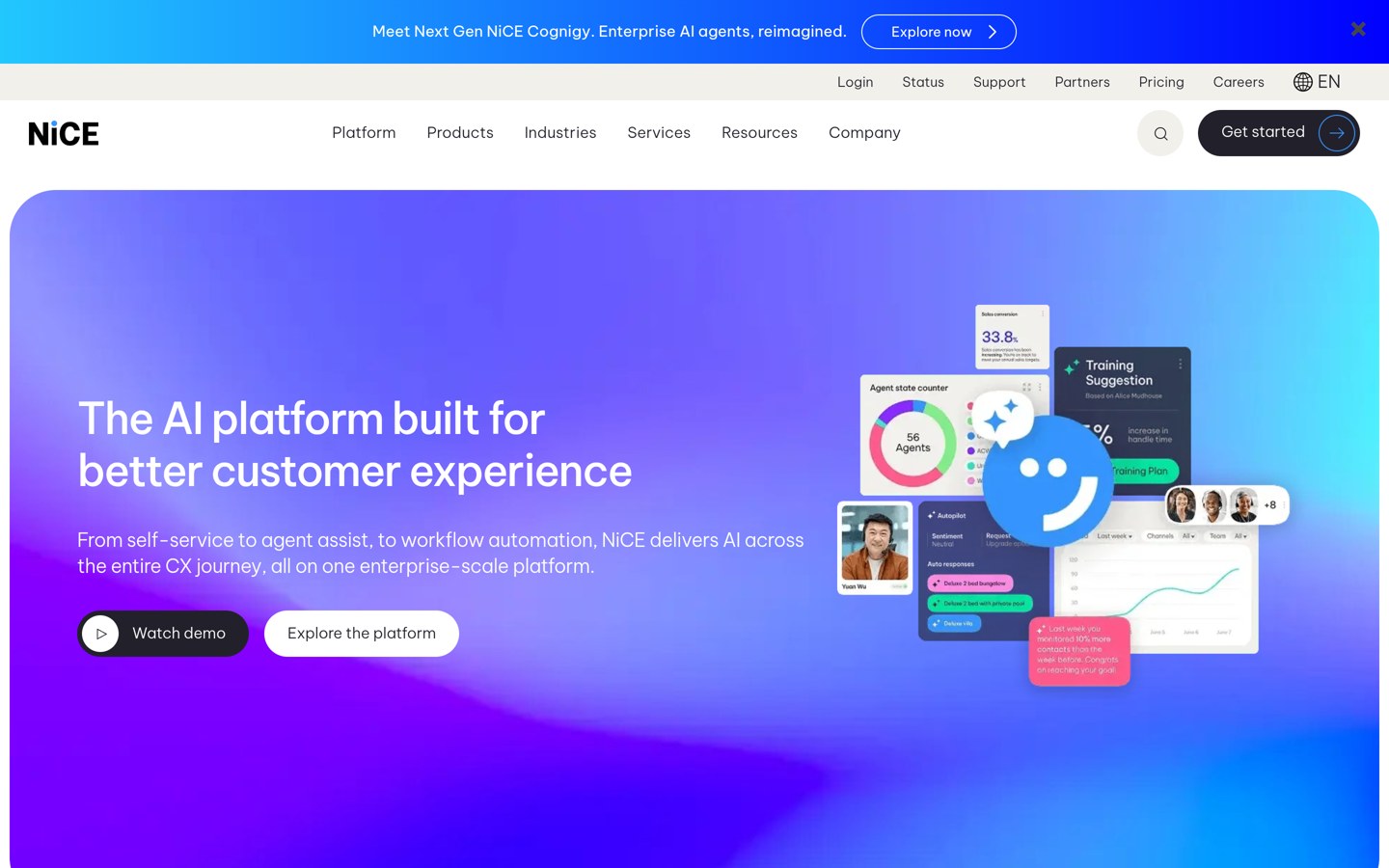
NICE CXone is an AI-native contact-center platform for large, regulated contact centers. It covers omnichannel routing, workforce management, quality management and AI across voice and digital channels, with FedRAMP and HIPAA coverage.
The trade off is price. The Omnichannel Suite costs $110 an agent a month, and top tiers reach $240 or more. It suits compliance-heavy enterprises that need AI-native routing at scale.
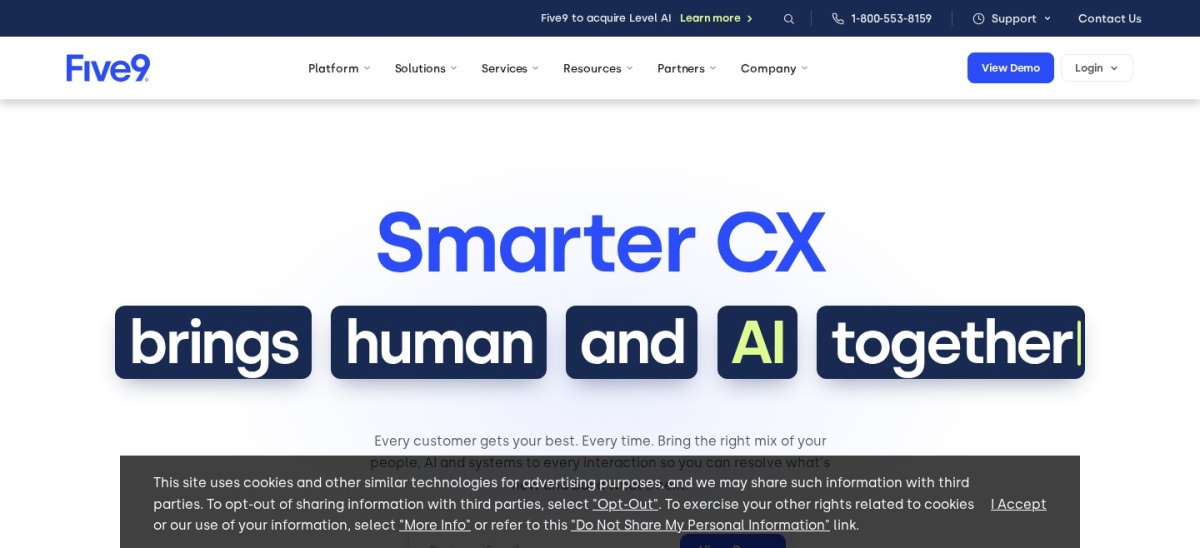
Five9 is the enterprise contact center for large teams running blended inbound and outbound operations. It offers deep Salesforce-native routing, predictive dialing and AI across voice and digital channels, with a 50-seat minimum on its Core plan.
The trade off is cost and evidence. Digital costs $119 a seat a month and Core $159, and its G2 rating of 4.2 out of 5 from 666 reviews is the lowest of the enterprise tools here. It suits large enterprise centers that need Salesforce-native routing and predictive dialing at scale.
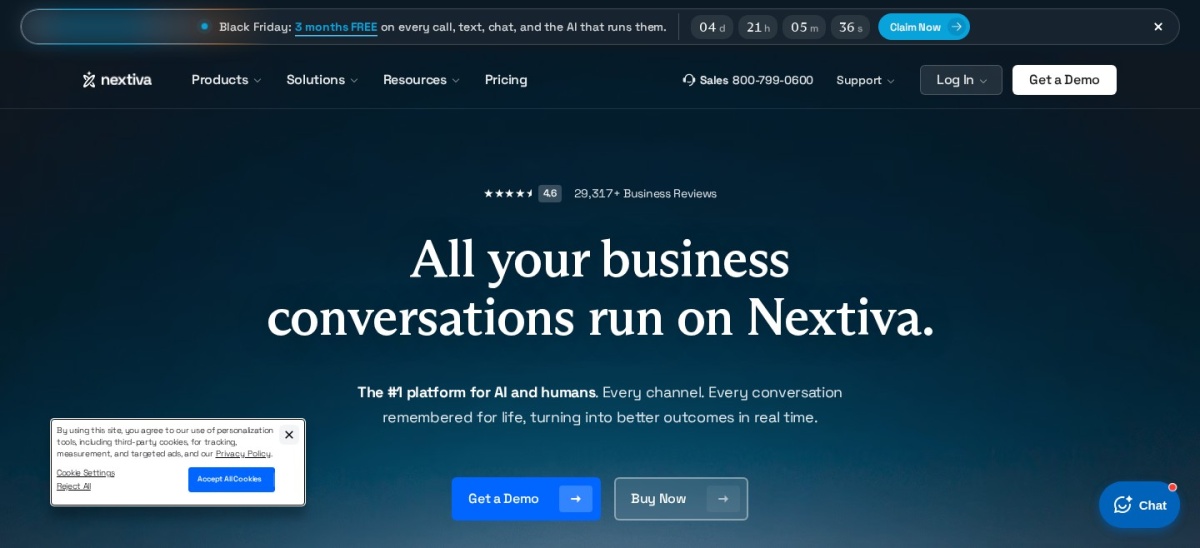
Nextiva is a unified communications platform with a contact-center add-on. It combines business phone, video, messaging and a starter contact center in one system, with AI transcripts and summaries on higher tiers.
The trade off is the split pricing. Phone plans start at $15 a user a month for Core, but the Contact Center Essential plan costs from $75 an agent a month on top. It suits small businesses to mid-market teams that want one vendor for phones and a starter contact center.
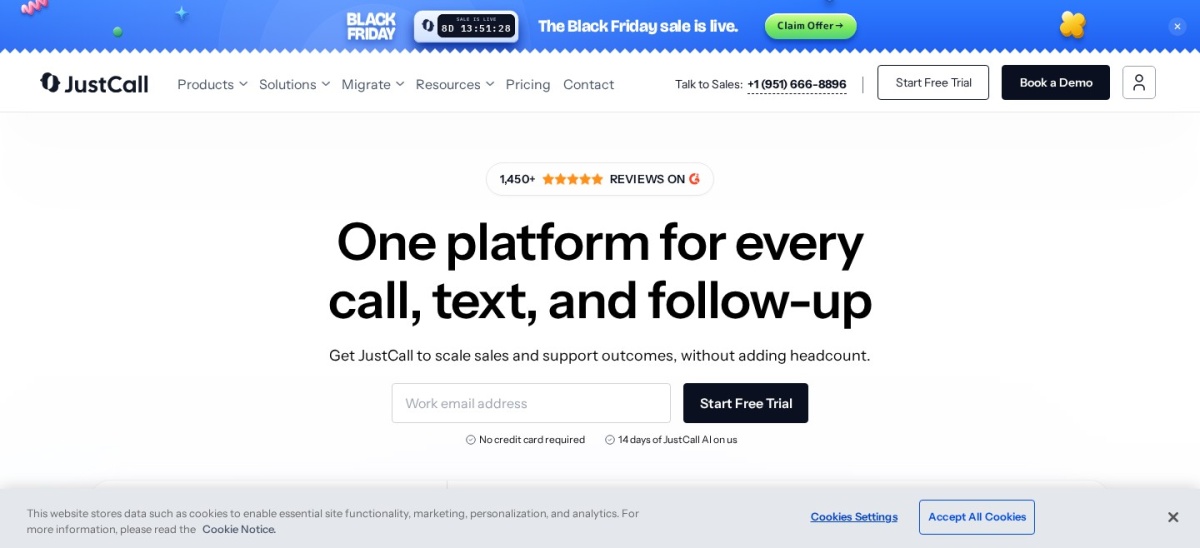
JustCall is a cloud phone system for sales and support teams that need calling plus SMS in one tool. It covers voice, SMS, bulk messaging and a power dialer, with integrations for HubSpot, Salesforce and Zoho.
The trade off is depth. It is not a full helpdesk, and real-time assist, scoring and sentiment need the Pro Plus plan at $89 a user a month. Team costs $29 a user a month billed annually. It suits SMS-heavy sales and support teams that want one tool for calls and texts.
Cloud phone systems such as Aircall, CloudTalk and JustCall suit teams of 3 to 100 agents. They go live in days, charge per user, and cover queues, IVR, recording and CRM integrations.
Full contact-center platforms such as Genesys, NICE CXone, Talkdesk and Five9 suit 50 to 5,000 agents. They add omnichannel routing, workforce management, quality management and compliance tooling, and implementation takes weeks.
The expensive mistake is buying a platform for a team bigger than yours. A 10-agent support team does not need workforce management, and a 500-agent center cannot run on a phone system.
Dialpad sits between the groups: a unified phone system with a real contact-center tier, AI transcription and live coaching built in.
How we chose
We started from the call center platforms ranked on G2 and in 2026 buyer guides, then kept those with a verifiable G2 rating and real call center features such as queues, routing and IVR.
Prices come from vendor pricing pages as read in November 2026 by three independent comparisons, checked on 8, 12 and 19 November. Where sources disagree, the list notes the conflict.
We left out tools with no verifiable G2 rating. No vendor paid for a place, and we do not claim hands-on testing for this list.
How to choose call center software
Start with your team size and channels, then match the platform to that scale.
Count your agents and channels. Teams under 100 agents on voice only need a cloud phone system. Larger teams, or teams on voice plus chat and email, need a full contact-center platform.
Check the CRM integration. Confirm the tool logs calls automatically in Salesforce, HubSpot or Zendesk. Manual logging kills adoption, and the best tools here all integrate deeply.
Try the trial on real calls. Run a trial with real agents and real customers for two weeks. Check call quality, queue behaviour and how the CRM logging actually works.
Price the full bill. Add telecom usage, AI charges, implementation and the seat minimum to the per-user price. Aircall needs 3 licences and Five9 needs 50 seats on its Core plan.
FAQ
What is the best call center software?
Aircall is the best pick for most support and sales teams. It costs $30 a license a month billed annually, integrates with more than 100 tools including Salesforce, HubSpot and Zendesk, and it is rated 4.4 out of 5 on G2 from more than 1,600 reviews.
How much does call center software cost per agent?
Entry prices run from $25 to $119 per user a month. CloudTalk starts at $25, Aircall at $30, Dialpad's contact center at $89, Talkdesk at $105 and NICE CXone at $110. Top tiers reach $240 a month or more, before telecom and AI charges.
What is the difference between a cloud phone system and a CCaaS platform?
A cloud phone system covers voice calls with queues and IVR for small teams. A CCaaS platform adds omnichannel routing across voice, chat and email, plus workforce and quality management for large contact centers.
Which call center software is best for small teams?
CloudTalk is the best small-team pick, starting at $25 a user a month with a one-seat minimum and numbers in more than 160 countries. Aircall is close behind at $30 a license a month, with a 3-licence minimum and deeper CRM integrations.
Do these tools include AI?
Yes, most do. Dialpad transcribes and summarises every call and coaches agents live. Aircall, CloudTalk, Genesys, Talkdesk and NICE all offer AI summaries, voice agents or real-time assist, usually on mid or top tiers.
Which call center software works best with Salesforce?
Five9 has the deepest Salesforce-native routing and predictive dialing, and Genesys, Talkdesk, NICE CXone and Aircall all integrate with Salesforce. If your team lives in Salesforce, Five9 or Genesys are the strongest picks.