Plytix is the top PIM software for most teams, with a free plan for small catalogs, paid plans from 149 euros a month, and a 4 point 7 rating on G2. Catsy suits manufacturers that need strong distributor syndication, while Akeneo fits large enterprises with complex catalogs.
How we make this list: we compare pricing pages, product documentation and public user reviews, then re-check every price before each update. No product paid for a place. Disclosure.
Plytix is the best PIM software for most teams, with a free plan and the clearest pricing in this list.
Catsy holds the highest G2 rating at 4.8 out of 5, and suits manufacturers that syndicate to many channels.
Akeneo is the enterprise pick, from 45,000 dollars a year, with the largest PIM community.
Four of the eight tools publish no price at all, so expect a sales call and a custom quote.
Pimcore is the open-source pick, with PIM, DAM, MDM and CMS in one platform from 9,900 dollars a year.
How do you choose the top PIM software?
Start with catalog size, not features. A team with 500 SKUs needs a different tool than a team with 500,000, and prices rise with size on Plytix while enterprise tools charge by quote.
Most PIM vendors hide their prices. Only Plytix, Pimcore, Akeneo, Salsify and Pimberly publish a starting figure, while Catsy, Sales Layer and Syndigo sell by quote, so get a written figure for your catalog before comparing.
Syndication is where PIMs differ most. Our guide to catalog management software compares the same tools through a catalog lens, and Salsify and Syndigo lead when retailer feeds are the main job.
Check the free plan limits before you commit. Plytix caps its free plan at 100 SKUs, Pimcore limits its Community Edition to non-production use, and Akeneo's free edition is very limited.
Implementation time matters as much as price. Lightweight tools go live in days, while enterprise PIMs take weeks or months, so ask for a go-live date in writing.
List prices in each vendor's currency, checked Nov 2026
CatsyCustom
Sales LayerCustom
SyndigoCustom
PlytixFREE€1,788
PimcoreFREE$9,900
Salsify$18,000
Pimberly$30,000
AkeneoFREE$45,000
The 8 best top PIM software tools
01
Plytix
4.7/5on G2 (452 reviews, checked Nov 2026)
Paid from€149/mo
Best PIM software overall
Free planYes, up to 100 SKUs
Paid planPro from €149/mo
UsersUnlimited seats
DAM includedYes
plytix.com
Plytix homepage, captured Nov 2026.
Plytix is a cloud PIM and DAM for small and growing commerce teams, built around a spreadsheet-style product grid. The free Standard plan covers catalogs of up to 100 SKUs, with unlimited seats, unlimited file storage and 500 AI credits a month.
The trade off is price by catalog size. Pro starts at 149 euros a month for 100 SKUs and climbs as the SKU count grows, so a large catalog costs more than the headline figure. It suits teams moving off spreadsheets that want a clear price and a fast start.
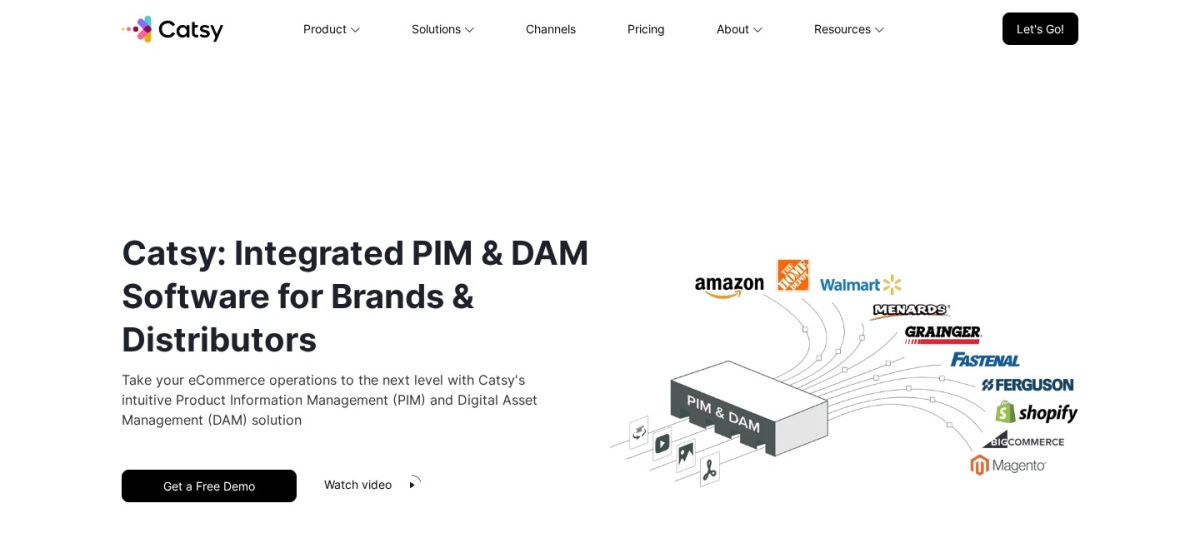
Catsy is a combined PIM and DAM for brands, retailers and distributors that sell across many channels. It centralizes product data and images, checks data quality and publishes catalogs and listings to Shopify, Amazon, Walmart and distributor portals.
The trade off is price. Catsy publishes no starting price, so every deal is a quote, and smaller teams may find the sales process slow. It suits manufacturers and distributors that syndicate to many channels and also need print catalogs.
What we like
Highest G2 rating here at 4.8 out of 5
PIM and DAM in one system
Live InDesign publishing for print catalogs
Strong distributor syndication
Watch out for
Quote-only pricing
No free plan or trial published
Paid plans are quoted per catalog and channel mixVisit catsy.com
03
Sales Layer
4.6/5on G2 (317 reviews, checked Nov 2026)
PricingCustom/yr
Best for fast onboarding and guided setup
Free planNo, 30-day trial
Paid planBy quote
OnboardingGuided setup
ChannelsMarketplaces and feeds
saleslayer.com
Sales Layer homepage, captured Nov 2026.
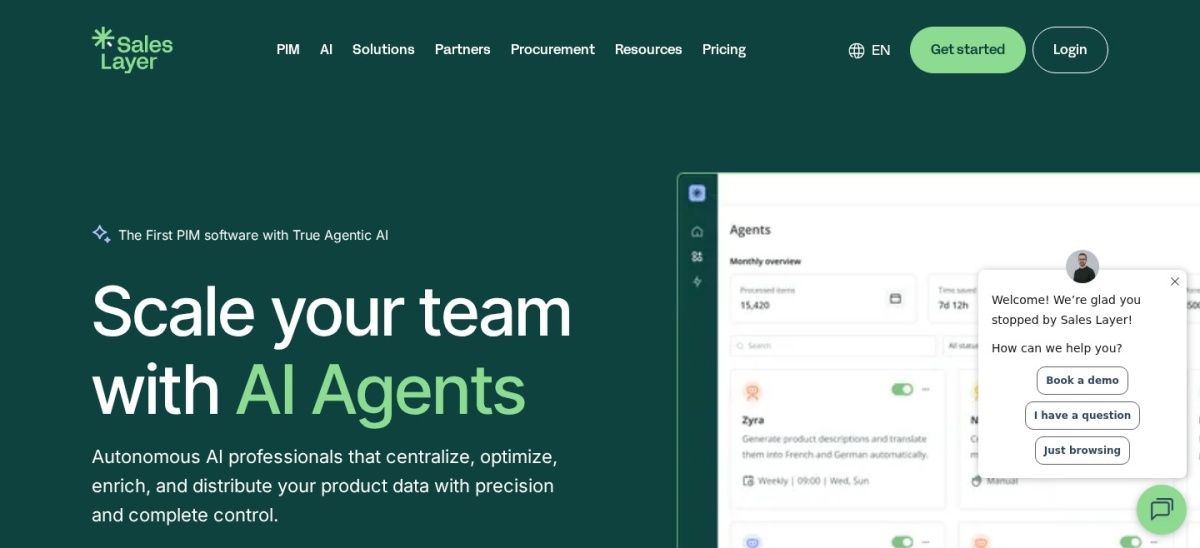
Sales Layer is a cloud PIM for manufacturers, brands, retailers and distributors with multichannel catalogs. It offers flexible data models, classification inheritance, bulk editing and product feeds, plus a 30-day free trial and guided onboarding.
The trade off is price. Sales Layer publishes no starting price, so buyers need a quote, and advanced features can add cost for larger teams. It suits mid-market teams that want to go live fast without a long implementation project.
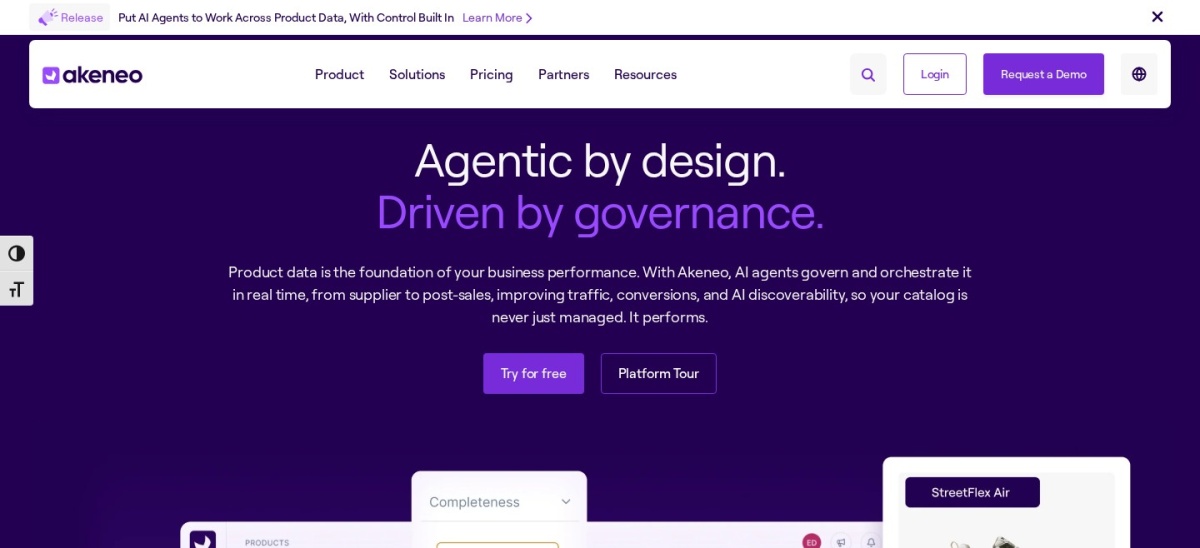
Akeneo is the PIM most large enterprises evaluate first. The Growth package starts at 45,000 dollars a year and covers core enrichment, a rules engine and catalog management, while a free Community Edition exists for small or technical teams.
The trade off is cost and complexity. Growth is a serious enterprise price, add-ons can push it higher, and implementation takes weeks. It suits large brands and manufacturers with complex catalogs across many channels and languages.
Salsify is a product experience platform for brands that sell into retail chains. The Basic plan costs 1,500 dollars a month and centralizes product content, automates retailer syndication and tracks digital shelf performance.
The trade off is cost beyond the base plan. Extra retailer connections and changes can add fees, and small brands may find the platform heavy. It suits consumer brands whose main job is getting accurate content onto many retailer sites.
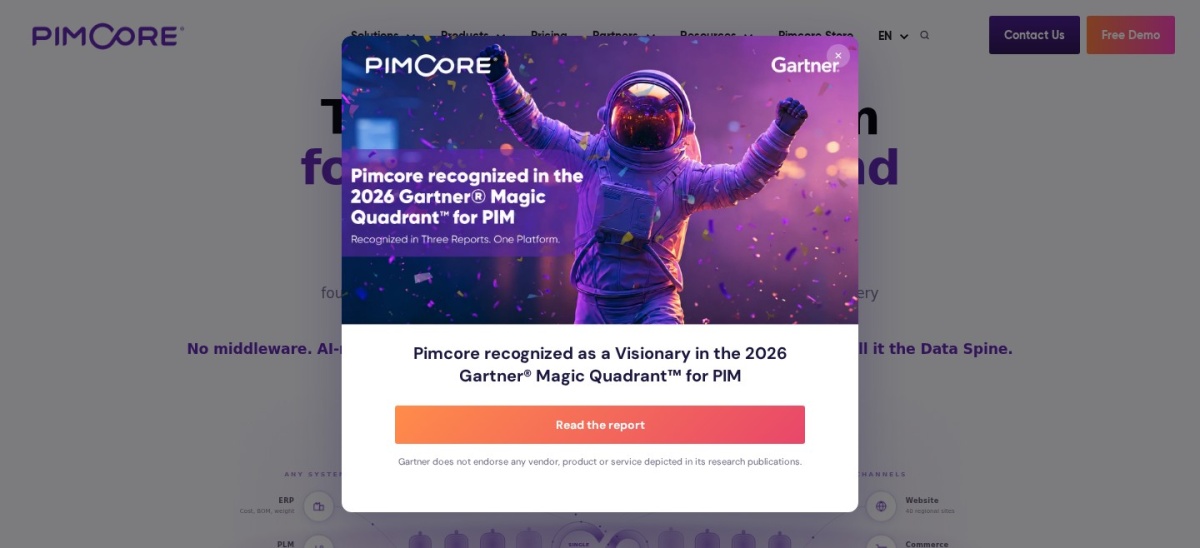
Pimcore is an open-core platform that combines PIM, DAM, master data management and a CMS in one system teams fully control. The Professional plan costs 9,900 dollars a year, while the Community Edition is free for non-production use.
The trade off is technical effort. Pimcore needs developers or an implementation partner to configure, so non-technical teams move slowly. It suits technical teams and agencies that want one governed platform instead of several tools.
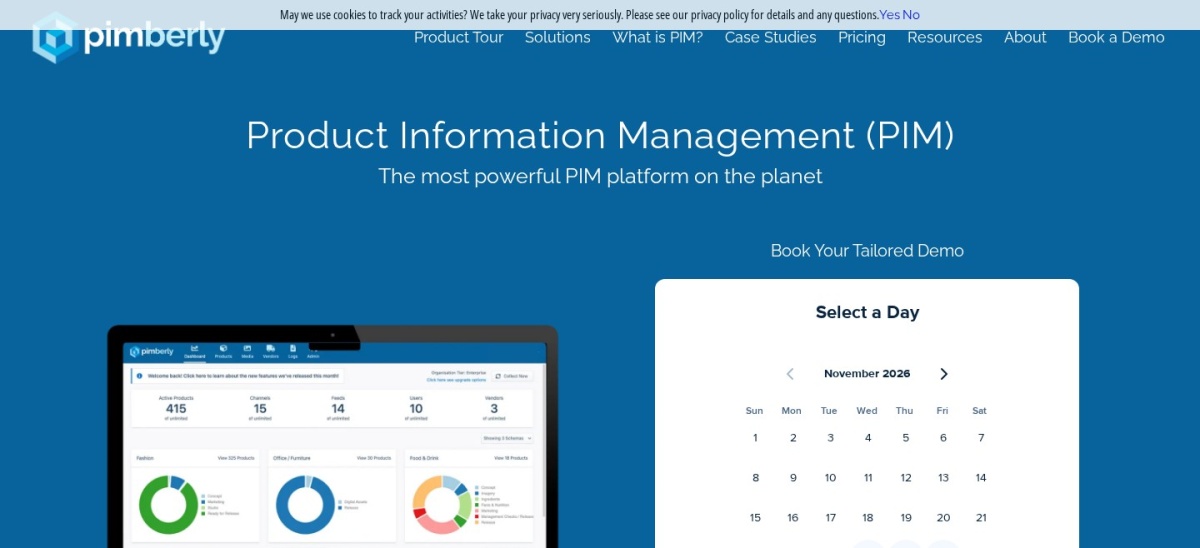
Pimberly is an enterprise SaaS PIM and DAM for brands, manufacturers, distributors and retailers. The Regular plan costs 30,000 dollars a year and covers 50,000 SKUs and 20 users, with integrated DAM, unlimited channels, locales and workflows.
The trade off is price and scope. Pimberly is an enterprise buy, and smaller catalogs pay for capacity they may not use. It suits mid-market and enterprise teams with heavy supplier onboarding and many channels to feed.
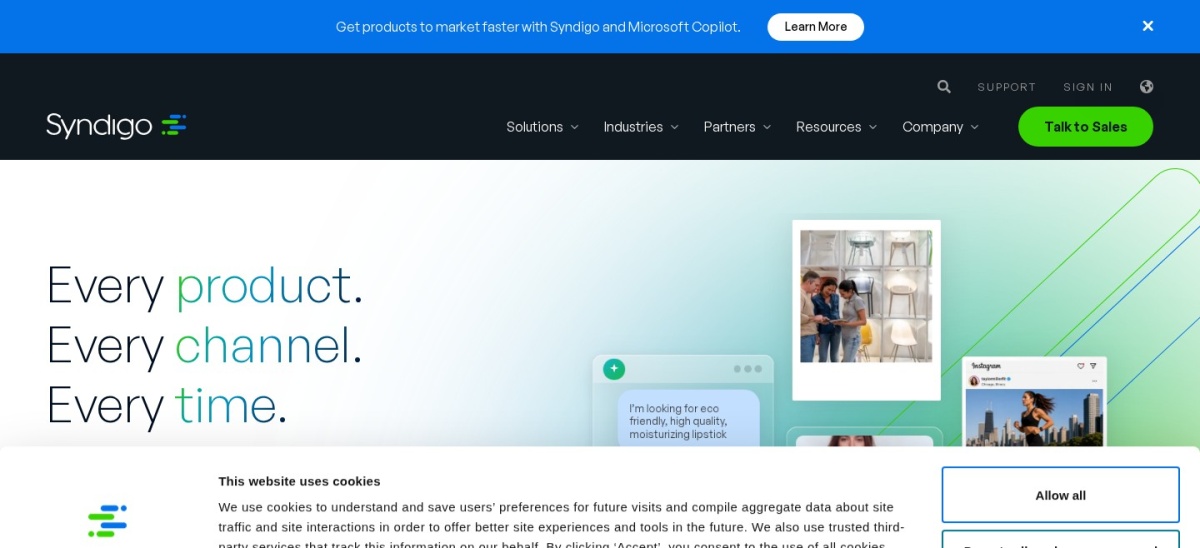
Syndigo is a product data platform for brands that syndicate content to large retail networks. It combines PIM, master data and content syndication, grades supplier content automatically and distributes validated product content to retailer sites.
The trade off is price and fit. Syndigo publishes no prices, so buyers need a quote, and it is built for scale rather than small catalogs. It suits brands sending product data to many retail partners with strict compliance needs.
Only five of the eight tools publish a starting price. Plytix, Pimcore, Akeneo, Salsify and Pimberly list figures, while Catsy, Sales Layer and Syndigo sell by quote because price depends on SKUs, channels and implementation.
Quote-only pricing is normal for enterprise PIM. Vendors price by catalog size, user count, modules and services, so two buyers rarely pay the same figure for the same product.
Budget for implementation as well as the licence. Lightweight tools go live in days, while enterprise PIMs need weeks of setup, data mapping and training, which can cost as much as the first year.
How we chose
We started from the PIM tools with the largest G2 review bases, then kept eight that cover small teams, mid-market brands and enterprises, from free plans to quote-only platforms.
Prices come from vendor pricing pages and G2 pricing data, checked on 29 November 2026. Ratings and review counts come from G2 on the same day. Where a vendor shows a sale, the list shows the regular price.
We left out tools with no verifiable G2 rating. No vendor paid for a place, and we do not claim hands-on testing for this list.
How to choose the top PIM software
Start with your catalog size, then match the tool to your channels.
Count your SKUs first. Price and fit both depend on catalog size. A 500-SKU catalog fits Plytix free or Pro, while a 100,000-SKU catalog needs an enterprise platform.
List your sales channels. If you sell into retail chains, shortlist Salsify and Syndigo. If you sell through distributors, look at Catsy and Pimberly first.
Ask for a written quote. Quote-only vendors rarely publish prices, so get a figure for your catalog, channels and users before you compare tools side by side.
Check the free plan limits. Free plans cap SKUs and features. Confirm the cap covers your catalog with room to grow before you build on it.
FAQ
What is the top PIM software in 2026?
Plytix is the top PIM software for most teams. It has a free plan for catalogs up to 100 SKUs, Pro pricing from 149 euros a month, and a 4.7 out of 5 rating on G2 from 452 reviews.
How much does PIM software cost?
PIM software costs from free to 45,000 dollars a year. Plytix starts at 149 euros a month, Pimcore Professional costs 9,900 dollars a year, and Akeneo Growth starts at 45,000 dollars a year, while Catsy, Sales Layer and Syndigo are quote only.
Is there a free PIM tool?
Yes. Plytix has a free Standard plan for catalogs up to 100 SKUs, Pimcore has a free Community Edition, and Akeneo has a free Community Edition. The free plans are limited, so check SKU caps and channel limits before you commit.
What is the difference between Plytix and Akeneo?
Plytix is a lightweight PIM for growing teams, with a free plan and published pricing from 149 euros a month. Akeneo is an enterprise PIM from 45,000 dollars a year, built for large catalogs, complex data models and many channels.
Which PIM is best for manufacturers?
Catsy is the best pick for manufacturers and distributors. It combines PIM and DAM, publishes to distributor portals and marketplaces, and holds the highest G2 rating here at 4.8 out of 5 from 156 reviews.
Which PIM is best for retail syndication?
Salsify is the best pick for retail syndication. Basic costs 1,500 dollars a month and covers retailer syndication plus digital shelf analytics, while Syndigo suits brands sending content to very large retail networks.
SaaS SEO and WordPress specialist with about 8 years of experience. Rakib compares WordPress plugins, themes, hosting and software using public pricing, documentation and user reviews. See how we rank.