Best PIM Software for Ecommerce Site in 2026: 7 Tools Compared
WLWPLegible EditorsLast verified 23 Nov 2026How we rank12 min read
★ Short answer
Plytix is the best PIM software for most ecommerce sites: it has a free plan, clear pricing from $149 a month, and the highest G2 rating in this list. Akeneo is the best pick for enterprise catalogs, and Pimcore is the best open-source option for teams with developers.
How we make this list: we compare pricing pages, product documentation and public user reviews, then re-check every price before each update. No product paid for a place. Disclosure.
Plytix is the best PIM software for most ecommerce sites, with a free plan, clear pricing from $149 a month, and a 4.7 out of 5 rating on G2.
Akeneo is the best pick for enterprise catalogs, with a free Community Edition and paid tiers from around 35,000 euros a year.
Pimcore is the best open-source option, with PIM, DAM, MDM and CMS in one platform, starting at $9,900 a year for Professional.
Salsify and Syndigo are the picks for brands selling into retail chains, but both are custom-quote and typically cost $50,000 or more a year.
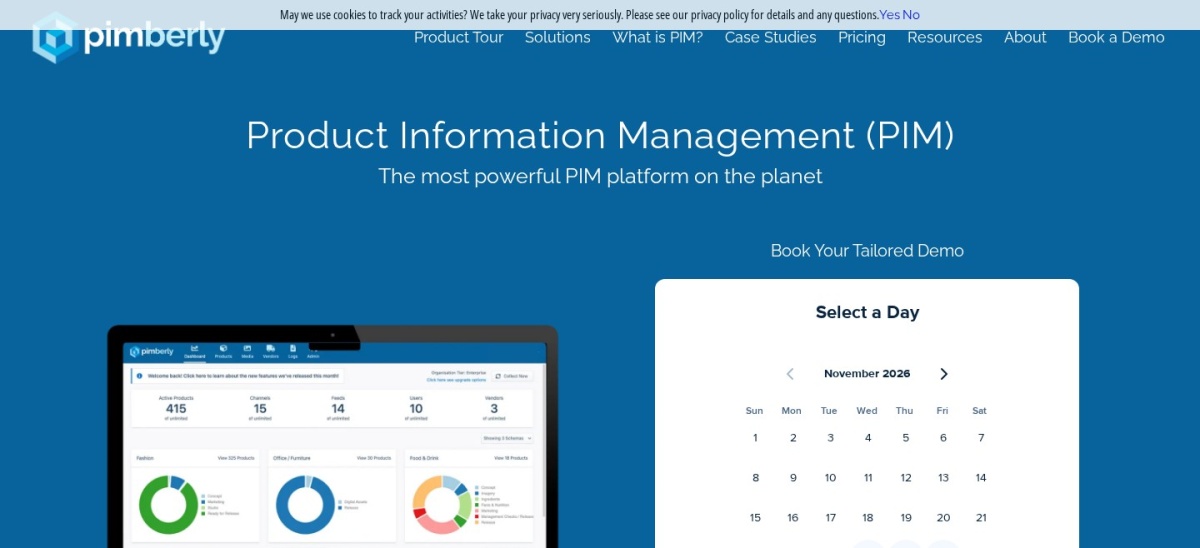
Pimberly is the best pick for supplier-heavy catalogs, with strong supplier onboarding from around $36,000 a year.
What PIM software does for an ecommerce site
Every product you sell lives in a dozen places: your website, Amazon, retailer portals and print catalogs. When specifications, images or prices disagree between them, customers lose trust and retailers delist you.
PIM software creates one governed source of truth and syndicates it everywhere. It holds attributes, images, translations and channel-specific data for every SKU, then pushes clean product content to each sales channel.
The category covers very different products. Lightweight tools such as Plytix suit small ecommerce teams moving off spreadsheets, while enterprise platforms handle millions of SKUs across global supply chains. Our guide on the best ecommerce platforms for product listings compares more ways to list products.
SKU count, channel count and digital asset volume drive price more than user seats. Model all three before requesting quotes, and start with a free plan or community edition where one exists.
Plytix is the PIM most growing ecommerce teams should start with. A free Standard plan covers up to 100 SKUs, Pro starts at $149 a month, and every plan includes unlimited users, unlimited file storage and 500 AI credits a month.
The trade off is scale. Plytix suits brands with up to tens of thousands of SKUs, while million-SKU catalogs with complex governance will outgrow it. Its DAM features are also lighter than specialist tools. It suits Shopify and Amazon sellers moving off spreadsheets into their first real PIM.
Data modelingConfigurable products, localized attributes
Paid planGrowth and Enterprise, quote
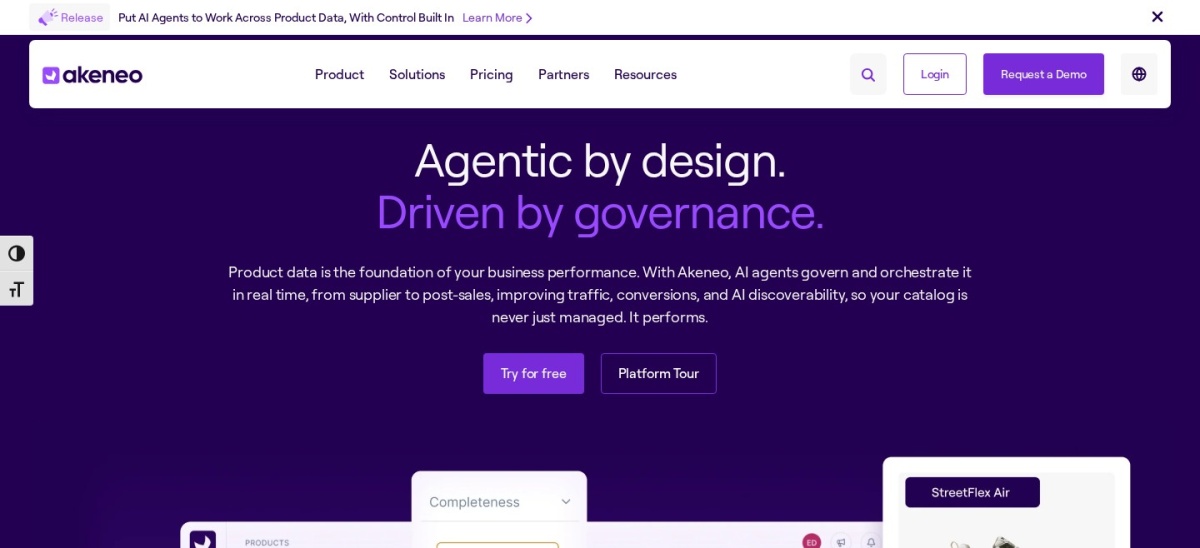
akeneo.com
Akeneo homepage, captured Nov 2026.
Akeneo is the name most enterprises evaluate first for PIM. Its open-source Community Edition is genuinely free and capable, while paid Growth and Enterprise tiers add SaaS hosting, advanced workflows and support for large omnichannel catalogs.
The trade off is cost and time. Paid tiers start around 35,000 euros a year, implementations typically run three to six months with partner help, and AI enrichment sits in premium add-ons. It suits large brands with complex catalogs and a team to run it.
Pimcore is the open-source platform for teams that want PIM, digital asset management and master data management in one system they fully control. The Community Edition is free, and paid tiers run from $9,900 a year for Professional to $29,900 for Enterprise.
The trade off is engineering. Without developers, Pimcore is a framework, not a product: implementation, hosting, security patching and upgrades all fall on your team. It suits organizations with in-house engineering that want maximum control over their data platform.
What we like
PIM plus DAM plus MDM in one open platform
No license cost for Community
Extremely customizable for engineering teams
Watch out for
Needs real developers to implement and run
Total cost can exceed SaaS without in-house engineering
Hosting and upgrades fall on your team
Enterprise tier is $29,900/yr; cloud hosting costs moreVisit pimcore.com
04
Salsify
4.4/5on G2 (129 reviews, checked Nov 2026)
PricingQuote/mo
Best PIM software for retail syndication
Free planNo
Starting priceCustom quote
SyndicationHundreds of retailer portals
Paid planQuote
salsify.com
Salsify homepage, captured Nov 2026.
Salsify is less a PIM than a product experience platform for brands whose business depends on retail shelves, physical and digital. Beyond centralizing product data, it syndicates content to hundreds of retailer portals and monitors digital shelf performance.
The trade off is price. Pricing is enterprise-custom, with reported deals typically from $50,000 to well over $150,000 a year, and implementations run long. It suits major consumer brands where Walmart, Target or Amazon retail operations can make or break a quarter.
inRiver serves manufacturers and distributors whose product data originates in engineering and ERP systems rather than marketing. Its strength is the product lifecycle: guiding complex products from creation through enrichment to syndication, with workflows that match how industrial companies work.
The trade off is enterprise scale. Pricing is custom-quote, with reported starting ranges around 30,000 to 50,000 euros a year, and implementations are major projects. It suits B2B manufacturers with deep, technical catalogs and SAP in the stack.
What we like
Strong product lifecycle workflows
Proven with SAP-centric enterprises
Handles complex B2B catalogs
Watch out for
Enterprise pricing, reportedly €30,000-plus a year
Syndigo dominates the data syndication layer between brands and retailers: GDSN compliance, nutrition and regulatory data, and content distribution to thousands of retail endpoints. Large CPG and grocery brands rely on it to keep product data accurate across the retail ecosystem.
The trade off is focus. The PIM capabilities exist, but syndication is the heart of the product, and enterprise licensing is complex, with pricing typically starting around $75,000 a year. It suits brands whose product data must be perfect at 500 retailers.
Pimberly focuses on the supplier side of PIM: onboarding thousands of suppliers, validating their product data, and enriching it into channel-ready content. Distributors and retailers managing marketplace-style assortments from many suppliers get particular value.
The trade off is reach. It lacks Akeneo open-source community and US market presence, which affects partner availability, and pricing is reported from around $36,000 a year. It suits teams whose catalog complexity comes from supplier count rather than product complexity.
Free PIM tools cover small catalogs well. Plytix Standard is free up to 100 SKUs, and the Akeneo and Pimcore Community Editions cost nothing, with the catch that you host and run them yourself.
Paid tools mostly add scale and support. Plytix Pro raises the SKU limit and adds more API calls and CDN traffic, while enterprise tools add syndication, governance and dedicated support.
Enterprise PIM is a different purchase. Salsify, Syndigo and inRiver are custom-quote, with reported prices from $50,000 a year, and implementations run for months. Our best ecommerce inventory management software guide compares more tools for running a store.
If your catalog is under a few hundred SKUs, a free plan is enough. Once you sell through many channels or manage thousands of suppliers, paid PIM pays for itself in fewer listing errors.
How we chose
We shortlisted PIM tools with a real 2026 market presence, from free plans to enterprise platforms, for ecommerce catalogs of every size.
Prices come from vendor pricing pages and G2, checked on 23 November 2026. Ratings come from G2 on the same day. Where a vendor shows a sale, the list shows the regular price.
We left out tools with no rating on G2 or Capterra. No vendor paid for a place, and this list is based on pricing, docs and reviews, not on using the tools ourselves.
How to choose PIM software for an ecommerce site
Start with catalog size, then check channels and budget.
Count your SKUs and channels. Plytix prices by SKU count, so a 100-SKU catalog starts free while a 10,000-SKU catalog costs more. Enterprise tools quote by catalog and channel complexity.
Check your sales channels. If you sell through retail chains, Salsify or Syndigo syndication matters more than PIM features. If you sell on Shopify and Amazon only, a lighter tool fits.
Decide open source or SaaS. Akeneo and Pimcore Community Editions are free but need developers. SaaS tools cost more but someone else runs the infrastructure.
Try the free options first. Plytix Standard is free up to 100 SKUs, and Akeneo and Pimcore Community Editions cost nothing. Start there before requesting enterprise quotes.
FAQ
What is the best PIM software for ecommerce?
Plytix is the best pick for most ecommerce sites. It has a free plan for up to 100 SKUs, Pro pricing from $149 a month, and a 4.7 out of 5 rating on G2.
Is there free PIM software?
Yes. Plytix Standard is free for up to 100 SKUs, and the Akeneo and Pimcore Community Editions are free and open source. The free options suit small catalogs, while paid plans add hosting, support and more SKUs.
What is the best PIM software for enterprise?
Akeneo is the best pick for enterprise catalogs, with the most mature open-source PIM and strong data modeling. Paid tiers start around 35,000 euros a year, and implementations typically run three to six months.
How much does PIM software cost?
PIM software ranges from free to six figures a year. Plytix Pro starts at $149 a month, Pimcore Professional at $9,900 a year, and enterprise tools such as Salsify and Syndigo typically cost $50,000 or more a year.
Do I need PIM software for a small ecommerce store?
Probably not at first. A store with under 100 SKUs can manage products in its ecommerce platform. Once products live in many channels, or the catalog grows past a few hundred SKUs, a PIM saves time and errors.
What is the difference between PIM and DAM?
PIM manages product information such as attributes, prices and descriptions. DAM manages digital assets such as images and videos. Tools such as Plytix and Pimcore include both, while Salsify and Syndigo focus on syndication.