Best Ecommerce Inventory Management Software in 2026: 9 Tools Compared
WLWPLegible EditorsLast verified 23 Nov 2026How we rank12 min read
★ Short answer
Cin7 Core is the best ecommerce inventory management software for multichannel brands, with one stock pool across every channel at $349 a month. Zoho Inventory is the budget pick at $29 a month with a free plan.
How we make this list: we compare pricing pages, product documentation and public user reviews, then re-check every price before each update. No product paid for a place. Disclosure.
Zoho Inventory is the budget pick: free for 50 orders a month, with Standard at $29 a month.
Cin7 Core is the multichannel heavyweight at $349 a month, with unlimited inventory locations.
Veeqo gives free shipping tools and inventory from $19 a month, the cheapest paid inventory entry here.
Katana is the only maker-first pick, tying stock to production at $299 a month.
Linnworks and Extensiv publish no prices, so both need a quote before you can budget.
Start with order volume, not features
Inventory tools are priced by what you move, not by what they do. Zoho caps orders per plan, Veeqo prices in order bands, Cin7 meters annual sale orders, and Katana charges a flat monthly fee. Count a busy month first, then price each tool at that count.
Channel count decides the shortlist. A seller on one store and one marketplace can run on Zoho or Veeqo. A brand on Shopify, Amazon and wholesale needs Cin7, Extensiv or Linnworks to keep one stock pool across every channel.
Makers need a different tool. Katana ties raw materials and work orders to finished stock, which a pure inventory ledger cannot do. Our live chat software guide covers the customer side of the same operation.
Watch the free tier limits. Zoho gives 50 orders a month free, Veeqo gives free shipping tools, and Katana gives 30 SKUs free. All three are real starting points, not trials.
The 9 best ecommerce inventory management software
01
Cin7 Core
4.3/5on G2 (352 reviews, checked Nov 2026)
Starts at$349/mo
Best for multichannel brands
Cheapest planStandard, $349/mo
Free trial14 days
Users5 on Standard
Inventory locationsUnlimited
cin7.com
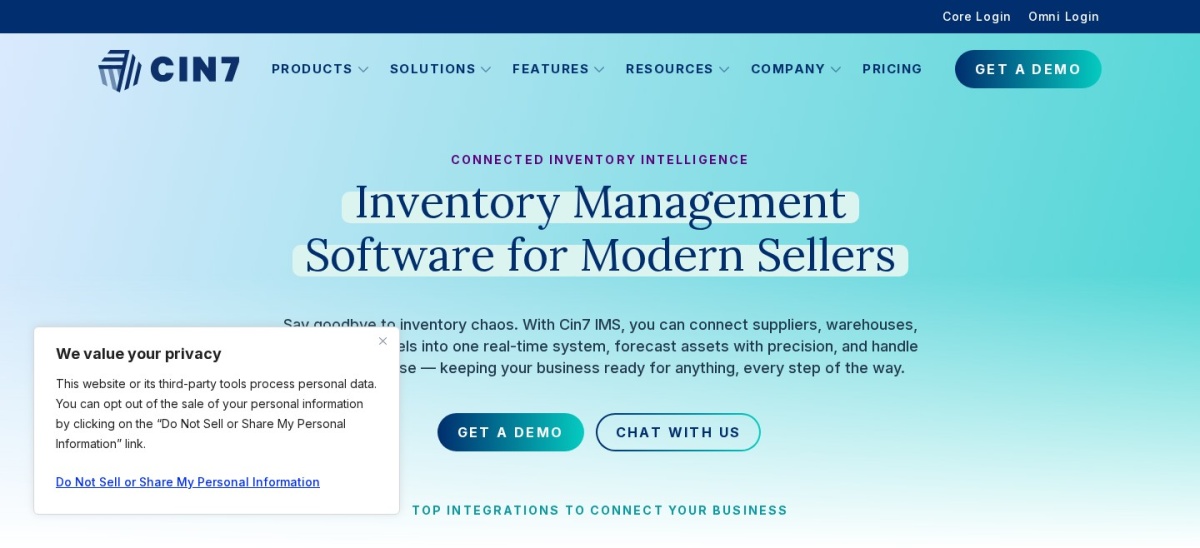
Cin7 Core homepage, captured Nov 2026.
Cin7 Core is an inventory and operations platform for product brands that sell through ecommerce, marketplaces, wholesale and retail. Standard costs $349 a month and includes 5 users, 2 integrations, 6,000 sale orders a year and unlimited inventory locations.
The trade off is setup. Cin7 is a real project to implement, and support quality varies by plan. It suits brands mixing direct sales with wholesale and B2B.
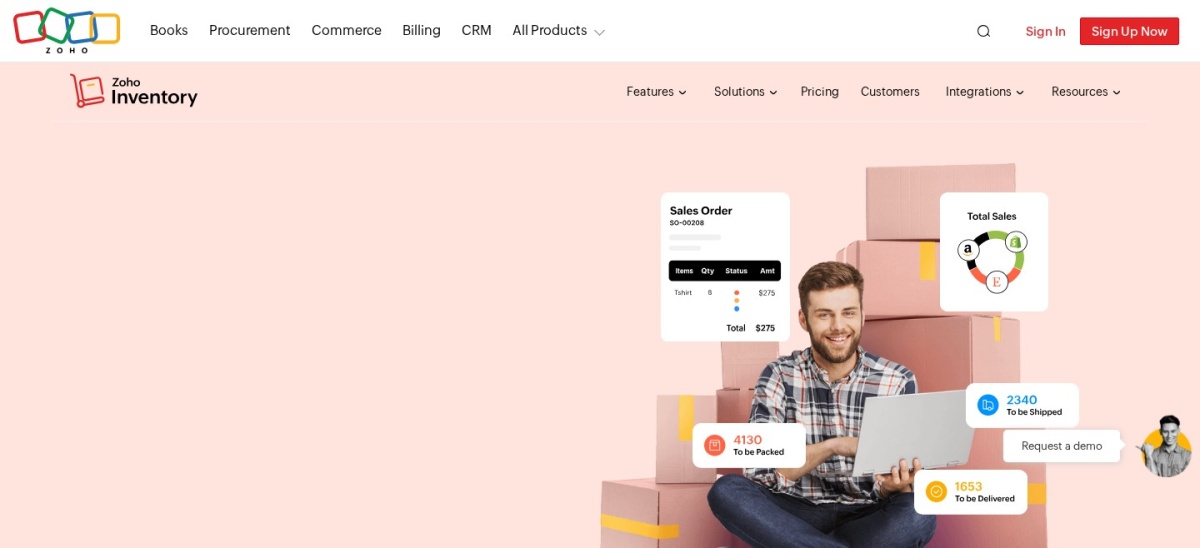
Zoho Inventory is a cloud inventory system priced per organization, not per user. The free plan covers 50 orders a month, and Standard costs $29 a month billed annually for 500 orders, 3 users and 2 locations, with composite items and dropshipping.
The trade off is order caps. Every plan caps monthly orders, so a big sale month can push you into the next tier. It suits small sellers that want real inventory software at the lowest cost.
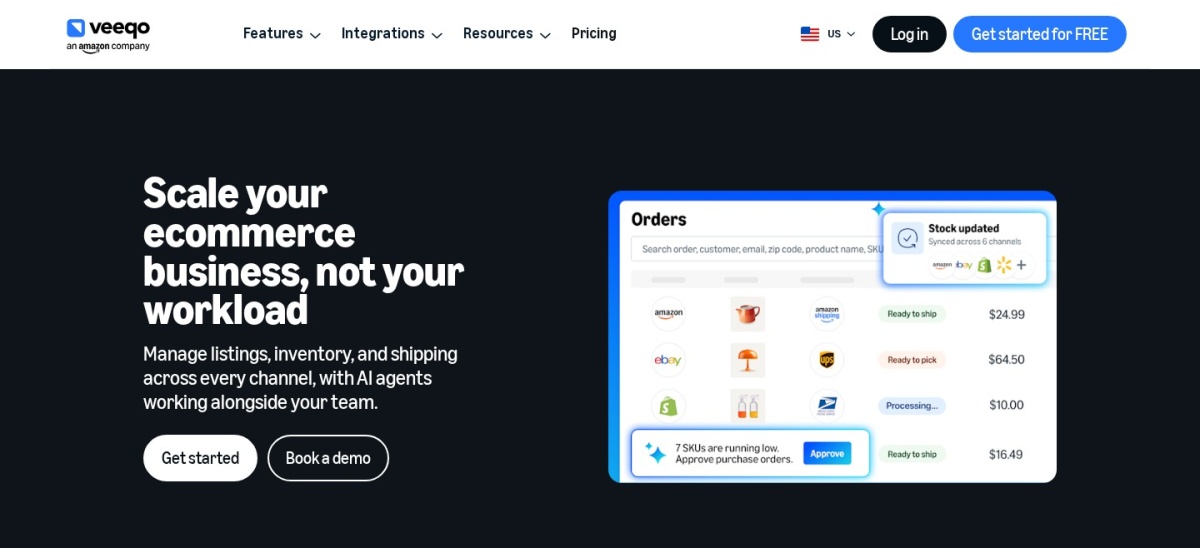
Veeqo is a multichannel inventory and shipping platform owned by Amazon. The shipping plan is free with unlimited orders, users and products, and the Inventory plan starts at $19 a month for up to 300 seller-fulfilled orders.
The trade off is the Amazon link. Veeqo is strongest for sellers who already sell on Amazon, and the inventory price rises in bands as order volume grows. It suits marketplace sellers who ship a lot.
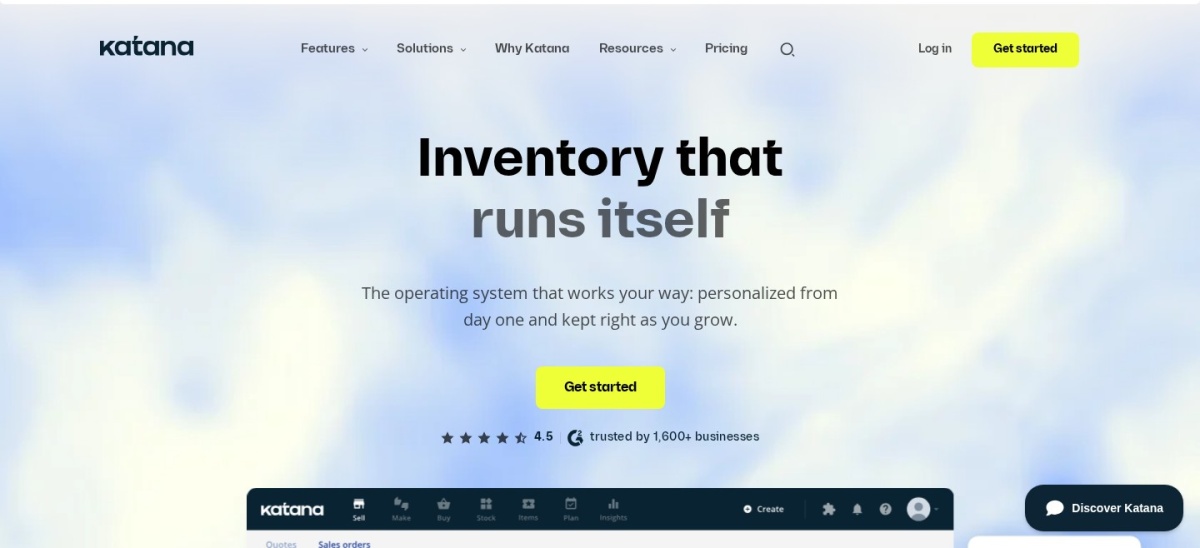
Katana is an inventory platform for brands that manufacture or assemble their own products. Raw materials, work orders and finished goods live in one visual system, so selling a unit deducts both the finished product and its components.
The trade off is price. Core starts at $299 a month, and add-ons push the bill higher, so makers should count the full cost before committing. It suits product businesses that make things.
inFlow Inventory is an inventory system for stores that also take wholesale orders, with B2B ordering beside retail orders. Paid plans start at $99 a month billed annually, and barcode scanning keeps stock counts accurate across locations.
The trade off is that inFlow is lighter on marketplace automation than Cin7 or Extensiv. It suits stores that need team seats and locations more than channel depth.
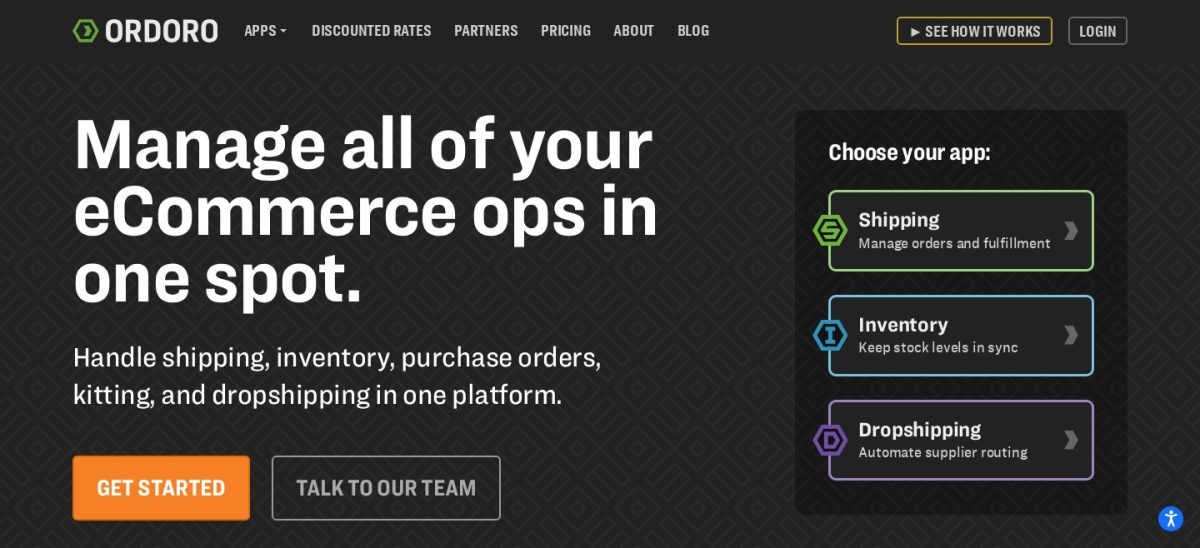
Ordoro is an operations platform that combines shipping, inventory, dropshipping and kitting in one workflow. Its shipping plan is free for 100 orders a month, while the Inventory Advanced plan starts at $349 a month.
The trade off is the jump between plans. The free shipping tier is light, and the full inventory features sit on the $349 plan. It suits growing stores that ship from their own warehouse.
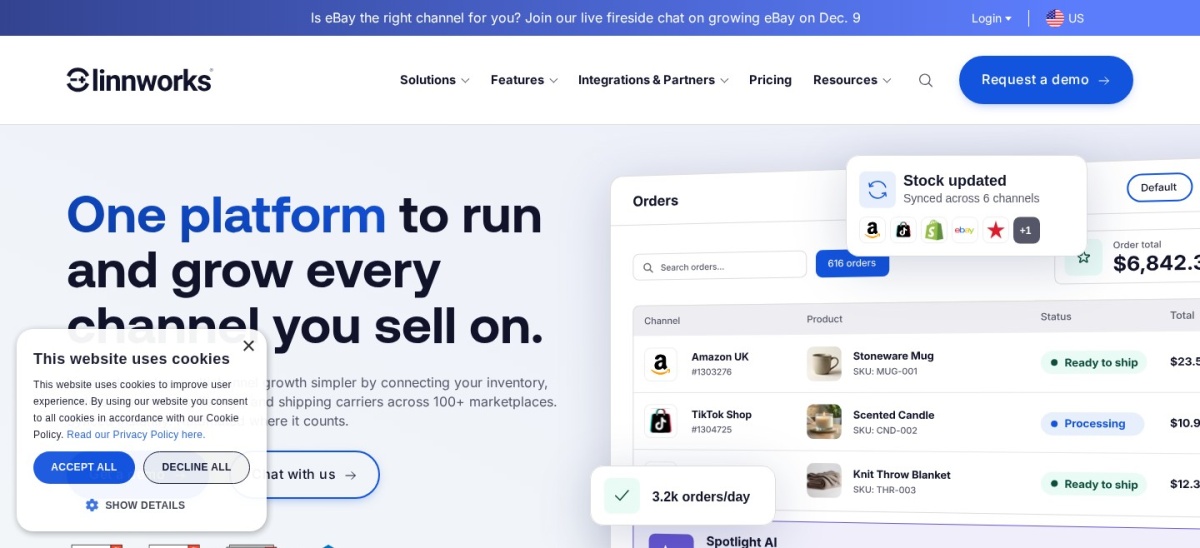
Linnworks is an inventory and order platform for marketplace-heavy sellers. It centralises listings, stock levels and order processing across Amazon, eBay, Shopify and other channels, with automation rules that route orders and print labels without manual work.
The trade off is pricing. Linnworks publishes no list price, so the cost is a quote based on channels and volume. It suits sellers whose problem is channels, not finance.
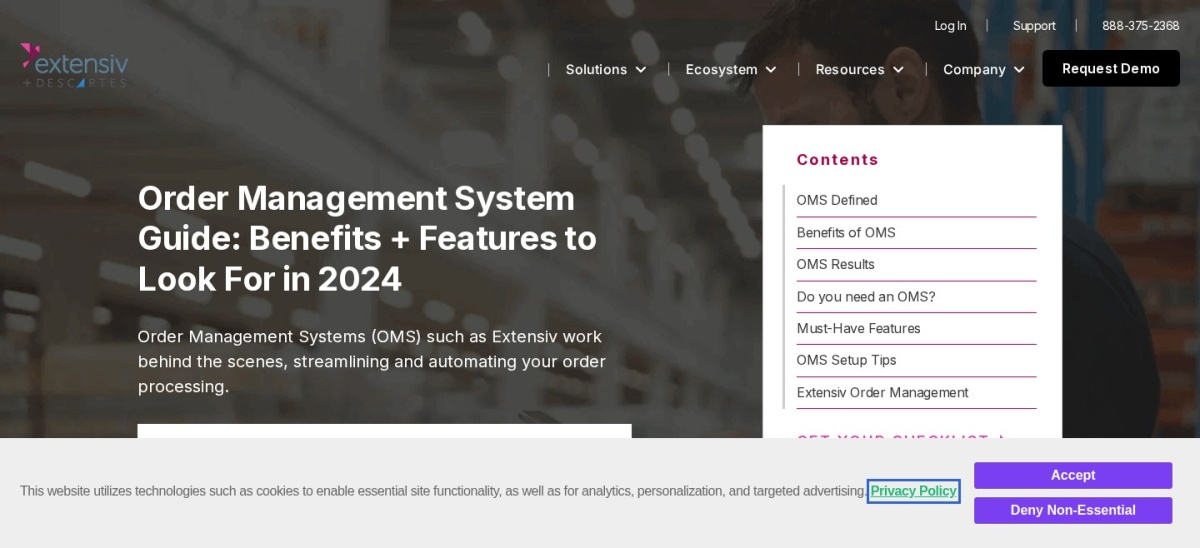
Extensiv Order Manager homepage, captured Nov 2026.
Extensiv Order Manager is an enterprise platform, formerly Skubana, that unifies orders, inventory and analytics across warehouses and channels. Its automation routes orders to the right warehouse and handles the repetitive work that breaks down at thousands of orders a month.
The trade off is that Extensiv lists no prices on its own site, and the Shopify App Store listing that starts at $400 a month may be out of date. It suits high-growth brands with several warehouses.
Cheapest planOne app free; Standard $31.10/user/mo
Free planYes, one app free
FocusOrders, stock and accounting together
Barcode appYes
odoo.com
Odoo Inventory homepage, captured Nov 2026.
Odoo Inventory is the stock module of the Odoo ERP, and one app is free. Standard costs $31.10 per user a month billed annually, and adding Sales, Accounting or Manufacturing turns it into a full back office without a second system.
The trade off is per-user pricing. The bill grows with every seat, so a large warehouse team pays more than on per-organization plans. It suits growing businesses that want orders, stock and accounting together.
Free plans cover the start well. Zoho handles 50 orders a month, Veeqo ships for free, and Katana tracks 30 SKUs, all without a card.
Paid plans mostly add volume and locations. The first paid tier usually lifts the order cap and adds users, warehouses and batch tracking.
For a store doing hundreds of orders a month, the paid tier pays for itself in avoided oversells. One oversold listing costs more than a month of Zoho Standard.
How we chose
We started from the established ecommerce inventory management software vendors most often shortlisted for online stores, then kept those with a verifiable rating on G2, Capterra or Trustpilot and a published pricing page or a clear quote-based model.
Prices come from each vendor's pricing page or, where the vendor publishes no price, from the vendor's own statement that pricing is by quote. Ratings and review counts come from G2, Capterra or Trustpilot, checked on 23 November 2026. Where a vendor shows a sale, the list shows the regular price.
We left out tools with no verifiable public rating. No vendor paid for a place, and we do not claim hands-on testing for this list.
How to choose ecommerce inventory management software
Start with the size of your store and the problem that costs the most, then match the tool to that problem.
List the problem that costs you most. Fraud losses, manual work, stockouts and slow replies each point at a different tool. Pick the one problem first and judge every vendor on it.
Check the real price at your volume. Most of these tools bill by orders, seats or usage, so the entry price is not the price at your volume. Model a busy month before you sign.
Confirm the integrations you already use. A tool that lacks your store platform, payment provider or warehouse system will cost more in workarounds than it saves. Check the connector list first.
Run a short trial on real orders. A trial with live traffic shows whether the tool fits your workflow. Keep your old process running beside it until the trial proves itself.
FAQ
What is the best ecommerce inventory management software?
Cin7 Core is the strongest pick for multichannel brands, with one stock pool across Shopify, Amazon and wholesale at $349 a month. Zoho Inventory is the best budget pick, with a free plan and Standard at $29 a month.
How much does inventory management software cost?
It ranges from free plans at Zoho, Veeqo and Katana to $19 a month for Veeqo Inventory, $29 a month for Zoho Standard, and $349 a month for Cin7 Core. Linnworks and Extensiv are quote-only.
What is the difference between Cin7 and Zoho Inventory?
Cin7 is built for multichannel brands with wholesale and warehouse depth, starting at $349 a month. Zoho Inventory is built for small sellers, with a free plan and paid plans from $29 a month, priced per organization rather than per user.
Do I need inventory software if I only sell on Shopify?
Shopify tracks stock for one store, but it cannot sync stock across Amazon, eBay and wholesale. If you sell on more than one channel, a tool such as Veeqo or Zoho stops overselling across them.
Which inventory tool is best for manufacturers?
Katana is the maker-first pick. It ties raw materials, work orders and finished goods together, so selling a unit deducts its components. It is rated 4.4 out of 5 on G2 from 117 reviews.
What does Veeqo cost?
Veeqo shipping tools are free with unlimited orders. The Inventory plan starts at $19 a month for up to 300 seller-fulfilled orders, and the price rises in bands as order volume grows.