Best Ecommerce Order Management Software in 2026: 9 Tools Compared
WLWPLegible EditorsLast verified 23 Nov 2026How we rank12 min read
★ Short answer
ShipStation is the best ecommerce order management software for most sellers. It imports orders from 300-plus channels into one queue, with Starter at $9.99 a month billed annually. Shippo is free up to 30 labels.
How we make this list: we compare pricing pages, product documentation and public user reviews, then re-check every price before each update. No product paid for a place. Disclosure.
ShipStation is the top pick for most sellers: Starter costs $9.99 a month billed annually for 50 shipments.
Shippo is free up to 30 labels a month, with Pro from $17 a month.
Veeqo gives free shipping tools and inventory from $19 a month.
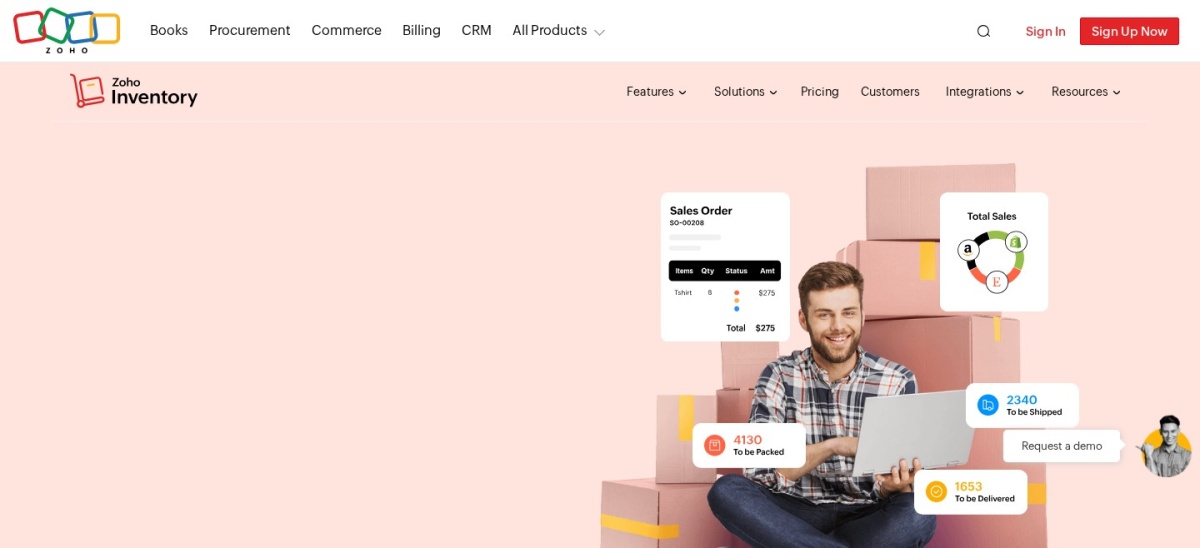
Zoho Inventory is the low-cost order system at $29 a month with a free plan.
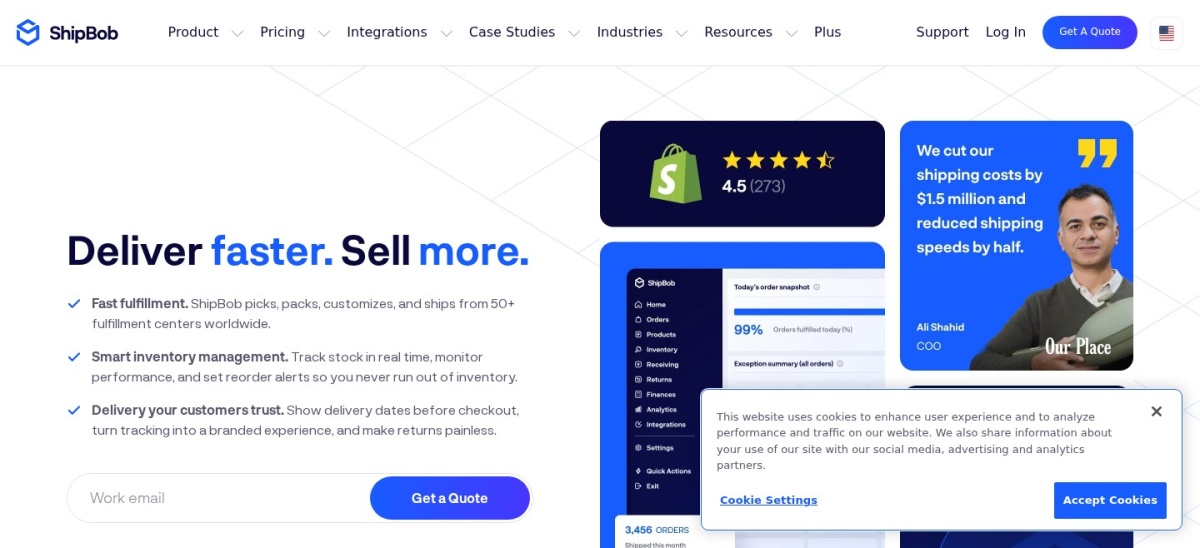
ShipBob is the only fulfillment provider here and the only one with no published monthly rate.
Price by shipment, label or order
Order tools bill in different units. ShipStation bills by shipment band, Shippo bills by label, Zoho bills by order count, and ShipBob bills per order picked plus storage. Count a busy month first, then price each tool at that count.
Labels are not order management. Shippo and Pirate Ship print labels cheaply, but they do not manage stock, backorders or dropshipping. ShipStation, Zoho, Cin7 and Extensiv run the whole order path from sale to shipment.
Fulfillment is a different buy. ShipBob stores, picks and ships for you, so the comparison is against in-house packing plus a label tool, not against software alone. Our live chat software guide covers the customer side of the same orders.
Free tiers are real. Shippo gives 30 labels a month free, Veeqo shipping is free, and Zoho gives 50 orders a month free. Start free, then pay when volume proves the need.
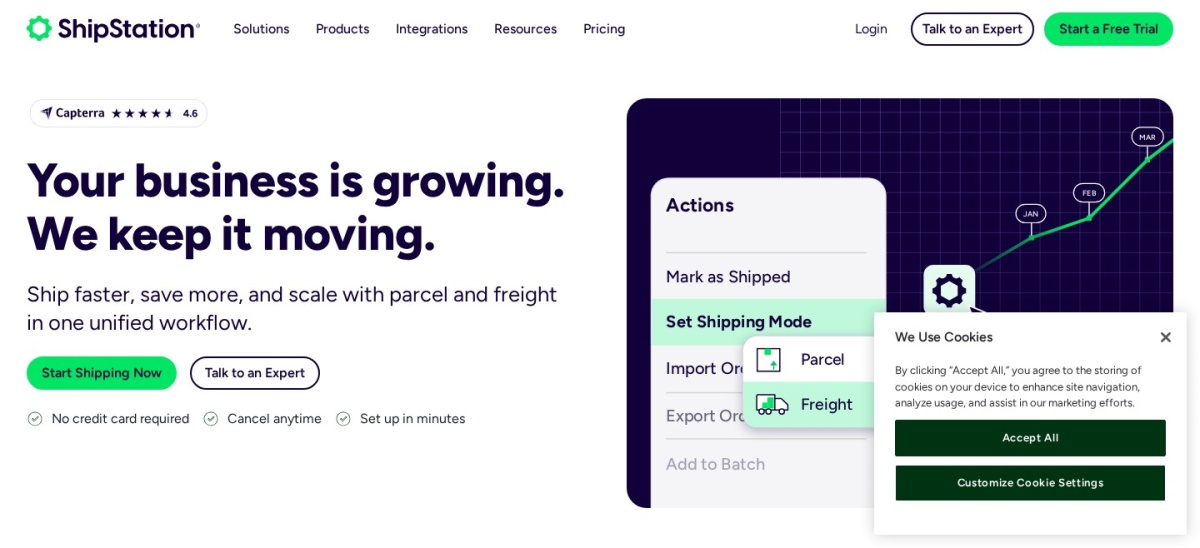
ShipStation is where many stores first get order management: it imports orders from more than 300 carts and marketplaces into one queue, applies automation rules such as choosing a carrier by weight, prints branded labels in batches and sends tracking to customers.
The trade off is shipment bands. Starter covers 50 shipments a month, and the price rises in clear bands as volume grows, while inventory tools sit on the $349.99 Premium plan. It suits growing multichannel sellers.
What we like
300-plus integrations across carts and marketplaces
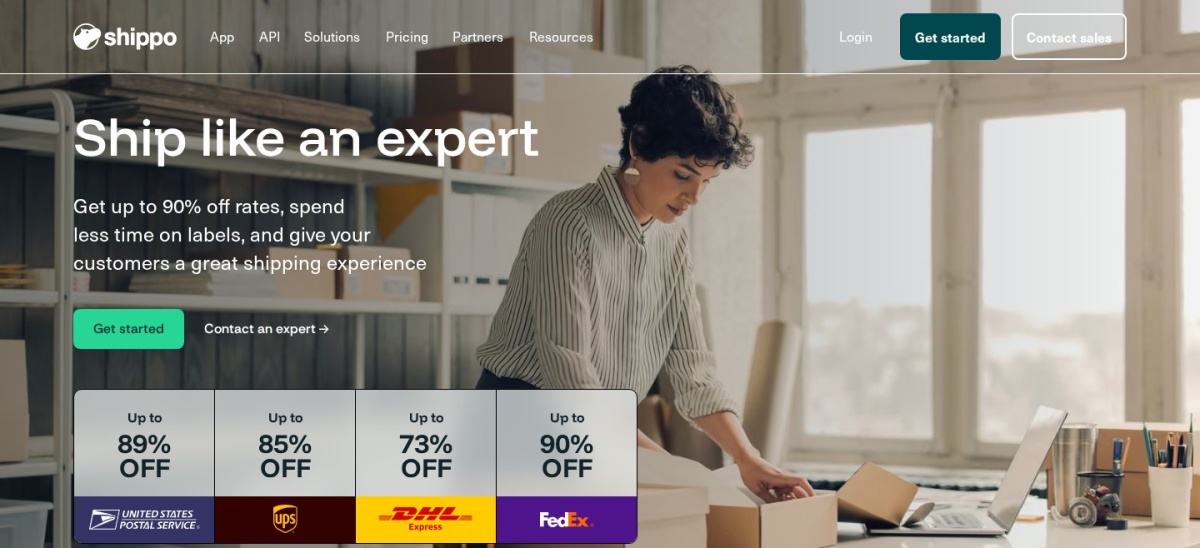
Shippo is a lighter label tool with a free start and a subscription that rises with label count. Starter is free up to 30 labels a month for one user, with discounted rates across 40 or more carriers, and Pro starts at $17 a month on annual billing.
The trade off is depth. Shippo is a label tool first, not a full order system, so inventory and warehouse features are thin. It suits low-volume sellers and API users.
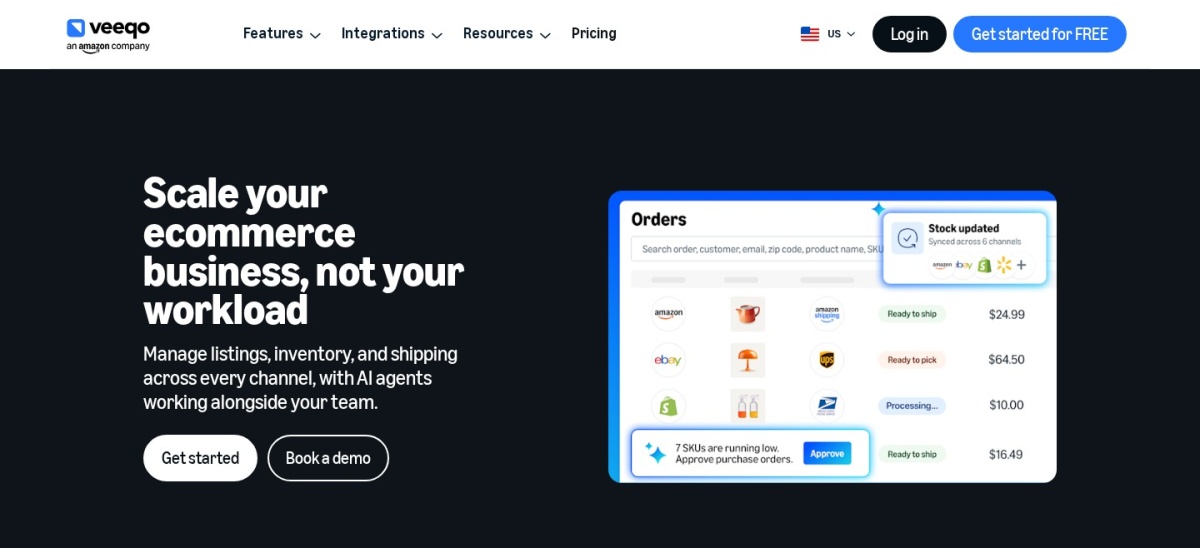
Veeqo is a multichannel order and shipping platform owned by Amazon. The shipping plan is free with unlimited orders, users and products, and the Inventory plan starts at $19 a month for up to 300 seller-fulfilled orders.
The trade off is the Amazon link and order bands. Inventory price rises as order volume grows, and the platform is strongest for Amazon sellers. It suits sellers who ship a lot across channels.
Zoho Inventory is an inventory system that handles the whole order path for a small store: sales orders from connected channels, stock allocation, packages, shipments, backorders and dropshipping, with pricing per organization rather than per user.
The trade off is order caps. Every plan caps monthly orders, so a sale month can push you into the next tier. It suits small online sellers that want orders and stock in one low-cost system.
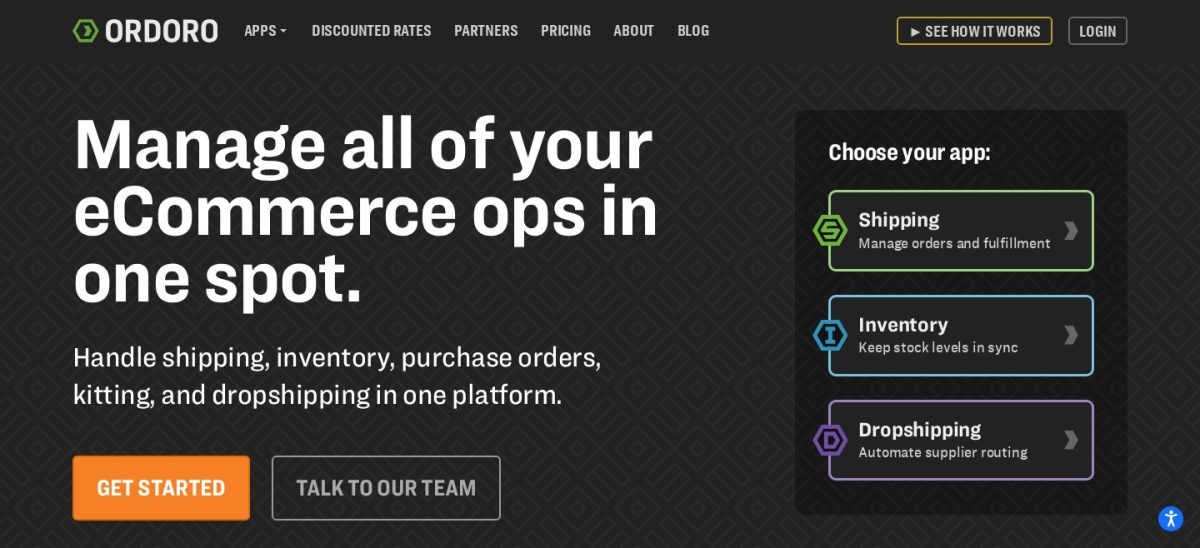
Ordoro is an operations platform that combines shipping, inventory, dropshipping and kitting in one workflow. Its shipping plan is free for 100 orders a month, while the Inventory Advanced plan starts at $349 a month.
The trade off is the jump between plans. The free shipping tier is light, and the full inventory features sit on the $349 plan. It suits growing stores that ship from their own warehouse.
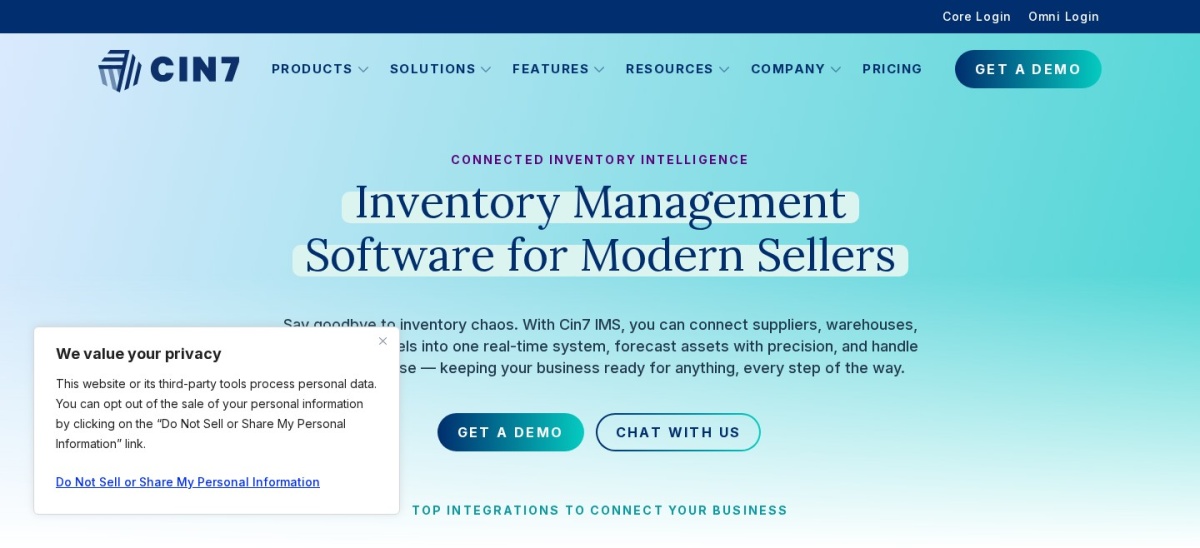
Cin7 Core is an operations platform that manages orders from Shopify, Amazon and B2B channels against one stock pool, with unlimited inventory locations, kits and bundles, batch tracking and COGS tracking. Standard costs $349 a month for 5 users and 6,000 sale orders a year.
The trade off is setup. Cin7 is a real project to implement, and support quality varies by plan. It suits multichannel sellers that need orders managed against one stock pool.
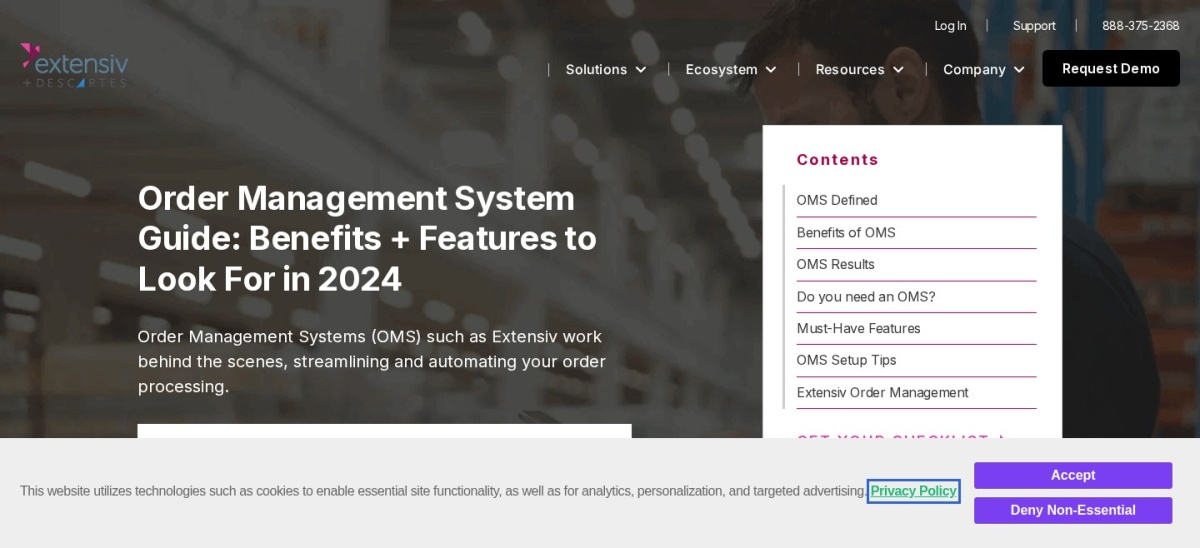
Extensiv Order Manager homepage, captured Nov 2026.
Extensiv Order Manager is an enterprise platform, formerly Skubana, that unifies orders, inventory and analytics across warehouses and channels. Its automation routes orders to the right warehouse and handles the repetitive work that breaks down at thousands of orders a month.
The trade off is that Extensiv lists no prices on its own site, and the Shopify App Store listing that starts at $400 a month may be out of date. It suits high-growth brands with several warehouses.
Cheapest planOne app free; Standard $31.10/user/mo
Free planYes, one app free
FocusOrders, stock and accounting together
Barcode appYes
odoo.com
Odoo homepage, captured Nov 2026.
Odoo is a modular ERP where Inventory, Sales and Accounting run as apps on one system. One app is free, Standard costs $31.10 per user a month billed annually, and adding apps turns it into a full back office without a second system.
The trade off is per-user pricing. The bill grows with every seat, so a large warehouse team pays more than on per-organization plans. It suits growing businesses that want orders, stock and accounting together.
ShipBob is a fulfillment provider, not just software. It stores stock in more than 60 warehouses, picks and packs each order and ships it, so a brand hands over the physical work instead of printing labels itself.
The trade off is price clarity. ShipBob publishes no flat monthly rate, and every account is quoted on volume, SKU count and storage. It suits brands that want fulfillment handled for them.
Labels vs order management: know what you are buying
A label tool prints postage at a discount. An order management system imports orders from every channel, applies rules, manages stock and prints labels as the last step.
If your problem is postage cost, buy a label tool. If your problem is orders from three channels and stock that never matches, buy an order system.
ShipStation sits between the two: it starts as a label tool and grows into order management as volume rises.
How we chose
We started from the established ecommerce order management software vendors most often shortlisted for online stores, then kept those with a verifiable rating on G2, Capterra or Trustpilot and a published pricing page or a clear quote-based model.
Prices come from each vendor's pricing page or, where the vendor publishes no price, from the vendor's own statement that pricing is by quote. Ratings and review counts come from G2, Capterra or Trustpilot, checked on 23 November 2026. Where a vendor shows a sale, the list shows the regular price.
We left out tools with no verifiable public rating. No vendor paid for a place, and we do not claim hands-on testing for this list.
How to choose ecommerce order management software
Start with the size of your store and the problem that costs the most, then match the tool to that problem.
List the problem that costs you most. Fraud losses, manual work, stockouts and slow replies each point at a different tool. Pick the one problem first and judge every vendor on it.
Check the real price at your volume. Most of these tools bill by orders, seats or usage, so the entry price is not the price at your volume. Model a busy month before you sign.
Confirm the integrations you already use. A tool that lacks your store platform, payment provider or warehouse system will cost more in workarounds than it saves. Check the connector list first.
Run a short trial on real orders. A trial with live traffic shows whether the tool fits your workflow. Keep your old process running beside it until the trial proves itself.
FAQ
What is the best ecommerce order management software?
ShipStation is the best pick for most sellers, importing orders from more than 300 carts and marketplaces into one queue. Starter costs $9.99 a month billed annually for 50 shipments, and it is rated 4.3 out of 5 on G2.
How much does order management software cost?
It ranges from free on Shippo and Veeqo to $9.99 a month for ShipStation Starter, $17 a month for Shippo Pro, $19 a month for Veeqo Inventory, and $29 a month for Zoho Inventory. ShipBob and Extensiv are quote-only.
What is the difference between ShipStation and Shippo?
ShipStation is a full order platform with automation and 300-plus integrations, priced by shipment volume. Shippo is a lighter label tool with a free start and a subscription that rises with label count.
Do I need order management software for a small store?
A store with one channel and a few dozen orders a week can manage with the store admin alone. Once orders come from two or more channels, a tool such as ShipStation or Zoho stops double-selling and missed shipments.
What does ShipBob cost?
ShipBob publishes no flat monthly rate. Every account is quoted on order volume, SKU count and storage, and the pricing page publishes storage at $5 a month per bin, $10 per shelf and $40 per pallet.
Which tool is best for dropshipping?
Ordoro is the dropshipping pick here, with shipping, inventory and kitting in one workflow. Zoho Inventory also includes dropshipping on its $29 a month Standard plan.