Best CMS Software for Ecommerce in 2026: 7 Tools Compared
WLWPLegible EditorsLast verified 22 Nov 2026How we rank11 min read
★ Short answer
Shopify is the best CMS software for ecommerce overall, combining store content, inventory, checkout and multichannel selling, with Basic starting at $29 per month billed annually. BigCommerce is a strong choice for growing catalogs and flexible integrations, while Wix suits smaller businesses that prioritize visual website editing.
How we make this list: we compare pricing pages, product documentation and public user reviews, then re-check every price before each update. No product paid for a place. Disclosure.
Shopify leads for general ecommerce management, with a 4.4/5 G2 rating from 5,172 reviews and Basic at $29/month billed annually.
BigCommerce starts at $29/month annually and earns 4.2/5 from 598 G2 reviews, making it a strong option for expanding stores.
Wix Core supports ecommerce from approximately $29/month on annual billing, with a 4.2/5 G2 rating from 1,943 reviews.
Webflow Ecommerce Standard costs $29/month billed annually, supports 500 ecommerce items and charges a 2% platform transaction fee.
Big Cartel offers a limited free plan and a $15/month Platinum plan, earning 4.6/5 from 115 G2 reviews.
Hostinger's ecommerce website builder advertises renewal pricing of $10.99/month, while Volusion Personal costs $35/month.
What matters when choosing an ecommerce CMS
An ecommerce CMS manages more than product pages. It connects your storefront content with product catalogs, inventory, checkout, orders and customer information.
Start by deciding whether you need a hosted platform or greater control over your website infrastructure. Hosted systems handle much of the technical maintenance, while self-managed options give developers additional flexibility.
Compare the complete cost of running a store, not just the subscription. Transaction fees, payment processing, premium themes, third-party apps and renewal charges can change the final expense considerably.
Content management also matters. A useful ecommerce CMS should let editors update landing pages, product descriptions, navigation and search metadata without depending on developers for routine changes.
Finally, consider the store you expect to operate later. Product limits, inventory workflows, integrations, API access and multichannel selling can matter more than the lowest introductory price.
Shopify is a hosted ecommerce CMS that combines product management, website content, checkout, inventory and orders in one dashboard. Its Basic plan costs $29 per month billed annually and includes online selling, an integrated checkout, built-in hosting and access to Shopify's app ecosystem. Merchants can manage storefront content alongside their sales operations.
The trade off is the cost of additional apps, premium themes and potential payment-related fees. Basic costs $348 annually, while monthly billing is $39 per month. It suits businesses that want a dedicated ecommerce system without managing servers or assembling separate store components.
What we like
Integrated storefront, checkout and inventory management
Extensive ecosystem of ecommerce integrations
Supports online and in-person selling
Managed hosting and platform updates
Watch out for
Premium apps can increase operating costs
Additional payment fees may apply
Advanced customization can require development work
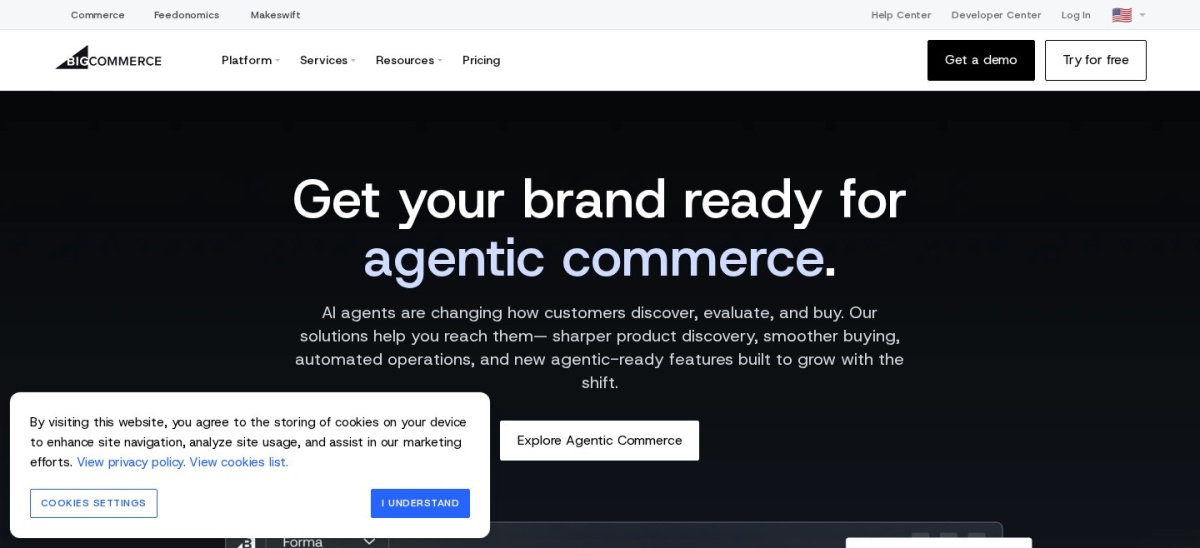
BigCommerce is an ecommerce platform offering hosted storefronts, catalog management, checkout and API-based commerce options. Its Core plan starts at $29 per month billed annually, or $39 with monthly billing. The platform supports visual storefront editing, payment integrations and connections to external business systems.
The trade off is that its plan structure includes sales-volume thresholds and certain payment-provider fees. Core costs $348 annually, and businesses with growing requirements may need higher plans. It suits established retailers and teams that want flexible integrations alongside managed ecommerce infrastructure.
What we like
Supports hosted and headless commerce architectures
Catalog management suited to expanding stores
API access for custom integrations
Multiple payment-provider options
Watch out for
Plan thresholds can require upgrades
Some payment-provider arrangements incur additional fees
Advanced configurations may need technical expertise
Growth and Scale add higher sales allowances and expanded commerce capabilities.Visit bigcommerce.com
03
Wix
4.2/5on G2 (1,943 reviews, checked Nov 2026)
Paid from$29/mo
Best for beginner-friendly store design
Ecommerce planCore
Online paymentsCore and above
Storage50 GB on Core
Site collaborators5 on Core
wix.com
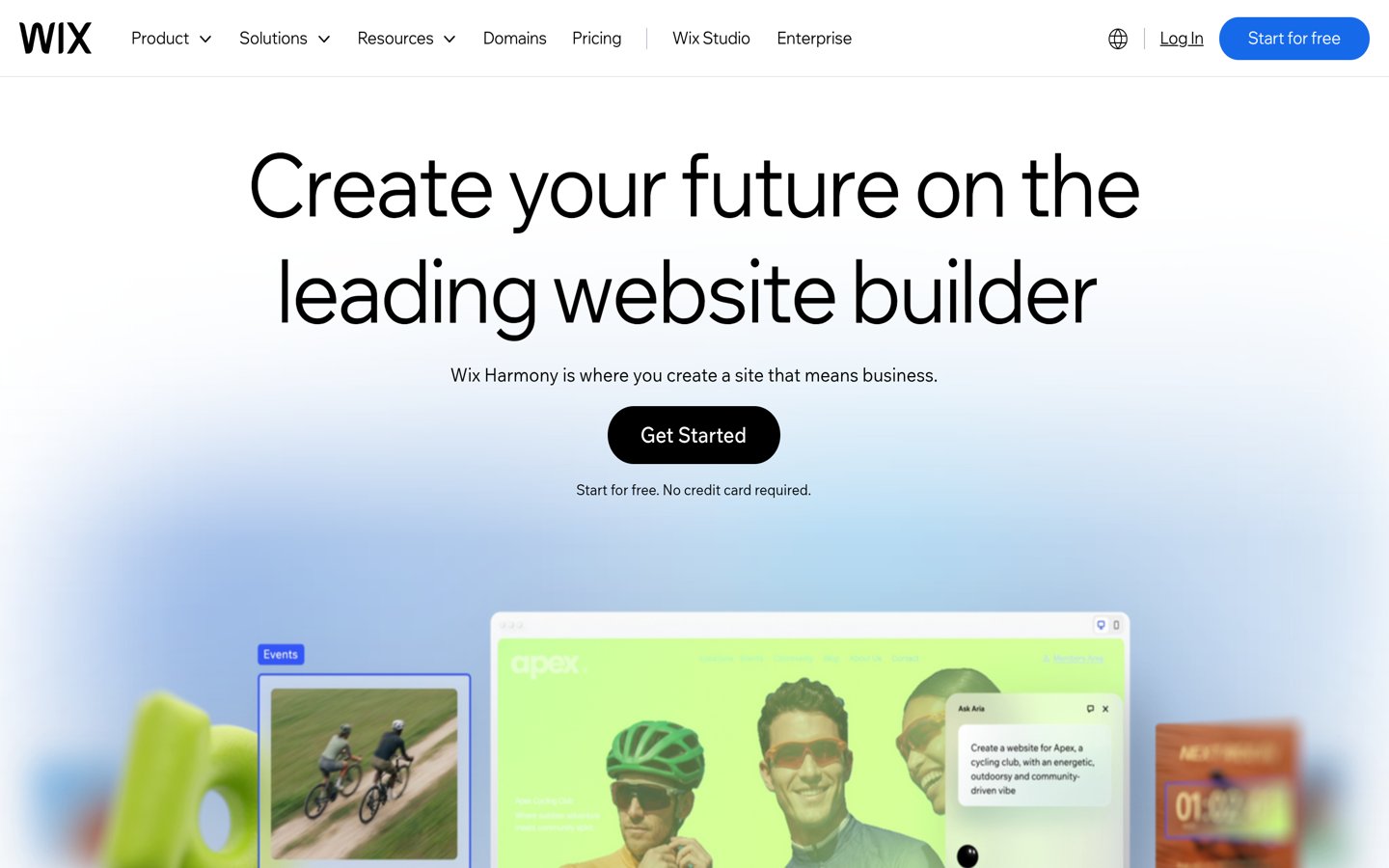
Wix homepage, captured Nov 2026.
Wix is a visual website builder and CMS with ecommerce features for selling products and services. Its Core plan includes basic ecommerce, payment acceptance, 50 GB of storage and five site collaborators. A free website plan is available for building and editing, but accepting online payments requires an eligible paid plan.
The trade off is that ecommerce features and capacity depend on the subscription tier. Core is advertised at approximately $29 per month billed annually, while additional business features require higher plans. It suits small stores that prioritize visual design, website content and straightforward administration over advanced commerce architecture.
What we like
Visual drag-and-drop website editor
Free plan for exploring the builder
Built-in hosting and website management
Commerce features integrated with site content
Watch out for
Free sites cannot accept online payments
Advanced ecommerce capabilities require upgrades
Less control over underlying infrastructure
Higher plans expand storage, collaborators, ecommerce capabilities and business tools.Visit wix.com
04
Webflow
4.4/5on G2 (998 reviews, checked Nov 2026)
Paid from$29/mo
Best for design-focused ecommerce websites
Ecommerce planStandard
Ecommerce items500
Platform transaction fee2%
Annual billing$348
webflow.com
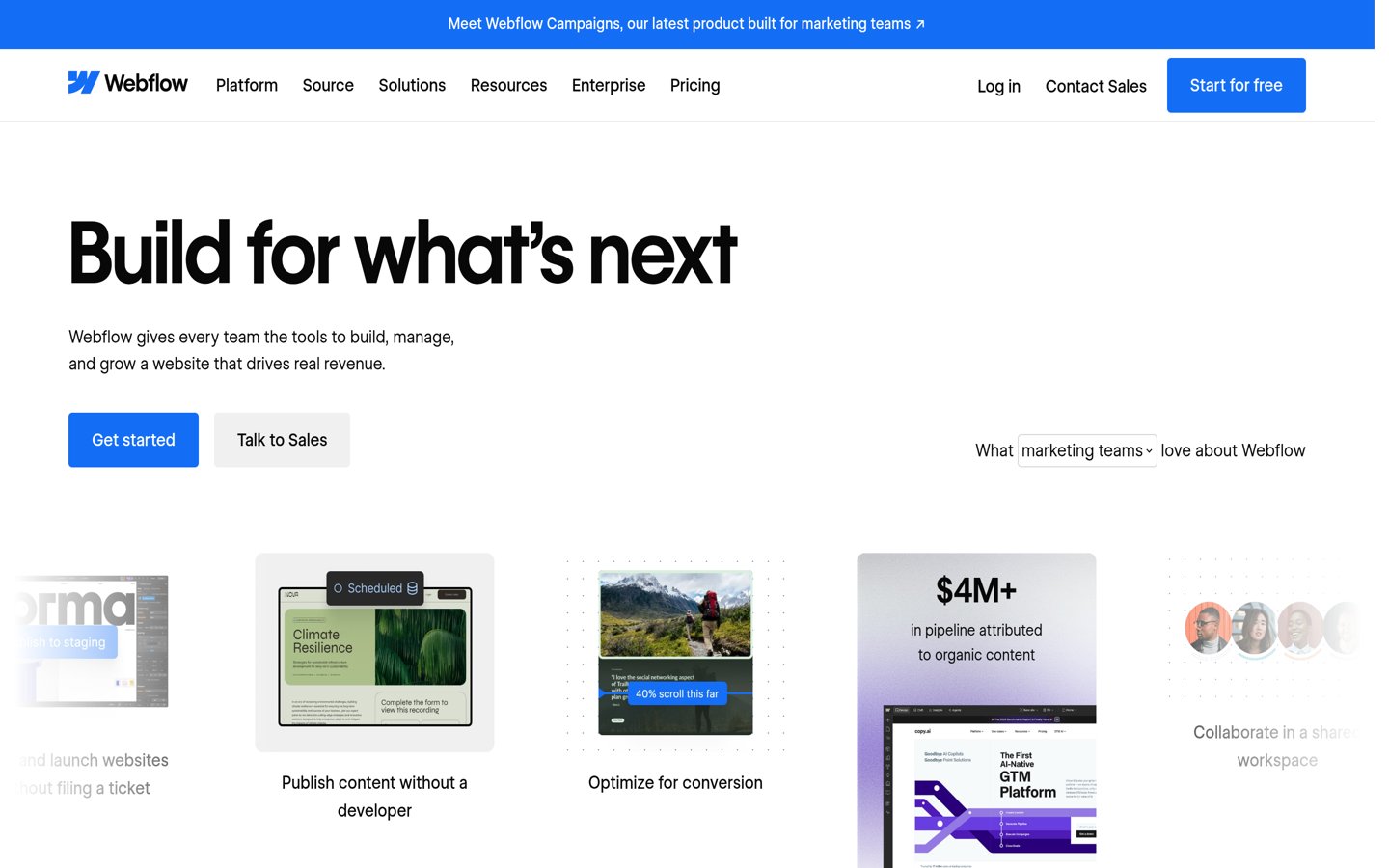
Webflow homepage, captured Nov 2026.
Webflow is a visual CMS and website design platform with dedicated ecommerce plans. Ecommerce Standard costs $29 per month billed annually and supports 500 ecommerce items, a customizable shopping cart and checkout. Its visual editor gives designers detailed control over storefront layouts and content presentation.
The trade off is the Standard plan's 2% platform transaction fee and ecommerce item limit. The annual subscription costs $348, while higher ecommerce plans remove that platform fee and expand capacity. It suits design-led brands and agencies that value page customization more than extensive built-in retail operations.
What we like
Detailed visual control over storefront design
CMS for structured website content
Customizable shopping cart and checkout
Hosted site infrastructure
Watch out for
Standard ecommerce plan charges a 2% platform transaction fee
Entry ecommerce plan limits catalog capacity
Advanced store management may require integrations
Ecommerce Plus adds 5,000 items and removes the platform transaction fee.Visit webflow.com
05
Big Cartel
4.6/5on G2 (115 reviews, checked Nov 2026)
Paid from$15/mo
Best for artists and independent sellers
Paid planPlatinum
Monthly price$15
Platform transaction fee0%
Free optionLimited Gold plan
bigcartel.com
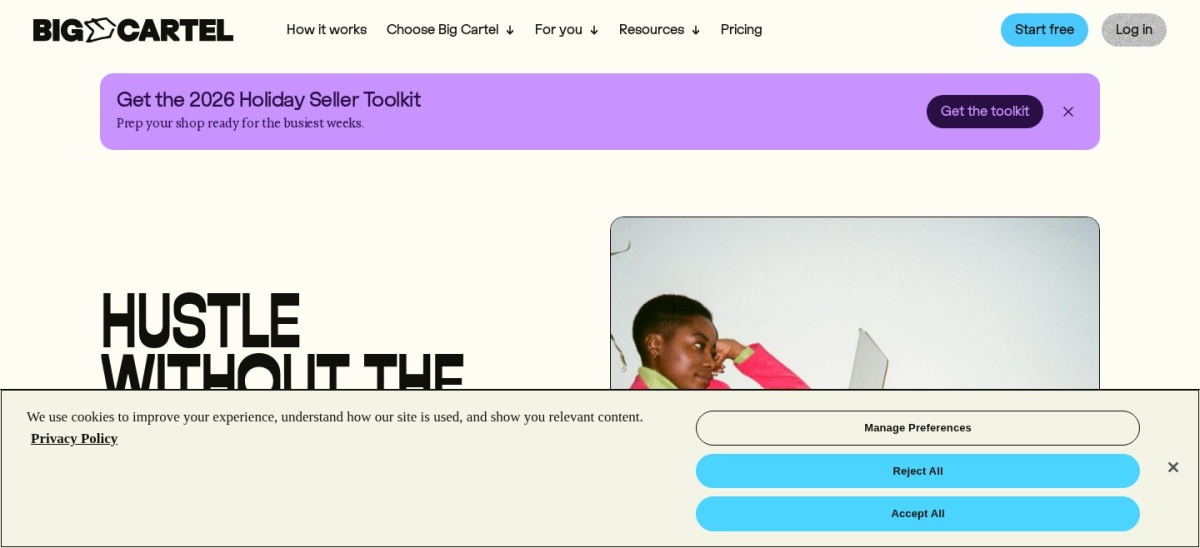
Big Cartel homepage, captured Nov 2026.
Big Cartel is an ecommerce storefront platform designed for artists, makers and independent brands. Its limited Gold plan provides a free starting point, while Platinum costs $15 per month after a seven-day trial. Paid storefront features include custom domains, physical and digital products, memberships, shipping tools and design customization.
The trade off is a narrower range of advanced commerce tools than platforms built for complex retail operations. Platinum costs $180 annually at its regular monthly rate, and Diamond costs more for additional automation. It suits independent sellers who want a straightforward shop without managing hosting or complicated integrations.
What we like
Limited free storefront option
Simple store setup for individual creators
Supports physical and digital products
No platform transaction fees
Watch out for
Limited advanced commerce functionality
Abandoned-cart recovery requires Diamond
Smaller integration ecosystem than larger platforms
Diamond adds abandoned-cart recovery, scheduled drops and additional automation.Visit bigcartel.com
06
Hostinger
4.4/5on G2 (904 reviews, checked Nov 2026)
Starts at$10.99/mo
Best for low-cost hosted storefronts
PlatformAI Website Builder
Renewal reference$10.99/mo
StorefrontBuilt-in ecommerce
HostingIncluded
hostinger.com
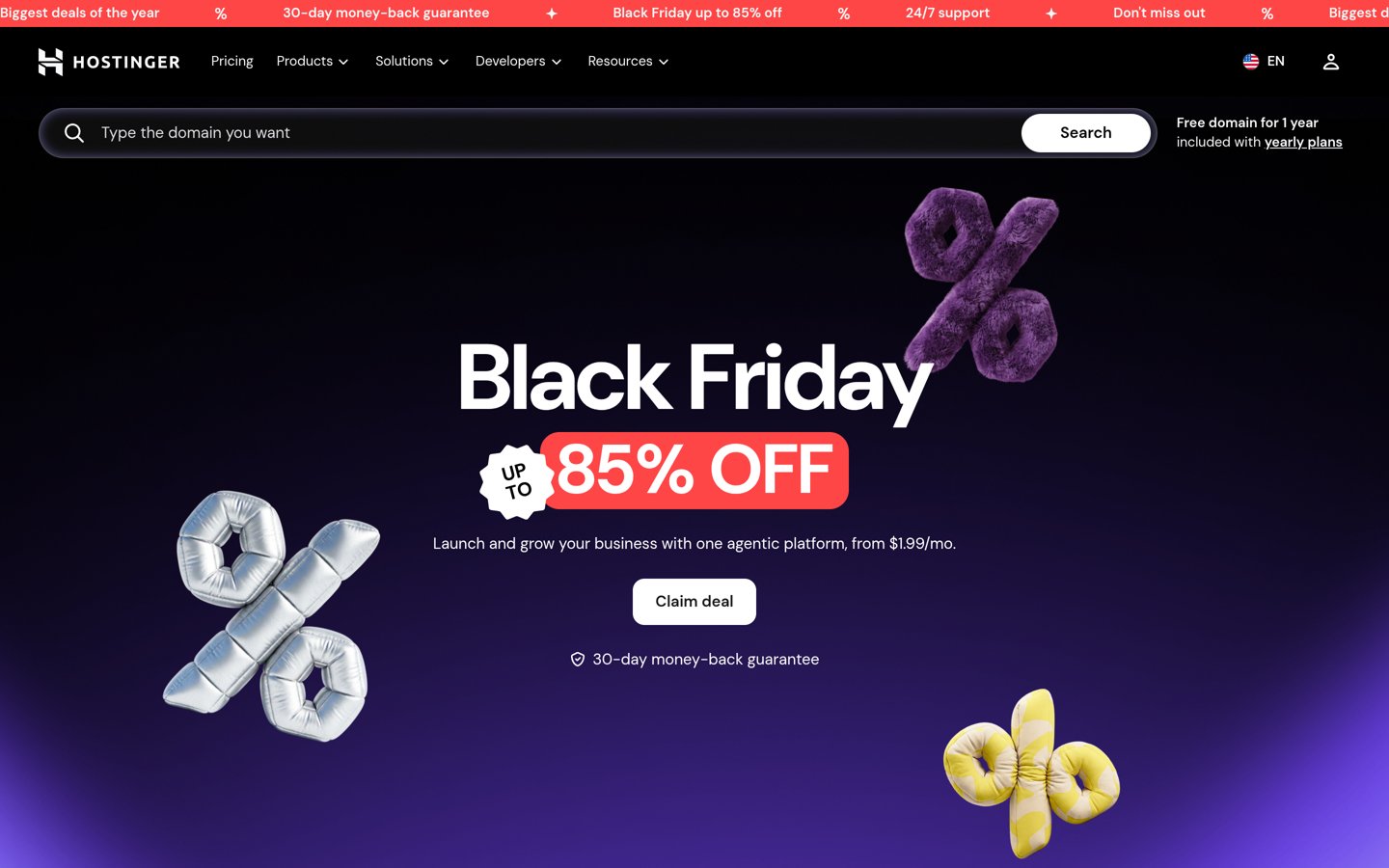
Hostinger homepage, captured Nov 2026.
Hostinger is a website hosting and builder platform that supports ecommerce storefronts through its website creation tools. Its ecommerce website builder combines site editing, product listings and hosted infrastructure. The published website builder offer shows a regular renewal reference of $10.99 per month, while promotional introductory periods may cost less.
The trade off is that promotional rates and renewal charges differ, and the advertised monthly equivalent can require a longer prepaid commitment. The $10.99 renewal reference equals $131.88 for twelve months, but actual billing depends on the selected term. It suits smaller businesses seeking a hosted website and store together.
What we like
Website builder and hosting in one service
Ecommerce functionality available
AI-assisted website creation
Regular renewal pricing disclosed
Watch out for
Promotional and renewal prices differ substantially
Longer billing commitments may be required
Less specialized for complex retail operations
Paid hosting and builder plans provide publishing, hosting and ecommerce capabilities.Visit hostinger.com
07
Volusion
3.2/5on G2 (68 reviews, checked Nov 2026)
Starts at$35/mo
Best for traditional online retail management
Entry planPersonal
Product allowance100
Annual GMV allowance$50,000
Staff accounts1
volusion.com
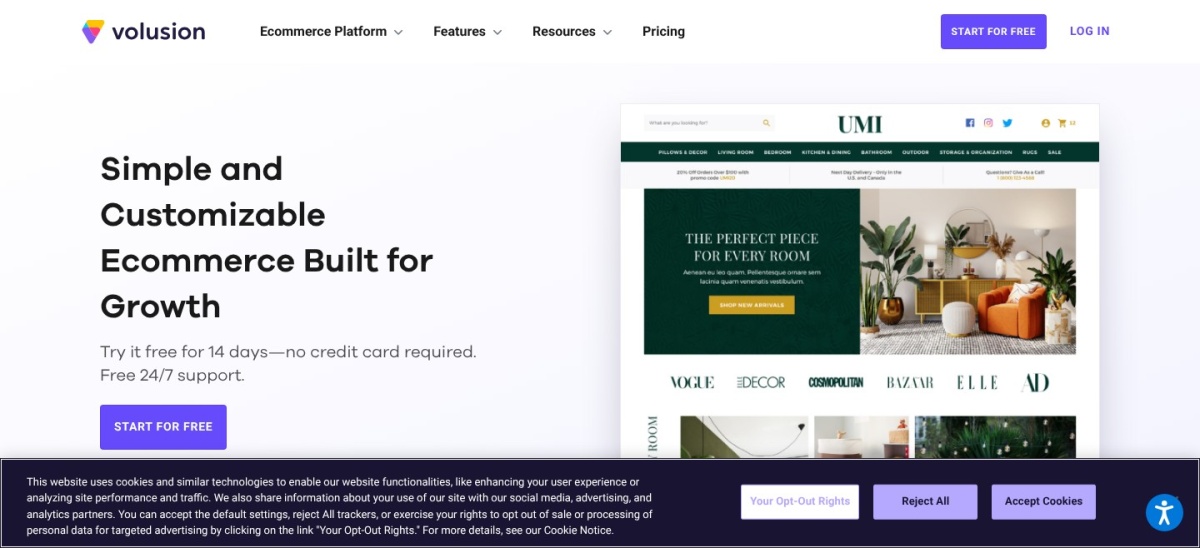
Volusion homepage, captured Nov 2026.
Volusion is a hosted ecommerce platform for building storefronts and managing online retail operations. Its Personal plan costs $35 per month and supports 100 products, one staff account and up to $50,000 in annual gross merchandise volume. The entry plan includes storefront management and live chat and email support.
The trade off is the restrictive product and sales limits on Personal, alongside a lower G2 rating of 3.2/5. Its regular subscription costs $420 annually, while Professional costs $79 per month for higher capacity. It suits smaller conventional retail catalogs that prefer a hosted commerce system.
What we like
Hosted storefront and ecommerce administration
Clear published subscription pricing
Product and order management tools
Live chat and email support
Watch out for
Personal plan limits stores to 100 products
Annual sales-volume allowance restricts entry-level use
Lower public review rating than other platforms here
Some management features require higher plans
Professional increases product, sales-volume and staff allowances.Visit volusion.com
Hosted vs self-managed ecommerce CMS: which should you choose?
Hosted ecommerce platforms combine store software, infrastructure and routine maintenance. They appeal to businesses that want a working storefront without independently maintaining application servers, security updates and hosting environments.
Self-managed ecommerce systems provide more control over hosting, code and database infrastructure. They can be useful when a business has specific integration requirements or an existing development team.
The choice affects ownership responsibilities. With hosted services, you depend on the provider's platform rules, available integrations and subscription structure. With self-managed software, you take responsibility for more technical operations.
For most smaller stores, hosted ecommerce simplifies ongoing administration. Businesses with unusual workflows should compare API access, customization constraints and migration options before committing.
What an ecommerce CMS really costs beyond the subscription
Subscription pricing is only one part of ecommerce spending. Payment processing, premium themes, apps, domains, custom development and email marketing tools can add to the monthly budget.
Transaction fees deserve particular attention. Webflow Standard lists a 2% platform transaction fee, while Big Cartel advertises no platform transaction fees. Payment processors can charge their own fees separately.
Annual subscriptions can lower the advertised monthly equivalent, but they also require a longer commitment. Promotional prices should not be confused with the regular amount charged at renewal.
Before choosing a CMS, calculate the complete recurring cost of the features your store actually needs. Compare those costs with the time required to maintain the platform and its integrations.
How we chose
We selected established ecommerce CMS products and hosted website platforms based on their relevance to storefront creation, product management, checkout, content editing and ongoing store administration. We prioritized maintained services with substantial public review histories.
We reviewed official pricing and feature pages and public G2 reviews on 22 Nov 2026, using the published regular subscription or renewal rates rather than introductory offers wherever those rates were available. We compared entry-level ecommerce capabilities, catalog limits, transaction fees, hosting responsibilities and upgrade paths.
We excluded products whose required pricing could not be sufficiently established from accessible official information, as well as options with unclear maintenance status or inadequate public review evidence. Self-managed systems without a comparable software subscription were not forced into the paid-plan price ladder. No vendor paid for a place, and we do not claim testing for this list.
How to choose the right CMS for your ecommerce store
Start with your store's operational requirements, then compare the platforms that fit your catalog, content workflow and budget.
Define your storefront and catalog needs. List the products you plan to sell, their variants, inventory requirements and any special checkout workflows. Check whether the entry plan supports those needs without additional extensions.
Calculate your full recurring cost. Compare subscription prices, payment fees, transaction charges, paid apps, hosting and renewal rates. Use regular pricing rather than a temporary promotion to establish a realistic operating budget.
Evaluate content and design management. Check how easily editors can create product descriptions, landing pages, navigation menus, blog posts and search metadata. Choose a CMS that fits the experience of the people maintaining the website.
Check integrations and future capacity. Review available APIs, accounting connections, shipping integrations, analytics, sales channels and migration options. Choose a platform that can support expected growth without requiring an immediate rebuild.
FAQ
What is the best CMS software for ecommerce?
Shopify is the strongest general-purpose choice for businesses that want product management, website content, inventory, checkout and selling tools in a hosted platform. Its Basic plan starts at $29 per month billed annually. BigCommerce is another strong option for flexible commerce integrations, while Wix emphasizes visual website creation.
What is the difference between an ecommerce CMS and an ecommerce platform?
An ecommerce CMS focuses on managing website and product content, while an ecommerce platform also handles transactions, orders, inventory and selling operations. Many modern services combine these responsibilities. Shopify and BigCommerce are commerce-focused systems, while Wix and Webflow combine broader website management with ecommerce capabilities.
Which ecommerce CMS is easiest for beginners?
Wix and Big Cartel are good starting points for smaller businesses that want visual editing and straightforward storefront administration. Wix combines website design with ecommerce on eligible paid plans. Big Cartel offers a limited free option and a Platinum plan costing $15 per month.
Can I build an ecommerce website for free?
Some platforms allow free website creation or limited selling. Big Cartel offers a limited Gold plan, while Wix and Webflow provide free website-building options with restrictions. A production store may still require a paid subscription for payment acceptance, custom domains, additional products or expanded features.
Which CMS is best for ecommerce SEO?
Shopify, BigCommerce, Wix and Webflow all provide ways to manage important website content and search-related settings. The right choice depends on your need for editable metadata, descriptive URLs, structured content, redirects and publishing workflows. Strong search performance also depends on site architecture, content quality and ongoing optimization.
Is Shopify better than BigCommerce?
Shopify is a practical choice for merchants who value an integrated storefront, broad app ecosystem and multichannel management. BigCommerce may appeal more to businesses seeking flexible integrations and different commerce architectures. Both advertise entry-level plans at $29 per month with annual billing, but their fees and upgrade structures differ.
How much does ecommerce CMS software cost?
Pricing varies by platform and billing arrangement. Big Cartel Platinum costs $15 per month, Shopify Basic starts at $29 per month billed annually, and Volusion Personal costs $35 per month. Businesses should also budget for payment processing, extensions, design work and renewal charges.
Is Webflow suitable for a large ecommerce store?
Webflow can support branded storefronts with detailed design control, but the entry ecommerce plan has a 500-item limit and a 2% platform transaction fee. Higher plans increase capacity and remove that fee. Businesses with complex inventory, fulfillment or multichannel requirements should carefully review available integrations.