Best Personal Blog Platform in 2026: 7 Tools Compared
WLWPLegible EditorsLast verified 22 Nov 2026How we rank6 min read
★ Short answer
Ghost is the top personal blog platform for writers who want built-in newsletters, clean SEO structure, and 0% platform fees on paid memberships starting at $15/mo billed yearly. WordPress.com fits bloggers who want managed hosting with theme and plugin options, while Substack suits newsletter-first writers starting at $0 plus a 10% revenue share.
How we make this list: we compare pricing pages, product documentation and public user reviews, then re-check every price before each update. No product paid for a place. Disclosure.
Ghost(Pro) Starter starts at $15/mo billed yearly ($18/mo monthly) for up to 1,000 members, while Publisher starts at $29/mo yearly for paid subscriptions.
WordPress.com offers a free plan with 1 GB storage and paid plans starting at $9/mo monthly (with discounted multi-year renewal rates noted in public pricing guides).
Substack charges $0 upfront to publish and send newsletters, taking 10% of paid subscription revenue plus Stripe processing fees and a one-time $50 custom domain fee.
beehiiv supports up to 2,500 subscribers on its free plan, with Lite starting at $49/mo billed yearly ($59/mo monthly) at the 1,000-subscriber tier and 0% platform fees.
Squarespace Basic starts at $19/mo billed yearly ($25/mo monthly) and includes a free custom domain for the first year on annual plans.
What to look for in a personal blog platform
Personal bloggers weigh three trade-offs first: how much technical upkeep they want to avoid, how easily they can move their writing and subscribers later, and whether email newsletters sit at the center of the site.
Hosted publishing tools and website builders handle servers, SSL, and updates for you, whereas open-source or extensible setups give you more control over layouts, domains, and add-ons.
Monetization models also vary sharply. Flat monthly subscriptions keep platform revenue fees at 0% on paid plans, while free-to-start publishing networks often take a percentage of reader subscriptions.
Before committing to an annual plan, check custom domain rules, contributor limits, and whether features you plan to use—such as paid tiers, custom domains, or analytics history—sit on a higher tier.
Best for independent blogs with built-in newsletters
Entry planStarter at $15/mo yearly ($18/mo monthly)
Members includedUp to 1,000 members on Starter
Paid subscriptionsPublisher plan from $29/mo yearly
Platform fee0% on paid subscriptions
ghost.org
Ghost homepage, captured Nov 2026.
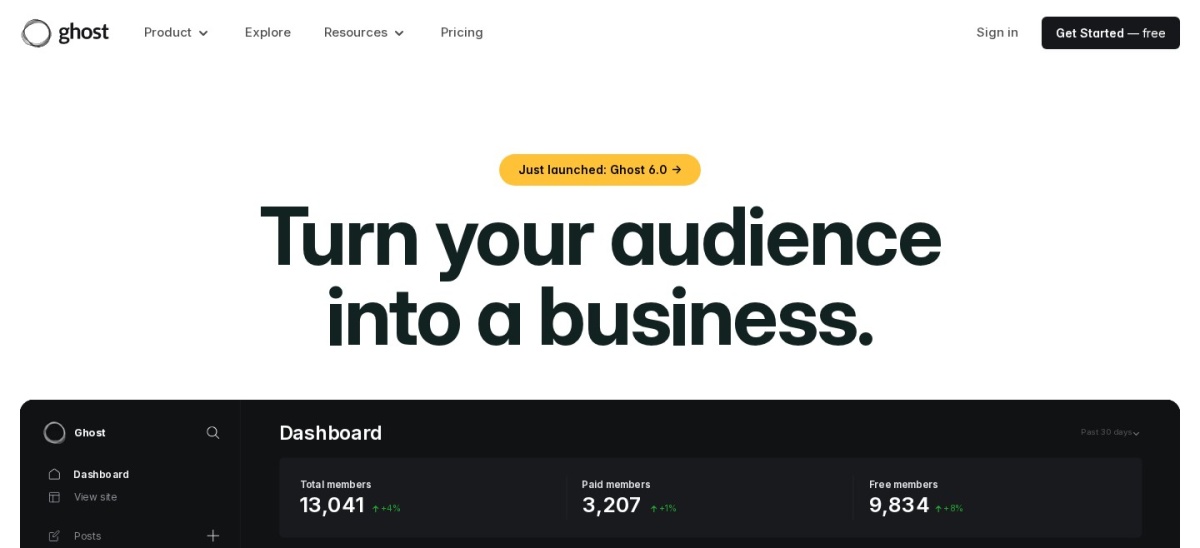
Ghost is a publishing platform focused on blogs, email newsletters, and reader memberships with built-in SEO tools and clean post formatting. Its hosted Starter tier starts at $15/mo billed yearly ($18/mo monthly) for up to 1,000 members and unlimited email sends.
The trade off is that Starter does not include paid subscriptions or custom themes, which start on Publisher at $29/mo yearly ($180/yr entry on Starter). It suits solo writers who want newsletters and memberships in one place without assembling separate plugins.
What we like
Combines blog publishing, email newsletters, and membership tools in one interface
Includes built-in SEO structure and clean formatting controls
0% Ghost platform fee on paid subscriptions on eligible plans
Watch out for
No free hosted tier beyond a trial, and open-source self-hosting requires server setup
Paid subscriptions and custom themes require stepping up to Publisher
Paid plans add paid member tiers, custom themes, integrations, and higher member limits.Visit ghost.org
02
WordPress.com
4.4/5on G2 (2,724 reviews, checked Nov 2026)
Paid from$9/mo
Best for managed hosting with themes and plugins
Free plan1 GB storage, unlimited posts, subdomain
Monthly list pricePersonal listed at US$9/mo monthly
Storage on Personal6 GB storage with unlimited visitors
Domain & adsAd-free and 1st-year domain on yearly plans
wordpress.com
WordPress.com homepage, captured Nov 2026.
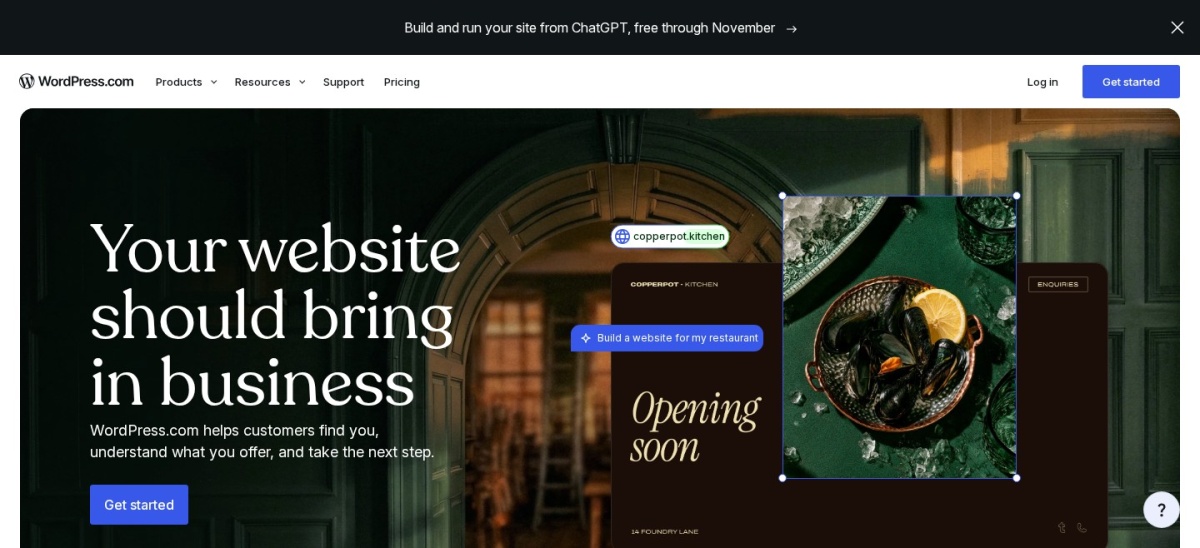
WordPress.com is a hosted publishing and website platform built on WordPress software, with a free plan that includes 1 GB of storage and unlimited pages and posts on a subdomain. Paid tiers add custom domains, more storage, and site customization without self-managing servers.
The trade off is that monthly billing on Personal runs $9/mo ($108/yr), while lower multi-year renewal rates and broader plugin access depend on plan level. It suits bloggers who want managed hosting with room to grow into a fuller website.
What we like
Offers a free tier with unlimited posts and pages and no expiration date
Handles hosting, security updates, and backups automatically
Scales from simple personal blogs to broader sites and stores
Watch out for
Free plan includes platform ads and uses a WordPress.com subdomain
Advanced plugin and code flexibility increases on higher tiers
Paid plans remove visitor ads, add a custom domain on annual terms, and expand storage and tools.Visit wordpress.com
03
Substack
4.3/5on G2 (17 reviews, checked Nov 2026)
PriceFree
Best for newsletter-first writers starting free
Publishing cost$0 for hosting, posts, and email sends
Paid revenue fee10% platform fee plus Stripe fees
Custom domainOptional one-time $50 fee
Core formatPosts paired with email newsletters
substack.com
Substack homepage, captured Nov 2026.
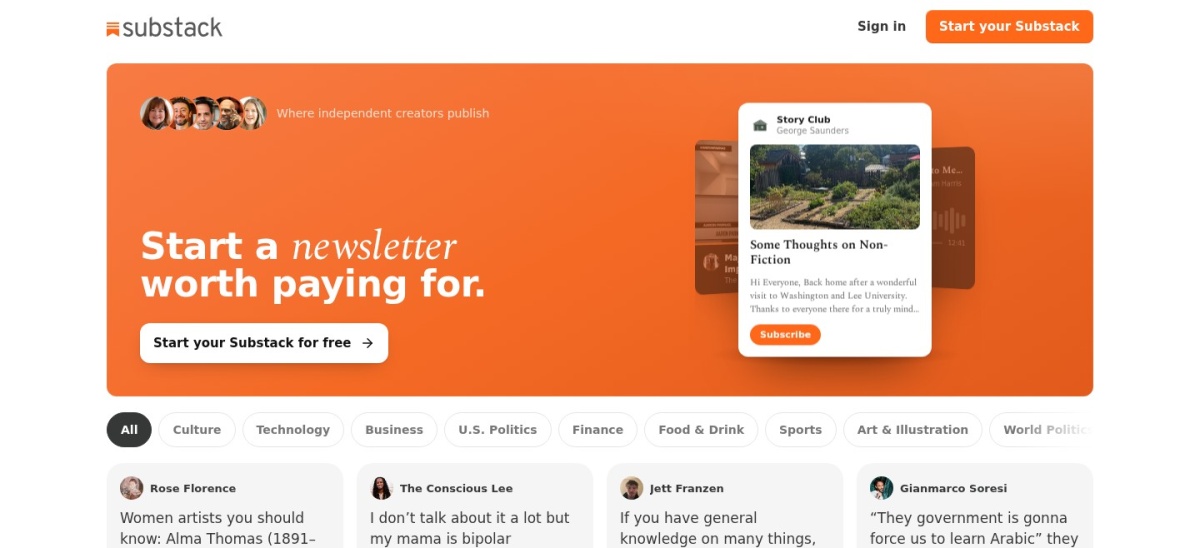
Substack is a publishing and newsletter platform that costs $0 to start, with no monthly subscription bill regardless of subscriber count. Writers can publish posts, send emails, and offer paid reader subscriptions in one place.
The trade off is a 10% Substack fee on paid subscription revenue—on top of Stripe processing fees and a one-time $50 custom domain fee—with no subscription plan to lower that cut. It suits writers who want fast newsletter setup and built-in reader discovery.
What we like
Zero monthly platform fee to publish posts and send newsletters
Straightforward setup for paid reader subscriptions
Built-in recommendation and reader network features
Watch out for
Takes 10% of paid subscription revenue plus payment processing fees
Less site layout and SEO control than dedicated website platforms
Paid subscriptions and optional custom domain mapping let you charge readers without a monthly fee.Visit substack.com
04
beehiiv
4.5/5on G2 (40 reviews, checked Nov 2026)
Paid from$49/mo
Best for growing an email list alongside a blog
Free plan limitUp to 2,500 subscribers at $0
Lite starting price$49/mo yearly ($59/mo monthly) at 1,000 subs
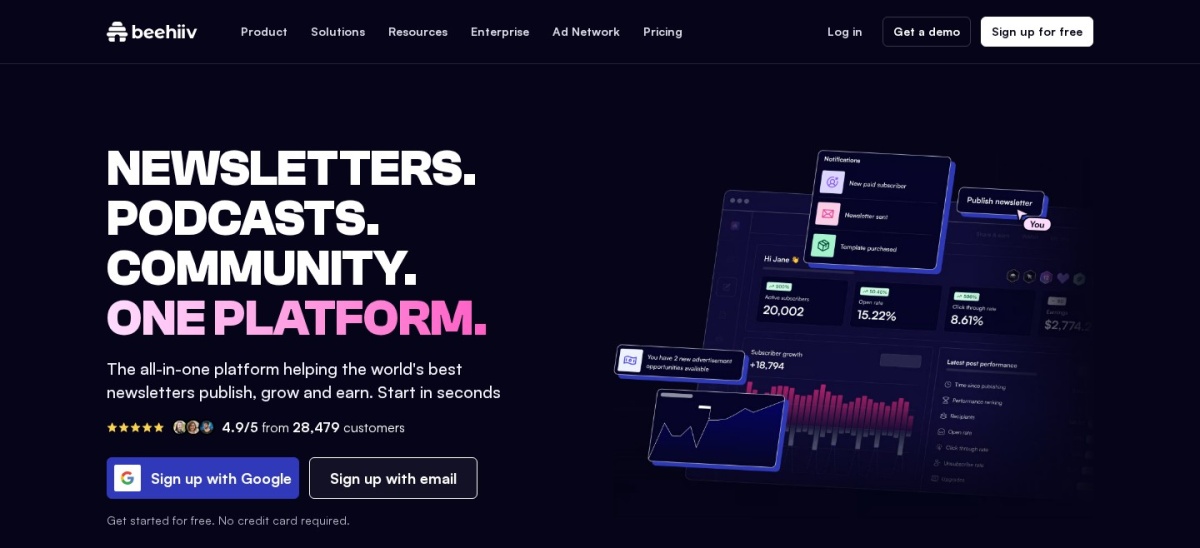
beehiiv is a publishing and newsletter platform that combines hosted web pages with email campaigns, starting with a free plan for up to 2,500 subscribers and unlimited sends. It includes subscriber tools, landing pages, and a recommendation network.
The trade off is that Lite starts at $49/mo billed yearly ($59/mo monthly) at the 1,000-subscriber tier and rises with subscriber counts ($588/yr entry on Lite). It suits creators building a newsletter-driven publication who want zero platform fee on paid subscriptions.
What we like
Generous free tier supporting up to 2,500 subscribers with unlimited sends
0% beehiiv platform fee on paid subscriptions
Includes audience growth, polls, and newsletter analytics tools
Watch out for
Paid tier pricing scales upward as your subscriber count grows
Designed primarily around newsletters rather than full general websites
Paid plans add subscriber automations, polls, A/B testing, higher limits, and team seats.Visit beehiiv.com
05
Squarespace
4.4/5on G2 (1,138 reviews, checked Nov 2026)
Starts at$19/mo
Best for visual personal sites with polished templates
Basic plan$19/mo yearly ($25/mo monthly)
Contributors2 contributors on Basic
Custom domain1st year free on annual plans
Site featuresDrag-and-drop editor, SSL, unlimited bandwidth
squarespace.com
Squarespace homepage, captured Nov 2026.
Squarespace is a hosted website builder with designer templates, a visual editor, and built-in blogging tools for personal sites and portfolios. Its Basic plan starts at $19/mo billed yearly ($25/mo monthly) and includes a free custom domain for the first year on annual terms.
The trade off is that there is no free plan—Basic costs $228/yr—and code injection plus unlimited contributors start on higher plans like Core. It suits writers who want a cohesive, visually consistent personal website without managing plugins.
What we like
Cohesive templates and visual editing out of the box
Includes hosting, SSL, and a first-year custom domain on annual plans
Keeps blog posts, pages, and site design in one system
Watch out for
No free plan, and annual commitment lowers the monthly rate
Basic limits you to 2 contributors and omits site-wide code injection
Free plan$0 hosted blog on a hashnode.dev subdomain
Pro plan$5/mo or $50/yr per seat / publication
Domain & APICustom domain and GraphQL API on Pro
WorkflowMarkdown-friendly editor with GitHub backup
hashnode.com
Hashnode homepage, captured Nov 2026.
Hashnode is a hosted blogging platform geared toward developers, offering a free tier to start a blog quickly with technical post formatting and community reach. Its Pro plan is priced at $5/mo or $50/yr per seat or publication.
The trade off is that custom domains, removing branding, and API access require Pro—which applies per publication—and the platform is tailored to technical writing rather than broad lifestyle blogging ($50/yr on Pro). It suits developers who want clean technical posts and low-cost custom domain hosting.
What we like
Low entry cost with a free tier and a $5/mo or $50/yr Pro option
Built with developer workflows, Markdown, and technical posts in mind
Includes a built-in developer reader community
Watch out for
Custom domains and branding removal require a paid Pro subscription
Narrower fit for non-technical or visual lifestyle blogs
Pro adds custom domain mapping, GraphQL API access, GitHub backup, and branding removal.Visit hashnode.com
07
Wix
4.2/5on G2 (2,024 reviews, checked Nov 2026)
Paid from$17/mo
Best for free-form drag-and-drop page design
Free plan$0 with Wix branding and wixsite.com URL
Light plan$17/mo billed yearly ($204/yr)
Storage on Light2 GB storage and 2 site collaborators
PaymentsOnline payments start on Core ($29/mo yearly)
wix.com
Wix homepage, captured Nov 2026.
Wix is a hosted website builder with a drag-and-drop editor and an installable blog app that lets you pair personal articles with custom pages. Its Light plan starts at $17/mo billed yearly ($204/yr) with 2 GB of storage and a free first-year domain voucher.
The trade off is that the free tier carries Wix branding and a wixsite.com address, while Light has a 2 GB storage cap and no online payments. It suits writers who want pixel-level drag-and-drop page control without coding.
What we like
Flexible drag-and-drop editor for custom layouts around blog posts
Free plan available for testing and drafting before connecting a domain
All-in-one hosting and site management in one dashboard
Watch out for
Light plan is capped at 2 GB of storage and 2 collaborators
Accepting online payments requires upgrading to Core or higher
Paid plans connect a custom domain and remove Wix branding, with higher tiers adding storage and payments.Visit wix.com
Free vs. paid platforms: what you actually give up
Free tiers on WordPress.com, Substack, beehiiv, Hashnode, and Wix let you start publishing without upfront software bills, which is helpful when testing whether you enjoy writing consistently. However, free plans usually keep you on a platform subdomain, display platform branding or ads, or cap subscriber counts and storage.
Paying for a custom domain and a basic plan—or choosing a flat-fee tier—usually makes sense once you want your own web address, cleaner presentation, or direct control over how you monetize.
How we chose
We selected established personal blogging and publishing platforms that remain actively maintained and widely used by individual writers, creators, and developers.
We checked public pricing pages and G2 review scores and review counts on 22 Nov 2026 using regular published plan rates rather than temporary discounts.
We excluded discontinued or inactive tools, products without verifiable pricing or review data, and enterprise-only suites that do not fit a personal blog.
No vendor paid for a place, and we do not claim testing for this list.
How to choose a personal blog platform in 4 steps
Follow these four steps to narrow down the right platform for your writing habit.
Decide whether email newsletters are central to your blog. If you want readers to get posts by email automatically, compare newsletter-native platforms like Ghost, beehiiv, and Substack against website builders.
Check how monetization fees affect your numbers. Compare flat monthly subscriptions with 0% platform fees against percentage revenue cuts like Substack's 10% fee before launching paid tiers.
Match storage, subscriber, and domain limits to your growth. Look closely at free tier caps—such as WordPress.com's 1 GB storage, beehiiv's 2,500-subscriber limit, or Wix's 2 GB storage on Light—and plan for domain renewals.
Pick an editing workflow you will stick with every week. Choose a distraction-free post editor, a developer-friendly Markdown workflow, or a visual page builder based on how you actually draft and publish.
FAQ
What is the best personal blog platform if I only want to write and send newsletters?
Ghost and beehiiv are strong fits if you want web posts and email newsletters together with 0% platform fees on paid plans, while Substack is a simple way to start at $0 with a 10% fee on paid subscriptions.
Can I start a personal blog for free?
Yes. WordPress.com, Substack, beehiiv, Hashnode, and Wix all offer free tiers to start publishing, though custom domains and extra features usually require a paid plan or domain fee.
When does a flat monthly plan beat a revenue-share platform?
A flat monthly plan with 0% platform fees typically becomes more cost-effective once paid reader subscription revenue grows past the cost of the monthly plan plus payment processing fees.
Do website builders like Squarespace and Wix work well for personal blogs?
Yes, both include built-in blogging features and visual design tools in one subscription, though Squarespace Basic caps you at 2 contributors and Wix Light limits storage to 2 GB.
Why might a developer choose Hashnode over a general site builder?
Hashnode focuses on technical writing with a clean reading experience and low-cost Pro pricing at $5/mo or $50/yr, whereas general builders focus more on broad visual site design.
Should I buy a custom domain right away for a personal blog?
Buying a custom domain gives your blog a permanent address that stays yours even if you switch platforms later, though many writers start on a free tier first to build a publishing habit.