Best Platform to Sell Products in 2026: 8 Tools Compared
WLWPLegible EditorsLast verified 23 Nov 2026How we rank12 min read
★ Short answer
Shopify is the best platform to sell products for most sellers. Its Basic plan costs $39 a month and covers hosting, checkout, unlimited products and thousands of apps, and it is rated 4.4/5 on G2. Pick WooCommerce for full ownership on WordPress and Square Online for the best free start.
How we make this list: we compare pricing pages, product documentation and public user reviews, then re-check every price before each update. No product paid for a place. Disclosure.
Shopify is the default pick: hosting, checkout and thousands of apps from $39 a month, rated 4.4/5 on G2.
WooCommerce is free and takes no revenue share, but hosting and extensions typically run $50 to $200 a month for a serious store.
BigCommerce charges no transaction fees on any plan, which helps margins as volume grows.
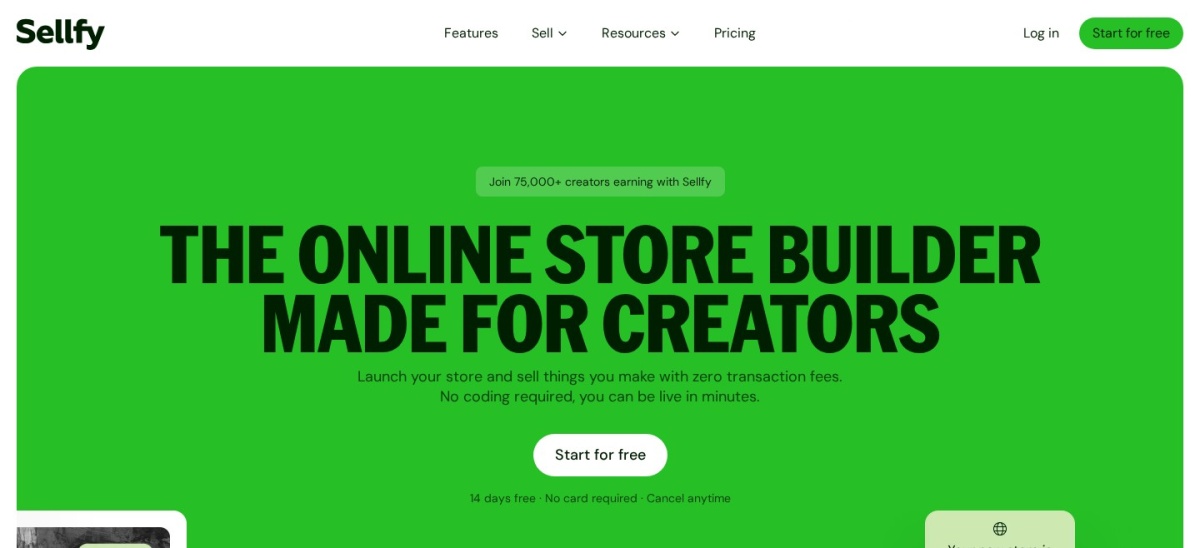
Sellfy charges 0% transaction fees on paid plans, from $29 a month, with a $10,000 yearly sales cap on Starter.
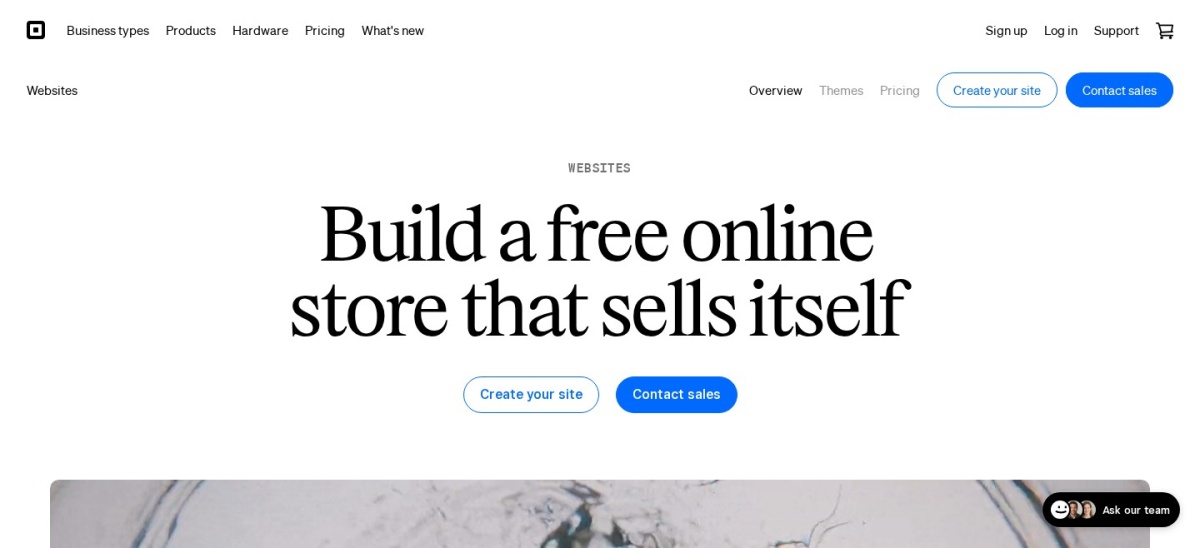
Square Online has the best free plan here, with a real storefront at $0 and paid plans from $29 a month.
What to look for when choosing where to sell
Selling online means more than listing products. The platform handles the storefront, checkout, payments, taxes and shipping, and the wrong choice shows up later as fees, missing features or a painful move.
Hosted platforms such as Shopify and BigCommerce bundle hosting, security and checkout into one monthly bill. Open platforms such as WooCommerce give you full ownership, but you pay separately for hosting and extensions and you fix problems yourself.
Fees matter as much as the plan price. A platform with 0% transaction fees can still cost more through card rates, app subscriptions or a sales cap that forces an upgrade.
Marketplaces such as Etsy bring built-in shoppers but take a cut of every sale and keep the customer relationship. An owned store costs more to start and keeps the buyer, the data and the margin.
Shopify is the all-in-one commerce platform most sellers start with. The Basic plan costs $39 a month and includes hosting, SSL, checkout, unlimited products, discount codes and access to thousands of apps. A 3-day free trial starts the process, then $1 a month for the first 3 months. Shopify Payments costs 2.9% + 30 cents per online sale on Basic.
The trade off is the total bill. Card rates, paid apps and a 2% fee on third-party payment providers add up, and checkout customization stays limited until Plus, which starts at $2,300 a month. It suits brands building a real online business that want one dashboard for web, social and in-person sales.
What we like
Largest app ecosystem of any platform here
Checkout is fast and converts well
Sells online, on social and in person from one admin
Watch out for
Paid apps can raise the real monthly cost a lot
2% fee on third-party payment providers on Basic
Checkout customization is limited until the Plus plan
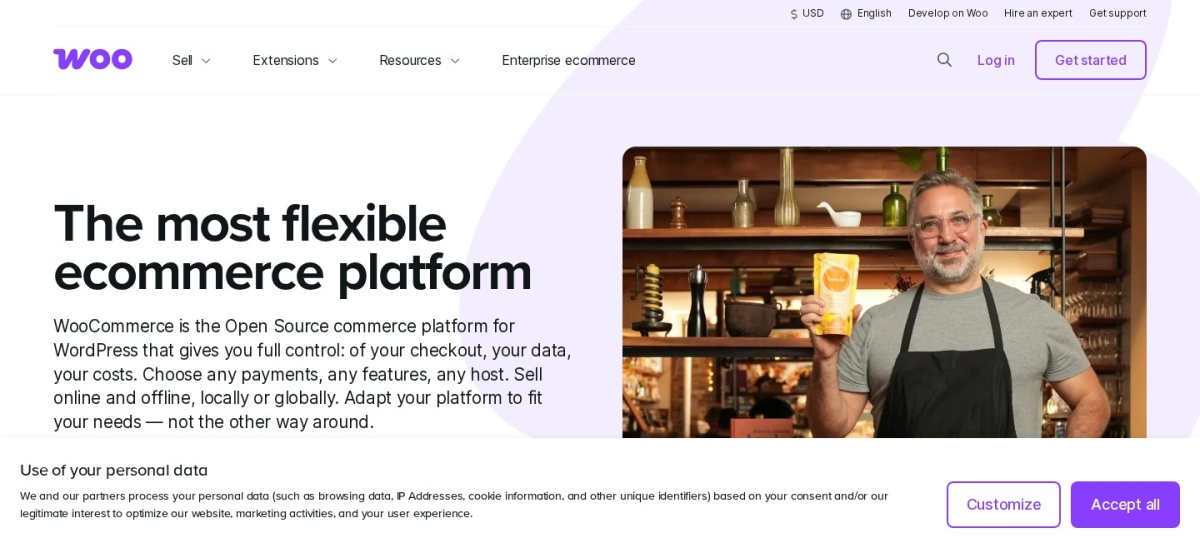
WooCommerce is the free, open-source plugin that turns any WordPress site into a store. The plugin itself costs nothing and takes no revenue share: you pay for hosting, a domain and whatever extensions you need. The extension marketplace covers payments, shipping, subscriptions and bookings, and you own the code, the data and the hosting relationship.
The trade off is the technical burden. Good hosting, premium extensions and maintenance typically run $50 to $200 a month for a serious store, and you are responsible when things break. It suits WordPress users who want full control and already know the platform.
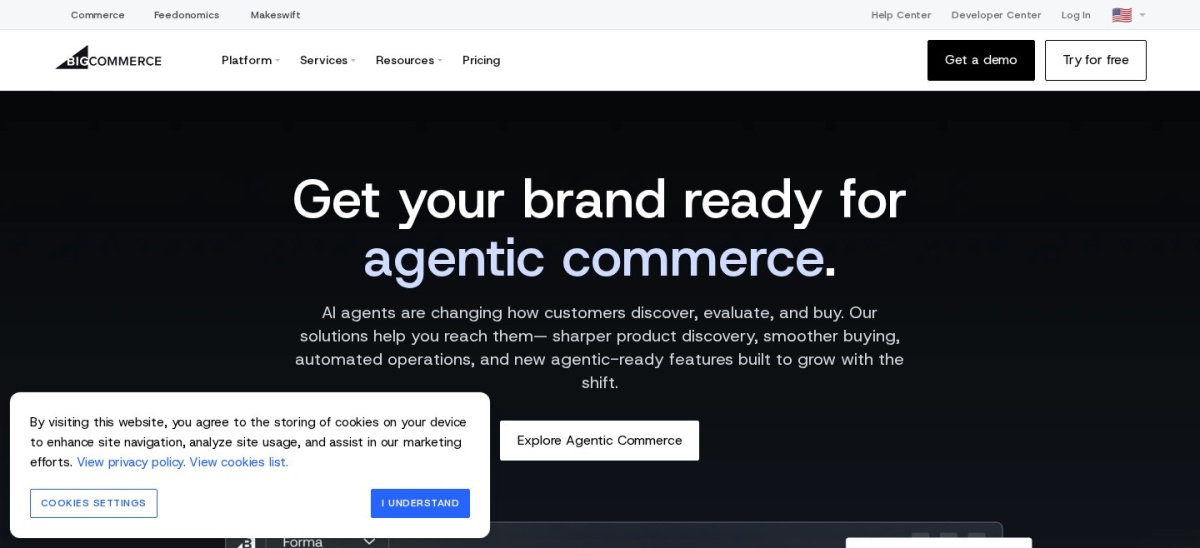
BigCommerce is Shopify's closest rival with a different pricing philosophy. The Core plan costs $39 a month and includes unlimited products, unlimited staff accounts and no transaction fees on any plan, even with third-party payment providers. It also includes natively what Shopify sellers buy as apps: multi-currency, customer groups and advanced discounting.
The trade off is revenue-based tiers. Plans cap annual online sales at $50,000 on Core, with automatic upgrades when you exceed them, and the design options are fewer than Shopify's. It suits sellers who hate transaction fees and app sprawl and want strong built-in features.
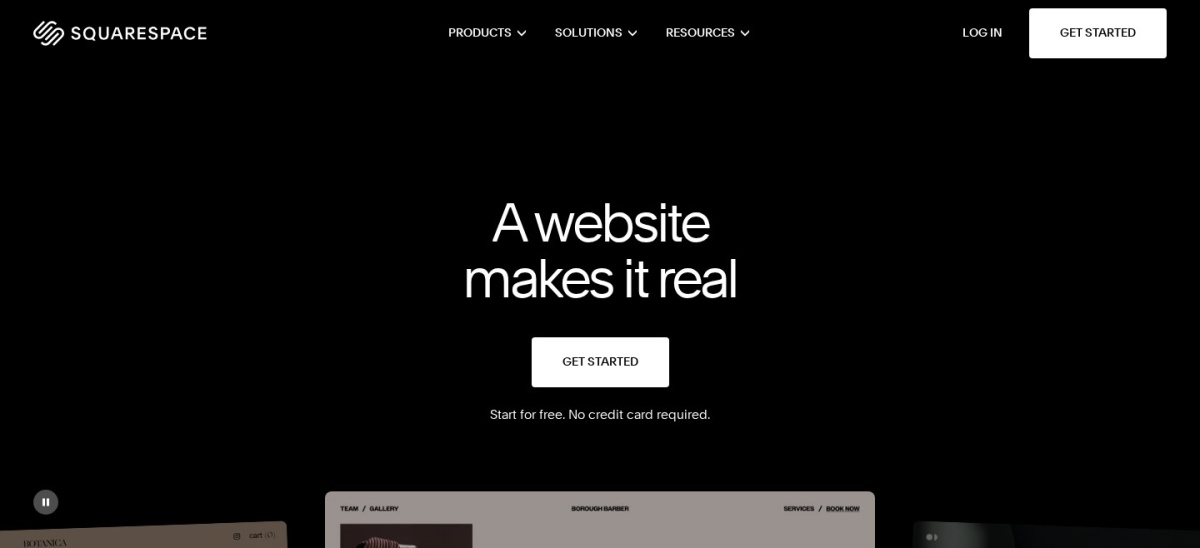
Squarespace is the website builder for design-led brands that want a store inside a beautiful site. The Basic plan costs $25 a month and includes templates, a custom domain free for the first year, and commerce with a 2% online store transaction fee. Core costs $39 a month and removes the fee, adds code injection and advanced commerce tools.
The trade off is the fee on Basic and the smaller app ecosystem. Email marketing is a separate subscription from $7 a month, and the platform is less suited to large catalogs or complex B2B selling. It suits creatives and service businesses where the store is part of a strong brand site.
Wix is a general-purpose website builder with ecommerce layered in. The free plan lets you build a site on a Wix address, and selling starts on Core at $36 a month, with 50 GB of storage, basic ecommerce, scheduling and a basic marketing suite. Business adds standard ecommerce and more storage, and the drag-and-drop editor needs no code.
The trade off is fees and limits. Core carries a 4% transaction fee and Business a 2% fee, on top of the 2.9% + 30 cents card rate, and per-plan store limits are hard to find on the pricing page. It suits beginners and creatives who want a site and a small store in one place.
What we like
Free plan to start building today
Easiest drag-and-drop editor here
Scheduling and services built into Core
Watch out for
Transaction fees of 4% on Core and 2% on Business
Free plan cannot accept payments
Store limits are not clearly published
Business adds standard ecommerce and more storageVisit wix.com
06
Ecwid
4.7/5on G2 (405 reviews, checked Nov 2026)
Starts at$25/mo
Best for adding a store to an existing site
Free planNo, free plan retired
Paid planVenture, digital goods included
Transaction fee0%
SetupWidget or plugin on your site
ecwid.com
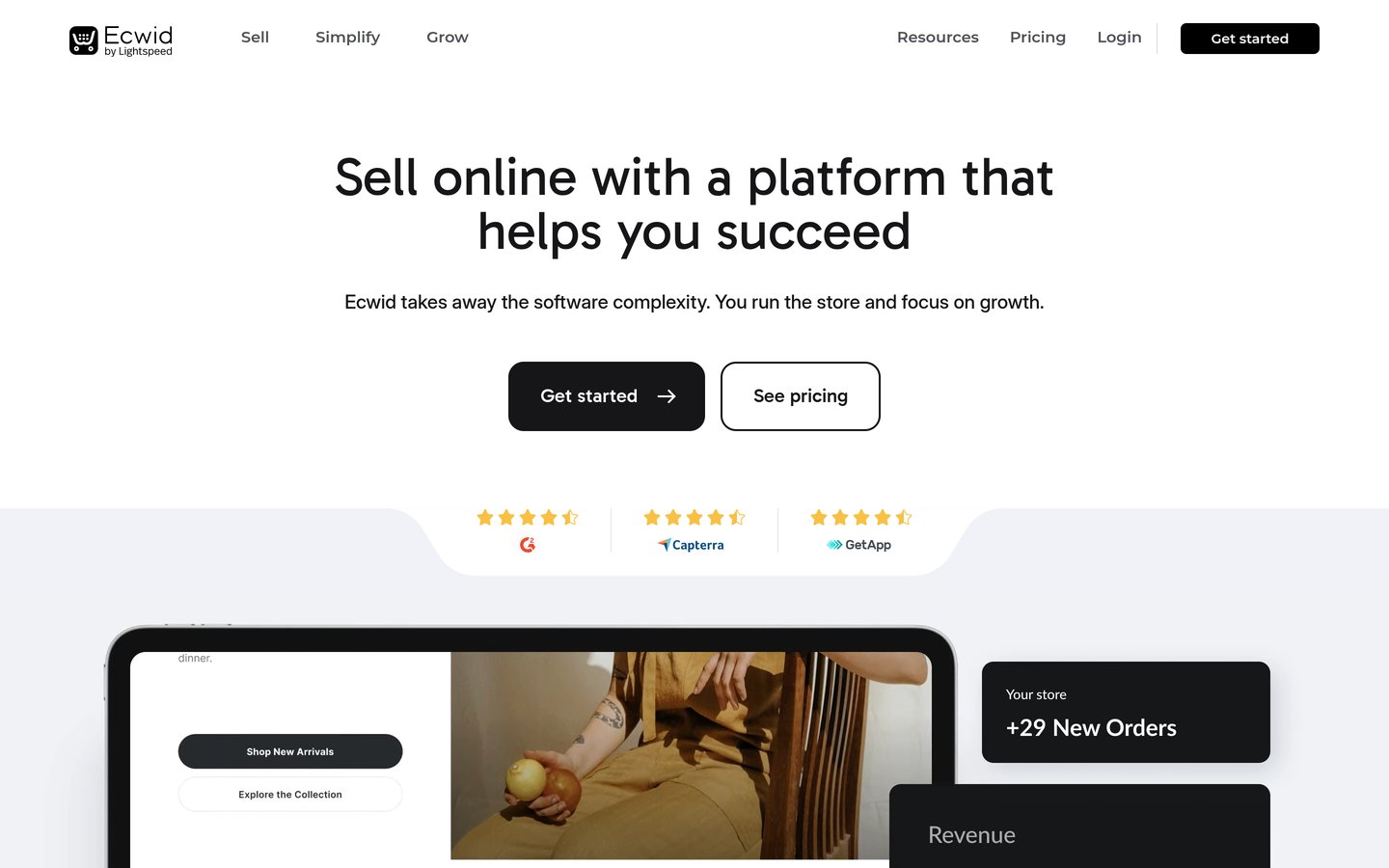
Ecwid homepage, captured Nov 2026.
Ecwid bolts a store onto a site you already have, whether it runs on WordPress, Wix, Squarespace or a plain HTML page. The Venture plan costs $25 a month and covers digital goods, discounts and more, with 0% transaction fees. Setup is a widget or plugin, so the store keeps your existing design instead of forcing a rebuild.
The trade off is that the free plan is gone. Ecwid retired its free tier, so every store now needs a paid plan, and the entry plan limits some features that rivals include. It suits sellers with a working site who want to add a cart without moving platforms.
What we like
Highest G2 rating in this list at 4.7/5
0% transaction fees
Works on almost any existing website
Watch out for
No free plan anymore
Entry plan limits some advanced features
Less design control than a full storefront builder
Sellfy is built for creators selling digital products, with a quick all-in-one store and print-on-demand for physical goods. The Starter plan costs $29 a month and charges 0% transaction fees, with a $10,000 yearly sales cap. Business costs $79 a month with a $50,000 cap, and Premium costs $159 with a $200,000 cap. Your Stripe or PayPal fees apply on top.
The trade off is the sales cap. Sellfy may charge 2% on sales above the cap until you upgrade, so fast growth forces a plan jump. It suits digital sellers who want a simple store, upsells and a custom domain without per-sale commissions.
Square Online, formerly Weebly, gives you a real storefront at $0 with no monthly bill, which is the best free start in this list. The free plan covers a basic store with Square payment processing, and Plus costs $29 a month with more features and lower fees. It connects directly to Square POS, so online and in-person sales share one inventory.
The trade off is depth. Advanced features require upgrades, transaction fees can add up at volume, and the design and SEO options are more limited than Shopify or Squarespace. It suits sellers who already use Square in person, or small stores that want to start free.
An owned store is the better long-term pick for most sellers. You keep the customer list, set your own rules and pay no per-sale commission beyond card processing.
A marketplace is the faster first sale. Etsy and similar sites put your products in front of shoppers already looking, but they charge listing and transaction fees and control the buyer relationship.
Many sellers run both: a marketplace for discovery and an owned store for repeat buyers. Start with the channel your buyers already use, then add the other once sales are steady.
How we chose
We started from the ecommerce platforms that appear most often in 2026 comparisons, then kept those with published pricing and a public G2 rating.
Prices come from each vendor's official pricing page, checked on 23 November 2026. Ratings and review counts come from G2 on the same day. Where a vendor shows a sale price, the list shows the regular price.
We left out platforms with no published pricing and marketplaces that do not offer an owned storefront. No vendor paid for a place, and we do not claim hands-on testing for this list. This list is based on pricing, docs and reviews, not on using the tools ourselves.
How to choose a platform to sell products
Start from what you sell and where your buyers already are, then check the total cost, not just the plan price.
List what you sell. Physical goods need shipping, inventory and tax tools. Digital products need instant delivery and license keys. Services need bookings, not a cart.
Check the total monthly cost. Add the plan price, card rates, transaction fees and the apps you will need. A $29 plan with 2% fees can cost more than a $39 plan with 0% fees.
Test the checkout on your phone. Most buyers shop on mobile. If the checkout feels slow or asks for too much, try another platform before you commit.
Start with one sales channel. Launch the store first, then add social selling or a marketplace once orders are steady. Spreading thin at the start slows everything down.
FAQ
What is the best platform to sell products online?
Shopify is the best platform for most sellers, with hosting, checkout and thousands of apps in one place from $39 a month. WooCommerce is the best pick for WordPress users who want full ownership, and Square Online is the best free start.
Is it better to sell on Etsy or your own website?
Etsy is better for the first sales because shoppers are already there, but it charges $0.20 per listing plus 6.5% per sale. Your own store keeps the customer and the margin, so it pays off once you have steady traffic.
What is the cheapest way to sell products online?
WooCommerce is the cheapest to start because the plugin is free and takes no revenue share, though hosting and extensions add cost. Square Online also starts free, and Ecwid bolts a store onto an existing site from $25 a month.
Does Shopify charge transaction fees?
Shopify charges no extra fee when you use Shopify Payments, which costs 2.9% + 30 cents per online sale on Basic. Using a third-party payment provider adds a 2% fee on the Basic plan.
Can I sell digital products on these platforms?
Yes. Shopify, WooCommerce, Sellfy and Square Online all support digital products with instant delivery. Sellfy is built for digital sellers and charges 0% transaction fees on its paid plans.
Do I need a website to sell products?
No. Square Online, Sellfy and Ecwid all give you a hosted storefront without building a site first. A full website helps later for branding and search traffic, but it is not needed for the first sale.