Best Platforms for Digital Products in 2026: 7 Tools Compared
WLWPLegible EditorsLast verified 22 Nov 2026How we rank6 min read
★ Short answer
Payhip is our top pick for selling digital products with a free plan that includes all core features and automated VAT and sales tax handling. Sellfy fits flat-rate storefronts with zero transaction fees, while Podia suits creators bundling courses, memberships, and email marketing.
How we make this list: we compare pricing pages, product documentation and public user reviews, then re-check every price before each update. No product paid for a place. Disclosure.
Payhip starts at $0/mo with a 5% transaction fee and includes all features on every tier.
Sellfy charges $0 transaction fees across plans starting at $22/mo billed yearly.
Gumroad requires no monthly subscription but charges 10% + $0.50 on direct sales and 30% via Discover.
Podia starts at $42/mo billed annually on Mover with a 5% transaction fee and 50 products.
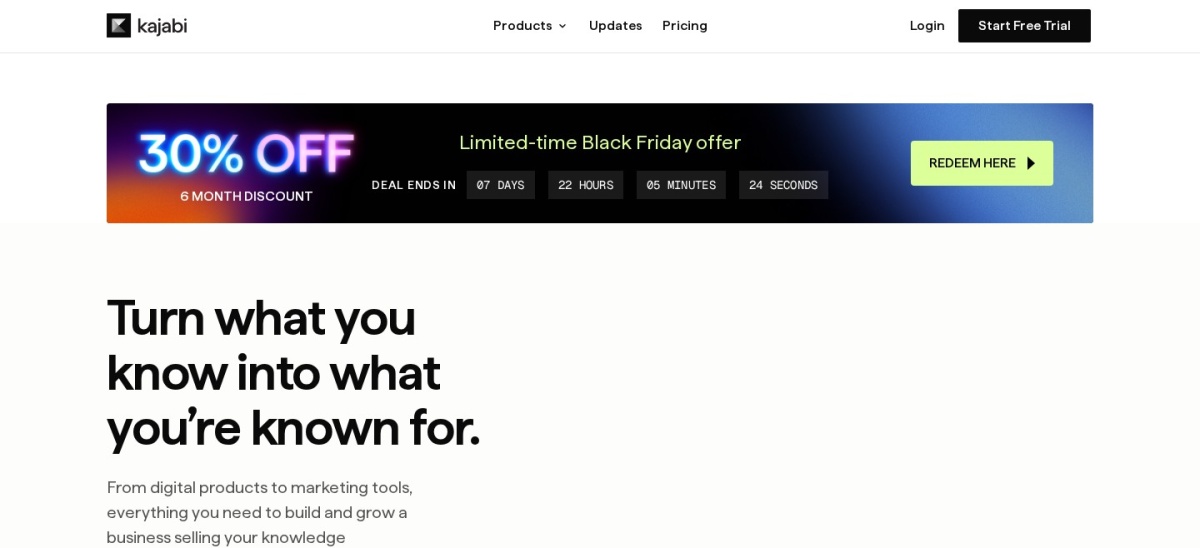
Kajabi starts at $143/mo billed annually on Basic with 0% revenue share on Kajabi Payments.
What to look for when choosing a digital product platform
Selling files, courses, templates, or memberships online comes down to two billing models: transaction-fee pricing or flat monthly subscriptions. Low-volume sellers often prefer pay-as-you-go plans with no monthly overhead, while growing catalogs usually save money on flat-rate tiers with lower or zero platform fees.
Tax compliance is another major divider. Some platforms act as a merchant of record to calculate, collect, and remit international VAT and sales tax automatically, while others leave tax collection and payout processing to your connected Stripe or PayPal account.
Product format support also shapes your stack. A simple file link or storefront works for ebooks and presets, whereas structured lessons, communities, and email sequences call for a broader creator suite.
Full-stack suite for established course businesses
$143/mo
No free plan
4.1/5
Price ladder: cheapest paid plan per year
List prices, USD, checked Nov 2026
GumroadFree
Sellfy$264
PayhipFREE$348
ThriveCart$444
Podia$504
SamCart$948
Kajabi$1,716
The 7 best platforms for digital products
01
Payhip
4.7/5on G2 (5 reviews, checked Nov 2026)
Paid from$29/mo
Best overall for free entry and tax handling
Starting plan$0/mo (5% fee)
Cheapest paid tier$29/mo Plus (2% fee)
Product typesDownloads, courses, memberships
Tax supportVAT and US/Canadian sales tax
payhip.com
Payhip homepage, captured Nov 2026.
Payhip is an all-in-one storefront for digital downloads, courses, coaching, and memberships that offers a free plan with unlimited products and all features unlocked. The free tier carries a 5% transaction fee, while Plus costs $29/mo and lowers the fee to 2%.
The trade off is that even the $29/mo Plus plan still charges a 2% platform fee on top of payment processor fees, and storefront customization is simpler than a full website builder. It suits solo creators who want low upfront cost and built-in sales tax handling.
What we like
Free plan includes all features and unlimited products
Handles EU/UK VAT and US/Canadian sales tax
Supports downloads, courses, memberships, and coaching
Watch out for
Plus plan still charges a 2% transaction fee
Less design flexibility than a full CMS
Plus at $29/mo cuts the Payhip transaction fee from 5% to 2%.Visit payhip.com
02
Sellfy
4/5on G2 (58 reviews, checked Nov 2026)
Starts at$22/mo
Best for flat-rate stores with zero transaction fees
Cheapest paid tier$22/mo billed yearly ($264/yr)
Transaction fee0% platform fee
Sales cap on entry tierUp to $10,000/yr
Max file size10 GB on Starter
sellfy.com
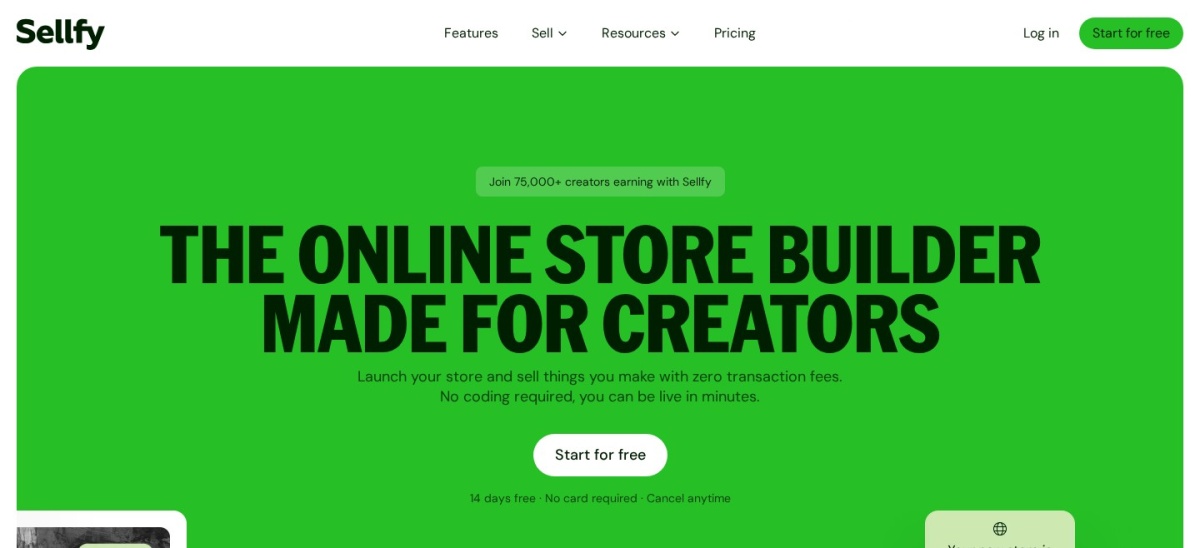
Sellfy homepage, captured Nov 2026.
Sellfy is a hosted storefront for selling digital downloads, subscriptions, and print-on-demand items with 0% platform transaction fees on every plan. Starter is $22/mo billed yearly ($264/yr) and includes unlimited products, email marketing tools, and up to $10,000 in annual sales.
The trade off is that Starter caps annual sales at $10,000 and leaves out upsells, cart abandonment recovery, and custom branding removal, which are priced at $264/yr on the entry plan. It suits creators selling steady volume who prefer predictable flat pricing over percentage fees.
What we like
0% Sellfy transaction fees across all plans
Quick storefront setup for digital files and subscriptions
Includes built-in email marketing credits
Watch out for
Starter plan has a $10,000 yearly sales limit
Upsells and cart recovery require higher tiers
Business at $59/mo billed yearly raises the sales cap to $50,000/yr and adds upsells and cart recovery.Visit sellfy.com
03
Podia
4.4/5on G2 (26 reviews, checked Nov 2026)
Starts at$42/mo
Best for bundling courses, downloads, and community
Cheapest paid tier$42/mo billed yearly ($504/yr)
Transaction fee5% on Mover
Product limit50 products on Mover
Subscriber limitUp to 100 email subscribers on Mover
podia.com
Podia homepage, captured Nov 2026.
Podia is an all-in-one creator platform combining digital downloads, online courses, community spaces, and email marketing under one roof. Its Mover plan starts at $42/mo billed annually ($504/yr) with up to 50 products, 25 community spaces, and a 5% transaction fee.
The trade off is that Mover charges a 5% transaction fee and caps email subscribers at 100, at $504/yr billed annually. It suits creators building courses and communities who want fewer separate tools.
What we like
Combines courses, downloads, community, and email
Includes up to 50 products on the Mover tier
Clean interface with built-in customer messaging
Watch out for
Mover plan includes a 5% transaction fee
Low 100-subscriber limit on the entry tier
Shaker at $84/mo billed yearly removes transaction fees and adds upsells, PayPal, and Zapier.Visit podia.com
04
ThriveCart
4.6/5on G2 (31 reviews, checked Nov 2026)
Starts at$37/mo
Best for conversion-focused checkouts and upsells
Cheapest paid tier$37/mo billed yearly ($444/yr)
Transaction fee0% platform fee
Checkout featuresOrder bumps, upsells, downsells
Included modulesCourses and community included
thrivecart.com
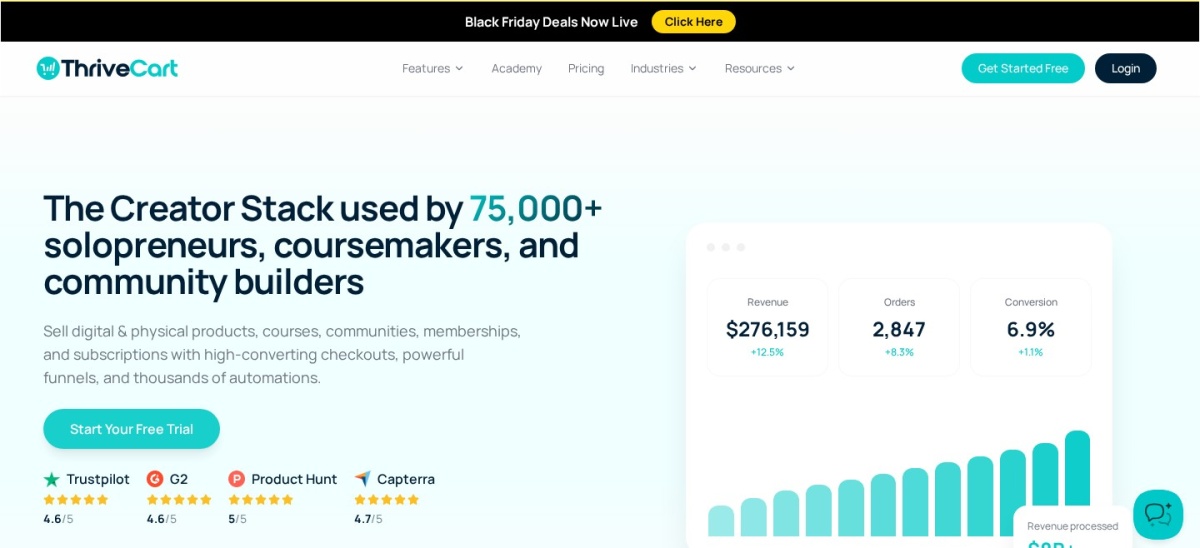
ThriveCart homepage, captured Nov 2026.
ThriveCart is a checkout platform built around order bumps, one-click upsells, downsells, and A/B testing with 0% platform fees on sales. Its Standard subscription is $37/mo billed annually ($444/yr) and includes course and community features.
The trade off is that it functions primarily as a checkout engine rather than a full website or email marketing suite, at $444/yr on Standard. It suits sellers who already have traffic and want high-converting checkout funnels.
What we like
0% platform fee on transactions
Strong order bump, upsell, and A/B testing tools
Bundles course and community features
Watch out for
Not a full replacement for a website or email CRM
Tax collection adds a small processing fee on new accounts
Pro+ at $67/mo billed yearly adds built-in affiliate management and lower tax processing fees.Visit thrivecart.com
05
SamCart
4.3/5on G2 (101 reviews, checked Nov 2026)
Starts at$79/mo
Best for funnel templates and checkout pages
Cheapest paid tier$79/mo Core
Active businesses75,000+
Core payment rate2.9% + 30¢ via SamPay
Funnels & bumpsRequire Pro tier
samcart.com
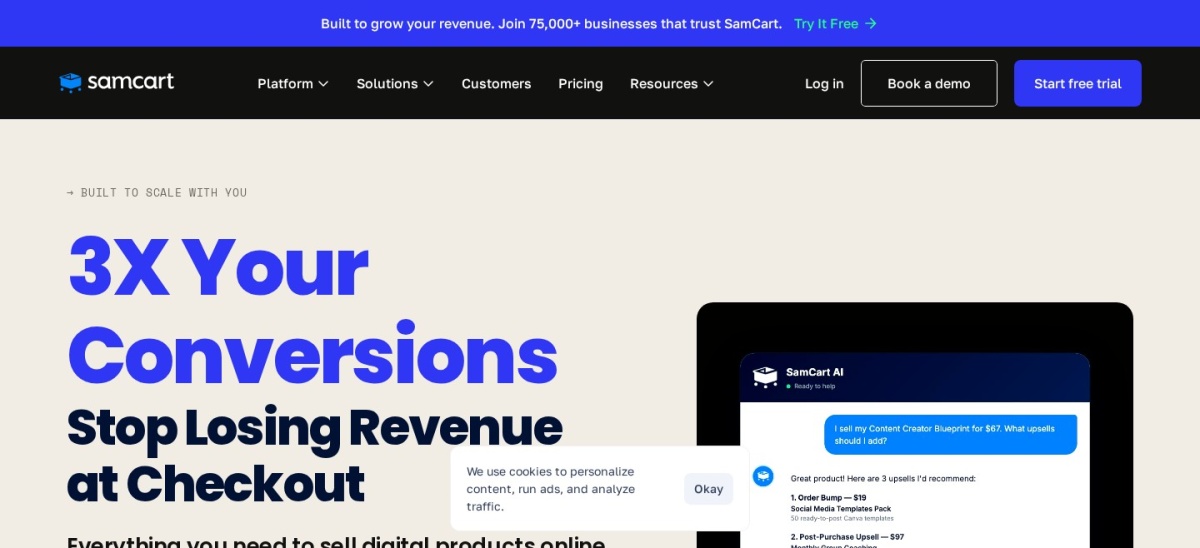
SamCart homepage, captured Nov 2026.
SamCart is a checkout and offer-page platform used by more than 75,000 businesses to sell digital products, subscriptions, and services. Its Core plan starts at $79/mo ($948/yr at monthly list rate) with unlimited products and pages.
The trade off is that order bumps and one-click upsells sit on the higher Pro tier rather than Core, at $79/mo. It suits digital sellers focused on structured sales pages who can justify the monthly cost.
What we like
Polished checkout templates and fast page setup
Unlimited products and pages on Core
Adopted by over 75,000 businesses
Watch out for
Core plan leaves out order bumps and upsells
Higher monthly cost than lightweight download stores
Pro at $199/mo adds order bumps, one-click upsells, and an affiliate center.Visit samcart.com
06
Gumroad
4.2/5on G2 (16 reviews, checked Nov 2026)
PriceFree
Best for zero monthly fees and quick file sales
Monthly subscription$0/mo (no paid plan)
Direct sale fee10% + $0.50 plus processing
Discover marketplace fee30% flat fee
Tax handlingMerchant of record worldwide
gumroad.com
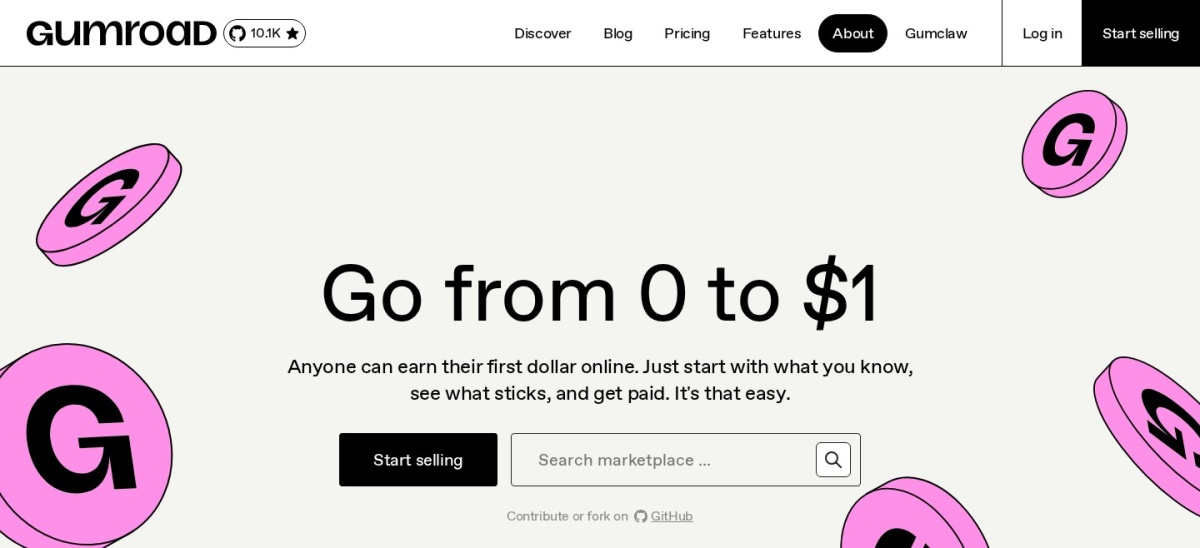
Gumroad homepage, captured Nov 2026.
Gumroad is a fast digital storefront with no monthly subscription that handles global sales tax and VAT as merchant of record. Direct sales carry a 10% + $0.50 fee plus card processing, while sales through Discover carry a 30% flat fee.
The trade off is steep per-sale fees on higher revenue and a 30% cut on Discover marketplace sales, with $0 in monthly subscription fees. It suits beginners testing low-priced downloads who do not want a recurring bill.
What we like
No monthly subscription fee
Handles global sales tax and VAT as merchant of record
Fast product setup for files and simple memberships
Watch out for
10% + $0.50 direct fee plus processing adds up quickly
30% flat fee on Discover marketplace sales
No paid subscription tier exists; direct sales drop to 5% + $0.50 in calendar months over $20,000.Visit gumroad.com
07
Kajabi
4.1/5on G2 (93 reviews, checked Nov 2026)
Starts at$143/mo
Best full-stack suite for established course businesses
Kajabi is an all-in-one business suite combining website hosting, funnels, email marketing, community, and courses with 0% revenue share on Kajabi Payments. Basic costs $143/mo billed annually ($1,716/yr) and includes 5 products and 2,500 contacts.
The trade off is a high starting price and a 5-product cap on Basic, at $1,716/yr billed annually. It suits established creators consolidating multiple marketing and course subscriptions into one platform.
What we like
Replaces website, email, funnels, and course tools
0% revenue share on Kajabi Payments
Unlimited marketing email sends on every plan
Watch out for
High entry cost compared to basic download stores
Basic limits you to 5 products and 2,500 contacts
Growth at $199/mo billed yearly expands capacity to 50 products and 25,000 contacts.Visit kajabi.com
Percentage fees vs. flat monthly plans
A platform with a 5% or 10% transaction fee costs almost nothing when you make one or two sales a month. Once your monthly revenue climbs, percentage cuts can overtake a flat subscription fee.
Check whether payment processor charges apply on top of the platform fee and whether the vendor acts as merchant of record for global taxes. Comparing net take-home pay across realistic monthly sales numbers prevents surprises after launch.
How we chose
We selected established platforms for digital products by reviewing vendor documentation, pricing pages, and software directories across storefronts, checkout carts, and course suites.
All pricing figures, plan limits, and G2 ratings in this list were checked on 22 Nov 2026 from published pricing and review pages.
We excluded platforms without verifiable pricing or review data on our checked pages and prioritized active, widely used options. No vendor paid for a place, and we do not claim testing for this list.
How to choose a digital product platform
Follow four practical steps to match a platform to your catalog and sales model.
List the formats you plan to sell. Decide whether you are delivering downloadable files, structured courses, memberships, or checkout funnels before comparing plan limits.
Check total fees at your target revenue. Compare percentage transaction fees against flat monthly subscriptions alongside payment processor charges.
Verify how sales tax and VAT are handled. Confirm whether the vendor acts as merchant of record for international taxes or leaves tax setup to your connected gateway.
Review product and audience caps. Check limits on products, email contacts, file sizes, and upsell features so you do not outgrow the entry tier immediately.
FAQ
Which platform is best if I want to start for $0 a month?
Payhip offers a $0 plan with unlimited products and all features unlocked at a 5% transaction fee. Gumroad also has no monthly subscription, charging 10% + $0.50 on direct sales plus card processing.
Do zero-transaction-fee platforms charge anything extra on sales?
Platforms with 0% platform fees such as Sellfy and ThriveCart still rely on payment processors like Stripe or PayPal, which charge their own card processing fees. Some plans may also apply separate tax collection fees.
What is the difference between a merchant of record and a standard checkout?
A merchant of record sells on your behalf and handles international sales tax and VAT compliance. Standard checkout setups connect to your own payment account, leaving tax rules and filings to you.
When does a flat monthly plan beat a percentage fee?
A flat monthly plan usually becomes cheaper once your monthly sales volume generates more in percentage fees than the subscription costs. Low or irregular sales often favor a lower-fixed-cost or free-entry option.
Should I pick an all-in-one course suite or a simple file store?
Pick a simple file store if you mainly sell ebooks, templates, or presets and already have marketing tools. Pick a broader suite like Podia or Kajabi if you want courses, community, and email in one place.
Why do some plans limit products or email contacts?
Entry tiers often cap products, file sizes, or contact counts to keep starter prices lower. Growing catalogs and larger email lists typically require moving up to mid-tier or higher plans.