Plytix is the best PIM software for a small retail business, with a free Standard plan up to 100 SKUs, Pro from $149 a month and a G2 rating of 4.7 out of 5 from 456 reviews. Pick Apimio if you sell on Shopify, or Catsy if you publish to many retailers.
How we make this list: we compare pricing pages, product documentation and public user reviews, then re-check every price before each update. No product paid for a place. Disclosure.
Plytix is the only pick with a genuinely free plan and a published paid price: free up to 100 SKUs, Pro from $149 a month.
Catsy has the highest G2 rating here at 4.8 out of 5 from 156 reviews, but pricing is quote only.
Apimio is the cheapest published-price paid PIM for Shopify stores at $199 a month for 10,000 SKUs.
Akeneo Growth starts at $45,000 a year, so it only fits retailers planning a large multilingual catalog.
Four of the nine tools publish no starting price: Catsy, Sales Layer, Pimberly and Salsify all need a quote.
What a PIM should do for a small retailer
A PIM is one place for every product fact: names, descriptions, prices, images, sizes and variants. A small retailer usually starts in spreadsheets, then finds the same product described three different ways across the store, Amazon and a printed catalog.
The fix is a single source of truth. Change a price or a photo once, and every channel that reads from the PIM gets the same version. Our guide on adding products in WooCommerce shows the manual side of the same job.
For a small catalog, price and setup matter more than enterprise features. A free plan or a 14-day trial lets a shop prove the workflow on its worst 50 products before paying.
Watch the limits that raise the bill: SKU counts, user seats, connected stores and channel feeds. Plytix and Ergonode charge by catalog size, while Pimcore charges a flat annual fee whatever the catalog size.
List prices in each vendor's currency, checked Nov 2026
CatsyQuote
Sales LayerQuote
PimberlyQuote
SalsifyQuote
PlytixFREE$1,788
Apimio$2,388
ErgonodeFREE€5,990
PimcoreFREE$9,900
AkeneoFREE$45,000
The 9 best PIM software tools for small retail business
01
Plytix
4.7/5on G2 (456 reviews, checked Nov 2026)
Paid from$149/mo
Best PIM for small retail overall
Free planYes, up to 100 SKUs
Paid planPro from $149/mo
SeatsUnlimited on all plans
API calls2,000 per hour
plytix.com
Plytix homepage, captured Nov 2026.
Plytix is a cloud PIM and DAM for small commerce teams, built around a spreadsheet-style product grid. The free Standard plan covers catalogs of 100 SKUs or fewer, with unlimited seats, unlimited file storage, 500 AI credits a month and 2,000 API calls an hour. It also includes product families, bulk editing and feeds to Shopify, BigCommerce and marketplaces.
The trade off is price by catalog size. Pro starts at $149 a month for 100 SKUs and climbs as the SKU count grows, so a 5,000-SKU catalog costs more than the headline figure. It suits small retailers that want a free start and a published price path as they grow.
What we like
Free plan with unlimited seats and storage
Published prices that scale with SKU count
Highest review count in this list on G2
Watch out for
Paid price rises as the catalog grows
Advanced workflows are limited next to enterprise PIMs
Pro adds more CDN traffic, API calls and change historyVisit plytix.com
02
Catsy
4.8/5on G2 (156 reviews, checked Nov 2026)
PricingQuote/yr
Best rated PIM for multi-channel retail
Free trial14 days
PIM plus DAMYes, combined
Shopify stores3 on Essential
ChannelsAmazon, Shopify, Walmart
catsy.com
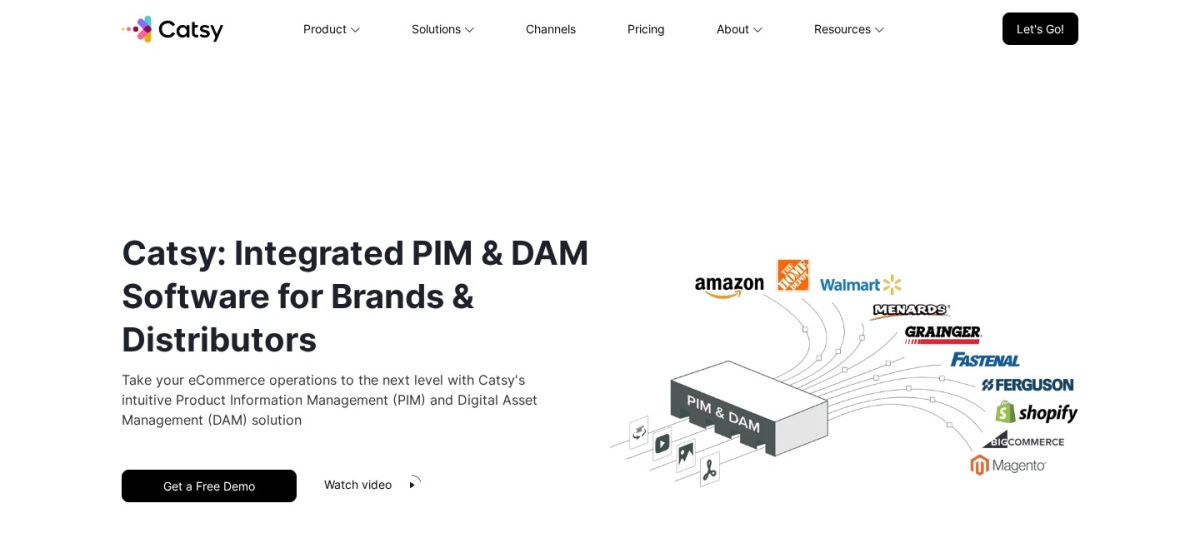
Catsy homepage, captured Nov 2026.
Catsy is a combined PIM and DAM for brands, retailers and distributors that sell across many channels. It centralizes product data and images, checks data quality, and publishes catalogs and listings to Shopify, Amazon, Walmart and retailer portals. A 14-day free trial is available, and the Essential plan connects up to 3 Shopify stores.
The trade off is price transparency. Catsy publishes its plan tiers but no dollar prices, so a small retailer must request a quote to compare it with published-price rivals. It suits teams that publish to many retailers and want PIM and DAM in one system.
What we like
Highest G2 rating in this list
PIM and DAM in one system
Strong retailer and marketplace publishing
Watch out for
No published starting price
Aimed more at brands and distributors than single stores
Paid plans add more stores, outputs and marketplace syncVisit catsy.com
03
Sales Layer
4.6/5on G2 (317 reviews, checked Nov 2026)
PricingQuote/yr
Best for guided setup and fast onboarding
Free trial30 days
Data modelFlexible, with inheritance
LanguagesUp to 156
Paid planQuote only
saleslayer.com
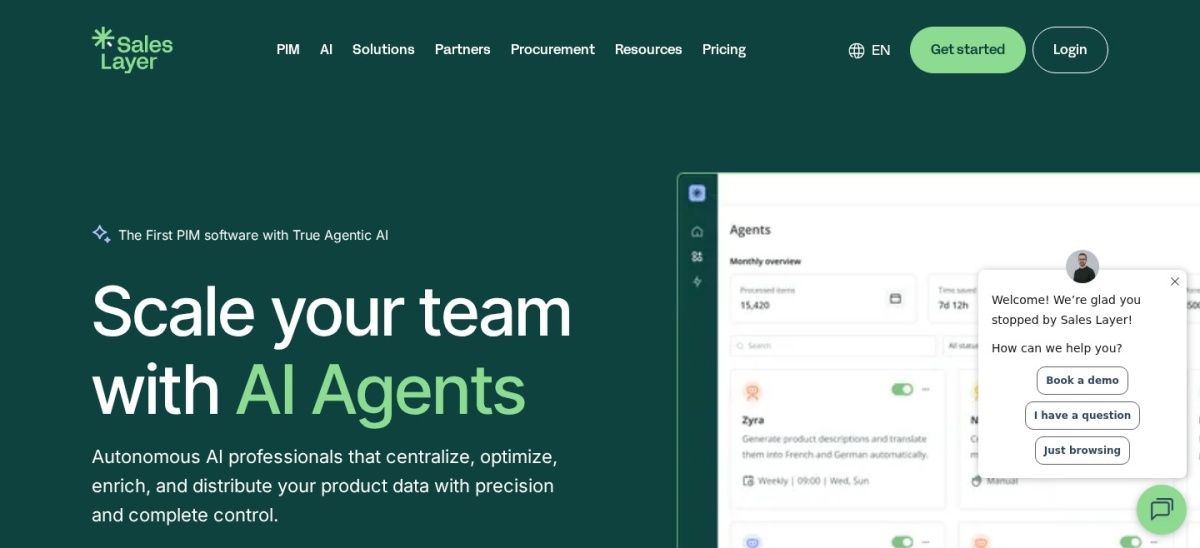
Sales Layer homepage, captured Nov 2026.
Sales Layer is a cloud PIM for manufacturers, brands, retailers and distributors with multichannel catalogs. It offers flexible data models, classification inheritance, bulk editing and product feeds, plus a 30-day free trial. G2 reviewers rate it 4.6 out of 5 from 317 reviews, the second-largest review count in this list.
The trade off is that pricing is quote only. There is no published starting price, so budgeting means asking sales for a figure tied to catalog size and channels. It suits teams that want guided setup and fast onboarding without developer help.
Ergonode is a cloud PIM with built-in DAM, workflows and AI content tools for ecommerce teams. The free plan covers up to 1,000 products and 2 users, and the paid Essential plan is priced in euros at €5,990 a year, covering 30,000 products and 5 users. It includes localization, automations and 3,000 AI text generations a month on Essential.
The trade off is cost in a second currency. A US buyer pays in euros, and the free plan is small, so growing past 1,000 products means moving to a paid plan quickly. It suits small retailers that sell in more than one language and want workflows included.
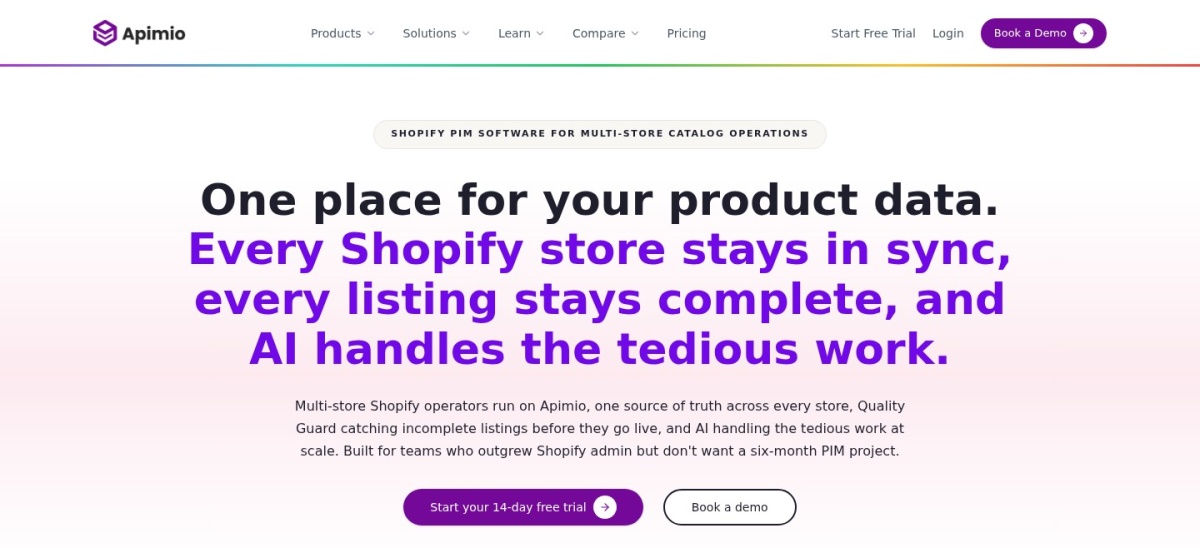
Apimio is a PIM built for Shopify stores whose catalogs have outgrown the Shopify admin. Basic PIM costs $199 a month for one store, 10,000 SKUs, 50 GB of storage and 3 team members, with a Quality Guard that holds incomplete products back from publishing. A 14-day free trial covers the Advanced feature set.
The trade off is platform focus. Apimio is built around Shopify, so a retailer selling mainly on WooCommerce or Amazon is buying outside its design centre. It suits Shopify retailers that want a published monthly price and a publish gate for incomplete listings.
What we like
Published monthly prices, no annual contract
Quality Guard stops incomplete listings going live
Can be billed through the Shopify invoice
Watch out for
Built for Shopify, not other platforms
Basic plan allows only 3 team members
Advanced adds feeds, workflows and unlimited membersVisit apimio.com
06
Pimcore
4.5/5on G2 (50 reviews, checked Nov 2026)
Paid from$9,900/yr
Best open-core PIM for developer-led teams
Free editionCommunity, free
Paid planProfessional, $9,900/yr
User limitsNo seat limits
HostingSelf-hosted or PaaS
pimcore.com
Pimcore homepage, captured Nov 2026.
Pimcore is an open-core platform that combines PIM, DAM, master data management and content in one system you host. The Community Edition is free, and the paid Professional edition costs $9,900 a year with no limits on products, assets or users. Every edition includes all core modules, so the price does not change with catalog size.
The trade off is effort. Pimcore is a platform to build on, not a signup-and-go SaaS product, and Professional includes no support contract. It suits retailers with developers who want full control of the data model and hosting.
Akeneo is a PIM with a strong data model for product families, variants and localization across 18 languages. The Community Edition is free and open source, while the hosted Growth package starts at $45,000 a year. G2 reviewers rate it 4.4 out of 5 from 250 reviews, and go-live most often takes 3 to 6 months.
The trade off is price and project size. Growth costs far more than any small-retail pick here, and setup is a multi-month project with a partner. It suits retailers planning complex multilingual catalogs that will grow well past small-retail size.
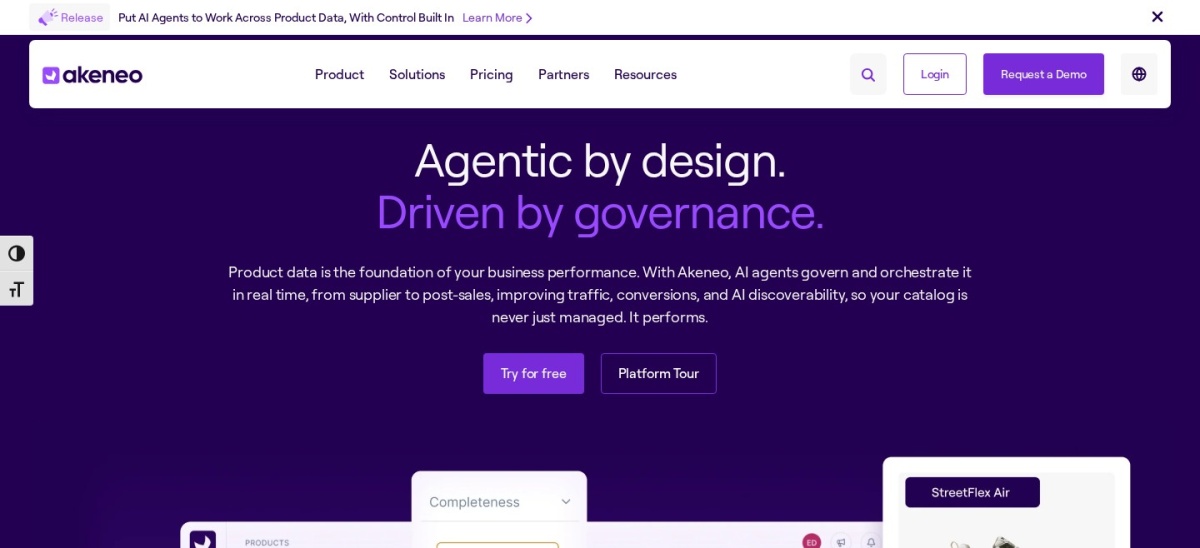
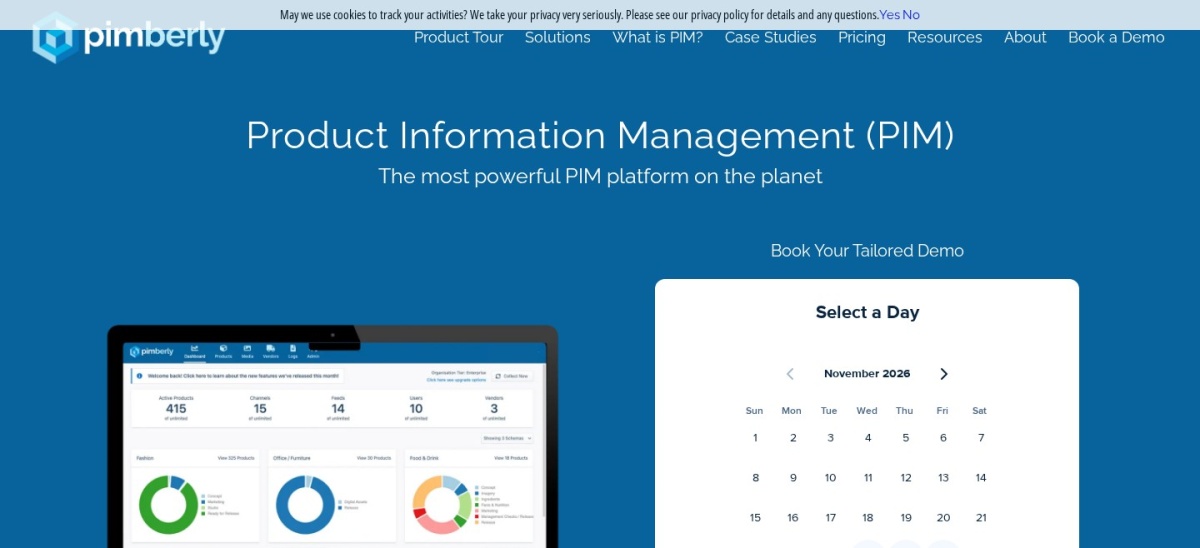
Pimberly is a SaaS PIM and DAM for retailers and brands with large, complex catalogs. It combines product data, digital assets, validation rules and workflows in one governed system, with integrations for Shopify Plus, Magento and ERP systems. G2 reviewers rate it 4.4 out of 5 from 243 reviews.
The trade off is that pricing is quote only, and go-live most often takes 3 to 6 months. It suits larger small retailers, or growing ones, that need strict validation and workflow control across many channels.
Salsify is a product experience management platform for brands selling through retailers and marketplaces. It centralizes product content and publishes it to Amazon, Walmart, Target and Google Shopping, with 14 integrations listed on G2. G2 reviewers rate it 4.4 out of 5 from 145 reviews, and go-live most often takes 1 to 3 months.
The trade off is fit and price. Salsify is built for brands selling through retailers, not for a single small storefront, and pricing is quote only. It suits small retailers that already sell through several large retailers and need their content kept in sync.
Free plans cover the basics well. Plytix, Ergonode, Pimcore and Akeneo all let a small shop start without paying, though the free limits are small.
Paid plans mostly add scale and support. You get more SKUs, more users, more channels and help when imports go wrong.
Quote-only tools hide the bill until you talk to sales. Ask for the price at your SKU count and store count in writing before you migrate a catalog.
If your catalog is under 500 SKUs, start free. Our inventory guide explains how to keep stock counts straight while the catalog moves into a PIM.
How we chose
We started from the PIM tools most often recommended for small retail catalogs, then kept nine with public G2 ratings and a free plan, a free trial or a published price.
Prices come from each vendor's pricing page, checked on 25 November 2026. Ratings and review counts come from G2 on the same day. Where a vendor shows a sale, the list shows the regular price.
We left out tools with no public rating, including UnoPim, which has no G2 reviews yet. No vendor paid for a place, and we do not claim to have used these tools ourselves.
How to choose a PIM for a small retail business
Start with your catalog size and your main sales channel, then shortlist two tools.
Count your SKUs and channels. A shop with 200 SKUs and one store needs a different tool from one with 8,000 SKUs across Shopify and Amazon.
Try the free plan or trial on real products. Migrate your messiest 50 products first, including the variant-heavy and image-poor ones, and run a full price update through the tool.
Check the price at your size, not the headline. Plytix prices rise with SKU count, and quote-only tools need a written figure for your catalog before you compare.
Confirm the connector for your store. See how to add variable products in WooCommerce if your catalog leans on variants, and check the PIM supports them.
FAQ
What is the best PIM software for a small retail business?
Plytix is the best pick for most small retailers. Its free plan covers up to 100 SKUs with unlimited seats, Pro starts at $149 a month, and G2 reviewers rate it 4.7 out of 5 from 456 reviews.
Is there a free PIM for small retailers?
Yes. Plytix is free for up to 100 SKUs, Ergonode is free for up to 1,000 products, and Pimcore and Akeneo both have free open-source editions. Free plans have small limits, so check the SKU and user caps before you commit.
How much does PIM software cost for a small business?
Published prices here run from free to $199 a month for Apimio Basic and $149 a month for Plytix Pro at 100 SKUs. Akeneo Growth starts at $45,000 a year, while Catsy, Sales Layer, Pimberly and Salsify are quote only.
Do I need a PIM if I only sell on Shopify?
Not always. Shopify admin handles a small, simple catalog well. A PIM earns its place once you sell across several stores or channels, or when incomplete listings keep reaching customers, which is the problem Apimio's publish gate is built to stop.
What is the difference between a PIM and a DAM?
A PIM holds product facts such as names, prices, sizes and descriptions, while a DAM holds the media files such as photos and videos. Plytix, Catsy, Ergonode, Pimcore and Pimberly combine both, so images sit beside the product data they belong to.
How long does it take to set up a PIM?
Small cloud tools such as Plytix and Apimio can be running in days, since setup is mostly importing a spreadsheet and mapping fields. Larger tools such as Akeneo and Pimberly most often take 3 to 6 months, with partner help.
SaaS SEO and WordPress specialist with about 8 years of experience. Rakib compares WordPress plugins, themes, hosting and software using public pricing, documentation and user reviews. See how we rank.