Stripe is the best top payment processing software for most businesses, with no monthly fee and 134 ready integrations. Square is the better pick for in-person sales, while PayPal wins when your customers already have PayPal accounts.
How we make this list: we compare pricing pages, product documentation and public user reviews, then re-check every price before each update. No product paid for a place. Disclosure.
Stripe is the top pick: no monthly fee, 2.9% + 30¢ per card sale and 134 integrations.
Square charges the lowest in-person flat rate at 2.6% + 15¢, with a free POS app.
Helcim and Stax beat flat rates at volume: Helcim adds 0.40% + 8¢ to interchange, Stax charges $99 a month with no percentage markup.
PayPal costs the most per online sale at 2.99% + 49¢, but its checkout is the most familiar to buyers.
Adyen and Authorize.net are for bigger or existing setups: Adyen needs a sales quote and a minimum invoice, Authorize.net adds a $25 monthly gateway fee.
How do you choose the top payment processing software?
The cheapest processor is the one that matches how you sell. A flat rate looks simple, but it punishes high-volume sellers and rewards low-volume ones.
Monthly fees only make sense above a clear volume line. A 25-dollar gateway fee or a 99-dollar subscription needs enough sales to beat the percentage you save.
Interchange-plus pricing is the fairest deal for steady volume, because you pay the card networks' real cost plus a published margin. Flat-rate tools hide that cost in one percentage.
Check the extras before you sign. International cards, currency conversion, chargebacks and instant payouts can add more to the bill than the headline card rate. Our payment gateway guide for WordPress covers the WordPress side in detail.
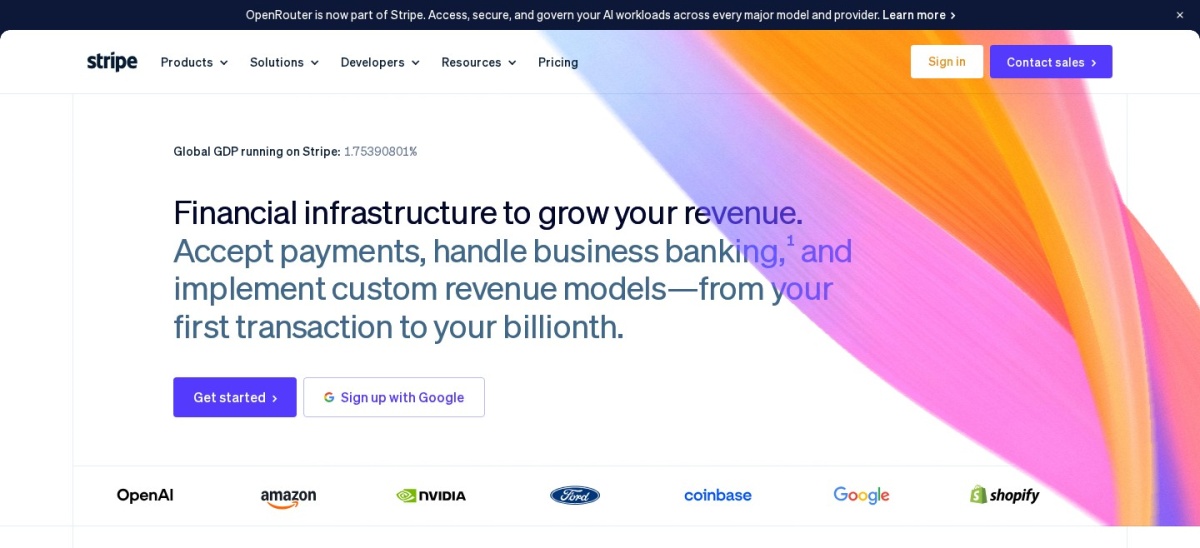
Stripe is the developer-first payment processor that powers online checkout for millions of businesses. The standard account has no monthly fee and no setup fee, charging 2.9% plus 30 cents per successful domestic card payment, with 134 ready integrations listed on G2 and support for 135-plus currencies.
The trade off is that the flat rate gets expensive at volume, and add-ons such as Radar fraud rules, Billing and instant payouts each carry their own fees. It suits online businesses, marketplaces and software platforms that want one account to cover cards, wallets and subscriptions.
What we like
No monthly or setup fee on the standard plan
134 integrations and the widest developer tooling
Accepts cards, wallets, bank debits and local methods
Watch out for
Flat rate costs more than interchange-plus at volume
Add-ons such as Billing and Radar cost extra
Account reviews can freeze payouts without warning
Paid add-ons cover billing, fraud rules and instant payoutsVisit stripe.com
02
Square
4.5/5on G2 (176 reviews, checked Nov 2026)
Pricing2.6% + 15¢/txn
Best for in-person and small shops
In-person rate2.6% + 15¢
Online rate2.9% + 30¢
Monthly fee$0
POS appFree
squareup.com
Square homepage, captured Nov 2026.
Square is the all-in-one commerce platform for shops, stalls and service businesses that take cards face to face. The free plan includes the point-of-sale app, invoicing and online checkout, with in-person sales at 2.6% plus 15 cents and online sales at 2.9% plus 30 cents.
The trade off is that the flat rate never falls with volume, so high-volume sellers pay more than they would on interchange-plus pricing. It suits small retailers, food stalls and mobile businesses that want to start taking cards today without a monthly fee or a sales call.
What we like
Lowest in-person flat rate in this list
Free POS app, invoicing and online checkout
Hardware from a pocket reader to a full register
Watch out for
Flat rate never drops as volume grows
Online and invoice rates are higher than in person
PayPal is the most recognised name in online payments, and its checkout button is familiar to buyers around the world. The standard account has no monthly fee, charges 2.99% plus 49 cents per online card payment, and includes buyer and seller protection on eligible transactions.
The trade off is cost. Its online rate is the highest flat rate in this list, and international payments add a currency conversion charge on top. It suits sellers whose customers already have PayPal accounts and want the fastest possible checkout.
What we like
Most familiar checkout button for online buyers
No monthly fee and fast account setup
Buyer and seller protection on eligible sales
Watch out for
Highest online flat rate in this list
Currency conversion adds a steep markup
Accounts can be frozen during reviews
Advanced plans add lower rates and virtual terminal toolsVisit paypal.com
04
Helcim
4.1/5on Trustpilot (1,128 reviews, checked Nov 2026)
PricingInterchange + 0.40% + 8¢/txn
Best interchange-plus pricing with no monthly fee
In-person marginInterchange + 0.40% + 8¢
Online marginInterchange + 0.50% + 25¢
Monthly fee$0
ACH fee0.5% + 25¢
helcim.com
Helcim homepage, captured Nov 2026.
Helcim is a merchant account with transparent interchange-plus pricing and no monthly fee, which is rare for a dedicated account. Card-present sales cost interchange plus 0.40% and 8 cents at volumes under 50,000 dollars a month, and the margin falls automatically as volume grows.
The trade off is that the real cost depends on your card mix, so the headline margin is not the whole bill, and some reviewers report strict account reviews. It suits small and mid-size businesses that process steady volume and want to pay the wholesale card cost plus a small published margin.
What we like
True interchange-plus pricing with no monthly fee
Margin drops automatically as volume grows
Free POS software, invoicing and recurring billing
Watch out for
Final cost varies with your card mix
Strict onboarding and account reviews reported
Available in the United States and Canada only
Volume discounts apply automatically every three monthsVisit helcim.com
05
Stax
4.4/5on Trustpilot (1,168 reviews, checked Nov 2026)
Starts at$99/mo
Best for high-volume sellers on a subscription
Monthly fee$99
Card markup0% + 8¢
Card-not-present0% + 15¢
ACH fee1%, capped at $10
staxpayments.com
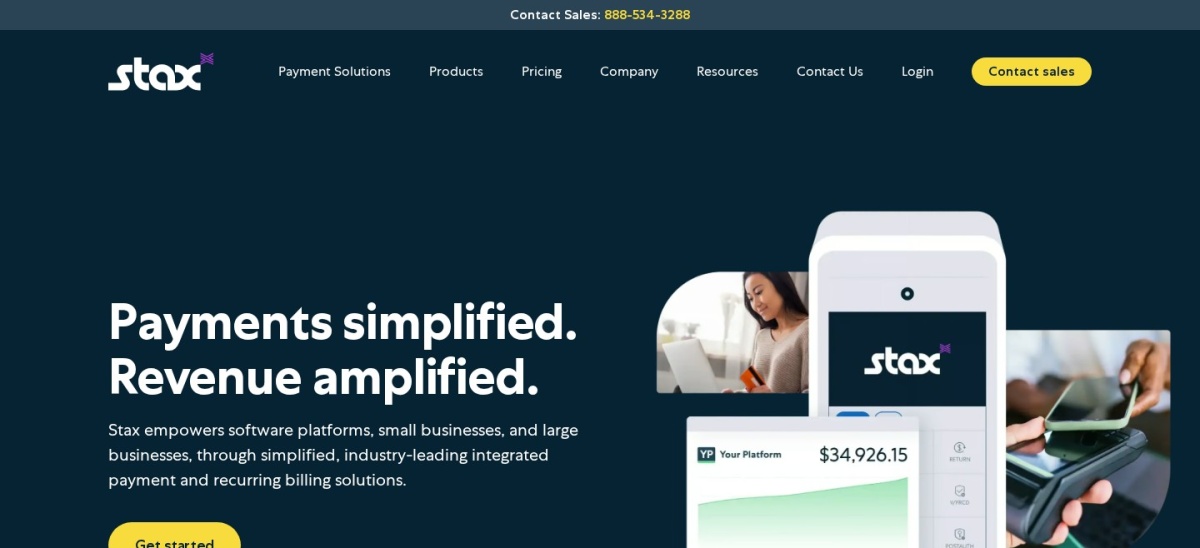
Stax homepage, captured Nov 2026.
Stax is a subscription payment processor that charges a flat monthly fee instead of a percentage of sales. The entry plan costs 99 dollars a month for up to 150,000 dollars of annual volume, with interchange passed through at no extra percentage and 8 cents per card-present transaction.
The trade off is the fixed fee itself. Low-volume months still cost 99 dollars, so small sellers pay more than they would on a flat rate. It suits established businesses with steady card volume that can spread the subscription across enough sales to beat percentage pricing.
Braintree is PayPal's developer platform for online payments, now sold as PayPal Enterprise Payments. One integration covers cards, PayPal, Venmo, Apple Pay and Google Pay, with card payments at 2.59% plus 49 cents and no monthly fee.
The trade off is support. Reviewers praise the APIs but report slow help when accounts are reviewed or funds are held, and there is no in-person hardware story. It suits online businesses whose customers pay with PayPal or Venmo and want those wallets beside cards in one checkout.
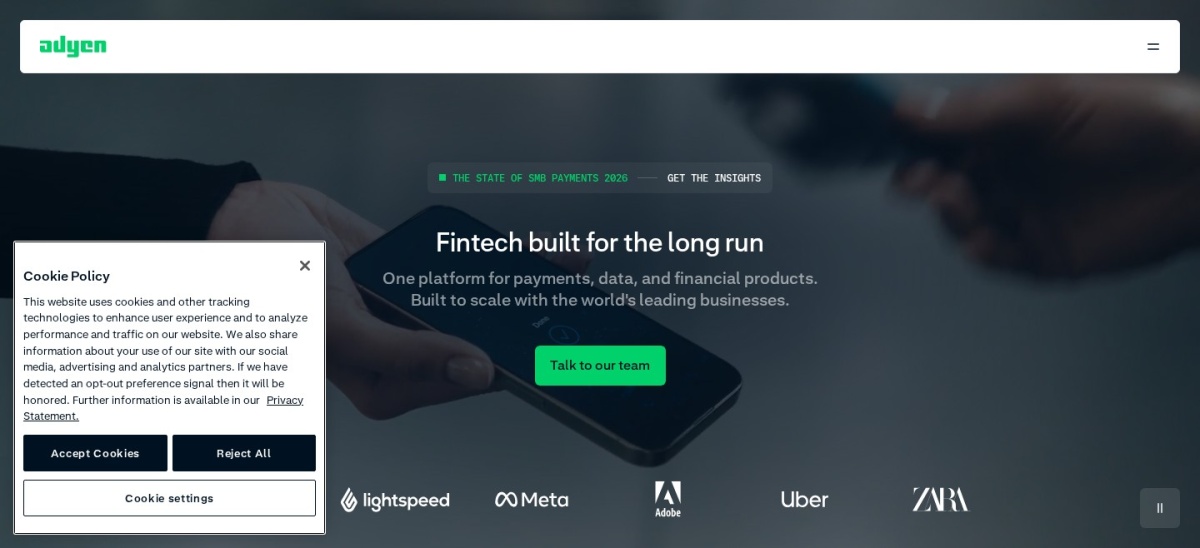
Adyen is the enterprise payments platform behind large global merchants and marketplaces. Its published United States card rate is 13 cents per transaction plus interchange and scheme fees with a 0.60% markup, and there is no setup or monthly fee.
The trade off is access. Adyen is sales-led, a minimum invoice applies by industry, and small businesses will not get self-serve signup or a published rate card. It suits large merchants that process across countries and want one platform for online, in-app and in-store payments.
What we like
Transparent interchange-plus pricing at scale
One platform for online, in-app and in-store sales
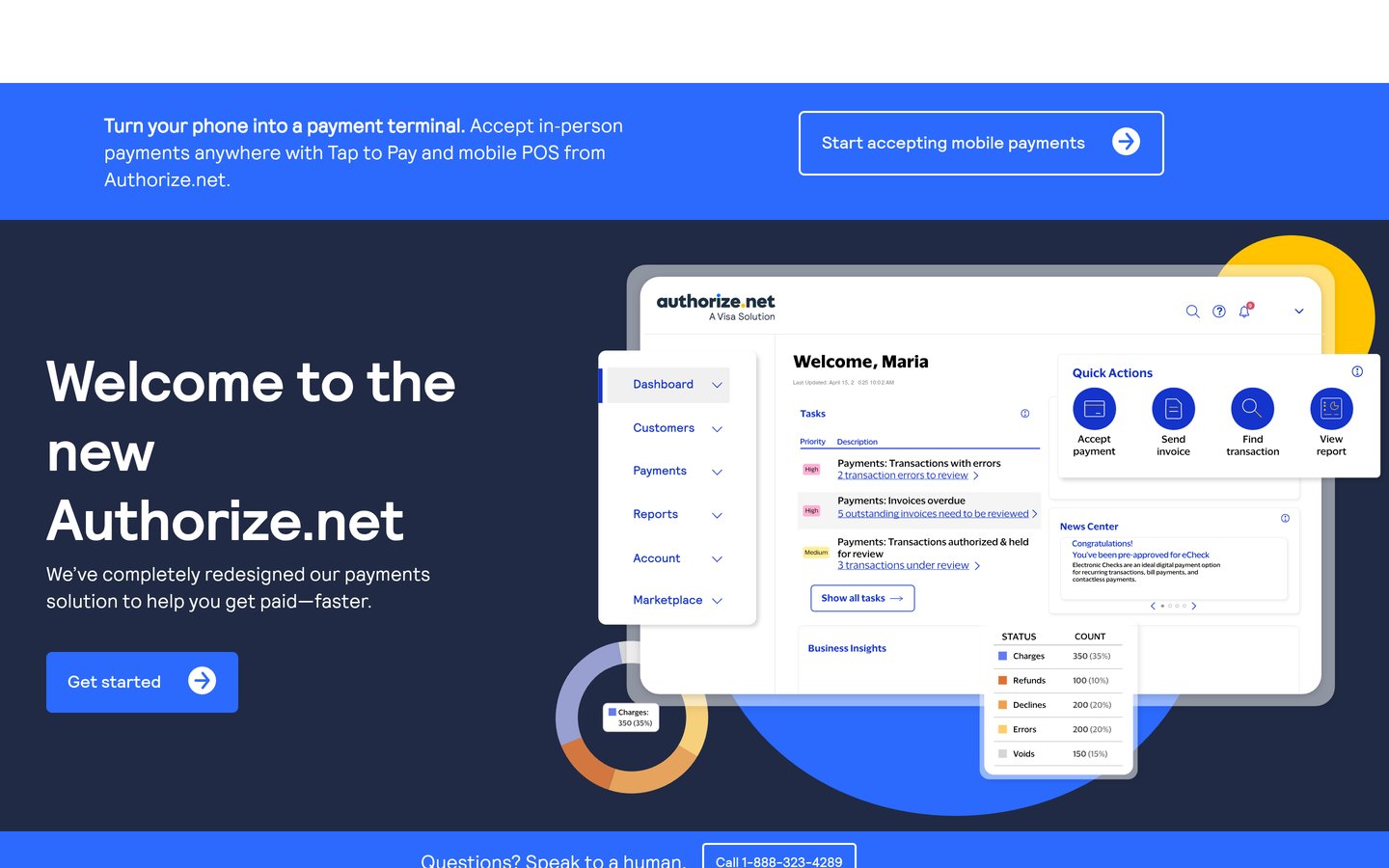
Authorize.net is the long-running payment gateway from Visa, and it works either as an all-in-one account or as a gateway on top of a merchant account you already have. The all-in-one plan costs 25 dollars a month with card payments at 2.9% plus 30 cents.
The trade off is the monthly fee. Very low-volume sellers pay 25 dollars before they process a single sale, and the gateway-only plan adds 10 cents per transaction on top of your processor's rates. It suits businesses that already have a merchant account and need a reliable gateway with fraud tools and recurring billing.
Clover is the Fiserv-owned point-of-sale system sold direct and through banks, with hardware from the pocket-sized Go reader to the full Station counter terminal. In-person rates start at 2.3% plus 10 cents on higher plans, and a payments-only plan starts at zero dollars a month.
The trade off is complexity. Prices vary by plan and reseller, some bundles run on multi-year agreements, and reviewers report billing surprises. It suits brick-and-mortar shops and restaurants that want strong hardware and are happy to compare quotes before signing.
A flat rate charges the same percentage on every sale, whatever card the customer uses. It is simple to budget and suits low-volume sellers, because there is no monthly fee and no surprise line items.
Interchange-plus passes the card networks' real cost through and adds a small published margin. Debit cards cost far less than rewards credit cards under this model, so businesses with steady volume usually pay less overall.
The crossover point depends on your card mix. Helcim's margin of 0.40% plus 8 cents beats a 2.9% flat rate on most debit and standard credit sales, while Stax's 99-dollar subscription wins once monthly volume is high enough to spread the fee thin.
How we chose
We started from the payment processors most often recommended for small and mid-size businesses, then kept the nine with verifiable ratings on G2, Capterra or Trustpilot and published United States pricing.
Prices and ratings were checked on 29 November 2026. Card rates come from each vendor's pricing page or vendor-supplied directory pricing, and review counts come from the review site named for each tool. Where a vendor sells through resellers, the list says so.
We left out processors that hide all pricing behind a sales call with no published rate, and tools with no verifiable review base. No vendor paid for a place, and we do not claim hands-on testing for this list.
How to choose payment processing software
Start with how your customers pay, then work out what each sale really costs.
Work out your average sale and monthly volume. A flat rate suits small tickets and low volume. Interchange-plus or a subscription wins once volume is steady and tickets are larger.
Match the tool to your channel. Square and Clover lead in person, Stripe and Braintree lead online, and PayPal leads where buyers already have accounts.
Add the extras to the headline rate. Count international cards, currency conversion, chargebacks and payout speed before you compare two rates.
Read the contract before you sign. Check the monthly fee, the term length and any early-exit charge, especially with reseller-sold hardware bundles.
FAQ
What is the best payment processing software in 2026?
Stripe is the best payment processing software for most businesses in 2026. It charges no monthly fee, takes 2.9% plus 30 cents per domestic card sale, and connects to 134 integrations, so it fits online stores, marketplaces and software platforms alike.
What is the cheapest payment processing software?
Helcim is the cheapest for most steady-volume sellers, because it passes interchange through and adds only 0.40% plus 8 cents per in-person sale with no monthly fee. Stax is cheaper still at high volume, since its $99 monthly subscription replaces any percentage markup.
Does Square or Stripe cost less?
Square costs less in person at 2.6% plus 15 cents, while Stripe and Square charge the same 2.9% plus 30 cents online. Pick Square for a shop counter and Stripe for a website, unless your volume is high enough for interchange-plus pricing.
Is there a payment processor with no monthly fee?
Yes. Stripe, Square, PayPal, Helcim and Braintree all charge no monthly fee and only take a cut of each sale. Authorize.net charges $25 a month and Stax charges $99 a month, so both need enough volume to pay for themselves.
Which payment processor is best for small businesses?
Square is the best payment processor for most small businesses that sell in person, thanks to its free POS app and 2.6% plus 15 cents in-person rate. Stripe is the better pick for businesses that sell mainly online.
Stripe vs PayPal: which is better?
Stripe is better for most sellers because its online rate is lower at 2.9% plus 30 cents against PayPal's 2.99% plus 49 cents, and it offers deeper integrations. PayPal wins when your customers already have PayPal accounts and expect its checkout button.
SaaS SEO and WordPress specialist with about 8 years of experience. Rakib compares WordPress plugins, themes, hosting and software using public pricing, documentation and user reviews. See how we rank.