Ramp is the best procurement software for cost control, with a free plan for cards, expenses and accounts payable, and Plus from fifteen dollars a user a month. Precoro suits teams that want a published flat price, while Procurify fits mid-market teams rolling out approvals everywhere.
How we make this list: we compare pricing pages, product documentation and public user reviews, then re-check every price before each update. No product paid for a place. Disclosure.
Ramp leads at 4.8 out of 5 on G2 from 2,578 reviews, with a free base tier for cards, expenses and accounts payable.
Precoro is the only full suite with a published flat price: Core from $499 a month billed annually.
Procurify is the easiest company-wide rollout at 4.6 out of 5, but it is quote-only with a median near $15,000 a year.
Coupa and SAP Ariba suit large enterprises, with the widest module lists and the largest supplier network.
ProcureDesk publishes Startup from $830 a month for 10 users, with guided setup and three-way matching.
How do you choose the top procurement software for cost control?
Cost control starts before the purchase, not after it. The best tools in this list force every request through approvals and budgets first, then track spend against those budgets in real time.
Published prices are rare in this category. Only Precoro, Ramp and ProcureDesk publish entry prices, while Coupa, SAP Ariba, Ivalua, JAGGAER, Zip and Procurify all sell by quote.
Enterprise suites cover the full source-to-pay cycle, while mid-market tools focus on the core job: requests, approvals, purchase orders and invoice matching.
Check implementation time before you buy. Precoro goes live in 2 to 8 weeks, while Coupa and SAP Ariba take 6 to 18 months with partner help.
The 9 best procurement software tools for cost control
01
Ramp
4.8/5on G2 (2,578 reviews, checked Nov 2026)
Paid from$15/mo
Best procurement software for cost control
Free planCards, expenses, AP
Paid planPlus, $15/user/mo
G2 rating4.8 out of 5
ImplementationDays, not months
ramp.com
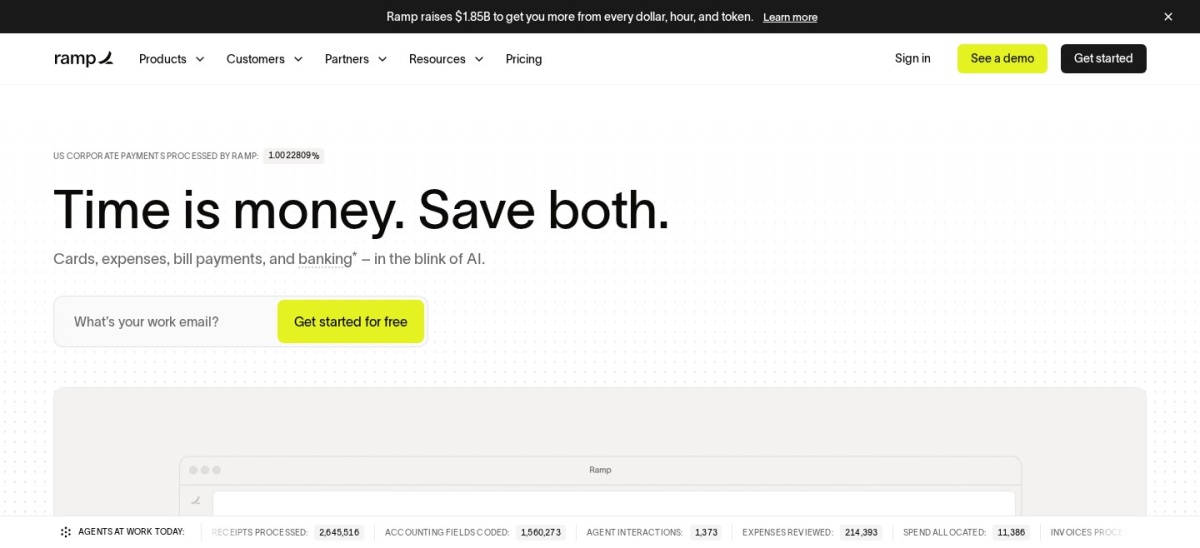
Ramp homepage, captured Nov 2026.
Ramp is a spend management platform for corporate cards, expenses, accounts payable and procurement. Its base tier is free, and Plus costs $15 a user a month with approvals, accounting automation and vendor management.
The trade off is scope. Ramp is not a full source-to-pay suite, so strategic sourcing and contracts need another tool. It suits finance teams that want cards, expenses and AP controlled from one free starting point.
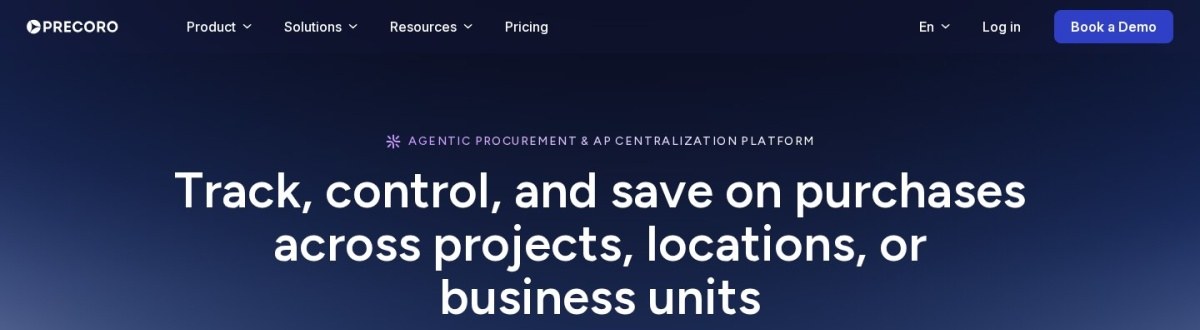
Precoro is a procure-to-pay platform for small and growing teams, covering requests, approvals, purchase orders, receiving and invoice matching. Core costs $499 a month billed annually, with no per-user maths and go-live in 2 to 8 weeks.
The trade off is the flat price. Real-time budget tracking, AI agents and single sign-on wait for Automation at $999 a month, and the annual-only billing means a $5,988 minimum commitment. It suits mid-size teams that want a price they can plan around.
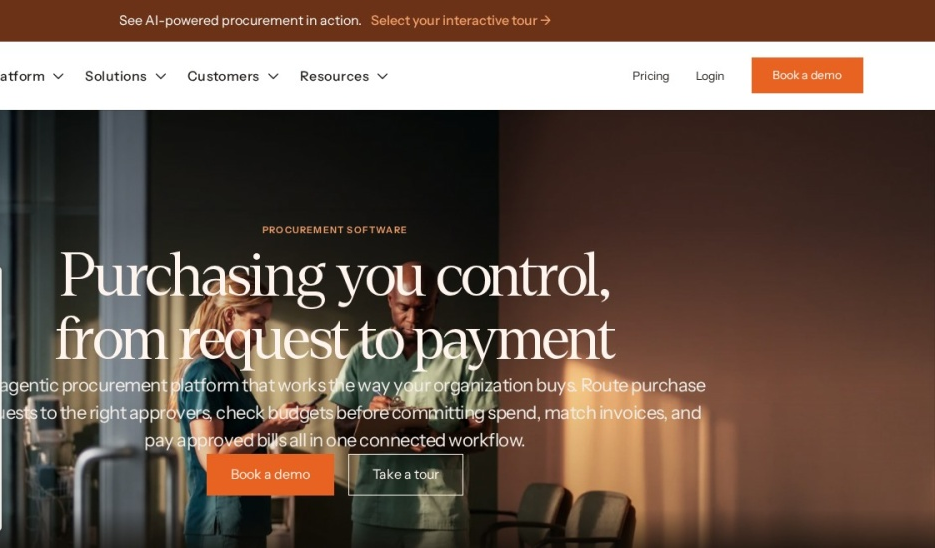
Procurify is a procure-to-pay platform for mid-market teams, covering purchasing, expenses and accounts payable with real-time budget tracking. Managers approve requests from the mobile app, which drives adoption across departments.
The trade off is pricing. Procurify publishes no price and offers no free trial, only a demo, with buyer data putting the median contract near $15,000 a year. It suits growing teams that need every department to follow the same buying process.
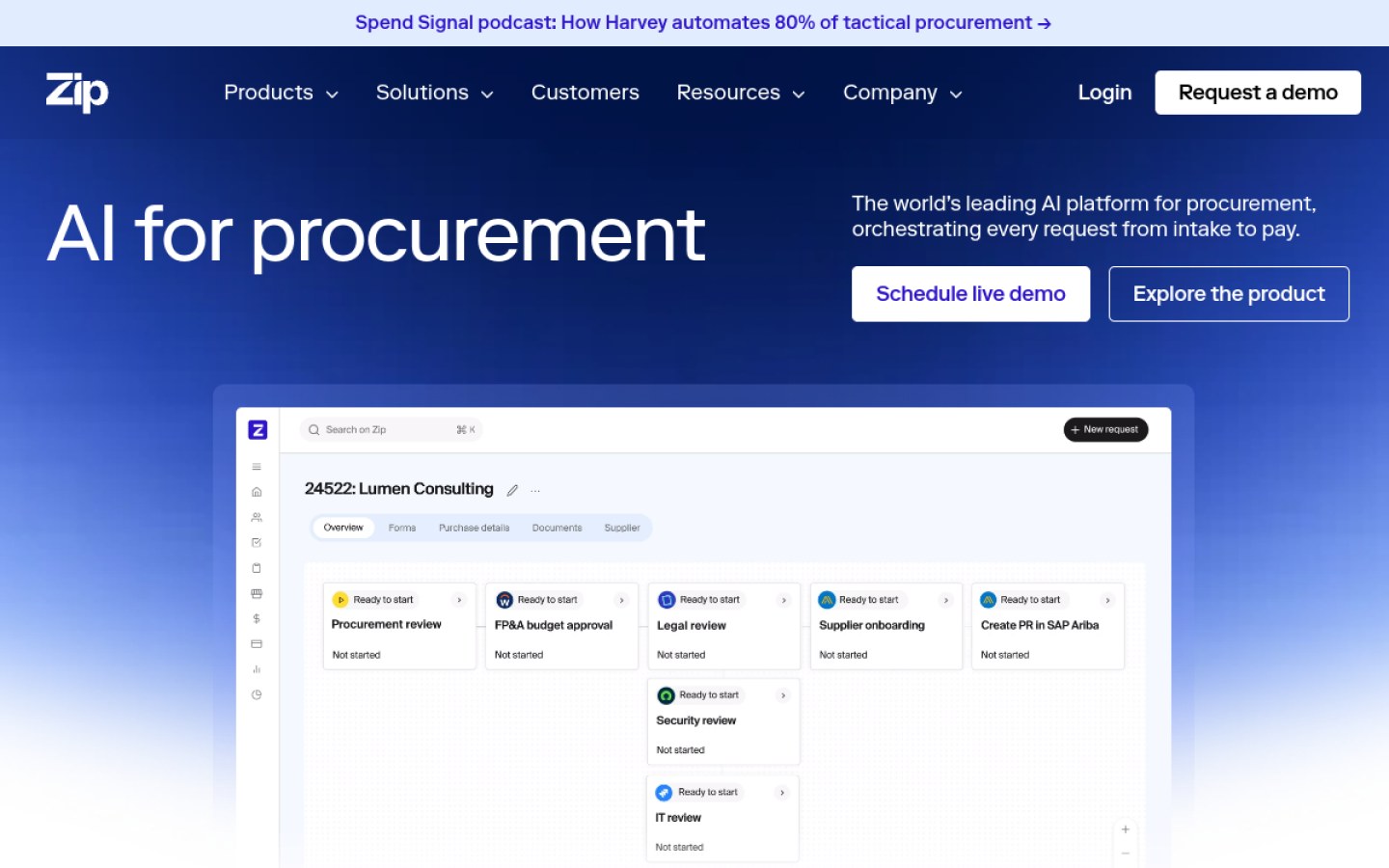
Zip is an intake-to-procure platform that gives every purchase one AI-guided front door. Employees submit requests, and Zip routes them by policy, amount, department and vendor before anything reaches finance or legal.
The trade off is that Zip is not a system of record. Purchase orders, invoicing and payments still live in your ERP or procurement suite, so Zip adds a layer rather than replacing one. It suits large companies where legal and security review every purchase.
Coupa is a business spend management platform covering sourcing, contracts, supplier management, procurement, invoicing and expenses in one suite, with spend analytics on top. It is rated 4.2 out of 5 on G2 from 569 reviews.
The trade off is cost and time. Coupa is quote-only with six-figure contracts and implementations of 4 to 6 months, so it suits enterprises, not small teams. It suits companies replacing several systems with one suite.
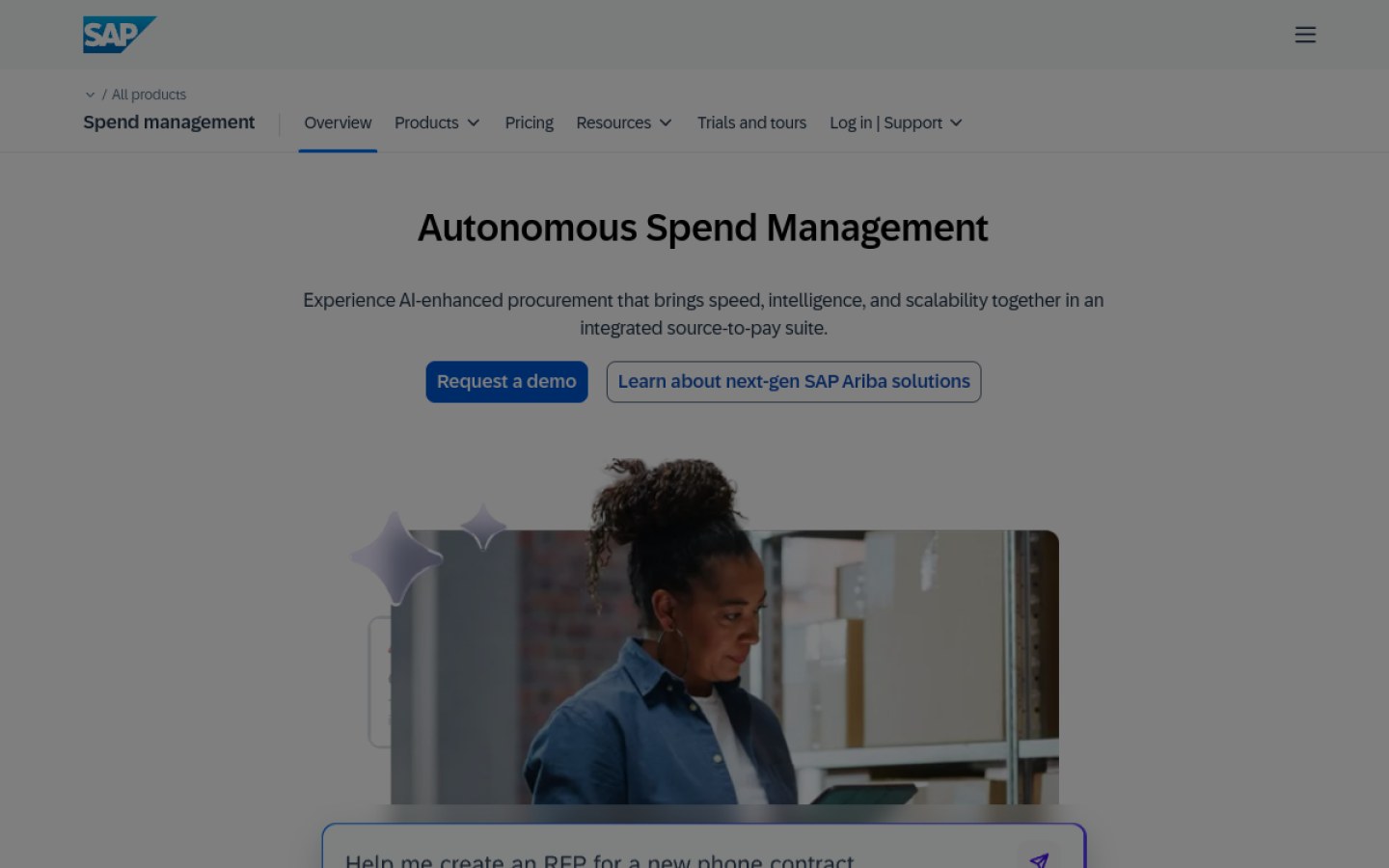
SAP Ariba is a source-to-pay suite covering sourcing, contracts, supplier lifecycle and risk, buying and invoicing, linked to the SAP Business Network. It tops G2's Procure to Pay Grid by score and runs the largest supplier network at over 5.5 million companies.
The trade off is fit. Ariba suits large global enterprises already running SAP, with implementations of 9 to 18 months and quote-based pricing. It suits SAP estates trading with suppliers already on the network.
What we like
Largest supplier network at 5.5 million
Deepest SAP S/4HANA integration
Tops G2's Procure to Pay Grid
Watch out for
Quote-only, enterprise pricing
9 to 18 month implementations
Interface feels complex to new users
Priced by spend processed, multi-year dealsVisit sap.com
07
Ivalua
4.3/5on G2 (102 reviews, checked Nov 2026)
PricingCustom/yr
Best for direct materials sourcing
Free planNo free plan
Paid planCustom quote
FocusDirect materials
G2 rating4.3 out of 5
ivalua.com
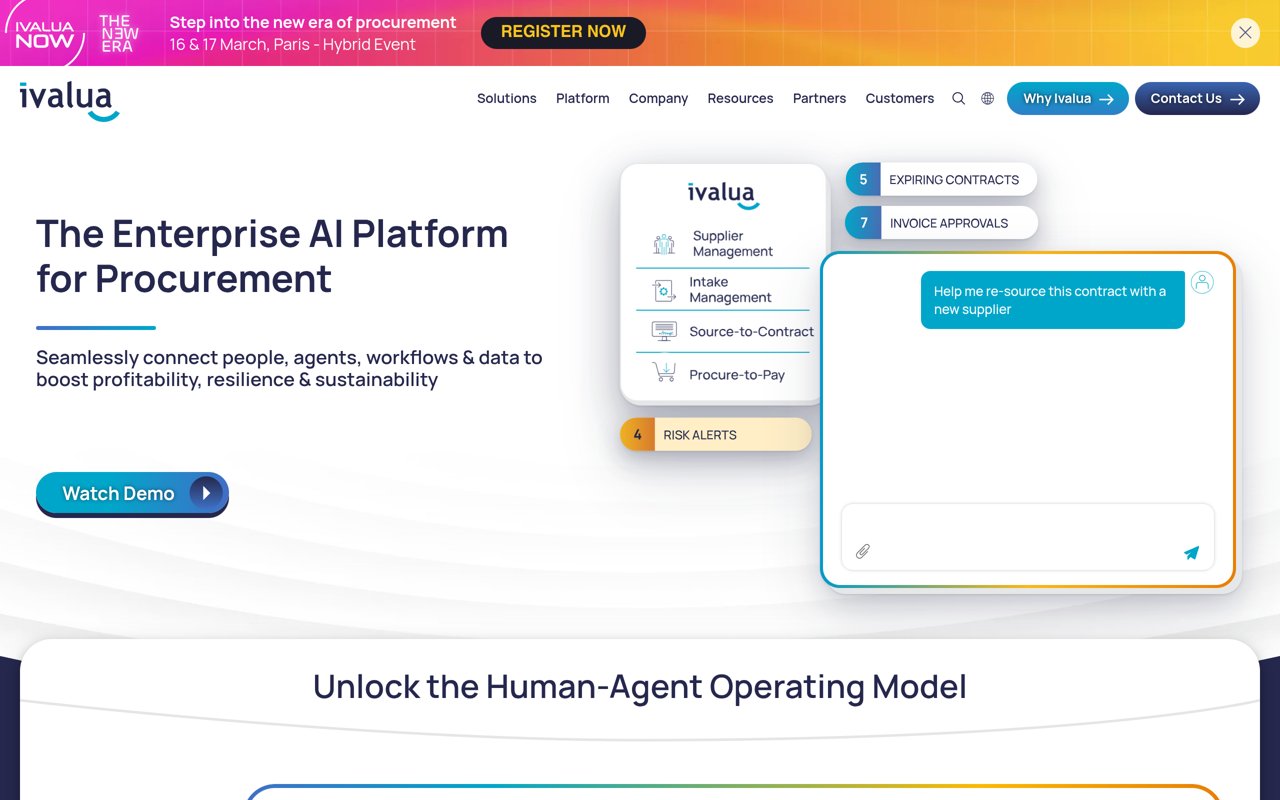
Ivalua homepage, captured Nov 2026.
Ivalua is a source-to-pay suite for direct and indirect materials alike, with strong configurability for complex buying. It holds 4.3 out of 5 on G2 from 102 reviews and covers sourcing, contracts, procurement and supplier risk.
The trade off is enterprise scope. Ivalua sells by quote with long implementations, so it suits large manufacturers and global companies, not small teams. It suits buyers with complex direct materials that simpler tools cannot model.
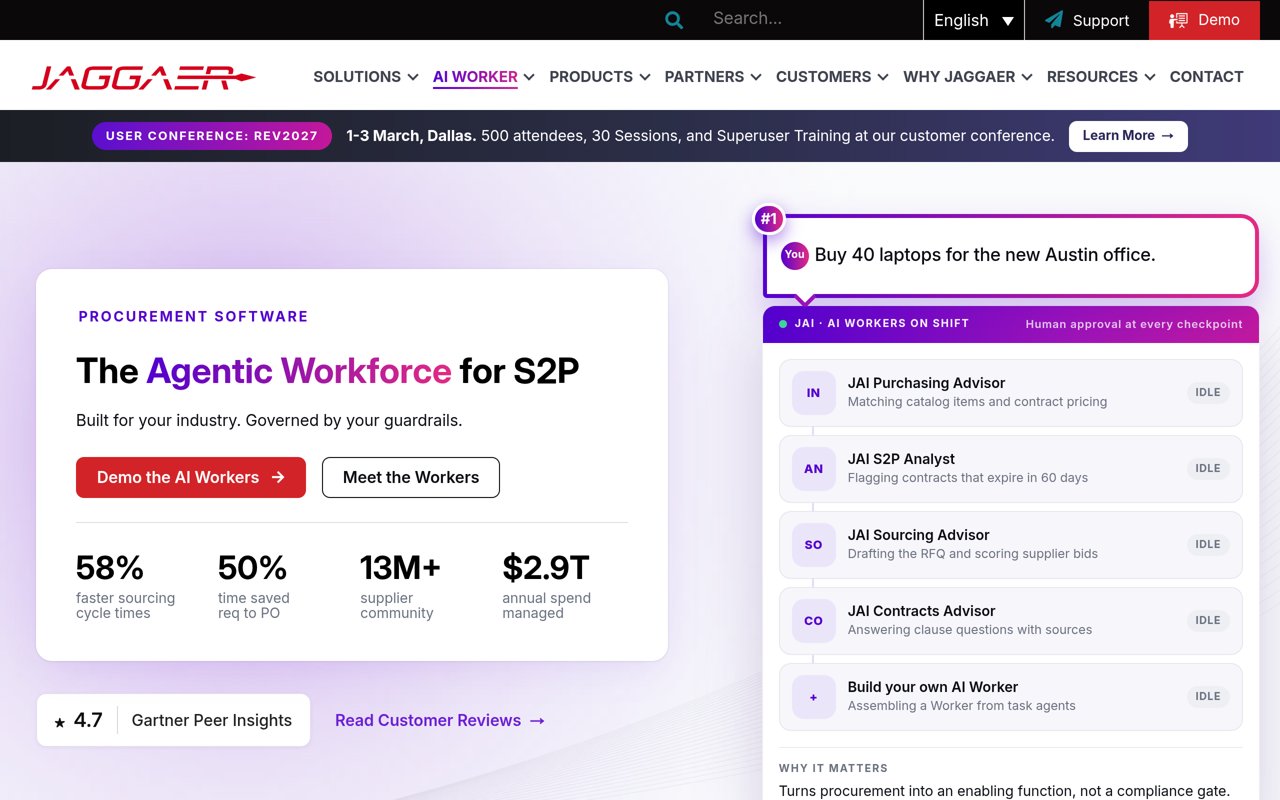
JAGGAER is a source-to-pay suite built around industry versions, with strategic sourcing, auctions, supplier management and quality for direct spend. It holds 4.1 out of 5 on G2 from 86 reviews.
The trade off is niche fit. JAGGAER suits manufacturing, life sciences and higher education best, with formal supplier qualification that generalist tools lack. It suits regulated buyers that need deep qualification and quality tracking.
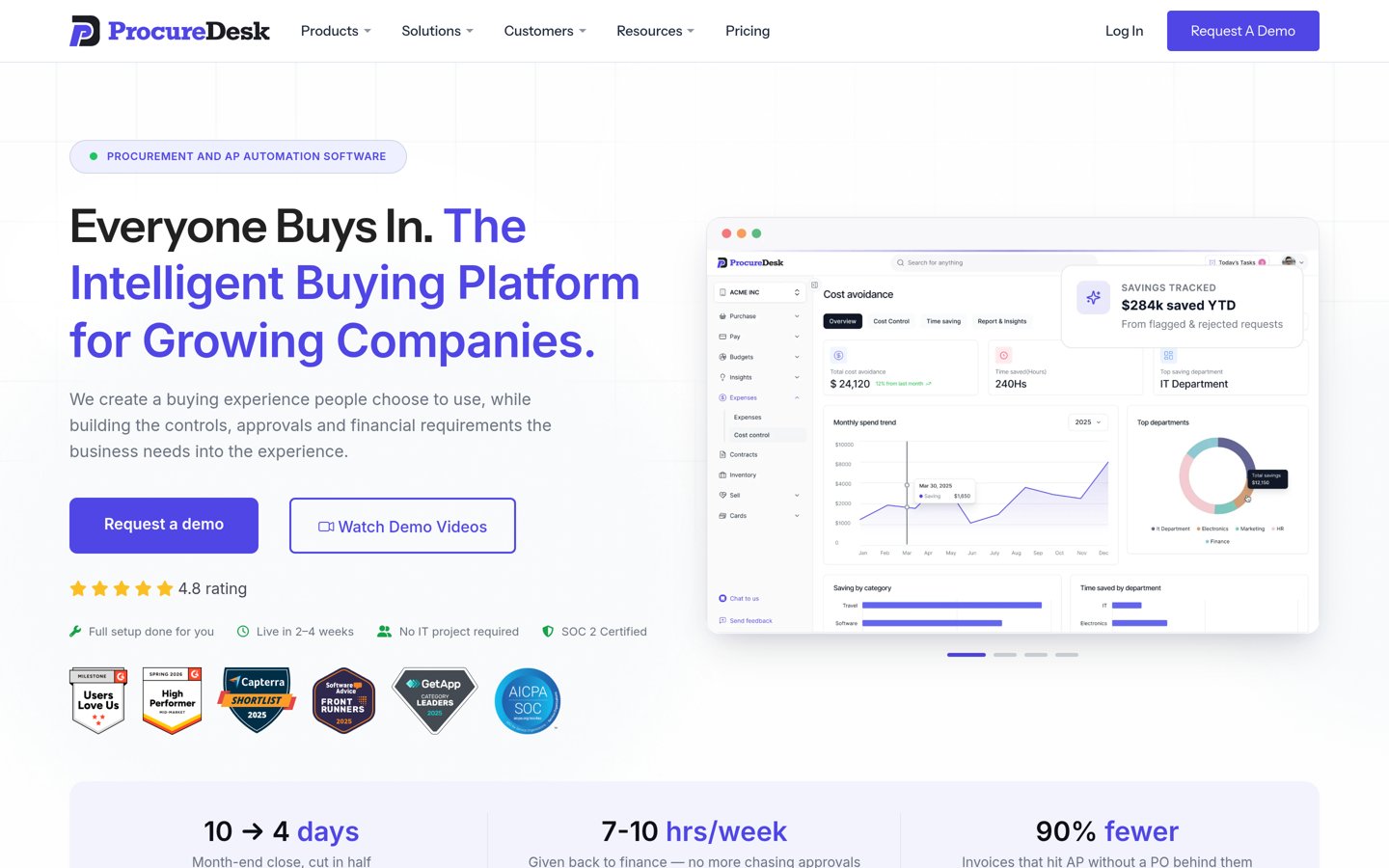
ProcureDesk is a procure-to-pay platform for finance-led teams that buy from catalogs, with 200-plus punch-out catalogs and automated three-way invoice matching. Startup costs $830 a month billed annually for 10 users, with guided setup included.
The trade off is the entry price. At $9,960 a year for 10 users, Startup costs more than Precoro Core, and unlimited requisitioners wait for Enterprise. It suits QuickBooks, Xero or NetSuite shops that want a fixed annual price.
Free plans cover the basics well. Ramp is free for cards, expenses and accounts payable, which is enough for a small team to control spend without a contract.
Paid plans mostly add approvals and budgets. Multi-step approvals, real-time budget checks and three-way invoice matching are the features that usually force the upgrade.
If your team only needs cards and expense tracking, Ramp free may be enough for months. Pay when you need purchase orders checked against budgets before approval.
How we chose
We started from the procurement platforms most often recommended for cost control in 2026, then kept those with a verifiable G2 rating and a published or quote-based price.
Prices come from each vendor's pricing page as reported in November 2026 checks, and ratings and review counts come from G2 on 29 November 2026. Where a vendor shows a sale, the list shows the regular price.
We left out tools with no verifiable G2 review count. No vendor paid for a place, and we do not claim hands-on testing for this list.
How to choose procurement software for cost control
Start with the spend you cannot see today, then pick the tool that forces it through approval first.
Map the spend that escapes approval today. Shadow purchases and emailed approvals are the usual leaks. Pick a tool that routes every request through one intake first.
Check budget enforcement, not just tracking. Precoro and Procurify check requests against live budgets at approval time, while reporting-only tools show the overspend after it happens.
Count the real yearly cost. Published prices here run from free to $9,960 a year, while quote-only suites start near $50,000 a year with implementation on top.
Plan the rollout time. Mid-market tools go live in weeks, enterprise suites in months, so match the timeline to how fast spend needs controlling.
FAQ
What is the best procurement software for cost control in 2026?
Ramp is the best procurement software for cost control for most teams. It pairs cards and expenses with accounts payable on a free plan, holds 4.8 out of 5 on G2 from 2,578 reviews, and Plus costs $15 a user a month.
What is the cheapest procurement software?
Ramp is cheapest because its base tier is free for cards, expenses and accounts payable. The cheapest paid plan with purchase orders is Spendwise from $9 a user a month, while Precoro Core costs $499 a month.
Which procurement software has a published price?
Precoro is the only full suite here with a published flat price: Core from $499 a month billed annually. ProcureDesk publishes Startup from $830 a month for 10 users, and Ramp publishes Plus at $15 a user a month.
Is Coupa or SAP Ariba better for cost control?
Coupa suits enterprises that want one suite for sourcing, contracts, procurement and expenses, at 4.2 out of 5 on G2. SAP Ariba suits large SAP estates with the biggest supplier network, at 4.1 out of 5 from 789 reviews.
Does Procurify have a free plan?
No, Procurify has no free plan or free trial, only a demo. It is quote-based, with buyer data putting the median contract near $15,000 a year, and requesters use free Basic accounts.
How long does procurement software take to implement?
Mid-market tools go live in 2 to 8 weeks, with Precoro at 2 to 8 weeks and Procurify near 8 weeks. Enterprise suites take 6 to 18 months, so budget partner time as well as licence fees.
SaaS SEO and WordPress specialist with about 8 years of experience. Rakib compares WordPress plugins, themes, hosting and software using public pricing, documentation and user reviews. See how we rank.