monday.com is the best project management tool for most teams. It is rated 4.7 out of 5 on G2 from more than 17,000 reviews, and paid plans start at $9 per seat a month. Pick Asana for cross-team portfolios, ClickUp for the most features per dollar, and Trello for simple visual boards.
How we make this list: we compare pricing pages, product documentation and public user reviews, then re-check every price before each update. No product paid for a place. Disclosure.
monday.com leads on G2 at 4.7 out of 5 from 17,422 reviews, with paid plans from $9 per seat a month.
Trello is the cheapest paid plan in this list at $5 per user a month, and its free plan covers up to 10 boards.
ClickUp packs the most into its paid plans, with a regular price of $12 per user a month after the annual-billing discount.
Smartsheet has no free plan, only a 30-day trial, but it is the strongest choice for spreadsheet-style planning at $9 a month.
Every tool here except Smartsheet has a free plan, so a team can try the core workflow before paying.
What a team project tool should cover
A team project tool has one job: show everyone what needs doing, who owns it and when it is due. If the tool hides that behind setup work, the team stops using it.
Look for more than one view. A list works for daily tasks, a board works for status, and a timeline or Gantt view works for deadlines that depend on each other.
Free plans differ more than prices do. Some cap the team at 2 users, some cap boards or projects, and some limit automations to a few hundred runs a month.
Check the seat rules before you buy. monday.com bills paid plans in seats with a 3-seat minimum, while Asana and ClickUp bill per user. Our guide on adding users in WordPress shows the same seat-and-role thinking on a smaller scale.
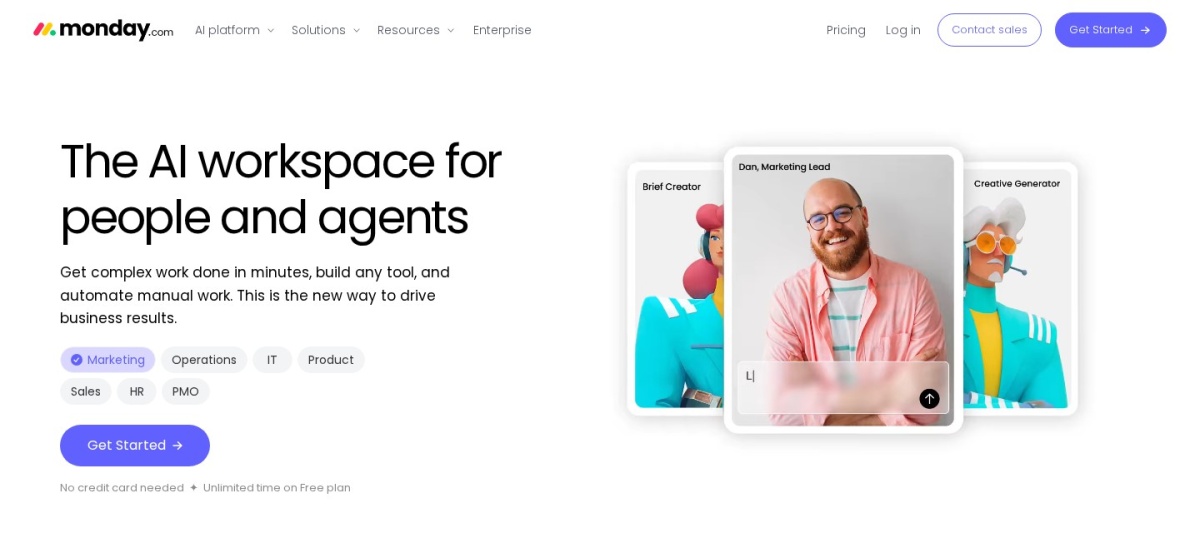
monday.com is a visual work platform built around boards with typed columns for status, owner, date and budget. The free plan covers up to 2 seats and 3 boards, while Basic at $9 per seat a month billed yearly adds unlimited items, boards and viewers.
The trade off is the seat minimum. Every paid plan needs at least 3 seats, so a 2-person team still pays for 3, and automations only arrive on Standard at $12 a seat. It suits teams that want colourful, flexible boards without a long setup.
What we like
Highest G2 rating in this list at 4.7 out of 5
Boards are easy to shape around any workflow
Free plan is genuinely usable for a pair
Strong templates for marketing, sales and HR teams
Asana is a work management platform that links daily tasks to projects, portfolios and goals. The free Personal plan covers up to 2 users with unlimited tasks and projects, while Starter at $10.99 per user a month billed yearly adds Timeline, Gantt views, dashboards and unlimited automations.
The trade off is that the planning layer costs more. Portfolios, goals and workload views sit on Advanced at $24.99 per user a month, so small teams pay for the full ladder to plan across teams. It suits cross-functional teams that run many projects at once.
What we like
Clean, consistent interface across list, board and timeline
Task dependencies and multi-homing keep work linked
Unlimited automations on Starter
Used by more than 100,000 organisations
Watch out for
Free plan is limited to 2 users
Portfolios and goals need the Advanced plan
No built-in time tracking on Starter
Advanced adds portfolios, goals and workload viewsVisit asana.com
03
ClickUp
4.7/5on G2 (11,000+ reviews, checked Nov 2026)
Paid from$12/mo
Best value for features per dollar
Free planYes, unlimited tasks
Cheapest paid planCore, $12/user/mo regular
Automations1,000 actions a month on Core
Native time trackingYes, on Core
clickup.com
ClickUp homepage, captured Nov 2026.
ClickUp is an all-in-one workspace that combines tasks, docs, whiteboards, goals and time tracking. The free plan includes unlimited tasks and members with 100 automation actions a month, while Core lists a regular price of $12 per user a month, or $9 with annual billing, and adds unlimited storage, Gantt views and 1,000 automation actions.
The trade off is complexity. ClickUp has more settings than most tools here, so a team needs time to set it up well, and large workspaces can feel slow. It suits teams that want to replace several tools with one workspace.
What we like
Most features included at the entry paid price
Docs, goals and time tracking in the same tool
Free plan allows unlimited tasks and members
Rated 4.7 out of 5 on G2
Watch out for
Steep learning curve for new teams
Interface can feel crowded with many features
Regular price is $12, not the $9 annual-billing price
Business adds 10,000 automations and advanced dashboardsVisit clickup.com
04
Notion
4.6/5on G2 (13,876 reviews, checked Nov 2026)
Paid from$10/mo
Best for docs, wikis and projects together
Free planYes, for individuals
Cheapest paid planPlus, $10/member/mo
Databases and boardsYes, on all plans
Notion AITrial on Plus, full on Business
notion.com
Notion homepage, captured Nov 2026.
Notion is a flexible workspace that combines pages, wikis, databases and project boards in one place. The free plan covers personal use with a block limit once a second member joins, while Plus at $10 per member a month billed yearly adds unlimited collaborative blocks, unlimited file uploads and 30-day page history.
The trade off is structure. Notion gives a team a blank database, not a ready-made project workflow, so someone has to design the system first. It suits docs-first teams that want their wiki and their project tracker in the same tool.
What we like
One workspace for docs, wikis and projects
Databases link pages, tasks and people together
Rated 4.6 out of 5 on G2 from 13,876 reviews
Free plan is strong for personal use
Watch out for
No ready-made project workflow out of the box
Learning curve while the team builds its system
Automation is weaker than dedicated project tools
Business adds Notion Agent, AI meeting notes and SAML SSOVisit notion.com
05
Trello
4.4/5on G2 (14,064 reviews, checked Nov 2026)
Paid from$5/mo
Best for simple visual boards
Free planYes, 10 boards per workspace
Cheapest paid planStandard, $5/user/mo
Timeline and calendarPremium plan
Automations1,000 runs a month on Standard
trello.com
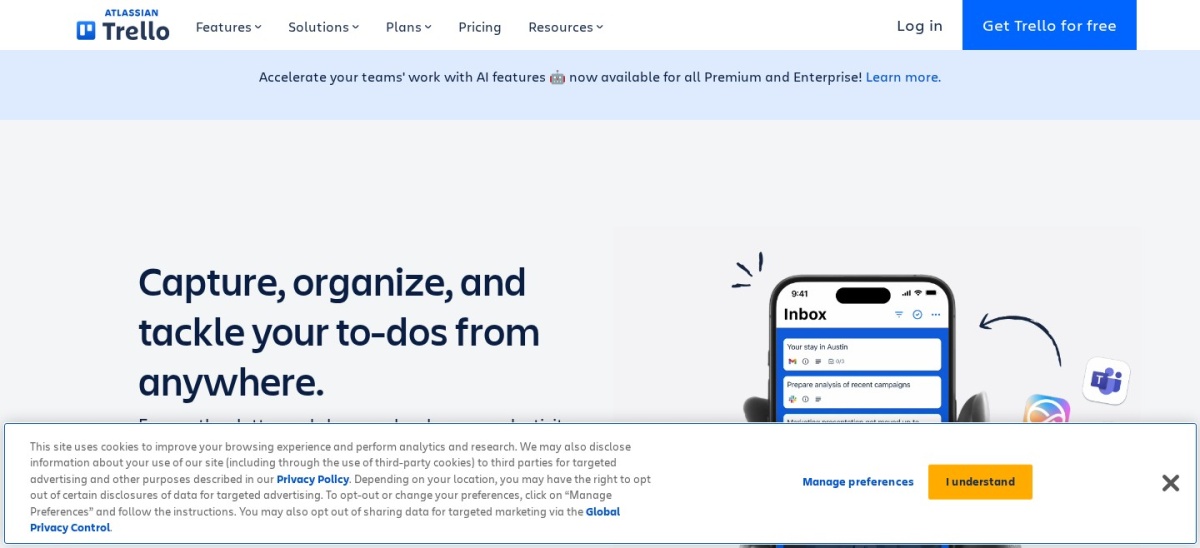
Trello homepage, captured Nov 2026.
Trello is a Kanban board tool from Atlassian that organises work as cards on lists. The free plan allows up to 10 boards and 10 collaborators per workspace with 250 automation runs a month, while Standard at $5 per user a month billed yearly adds unlimited boards, custom fields and 1,000 automation runs.
The trade off is depth. Trello has no built-in Gantt chart or workload view on Standard, and complex projects with many dependencies outgrow boards quickly. It suits small teams that want a visual board running in minutes.
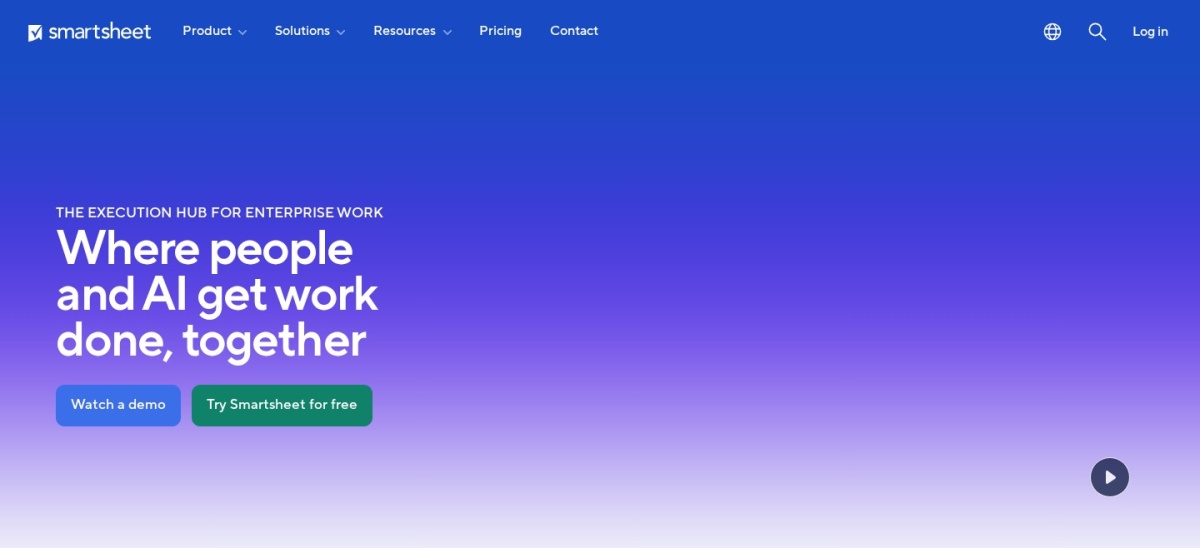
Smartsheet is a work management platform built around a spreadsheet-style grid, with board, calendar and Gantt views layered on top. Pro costs $9 per member a month billed yearly for 1 to 10 members, with 250 automations a month and 20 GB of storage, and a 30-day trial of Business is available instead of a free plan.
The trade off is the learning curve, the most common complaint on G2, and the fact that Gantt views, workload tracking and unlimited automations need Business at $19 a month. It suits teams that already plan in spreadsheets and want reports on top.
What we like
Largest G2 review base here at 22,632 reviews
Familiar grid layout for spreadsheet users
Strong reports and dashboards on Business
Good for tracking many projects in one place
Watch out for
No free plan, only a 30-day trial
Steep learning curve for new users
Key views and features need the Business plan
Business adds Gantt, workload tracking and unlimited automationsVisit smartsheet.com
07
Jira
4.3/5on G2 (7,938 reviews, checked Nov 2026)
Paid from$7.91/mo
Best for software and agile teams
Free planYes, up to 10 users
Cheapest paid planStandard, $7.91/user/mo
Scrum and Kanban boardsYes, on all plans
Automation runs1,700 a month on Standard
atlassian.com
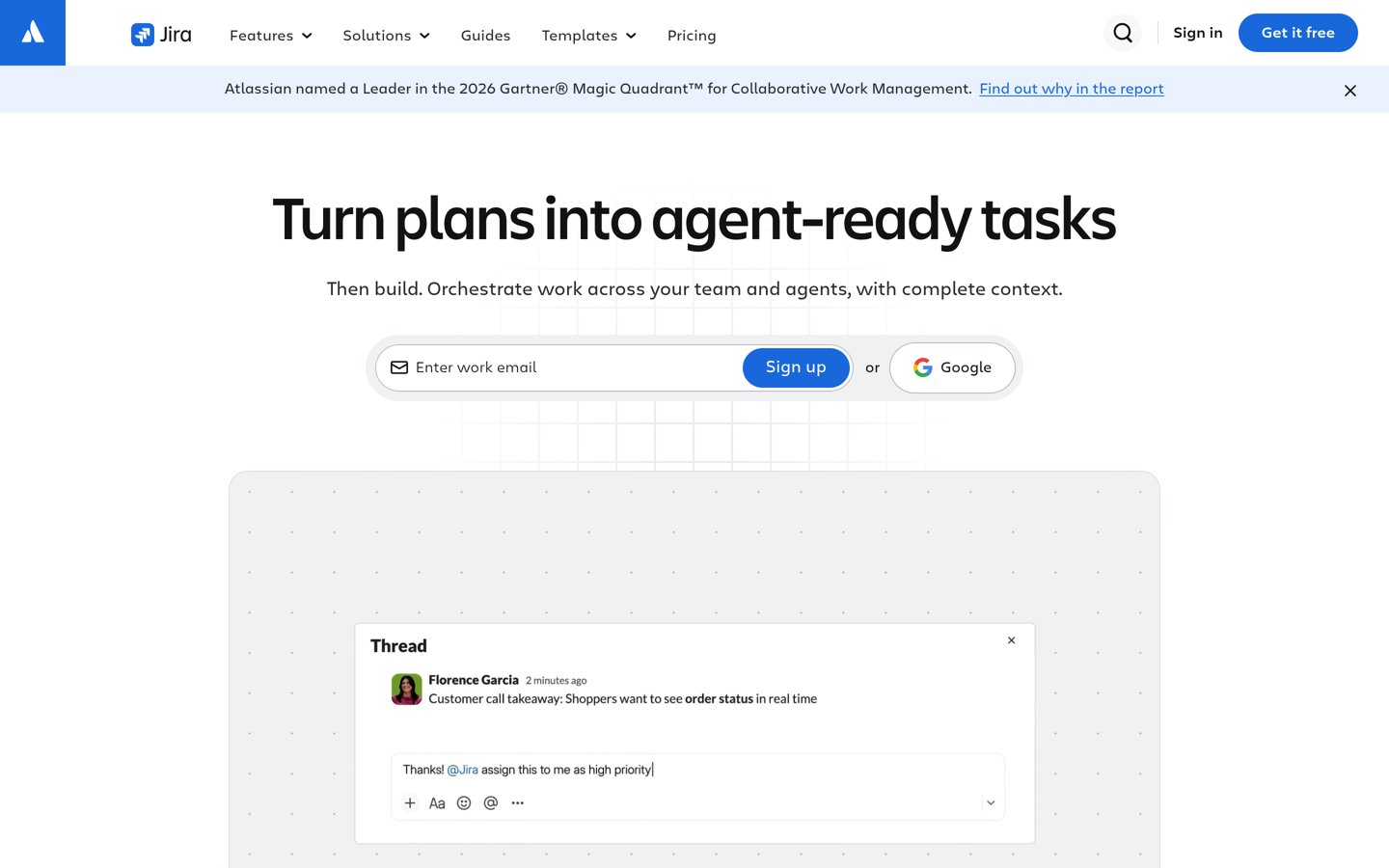
Jira homepage, captured Nov 2026.
Jira is Atlassian's issue and project tracker, built for software teams that work in sprints. The free plan covers up to 10 users with 2 GB of storage, while Standard costs $7.91 per user a month billed yearly and adds user roles, 250 GB of storage and 1,700 automation rule runs a month.
The trade off is setup and price by seat count. Jira's per-user price falls as seats rise, and non-technical teams often find its workflows heavy for simple work. It suits software teams that need sprints, backlogs and release tracking.
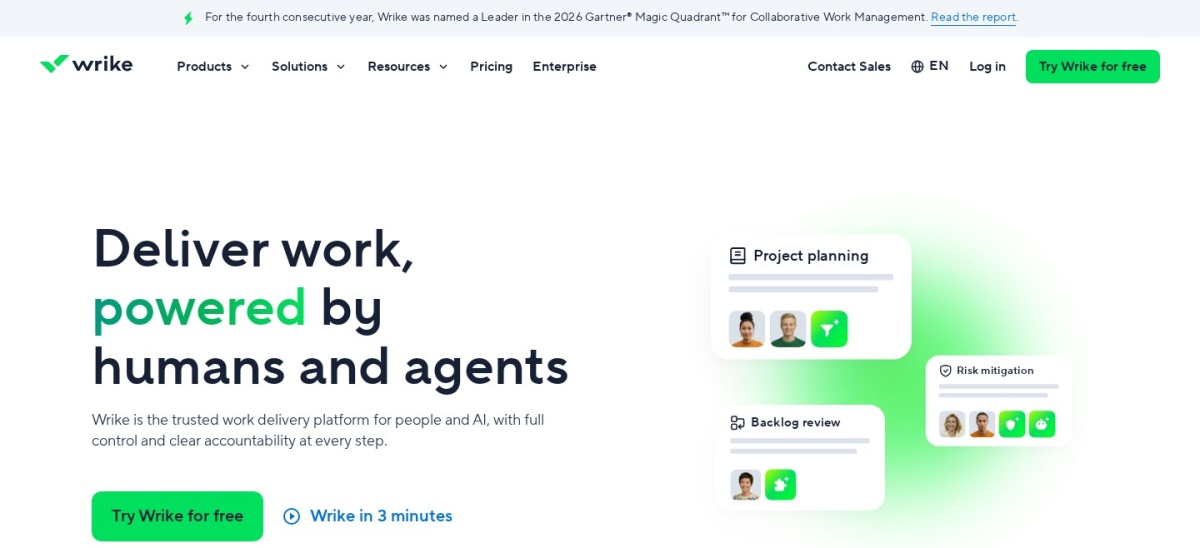
Wrike is a work management platform for teams that need structured workflows, request forms and approvals. The free plan covers up to 5 users, while Team at $9.80 per user a month billed yearly adds dashboards, Gantt charts and shareable workflows for 2 to 25 users.
The trade off is a steep price jump. Custom fields, request forms and workload charts sit on Business at $24.80 per user a month, so the plan most teams need costs more than twice the entry plan. It suits marketing and operations teams with formal approval steps.
What we like
Strong request forms and approval chains
Cross-tagging puts one task in many views
Gantt charts and dashboards on the Team plan
More than 400 integrations listed
Watch out for
Business plan costs $24.80, over twice the Team price
Interface takes time to learn
G2 rating of 4.2 is near the bottom of this list
Business adds custom fields, request forms and workload chartsVisit wrike.com
09
Basecamp
4.1/5on G2 (5,488 reviews, checked Nov 2026)
Paid from$15/mo
Best for simple team communication
Free planYes, 1 project only
Cheapest paid planPlus, $15/user/mo
Flat-rate planPro Unlimited, $299/mo
Gantt chartNo
basecamp.com
Basecamp homepage, captured Nov 2026.
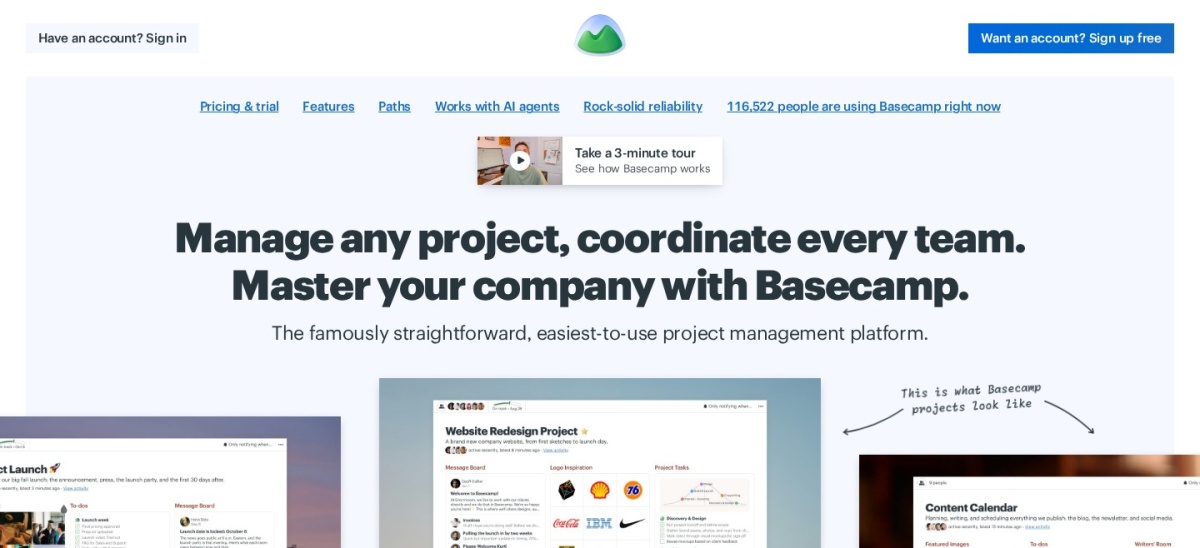
Basecamp is a calm project tool that puts to-dos, message boards, schedules, chat and files in one place per project. The free plan covers 1 project with 1 GB of storage, while Plus at $15 per user a month adds unlimited projects, 500 GB of storage and unlimited integrations.
The trade off is missing planning features. Basecamp has no Gantt chart, no subtasks and no built-in time tracking, so teams that plan in detail will feel the gaps. It suits teams that value simple communication over heavy planning.
What we like
Simplest tool in this list to use day to day
Flat $299 a month Pro plan suits large teams
Chat, files and to-dos in one place
No per-user charge on the Pro Unlimited plan
Watch out for
No Gantt chart, subtasks or time tracking
Lowest G2 rating in this list at 4.1 out of 5
Free plan allows only 1 project
Pro Unlimited adds 5 TB storage and priority support for $299 a monthVisit basecamp.com
Free vs paid: what you give up
Free plans cover the basics well. Most include task lists, boards and a few projects, which is enough to test the workflow with a small team.
Paid plans mostly add views and limits. You get Timeline and Gantt views, more automations, more storage and guest access.
Smartsheet is the exception: it has no free plan at all, only a 30-day trial. Basecamp's free plan allows only one project, and Asana's allows only two users.
For a team of five, the cheapest paid seat is Trello Standard at $5 a month, or $300 a year for the team. The same team on Basecamp Plus pays $900 a year.
How we chose
We started from the best-known project management tools for teams, then kept nine with a free plan or trial, a published price and a public G2 rating.
Prices come from each vendor's pricing page, checked on 26 November 2026. Ratings and review counts come from G2 on the same day. Where a vendor shows a sale price, the list shows the regular price.
We left out tools with no published price and tools aimed only at one niche, such as construction or legal work. No vendor paid for a place, and we do not claim to have used these tools ourselves.
How to choose a project management tool for your team
Start with how your team already works, then match the tool to that habit.
Count your team and your projects. A 2-person team fits Asana or monday.com free plans, while a 10-person team needs to compare per-seat prices, seat minimums and the flat-rate Basecamp Pro plan.
List the views you actually need. If deadlines depend on each other, you need Timeline or Gantt views. Trello Standard and Basecamp do not offer them, so check before you commit.
Try the free plan with real work. Run one real project for two weeks and watch whether the team updates it without reminders. A tool nobody updates is worse than a spreadsheet.
Check the next plan up. Automations, portfolios and workload views often sit one tier above the entry plan. Price that tier too, because most teams outgrow the cheapest plan.
FAQ
What is the best project management tool for teams?
monday.com is the best pick for most teams. It is rated 4.7 out of 5 on G2 from 17,422 reviews, paid plans start at $9 per seat a month, and its boards adapt to almost any workflow without a long setup.
Which project management tool is cheapest for a small team?
Trello is the cheapest paid option here at $5 per user a month billed yearly. Its free plan covers up to 10 boards per workspace, and Standard adds unlimited boards and 1,000 automation runs a month.
Does ClickUp really cost $9 or $12 a month?
Both figures are real. ClickUp shows $9 per user a month with annual billing and $12 as the regular price without the annual commitment. This list uses the regular $12 price, which is $144 per user a year.
Which tool is best for software teams?
Jira is the best choice for software teams. It is built for sprints, backlogs and release tracking, with Scrum and Kanban boards on every plan and a free plan for up to 10 users.
Is there a good free project management tool for teams?
Yes. ClickUp, Trello, Notion, Asana, monday.com, Jira, Wrike and Basecamp all have free plans. Trello and ClickUp are the most generous, while Asana and monday.com limit free use to 2 users or seats.
What is the difference between monday.com and Asana?
monday.com builds work around flexible boards with typed columns, while Asana links tasks to projects, portfolios and goals. monday.com rates higher on G2 at 4.7 against 4.4, and Asana is stronger for cross-team planning.
SaaS SEO and WordPress specialist with about 8 years of experience. Rakib compares WordPress plugins, themes, hosting and software using public pricing, documentation and user reviews. See how we rank.