Anaplan is the best of the top forecasting software, with connected planning used by large finance teams and a top G2 rating from hundreds of reviewers. Datarails suits Excel-first teams, while Fathom is the cheapest published price at 450 dollars a month.
How we make this list: we compare pricing pages, product documentation and public user reviews, then re-check every price before each update. No product paid for a place. Disclosure.
Anaplan is the strongest connected planning platform here, rated 4.6 out of 5 from 495 G2 reviews.
Seven of the nine tools are priced by quote, with entry contracts near 30,000 dollars a year.
Jirav Pro is published at 15,000 dollars a year, and Fathom Pro at 450 dollars a month per company.
Datarails, Vena and Cube keep planning in Excel, while Anaplan and Pigment use a dedicated model.
Fathom is the fastest to set up, with most teams live in under a month.
How do you choose the top forecasting software for your team?
Forecasting software turns budgets into rolling plans that update as actuals arrive. Finance teams use it to model scenarios, reforecast cash and answer what-if questions without rebuilding spreadsheets.
Most of the market is priced by quote. Only Jirav and Fathom publish prices, at 15,000 dollars a year and 450 dollars a month, while Anaplan, Datarails, Vena, Cube, Pigment, Workday and Planful all quote per deal.
Excel is the dividing line. Datarails, Vena and Cube keep finance teams working in spreadsheets, while Anaplan, Pigment and Planful move planning into a dedicated model with its own interface.
Start with your team size and timeline. Small finance teams should look at Jirav and Fathom first, mid-size teams at Datarails and Cube, and enterprises with months to implement at Anaplan, Vena and Workday.
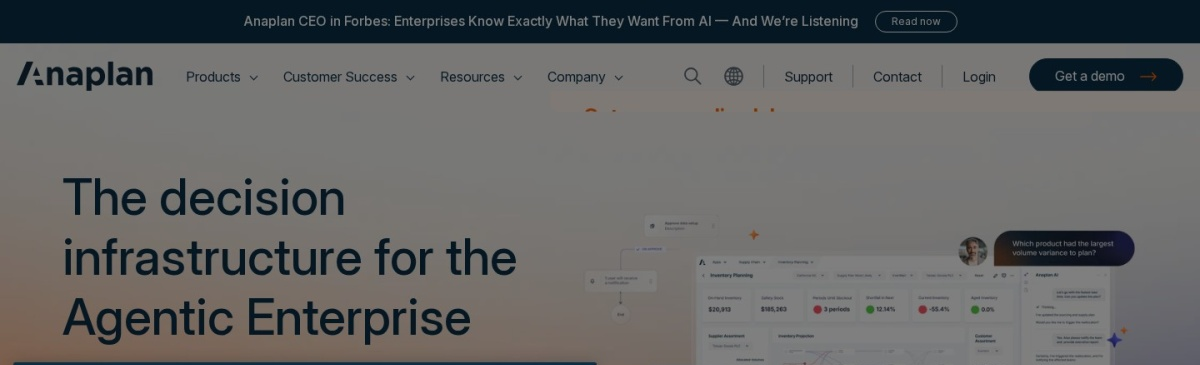
Anaplan is a connected planning platform for finance and operations, built on its Hyperblock engine for large models. It links budgets, forecasts and workforce plans in one shared model, with PlanIQ for predictive forecasts and integrations for SAP, Oracle, Salesforce and Workday.
The trade off is cost and setup. Anaplan publishes no prices, third-party data puts entry deals near 30,000 to 50,000 dollars a year, and G2 reviewers report 3 to 6 months to go live. It suits large finance teams that need one connected model across departments.
Datarails is an FP&A platform that keeps finance teams working in Excel, with live data connections behind every spreadsheet. It adds dashboards, consolidations and an AI assistant called FP&A Genius, with 600 plus integrations for ERP, CRM and payroll systems.
The trade off is price and the Excel tie. Datarails publishes no prices, typical contracts run near 33,000 dollars a year by third-party data, and teams that want to leave spreadsheets will not find a native model here. It suits mid-size finance teams that live in Excel and want live data.
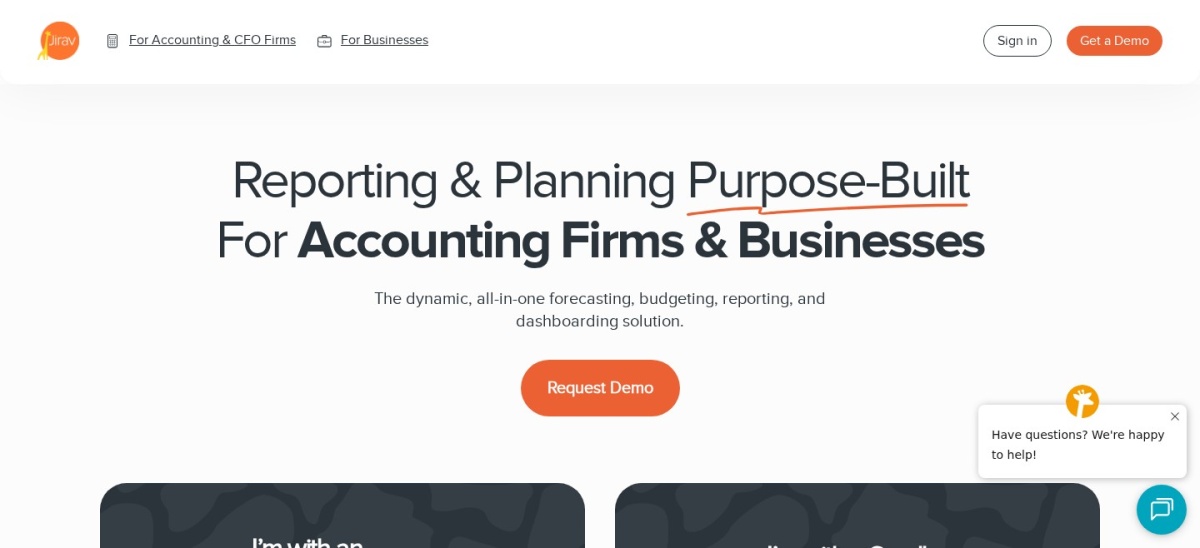
Jirav is an FP&A platform for small and mid-size businesses, with driver-based budgets, rolling forecasts and board-ready reports. The Pro plan costs $15,000 a year and covers multi-year plans, departmental budgeting and 5 admin users, with QuickBooks, Xero and Gusto integrations.
The trade off is scope and price. Jirav has only 4 integrations, the Starter plan price did not render on its pricing page today, and Pro at $15,000 a year is steep for a small team. It suits growing companies that want driver-based planning without an enterprise quote.
What we like
Driver-based budgets and rolling forecasts
Published Pro price at $15,000 a year
1 to 3 months to go live
Rated 4.7 out of 5 on G2
Watch out for
Only 4 integrations
Starter price did not render on the pricing page today
Pro at $15,000 a year is steep for small teams
Starter exists but its price did not render todayVisit jirav.com
04
Vena
4.5/5on G2 (480 reviews, checked Nov 2026)
PricingCustom/yr
Best Excel-native planning with close tools
PricingQuote only
Free planNo, demo only
ImplementationAbout 5 months
TiersProfessional, Complete
vena.io
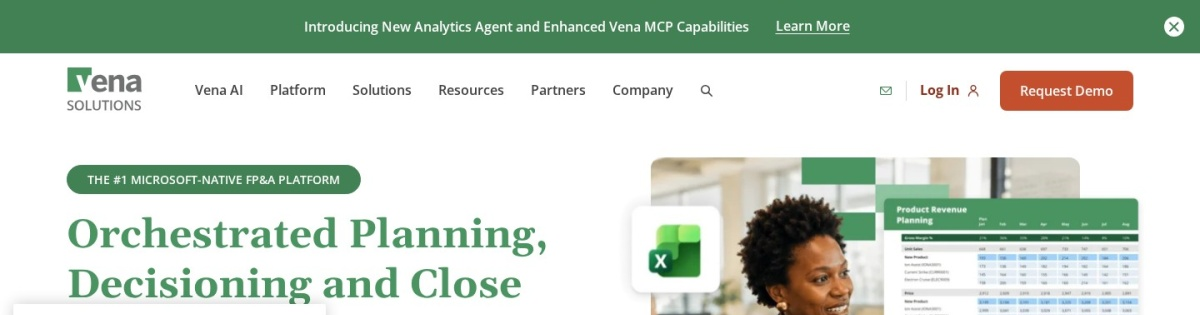
Vena homepage, captured Nov 2026.
Vena is an Excel-native planning platform for finance teams, with budgeting, forecasting and close management in spreadsheets. It offers Professional and Complete tiers, workflow approvals and pre-built templates, with about 5 months to implement by G2 reviewer reports.
The trade off is price and setup. Vena publishes no prices, third-party data puts typical contracts near 27,000 dollars a year, and implementation takes about 5 months. It suits finance teams that want Excel-native planning with strong close management.
What we like
Excel-native planning and close management
Workflow approvals and templates
Strong for finance teams in Excel
Rated 4.5 out of 5 from 480 G2 reviews
Watch out for
No published prices
Typical contracts near $27,000 a year
About 5 months to implement
Complete tier adds workflow and close toolsVisit vena.io
05
Cube
4.5/5on G2 (146 reviews, checked Nov 2026)
PricingCustom/yr
Best spreadsheet-native planning
PricingQuote only
Free planNo, demo only
UsersUnlimited
SyncTwo-way Excel and Sheets
cube.dev
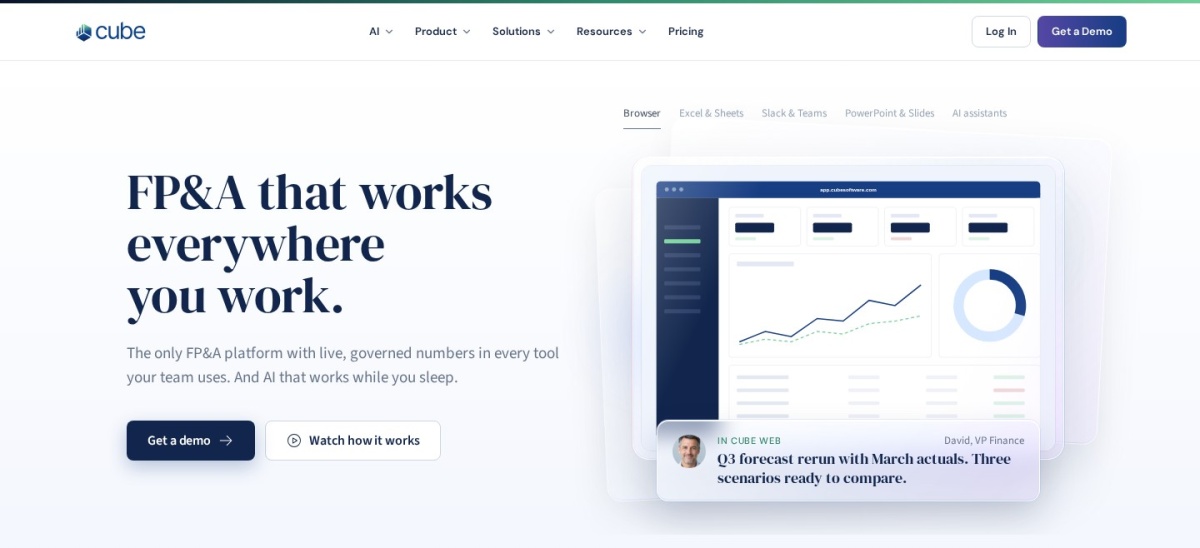
Cube homepage, captured Nov 2026.
Cube is a spreadsheet-native FP&A platform that syncs Excel and Google Sheets two ways, so plans and actuals stay in step. It covers budgeting, forecasting and reporting with unlimited users, and it moved to Bronze, Silver and Gold tiers in 2026.
The trade off is price transparency. Cube publishes no prices since moving to tiered plans, and its historic Go plan near 1,500 dollars a month is retired, so buyers must ask for a quote. It suits finance teams that want to keep planning in spreadsheets.
What we like
Two-way sync with Excel and Google Sheets
Unlimited users
Spreadsheet-native, no new interface to learn
Rated 4.5 out of 5 on G2
Watch out for
No published prices since the tier change
Historic Go plan near $1,500 a month is retired
Smaller G2 review base at 146 reviews
Bronze, Silver and Gold tiers replaced Go in 2026Visit cube.dev
06
Pigment
4.6/5on G2 (118 reviews, checked Nov 2026)
PricingCustom/yr
Best visual scenario planning
PricingQuote only
Free planNo, demo only
PlanningVisual scenarios
AIAI forecasting
pigment.com
Pigment homepage, captured Nov 2026.
Pigment is a visual planning platform for finance and operations, with scenario planning, AI forecasting and live dashboards. It is built for teams that want to model headcount, revenue and cash in one connected workspace, with a modern interface reviewers rate highly.
The trade off is price and review depth. Pigment publishes no prices, its G2 rating rests on 118 reviews, and it is built for mid-size teams rather than the largest enterprises. It suits finance teams that want visual scenario planning without a legacy platform.
What we like
Visual scenario planning
AI forecasting built in
Modern interface reviewers rate highly
Rated 4.6 out of 5 on G2
Watch out for
No published prices
Only 118 G2 reviews
Built for mid-size teams, not the largest enterprises
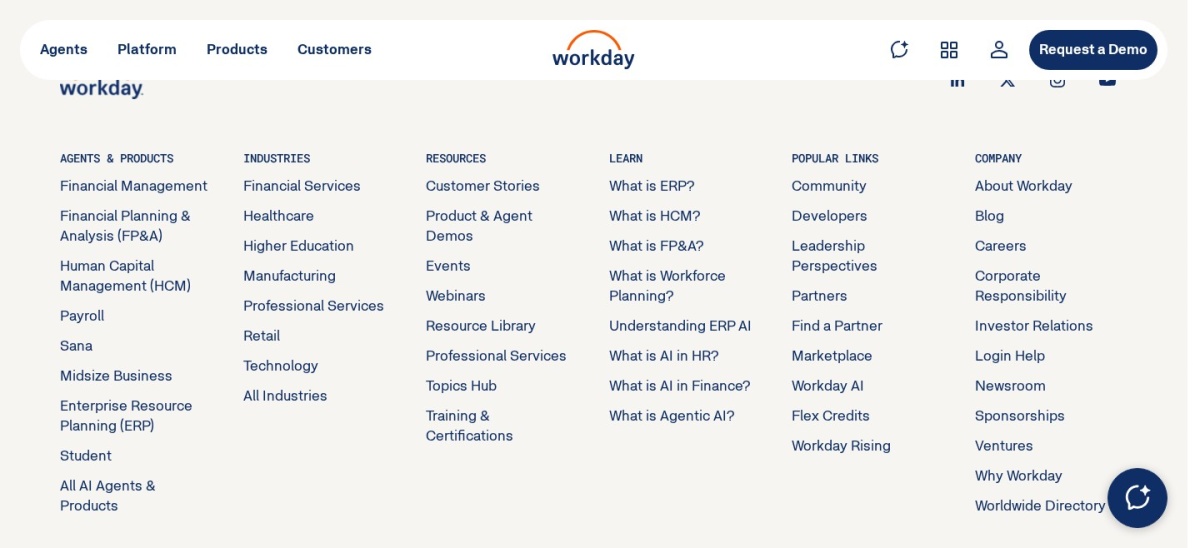
Workday Adaptive Planning homepage, captured Nov 2026.
Workday Adaptive Planning is an enterprise planning platform for finance, workforce and sales planning in one system. It covers budgeting, forecasting and reporting with driver-based models, and it is the planning arm of the Workday suite.
The trade off is price and setup. Workday publishes no prices, implementation takes about 5 months by G2 reviewer reports, and return on investment is reported near 18 months. It suits large enterprises already running Workday that want planning in the same suite.
What we like
Finance, workforce and sales planning in one system
Planful is a cloud FP&A platform for finance teams, with budgeting, forecasting, consolidations and reporting in one system. It covers workforce planning, close management and marketing planning, with a long track record in mid-size and enterprise finance.
The trade off is price transparency. Planful publishes no prices, third-party data puts entry deals near 50,000 to 150,000 dollars a year, and a 1,100 dollar a month figure in some articles comes from deal data, not a list price. It suits finance teams that want a full FP&A suite.
What we like
Budgeting to close in one system
Workforce and marketing planning included
Long track record in finance
Rated 4.3 out of 5 from 508 G2 reviews
Watch out for
No published prices
Entry deals near $50,000 to $150,000 a year
Some quoted prices come from deal data, not list prices
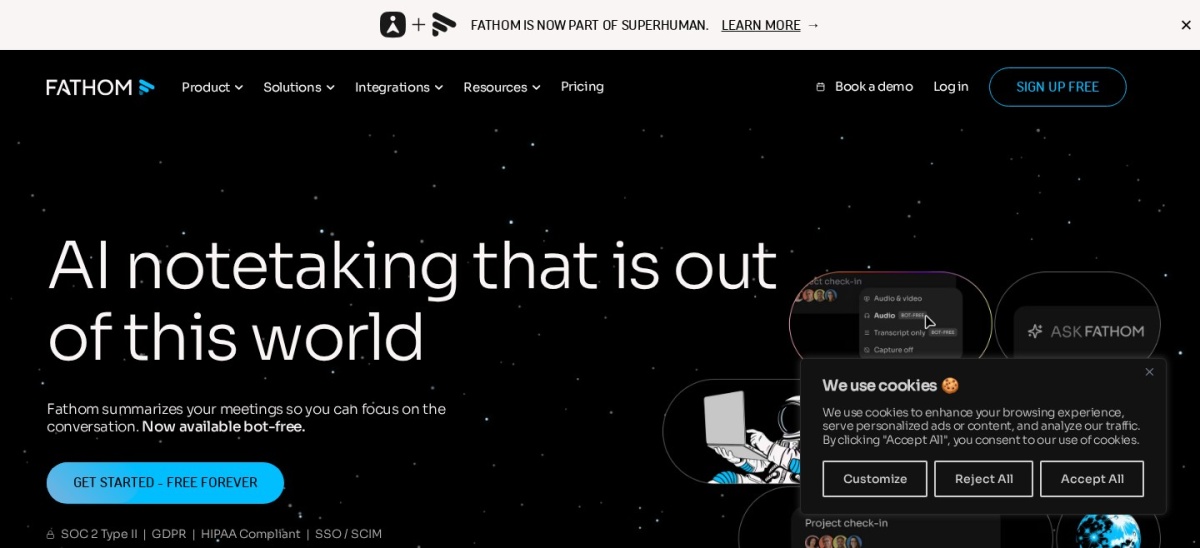
Fathom is a reporting and forecasting platform for accounting firms and small businesses, built on Xero, QuickBooks and MYOB. The Pro plan costs $450 a month per company and covers three-way cash-flow forecasting, budgets, scenarios and multi-currency consolidations.
The trade off is scope and price history. Fathom is reporting-first, so it is not a full planning platform, and its pricing changed in 2026: G2 still lists older Starter, Silver and Gold tiers at 50, 260 and 380 dollars a month. It suits firms that want forecasting on top of their accounting data.
What we like
Cheapest published price here at $450 a month
Three-way cash-flow forecasting
14-day free trial
Rated 4.6 out of 5 from 182 G2 reviews
Watch out for
Reporting-first, not a full planning platform
Price rose sharply in 2026
G2 still lists older tiers at $50, $260 and $380 a month
Portfolio monitoring starts at $67 a month for 100 companiesVisit fathomhq.com
Why most forecasting software is quote only
Enterprise planning tools price by scope, not by seat. The quote covers the number of models, users, integrations and the implementation work, so no single number fits every buyer.
Third-party contract data puts Anaplan entry deals near 30,000 to 50,000 dollars a year, Datarails near 33,000 dollars a year and Vena near 27,000 dollars a year. Treat these as ranges, not prices.
Only Jirav and Fathom publish prices here. If a vendor will not quote in writing before a demo, treat that as a signal about how the sales process will go.
How we chose
We started from the forecasting tools finance teams actually evaluate, then kept the nine with a public G2 rating and a published price or a clear quote-only model. Planning depth, Excel fit, implementation time and price transparency decided the order.
Prices come from each vendor pricing page, checked on 29 November 2026. Jirav Pro at 15,000 dollars a year and Fathom Pro at 450 dollars a month were read on their own pricing pages today. Anaplan, Datarails, Vena, Cube, Pigment, Workday and Planful publish no prices, so their figures are third-party contract data, not list prices. Ratings and review counts come from G2 on the same day.
We left out tools with no verifiable rating and spreadsheet-only templates with no forecasting engine. No vendor paid for a place, and we do not claim hands-on testing for this list.
How to choose forecasting software for your finance team
Start with your planning model, then check the price and the timeline.
Decide where planning lives. If your team will not leave Excel, pick Datarails, Vena or Cube. If you want a dedicated model with its own interface, look at Anaplan, Pigment or Planful.
Ask for a real price early. Seven of these nine tools quote per deal, and entry contracts start near 30,000 dollars a year. Get a written quote before you invest weeks in a demo.
Check the implementation time. Anaplan takes 3 to 6 months to go live, Vena and Workday about 5 months, and Jirav 1 to 3 months. Fathom is live in under a month for most teams.
Test with your own actuals. Load a quarter of real data and build a rolling forecast. If the model needs a consultant to change a driver, it will slow your team down every month.
FAQ
What is the best forecasting software in 2026?
Anaplan is the best forecasting software, because its connected planning covers finance and operations in one model and it is rated 4.6 out of 5 on G2. Datarails is the best Excel-first option, and Fathom is the cheapest published price at 450 dollars a month.
How much does forecasting software cost?
Most forecasting software is priced by quote, with entry contracts near 30,000 dollars a year for Anaplan and typical Datarails contracts near 33,000 dollars a year. Jirav publishes a Pro plan at 15,000 dollars a year, and Fathom Pro costs 450 dollars a month per company.
Is there a free forecasting software?
No full forecasting platform in this list has a free plan. Workday Adaptive Planning offers a free trial, and Fathom offers a 14-day free trial, but the enterprise tools are demo only. Small teams that need free forecasting should use spreadsheet templates or Fathom Portfolio for monitoring.
Anaplan vs Datarails: which is better for forecasting?
Anaplan is better for large finance teams that need connected planning across departments, with a Hyperblock engine and 3 to 6 months to implement. Datarails is better for mid-size teams that want to keep working in Excel, with 600 plus integrations and faster setup.
What is the cheapest forecasting software with a published price?
Fathom Pro is the cheapest forecasting software with a published price, at 450 dollars a month per company, or 5,400 dollars a year. Jirav Pro is the only other published price here, at 15,000 dollars a year, while the other seven tools are priced by quote.
How long does forecasting software take to set up?
Anaplan typically takes 3 to 6 months to go live, Vena and Workday Adaptive Planning take about 5 months, and Jirav takes 1 to 3 months. Fathom is the fastest here, with most teams live in under a month, because it sits on top of Xero or QuickBooks.
SaaS SEO and WordPress specialist with about 8 years of experience. Rakib compares WordPress plugins, themes, hosting and software using public pricing, documentation and user reviews. See how we rank.