Ramp is the best top expense reporting software for most teams, with a full free plan and the highest rating in this list. Brex is the closest rival with the same rating, while Expensify suits teams that want to keep their existing cards.
How we make this list: we compare pricing pages, product documentation and public user reviews, then re-check every price before each update. No product paid for a place. Disclosure.
Ramp and Brex both start free, and both are rated 4.8 out of 5 on G2, the highest scores in this list.
Expensify stays the simplest receipt-first tool, with Collect at $5 per member a month and no card switch needed.
Zoho Expense is the cheapest paid plan in this list, at $3 per user a month billed annually.
BILL Spend and Expense charges $0 per user a month for cards, budgets and AI receipt matching.
Navan has the largest review base here, with 9,517 G2 reviews.
How do you choose the best top expense reporting software?
The tools in this list split into two kinds. Card-led tools such as Ramp, Brex and BILL issue the corporate card and control spend before it happens, while report tools such as Expensify and Sage Expense Management process expenses after the spend.
Free plans are real in this category, because card-led tools earn from card spend rather than subscriptions. A free plan from Ramp or Brex covers cards, receipt matching and approvals, so a small team may never need to pay.
The card question decides the shortlist. If your team will move spending onto a new card, Ramp or Brex give the most for nothing, but if staff pay out of pocket and claim it back, Expensify or Zoho Expense fit better. Our expense management guide compares the same tools for wider finance teams.
Watch the paid step-up. Ramp Plus adds a platform fee it does not publish, and Expensify Control can cost $18 to $36 a member a month, so check the second-year price before you commit.
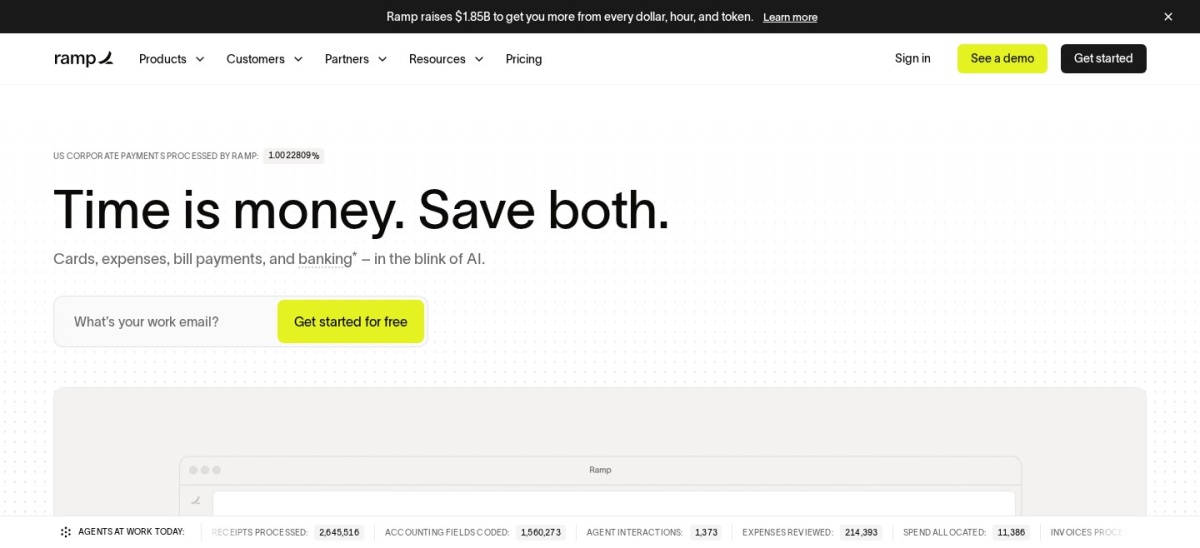
Ramp is a spend platform that pairs corporate cards with expense tracking, and its core plan costs nothing. The free tier includes unlimited physical and virtual cards, expense management, bill pay, receipt capture and sync to QuickBooks Online and Xero.
The trade off is the paid tier. Plus costs $12 per user a month with annual billing, plus a platform fee based on team size that Ramp does not publish. It suits teams happy to move spending onto Ramp cards.
What we like
Full core platform free
Highest G2 rating here at 4.8
Automatic receipt matching from card spend
Watch out for
Plus adds an unpublished platform fee
Needs the Ramp card for the full benefit
US-focused card program
Plus adds AI expense reviews and deeper controlsVisit ramp.com
02
Brex
4.8/5on G2 (1,657 reviews, checked Nov 2026)
Paid from$12/mo
Best for startups and global teams
Cheapest paid planPremium, $12/user/mo
Free planYes, Essentials
Countries120+
Entities on Essentials2
brex.com
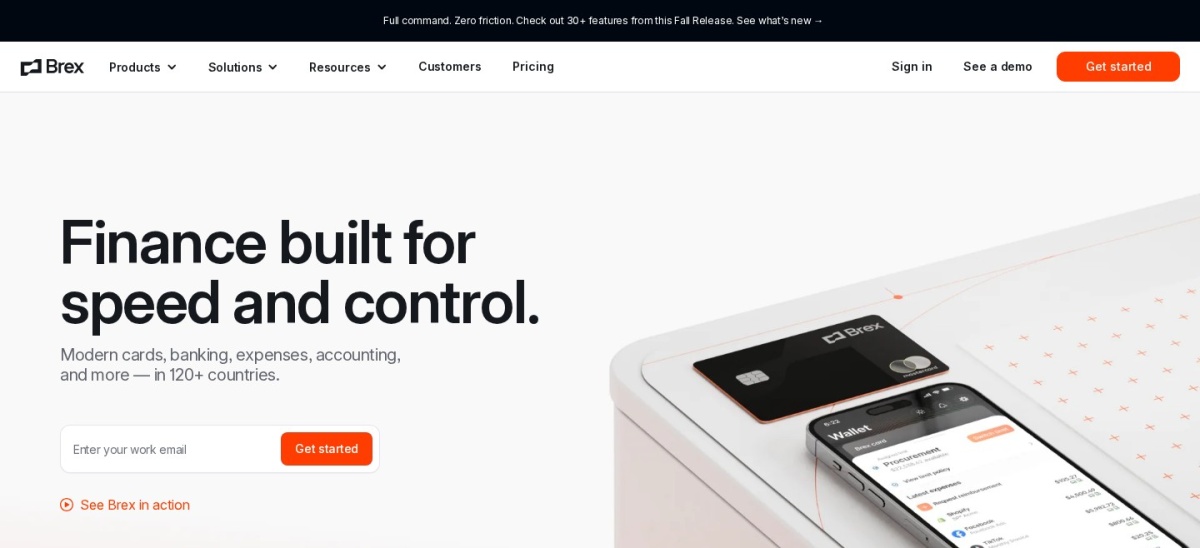
Brex homepage, captured Nov 2026.
Brex is a corporate card and spend platform that combines cards, expenses, bill pay and travel in one dashboard. The free Essentials plan includes global cards, reimbursements, accounting integrations and travel booking at $0 per user.
The trade off is control depth. Premium costs $12 per user a month and adds multiple expense policies, live budgets, multi-entity support and ERP integrations. It suits funded startups and global teams.
What we like
Strongest free tier next to Ramp
Cards work in more than 120 countries
Premium has no hidden platform fee
Watch out for
Advanced controls need the $12 plan
Capital One acquired Brex in 2026, so the roadmap may change
Fewer accounting links than Expensify
Premium adds multiple policies and live budgetsVisit brex.com
03
Navan
4.7/5on G2 (9,517 reviews, checked Nov 2026)
Paid from$15/mo
Best for travel plus expense reports
Cheapest paid planPro, $15/user/mo
Free planYes, limited
G2 reviews9,517, the largest here
Travel bookingIncluded
navan.com
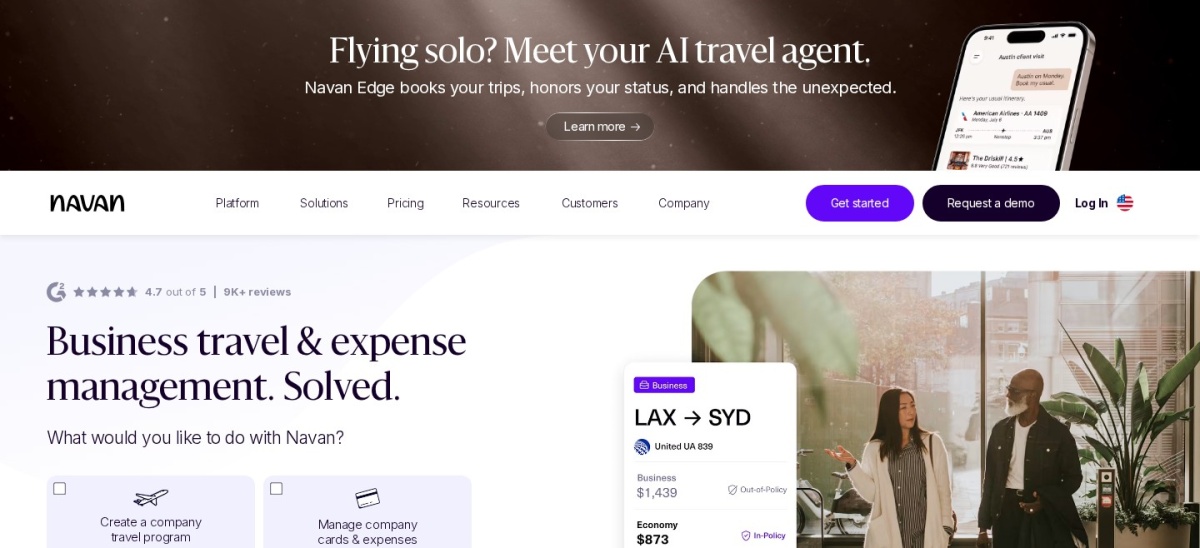
Navan homepage, captured Nov 2026.
Navan is a travel and expense platform that books trips and files the expense report in the same place. The free plan covers basic travel and expenses, and Pro at $15 a user a month adds policy controls, approvals and deeper reporting.
The trade off is that Navan shines brightest for teams that travel. A team that rarely books trips will find cheaper reporting tools elsewhere. It suits companies where travel is a large share of spending.
Sage Expense Management homepage, captured Nov 2026.
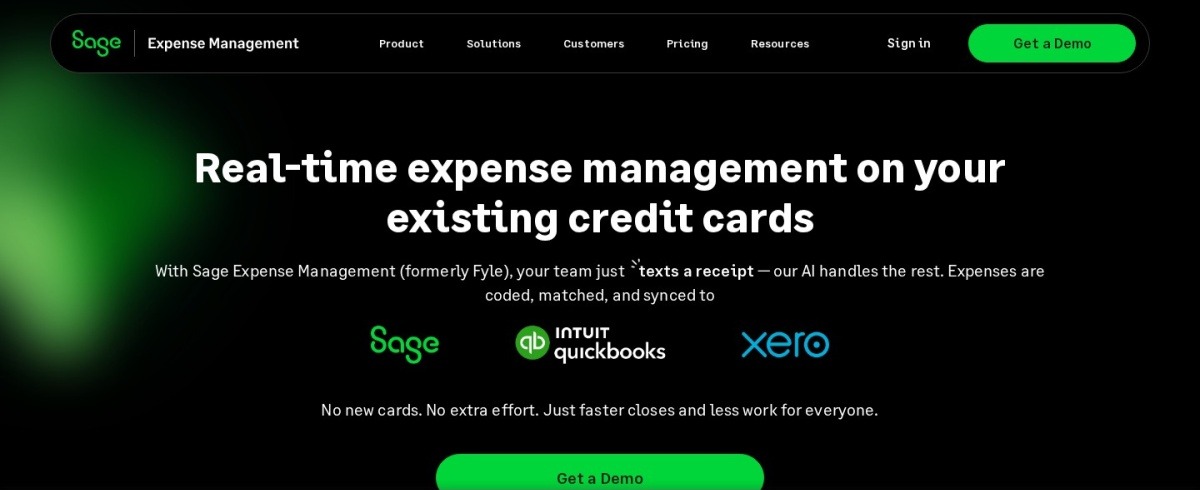
Sage Expense Management is an expense automation platform formerly known as Fyle. Its Growth plan starts at $11.99 per active user a month with annual billing and includes unlimited expense tracking, receipt scanning, real-time card feeds and mileage tracking.
The trade off is the billing model. You pay only for active users, but the plan needs at least 5 users, so very small teams pay for seats they do not use. It suits finance teams on Sage Intacct or Sage 300.
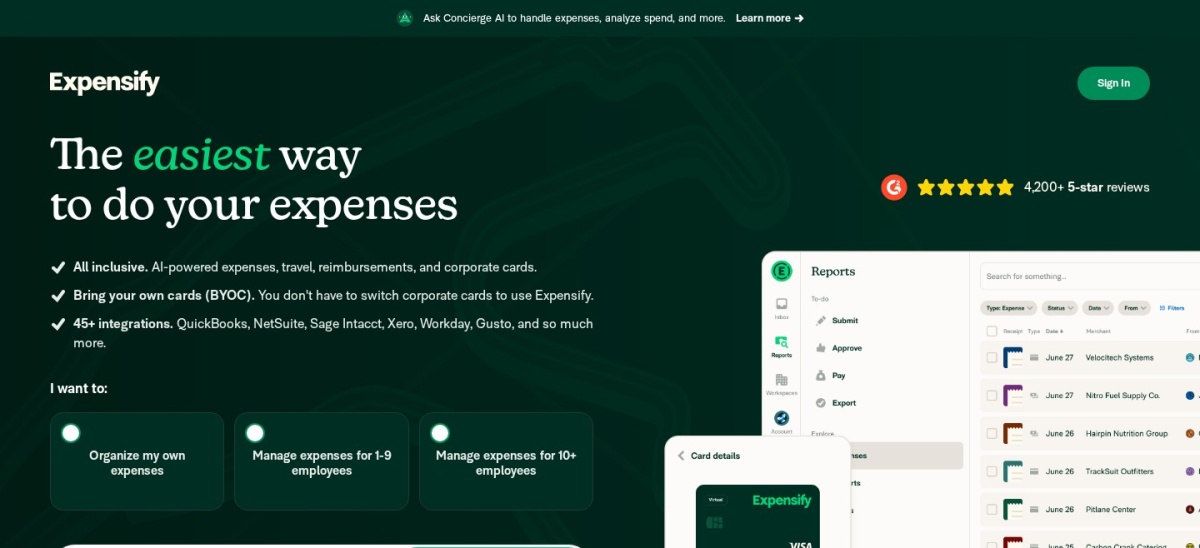
Expensify is the classic expense-report tool, built around SmartScan receipt capture. Snap a photo or forward a receipt and it builds the report, with mileage tracking, approvals and sync to QuickBooks and Xero on the Collect plan.
The trade off is price at the top. Control costs $18 per member a month on an annual plan, or $36 pay-per-use, and Expensify Card spend can cut it by up to half. It suits teams that refuse to switch cards.
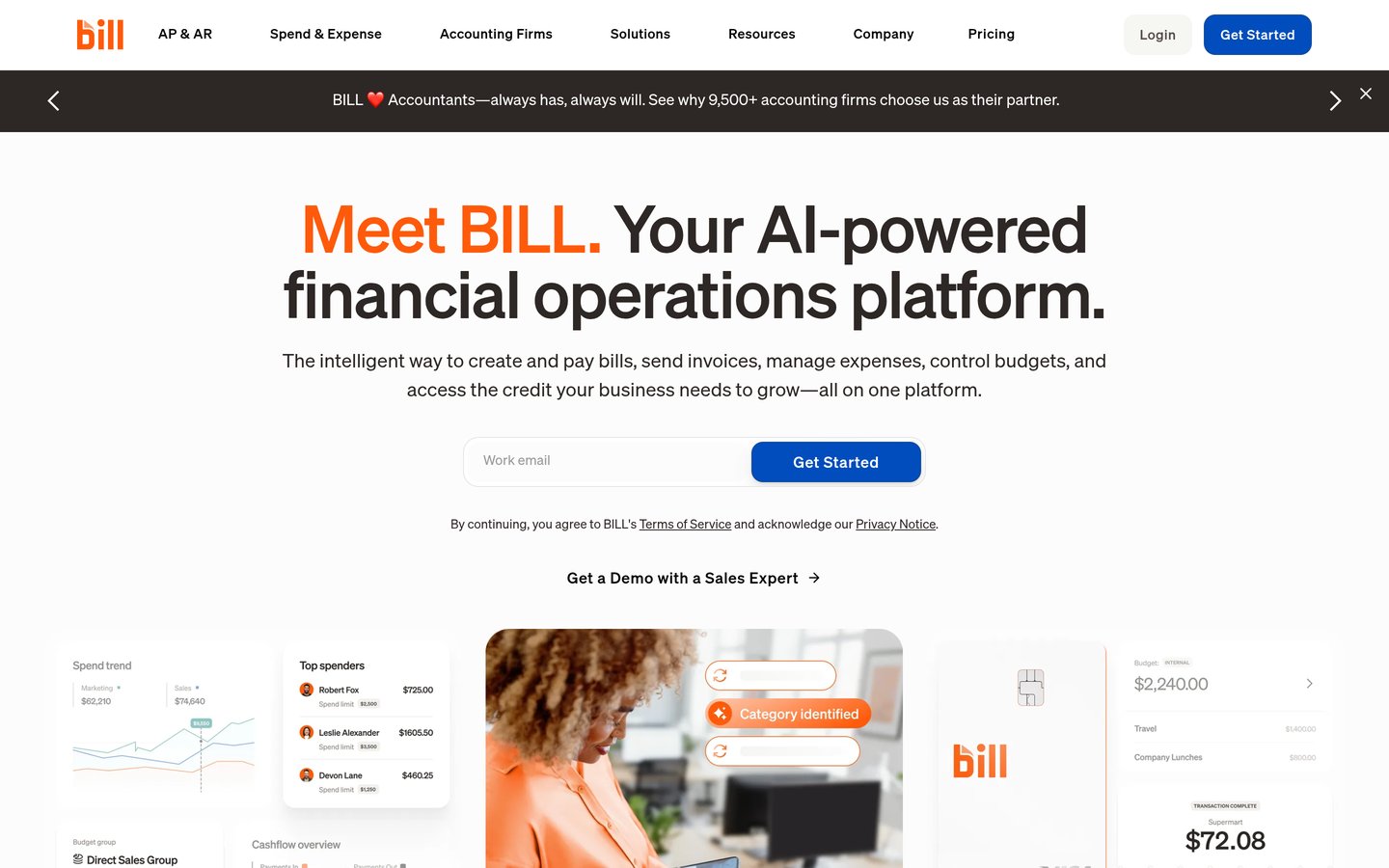
BILL Spend & Expense is a free card-led expense tool that bundles corporate cards, budgets and expense tracking at $0 per user a month. It includes AI receipt matching, approvals and sync to QuickBooks and Xero.
The trade off is that BILL earns from card spend, so the free plan fits teams that spend enough on the card. It suits QuickBooks and Xero users who want cards and budgets without a subscription.
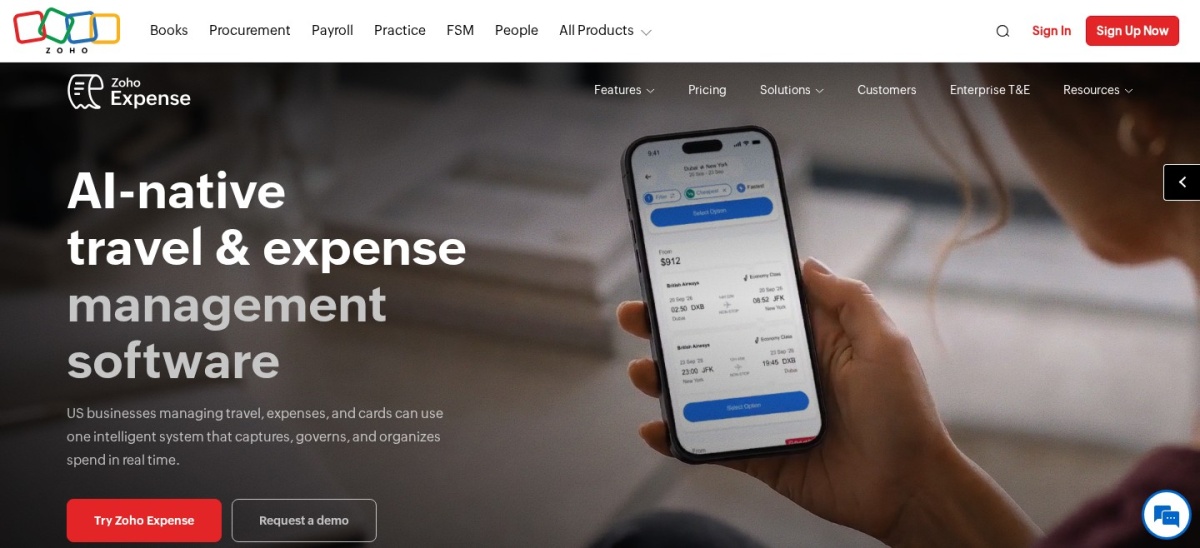
Zoho Expense is the cheapest paid expense tool in this list, at $3 per user a month billed annually. Standard includes 200 Autoscans per user a month, approvals, mileage tracking and sync to Zoho Books, with a free plan for up to 3 users.
The trade off is depth. Premium at $5 a user a month adds advanced approvals and custom functions, but Zoho Expense stays simpler than Ramp or Brex. It suits small teams already using Zoho Books.
Rydoo is a travel and expense tool built around receipt workflows and approvals. Essentials costs $9 a user a month billed annually with a 5-user minimum, and includes AI receipt scanning, expense approvals and mileage tracking.
The trade off is the entry bar. There is no free plan and the 5-user minimum makes it dearer for very small teams. It suits mid-size teams that want clean receipt workflows without a corporate card switch.
SAP Concur is the enterprise expense platform, built for multinational compliance. It combines expense reports, travel booking and invoice management, with native SAP ERP integration and policy controls that smaller tools cannot match.
The trade off is cost and complexity. Pricing is usage-based from about $7 per report, and setup takes longer than any other tool here. It suits large companies that already run SAP.
Free plans cover the basics well. Most include cards, receipt capture, approvals and accounting sync.
Paid plans mostly add control. You get more policies, live budgets, multi-entity support and deeper ERP links.
For a team that spends mostly on company cards, a free card-led plan may be enough. Report-led teams should budget from $3 a user a month.
How we chose
We started from the established expense tools with a public G2 rating and a published price or a free plan, then kept the nine with the strongest mix of rating, review volume and fit for general teams.
Prices come from each vendor pricing page or a November 2026 pricing guide that read the vendor page, checked on 29 November 2026. Ratings and review counts come from G2 on the same day.
We left out tools with no verifiable rating on G2, Capterra or Trustpilot. No vendor paid for a place, and we do not claim hands-on testing for this list.
How to choose top expense reporting software
Decide first whether you want a new corporate card or to keep the cards you already have.
Decide card-led or report-led. Card-led tools control spend before it happens. Report-led tools process claims after the spend and work with any card.
Check the free plan limits. Free plans from Ramp, Brex and BILL are full platforms, while Zoho Expense caps its free plan at 3 users.
Count the paid step-up. Ramp Plus adds an unpublished platform fee and Expensify Control can reach $36 a member a month, so price the second year too.
Test receipt capture with real receipts. Snap a crumpled receipt and a long hotel bill through the app before you roll it out to the whole team.
FAQ
What is the best top expense reporting software in 2026?
Ramp is the best top expense reporting software for most teams. Its free plan covers unlimited corporate cards, receipt matching and approvals, and it is rated 4.8 out of 5 on G2 from 2,578 reviews.
What is the cheapest expense reporting software?
Zoho Expense is the cheapest paid expense reporting software at $3 per user a month billed annually, with a free plan for up to 3 users. Ramp, Brex and BILL all offer full core plans at $0 per user.
Is there free expense reporting software?
Yes. Ramp, Brex and BILL all run full expense platforms for free, funded by card spend, and Zoho Expense offers a free plan for up to 3 users. Expensify also has a basic free plan.
Ramp or Brex: which is better for expense reporting?
Both are rated 4.8 out of 5 on G2 and both start free. Brex wins on price because Premium is $12 per user a month with no platform fee, while Ramp Plus is $12 plus a fee Ramp does not publish.
Which expense reporting software works with my existing cards?
Expensify and Sage Expense Management work with the cards you already have, so there is no card switch. Expensify Collect costs $5 per member a month, and Sage starts at $11.99 per active user a month.
Which expense reporting software is best for small teams?
Zoho Expense is the best pick for small teams on a budget, at $3 per user a month with a free plan for up to 3 users. Ramp is the best free option for teams happy to use its cards.
SaaS SEO and WordPress specialist with about 8 years of experience. Rakib compares WordPress plugins, themes, hosting and software using public pricing, documentation and user reviews. See how we rank.