ER/Studio is the top data modeling software for governed enterprise teams, with a published price and native sync to Purview and Collibra. SqlDBM suits cloud warehouse teams that want browser modeling, while Lucidchart is the pick for explaining a model to non-technical stakeholders.
How we make this list: we compare pricing pages, product documentation and public user reviews, then re-check every price before each update. No product paid for a place. Disclosure.
ER/Studio is the only tool here with native two-way sync to both Microsoft Purview and Collibra.
SqlDBM is the strongest browser option for Snowflake, Databricks and BigQuery teams, but it publishes no prices.
Lucidchart has the biggest review base by far, with 8,717 G2 reviews, but it draws models rather than engineering them.
dbt holds the highest rating at 4.7 out of 5, yet it models transformations in SQL and draws no ERDs.
DbSchema and dbdiagram.io are the cheapest entries, at $294 once and $8 a month, for developers who want a fast schema sketch.
How do you choose the top data modeling software?
Data modeling tools split into two jobs. Diagramming tools help you communicate a structure, while engineering tools help you build and govern it in production.
The price spread is the widest in this round. Free and one-time tools start near $8 a month, while enterprise platforms run into thousands of dollars per user each year.
Governance is what separates the enterprise tools. Purview and Collibra sync, business glossaries and lineage matter in regulated industries and mean little to a five-person team.
Ratings need reading beside review counts. A 4.7 from 209 reviews carries more weight than a 4.5 from 2 reviews, and two tools here have no published review count at all.
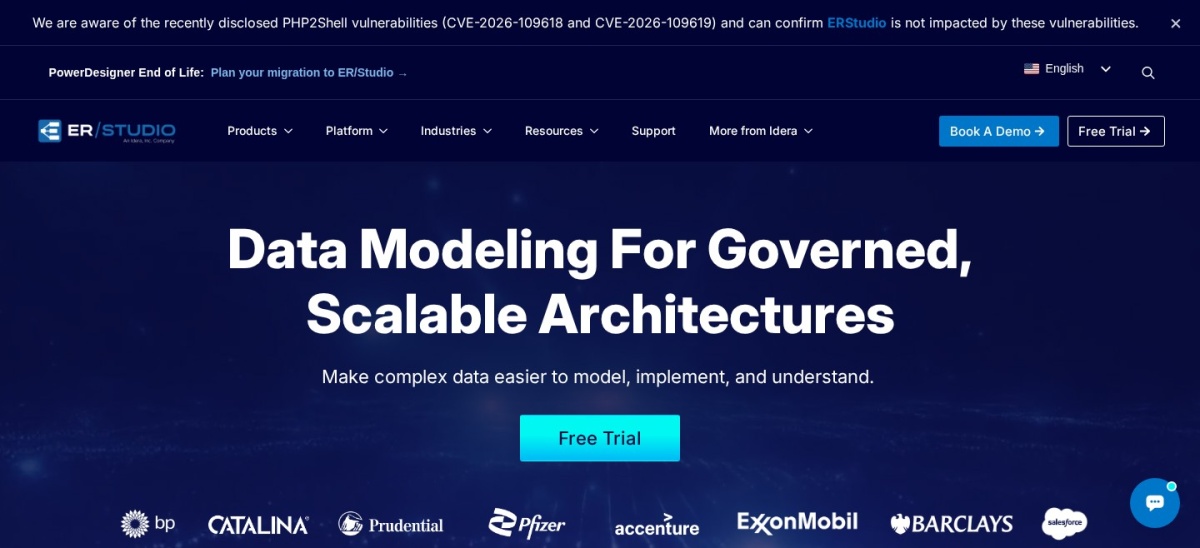
ER/Studio is an enterprise data modeling platform from IDERA that covers the full lifecycle from conceptual and logical models through physical DDL generation. Data Architect costs $2,687 per user per year, Pro costs $3,693, and a free Community Edition is available for trying the core workflow.
The trade off is cost and learning curve. The per-user price puts it out of reach for small teams, and new users face a steeper setup than browser tools. It suits regulated industries that need governance sync with Microsoft Purview and Collibra.
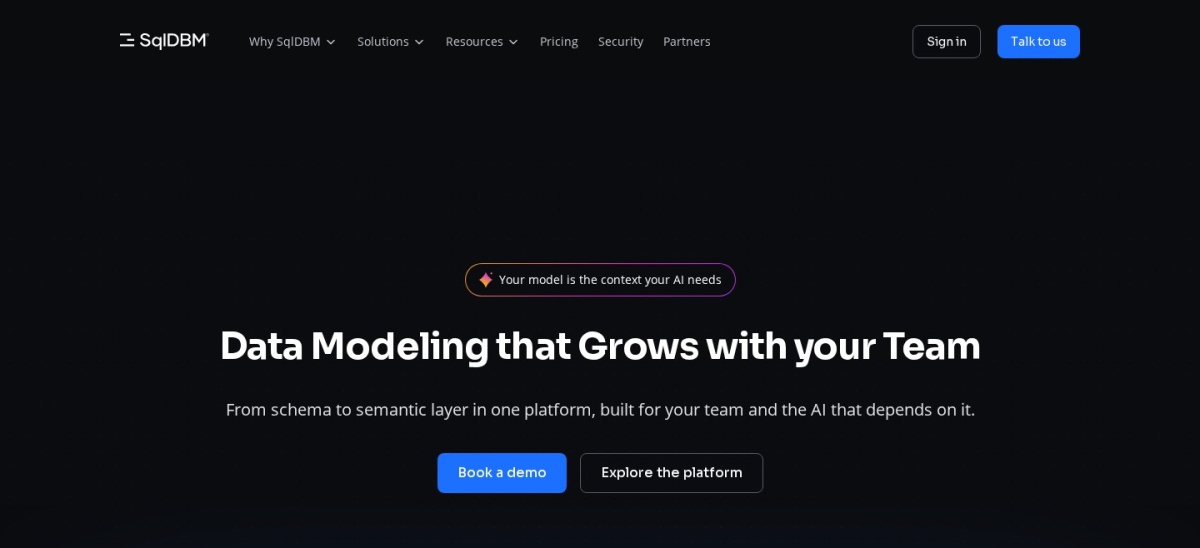
SqlDBM is a browser-based data modeling tool built for teams working in Snowflake, Databricks, BigQuery and other cloud warehouses. It covers conceptual, logical and physical modeling with forward and reverse engineering, version control and AI-assisted schema design, all in the browser.
The trade off is pricing transparency. SqlDBM publishes no prices and sells per user by quote, so budgeting needs a sales conversation, and governance features are lighter than enterprise desktop tools. It suits cloud data teams that want shared browser models tied to Git and dbt.
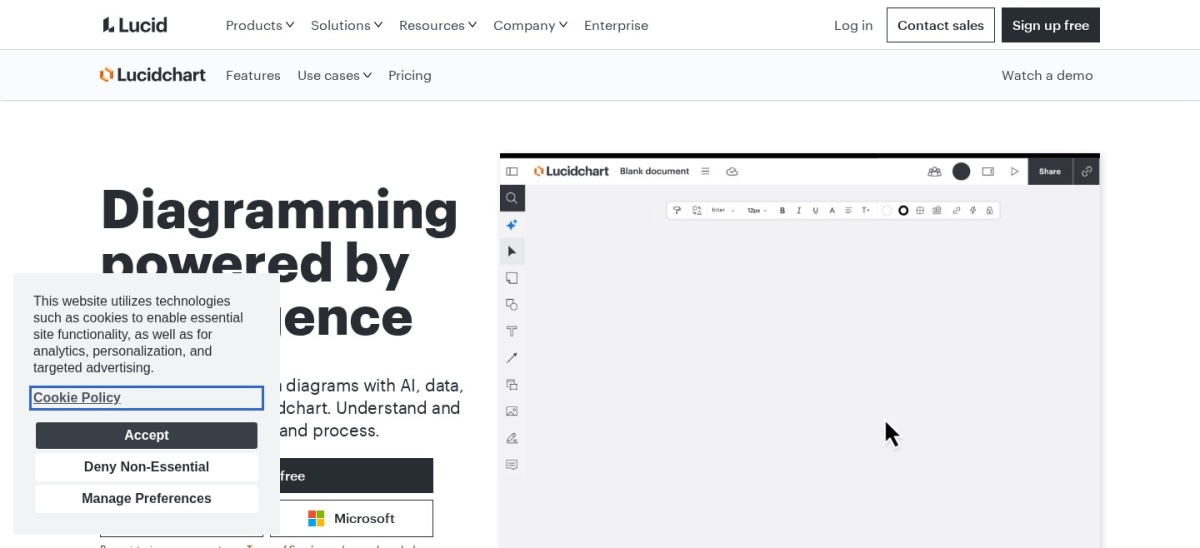
Lucidchart is a visual collaboration platform that builds entity-relationship diagrams alongside flowcharts, org charts and process maps. The free plan covers limited documents, Individual costs $9 a month billed yearly, and Team adds shared editing for $10 per user a month.
The trade off is depth. Lucidchart draws models rather than engineering them: it does not generate DDL, reverse-engineer live databases or sync with governance catalogs. It suits teams that need to explain a data structure to non-technical stakeholders quickly.
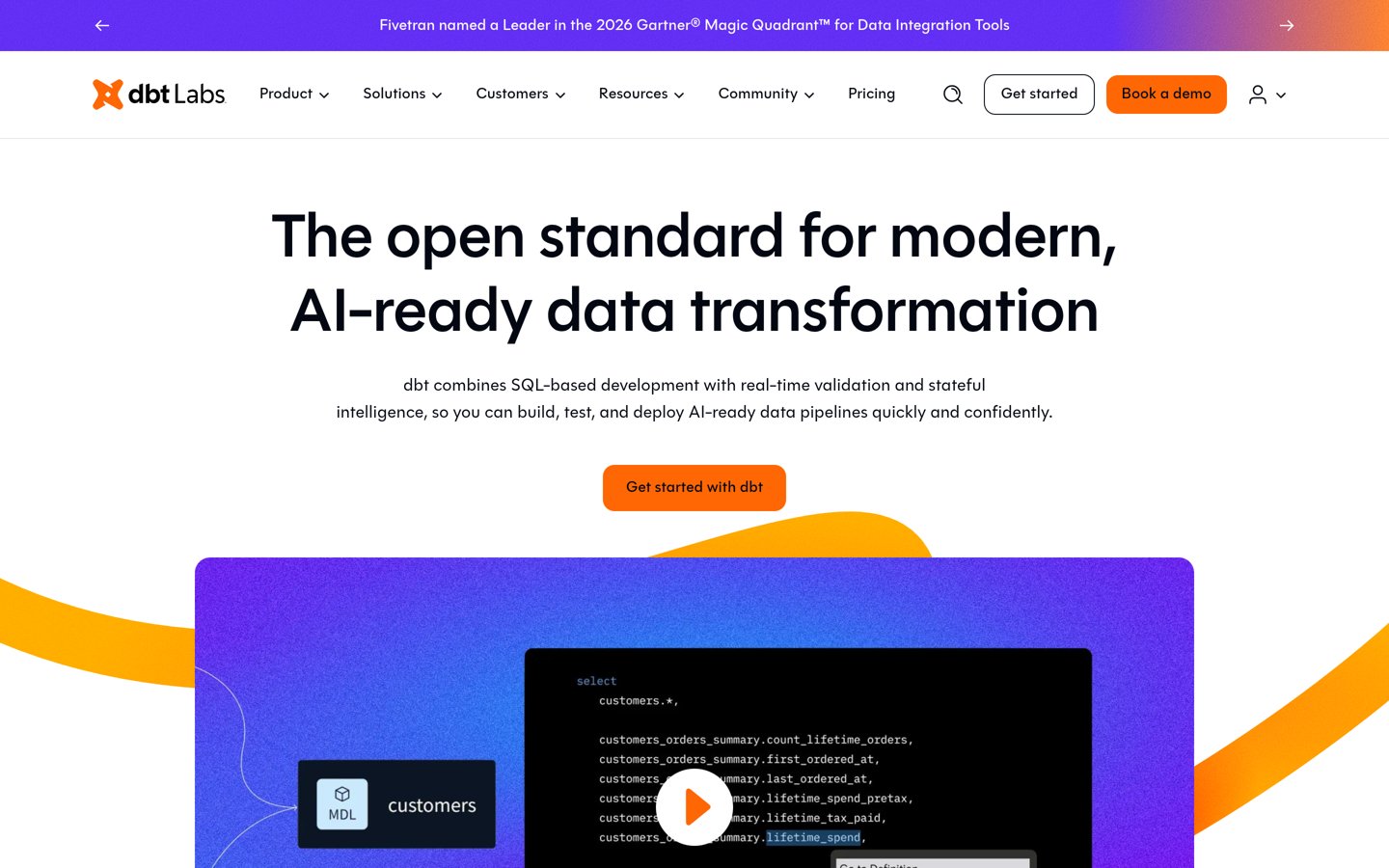
dbt is a SQL-native transformation framework for data engineers building ELT workflows inside cloud warehouses such as Snowflake and BigQuery. The Developer plan is free for a single seat, and Starter costs $100 per user a month, with built-in testing and Git version control.
The trade off is scope. dbt models transformations in SQL and has no ERD generation, no conceptual or logical layer, and no reverse engineering from existing databases. It suits analytics engineers who live in the warehouse and want software engineering practices for data.
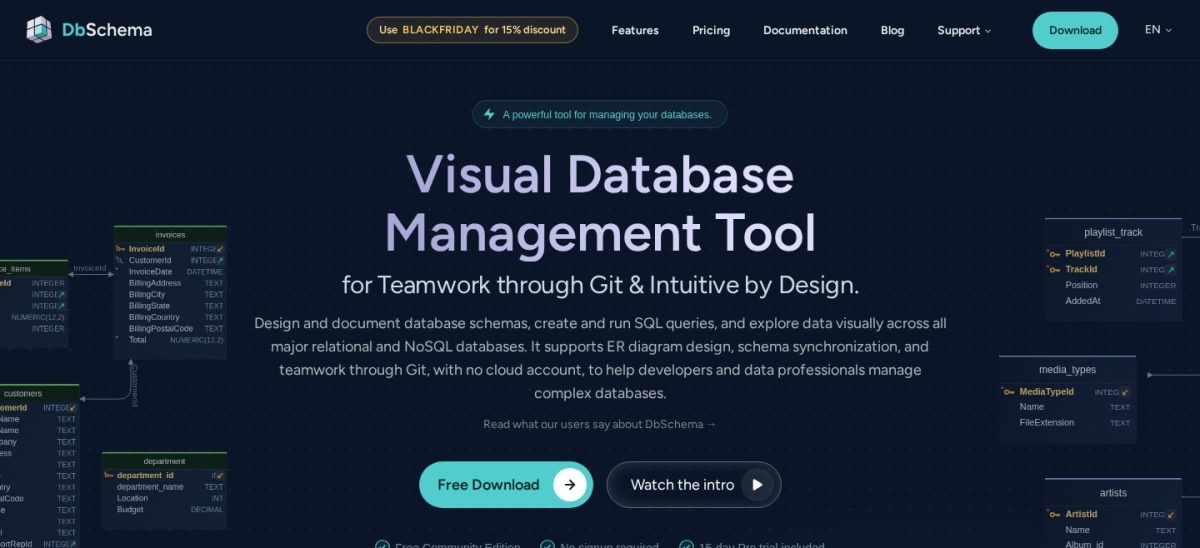
DbSchema is a cross-platform schema design tool for developers and DBAs working with relational and NoSQL databases. The Community Edition is free, and Pro Developer costs $294 as a one-time perpetual license including a year of updates, with visual schema sync and a query builder.
The trade off is the thin rating and the solo focus. Its G2 score rests on only 2 reviews, and there is no enterprise collaboration layer or governance integration. It suits individual developers who want an offline-first tool with a one-time license.
4.3/5on G2 (Not published reviews, checked Nov 2026)
Starts at$189/yr
Best browser modeling for small teams
Price$189/user/yr
Free trial14 days
DeploymentBrowser, no install
Team modelingYes
redgate.com
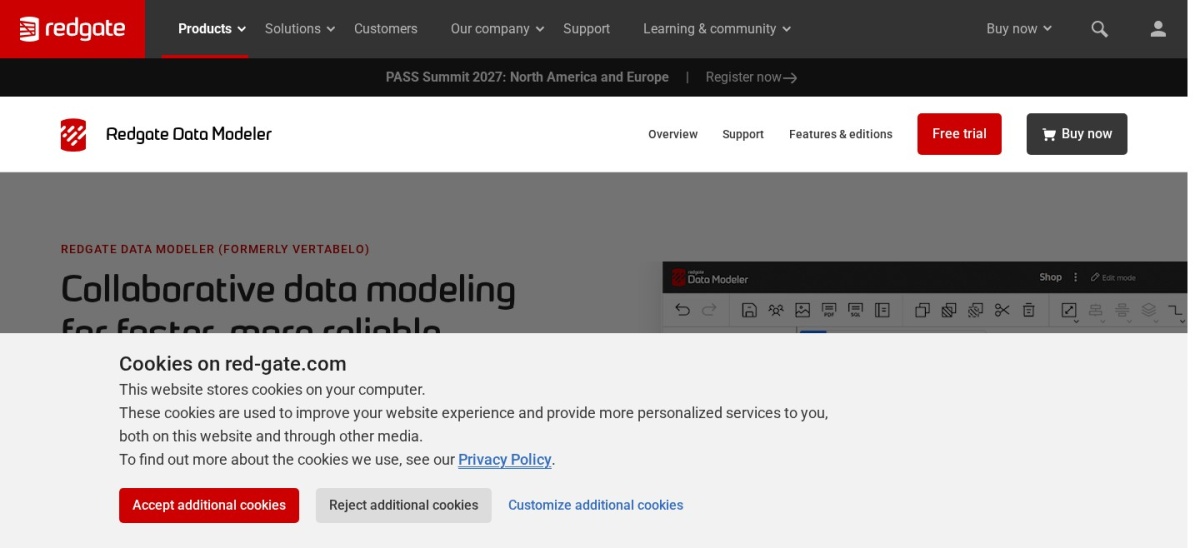
Redgate Data Modeler homepage, captured Nov 2026.
Redgate Data Modeler is a cloud database modeling tool, formerly Vertabelo, for developers and small teams who want to design schemas in the browser. It costs $189 per user per year, with a 14-day trial, and covers forward and reverse engineering with team collaboration.
The trade off is depth beside enterprise tools. It has no governance catalog integration or business glossary, and the review base on G2 is thin. It suits small teams who want browser-based modeling without installing desktop software.
4.3/5on G2 (Not published reviews, checked Nov 2026)
Paid from$8/mo
Best fast ER diagrams for developers
Pro$8/mo
Free planYes
DDL exportYes
Diagram languageDBML
dbdiagram.io
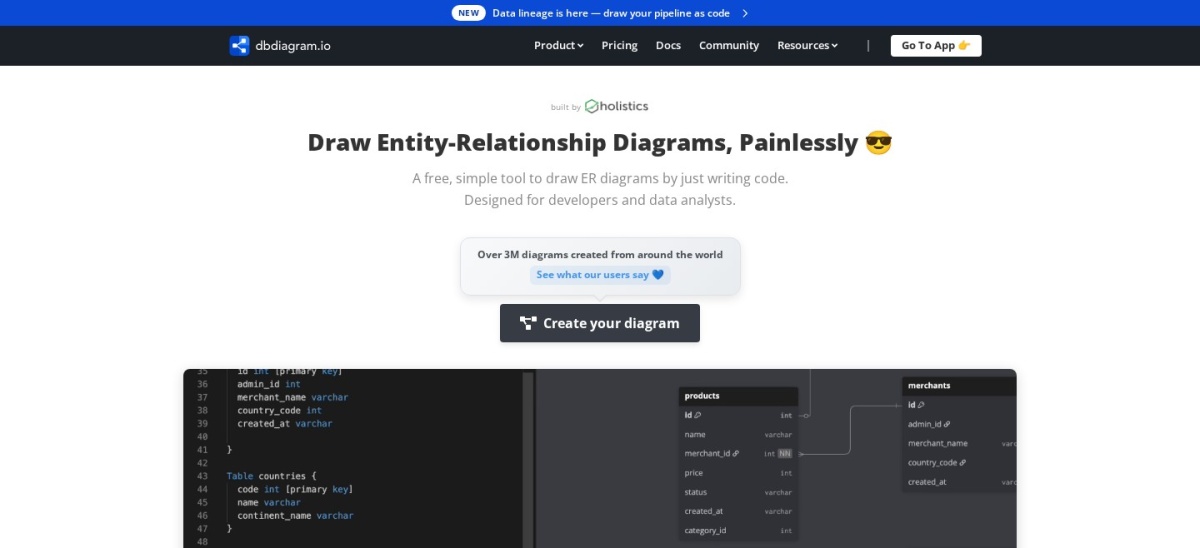
dbdiagram.io homepage, captured Nov 2026.
dbdiagram.io is a lightweight tool for drawing entity-relationship diagrams quickly from a simple domain-specific language. The free plan covers basic diagrams, and Pro costs $8 a month, with DDL export for turning a sketch into a real schema.
The trade off is scope. It is a diagramming sketchpad, not a modeling platform: there is no governance, no team repository and no reverse engineering from live databases. It suits developers who want a fast ERD sketch with DDL export and nothing heavier.
A diagram is a picture of a structure. A model is a living artifact connected to a live database, with DDL generation and reverse engineering.
Teams that buy a diagramming tool for engineering work end up redrawing the same schema by hand. Teams that buy an enterprise platform for a picture pay thousands for features they never open.
Many teams run both: Lucidchart for stakeholder reviews and ER/Studio or SqlDBM for the production schema.
How we chose
We started from the data modeling tools most often recommended in 2026 roundups, then kept those with a verifiable rating on G2 and a price we could confirm or a vendor-stated quote model.
Prices come from each vendor's pricing page or product page, checked on 29 November 2026. ER/Studio lists $2,687 a user a year, Lucidchart lists $9 a month billed yearly, and SqlDBM sells per user by quote. Ratings and review counts come from G2 on the same day.
We left out tools with no verifiable rating on G2, Capterra or Trustpilot, including Hackolade and Navicat Data Modeler. No vendor paid for a place, and we do not claim hands-on testing for this list.
How to choose the top data modeling software
Start with what the model has to become: a picture for a meeting, or a production schema.
Decide whether the output is a picture or a schema. Lucidchart and dbdiagram.io communicate structure. ER/Studio, SqlDBM and DbSchema build and sync real database schemas.
Check governance needs early. Regulated teams need lineage, glossaries and catalog sync. Small teams can skip those features and save thousands per seat.
Match the tool to your databases. Cloud warehouse teams belong in SqlDBM or dbt. Mixed relational and NoSQL estates need DbSchema or an enterprise modeler.
Test the free tier before buying. Most tools here offer a free plan or trial. Reverse-engineer a real schema and see whether the model survives contact with production.
FAQ
What is the best data modeling software in 2026?
ER/Studio is the best data modeling software for governed enterprise teams in 2026, with a full conceptual-to-physical lifecycle and native sync to Microsoft Purview and Collibra. Cloud teams should look at SqlDBM first.
What is the best free data modeling software?
Lucidchart and dbdiagram.io are the best free options for drawing ERDs, while DbSchema Community Edition and MySQL Workbench are stronger free choices for schema design that connects to live databases.
How much does data modeling software cost?
Prices range from free to thousands per user a year. DbSchema costs $294 once, dbdiagram.io is $8 a month, Lucidchart is $9 a month, and ER/Studio starts at $2,687 per user per year.
What is the difference between Lucidchart and ER/Studio?
Lucidchart draws diagrams for communicating structure, while ER/Studio engineers production schemas with forward and reverse engineering, DDL generation and governance sync. They solve different jobs and are often used together.
Which data modeling tool is best for Snowflake?
SqlDBM and dbt are the best fits for Snowflake teams. SqlDBM models schemas in the browser with reverse engineering, while dbt handles SQL transformations, testing and version control inside the warehouse.
Do I need an enterprise data modeling tool?
Only if you need governance. Small teams get by with DbSchema, dbdiagram.io or Lucidchart. Regulated industries need lineage, glossaries and catalog sync, which is where ER/Studio earns its price.
SaaS SEO and WordPress specialist with about 8 years of experience. Rakib compares WordPress plugins, themes, hosting and software using public pricing, documentation and user reviews. See how we rank.