Coupler.io is the best of these Sheetgo alternatives for most teams, with scheduled imports from 400+ sources into Google Sheets and Excel from $24 a month. Coefficient suits live CRM data in Sheets, while Zapier fits sheet updates inside wider app workflows.
How we make this list: we compare pricing pages, product documentation and public user reviews, then re-check every price before each update. No product paid for a place. Disclosure.
Coupler.io is the closest direct replacement, with scheduled imports from 400+ sources into Sheets, Excel and warehouses from $24 a month.
Coefficient is the pick for live CRM and finance data, with two-way sync to Salesforce and HubSpot from $49 a month.
Zapier and Make cover sheet updates as one step in a wider workflow, from $19.99 and $12 a month.
Supermetrics is the marketing specialist, pulling ad and analytics data into Sheets from $44 a month, with no free plan.
Paid plans in this list run from $72 a year for Rows to $960 a year for Parabola, and 7 of the 9 tools have a free plan.
How do you pick the right Sheetgo alternatives for your workflow?
Sheetgo moves rows between spreadsheets on a schedule. The best replacement depends on where your data starts, not on the spreadsheet itself.
Scheduled imports are the core job for most buyers. Coupler.io, Coefficient and Supermetrics all refresh data into Sheets automatically, while Zapier and Make react to events as they happen.
Two-way sync is a different need from one-way imports. Unito and Coefficient write changes back to the source app, which matters when two teams edit the same records in different tools.
Price follows the billing unit, so compare like with like. Some tools charge per month, others per user or per task, and our export and import guide shows how easily a cheap plan turns costly once rows and refreshes grow.
Coupler.io is a no-code data connector that pulls data from more than 400 sources into Google Sheets, Excel, Looker Studio, Power BI and warehouses. The free plan covers 1 account, 1 destination and 100 rows per run with manual refresh, while Starter adds daily refresh and 5,000 rows per run.
The trade off is the per-account pricing. Starter allows only 3 accounts and 1 user, so teams with many sources pay more as they add accounts. It suits analysts and small teams that want scheduled reports without building pipelines.
What we like
Highest G2 rating in this list at 4.8 out of 5
Every source is available on every plan
Daily refresh from the cheapest paid plan
Watch out for
Starter allows only 1 user and 3 accounts
Hourly refresh needs the $199 Pro plan
Paid plans add more accounts, destinations and faster refreshVisit coupler.io
02
Coefficient
4.7/5on G2 (206 reviews, checked Nov 2026)
Paid from$49/mo
Best for live CRM data in Sheets
Data sources70+
Refresh on StarterDaily
Free import size5,000 rows
Paid planStarter, $49/mo
coefficient.io
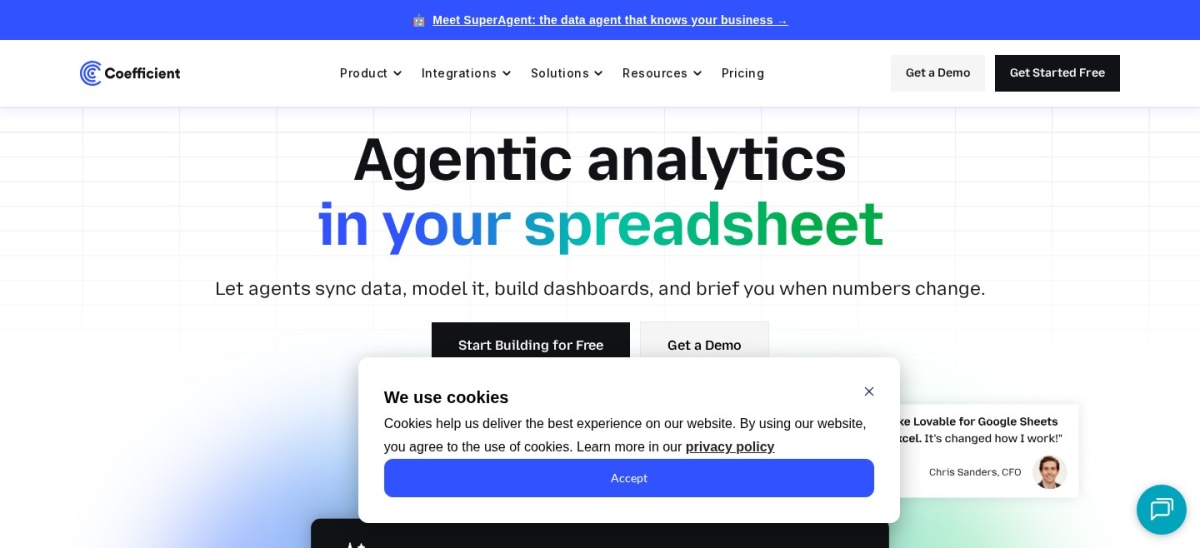
Coefficient homepage, captured Nov 2026.
Coefficient is a live-data connector that pulls Salesforce, HubSpot, NetSuite, QuickBooks, Snowflake and dozens of other systems into Google Sheets and Excel. The free plan includes 3 standard sources, imports of up to 5,000 rows and 50 refreshes a month with manual refresh.
The trade off is price per user. Starter costs $49 a month for one user only, and a second person who builds imports forces a move to Pro at $99 per user a month. It suits sales and finance teams that live in spreadsheets and need fresh CRM numbers.
What we like
Two-way sync writes data back to Salesforce and HubSpot
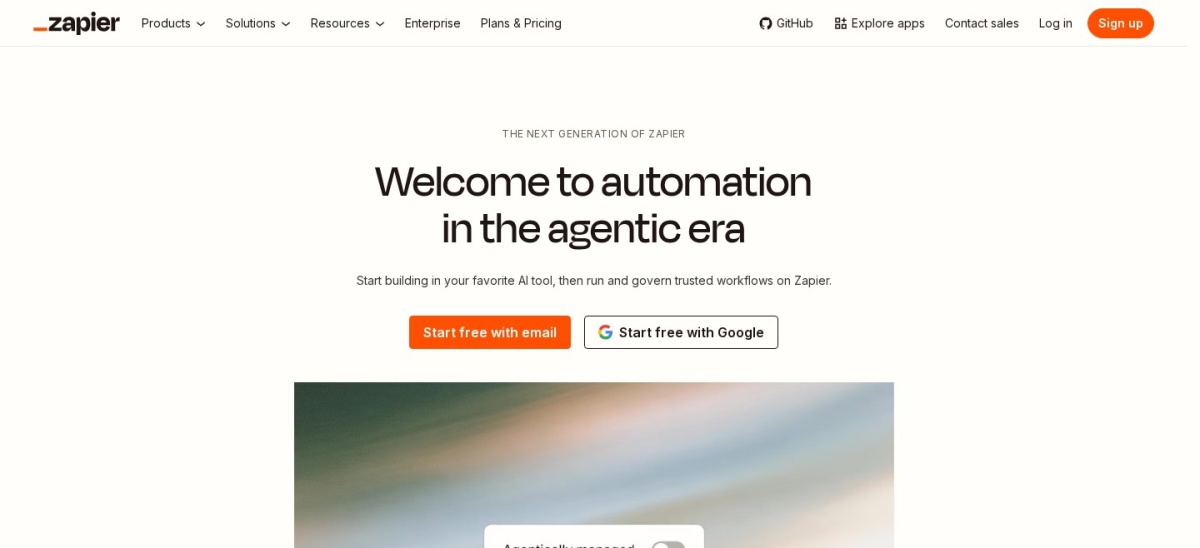
Zapier is a no-code automation platform that connects more than 9,000 apps, so a new form entry, sale or CRM update can add or change rows in Google Sheets automatically. The free plan covers 100 tasks a month with two-step workflows, while Professional adds multi-step workflows and premium apps.
The trade off is that it bills by task, not by sheet. Costs climb fast when a workflow runs thousands of times a month, and it has no scheduled bulk import like a connector tool. It suits teams that want a sheet to update as part of a wider workflow.
What we like
Largest app directory in this list
Easiest builder for non-technical users
Free plan covers 100 tasks a month
Watch out for
Costs rise quickly with task volume
No scheduled bulk import into Sheets
Professional adds multi-step workflows and premium appsVisit zapier.com
04
Make
4.6/5on G2 (500 reviews, checked Nov 2026)
Paid from$12/mo
Best value visual automation
Credits on Core10,000 a month
Free plan1,000 credits a month
Scheduling on CoreEvery minute
Paid planCore, $12/mo
make.com
Make homepage, captured Nov 2026.
Make is a visual automation platform where you build scenarios that move data between apps and spreadsheets on a canvas with filters and branches. The free plan covers 1,000 credits a month, while Core adds 10,000 credits, unlimited active scenarios and scheduling down to every minute.
The trade off is the learning curve. The visual builder is powerful but takes longer to learn than Zapier, and credit use is harder to predict up front. It suits teams that want complex, multi-step sheet workflows at a low entry price.
Supermetrics is a marketing data connector that pulls Google Ads, Facebook Ads, Analytics and about 175 other sources into Google Sheets, Excel, Looker Studio and warehouses. Starter covers 1 user, 1 destination and daily refresh, with a 14-day free trial and no permanent free plan.
The trade off is cost and scope. Extra sources, users and destinations are paid add-ons, and it is built for marketing reporting rather than general spreadsheet syncing. It suits agencies and marketing teams that report on ad spend every week.
Parabola is a no-code data preparation tool that cleans, validates and transforms rows in visual flows before sending them to a spreadsheet or another app. The free plan covers 1,000 rows per flow and 5 flows, while Starter raises the limit to 10,000 rows per flow with unlimited flows.
The trade off is price. Starter costs $80 a month, the highest entry price in this list, and it is built for operations work rather than simple scheduled imports. It suits finance and operations teams that need clean, checked data in every sheet.
Unito is a sync platform that keeps records aligned between spreadsheets, project tools such as Asana, Trello and Jira, and apps such as Slack and Zendesk. Changes on either side update the matching record on the other side, so teams stop copying updates between tools by hand.
The trade off is breadth and price. It covers 41 integrations, far fewer than Zapier or Make, and paid plans start at $65 a month with no free plan. It suits teams whose real problem is two tools drifting apart, not one-way imports.
What we like
True two-way sync between tools
Goes live in under a day for simple flows
Covers Asana, Jira, Trello and GitHub
Watch out for
Only 41 integrations
No free plan, and the entry price is high
Higher plans add more flows and deeper field syncVisit unito.io
08
Airtable
4.6/5on G2 (3,287 reviews, checked Nov 2026)
Paid from$20/user/mo
Best for replacing the spreadsheet itself
Records per base1,000 on Free
Records on Team50,000 per base
Automation runs100 on Free
Paid planTeam, $20/user/mo
airtable.com
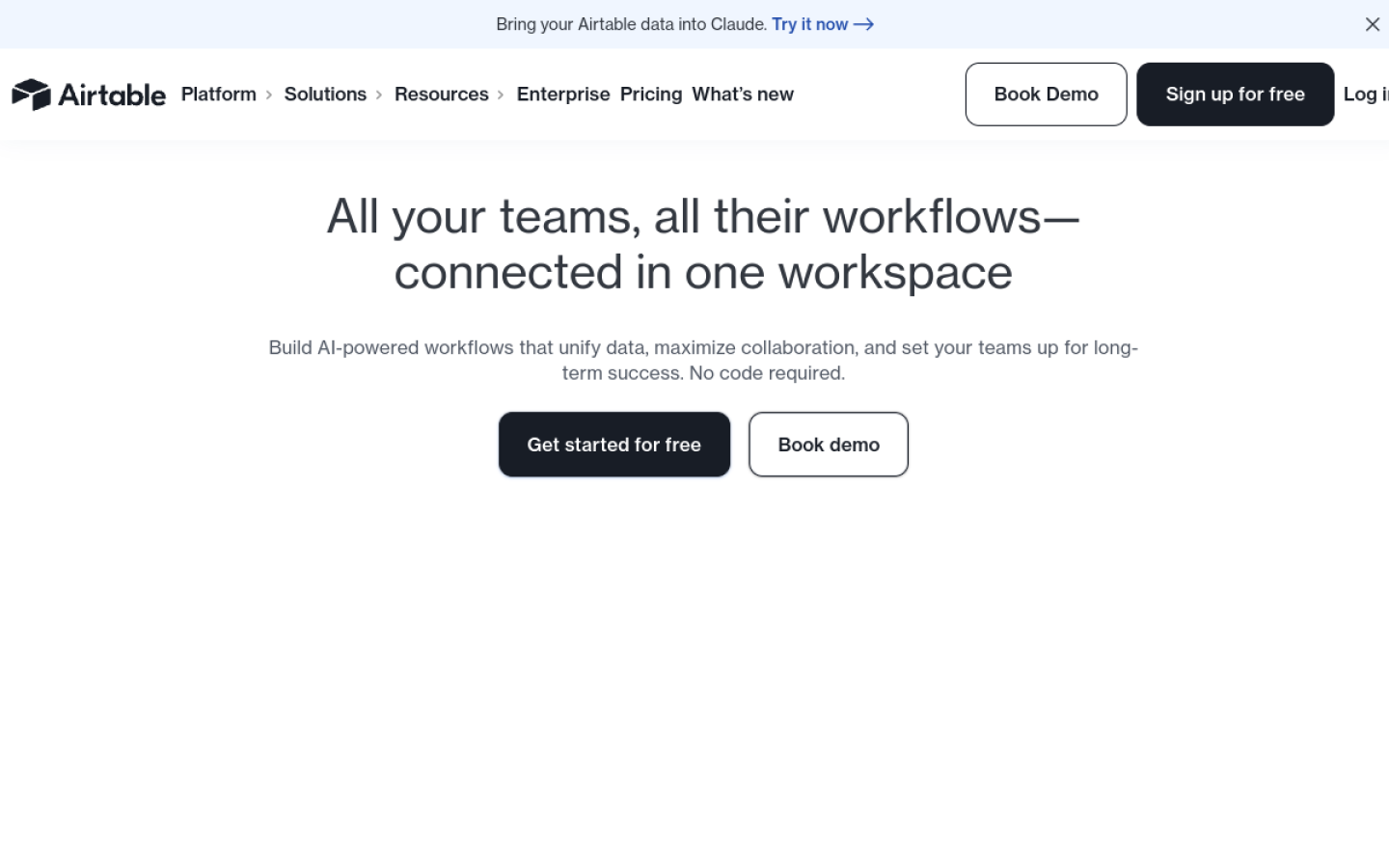
Airtable homepage, captured Nov 2026.
Airtable is a relational database with a spreadsheet view, so linked records, views, forms and automations replace fragile chains of copied sheets. The free plan covers 1,000 records per base, 1 GB of attachments and 100 automation runs, while Team raises the limit to 50,000 records per base.
The trade off is that it is a new home for your data, not a connector. Moving in takes planning, and the $20 per user monthly price adds up as the team grows. It suits teams that have outgrown scattered sheets and want one shared source.
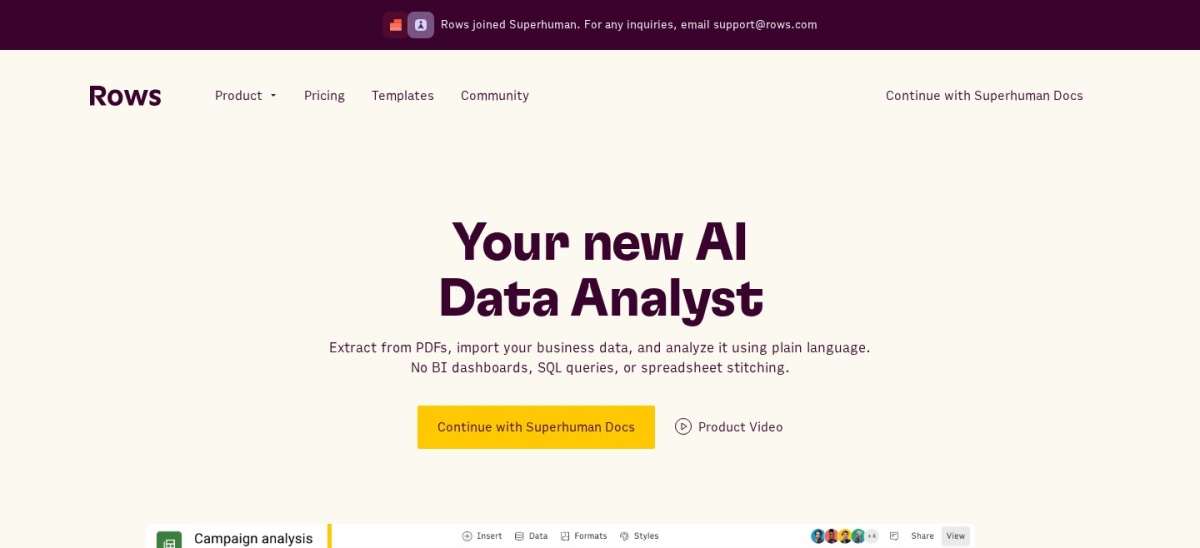
Rows is a spreadsheet with built-in data connectors and AI functions, so Stripe, HubSpot and Google Analytics data can refresh inside the sheet itself. The free plan includes unlimited spreadsheets, 5 AI tasks a month and 10 connected accounts, while Plus adds 200 AI tasks a month.
The trade off is that Rows has joined Superhuman, so buyers should check its longer-term plans and pricing before committing. Plus costs $6 per user a month on annual billing, the lowest entry price in this list. It suits growth and operations teams that want live data without leaving the sheet.
Free plans cover the basics well. Most include a working import or sync, a cap on rows or runs, and manual refresh.
Paid plans mostly add speed and scale. You get scheduled refresh, more accounts and sources, and higher row limits.
If a report must update every morning without fail, a paid plan is the safer choice. Our WordPress database back-up guide shows the same logic: automate the job that must not be forgotten.
How we chose
We started from the tools most often named as Sheetgo replacements in 2026, then kept only those that move data into or out of spreadsheets and are live now.
Prices come from each vendor's pricing page, checked on 29 November 2026. Ratings and review counts come from G2 on the same day. Where a vendor shows a sale, the list shows the regular price.
We left out tools with no public rating and tools that had shut down. No vendor paid for a place, and we do not claim to have used these tools ourselves.
How to choose a Sheetgo alternative
Start with where your data lives, then match the tool to that job.
Name the source and the destination. If data starts in ads or a CRM, pick a connector such as Coupler.io or Coefficient. If it starts in another app, pick an automation tool such as Zapier or Make.
Decide if sync must run both ways. One-way imports are cheaper and simpler. If two teams edit the same records, Unito or Coefficient is the safer pick.
Check the free plan limits first. Row caps, refresh limits and user limits bite fast. Run your largest report on the free plan before paying.
Price the whole year, not the first month. Per-user and per-task billing grows with the team. Compare the yearly totals in the price ladder above.
FAQ
What is the best Sheetgo alternative in 2026?
Coupler.io is the best Sheetgo alternative for most teams. It schedules imports from 400+ sources into Google Sheets and Excel from $24 a month, and it holds the highest G2 rating in this list at 4.8 out of 5.
How much does a Sheetgo alternative cost?
Paid plans in this list start at $6 a month for Rows and $12 a month for Make, and climb to $80 a month for Parabola. Coupler.io, the top pick, starts at $24 a month billed yearly, or $32 billed monthly.
Is there a free Sheetgo alternative?
Yes. Coupler.io, Coefficient, Zapier, Make, Parabola, Airtable and Rows all have free plans. Coupler.io is the most useful free option for scheduled imports, with 1 account, 100 rows per run and manual refresh.
Which Sheetgo alternative is best for beginners?
Coupler.io is the easiest start for scheduled imports, with a simple setup and a free plan. Zapier is the easiest for event-based automation, because its builder needs no code and its free plan covers 100 tasks a month.
Which Sheetgo alternative is best for small teams?
Make is the best value for small teams at $12 a month for 10,000 credits, with a free plan for 1,000 credits. Coupler.io is the better pick when the job is scheduled reports rather than general automation.
Coupler.io vs Coefficient: which is better?
Coupler.io is better for scheduled imports across many sources at a lower price, starting at $24 a month. Coefficient is better for live CRM and finance data, with two-way sync to Salesforce and HubSpot, but it starts at $49 a month for one user.
Zapier vs Make: which is better for sheets?
Zapier is better for simple, reliable workflows, with the largest app directory and the easiest builder. Make is better for complex multi-step workflows at a lower price, with 10,000 credits for $12 a month against 750 tasks for $19.99 on Zapier.
SaaS SEO and WordPress specialist with about 8 years of experience. Rakib compares WordPress plugins, themes, hosting and software using public pricing, documentation and user reviews. See how we rank.