Zoho Books tops our list of Sage Accounting alternatives because it combines a free accounting plan with paid subscriptions starting at $15 per month when billed annually. Choose Xero for collaborative bookkeeping and bank reconciliation or QuickBooks Online for working closely with external accountants and bookkeepers.
How we make this list: we compare pricing pages, product documentation and public user reviews, then re-check every price before each update. No product paid for a place. Disclosure.
Zoho Books Standard costs $180 annually, supports 3 users and earns 4.4/5 from 335 G2 reviews.
Xero starts at $27 per month, with its Early plan supporting 20 invoices and 5 bills.
QuickBooks Online has 3,919 G2 reviews and a regular Simple Start subscription price of $38 per month.
FreshBooks earns 4.5/5 from 984 G2 reviews, with Lite supporting 5 billable clients at $23 per month.
Wave offers free bookkeeping and unlimited invoices, with its Pro subscription available for $190 annually.
TrulySmall Accounting starts at $150 annually for independent business owners who can manage bank statement imports manually.
What should you look for in Sage Accounting alternatives?
A good Sage Accounting replacement should handle your complete bookkeeping workflow. Look beyond invoice creation and check whether the software supports reconciliation, expense recording, financial statements and accountant collaboration.
Regular subscription prices matter more than introductory discounts. Several accounting providers advertise reduced rates for new customers, but the long-term cost can change considerably when those offers expire. Compare standard annual expenses before switching.
Entry-level accounting plans often restrict transaction volumes or collaboration. Xero Early limits invoices and bills, FreshBooks Lite restricts billable clients, and some free subscriptions reserve automatic bank feeds for paying customers.
Migration is a financial data project rather than a simple application switch. Confirm that your replacement can accommodate opening balances, outstanding invoices, unpaid bills, account classifications and existing customer records. Keep an accessible archive of your historical Sage data.
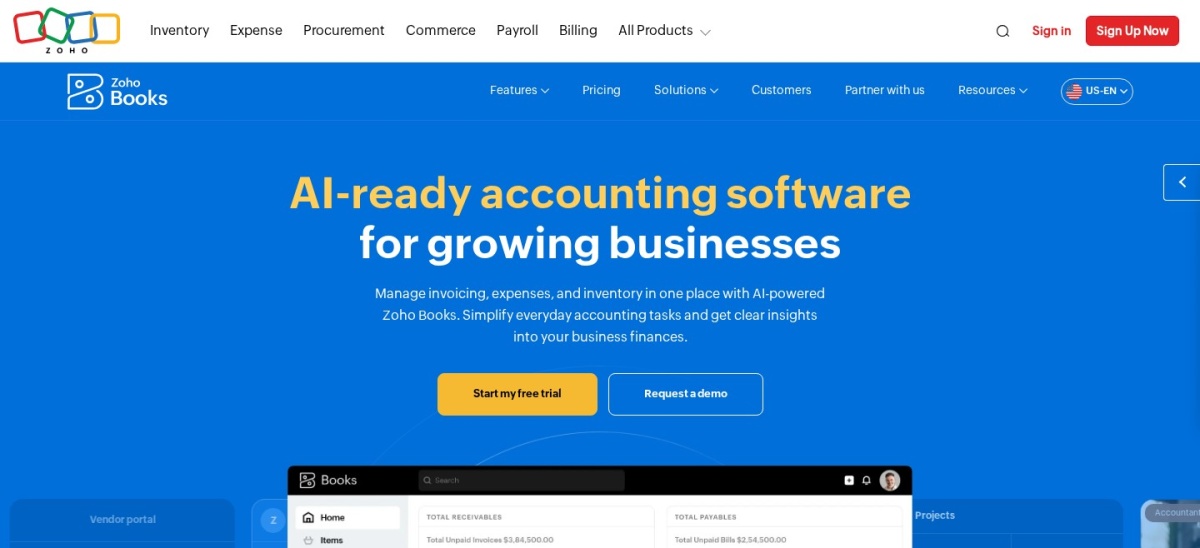
Zoho Books is a cloud accounting application covering invoices, expenses, financial statements and customer accounts. Its free subscription provides core bookkeeping features, while Standard supports 3 users and adds connected bank feeds, custom reporting and accounting period controls.
The trade off is that advanced inventory management, purchase orders and foreign currency transactions require Professional, priced at $40 per month with annual billing. Standard costs $15 per month annually or $20 with monthly billing. It suits small businesses seeking affordable accounting with room to expand.
What we like
Permanent free accounting subscription
Affordable paid plan with multiple users
Customer portal and payment reminders
Custom financial reporting on Standard
Integration with other Zoho applications
Watch out for
Free plan has eligibility restrictions
Automatic bank feeds require a paid subscription
Inventory management requires Professional
Standard adds connected banking, custom reporting and API accessVisit zoho.com
02
Xero
4.4/5on G2 (1,867 reviews, checked Nov 2026)
Starts at$27/mo
Best for collaborative bookkeeping
Early invoices20
Early bills5
Bank reconciliationIncluded
Paid planEarly, $27/mo
xero.com
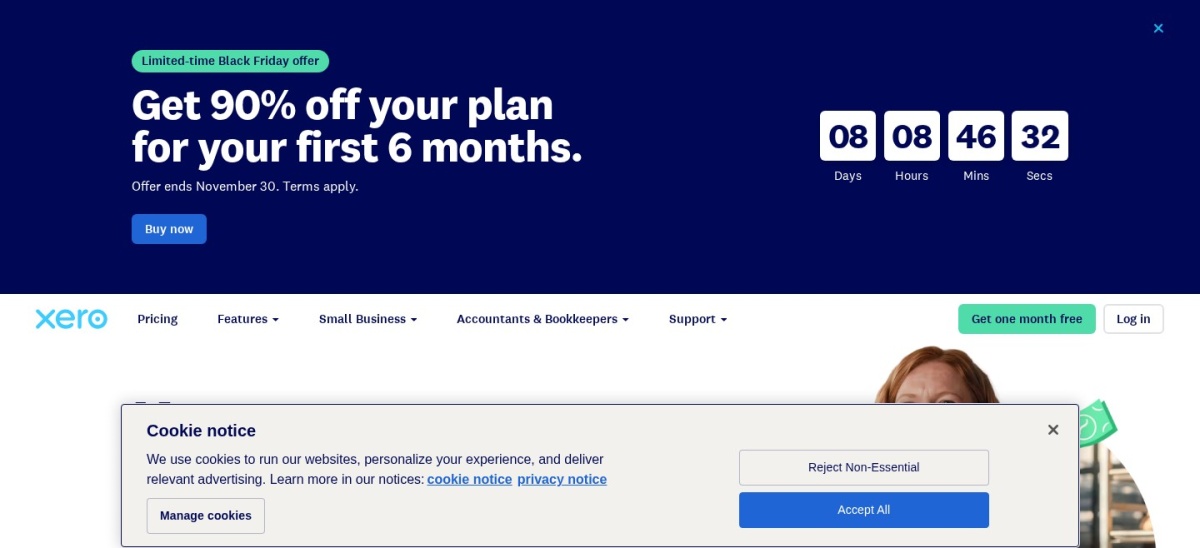
Xero homepage, captured Nov 2026.
Xero is an online bookkeeping platform designed for business owners and accounting professionals. Its Early subscription includes reconciliation, financial reports, document capture and support for 20 invoices and 5 bills, providing the foundations for managing a smaller business.
The trade off is that businesses with frequent billing activity may outgrow Early at its regular $27 monthly price. A temporary introductory offer reduced the displayed price to $2.70 when checked. It suits companies that prioritize collaborative accounting and connected financial workflows.
What we like
Bank reconciliation on the entry subscription
Accessible cloud bookkeeping for accounting teams
Financial reports and document capture
Extensive third-party application ecosystem
Watch out for
Entry plan restricts invoice and bill volumes
No permanent free accounting plan
Advanced requirements may require higher subscriptions
Growing removes the restrictive entry-level invoice and bill allowancesVisit xero.com
03
QuickBooks Online
4/5on G2 (3,919 reviews, checked Nov 2026)
Paid from$38/mo
Best for businesses working with external accountants
Free users1
Free bank connections1
Simple Start accountant access2 accountants
Paid planSimple Start, $38/mo
quickbooks.intuit.com
QuickBooks Online homepage, captured Nov 2026.
QuickBooks Online is a cloud accounting platform covering income, expenses, invoicing and business financial statements. Its free plan supports 1 user and 1 connected bank account, while Simple Start provides access for 1 business user and 2 external accountants.
The trade off is that accountant collaboration requires a paid subscription starting at $38 per month, and the free plan normally limits invoices to 2 monthly. A temporary offer displayed Simple Start at $11.40 for the initial promotional period. It suits businesses seeking familiar bookkeeping workflows and professional accounting support.
What we like
Large public review base
Free entry-level financial management
Dedicated external accountant access on paid plans
Connected bank transactions
Profit and loss and balance sheet reporting
Watch out for
Higher regular entry price than several competitors
Free plan excludes accountant access
Additional business users require higher subscriptions
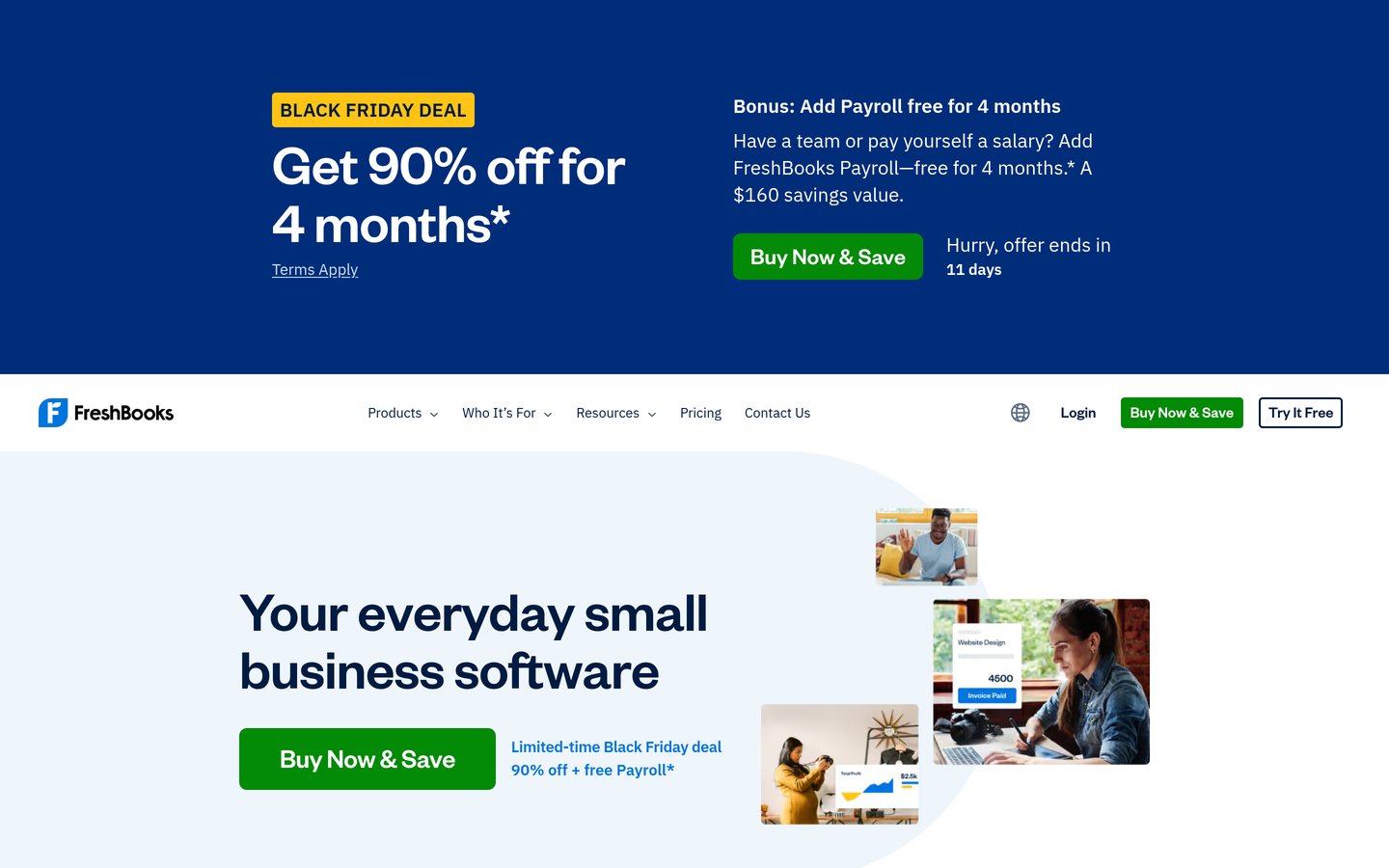
FreshBooks is an accounting and billing application built around client relationships and service delivery. Its Lite subscription supports invoicing for 5 clients, expense recording, estimates, online payment collection and financial reports for preparing business records.
The trade off is that Lite costs $23 per month at its regular rate, and growing businesses may need a higher subscription to remove client restrictions. Extra team members cost $11 monthly each. It suits independent professionals and service providers who prioritize billing over inventory management.
What we like
Client-focused invoicing workflows
Integrated estimates and expense recording
Suitable for time-based service billing
High G2 rating from a substantial review sample
Watch out for
Lite supports only five billable clients
Additional team access costs extra
No permanent free subscription
Higher plans expand client capacity and accounting functionalityVisit freshbooks.com
05
Wave
4.3/5on G2 (329 reviews, checked Nov 2026)
Paid from$190/yr
Best for free invoicing and basic bookkeeping
Free invoicesUnlimited
Free bookkeepingIncluded
Automatic bank importsPro
Paid planPro, $190/yr
waveapps.com
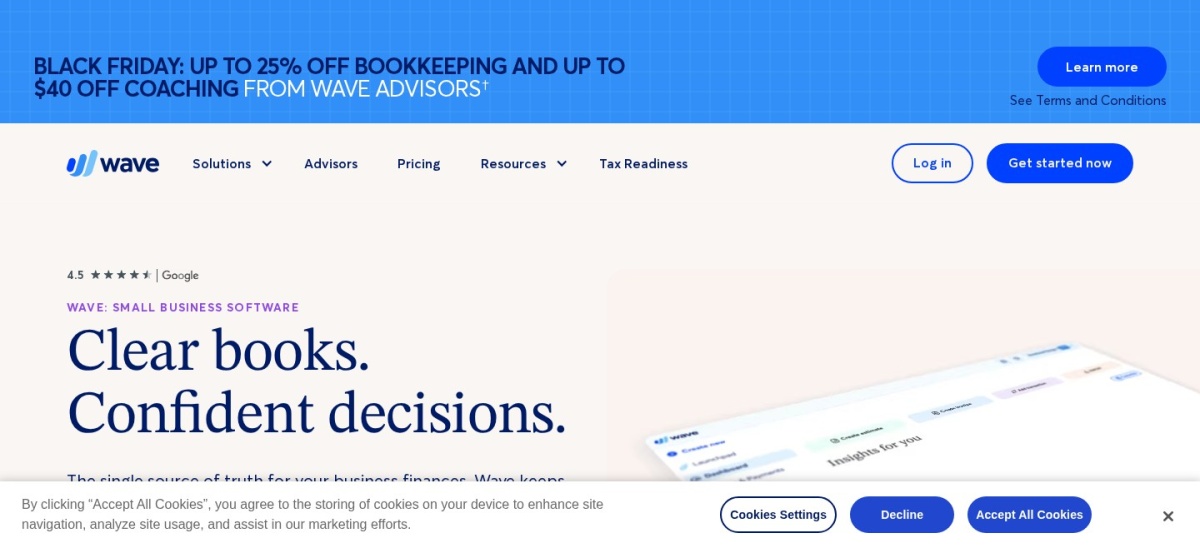
Wave homepage, captured Nov 2026.
Wave is a small business accounting application offering free invoices, estimates, bills and bookkeeping records through its Starter subscription. Pro adds automatic banking imports, transaction classification and receipt capture for a regular annual price of $190.
The trade off is that free users must manage more bookkeeping tasks manually, while payment processing can generate separate transaction charges. Pro also has a monthly option costing $19. It suits independent businesses that need basic financial records without committing immediately to subscription fees.
What we like
Free bookkeeping and unrestricted invoice creation
Financial overview for business owners
Affordable annual automation upgrade
Digital receipt capture on Pro
Watch out for
Automatic bank imports require Pro
Payment processing incurs separate charges
Less suitable for complex inventory workflows
Pro adds banking automation, receipt capture and automated remindersVisit waveapps.com
06
TrulySmall Accounting
4.5/5on G2 (67 reviews, checked Nov 2026)
Starts at$150/yr
Best for independent business owners
Solo users1
Solo bank importsCSV and OFX
Automatic bank synchronizationGrowth
Paid planSolo, $150/yr
trulysmall.com
TrulySmall Accounting homepage, captured Nov 2026.
TrulySmall Accounting is a bookkeeping platform focused on independent professionals and smaller companies. Its Solo subscription supports 1 user, unlimited invoices and estimates, expense tracking, receipt scanning and profit and loss reporting.
The trade off is that Solo requires manual bank statement uploads and costs $150 annually or $14 monthly, while automated bank synchronization requires Growth at $216 annually. It suits sole operators who want straightforward financial management without purchasing a larger accounting suite.
What we like
Low regular annual subscription price
Unlimited invoices and estimates
Receipt scanning included in Solo
Supports foreign currency transactions
Watch out for
No permanent free accounting subscription
Automatic bank feeds require Growth
Solo limits access to one user
Growth adds automatic bank feeds, bill management and inventory trackingVisit trulysmall.com
07
FreeAgent
4.3/5on G2 (44 reviews, checked Nov 2026)
Starts at$220/yr
Best for project-based business bookkeeping
Project trackingAvailable
Time trackingAvailable
Foreign currency invoicingIncluded
Paid plan$220 regular annual subscription
freeagent.com
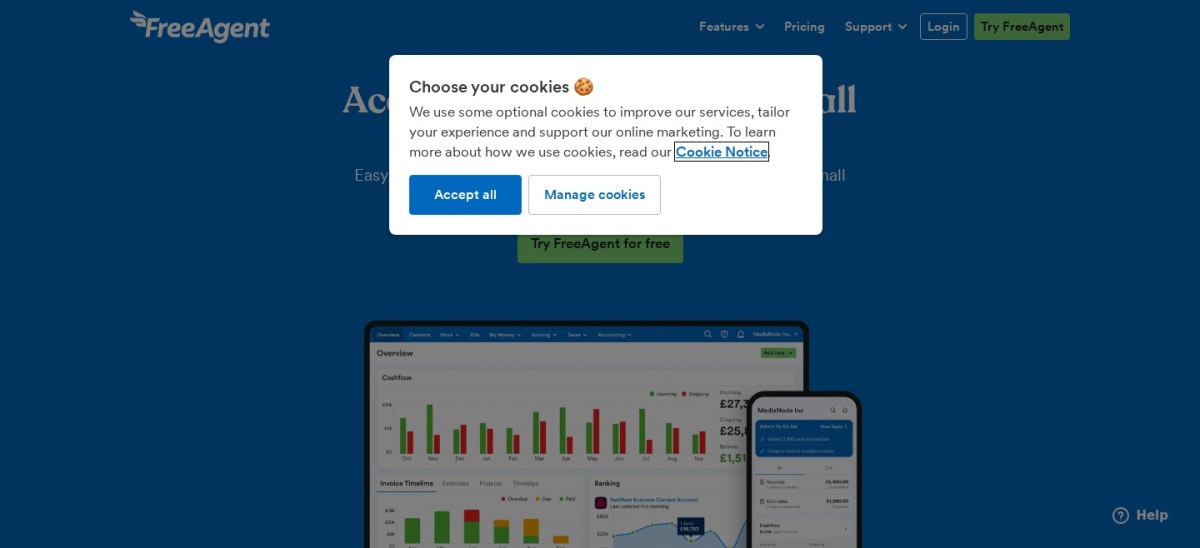
FreeAgent homepage, captured Nov 2026.
FreeAgent is a small business accounting platform combining project management, invoicing, expenses and banking workflows. Its regular $220 annual subscription provides access to accounting tools that help independent professionals organize client work and related financial records.
The trade off is that unlimited receipt scanning requires a separate $6 monthly add-on, and the advertised $110 first-year subscription is a temporary discount rather than the regular price. It suits project-based professionals who want billing and bookkeeping within a shared application.
What we like
Project tracking and accounting in one application
Time-based billing workflows
Foreign currency invoicing
Published regular annual pricing
Watch out for
Unlimited automated receipt capture costs extra
No standard permanent free subscription
Smaller public review sample than leading competitors
The paid subscription provides accounting, billing and project managementVisit freeagent.com
08
ZipBooks
4.7/5on G2 (86 reviews, checked Nov 2026)
Paid from$15/mo
Best for basic accounting and recurring invoices
Free invoicesUnlimited
Free bank connections1
Smarter team members5
Paid planSmarter, $15/mo
zipbooks.com
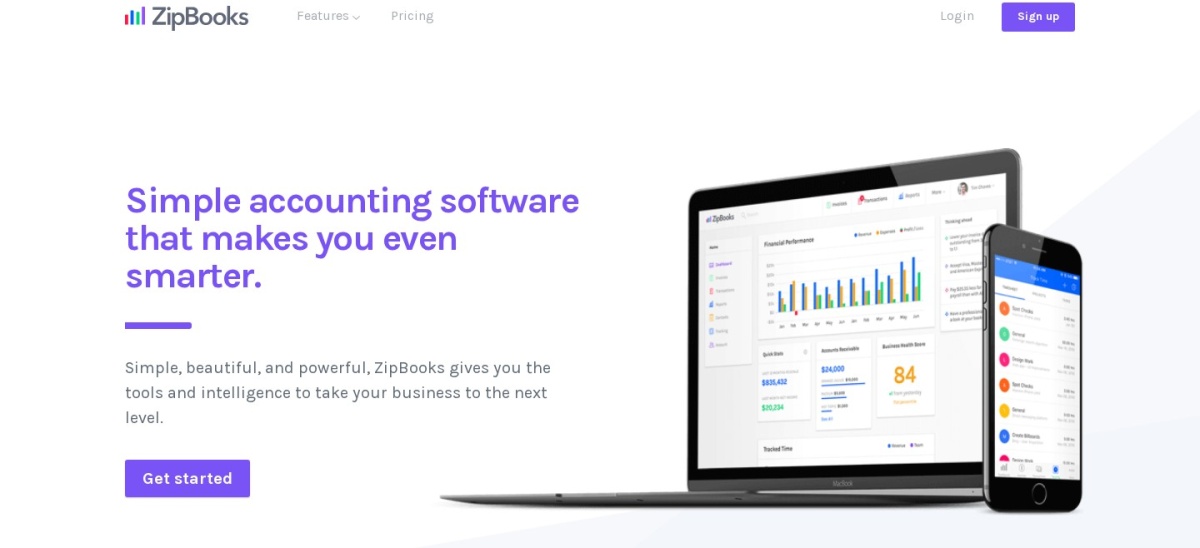
ZipBooks homepage, captured Nov 2026.
ZipBooks is a cloud bookkeeping application combining invoicing, financial records and time tracking. Its free Starter subscription supports unlimited invoices, unrestricted customer and vendor records, basic financial reporting and 1 connected bank account.
The trade off is that recurring billing, multiple bank connections and time tracking require Smarter at $15 per month, while advanced reporting and accounting period controls require Sophisticated at $35 monthly. It suits smaller service businesses with uncomplicated accounting requirements.
What we like
Unlimited invoices on the free subscription
Affordable recurring billing upgrade
Time tracking on Smarter
Supports multiple bank connections on paid plans
Watch out for
Limited free financial reporting
Advanced reconciliation requires Sophisticated
Smaller integration ecosystem than major competitors
Smarter adds recurring invoices, payment reminders and team collaborationVisit zipbooks.com
Which Sage Accounting alternatives have the lowest ongoing costs?
TrulySmall Accounting has the lowest regular paid annual subscription in this comparison at $150. Zoho Books and ZipBooks follow at $180 annually, although the features included in their entry subscriptions differ considerably.
Free subscriptions can reduce software expenses for businesses with straightforward accounting requirements. Zoho Books, Wave, QuickBooks Online and ZipBooks provide free options, but their restrictions on banking, collaboration and reporting vary.
The cheapest subscription is not necessarily the cheapest operational choice. Consider how much time your business spends importing transactions, recording expenses, preparing invoices and reconciling accounts. Additional automation may justify a higher recurring subscription.
How can you switch from Sage without losing accounting records?
Start with a complete export of your existing accounting records. Preserve the chart of accounts, customer and supplier details, transaction history, outstanding invoices, unpaid bills and financial statements before changing platforms.
Choose a transition date that simplifies reconciliation. Moving at the beginning of an accounting period can make opening balances easier to establish and reduce the risk of recording transactions twice.
Ask your accountant to validate the transferred balances. Compare the original and replacement balance sheets, profit and loss statements, outstanding receivables and bank balances before relying exclusively on the new software.
How we chose
We identified accounting platforms through public software directories, Sage competitor listings and official product documentation. We prioritized bookkeeping capabilities, financial reporting, invoicing, connected banking, subscription affordability and suitability for small businesses.
We opened official pricing pages and G2 review profiles on 29 Nov 2026. Prices reflect regular subscriptions rather than introductory discounts, using published annual billing where available. Monthly subscriptions are multiplied by twelve when calculating annual costs. Banking tags indicate availability across the product's plans, not necessarily its cheapest subscription.
We excluded invoice-only applications and products whose official pricing could not be confirmed. Odoo Accounting was considered but excluded because its official pricing page repeatedly failed to load. No vendor paid for a place, and we do not claim testing for this list.
How to choose the right Sage Accounting replacement
Compare your current bookkeeping requirements against these four purchasing considerations before committing to another accounting platform.
Identify your essential accounting features. List the functions you currently use in Sage, including reconciliation, financial reporting, expense recording, inventory and supplier management. Check which replacement subscriptions include these features rather than comparing product descriptions alone.
Compare regular annual subscription costs. Ignore temporary introductory discounts when preparing your budget. Include additional users, payment processing, receipt scanning, payroll integrations and other optional services that your business may require.
Confirm compatibility with your accountant. Ask whether your accountant can access the replacement platform, export financial reports and review transaction histories. Dedicated accountant access can reduce administrative work and simplify financial reporting.
Prepare and validate your migration. Export existing Sage records and confirm supported import formats. Establish opening balances, transfer outstanding transactions and reconcile the new accounts against your original records before completing the transition.
FAQ
What is the best Sage Accounting alternative in 2026?
Zoho Books is the best Sage Accounting alternative for most small businesses seeking affordable cloud bookkeeping. It earns 4.4/5 from 335 G2 reviews, offers a free subscription and provides a Standard plan supporting 3 users for $180 annually.
What is the best free alternative to Sage Accounting?
Wave is a strong free Sage Accounting alternative for businesses requiring unlimited invoices and basic bookkeeping without recurring software fees. Zoho Books is another suitable option for eligible businesses that need structured financial reporting and customer account management.
Is Zoho Books better than Xero?
Zoho Books is better for businesses prioritizing affordable subscriptions and access to a free accounting plan. Xero is preferable for companies that value collaborative bookkeeping and its application ecosystem. Xero Early costs $27 monthly, while Zoho Books Standard starts at $15 with annual billing.
How much do Sage Accounting alternatives cost?
Regular paid subscriptions in this comparison start at $150 annually for TrulySmall Accounting. Zoho Books and ZipBooks cost $180 annually, while QuickBooks Online Simple Start costs $456 annually. Free subscriptions are also available from several providers.
Which Sage Accounting alternative is easiest for beginners?
Wave is a suitable starting point for beginners who need basic invoices, expense records and financial reporting. TrulySmall Accounting is another option for independent business owners who prefer a focused bookkeeping application rather than an extensive collection of business management tools.
What is the best Sage Accounting alternative for freelancers?
FreshBooks is a strong Sage Accounting alternative for freelancers who prioritize client billing, estimates and expense recording. Its Lite subscription costs $23 monthly and supports 5 billable clients. ZipBooks provides a lower-cost option for professionals who need recurring billing and time tracking.
Can I transfer my Sage Accounting data to another platform?
Yes, you can transfer many accounting records through supported spreadsheet formats, migration services or manual imports. Available migration options depend on the replacement platform. Preserve historical transactions and financial statements separately if the new application cannot import your complete Sage history.
Which Sage Accounting alternative is best for inventory management?
Zoho Books Professional is a suitable choice for businesses that need inventory tracking alongside financial management, sales orders and purchase orders. It costs $40 per month with annual billing. Check whether its inventory capabilities meet your requirements before replacing a specialized stock management system.
SaaS SEO and WordPress specialist with about 8 years of experience. Rakib compares WordPress plugins, themes, hosting and software using public pricing, documentation and user reviews. See how we rank.