DotActiv is the strongest retail space planning software for startups, because its free plan covers real planograms for up to forty SKUs with no card required. Quant suits growing chains that need forecasting, while PlanoHero fits small teams that want simple drag-and-drop planograms.
How we make this list: we compare pricing pages, product documentation and public user reviews, then re-check every price before each update. No product paid for a place. Disclosure.
DotActiv is the only tool here with a genuinely free planogram tier, covering 40 SKUs.
Quant pairs planograms with forecasting from $1,650 per user a year.
PlanoHero is the simplest paid start, at $199 a month for up to 5,000 SKUs.
LEAFIO, RELEX, Blue Yonder and SymphonyAI are quote-only and built for larger chains.
Treat thin review bases with care: DotActiv and PlanoHero each have three or fewer G2 reviews.
What should a startup look for in retail space planning software?
A startup does not need an enterprise planning suite. It needs a tool that turns a shelf sketch into a planogram a store can follow, without a sales call or a five-figure contract.
Free and low-cost planogram tools cover the first stores well. The gap appears when the range grows past a few hundred SKUs, when forecasting and allocation start to matter more than drawing shelves.
Pricing in this category is split. DotActiv and PlanoHero publish their prices, while the AI and enterprise suites quote per project, so a startup should budget for the quoted tools only after the store count justifies them.
Review counts are thin across this niche. Several tools here hold high scores from only a handful of reviews, so the free plan or trial is a better test than the rating.
The 7 best retail space planning software tools for startups
01
DotActiv
4.5/5on G2 (1 reviews, checked Nov 2026)
Paid from$800/yr
Best free start for small catalogues
Free planYes, 40 SKUs, 5 planograms a month
Cheapest paid licenceLite, $800 a year
PlatformWindows and cloud
TrialFree plan, no card
dotactiv.com
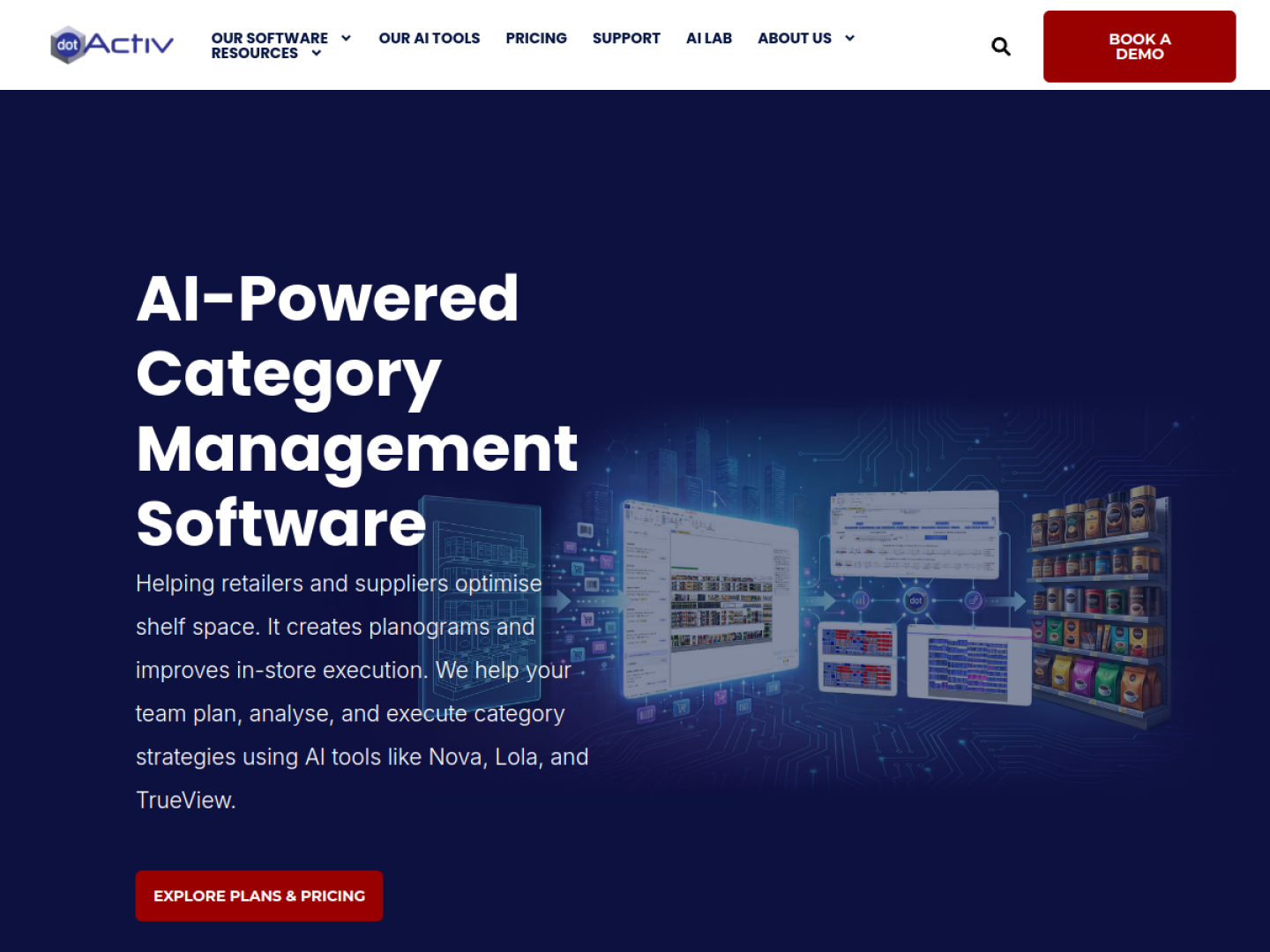
DotActiv homepage, captured Nov 2026.
DotActiv is a planogram and category management tool with a genuinely free tier, which is rare in this category. The free plan covers up to 40 SKUs, five planograms a month and 20 credits, enough for a startup to lay out its first shelves. Paid licences add more SKUs, clustering and reporting, and the interface is built around drag-and-drop merchandising rather than spreadsheets.
The trade off is the thin review base. DotActiv holds a high score on G2, but from a single review, so treat the rating as a weak signal and lean on the free plan instead. Support is lighter than the enterprise suites here, and large catalogues quickly outgrow the free tier, pushing a startup toward the paid licences sooner than expected.
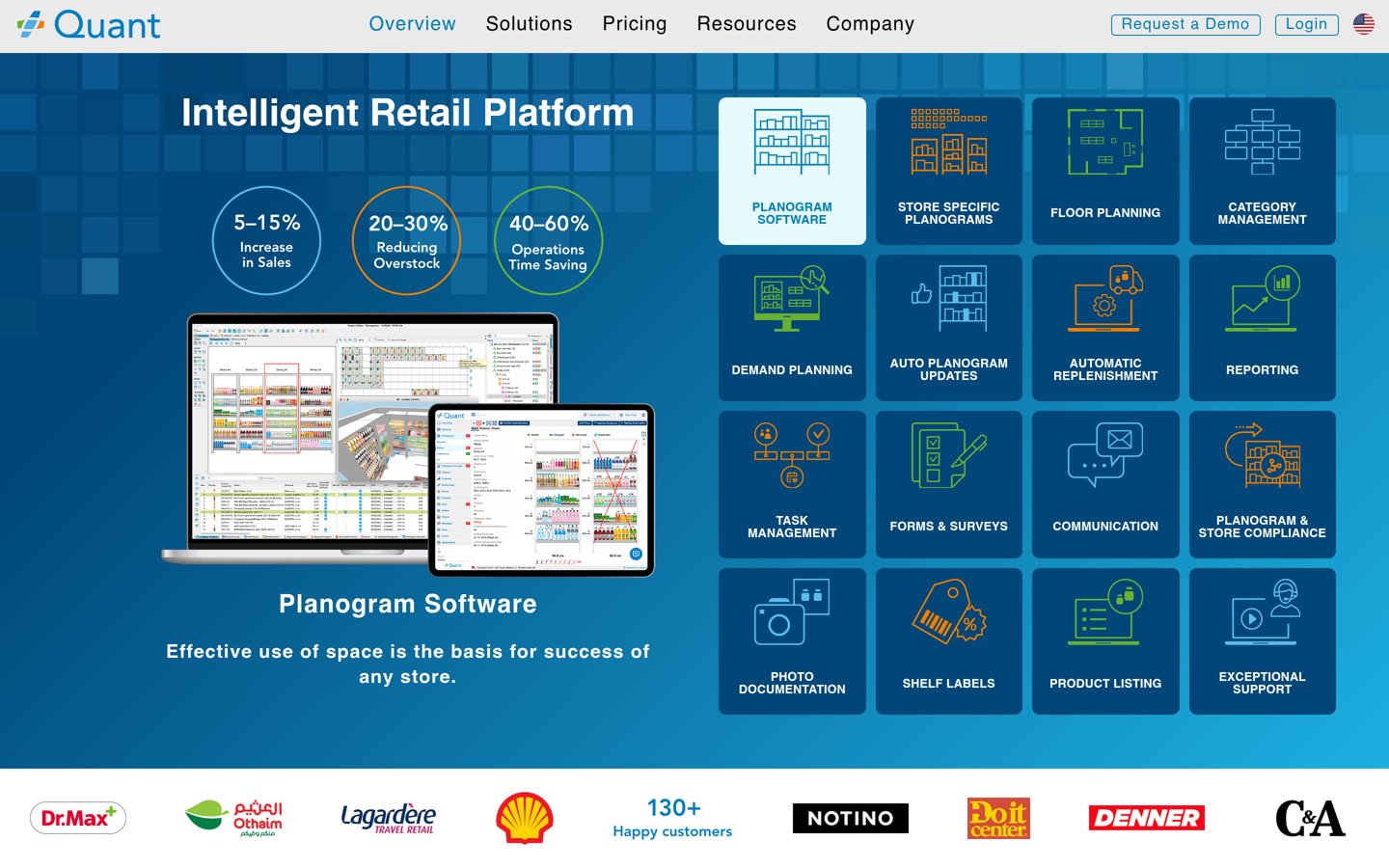
Quant is a planogram and retail planning platform that pairs shelf design with forecasting, so a startup can plan space and stock from the same data. The entry planogramming tier starts at $1,650 per user a year, and the planning tier adds demand forecasting for larger ranges. It suits teams that already sell through several stores and need one source of truth for space.
The trade off is price and complexity. Quant is built for retailers with real volume, so a very small startup may find the entry cost steep and the setup heavier than a simple planogram maker. The payoff comes once the range grows past a few hundred SKUs, when forecasting starts to save more than the licence costs.
PlanoHero is a cloud planogram tool built for retail chains that want fast, visual shelf planning without a long implementation. The Lite plan costs $199 a month and covers up to 5,000 SKUs and 100 planograms, with a 14-day free trial and no card required. Teams drag products onto shelves, share plans with stores and track execution with photo reports.
The trade off is the small review base. PlanoHero scores highly on G2, but from only three reviews, so the score says little about long-term support. The Lite plan also caps planograms at 100, which suits a startup now but can force an upgrade to the quoted Enterprise tier as the store count grows.
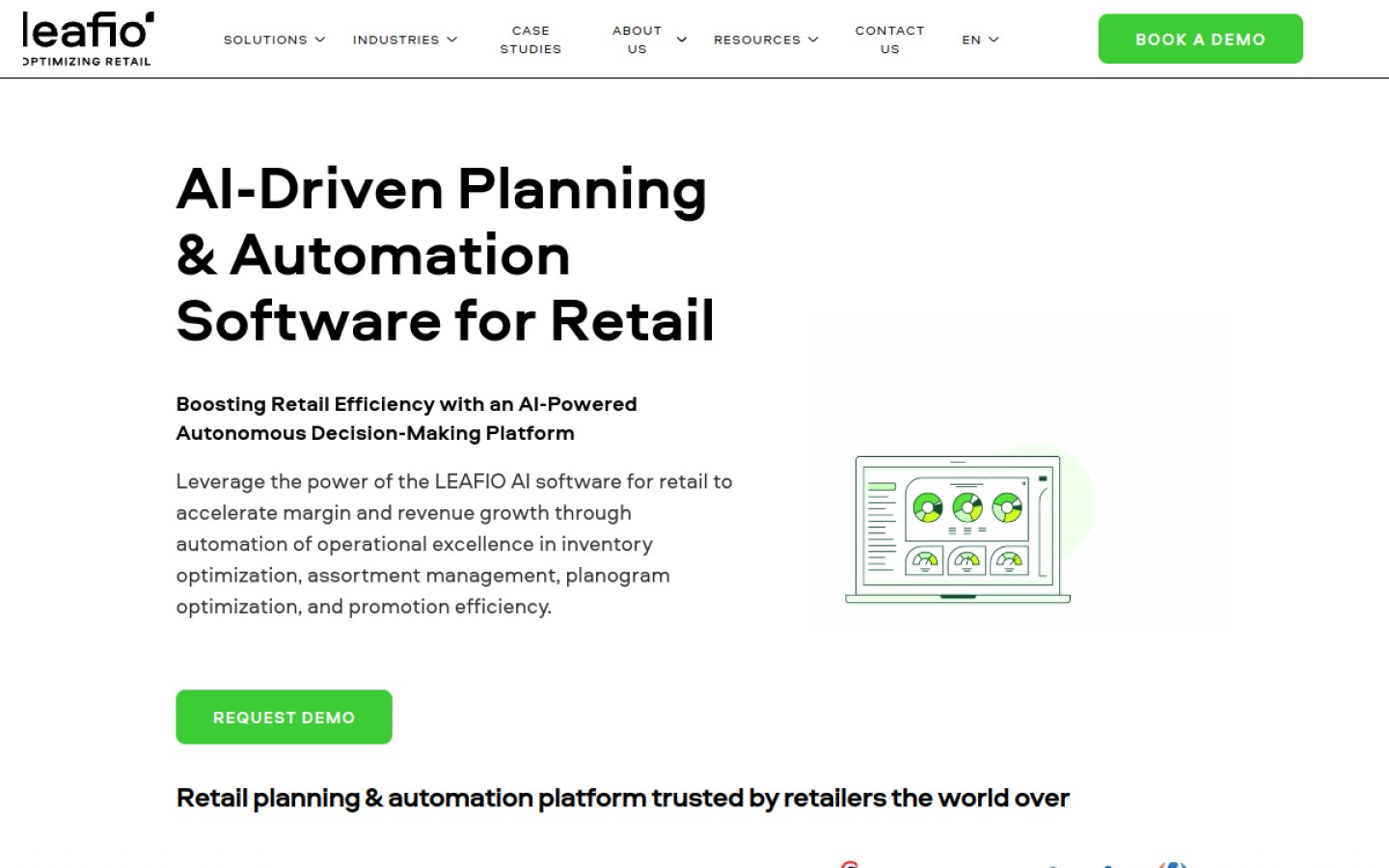
LEAFIO is a merchandising platform that uses artificial intelligence to plan assortments, allocate stock and build planograms across many stores. It is aimed at chains rather than single shops, with modules for assortment, allocation and shelf planning that share one data model. Pricing is quoted per project, with a one-time implementation fee plus a subscription scaled by stores and modules.
The trade off is access. LEAFIO publishes no prices, so a startup cannot budget for it without a sales conversation, and the implementation fee puts it out of reach for most early-stage teams. It earns its place here for startups that already run several stores and need AI-led assortment rather than simple shelf drawing.
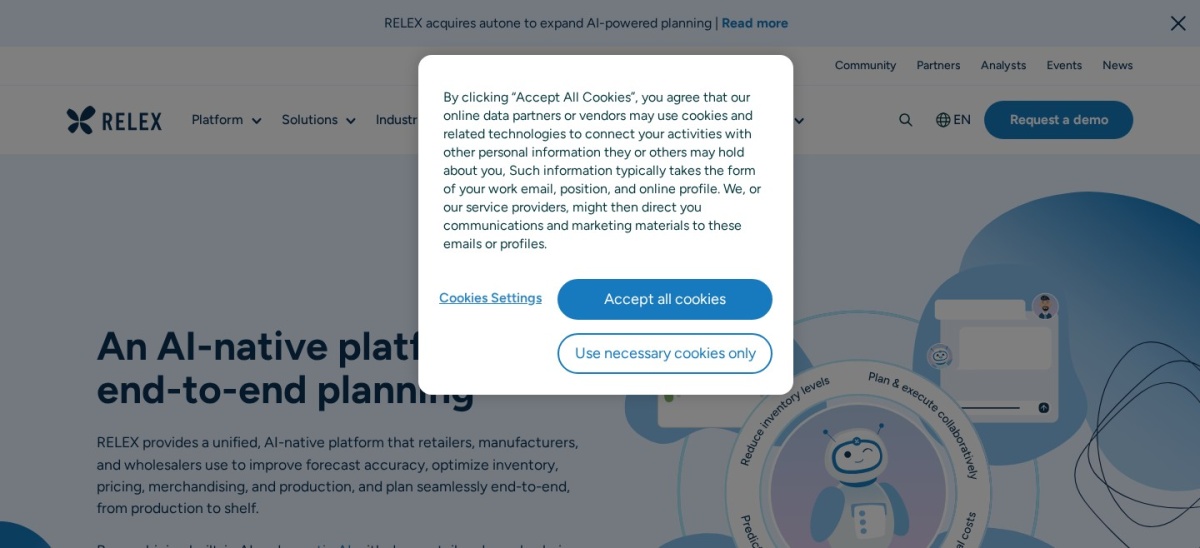
RELEX is an enterprise retail planning platform covering forecasting, replenishment, assortment and space planning in one system. Large grocers and general retailers use it to plan shelf space from the same demand forecasts that drive ordering. For a startup it is a look-ahead option: the capability is deep, but the engagement is built around large, multi-store operations.
The trade off is cost and fit. RELEX publishes no prices on its site, and the vendor-supplied figure seen on review sites is in euros and unconfirmed, so a startup cannot price it without a quote. It belongs on a shortlist only once the business runs enough stores to justify an enterprise planning project.
What we like
Forecasting, replenishment and space in one system
Blue Yonder is a large supply-chain and retail planning suite whose category management tools help chains plan assortments and shelf space at scale. It covers demand planning, allocation and replenishment alongside planograms, so space decisions sit next to inventory decisions. The audience is enterprise retail, and implementations are run as full projects rather than self-serve signups.
The trade off is that Blue Yonder is not a startup tool in any practical sense. Pricing is by quote only, the review base on G2 is small, and the platform is sold to retailers with large estates and dedicated planning teams. A startup should watch it as a benchmark for what good category management looks like, not as a first purchase.
SymphonyAI is an AI-led suite for retailers and consumer-goods makers, covering assortment, shelf planning, pricing and promotions from shared data. Its pitch is that space decisions improve when they draw on the same demand signals as pricing and promotion planning. The suite targets large chains, with deployments shaped around each retailer's categories and store formats.
The trade off is the same as the other enterprise names here. Pricing is by quote, the G2 review base is small, and the product is built for organisations with planning teams, not a founder laying out a first store. It is worth knowing about if the startup plans to scale into many stores and wants AI across assortment and space.
Free plans cover the basics well. DotActiv's free tier builds real planograms, shares them with a store and tracks the layout, which is enough for a first shop.
Paid plans mostly add scale and analysis. You get more SKUs, more planograms, clustering and reporting, plus forecasting in tools such as Quant.
The quote-only suites add AI and enterprise process. They suit chains with planning teams, not a founder laying out a first store, so treat them as a later step.
How we chose
We started from every retail space planning tool with a public price or a G2 listing, then kept those a startup could actually buy or try. Tools with no review presence at all, such as Nexgen POG, were left out, as were tools whose pricing pages would not load.
Prices come from each vendor's pricing page, checked on 30 November 2026. Ratings come from G2 on the same day. Where a vendor shows a sale, the list shows the regular price, and where a vendor quotes only, the list says so rather than repeating a third-party figure.
No vendor paid for a place, and we do not claim hands-on testing for this list. We ranked free and low-cost tools first because a startup's first planograms should cost little, and we flagged every thin review base so readers can weigh the scores.
How to choose retail space planning software for a startup
Start with the free tier, then buy only when the range outgrows it.
Count your SKUs first. Under 40 SKUs, DotActiv's free plan may be enough; past a few hundred, look at Quant or PlanoHero.
Check whether you need forecasting. If you only draw shelves, a planogram tool is enough; if you plan stock too, pick one with forecasting.
Test the free plan or trial. Build a real planogram for one store before paying, and check how easily staff can follow it.
Ask about the next price step. Know what the upgrade costs before you commit, so growth does not force a sudden switch.
FAQ
What is the best retail space planning software for startups?
DotActiv is the best start for most startups, because its free plan covers real planograms for up to 40 SKUs with no card required. PlanoHero is the simplest paid option at $199 a month, while Quant suits teams that also need forecasting. The quote-only enterprise suites fit later, once the store count grows.
Is there free retail space planning software for startups?
Yes. DotActiv offers a free plan with up to 40 SKUs, five planograms a month and 20 credits, which covers a first store's layout. The other tools here offer trials rather than free plans, and the enterprise suites are quote-only, so DotActiv is the only lasting free option on this list.
How much does retail space planning software cost?
Paid plans start at $199 a month for PlanoHero Lite and $800 a year per licence for DotActiv Lite, while Quant planogramming starts at $1,650 per user a year. LEAFIO, RELEX, Blue Yonder and SymphonyAI are quote-only, so their cost depends on stores, SKUs and modules.
What is a planogram?
A planogram is a visual map of how products sit on a shelf, showing each item's position, facing and quantity. Retailers use planograms to keep shelves consistent across stores, test new layouts and check that staff set displays as planned. The tools on this list build planograms digitally and share them with stores.
DotActiv vs Quant: which is better for a startup?
DotActiv is better for a startup on a tight budget, because its free plan covers the first planograms at no cost. Quant is better once the business runs several stores and needs forecasting alongside shelf planning, since it plans space and stock from the same data. Most startups should start free and move to Quant later.
Do I need enterprise software to plan a single store?
No. A single store needs a planogram tool, not an enterprise suite, and the free or low-cost options here cover that job well. Enterprise tools such as RELEX or Blue Yonder only make sense when many stores share one range and one planning team, which is a later-stage problem.
SaaS SEO and WordPress specialist with about 8 years of experience. Rakib compares WordPress plugins, themes, hosting and software using public pricing, documentation and user reviews. See how we rank.