Django is the best Laravel alternative, rated 4.5/5 from 177 G2 reviews, with a built-in admin panel, ORM and auth that match Laravel's batteries-included style. Stay in PHP with Symfony, or pick Ruby on Rails for the closest convention-over-configuration feel.
How we make this list: we compare pricing pages, product documentation and public user reviews, then re-check every price before each update. No product paid for a place. Disclosure.
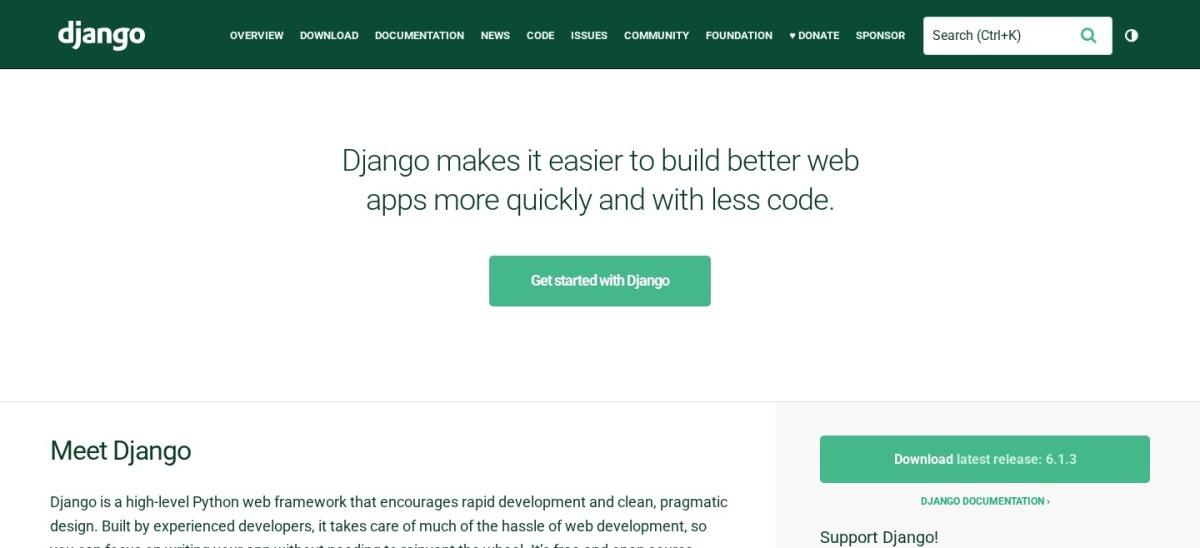
Django leads at 4.5/5 from 177 G2 reviews, with a built-in admin panel, ORM and auth.
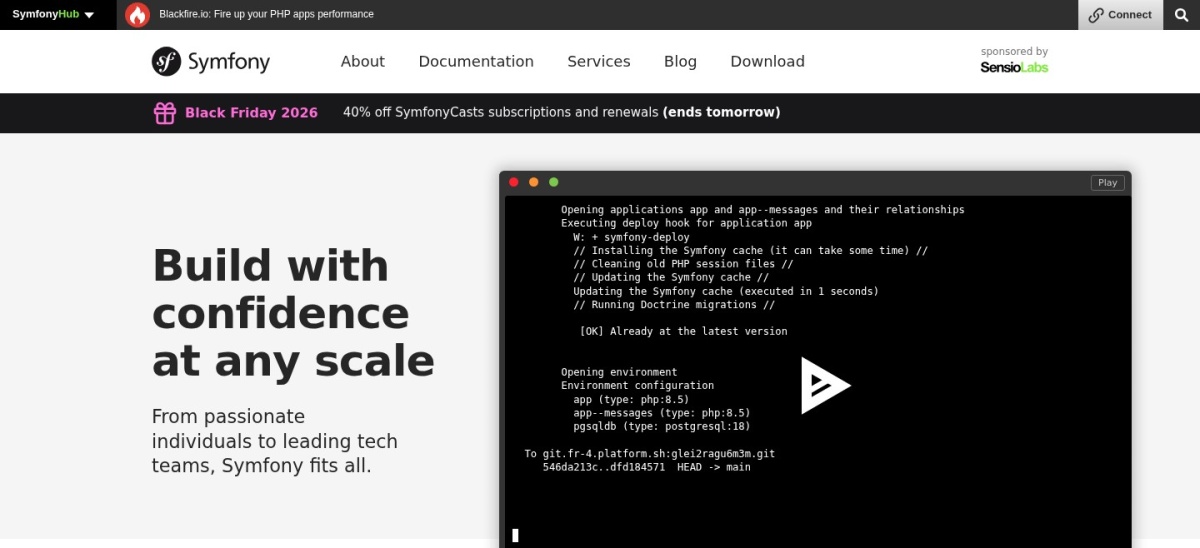
Symfony is the closest PHP switch: the same language as Laravel, with components that also power Laravel itself.
All 9 frameworks are free and open source, so hosting and developer time are the real costs.
Spring Boot has the most reviews here at 4.5/5 from 321 G2 reviews, and it suits Java teams building production services.
Flask and Express.js are the lightest picks: Flask is a microframework, and Express.js adds features through middleware.
How do you choose between Laravel alternatives?
Language comes first, because it decides who can build and maintain the app. Teams that know PHP can switch to Symfony or CodeIgniter without learning a new language, while Python, Ruby, Java and JavaScript teams have strong options in Django, Rails, Spring Boot and Express.js.
Batteries included is the next question. Laravel ships auth, queues, mail and an ORM out of the box, and only Django and Rails match that breadth in this list. Express.js and Flask give you a minimal base instead, so expect to choose and wire up each piece yourself.
Free licences do not mean free apps. Every framework here is free and open source, so the real costs are hosting, developer time and hiring. Our guide on what PHP is explains the language most Laravel teams already use, which is worth weighing before a switch.
Review volume is a useful signal for community size. Django has 177 G2 reviews and Spring Boot has 321, while NestJS has only 20, which reflects a smaller but growing community. A larger community usually means more answers, packages and hiring options.
Django is a high-level Python web framework that ships with an ORM, authentication, an admin panel and security protections, so a new app starts with most of what Laravel provides out of the box. It is free and open source, and its documentation covers everything from the first project to deployment.
The trade off is weight. Django's opinions and large feature set can feel heavy for a single small API, and its template and ORM style take time to learn if you come from PHP. It suits teams building data-heavy apps, content sites or APIs in Python that need admin tools from day one.
Symfony is a PHP framework built from reusable components for routing, security, templates, forms and database access, and its parts also power Drupal, Laravel and Composer. It is free and open source under the MIT license, with long-term support releases for teams that need stability.
The trade off is setup. Symfony's flexibility means more configuration up front than Laravel, and beginners can find its many components hard to navigate. It suits PHP teams building large, long-lived apps that value strict structure and predictable releases.
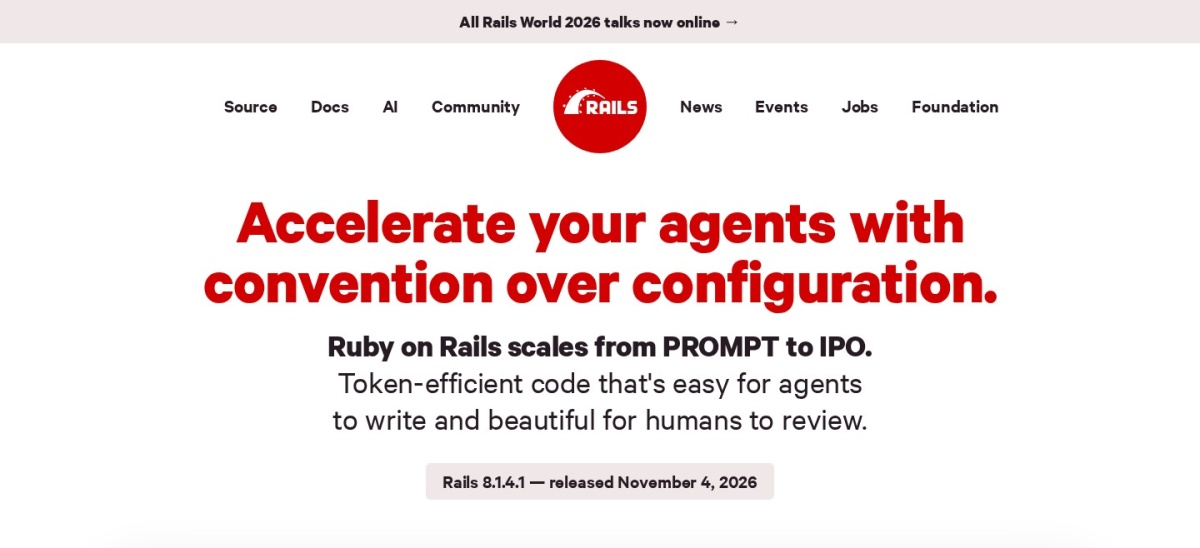
Ruby on Rails is a full-stack Ruby framework built on convention over configuration, with Active Record for databases, Action Controller for requests and built-in tools for mail, jobs, caching and file uploads. It is free and open source, and its scaffolding turns a new idea into a working app fast.
The trade off is Ruby itself. Hiring Ruby developers is harder than hiring PHP or JavaScript developers in many markets, and Rails apps can be slow to boot at large scale. It suits small teams and startups that want to ship a full product quickly with few decisions to make.
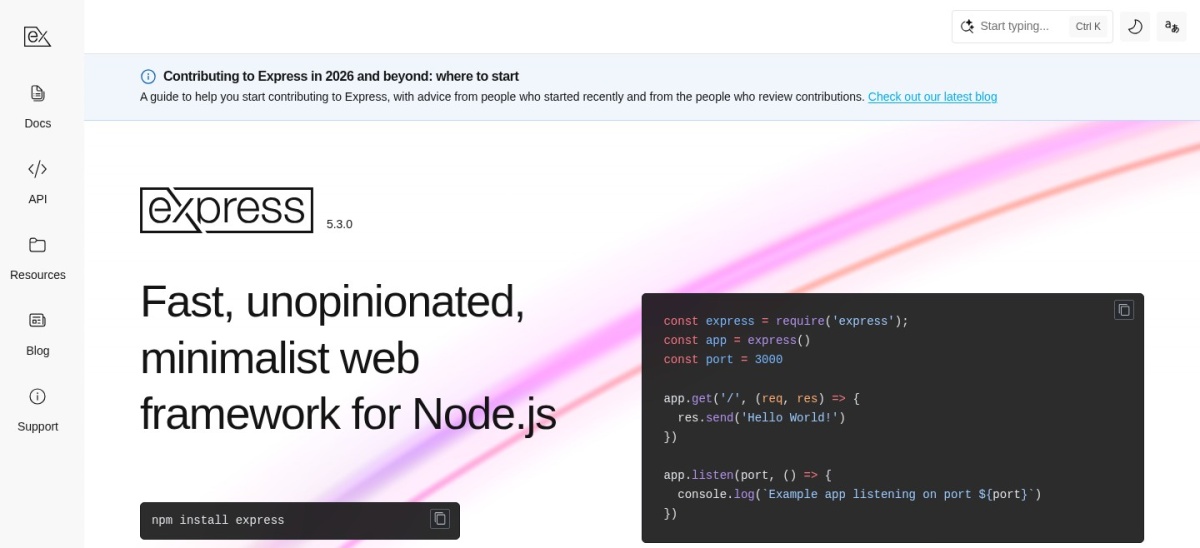
Express.js is a minimal and flexible Node.js web framework that provides routing, HTTP helpers and middleware for web apps and APIs. It is free and open source, and its small core stays out of the way while middleware adds auth, sessions, validation and anything else you need.
The trade off is that you build the stack yourself. Express.js ships no ORM, auth or admin panel, so every project starts with choices Laravel already made. It suits JavaScript teams building APIs or microservices who want full control over each piece.
Spring Boot is a Java framework for stand-alone, production-grade apps that you can just run, with embedded Tomcat, Jetty or Undertow and opinionated starters that cut configuration to a minimum. It is free and open source, and it adds metrics, health checks and external configuration out of the box.
The trade off is size and complexity. Spring Boot apps can be heavy, with large deployment sizes and a big ecosystem to learn, and its opinionated defaults can restrict teams that want full control. It suits Java teams building enterprise services and microservices that need to run in production for years.
What we like
Production features built in: metrics, health checks
NestJS is a progressive Node.js framework written in TypeScript, with modules, dependency injection and providers that keep a growing backend organised. It is free and open source, and it works with Express or Fastify underneath while adding structure Express.js leaves out.
The trade off is ceremony. NestJS asks for more boilerplate than Express.js, and its Angular-style patterns feel unfamiliar to developers used to plain JavaScript. It suits TypeScript teams building larger backends and microservices that need consistent architecture across services.
What we like
TypeScript throughout, with strong typing
Modular design scales across teams
Built-in GraphQL and WebSocket support
Watch out for
More boilerplate than Express.js
Angular-style patterns take time to learn
Paid options add courses, enterprise support and toolsVisit nestjs.com
07
ASP.NET Core
4.3/5on G2 (59 reviews, checked Nov 2026)
PriceFree
Best for Microsoft-stack teams
LanguageC#
Runs onWindows, Linux, macOS
Web UIBlazor included
Built-in authYes, with MFA
dotnet.microsoft.com
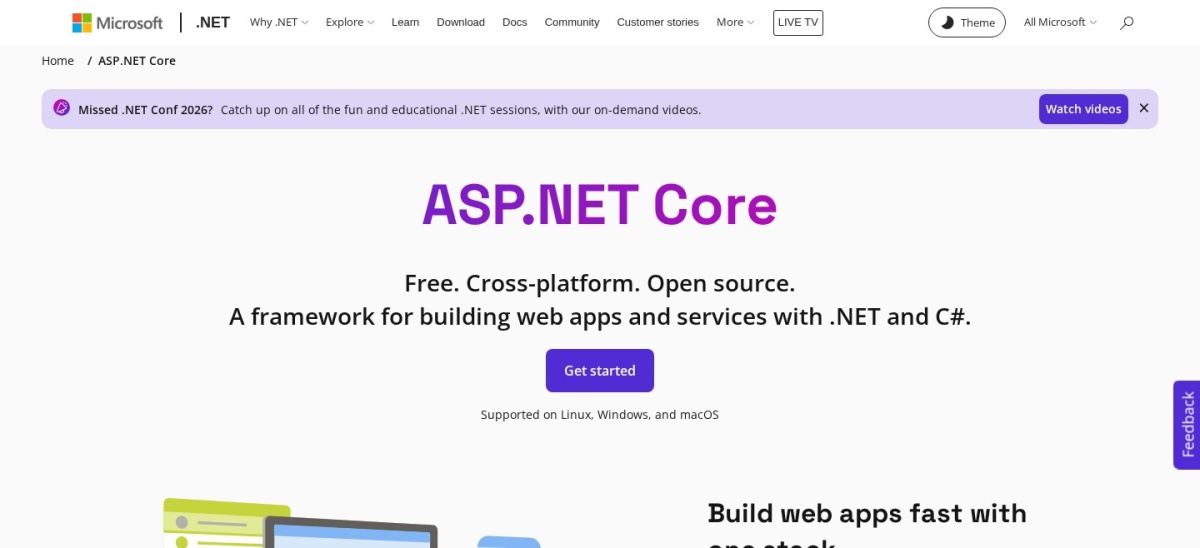
ASP.NET Core homepage, captured Nov 2026.
ASP.NET Core is a free, cross-platform, open-source framework for building web apps and services with .NET and C#, running on Windows, Linux and macOS. It ships with Blazor for web UI, built-in auth with multi-factor support, and protection against cross-site scripting and request forgery.
The trade off is the Microsoft stack. Teams outside .NET may find its tooling and hosting more expensive, and its conventions differ from Laravel's PHP style. It suits teams already using C# or Microsoft products that want a fast, supported framework with strong tooling.
Flask is a lightweight Python web framework built on the Werkzeug toolkit and the Jinja template engine, designed to get started quickly and scale up to complex apps. It is free and open source under the BSD-3-Clause license, and extensions add databases, auth and forms as you need them.
The trade off is that Flask gives you little to start with. There is no ORM, admin panel or auth built in, so larger apps need careful structure and many extensions. It suits Python developers building small APIs, prototypes or microservices who want a minimal base.
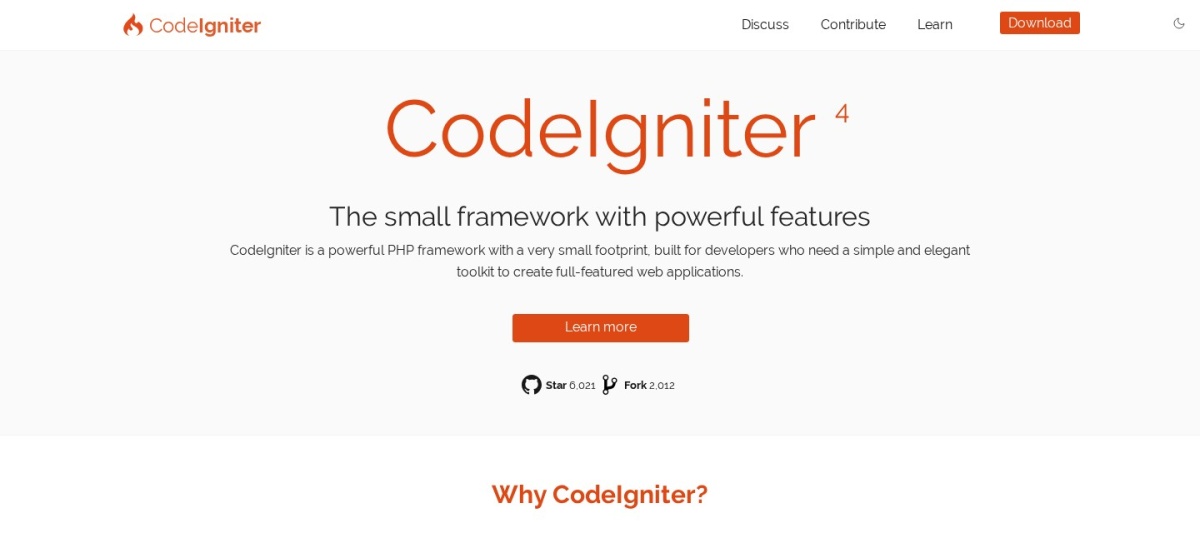
CodeIgniter is a PHP framework with a small footprint: version 4 is a 1.1MB download, with near-zero configuration and built-in protection against CSRF and cross-site scripting attacks. It is free and open source, and it encourages MVC without forcing it on you.
The trade off is fewer built-ins. CodeIgniter ships no ORM, auth system or admin panel like Laravel's, and its ecosystem is smaller than Laravel's or Symfony's. It suits PHP developers who want a light, fast framework for small to medium sites with little setup.
All 9 frameworks in this list are free and open source, so there is no licence fee at any size.
What costs money is everything around the framework: hosting, databases, monitoring and developer time. Symfony sells training and support through SensioLabs, and Spring offers enterprise support with early security patches.
For most small teams, the free framework plus a standard host is enough. Pay for support only when downtime or security patches carry real business cost.
How we chose
We started from the frameworks developers name most often as Laravel replacements, then kept the 9 with a public G2 rating and an active, maintained project.
Prices come from each project's own site, checked on 29 November 2026. All 9 are free open source, so the list shows $0 for every framework. Ratings and review counts come from G2 on the same day.
We left out tools with no public rating, such as niche forks and new entrants. No vendor paid for a place, and we do not claim to have used these tools ourselves.
How to choose a Laravel alternative
Start with your team's language, then match the framework to the size of the app.
Stay in PHP if your team already knows it. Symfony keeps you in PHP with enterprise structure, while CodeIgniter is the lightest PHP switch. See how to check what PHP version a host runs before you move.
Match the framework to the app size. Flask and Express.js fit small APIs and microservices. Django, Rails and Spring Boot fit full apps with admin tools, auth and background jobs.
Check the ecosystem for what you need. List the features your Laravel app uses, such as auth, queues, mail and file uploads, and confirm each alternative covers them, either built in or through a package.
Build one small feature first. Prototype login plus one data form before committing. It shows the real learning curve, the docs quality and how much code each framework needs.
FAQ
What is the best Laravel alternative in 2026?
Django is the best Laravel alternative for most teams. It is rated 4.5/5 from 177 G2 reviews, and its built-in admin panel, ORM and auth match Laravel's batteries-included style in Python.
Is there a free alternative to Laravel?
Yes, all 9 frameworks in this list are free and open source, including Django, Symfony, Ruby on Rails and Express.js. You pay only for hosting, and optional paid support is available for Symfony and Spring Boot.
What is the best Laravel alternative for PHP developers?
Symfony is the best Laravel alternative for PHP developers. It uses the same language, its reusable components power parts of Laravel itself, and long-term support releases suit teams that need stability.
Is Django better than Laravel?
It depends on the language your team uses. Django matches Laravel's built-in features in Python, with a stronger admin panel, while Laravel stays the faster start for PHP teams. Pick Django to move to Python, and stay with Laravel or Symfony to stay in PHP.
Which Laravel alternative is best for beginners?
CodeIgniter is the easiest PHP switch for beginners, with a 1.1MB download and near-zero configuration. Flask is the easiest Python start, with a minimal core and clear docs.
Django vs Symfony: which should I pick?
Pick Django if you are happy to move to Python and want a built-in admin panel with strong reviews behind it. Pick Symfony if you want to stay in PHP, keep Laravel-style structure, and rely on long-term support releases.
SaaS SEO and WordPress specialist with about 8 years of experience. Rakib compares WordPress plugins, themes, hosting and software using public pricing, documentation and user reviews. See how we rank.