Document360 is the best Helpjuice alternative for large help centres, with versioned articles, approval workflows and AI search for docs teams. Guru suits teams that need verified answers inside Slack, while KnowledgeOwl is the cheapest flat-rate pick at a hundred dollars a month.
How we make this list: we compare pricing pages, product documentation and public user reviews, then re-check every price before each update. No product paid for a place. Disclosure.
Document360 leads for large help centres, but it publishes no price and sells by quote only.
Guru holds the largest review base here at 4.7 out of 5 from 2,345 G2 reviews.
Zendesk Suite Team costs $55 per agent a month, confirmed on its pricing page today.
KnowledgeOwl is the cheapest flat-rate pick at $100 a month for one knowledge base and one author.
Confluence is the cheapest entry at $5.78 per user a month, but it is an internal wiki, not a public help centre.
How do you choose the best Helpjuice alternative?
Search decides whether a knowledge base gets used. Helpjuice built its name on fast search across articles, PDFs and images, so an alternative that only searches titles will frustrate readers who remember a phrase, not a title.
Flat pricing and per-agent pricing suit different teams. A flat $100 a month stays fixed as readers grow, while $55 per agent a month climbs with every hire, so count the agents, not just the headline price.
A knowledge base and a help desk are different buys. Our guide to the best help center software shows how help desks bundle tickets with docs, while a dedicated knowledge base spends the whole subscription on authoring, versioning and search.
AI answers are only as good as the articles behind them. Guru and Document360 both verify content and cite sources, but neither fixes a library full of outdated articles, so budget time for reviews as well as software.
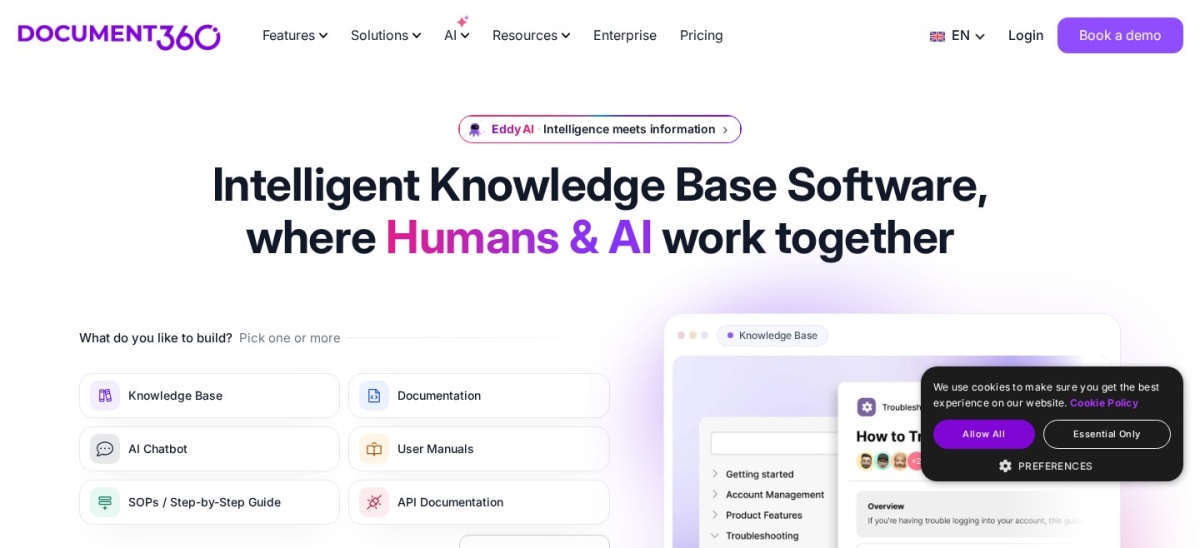
Document360 is a dedicated knowledge base platform built for large help centres, with versioned articles, category permissions, approval workflows and multi-language publishing. Its AI search, called Eddy, answers from your articles, and authors get Markdown and visual editors with reusable content blocks.
The trade off is price transparency. Document360 moved to quote-only pricing in August 2024, so there is no list price and no free plan, and small teams must ask for a quote before they know the cost. It suits docs teams that treat documentation as a product.
Guru is an AI knowledge platform that delivers verified answers where staff already work, in Slack, Chrome and Microsoft Teams. Cards carry verification dates and owners, so stale answers get flagged, and its AI search cites the source for every answer it gives.
The trade off is price. Guru is now sold on a custom quote with no published per-seat rate, and its strength is internal knowledge rather than public help centres. It suits support and sales teams that answer the same questions again and again.
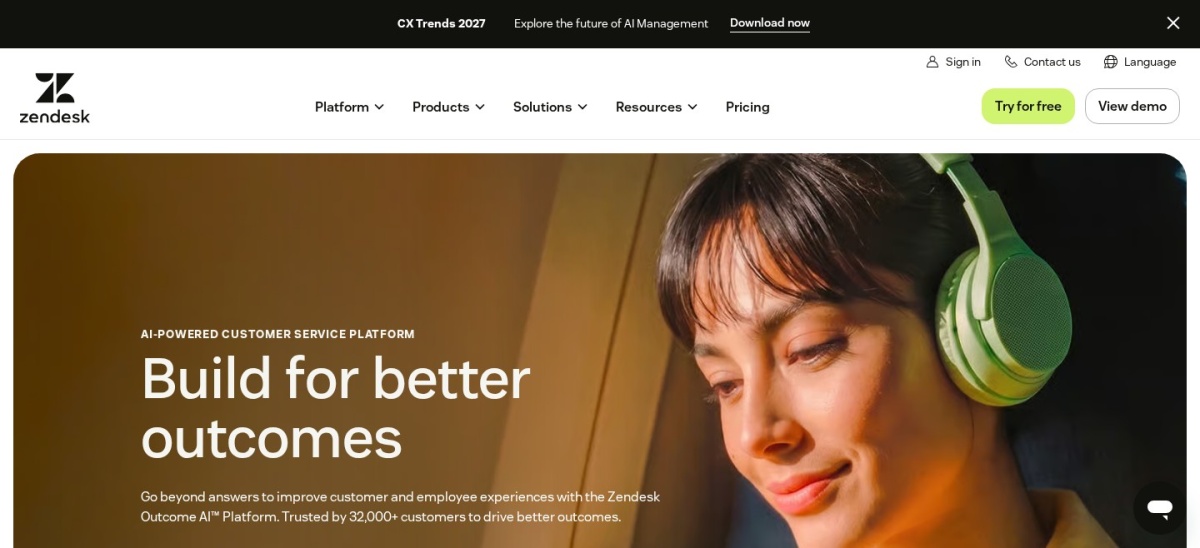
Zendesk is the best-known help desk in this list, and its Guide help centre sits beside ticketing, live chat and voice in the Suite plans. Suite Team at $55 per agent a month includes one help centre, AI agents and omnichannel routing, and Zendesk holds a 4.3 out of 5 rating from more than 7,000 G2 reviews.
The trade off is scope. The $19 Support Team plan is ticketing only, so the help centre needs Suite Team, and per-agent pricing climbs fast as the team grows. It suits large support teams that want tickets, chat and docs in one bill.
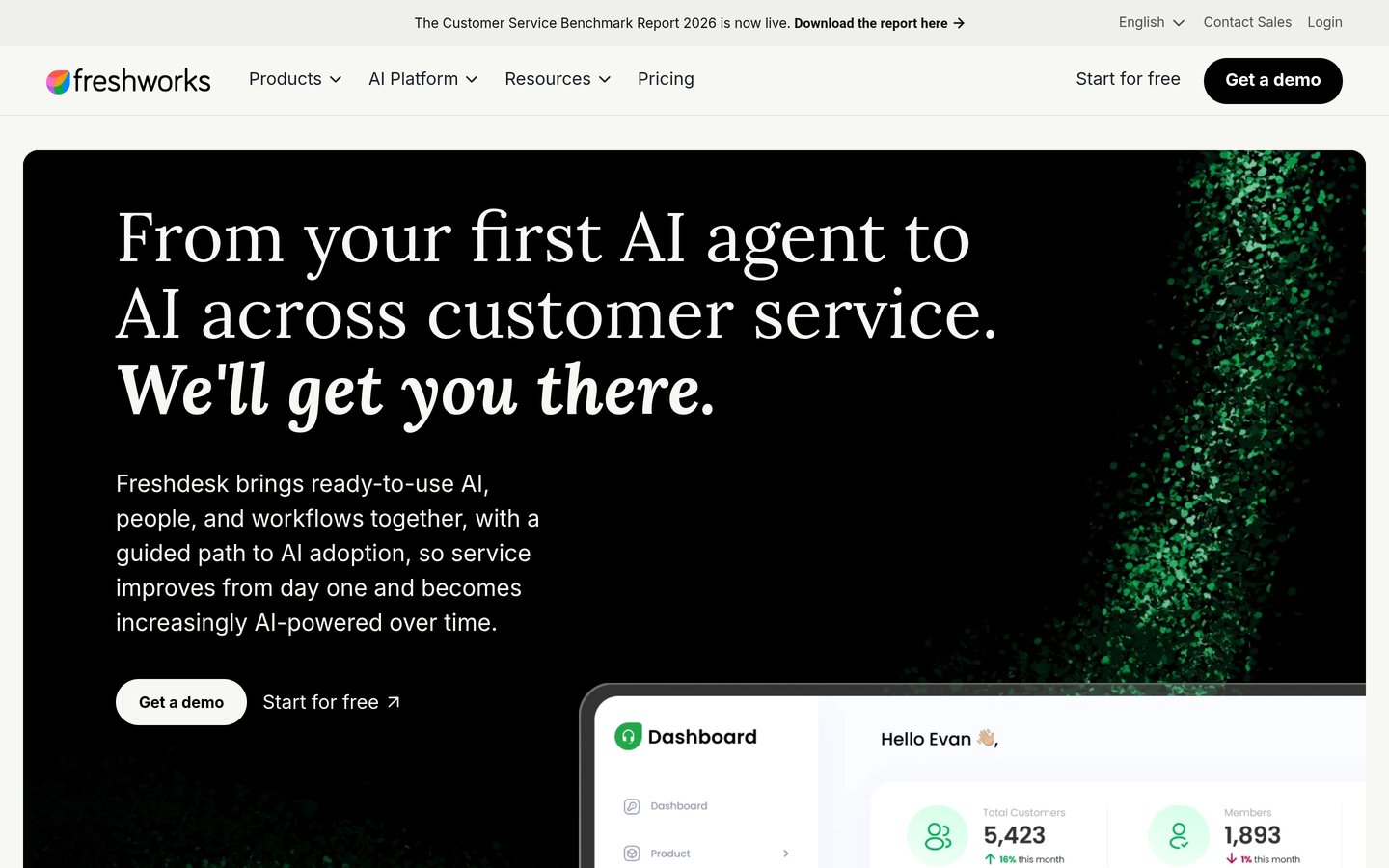
Freshdesk is Freshworks' help desk, and every paid plan includes a customer portal with a knowledge base. Growth costs $19 per agent a month billed yearly and adds ticketing, a shared inbox, 500 Freddy AI Agent sessions and out-of-the-box reports, and it holds a 4.4 out of 5 rating from more than 4,000 G2 reviews.
The trade off is depth. Freshdesk covers the basics well but its knowledge base has fewer versioning and approval controls than Document360, and AI features stay limited on Growth. It suits small and mid-sized teams that want tickets and docs in one cheap bill.
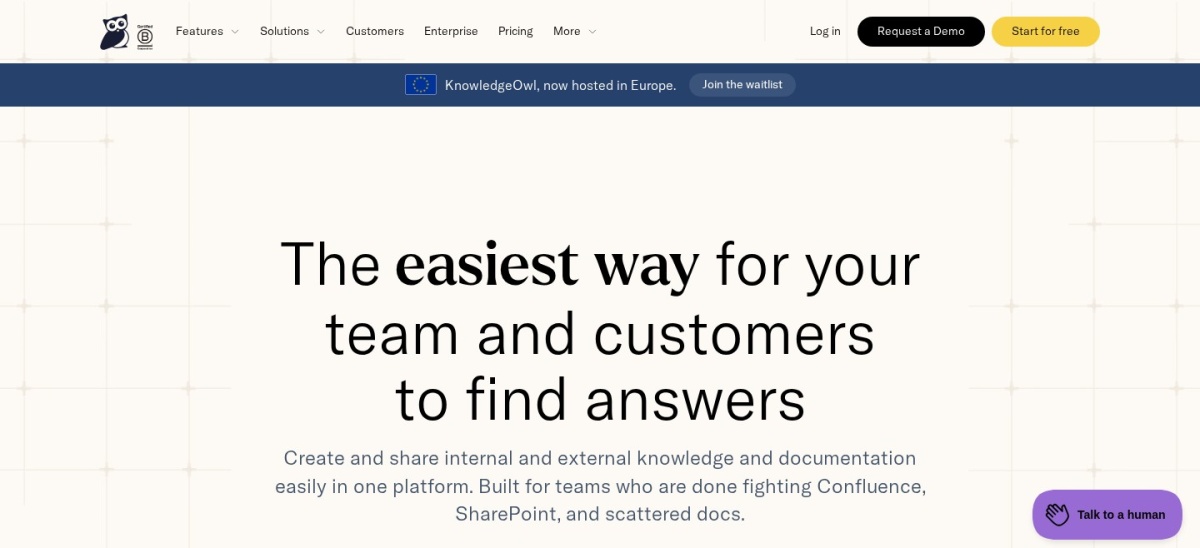
KnowledgeOwl is a focused knowledge base that charges a flat $100 a month for one knowledge base and one author, with unlimited readers. It covers versioning, semantic search, AI-assisted authoring and white-glove migration, without ticketing or chat bundled in.
The trade off is scope. KnowledgeOwl does one job, so teams that also need ticketing must buy a second tool, and extra authors cost $25 a month each. It suits small teams that want a standalone help centre at a fixed price.
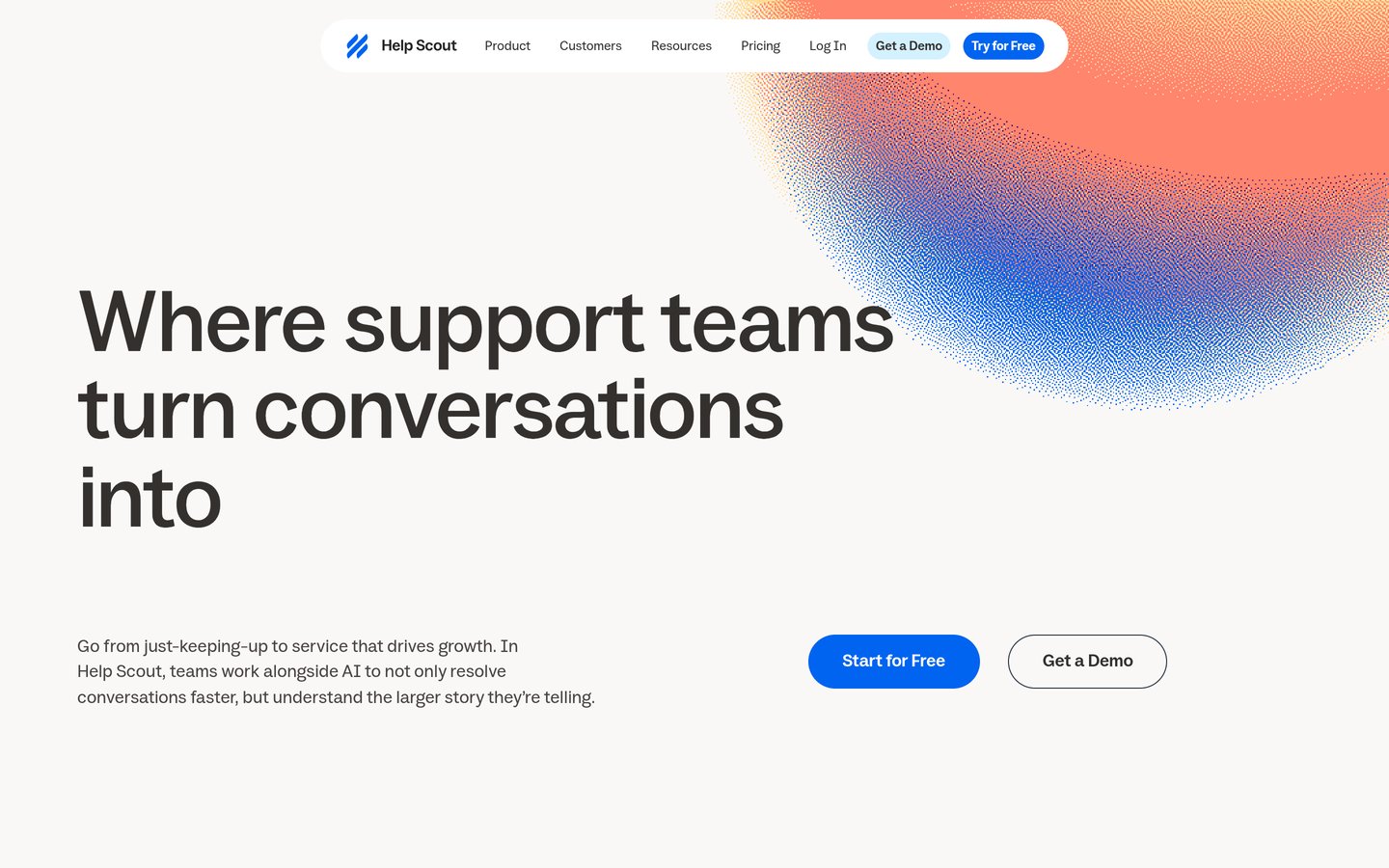
Help Scout is a shared inbox with a built-in Docs help centre, so small teams get email support and self-service articles in one simple product. Standard costs $25 per user a month billed yearly and includes live chat, multiple knowledge bases and basic workflows, and it holds a 4.4 out of 5 rating from 431 G2 reviews.
The trade off is scale. Help Scout stays simple by design, so large teams that need approval workflows, versioning or deep analytics will outgrow it. It suits small teams that want one friendly tool for inbox and docs.
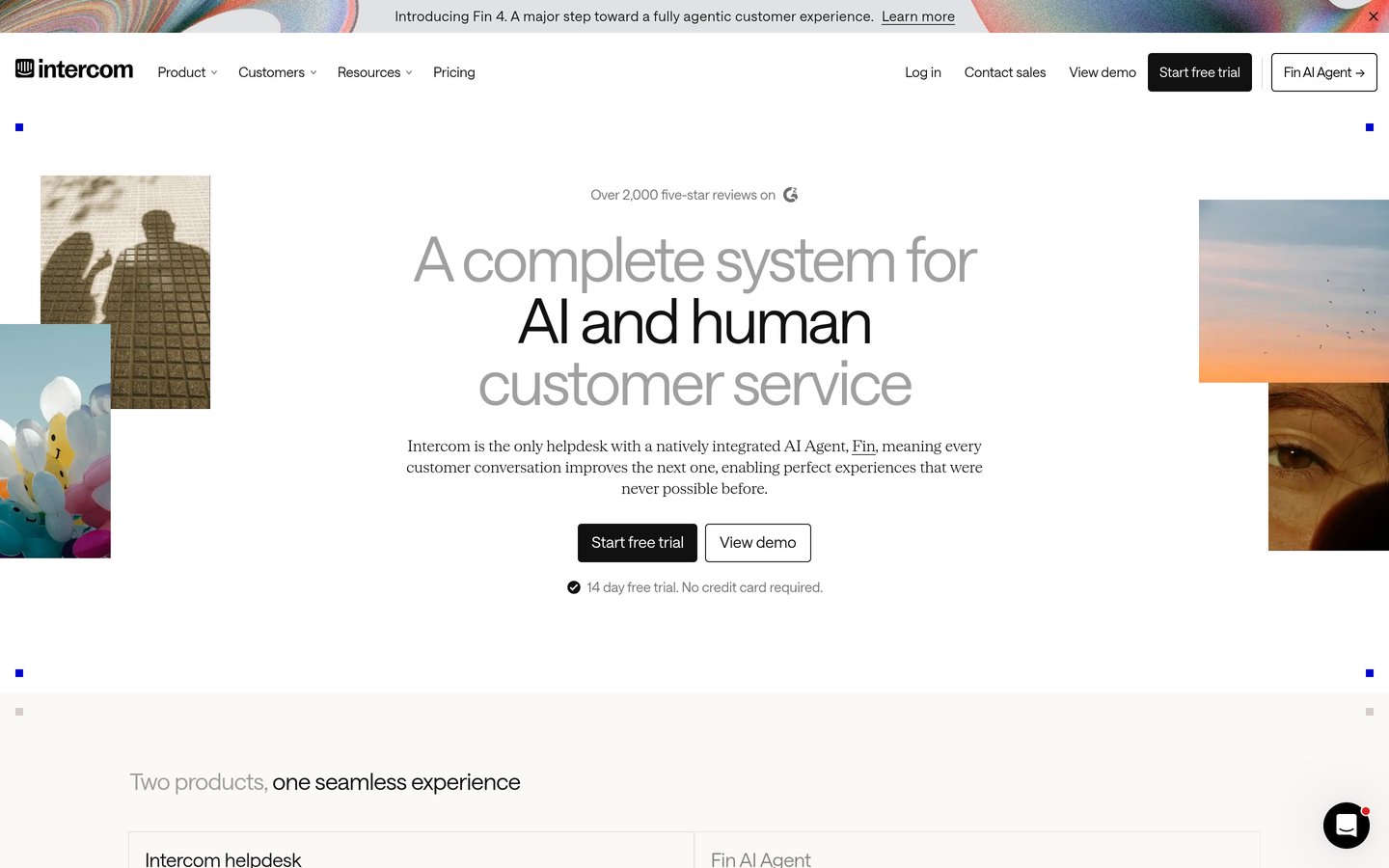
Intercom is a chat-first help desk built around Fin, its AI agent, which answers from your help centre articles. Essential lists at $29 per seat a month and includes the help centre, shared inbox and live chat, and it holds a 4.5 out of 5 rating from 3,911 G2 reviews.
The trade off is the AI bill. Fin resolutions beyond the included allowance cost extra, and a private, multilingual help centre needs the higher tier. It suits teams that want chat and AI answers first, with docs close behind.
Notion is a connected workspace where teams write docs, take notes and manage tasks in one place, and its wiki features make it a popular internal knowledge base for small teams. Plus costs $10 per user a month billed yearly and adds unlimited file uploads, version history and more guests.
The trade off is structure. Notion has no built-in public help centre, versioning controls or article analytics like a dedicated knowledge base, so customer-facing docs need workarounds. It suits internal wikis for teams that already live in Notion.
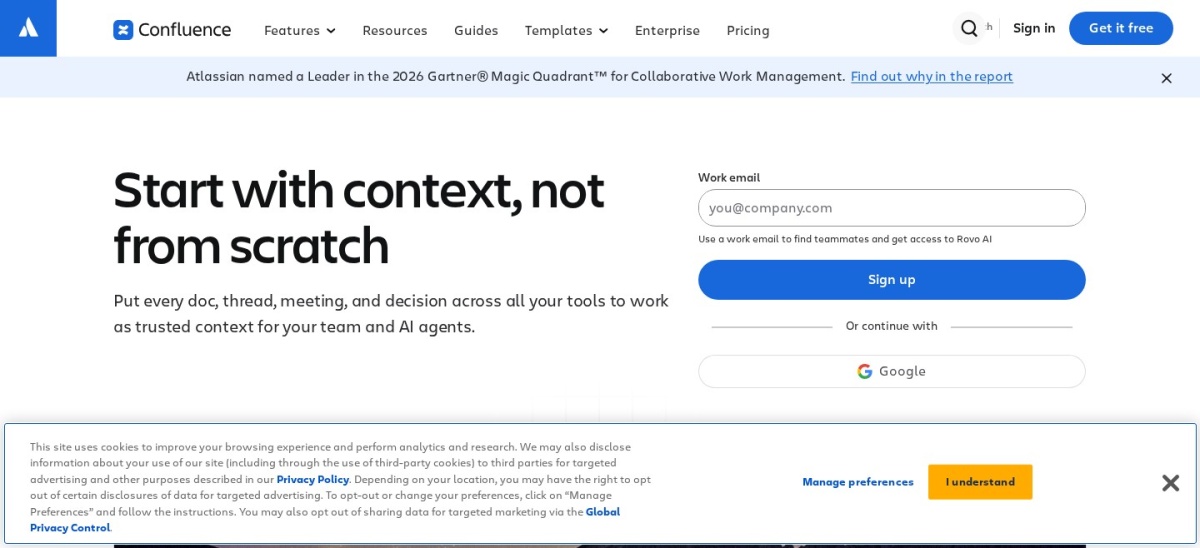
Confluence is Atlassian's team workspace, and it pairs natively with Jira, so engineering teams keep specs, runbooks and decisions beside their tickets. Standard costs $5.78 per user a month billed yearly, with page templates, permissions and version history included.
The trade off is the public face. Confluence is built for internal wikis, not customer help centres, and it holds the lowest G2 rating here at 4.1 from 4,368 reviews. It suits teams already on Jira that need a shared wiki.
Flat-rate tools charge by the knowledge base, not the reader. KnowledgeOwl costs $100 a month for one author no matter how many customers read, which suits public help centres with large audiences.
Per-agent tools charge for every support seat. Zendesk Suite Team at $55 per agent a month costs $550 a month for 10 agents, and the price rises with every hire, even if readers stay flat.
Internal wikis break the comparison. Notion and Confluence charge per user too, but every reader is also an author, so the per-user price buys editing as well as reading.
How we chose
We started from the knowledge base and help desk tools reviewers name most often as Helpjuice replacements, then kept nine with a public rating on G2 and a published price or a confirmed quote-only model. Tools with no verifiable rating were left out.
Prices come from each vendor's pricing page, checked on 29 November 2026, with Zendesk Suite Team confirmed at $55 per agent a month on its own pricing page today. Document360 and Guru publish no list price, so they are listed as Custom. Ratings and review counts come from G2 on the same day.
We left out tools that only cover internal wikis without a public help centre, and tools with no public rating. No vendor paid for a place, and we do not claim hands-on testing for this list.
How to choose a Helpjuice alternative
Start with who reads the articles, then match the pricing model and the search quality to that audience.
Decide public or internal first. A public help centre needs permissions, versioning and search analytics. An internal wiki needs editing and Slack answers instead.
Count the agents, not the readers. Per-agent pricing climbs with every hire, while flat pricing stays fixed. Work out the 10-agent cost before comparing headlines.
Test search with real questions. Paste five questions customers actually ask into each trial and see which tool finds the right article first.
Check migration help. Moving hundreds of articles takes time. Ask whether the vendor migrates your library for free before you commit.
FAQ
What is the best Helpjuice alternative in 2026?
Document360 is the best Helpjuice alternative for most teams. It is a dedicated knowledge base with versioned articles, approval workflows and AI search, rated 4.7 out of 5 from 554 G2 reviews, though pricing is by quote only.
How much do Helpjuice alternatives cost?
Prices run from $5.78 per user a month for Confluence Standard to $100 a month flat for KnowledgeOwl. Zendesk Suite Team costs $55 per agent a month, while Document360 and Guru sell by quote with no published price.
Which Helpjuice alternative is best for a public help centre?
Document360 is the strongest direct replacement, with versioned articles, category permissions and multi-language publishing. KnowledgeOwl is the budget pick at a flat $100 a month for one knowledge base and one author.
Is there a free Helpjuice alternative?
Notion and Confluence both offer free plans for small teams, and Freshdesk and Help Scout have free tiers. None is a dedicated public help centre like Helpjuice, so free plans suit internal wikis first.
Document360 or Guru: which is the better Helpjuice alternative?
Document360 is better for public help centres, with versioning and multi-language publishing. Guru is better for internal knowledge, surfacing verified answers in Slack and Chrome where staff already work.
Do Helpjuice alternatives include AI search?
Most do. Document360 has Eddy, Guru cites sources for its AI answers, Intercom's Fin agent answers from your articles, and KnowledgeOwl adds AI-assisted authoring and semantic search.
SaaS SEO and WordPress specialist with about 8 years of experience. Rakib compares WordPress plugins, themes, hosting and software using public pricing, documentation and user reviews. See how we rank.