Shopify is the best Ecwid alternative for most stores, with a huge app market and Basic plans that start at twenty-nine dollars a month. WooCommerce suits WordPress sites that want a free core, while BigCommerce fits stores that want no transaction fees.
How we make this list: we compare pricing pages, product documentation and public user reviews, then re-check every price before each update. No product paid for a place. Disclosure.
Shopify is the top pick, rated 4.4 out of 5 on G2, with Basic at $29 a month billed yearly.
WooCommerce is free at its core, so WordPress sites pay only for hosting and extensions.
BigCommerce and Square Online both start at $29 a month, with no extra transaction fees on BigCommerce.
Big Cartel is the cheapest paid plan here at $12 a month, with no commission on sales.
PrestaShop is free open-source software, but hosting, themes and modules add to the real cost.
How do you choose the best Ecwid alternatives for your store?
Start with what you sell and where you sell it. A store with ten products needs a different platform from a store with ten thousand, and a seller on social media needs different tools from a seller with a full website.
Monthly price is only part of the bill. Transaction fees, payment processing and paid apps can add more than the plan itself, so read the fee schedule before you compare plan prices.
A free plan is worth checking first. WooCommerce, PrestaShop, Square Online and Big Cartel all let you start without a monthly fee, though hosting or payment fees still apply.
Migration effort matters as much as price. Moving products, customers and orders from Ecwid takes time, so pick a platform you can stay on for years, not just the cheapest first month.
Shopify is the largest hosted ecommerce platform, with themes, payments, shipping and an app market that covers almost any selling need. Basic costs $29 a month billed yearly and includes unlimited products, discount codes and abandoned checkout recovery.
The trade off is the monthly bill. Basic is $39 a month on monthly billing, card processing adds 2.9% plus 30 cents per order, and many features need paid apps. It suits stores that want the biggest ecosystem and plan to grow past a simple catalogue.
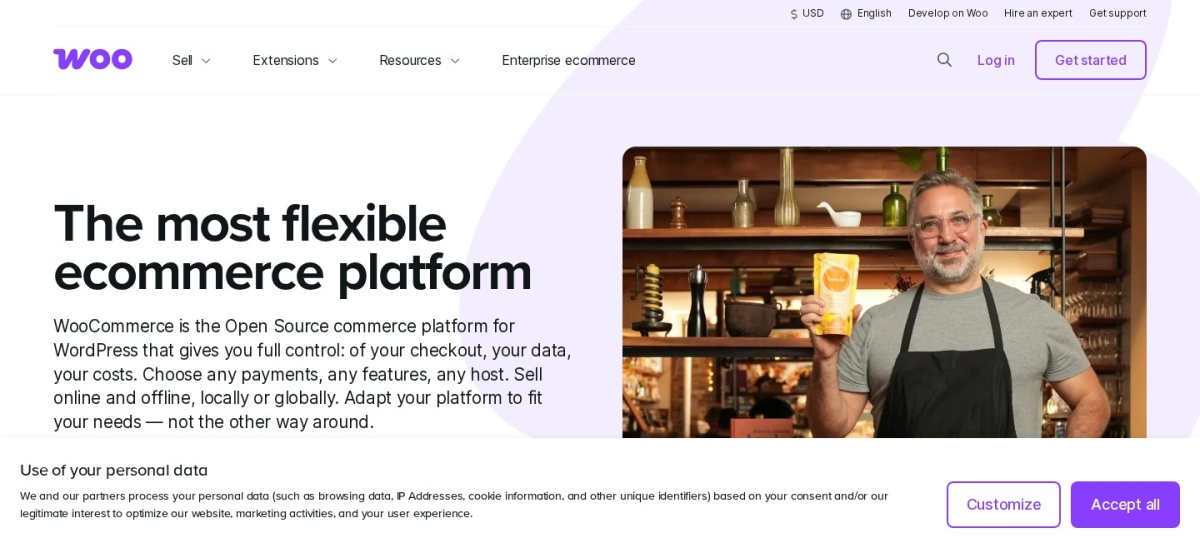
WooCommerce is a free plugin that turns any WordPress site into a full online store, with products, checkout, shipping and tax built in. The core plugin costs nothing, and you pay only for hosting, a theme and any extensions your store needs.
The trade off is that nothing is managed for you. Hosting, security, updates and backups are your job, and costs creep up as you add extensions. It suits WordPress sites that want full control and no monthly platform fee.
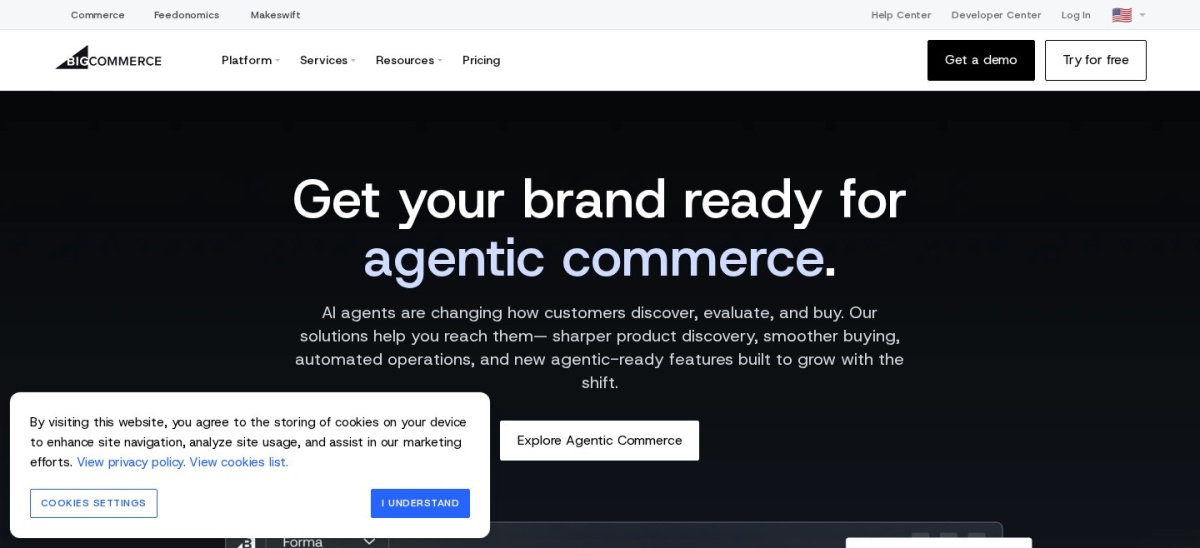
BigCommerce is a hosted ecommerce platform built for stores that want to grow without paying extra transaction fees. Standard costs $29 a month billed yearly and includes unlimited products, a built-in blog, coupons and multi-currency selling.
The trade off is the learning curve. BigCommerce has fewer themes and a smaller app market than Shopify, and monthly billing costs $39 a month, not $29. It suits stores that sell in volume and want no platform transaction fee on top of card processing.
Wix is a drag-and-drop website builder with ecommerce built in, so a small store can be live without touching code. The free plan covers a basic site, and Core adds online payments, unlimited products, abandoned cart recovery and a free domain for a year at $29 a month billed yearly.
The trade off is that Wix is a builder first and a store second. The Light plan at $17 a month cannot take payments, and large catalogues are harder to manage than on Shopify or BigCommerce. It suits small stores that want one tool for the website and the shop.
What we like
Easiest drag-and-drop builder in this list
Free plan for a basic site
Core adds payments and abandoned cart
Hundreds of store templates
Watch out for
Light plan cannot take payments
Harder to manage large catalogues
Switching templates means rebuilding
Core adds payments and abandoned cart recoveryVisit wix.com
05
Squarespace
4.4/5on G2 (1,133 reviews, checked Nov 2026)
Starts at$23/mo
Best for beautiful storefronts
Free planNo, 14-day trial
Core plan$23 a month, yearly
Basic plan$16, no payments
Transaction fee2% on Basic only
squarespace.com
Squarespace homepage, captured Nov 2026.
Squarespace is a design-led website builder known for polished templates, with ecommerce on its Core plan. Core costs $23 a month billed yearly and adds unlimited products, no transaction fees, subscriptions and abandoned cart recovery, while Basic at $16 a month cannot sell.
The trade off is selling depth. Squarespace has fewer payment and shipping options than Shopify, and its app market is small. It suits creators and small brands that want a beautiful storefront and sell a modest catalogue.
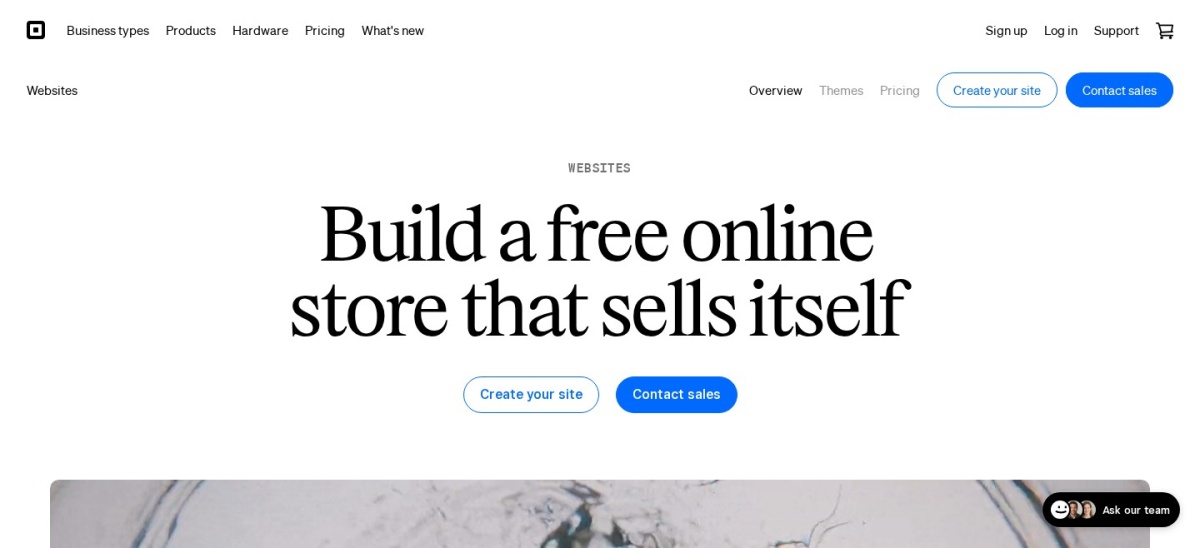
Square Online is the ecommerce arm of Square, built for sellers who already take card payments in person. The free plan covers unlimited products with Square branding, and Plus adds a custom domain, no Square ads and lower processing fees at $29 a month billed yearly.
The trade off is design range. Square Online has fewer templates and less design freedom than Wix or Squarespace, and the free plan shows Square branding. It suits market stalls, cafes and shops that already use Square for in-person sales.
PrestaShop is a free open-source ecommerce platform you install on your own hosting, with products, orders, shipping and tax built in. The Classic download costs nothing, and you pay only for hosting, a theme and any paid modules your store needs.
The trade off is that you run the store yourself. Hosting, security, updates and support are your responsibility, and paid modules add up. It suits developers and agencies that want full control and no monthly platform fee.
Big Cartel is a simple store builder for artists, makers and small brands, with no commission on sales. The free Gold plan covers 5 products, and Platinum adds up to 500 products, inventory tracking, Google Analytics and a custom domain at $12 a month billed yearly.
The trade off is scale. Big Cartel has no app market, no subscriptions and few marketing tools, so a growing store outgrows it. It suits independent sellers with a small catalogue who want the cheapest paid plan in this list.
Sellfy is a store builder for creators selling digital downloads, subscriptions and print-on-demand products, with checkout, email marketing and upsells built in. Starter costs $22 a month billed yearly and includes unlimited products, 0% Sellfy transaction fees and a $10,000 annual sales cap.
The trade off is the sales cap. Starter stops at $10,000 a year in sales, so a growing store must move to a higher plan, and Sellfy has no free plan. It suits creators selling digital products who want one tool for the store, emails and upsells.
What we like
0% Sellfy transaction fees
Digital downloads and print-on-demand in one place
Free plans here cover real selling. WooCommerce and PrestaShop cost nothing at the core, Square Online and Big Cartel let you list products free, and Wix lets you build the site before you pay.
Paid plans mostly remove limits and branding. You get a custom domain, no platform ads, more products, abandoned cart recovery and lower payment fees.
Watch the fees, not just the plan price. A $29 plan with 2.9% card processing costs more per order than a $12 plan with the same card rate, and a 0% platform fee can save a busy store hundreds a year.
How we chose
We started from the ecommerce platforms with a G2 rating and real review counts, then kept the nine with the strongest ratings and the clearest fit for small stores moving from Ecwid. Ecwid itself is the platform being replaced, so it is not in the list.
Prices come from each vendor's pricing page or a G2 pricing listing, checked on 29 November 2026. Shopify's pricing page rendered no plan prices today, so its $29 Basic figure rests on G2 and the sibling article, which checked the vendor page on 25 November 2026. Monthly billing costs $39 a month, not $29.
No vendor paid for a place, and we do not claim hands-on testing for this list.
How to choose an Ecwid alternative
Start with your monthly sales, then check the fees that eat into them.
List what you sell and where. Digital downloads, physical goods and print-on-demand each need different features, so shortlist platforms built for your product type.
Add up the real monthly cost. Combine the plan price, card processing and any paid apps, then compare that total, not the headline plan price.
Check the free plan or trial. List a few products on the free plan or trial first and test checkout end to end before you move your whole catalogue.
Plan the move from Ecwid. Export products, customers and orders from Ecwid, then import them in small batches and check that images and prices survive.
FAQ
What is the best Ecwid alternative in 2026?
Shopify is the best Ecwid alternative for most stores, with the biggest app market and Basic at $29 a month billed yearly. WooCommerce suits WordPress sites that want a free core, while BigCommerce fits stores that want no platform transaction fees.
How much do Ecwid alternatives cost?
Paid plans in this list run from $12 to $29 a month, with WooCommerce and PrestaShop free at the core. Shopify, BigCommerce, Wix and Square Online all start at $29 a month billed yearly, while Big Cartel Platinum costs $12 a month.
Is there a free Ecwid alternative?
Yes. WooCommerce and PrestaShop are free at the core, Square Online has a free plan with unlimited products, and Big Cartel lets you list 5 products free. Wix also offers a free plan, though it cannot take payments until you upgrade to Core.
Which Ecwid alternative is best for beginners?
Wix is the easiest Ecwid alternative for beginners, with drag-and-drop building and a free plan to learn on. Square Online is also simple for sellers who already use Square, while Shopify is best once the store starts to grow.
Shopify vs WooCommerce: which is better than Ecwid?
Shopify wins for stores that want a managed platform with the biggest app market, at $29 a month billed yearly. WooCommerce wins for WordPress sites that want a free core and full control, though you manage hosting yourself. Most new stores should start with Shopify unless they already run WordPress.
Do Ecwid alternatives charge transaction fees?
It depends on the platform. BigCommerce, PrestaShop, Big Cartel and Sellfy charge no platform transaction fee, while Squarespace Basic adds 2% and Shopify charges its own fee on top of card processing unless you use Shopify Payments. Card processing of about 2.9% plus 30 cents still applies almost everywhere.
SaaS SEO and WordPress specialist with about 8 years of experience. Rakib compares WordPress plugins, themes, hosting and software using public pricing, documentation and user reviews. See how we rank.