Shopify is the best Etsy alternative for most sellers, with unlimited products and a Basic plan at 29 dollars a month billed yearly. Pick Amazon Handmade for built-in traffic or Big Cartel for a tiny shop with no sales commission.
How we make this list: we compare pricing pages, product documentation and public user reviews, then re-check every price before each update. No product paid for a place. Disclosure.
Shopify is the best all-round pick, with unlimited products and Basic at 29 dollars a month billed yearly.
Amazon Handmade brings the most buyers, with no listing fees and a 15 percent referral fee per sale.
Big Cartel is the cheapest own store, with 5 products free and Platinum at 12 dollars a month billed yearly.
Etsy charges 20 cents to list plus 6.5 percent per sale before payment processing, so a 50 dollar sale costs 3 dollars and 45 cents in Etsy fees alone.
eBay suits vintage and one-off items, but its final value fee runs about 13.6 percent on most sales.
How do you choose the best Etsy alternative?
Start with where your buyers come from. Marketplaces like Amazon Handmade and eBay bring traffic to you, while a store builder like Shopify or Wix means you find every customer yourself.
Fees decide the real cost. Etsy charges 20 cents to list plus 6.5 percent on the sale before payment processing, so compare each alternative on the same sale, not just the monthly figure.
Control matters more as you grow. A marketplace owns the customer relationship and can change its rules, while your own store keeps the email list and the brand.
Check what you sell. Digital sellers suit Big Cartel, which covers digital products on Platinum with 0 percent commission, while vintage and one-off items sell best on eBay.
Shopify is a hosted commerce platform that runs the store, checkout, payments and hosting in one place. The Basic plan costs 29 dollars a month billed yearly and includes unlimited products, discount codes, abandoned cart recovery and 24/7 support.
The trade off is that you drive your own traffic. Shopify brings no buyers, and the 3-day trial then 1 dollar a month for 3 months offer ends quickly. It suits sellers ready to own their brand and grow beyond a marketplace.
1.7/5on Trustpilot (46,596 reviews, checked Nov 2026)
Pricing15% (per sale)
Best for built-in traffic
Free planNo, approval needed
Fee15% referral per sale
Listing feeNone
ProductsHandcrafted only
amazon.com
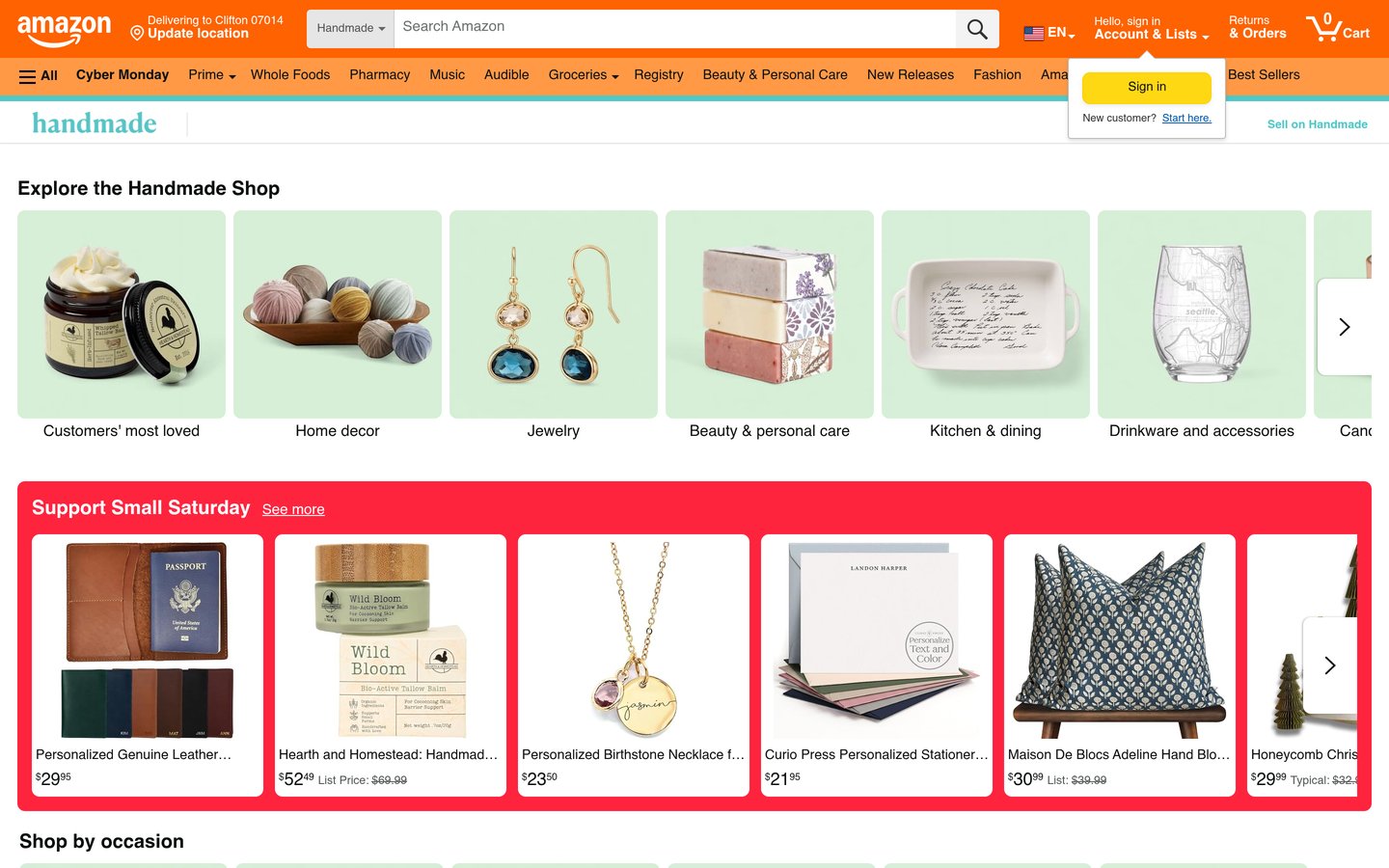
Amazon Handmade homepage, captured Nov 2026.
Amazon Handmade is a maker-only section of Amazon for handcrafted goods, with access to Amazon buyers and Prime shipping options. There are no listing fees, and the Professional plan fee is waived after a one-time first-month payment of 39 dollars and 99 cents.
The trade off is the referral fee. Handmade takes 15 percent per sale or 30 cents, whichever is greater, which beats Etsy's combined fees only on some sales. You also need Amazon to approve your application first. It suits makers with giftable, easy-to-ship products.
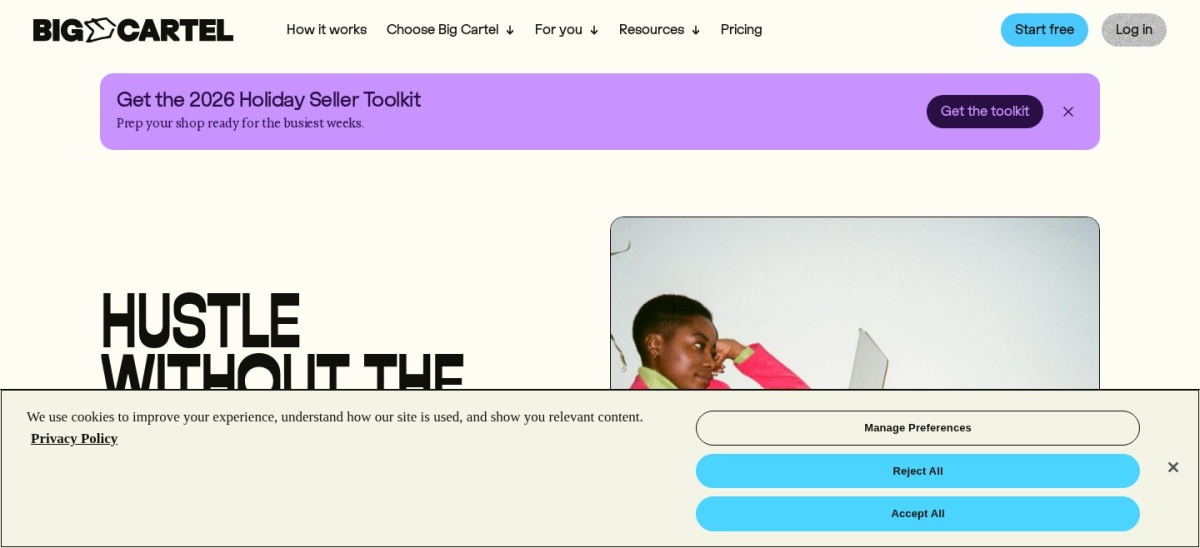
Big Cartel is a hosted store builder for artists and makers with a short catalog. The free Gold plan covers 5 products, and Platinum costs 12 dollars a month billed yearly for 50 products, discounts and digital products, with no commission on sales.
The trade off is scale. Themes and features are simple, and the top Diamond plan at 30 dollars a month only covers 500 products. It suits makers with a small range who want a cheap store with no sales commission.
Squarespace is a design-led website builder with commerce built in, known for polished templates and a clean checkout. The Basic plan costs 19 dollars a month billed yearly and covers unlimited products, with a 2 percent fee on each sale.
The trade off is that fee. Core costs 29 dollars a month billed yearly and removes the 2 percent charge, so it pays for itself once sales pass 500 dollars a month. It suits visual brands that want a beautiful storefront fast.
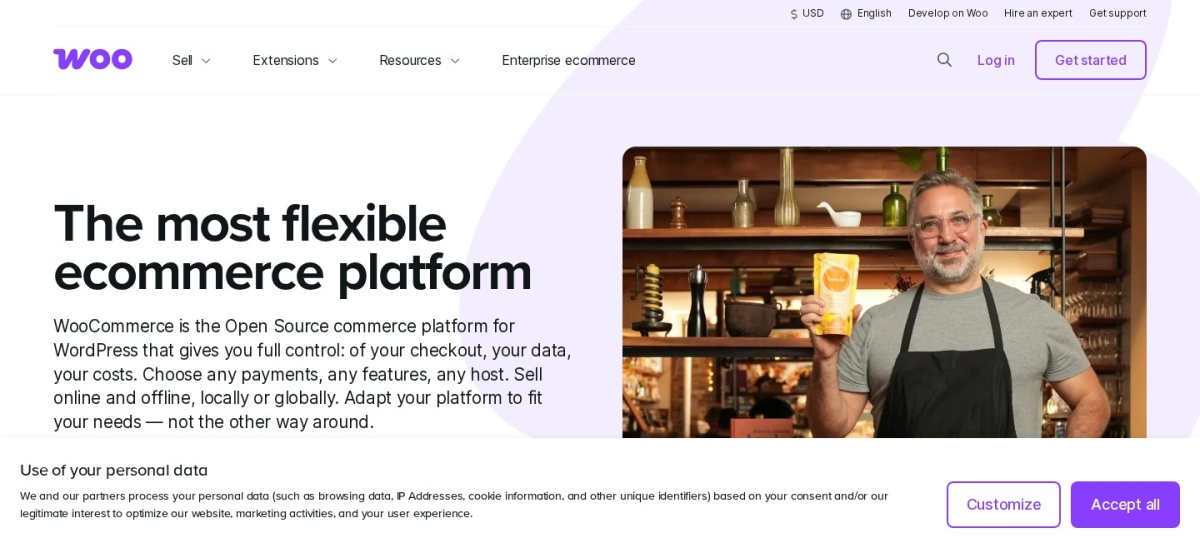
WooCommerce is a free, open-source plugin that turns a WordPress site into a full online store. It has more than 7 million active installs and a 4.4 out of 5 rating from 1,283 reviews on G2, and it covers products, checkout, coupons, taxes and shipping with no monthly platform fee.
The trade off is that you pay separately for hosting and extensions, and you fix problems yourself. A serious store typically runs 50 to 200 dollars a month in hosting and add-ons. It suits WordPress users who want full ownership and no revenue share.
Ecwid is a store widget that adds selling to an existing website, with a free plan covering 5 products. The Venture plan costs 15 dollars a month and adds 100 products, discount coupons and a mobile app for managing orders.
The trade off is depth. Ecwid is lighter than Shopify or WooCommerce, with fewer built-in marketing tools and a smaller app market. It suits sellers who already have a site and want to add a store without rebuilding.
Wix is a flexible website builder with a built-in CRM and a drag-and-drop editor that suits visual brands. The Core plan costs 29 dollars a month billed yearly and is the first plan that accepts payments, with 50 GB of storage and basic eCommerce.
The trade off is that the free plan and the Light plan cannot sell at all, so the real starting cost is Core. Wix also charges a 5 percent fee on digital content and memberships on Core. It suits beginners who want a simple site first and a shop second.
Square Online is a store builder from the payments company Square, with a free plan that includes a real storefront and unlimited products. The Plus plan costs 29 dollars a month and adds a custom domain, no Square branding and lower processing fees.
The trade off is that Square Online is strongest for sellers who also sell in person, and its design options are simpler than Squarespace or Wix. It suits makers who sell at markets and want online and in-person sales in one place.
1.2/5on Trustpilot (24,343 reviews, checked Nov 2026)
Pricing13.6% (per sale)
Best for vintage and one-off items
Free plan250 free listings a month
Fee13.6% final value
Listing feeFrom $0.35 after 250 free
ProductsVintage and collectibles
ebay.com
eBay homepage, captured Nov 2026.
eBay is the largest marketplace for vintage, collectibles and one-off items, where buyers search for specific objects rather than browsing handmade goods. Sellers get up to 250 free insertion listings a month, with further listings from 35 cents.
The trade off is fees and trust. Final value fees run about 13.6 percent on most sales plus a per-order fee, and eBay holds 1.2 out of 5 on Trustpilot from buyer reviews. It suits sellers with unique inventory that buyers search for by name.
A marketplace brings buyers to your listings, so you can start selling in a day with no marketing budget. The price is a sales fee on every order and rules you do not control.
Your own store keeps the full margin after card fees and owns the customer list, so repeat buyers cost you nothing extra. The price is that you must bring every visitor yourself.
Most makers do both. List on a marketplace for discovery, run a store beside it for repeat buyers, and move traffic across as your brand grows.
How we chose
We started from the platforms Etsy sellers compare most often, then kept the 9 with a public price or fee schedule and a G2 or Trustpilot rating from real reviewers.
Prices and fees come from each vendor's pricing or fee page, checked on 29 November 2026. Ratings and review counts come from G2 and Trustpilot on the same day. Where a vendor shows a sale, the list shows the regular price.
We left out tools with no verifiable rating. No vendor paid for a place, and we do not claim hands-on testing for this list.
How to choose an Etsy alternative
Decide whether you need traffic or control, then price a typical sale.
Decide traffic or control. Marketplaces bring buyers but take a cut and own the customer; your own store keeps the brand and the email list.
Price one real sale. A 50 dollar sale costs about 3 dollars and 45 cents in Etsy fees before processing, 7 dollars and 50 cents on Amazon Handmade, and nothing but card fees on Big Cartel.
Check the listing limits. Big Cartel's free plan covers 5 products and Ecwid's free plan covers 5, so a bigger catalog needs a paid plan.
Start where you already sell. List on a marketplace for reach and run your own store beside it, then move sales across as repeat buyers grow.
FAQ
What is the best Etsy alternative in 2026?
Shopify is the best Etsy alternative for most sellers. Basic costs 29 dollars a month billed yearly with unlimited products, and it holds 4.4 out of 5 on G2 from more than 5,100 reviews.
What is the cheapest Etsy alternative?
WooCommerce is the cheapest, because the plugin itself is free and takes no commission, though you pay for hosting separately. Big Cartel is next, with 5 products free and Platinum at 12 dollars a month billed yearly.
Is Amazon Handmade better than Etsy?
Amazon Handmade wins on traffic, with no listing fees and access to Amazon buyers, but it takes 15 percent per sale against Etsy's 6.5 percent. Etsy wins for makers who want lower fees and a handmade-only audience.
Can I sell on Etsy and another platform at once?
Yes. Most sellers list on Etsy for discovery and run a Shopify or Big Cartel store beside it for repeat buyers. Keep stock counts in sync so you never sell the same one-off item twice.
Shopify vs Squarespace: which is better for makers?
Shopify wins for sellers who plan to grow, with unlimited products and the largest app store. Squarespace wins for design-led brands, with polished templates and Basic at 19 dollars a month billed yearly.
Why is eBay rated so low?
eBay holds 1.2 out of 5 on Trustpilot from more than 24,000 reviews, but those scores reflect buyer experience, not seller tools. Sellers still use eBay because its search-driven traffic suits vintage and one-off items.
SaaS SEO and WordPress specialist with about 8 years of experience. Rakib compares WordPress plugins, themes, hosting and software using public pricing, documentation and user reviews. See how we rank.