Shopify is the best platform for selling online for most merchants, with a 4.4/5 G2 rating from 5,172 reviews and support for multiple sales channels. BigCommerce is a strong alternative for growing product catalogs, while Big Cartel suits independent artists and sellers with smaller inventories.
How we make this list: we compare pricing pages, product documentation and public user reviews, then re-check every price before each update. No product paid for a place. Disclosure.
Shopify earns a 4.4/5 G2 rating from 5,172 reviews and offers a Starter plan at $5/month.
BigCommerce Core costs $348/year with annual billing and supports growing retail businesses.
Big Cartel offers a free Gold plan and a $15/month Platinum subscription.
Ecwid Starter costs $60/year and supports up to 10 products.
Square Online combines online and physical sales, with a 4.6/5 Capterra rating from 332 reviews.
What to look for in a platform for selling online
The right selling platform depends on your products, available budget and where your customers shop. A small creator business has different requirements from a retailer managing a large inventory.
Compare subscription costs alongside payment processing fees, transaction charges, premium themes and extensions. A cheaper subscription does not necessarily mean lower operating costs.
Look for inventory management, mobile-friendly checkout, shipping integrations, product variations and discount tools.
Consider whether you need a standalone storefront, social selling links or ecommerce functionality that integrates with an existing website.
Shopify is a hosted ecommerce platform rated 4.4/5 across 5,172 G2 reviews. Its Starter subscription provides checkout and product-sharing features for merchants selling through social media and messaging channels.
The trade off is that the $5/month Starter plan lacks the customization of a complete ecommerce website. Basic costs $29/month with annual billing. It suits merchants who want to start selling quickly and expand into a dedicated online store later.
What we like
Low-cost social selling subscription
Extensive ecommerce integrations
Integrated checkout and inventory tools
Supports online and physical sales
Watch out for
Starter has limited storefront customization
Premium applications increase expenses
Additional fees can apply to external payment gateways
Basic adds a complete customizable ecommerce storefront.Visit shopify.com
02
BigCommerce
4.2/5on G2 (598 reviews, checked Nov 2026)
Starts at$29/mo
Best for growing retail businesses
Entry planCore, annual billing
Entry GMV threshold$30,000
HostingIncluded
Embedded payment provider fee$0
bigcommerce.com
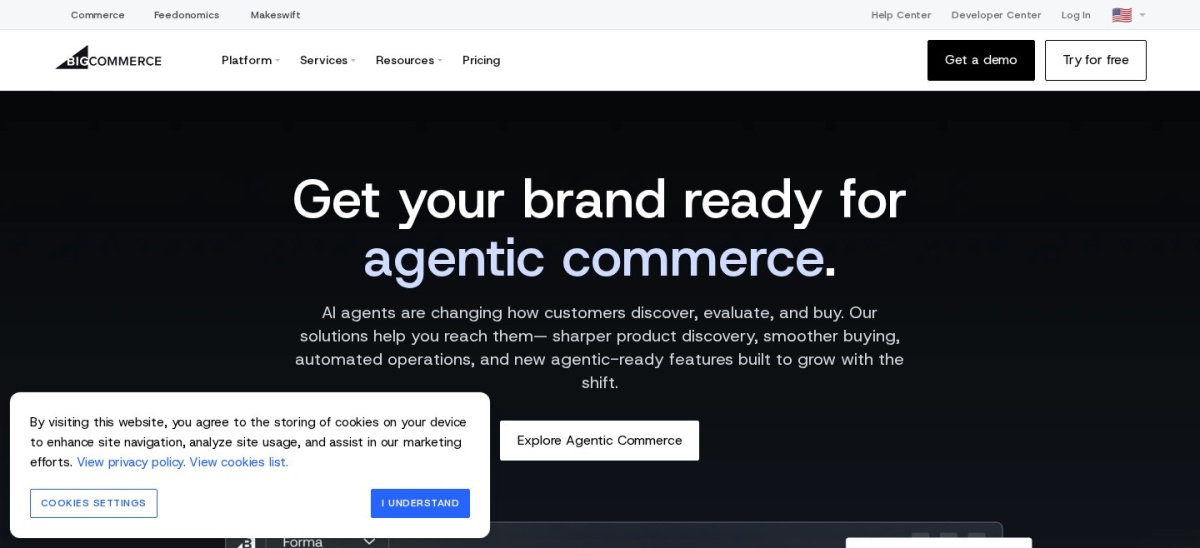
BigCommerce homepage, captured Nov 2026.
BigCommerce is a hosted ecommerce platform for retailers managing extensive product catalogs and multiple sales channels. Core includes a responsive storefront and commerce management features, with a $30,000 trailing annual GMV threshold.
The trade off is that Core costs $29/month with annual billing or $39 with monthly billing, and eligible orders through open payment providers incur a 2% platform fee. It suits growing retailers that need detailed product management and flexible integrations.
What we like
Flexible product catalog management
Supports multiple sales channels
Built-in storefront functionality
No additional platform fee for embedded payment providers
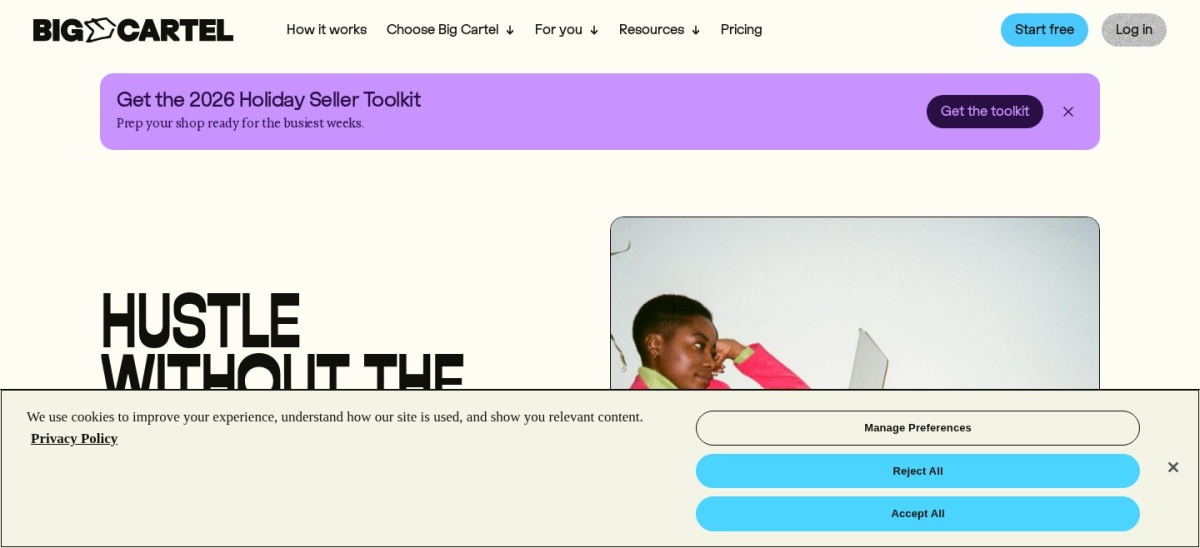
Big Cartel is an ecommerce platform designed for independent artists, makers and small brands. Its free Gold plan provides basic selling functionality, while Platinum includes additional design and product management features. It charges a 0% platform transaction fee.
The trade off is limited customization and catalog flexibility compared with larger ecommerce platforms. Platinum costs $15/month at its regular monthly rate, with temporary annual subscription offers available. It suits creators selling artwork, merchandise and handmade goods.
What we like
Permanent free selling plan
No platform transaction fees
Creator-focused storefront designs
Integrated print-on-demand functionality
Watch out for
Less suitable for extensive inventories
Advanced marketing features require Diamond
Smaller integration ecosystem
Platinum adds custom domain support and additional selling tools.Visit bigcartel.com
04
Ecwid
4.7/5on G2 (404 reviews, checked Nov 2026)
Starts at$5/mo
Best for adding ecommerce to existing websites
Entry planStarter
Product limit10
Platform transaction fee0%
Website integrationSupported
ecwid.com
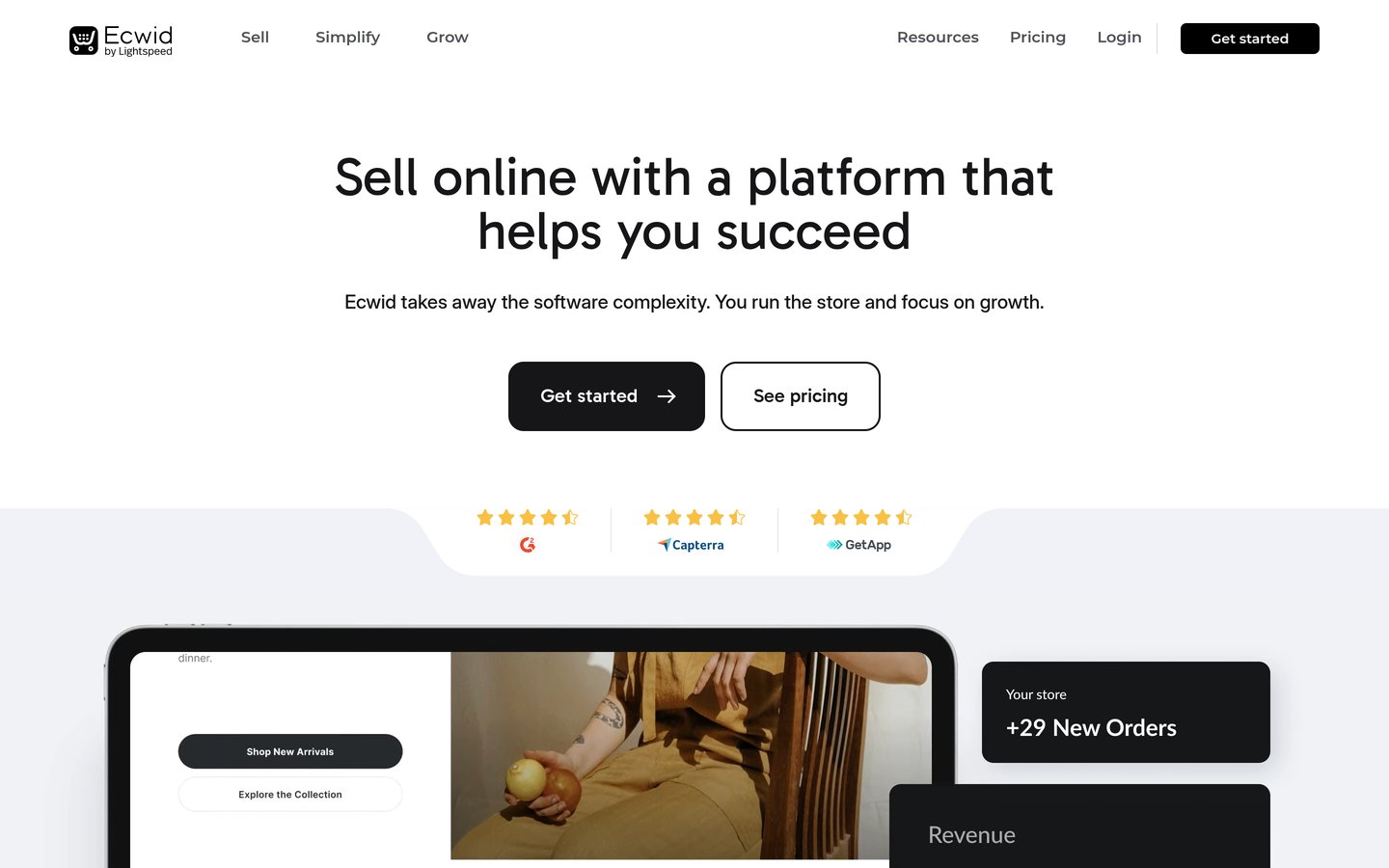
Ecwid homepage, captured Nov 2026.
Ecwid is a hosted ecommerce solution that adds selling functionality to an existing website or provides a standalone storefront. Its Starter subscription supports up to 10 products and charges no additional platform transaction fees.
The trade off is that the $5/month Starter plan has a small product allowance and fewer selling channels. Expanding inventory requires Venture or a higher subscription. It suits businesses that already have websites and want to introduce online shopping.
What we like
Works with existing websites
Affordable entry subscription
No additional platform transaction fees
Standalone storefront option
Watch out for
Starter limits inventory to 10 products
Additional social channels require upgrades
Limited entry-level marketing functionality
Venture expands inventory capacity and unlocks additional sales channels.Visit ecwid.com
05
Squarespace
4.4/5on G2 (1,138 reviews, checked Nov 2026)
Starts at$19/mo
Best for visually focused online stores
Entry planBasic, annual billing
Physical productsSupported
HostingIncluded
Website templatesIncluded
squarespace.com
Squarespace homepage, captured Nov 2026.
Squarespace is a website builder combining ecommerce, content publishing and visual design. Its Basic subscription starts at $19/month with annual billing and includes website creation and online selling functionality.
The trade off is that Basic carries commerce transaction fees and fewer advanced selling features than higher subscriptions. Monthly billing costs $25. It suits photographers, designers, boutique retailers and businesses that prioritize visual presentation.
Wix is a no-code website builder with integrated online selling features. Its Core subscription includes payment acceptance, basic ecommerce functionality, 50 GB of storage and support for five collaborators.
The trade off is that selling requires Core at $29/month with annual billing, even though basic website creation is available for free. Advanced commerce features require higher subscriptions. It suits beginners who want control over their website's appearance without coding.
What we like
Beginner-friendly visual editor
Flexible storefront layouts
Integrated business and marketing tools
Free website creation before upgrading
Watch out for
Free websites cannot accept online payments
Advanced selling features require higher plans
Website migration can require rebuilding
Core enables payments, ecommerce and expanded website resources.Visit wix.com
07
Square Online
4.6/5on Capterra (332 reviews, checked Nov 2026)
Paid from$49/mo
Best for physical retailers selling online
Free selling planSquare Free
Paid planSquare Plus
POS integrationNative
Billing basisPer business location
squareup.com
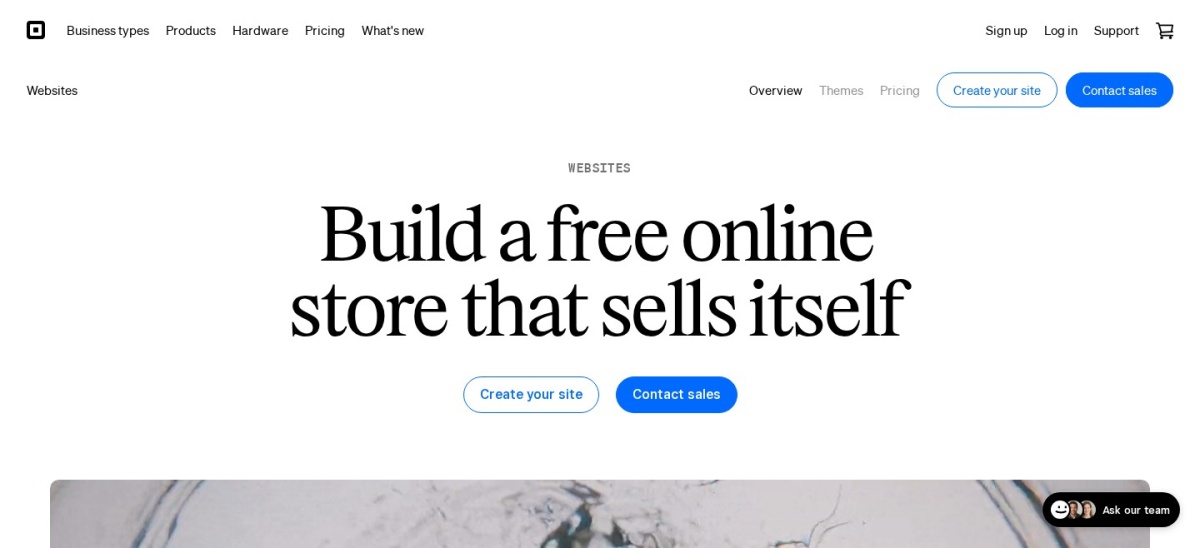
Square Online homepage, captured Nov 2026.
Square Online is an ecommerce solution connecting online orders, payments and physical retail operations. Square Free has no monthly subscription charge, while the platform holds a 4.6/5 Capterra rating across 332 reviews.
The trade off is payment processing charges and fewer storefront customization options than dedicated ecommerce platforms. Square Plus costs $49/month per location. It suits physical retailers, food businesses and merchants that need connected online and offline sales.
What we like
No monthly subscription required to start
Native point-of-sale integration
Connected inventory and order management
Suitable for local pickup operations
Watch out for
Limited advanced storefront customization
Paid subscription costs increase with locations
Payment processing fees apply
Square Plus adds expanded business features and improved processing rates.Visit squareup.com
How much does it cost to sell online?
Shopify Starter and Ecwid Starter each cost $60 per year. Big Cartel and Square Online offer free selling plans for businesses that want to avoid initial subscription expenses.
A complete hosted store generally costs more than a basic checkout or social selling subscription. Compare equivalent features rather than choosing solely by the lowest advertised price.
Budget separately for payment processing, shipping, premium templates, domain renewals and optional integrations. These expenses are not included in the annual subscription comparison.
How we chose
We compared established ecommerce platforms using official product documentation, subscription details and customer reviews from G2 and Capterra. We prioritized storefront functionality, payment options, inventory management and suitability for different selling models.
Prices, ratings and review counts were checked on 25 Nov 2026. Annual costs use regular published subscription prices, excluding temporary promotions, payment processing fees and optional extras. Official vendor pricing guides supplement pricing tables where necessary.
We excluded discontinued services, products without sufficient customer reviews and website plans that cannot accept online payments. We focused on platforms that provide direct selling functionality rather than standalone payment processors or marketplaces. No vendor paid for a place, and we do not claim testing for this list.
How to choose the best platform for selling online
Compare your products, sales channels and operating expenses before committing to an ecommerce subscription.
Identify your selling model. Choose a platform that supports your physical products, digital downloads, services or handmade goods.
Calculate your total annual expenses. Include subscriptions, transaction fees, payment processing, domain registration and any required premium integrations.
Check inventory and sales limits. Review product allowances, revenue thresholds and subscription upgrade requirements before importing your catalog.
Evaluate your checkout and fulfillment needs. Confirm payment options, shipping integrations, inventory synchronization and local pickup functionality.
FAQ
What is the best platform for selling online?
Shopify is our top overall choice because it supports social selling, dedicated storefronts and multiple sales channels. BigCommerce suits growing retailers, while Big Cartel is better suited to independent creators.
Can I sell products online for free?
Yes. Big Cartel and Square Online offer free selling plans without mandatory monthly subscription charges. However, payment processing fees still apply, and certain customization or marketing features require paid upgrades.
Which online selling platform is cheapest?
Shopify Starter and Ecwid Starter both cost $5 per month. Shopify Starter focuses on simplified selling and checkout, while Ecwid Starter supports a small product catalog and website integration.
Which ecommerce platform is best for beginners?
Wix is a suitable choice for beginners who want a visual website editor and integrated ecommerce features. Squarespace is another option for sellers who prioritize design and content publishing.
What is the best platform for selling handmade products?
Big Cartel is particularly suitable for artists and independent makers. Its free Gold plan allows sellers to start without a subscription, while Platinum provides expanded storefront and selling functionality.
Can I add an online store to my existing website?
Yes. Ecwid provides ecommerce functionality that integrates with existing websites, allowing businesses to introduce product listings and checkout without rebuilding their entire online presence around a new website platform.
SaaS SEO and WordPress specialist with about 8 years of experience. Rakib compares WordPress plugins, themes, hosting and software using public pricing, documentation and user reviews. See how we rank.