Etsy is the best platform to sell crafts online for most makers, putting handmade work in front of millions of buyers for a $0.20 listing fee plus 6.5% per sale and no monthly fee. Pick Shopify for your own branded store, or WooCommerce for the lowest long-run cost on WordPress.
How we make this list: we compare pricing pages, product documentation and public user reviews, then re-check every price before each update. No product paid for a place. Disclosure.
Etsy is the only pick with buyers built in: no monthly fee, a $0.20 listing fee and 6.5% per sale.
Shopify Basic costs $29 a month on annual billing and is the strongest choice for a branded craft store.
WooCommerce is free and rated 4.5 out of 5 on WordPress.org, but you pay separately for hosting.
Big Cartel lets you sell 5 products free, and its first paid plan is $15 a month with no sales commission.
Ecwid's cheapest paid plan is $5 a month, and its free plan was removed in November 2026.
What to look for in a platform for selling crafts
Craft sellers face one big choice: a marketplace that brings the buyers, or your own store where you keep the margin. Etsy is the first kind. Shopify, WooCommerce, Squarespace, Wix, Big Cartel, Square Online, Ecwid and Sellfy are the second, in different shapes.
Fees decide most of the cost. Marketplaces take a cut of every sale, while store builders charge a monthly fee and leave you to bring the traffic. Add the listing fee, the transaction fee and the card processing fee together before you compare two prices.
Product limits matter more for makers than for most sellers. A craft range can run to dozens of one-off pieces, so a free plan capped at 5 or 10 products fills up fast. Count your range now, including variations such as sizes and colours.
If you already run WordPress, our guide on how much WooCommerce costs shows why the free plugin can still cost money once hosting and extensions are counted.
1.4/5on Trustpilot (21,577 reviews, checked Nov 2026)
Paid from$10/mo
Best marketplace for handmade crafts
Monthly feeNone, Etsy Plus $10/mo
Listing fee$0.20 per listing
Transaction fee6.5% per sale
Payment processing3% + $0.25
etsy.com
Etsy homepage, captured Nov 2026.
Etsy is the largest online marketplace for handmade, vintage and craft-supply goods, with buyers who arrive already looking for one-off work. Opening a shop is free, each listing costs $0.20 and lasts four months, and Etsy charges 6.5% of the total sale plus payment processing of 3% plus $0.25. Etsy Plus costs $10 a month and adds listing and ad credits.
The trade off is fees and control. Fees stack to about 10% of a typical sale before optional ads, and your shop sits inside Etsy's design and rules. It suits makers starting out, or sellers who want sales without building traffic first.
What we like
Built-in audience of craft buyers
No monthly fee to open a shop
Simple listing and checkout flow
Etsy Plus adds ad and listing credits
Watch out for
Fees reach about 10% of each sale
Trustpilot rating of 1.4 reflects buyer complaints
Little control over shop design and rules
Etsy Plus adds credits and shop tools for $10 a monthVisit etsy.com
02
Shopify
4.4/5on G2 (5,159 reviews, checked Nov 2026)
Starts at$29/mo
Best branded store for craft sellers
Monthly feeBasic, $29/mo
Transaction fee0% with Shopify Payments
Free trial3 days, then $1/mo for 3 months
ProductsUnlimited on Basic
shopify.com
Shopify homepage, captured Nov 2026.
Shopify is a hosted store builder that gives a craft business its own website, checkout and payment processing in one place. Basic costs $29 a month on annual billing, or $39 month to month, and covers unlimited products, discount codes and basic reports. The current offer is 3 days free, then $1 a month for 3 months.
The trade off is cost. The monthly fee runs whether you sell or not, and many craft features, such as advanced shipping or reviews, need paid apps. It suits makers with steady sales who want a branded store rather than a marketplace listing.
4.5/5on WordPress.org (4,834 reviews, checked Nov 2026)
PriceFree
Best value store on WordPress
Plugin costFree
HostingPaid separately
Transaction feeSet by your gateway
ProductsUnlimited
woocommerce.com
WooCommerce homepage, captured Nov 2026.
WooCommerce is the free, open-source store plugin for WordPress, rated 4.5 out of 5 from 4,834 reviews and running on more than 7 million sites. It turns a WordPress site into a full shop with products, coupons, shipping and tax, and charges no monthly fee or sales commission of its own. You still pay for hosting, a domain and a payment gateway.
The trade off is setup. You arrange hosting, security and updates yourself, and costs vary with the host and the extensions you add. It suits makers who already use WordPress and want the lowest long-run cost with full control.
Squarespace is a website builder with commerce built in, known for polished templates that suit visual craft brands. Basic costs $25 a month, or $19 a month on annual billing, and includes unlimited products, a free custom domain for a year and a 14-day trial. The plan charges a 2% fee on store sales on top of card processing.
The trade off is fees and depth. The 2% store fee only drops to 0% on the Core plan at $39 a month, and commerce features are lighter than Shopify's. It suits makers whose site is also a portfolio and who sell a modest range.
Wix is a drag-and-drop website builder with commerce on its Core plan and above. Core costs $29 a month on annual billing and adds payments, unlimited products and basic store tools, while the free plan and Light plan cannot sell. Wix Payments charges 2.9% plus $0.30 per online card payment.
The trade off is price creep. Useful extras such as email marketing, bookings and advanced store features often sit in paid apps or higher plans. It suits makers who want to design the store themselves with no code.
What we like
Very easy drag-and-drop editor
Unlimited products on Core
Free plan to try the builder
0% Wix transaction fee on paid plans
Watch out for
Selling needs the $29 Core plan
Paid apps raise the real cost
Store features lag Shopify
Business at $39 a month adds standard store toolsVisit wix.com
06
Big Cartel
4.7/5on G2 (117 reviews, checked Nov 2026)
Paid from$15/mo
Best simple store for small ranges
Free planGold, 5 products
Paid planPlatinum, $15/mo
Sales commission0% on all plans
Products50 on Platinum
bigcartel.com
Big Cartel homepage, captured Nov 2026.
Big Cartel is a small store builder made for artists and makers, with a free Gold plan for up to 5 products. Platinum costs $15 a month, or $144 a year, for up to 50 products, discounts and digital products. Big Cartel takes no commission on sales, so you only pay Stripe or PayPal processing fees.
The trade off is scale. Themes and features are simple, and the top Diamond plan at $30 a month only covers 500 products. It suits makers with a small range who want a cheap, no-commission store.
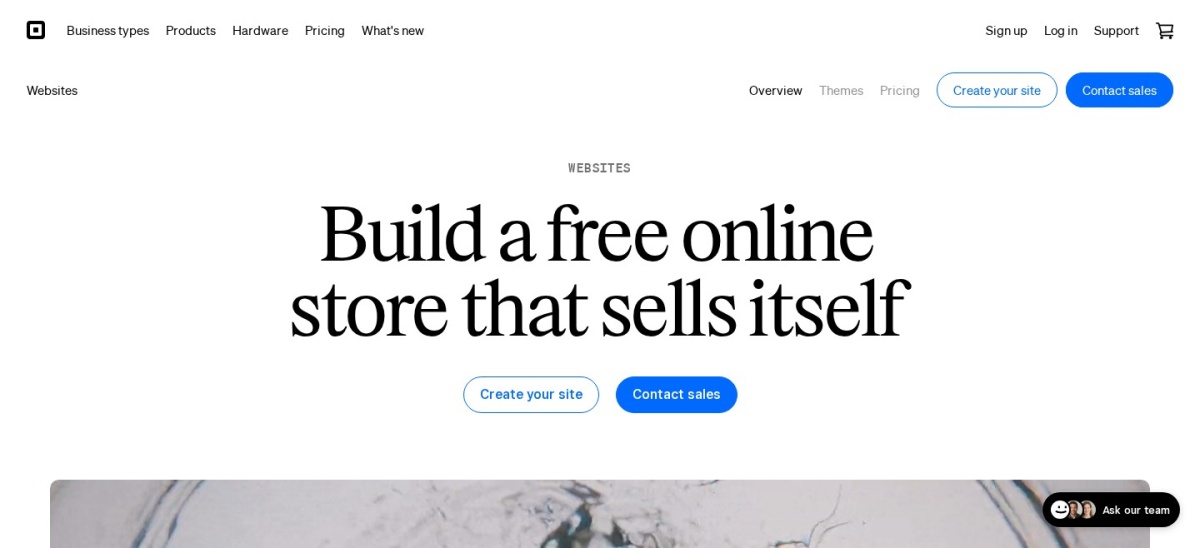
Square Online is the store builder from Square, built for sellers who also sell at markets and fairs. The free plan covers unlimited products, and Plus costs $29 a month billed yearly for a custom domain, more design control and customer accounts. Online card payments cost 2.9% plus $0.30, and stock syncs with Square POS.
The trade off is design depth. Templates and customisation are plainer than Squarespace or Wix, and advanced store features sit on Premium at $79 a month. It suits makers who sell in person as well as online.
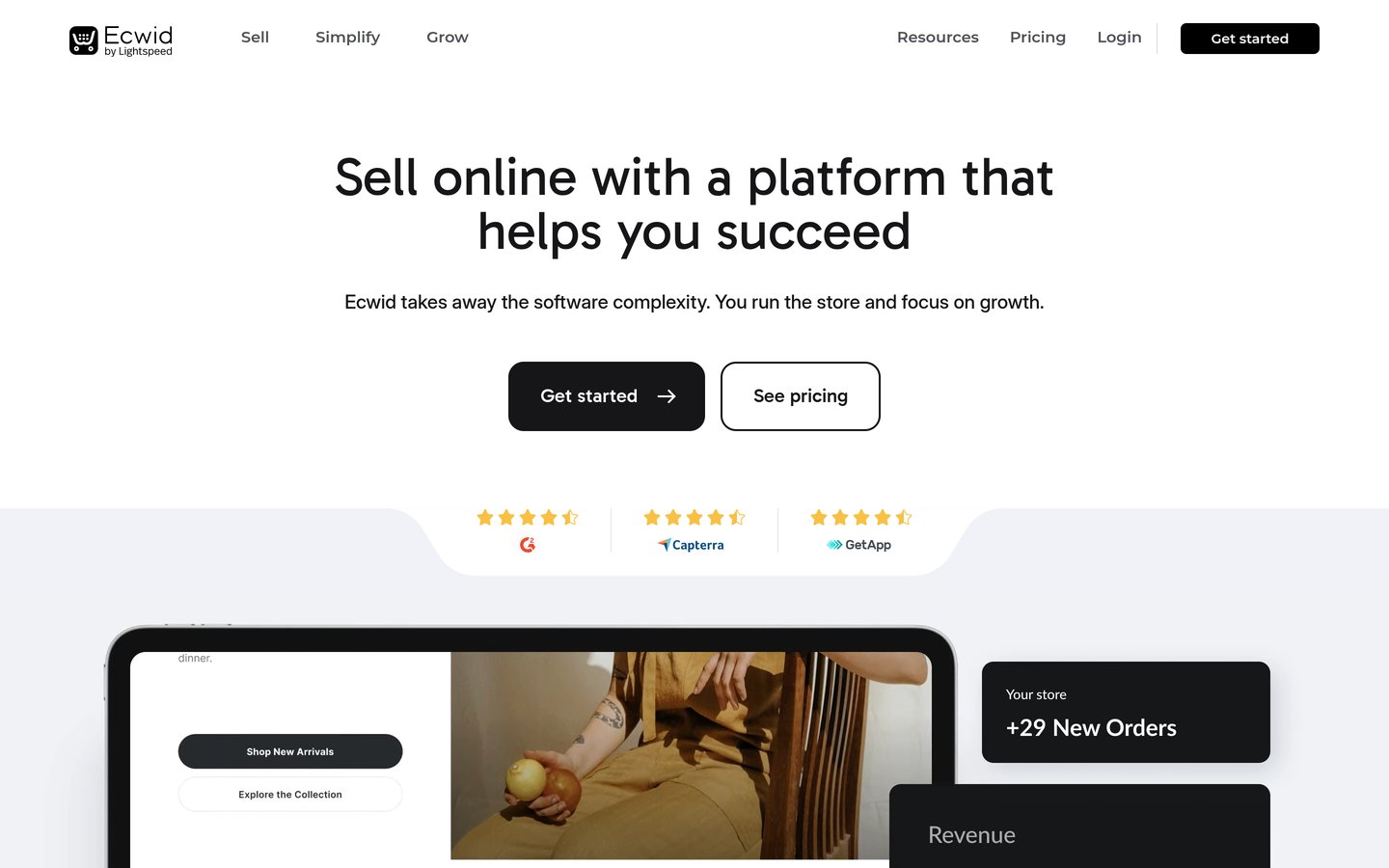
Ecwid is a store add-on from Lightspeed that adds a shop to a website you already have, instead of asking you to rebuild it. Starter costs $5 a month for up to 10 products, and Venture costs $29 a month billed yearly for up to 100 products, discount codes and selling on Instagram and Facebook. Ecwid charges no transaction fees of its own.
The trade off is limits and change. The free plan was removed in November 2026, so selling now starts at $5 a month, and the 10-product cap on Starter is tight for a full craft range. It suits makers with a site or social following who want to add selling fast.
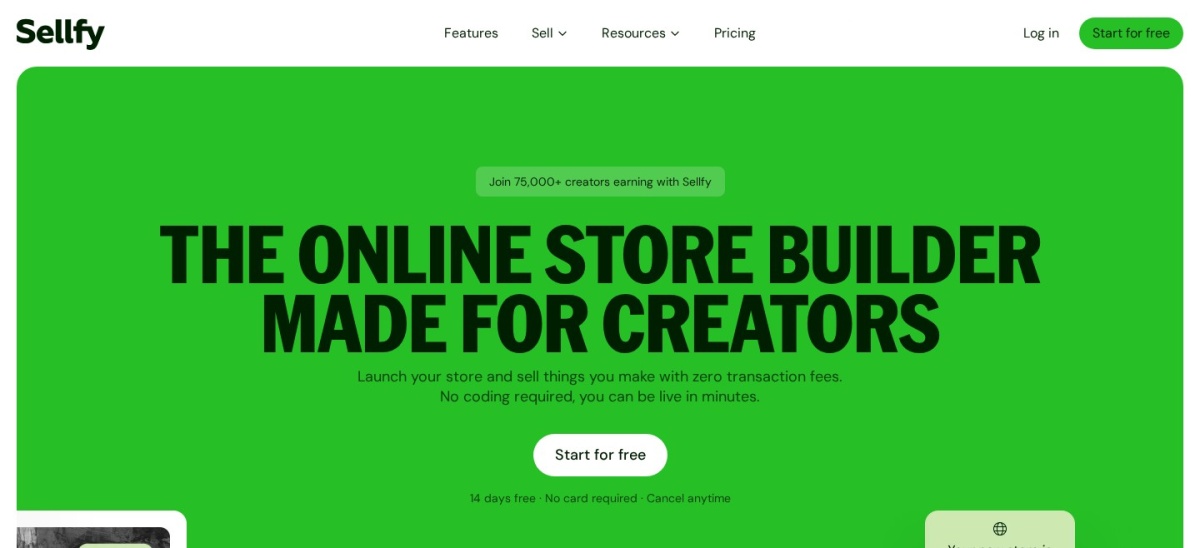
Sellfy is a simple storefront for creators who sell digital downloads, print-on-demand merch and physical crafts. Starter costs $22 a month billed yearly, or $29 month to month, and charges 0% Sellfy transaction fees on every plan. The plan covers unlimited products, email marketing and a custom domain, with a $10,000 yearly sales cap.
The trade off is the sales cap. Cross $10,000 in a year and you upgrade to Business at $59 a month or pay a 2% overage, and customisation is lighter than Shopify. It suits makers selling patterns, printables or digital craft goods.
A marketplace sells for you. Etsy brings buyers who search for handmade goods, so a new shop can make sales in its first week without ads or a following.
Your own store keeps more of each sale and builds your brand, but every visitor has to come from search, social media or a market stall. Most makers start on Etsy and add a store later, once they know what sells.
Run the numbers both ways. A $40 craft piece on Etsy loses about $4 in fees, while the same piece on a $29-a-month store costs nothing extra per sale beyond card processing, so the store wins once monthly sales pass roughly $300 in fees.
How we chose
We started from the platforms makers actually use to sell handmade work: marketplaces, hosted builders and WordPress stores, then kept nine with clear pricing and a public rating.
Prices come from each vendor's pricing page, checked in November 2026. Ratings and review counts come from G2, Trustpilot or WordPress.org on the same day. Where a vendor shows a sale, the list shows the regular price.
We left out general marketplaces with no craft focus and tools without a public rating. No vendor paid for a place, and we do not claim to have used these tools ourselves.
How to choose a platform to sell crafts online
Start with where your buyers already shop, then work out what each sale will cost you.
Decide marketplace or own store. A marketplace brings buyers but takes a cut of every sale. Your own store keeps the margin but you must bring the traffic yourself.
Add up the real cost per sale. Compare the monthly fee with the transaction fee. A free plan with a 6.5% cut can cost more than a $29 plan once sales grow.
Check the product and listing limits. Free plans often cap products at 5 or 10. Count your range now so a limit does not force a move later.
Try the free plan or trial first. List a few products, place a trial order if the plan allows it, and check the checkout, shipping and tax settings before you pay.
FAQ
What is the best platform to sell crafts online?
Etsy is the best pick for most makers. It has the largest audience looking for handmade goods, charges no monthly fee, and costs $0.20 per listing plus 6.5% of each sale. Shopify is the better choice once you want your own branded store.
How much does it cost to sell crafts on Etsy?
Each listing costs $0.20 and lasts four months. Etsy then takes 6.5% of the total sale, and payment processing adds 3% plus $0.25 for US sellers. Together the fees come to about 10% of a typical sale, before any optional advertising.
Is Shopify or Etsy better for handmade sellers?
Etsy is better for starting out, because buyers already search there for handmade goods. Shopify is better once you have repeat customers and want your own brand, domain and checkout. Many makers run both, with Etsy for discovery and Shopify for repeat sales.
Can I sell crafts online for free?
Yes, with limits. Big Cartel lets you sell 5 products free, Square Online has a free plan with unlimited products, and WooCommerce is a free plugin. Etsy also has no monthly fee, but you still pay the $0.20 listing fee and 6.5% per sale.
Do I need a website to sell crafts?
No. A marketplace such as Etsy lets you sell with no website at all. A website helps once you want your own brand, an email list and repeat buyers, and tools such as Square Online or Big Cartel keep the cost low.
What fees should craft sellers watch?
Watch four fees: the monthly plan, the listing fee, the transaction fee and card processing. A low monthly price can hide a high cut per sale, and listing fees add up fast when you sell many one-off pieces.
SaaS SEO and WordPress specialist with about 8 years of experience. Rakib compares WordPress plugins, themes, hosting and software using public pricing, documentation and user reviews. See how we rank.