Shopify is the best e commerce software for app ecosystem depth, with thousands of apps from 29 dollars a month. WooCommerce suits WordPress stores for free, while BigCommerce fits growing catalogs with no platform fee.
How we make this list: we compare pricing pages, product documentation and public user reviews, then re-check every price before each update. No product paid for a place. Disclosure.
Shopify has the biggest app ecosystem here, with 8,000+ apps in its store.
WooCommerce is free and takes no revenue share, with 1,000+ extensions available.
BigCommerce charges no platform fee on any plan, which helps margins as volume grows.
Ecwid is the cheapest paid start at $5 a month, for sellers who already have a website.
Adobe Commerce is the only enterprise pick here, and it publishes no price: every licence is a custom quote.
Which e commerce software has the best app ecosystem?
App count is only useful if the apps solve real problems. Shopify leads because its store covers payments, shipping, marketing and accounting, while smaller stores cover the basics and stop there.
Free platforms shift the cost to hosting and extensions. WooCommerce and PrestaShop cost nothing for the software, but hosting, a domain and paid extensions decide what a store really costs each month.
Transaction fees matter more than the monthly price once sales grow. BigCommerce, WooCommerce and Wix charge no platform fee, while Squarespace Basic adds 2% to every sale on top of card processing.
Hosted platforms trade control for convenience. Shopify, BigCommerce, Wix and Squarespace include hosting, security and support, while open-source platforms leave running costs and updates to you.
The 9 best e commerce software platforms for app ecosystems
01
Shopify
4.4/5on G2 (5,159 reviews, checked Nov 2026)
Starts at$29/mo
Best app ecosystem overall
App store8,000+ apps
ProductsUnlimited, Basic
Card rates2.9% + 30¢, Shopify Payments
Paid planBasic, $29/mo yearly
shopify.com
Shopify homepage, captured Nov 2026.
Shopify is the hosted ecommerce platform most stores are compared against, because it covers hosting, checkout, payments and analytics in one subscription. The Basic plan costs $29 a month billed yearly, or $39 month to month, and includes unlimited products, discount codes and abandoned cart recovery, with the app store filling almost any gap.
The trade off is the monthly cost of apps. The Basic plan is only the start: a handful of paid apps can double the bill, and card rates run 2.9% plus 30 cents per online sale through Shopify Payments. It suits stores that want the biggest app ecosystem and room to grow.
What we like
Largest app ecosystem here, 8,000+ apps
Unlimited products on Basic
2.9% plus 30 cents card rates with Shopify Payments
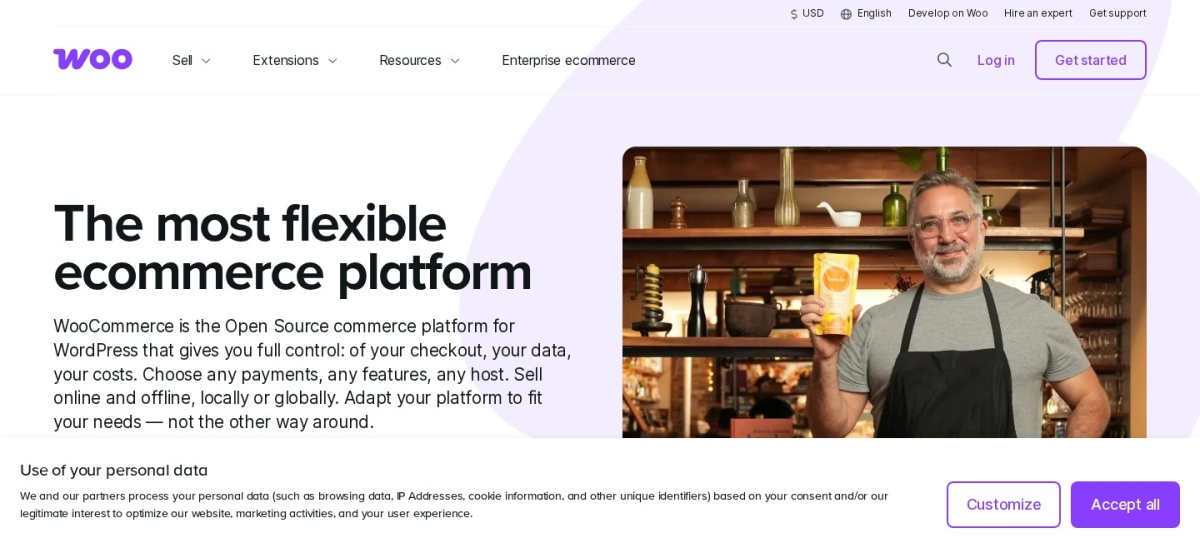
WooCommerce is the free, open-source plugin that turns any WordPress site into a store. The plugin itself costs nothing and takes no revenue share, with unlimited products, coupons, tax settings and payment options, and more than 1,000 extensions add subscriptions, bookings and shipping carriers.
The trade off is ownership of everything. Hosting, security, updates and support are your job, and a serious store typically spends $50 to $200 a month on hosting and extensions. It suits WordPress sites that want full control and the biggest free extension library.
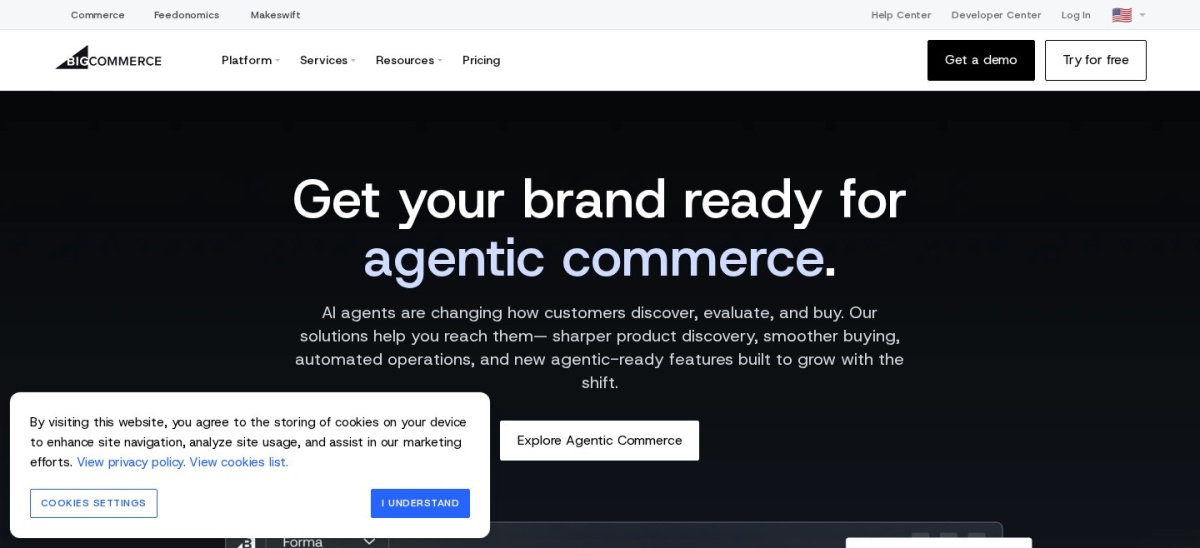
BigCommerce is the hosted rival that competes on built-in features rather than apps. The Core plan costs $29 a month billed yearly, or $39 month to month, and includes unlimited products, unlimited staff accounts, multi-currency selling and no platform transaction fee.
The trade off is the app store and the sales cap. The marketplace is smaller than Shopify's, and Core auto-upgrades past $30,000 in yearly sales, so fast-growing stores pay more sooner. It suits larger catalogues and B2B sellers that want features built in, not bought as apps.
Wix is a drag-and-drop website builder with ecommerce layered in. The free plan lets you build a site on a Wix address, and selling starts on Core at $29 a month billed yearly, with 50 GB of storage, basic ecommerce, scheduling and a basic marketing suite.
The trade off is scale and the app market. Wix suits small catalogues and service sellers, but the app market is smaller than Shopify's and the Core plan is a starting point, not a growth platform. It suits beginners who want a site and a shop in one place.
What we like
Easiest drag-and-drop builder here
Free plan to build before you sell
No platform fee with Wix Payments
Watch out for
Small app market beside Shopify
Core is a starting point, not a growth plan
Higher plans add storage, automation and more productsVisit wix.com
05
Squarespace
4.4/5on G2 (1,136 reviews, checked Nov 2026)
Starts at$19/mo
Best for design-led brands
Store fee2% per sale, Basic
ProductsUnlimited, Basic
Contributors2, Basic plan
Paid planBasic, $19/mo yearly
squarespace.com
Squarespace homepage, captured Nov 2026.
Squarespace is the design-led platform in this list, with templates that look finished before you add a product. The Basic plan costs $19 a month billed yearly, or $25 month to month, and covers unlimited products, a custom domain, built-in SEO and checkout on your own domain.
The trade off is the store fee and the app range. Basic adds a 2% Squarespace fee to every online sale on top of card processing, and the extensions library is far smaller than Shopify's. It suits design-led brands that sell a small catalogue beautifully.
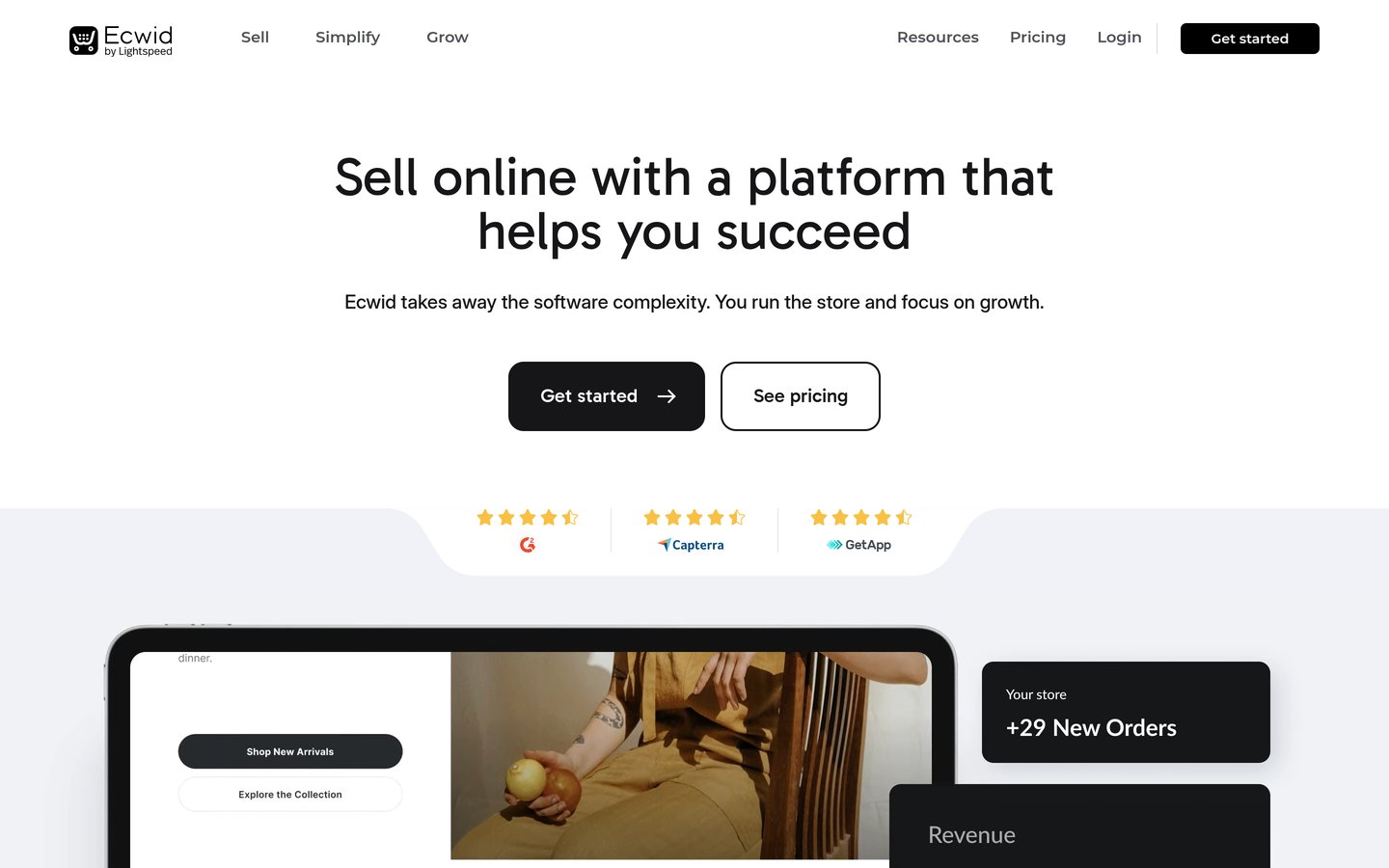
Ecwid is a store you add to a website you already have, instead of replacing it. The Starter plan costs $5 a month for 10 products, with no platform transaction fee, and it embeds on any site, including WordPress, Wix and Squarespace.
The trade off is size and the missing free plan. Starter covers only 10 products, the free plan ended in November 2026, and the app market is small beside Shopify's. It suits content sites and small sellers that need a shop without rebuilding their website.
Adobe Commerce is the enterprise ecommerce platform in this list, built for large brands and B2B merchants with complex catalogues and development teams. It handles custom product types, pricing logic, checkout flows, company accounts and shared catalogues that hosted platforms cannot.
The trade off is price and effort. Adobe publishes no list price and licenses by gross merchandise value, with third-party estimates in five figures a year, and every build needs developers. It suits enterprises that need deep customization and B2B tools above all else.
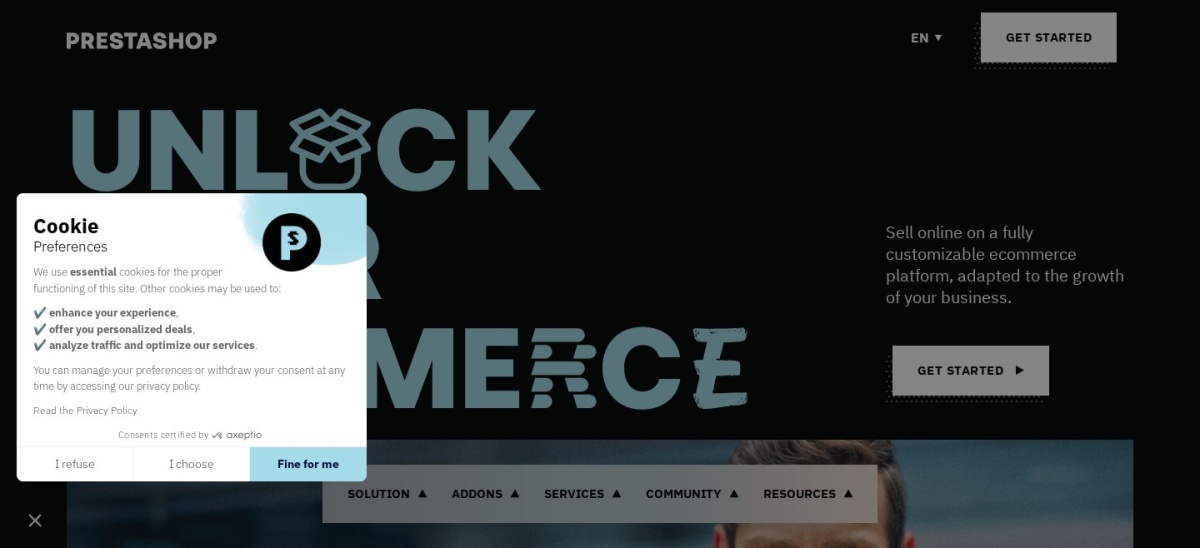
PrestaShop is a free, open-source store for merchants who want full control and international reach. The Classic download costs nothing, covers multilingual and multi-currency selling, and thousands of modules add payments, shipping and marketing features.
The trade off is technical work. Hosting, security, updates and support are your job, and the hosted PrestaShop edition starts at 24 euros a month, so the free download is only free if you run it yourself. It suits European merchants with technical help on hand.
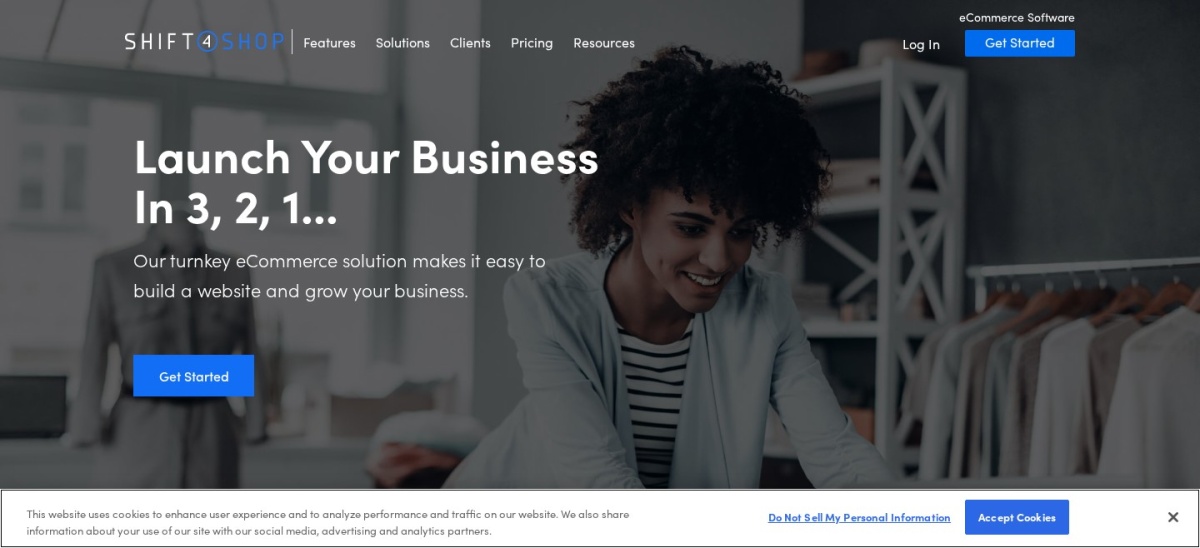
Shift4Shop is a hosted ecommerce platform that packs built-in commerce features into a low price. It is free in the US for stores that process payments through Shift4, with unlimited products and no platform fee, and paid plans start at $29 a month.
The trade off is the thin review record and the dated feel. Shift4Shop holds a 3.9 out of 5 G2 rating from about 30 reviews, the thinnest base here, and its app range is smaller than Shopify's. It suits budget-conscious US merchants that want features built in.
Free platforms cover the software, not the store. WooCommerce and PrestaShop charge nothing for the code, but hosting, security and support are your job.
Paid hosted plans bundle the running costs. Shopify, BigCommerce, Wix and Squarespace include hosting, SSL and support in the monthly price.
Apps are the hidden bill on every platform. A handful of paid Shopify apps can double the Basic plan, so budget for the apps before you commit.
How we chose
We started from the ecommerce platforms that appear most often in 2026 comparisons, then kept the nine with published pricing and a public G2 rating.
Prices come from each vendor's official pricing page, checked on 29 November 2026. Ratings and review counts come from G2 on the same day. Where a vendor shows a sale, the list shows the regular price.
We left out platforms with no verifiable G2 rating. No vendor paid for a place, and we do not claim hands-on testing for this list.
How to choose e commerce software for its app ecosystem
List the apps you actually need before you compare stores.
List the apps you need first. Write down payments, shipping, tax, email and accounting, then check each platform's store for those exact apps before you compare prices.
Count the total monthly cost. Add the plan, the apps and the transaction fees together, since a cheap plan with a 2% store fee costs more than a dearer plan once sales grow.
Check the free plan limits. WooCommerce and PrestaShop are free at the core but need hosting, while Shift4Shop is free only in the US with Shift4 payments.
Match the platform to your catalogue. Small catalogues fit Wix or Squarespace, growing stores fit Shopify or BigCommerce, and complex B2B catalogues need Adobe Commerce.
FAQ
What e commerce software has the best app ecosystem in 2026?
Shopify has the best app ecosystem, with 8,000+ apps in its store and the largest developer community in this list. WooCommerce follows with 1,000+ extensions, while BigCommerce builds more features in natively and needs fewer apps.
How much does the best e commerce software cost?
Shopify Basic costs $29 a month billed yearly, or $39 month to month. BigCommerce Core matches it at $29 a month billed yearly, WooCommerce and PrestaShop are free at the core, and Ecwid starts at $5 a month.
Is there a free e commerce software with a good app ecosystem?
WooCommerce is free and has the biggest free ecosystem, with 1,000+ extensions and 7 million active installs. PrestaShop is also free and open source, while Shift4Shop is free in the US for stores that use Shift4 payments.
Which e commerce software is best for beginners?
Wix is the easiest start, with drag-and-drop building and selling from $29 a month billed yearly. Squarespace suits design-led brands, while Shopify is the simplest hosted platform that still scales to thousands of orders.
Shopify or BigCommerce: which has the better app ecosystem?
Shopify has the bigger app ecosystem, with 8,000+ apps against a smaller BigCommerce marketplace, so niche needs are easier to fill. BigCommerce answers by building more in natively, including multi-currency selling and customer groups, with no platform fee.
Do e commerce platforms charge fees on every sale?
It depends on the platform. Shopify charges 2.9% plus 30 cents per online sale through Shopify Payments, Squarespace Basic adds 2% on top of card fees, and BigCommerce, WooCommerce, Wix and Ecwid charge no platform fee.
SaaS SEO and WordPress specialist with about 8 years of experience. Rakib compares WordPress plugins, themes, hosting and software using public pricing, documentation and user reviews. See how we rank.