Shopify is the best platform for an ecommerce store for most sellers. Basic costs $29 a month billed yearly, includes unlimited products and abandoned cart recovery, and it is rated 4.4 out of 5 on G2. Pick WooCommerce if you already run WordPress, or BigCommerce for more built-in features.
How we make this list: we compare pricing pages, product documentation and public user reviews, then re-check every price before each update. No product paid for a place. Disclosure.
Shopify leads: Basic at $29 a month billed yearly, unlimited products, rated 4.4 out of 5 on G2 from 5,158 reviews.
WooCommerce and PrestaShop are free at the core, but hosting, updates and support are your job.
Ecwid's free plan is gone: the cheapest paid start is now Starter at $5 a month for 10 products.
Square Online still lets you take real orders with no monthly fee on its free plan.
Watch the fees, not just the plan price: card rates and third-party gateway fees differ on every platform.
What to look for in an ecommerce platform
An ecommerce platform has to do three jobs: show products, take payments and handle orders. The best one for a store does all three without extra tools.
Price is more than the monthly plan. Card processing applies on every sale, some platforms add their own fee on top, and paid apps or extensions raise the bill.
A free plan or trial lets you test the idea before paying. Our guide on how much a WooCommerce store costs shows what the free core really costs once hosting and extensions are added.
Pick a platform with room to grow. Sales caps, product limits and missing features can force a move later, so check the limits before you build.
Shopify is a hosted commerce platform that runs the store, checkout, payments and hosting in one place. The Basic plan costs $29 a month billed yearly and includes unlimited products, discount codes, abandoned cart recovery and 24/7 support.
The trade off is cost creep. Paid apps add up fast, and sales through a third-party gateway carry a 2% fee on Basic. It suits sellers who want a store live quickly without managing hosting or updates.
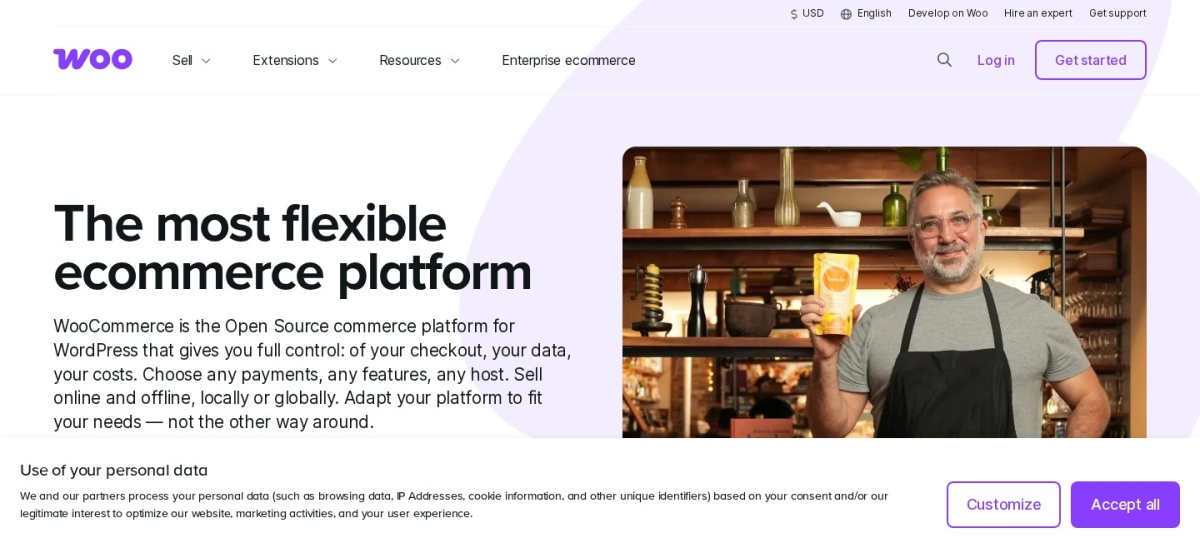
WooCommerce is a free, open-source plugin that turns a WordPress site into a store. The core software costs nothing and adds unlimited products, coupons, tax settings and payment options, while hosting, a domain and extensions are paid separately.
The trade off is upkeep. Updates, backups, security and speed are the store owner's job, and paid extensions add up. It suits sellers who already run WordPress and want full control of their data and checkout.
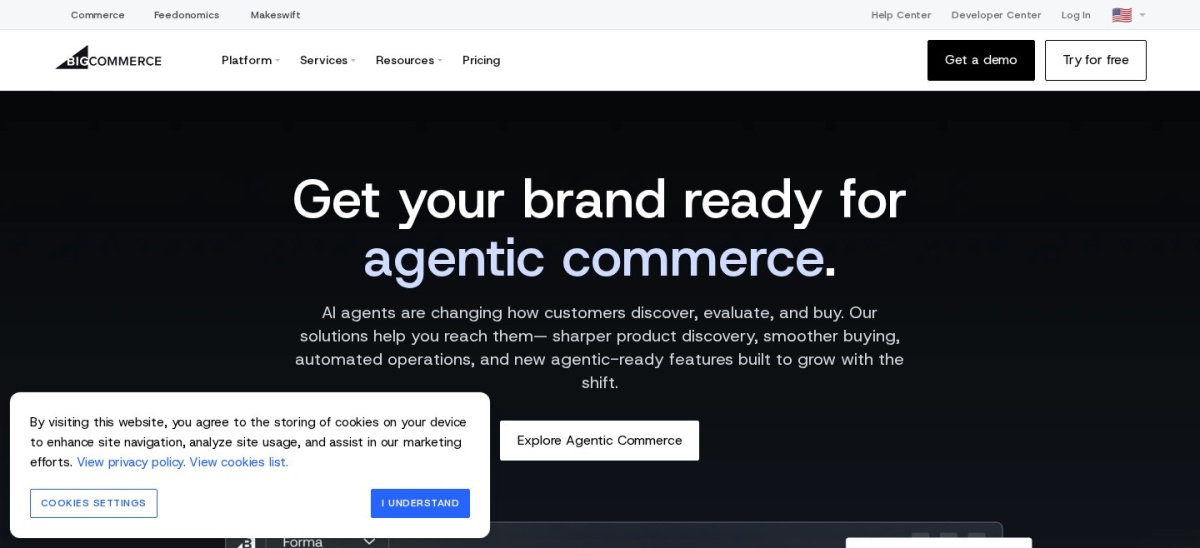
Best for growing stores that want built-in features
Cheapest paid planCore, $29/mo billed yearly
Sales cap$30,000 trailing-12-month GMV
Transaction fees0% on embedded providers
Free trial15 days
bigcommerce.com
BigCommerce homepage, captured Nov 2026.
BigCommerce is a hosted platform built for stores that plan to grow, with more selling features built in and fewer paid apps needed. The Core plan costs $29 a month billed yearly and includes unlimited products, unlimited staff accounts and no platform transaction fee on embedded payment providers.
The trade off is the sales cap. Core covers up to $30,000 in trailing-12-month sales, then the store moves up a plan. It suits growing brands that want built-in features and B2B tools without a big app bill.
Wix is a drag-and-drop website builder with a store built in, so the site and the shop share one editor. The Core plan costs $29 a month billed yearly and is the first plan that accepts payments.
The trade off is depth. It is not built for very large catalogs or complex B2B pricing, and moving a store off Wix later is hard. It suits small stores that want design control without code.
Platform transaction fee2% on Basic, 0% on Commerce
Commerce planCommerce Basic, $28/mo billed yearly
Trial14 days
squarespace.com
Squarespace homepage, captured Nov 2026.
Squarespace is a design-led website builder with commerce built in, known for polished templates and a clean checkout. The Basic plan costs $19 a month billed yearly and lets you sell with a 2% platform transaction fee, while Commerce Basic at $28 a month removes the fee.
The trade off is scale. It suits small catalogs and design-led brands, but large inventories and complex shipping rules fit other platforms better. It suits creators and small brands whose site is part of the brand.
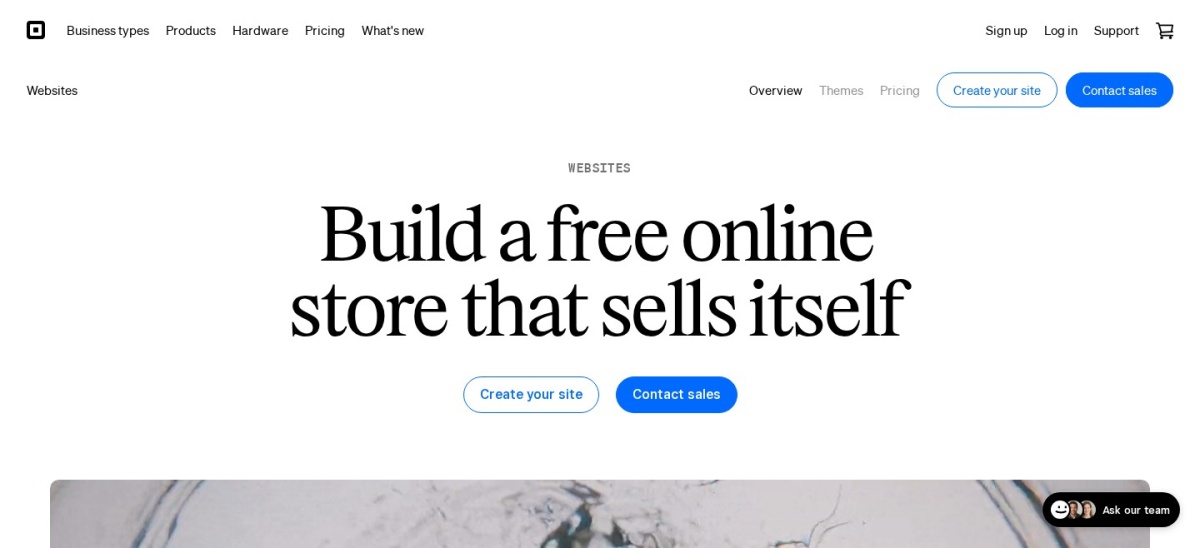
Best free start for sellers who also sell in person
Free planYes, unlimited products
POSNative Square POS included
Online card rate3.3% + 30¢ on the free plan
Paid planPlus, adds a custom domain
squareup.com
Square Online homepage, captured Nov 2026.
Square Online is the store builder from Square, built for sellers who also sell in person. The free plan covers unlimited products with no monthly fee, and it shares inventory with Square point of sale.
The trade off is design range. Templates are fewer than Wix or Squarespace, and the store works best inside Square's payment system. It suits local sellers who need online and in-person selling in one place.
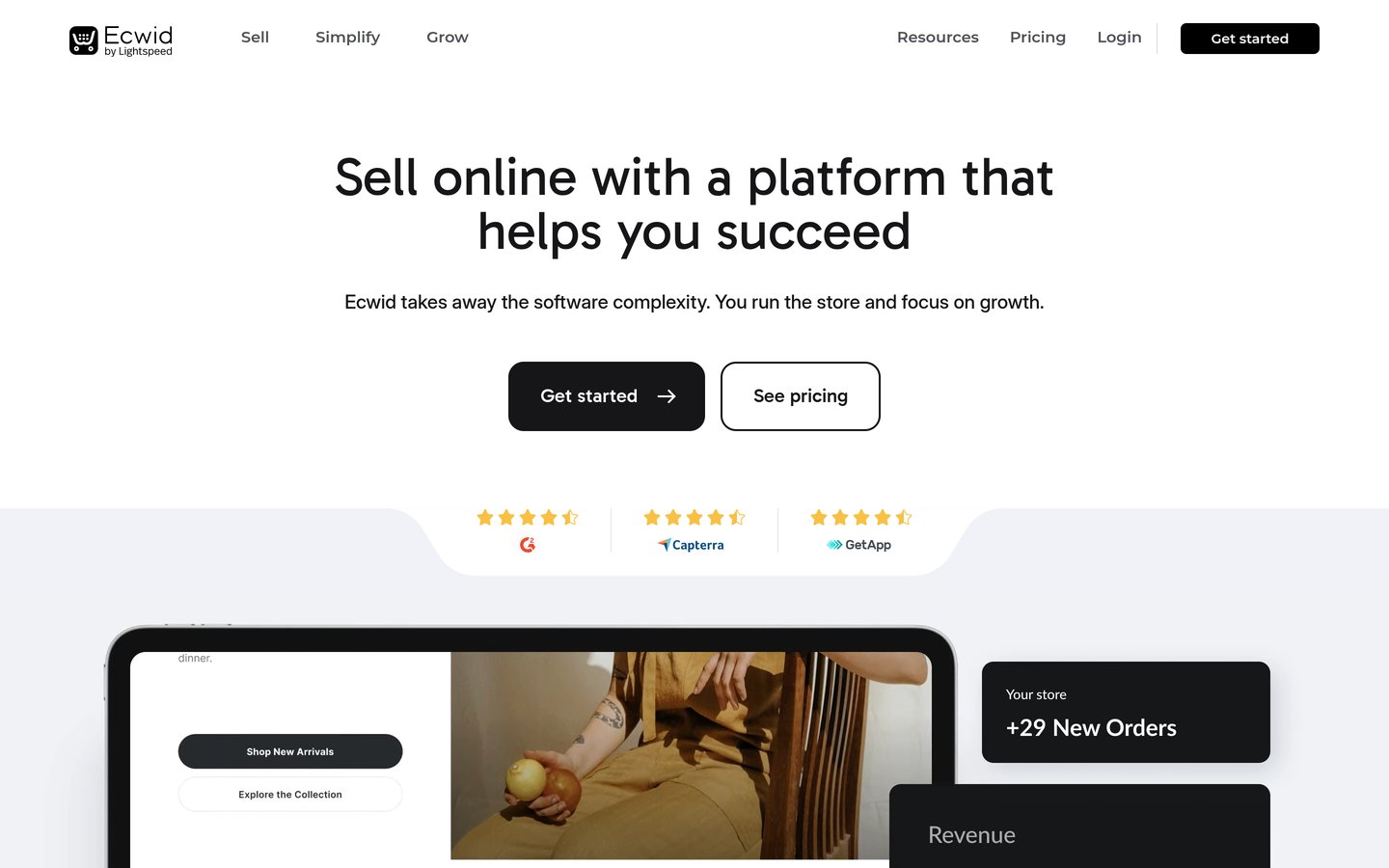
Ecwid by Lightspeed adds a store to an existing website or social page instead of replacing it. The Starter plan costs $5 a month for up to 10 products, with no platform transaction fee on any plan.
The trade off is that it is an add-on, not a full website builder. Sellers who need a standalone site must pair it with one, and the product cap pushes bigger catalogs to higher plans. It suits sellers with a site already who want to start selling fast.
Languages and currenciesMultilingual, multi-currency
HostingPaid separately
ModulesMany paid add-ons
prestashop.com
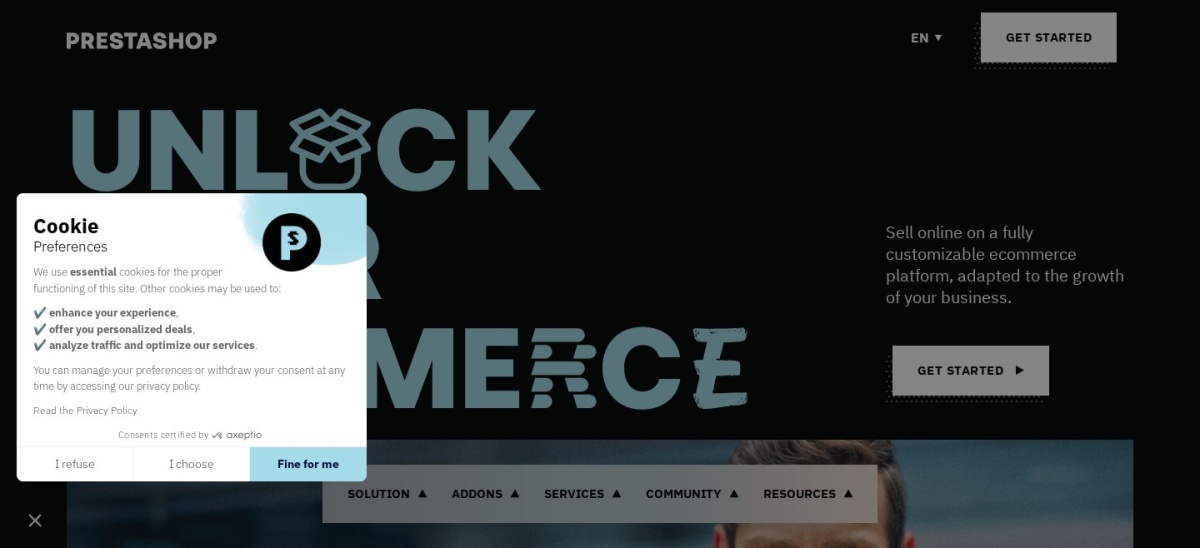
PrestaShop homepage, captured Nov 2026.
PrestaShop is free, open-source store software you install on your own hosting. The download costs nothing and covers products, orders, payments and shipping, with multi-language and multi-currency support built in.
The trade off is technical work. Hosting, updates and support are your job, and many useful features need paid modules. It suits sellers with technical help who want a free, customizable store they fully own.
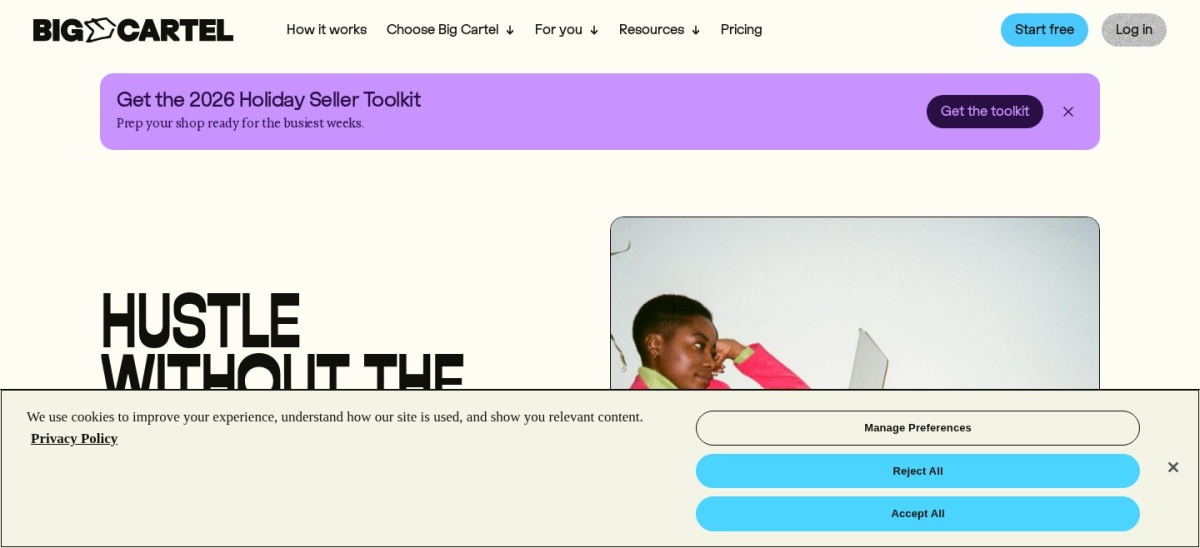
Big Cartel is a simple store for artists and makers, with a free plan for 5 products and the Platinum plan at $12 a month billed yearly for 50 products. It charges no platform fee on sales.
The trade off is scale. It caps at 500 products on the top plan and has few marketing tools. It suits makers with a small catalog who want a cheap, simple store.
Free plans and free software cover the basics well. Square Online sells with no monthly fee, and WooCommerce and PrestaShop cost nothing to install.
Paid plans mostly add scale and support. You get more products, a custom domain, lower card rates and help when something breaks.
If the store earns money every day, a paid plan often costs less than the sales lost to a limit. Check product caps and sales caps before you commit.
How we chose
We started from the established ecommerce platforms with a verifiable G2 rating and a published price, then kept the nine that fit a general online store best.
Prices come from each vendor's pricing page, checked on 25 November 2026. Ratings and review counts come from G2 on the same day. Where a vendor shows a sale, the list shows the regular price.
We left out tools with no verifiable rating or no published price. No vendor paid for a place, and we do not claim to have used these tools ourselves.
How to choose an ecommerce platform
Start with what you sell and how you sell it, then match the platform to that shape.
Count your products and orders. A maker with 20 products fits Big Cartel or Ecwid Starter; a catalog of thousands needs Shopify, BigCommerce or WooCommerce.
Add up the real monthly cost. Plan price plus card fees plus apps or extensions is the true bill. A $5 plan with paid add-ons can cost more than a $29 plan.
Check the limits before you build. Sales caps, product caps and transaction fees decide whether the platform still fits in a year.
Try the free plan or trial first. Take real orders before you commit to a monthly plan.
FAQ
What is the best platform for an ecommerce store?
Shopify is the strongest pick for most stores. Basic costs $29 a month billed yearly, includes unlimited products and abandoned cart recovery, and it is rated 4.4 out of 5 on G2 from more than 5,100 reviews.
Is there a free ecommerce platform?
Yes. WooCommerce and PrestaShop are free to install, and Square Online and Big Cartel have free plans. Hosting, a domain and card fees still cost money, so free does not mean zero cost.
Is WooCommerce better than Shopify?
It depends on the store. WooCommerce is free and gives full control, but you manage hosting, updates and security. Shopify costs $29 a month and handles hosting, checkout and support for you.
How much does it cost to run an online store?
A small store on Shopify or BigCommerce costs $29 a month plus card fees. WooCommerce can start near the cost of hosting alone, while paid extensions and apps raise the bill on every platform.
Do I need a free plan to start selling?
No, but it lowers the risk. Square Online lets you take real orders with no monthly fee, and Shopify offers a 3-day trial then $1 a month for 3 months before the full $29 price.
Which platform is best for selling in person too?
Square Online is the best fit for sellers who also sell in person. It shares inventory with Square point of sale, and its free plan covers unlimited products with no monthly fee.
SaaS SEO and WordPress specialist with about 8 years of experience. Rakib compares WordPress plugins, themes, hosting and software using public pricing, documentation and user reviews. See how we rank.