BigID is the best data governance software for PII mapping for discovery-first teams, with AI classification across structured and unstructured data. OneTrust suits enterprises that want privacy and governance in one suite, while DataGrail fits mid-market teams automating data rights.
How we make this list: we compare pricing pages, product documentation and public user reviews, then re-check every price before each update. No product paid for a place. Disclosure.
BigID is the discovery-first pick, with AI classification across structured and unstructured data.
OneTrust is the broadest suite here, covering privacy, governance and risk in one system.
DataGrail holds the highest mid-market rating at 4.7 out of 5 on G2 from 206 reviews.
MineOS has the highest rating in this list at 4.8 out of 5 on G2 from 233 reviews.
Every tool here is quote-based, so budget for a sales conversation before you compare totals.
How do you choose data governance software for PII mapping?
Start with discovery. PII mapping is only as good as the inventory behind it, so the tool must find personal data across databases, files, SaaS apps and cloud stores.
Check classification depth. A tool that labels names, emails and IDs accurately saves weeks of manual review, while a shallow scan leaves gaps an auditor will find.
Mind the rights requests. Mapping feeds access and deletion requests, so the tool should trace one person across every system without tickets.
Price the whole program. Every tool here sells by quote, and implementation can take months, so count services and time beside the licence.
Best data governance software for PII mapping overall
DiscoveryAI classification
Data typesStructured and unstructured
PricingBy quote
Free planNo
bigid.com
BigID homepage, captured Nov 2026.
BigID is a data discovery platform that finds, classifies and governs sensitive and personal data across enterprise systems. Its AI classification covers structured and unstructured data, with correlation that links records to the people they belong to.
The trade off is evidence. BigID holds 4.3 out of 5 on G2 from only 16 reviews, the thinnest base here, and pricing is by quote. It suits large teams whose main problem is not knowing where personal data lives.
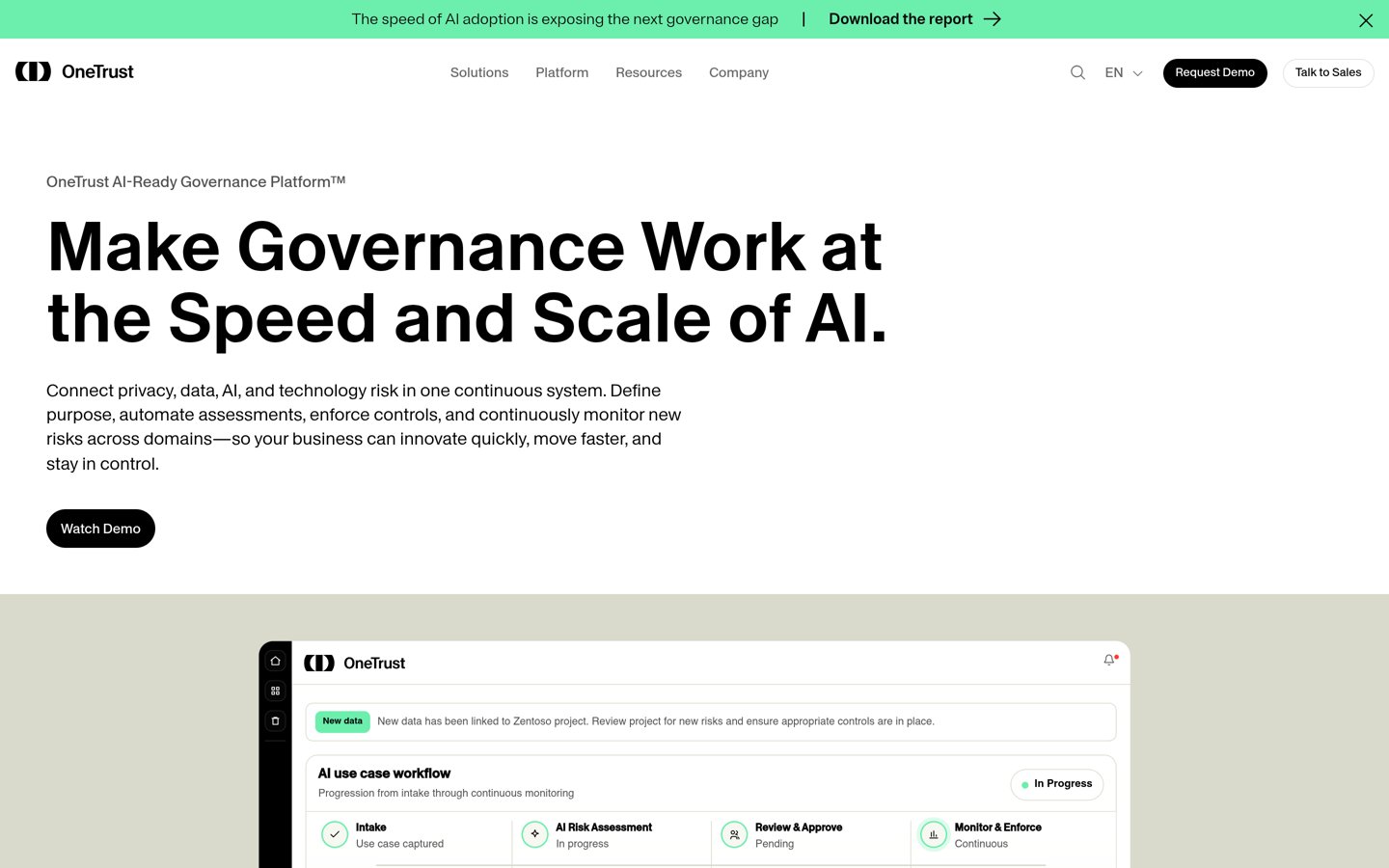
OneTrust is the broadest privacy and governance suite in this list, covering data mapping, consent, assessments, vendor risk and regulatory intelligence across 300+ jurisdictions. It is the enterprise default for privacy programs.
The trade off is scale and cost. OneTrust suits large teams with dedicated privacy staff, and meaningful deployments can run to six figures a year with months of setup. It suits enterprises that want privacy and governance in one system.
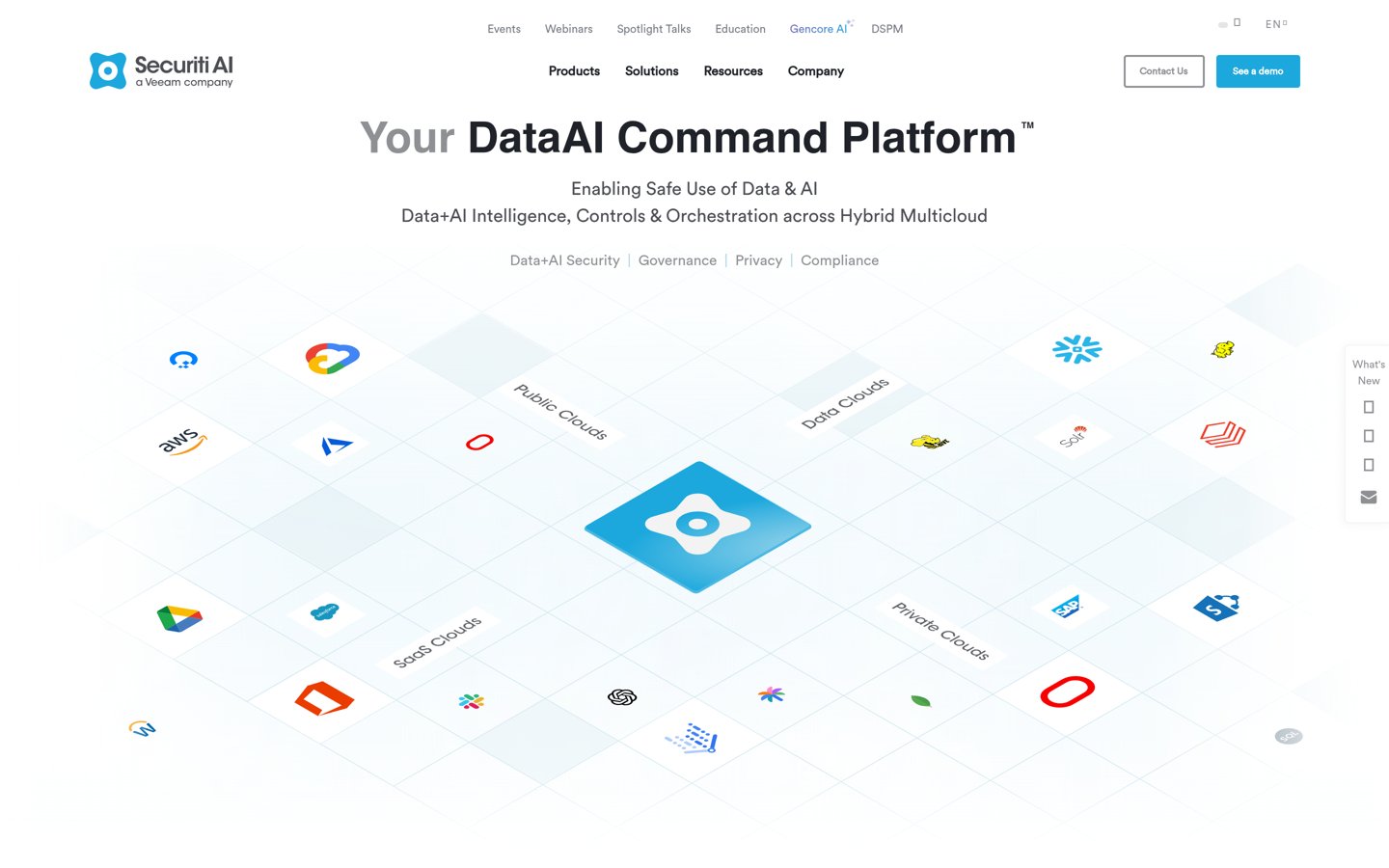
Securiti is a data intelligence platform that joins discovery, privacy automation, consent and AI governance in one system. Its Data Command Center scans structured and unstructured stores and automates rights requests from discovery to fulfilment.
The trade off is learning curve. Reviewers praise the depth but note a steep setup, and pricing is by quote. It suits automation-first teams that want privacy, security and AI governance together.
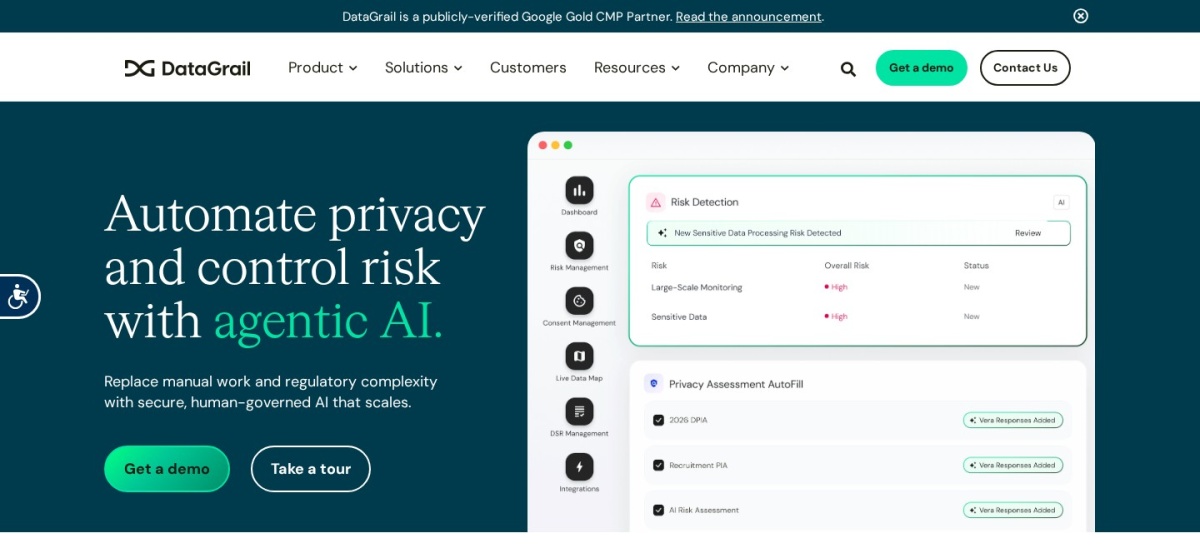
DataGrail is a privacy platform built for legal and security teams, with data discovery, a live data map and request automation. Request Manager handles access, deletion and opt-out across internal and third-party systems.
The trade off is scope. DataGrail is strongest on rights requests and mid-market teams, while enterprise governance depth is thinner than OneTrust or Collibra. It suits mid-market teams drowning in deletion requests.
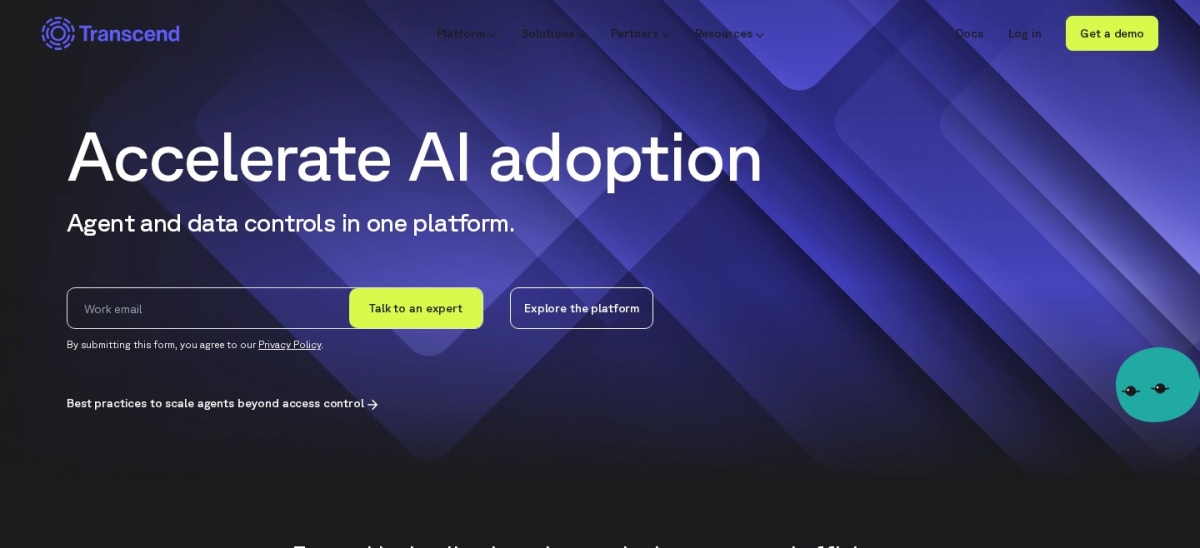
Transcend is a privacy platform that automates data rights requests as code, with data inventory, consent and AI governance. Its Sombra proxy enforces deletion and opt-out at the database level, and it reports more than 14 billion data rights honored.
The trade off is price transparency. Transcend publishes no price, and G2 lists Basic at $10,000 per user a year, so budgets wait for a call. It suits engineering-led teams that want privacy as code.
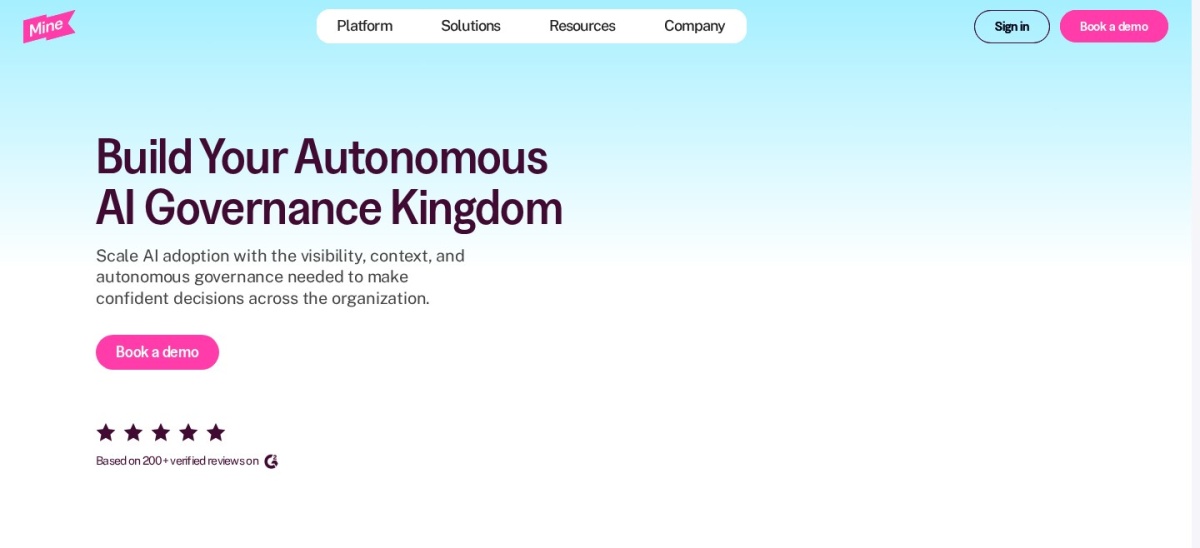
MineOS is an end-to-end privacy platform that automates data mapping, subject requests and consent in one system. Reviewers rate it the easiest to set up in this list, with strong support and automation.
The trade off is breadth. MineOS is strongest on mapping and requests for mid-market teams, while broad governance suites cover more. It suits teams that want automation without a long implementation.
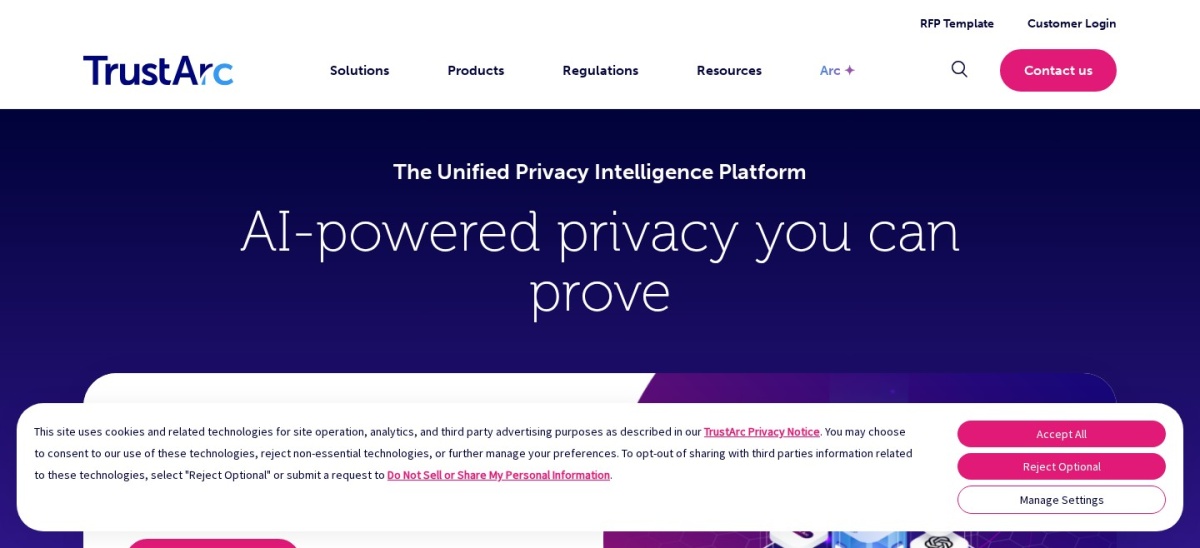
TrustArc is a privacy management platform with data mapping, assessments, consent and vendor risk, built on decades of assurance work. It holds the largest G2 review base in this list at 349 reviews.
The trade off is speed. Reviewers say TrustArc is slower to reach ROI than newer rivals, and the interface feels dated beside MineOS and DataGrail. It suits enterprises that value assessment pedigree and assurance.
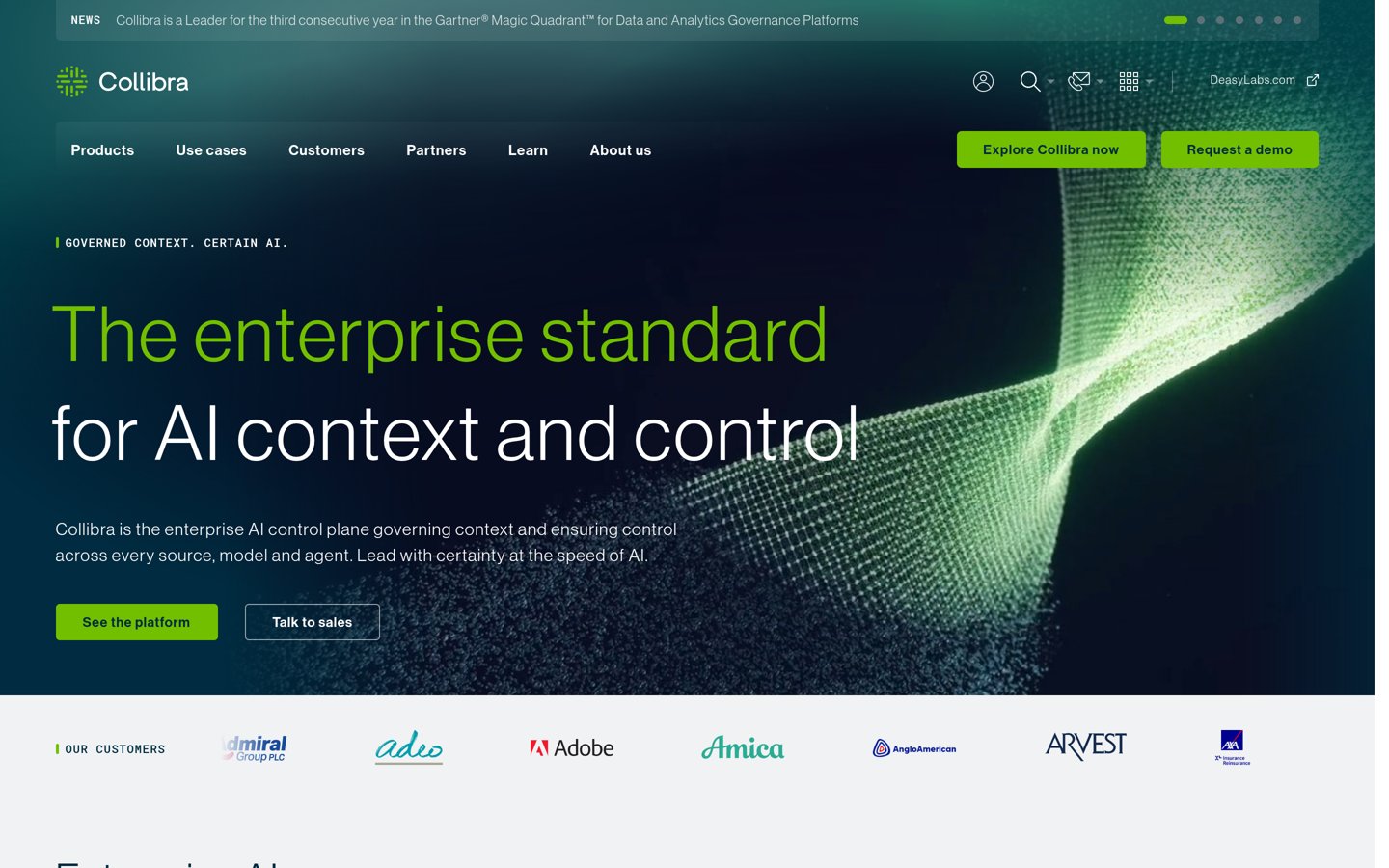
Collibra is a data governance platform that maps business definitions to data assets, with cataloguing, lineage and stewardship in one system. Its governance workflows carry an auditable change history.
The trade off is that Collibra is a governance platform first, so privacy mapping needs configuration rather than coming ready-made. It suits enterprise governance teams standardising catalogues and lineage.
Alation is a data catalogue platform with governance, stewardship and lineage, built for business users as well as data teams. Its AI features automate curation and help users find trusted data fast.
The trade off is privacy depth. Alation governs data well but is not a privacy platform, so PII mapping and rights requests need other tools. It suits data teams that want adoption and a strong catalogue.
No vendor in this list publishes a list price. Enterprise data governance and privacy platforms sell by quote, priced on data volume, systems and scope.
Third-party guides report entry points near $10,000 a year, but those figures are unconfirmed and the real quote depends on your estate.
Ask every vendor for implementation, services and renewal terms in writing before you compare, since the licence is only part of the total.
How we chose
We started from the data governance and privacy platforms with real PII discovery and mapping, then kept nine with a G2 rating and a published product. Each rating was checked against its G2 listing in November 2026.
Prices are quote-based across this list, since no vendor publishes a list price for these products. G2 lists Transcend Basic at $10,000 per user a year, but Transcend publishes no price, so we list it as Custom.
We left out compliance automation tools that do not map personal data and catalogues without privacy features. No vendor paid for a place, and we do not claim hands-on testing for this list.
How to choose data governance software for PII mapping
Start with where your personal data lives, then check how the tool finds it.
Map your data stores first. List databases, files, SaaS apps and cloud stores, then check the tool connects to each one before you buy.
Test classification on real data. Run a trial scan on a sample set and check how well it labels names, emails and IDs.
Trace one person end to end. Ask the tool to find one customer across every system, since that is the core of a rights request.
Get the full quote in writing. Ask for implementation, services and renewal terms up front, since quote-based pricing hides the total.
FAQ
What is the best data governance software for PII mapping in 2026?
BigID is the best data governance software for PII mapping for discovery-first teams. Its AI classification finds personal data across structured and unstructured stores, and it is built for complex enterprise environments.
How much does data governance software for PII mapping cost?
Every tool in this list is quote-based, with no published list price. Third-party guides report entry points near $10,000 a year, but the real figure depends on data volume and scope.
What is PII mapping in data governance?
PII mapping is the process of finding where personal data lives across your systems and linking it to the people it belongs to. It feeds privacy requests, audits and breach response.
Is OneTrust or BigID better for PII mapping?
BigID is better if discovery is the main problem, since classification is its core strength. OneTrust is better if you want privacy, governance and risk in one broad suite.
Which PII mapping tool is best for mid-market teams?
DataGrail is the strongest mid-market pick, rated 4.7 out of 5 on G2 from 206 reviews. MineOS is close behind at 4.8 out of 5 and is praised for ease of use.
Do these tools handle data subject requests too?
Yes, most tools here automate access and deletion requests once the map exists. DataGrail, Transcend and MineOS are built around that workflow, while Collibra and Alation focus on the catalogue.
SaaS SEO and WordPress specialist with about 8 years of experience. Rakib compares WordPress plugins, themes, hosting and software using public pricing, documentation and user reviews. See how we rank.