Fivetran is the best data pipeline software for most teams, with more than 700 managed connectors and a free plan up to 500,000 monthly active rows. Airbyte is the best pick for engineering teams that want open source, while Hevo suits small teams that want no-code pipelines.
How we make this list: we compare pricing pages, product documentation and public user reviews, then re-check every price before each update. No product paid for a place. Disclosure.
Fivetran leads with more than 700 managed connectors and a free plan up to 500,000 monthly active rows.
Airbyte is the cheapest managed start at $20 a month, with a free self-hosted Core edition.
Hevo Data is the clearest no-code option, with a free plan to 1 million events and Starter at $265 a month.
Fivetran, Airbyte, Hevo and Stitch all bill by a different meter, so the same workload can cost very different amounts.
Matillion, Talend and Informatica publish no price, so budget for a sales quote if you need governance.
How do you choose the best data pipeline software?
Data pipeline software moves data from apps and databases into a warehouse, where it can be queried and reported on. The tools here cover the loading step, and some also cover transformation and reverse ETL.
The billing meter matters more than the headline price. Fivetran counts changed rows, Hevo counts events, Airbyte counts credits and Stitch counts rows, so a pipeline that is cheap on one tool can be costly on another.
Start with a free tier. Fivetran, Airbyte, Hevo and Estuary all offer a free entry point, which is enough to test real pipelines before any contract, and our guide to the best enterprise data integration platforms covers the wider suites.
Governance changes the shortlist. If you need lineage, data quality and access controls, Matillion, Talend and Informatica are the picks, but all three are quote-only.
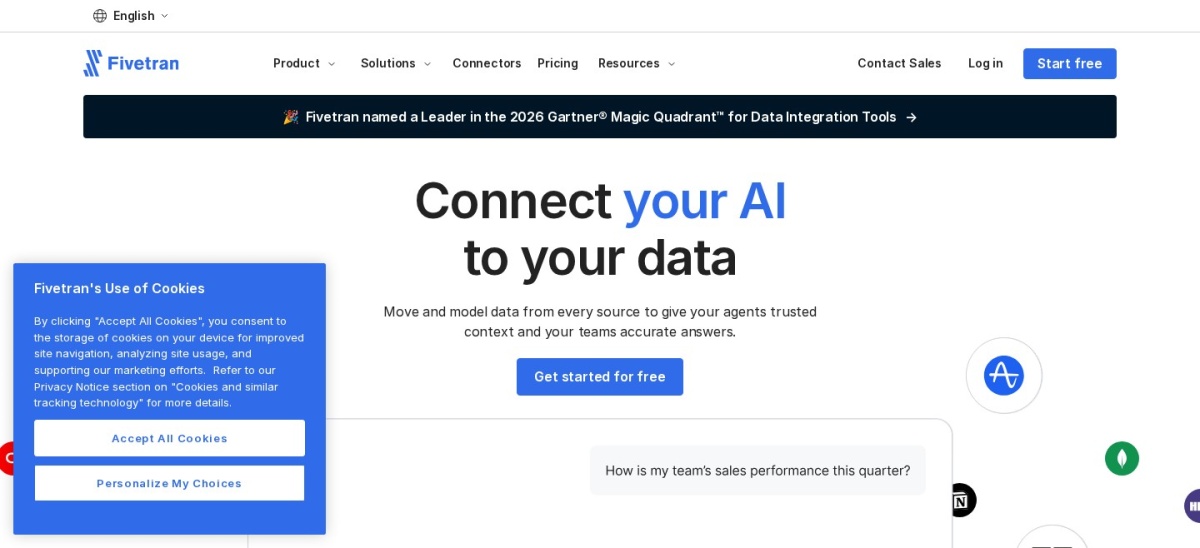
Fivetran is a fully managed ELT platform that moves data from more than 700 sources into cloud warehouses with almost no maintenance. The free plan covers 500,000 monthly active rows, and paid use is billed per connection on monthly active rows, with a $5 base charge. It is rated 4.3 out of 5 on G2 from 857 reviews.
The trade off is the meter. Fivetran bills by monthly active rows per connection, so high-change sources can cost far more than a flat fee, and contracts carry a $12,000 annual minimum. It suits teams that want pipelines to just keep working.
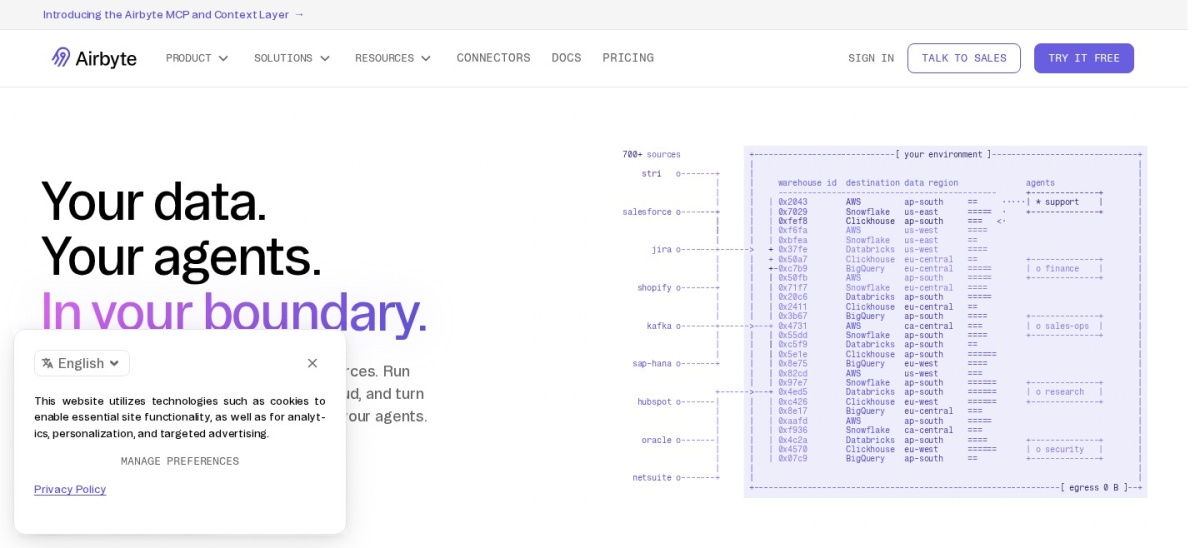
Airbyte is an open-source data integration platform with more than 700 connectors that runs as a free self-hosted Core edition or as managed Airbyte Cloud. Cloud Standard starts at $20 a month with 5 credits included, and a no-code Connector Builder creates custom connectors from API docs. It is rated 4.4 out of 5 on G2 from 78 reviews.
The trade off is credit billing. Costs rise with the volume you move, so a busy pipeline needs careful credit maths. It suits engineering-led teams that want open source or self-hosting.
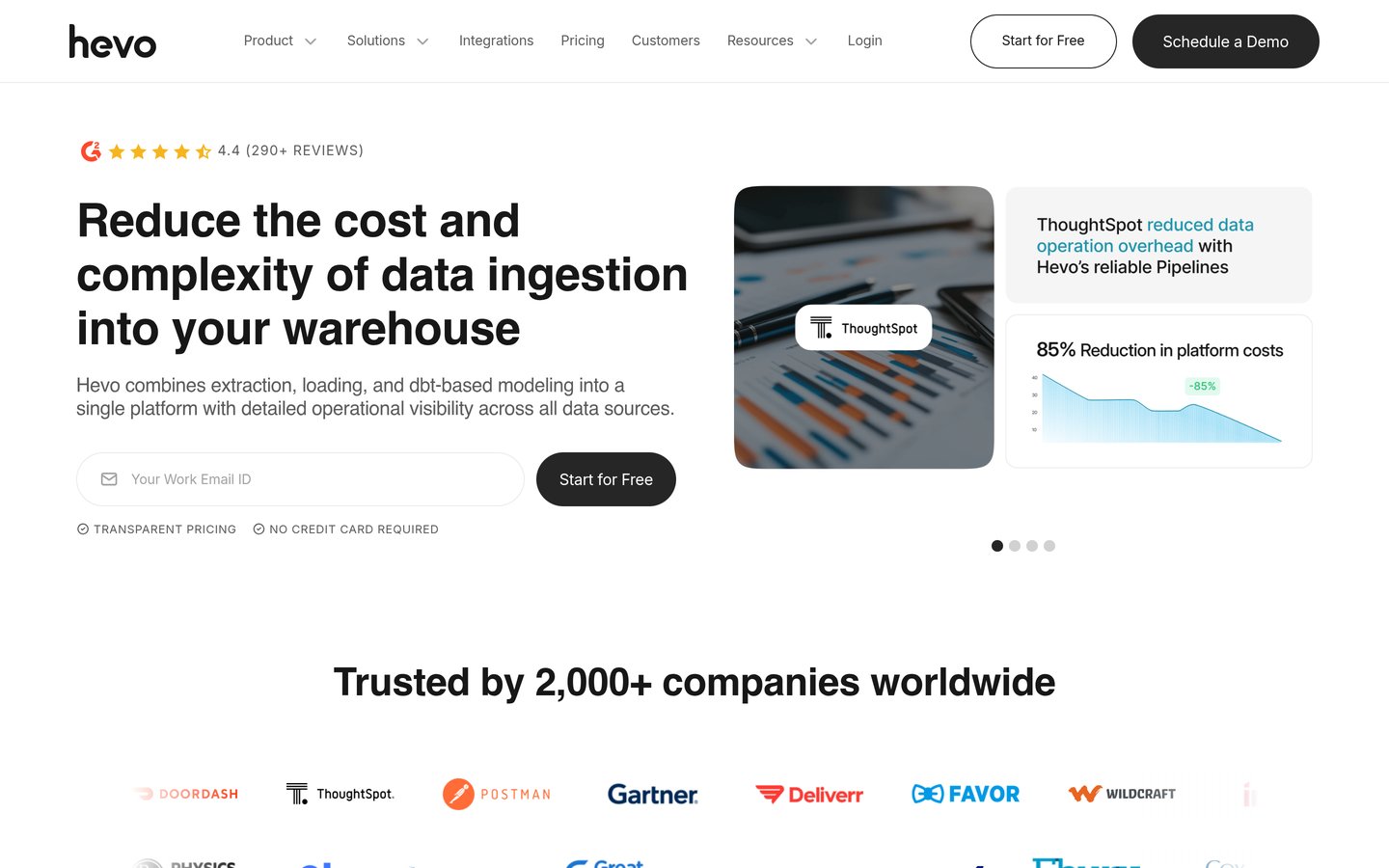
Hevo Data is a no-code ELT platform that syncs more than 150 sources into cloud warehouses with schema detection and monitoring handled automatically. The free plan covers 1 million events a month, and Starter costs $265 a month on annual billing for 5 million events. It is rated 4.4 out of 5 on G2 from 292 reviews.
The trade off is event billing. A sudden spike in events pushes you into a higher tier, so volume swings cost money. It suits small and mid-size teams that want a guided ELT tool with a readable price list.
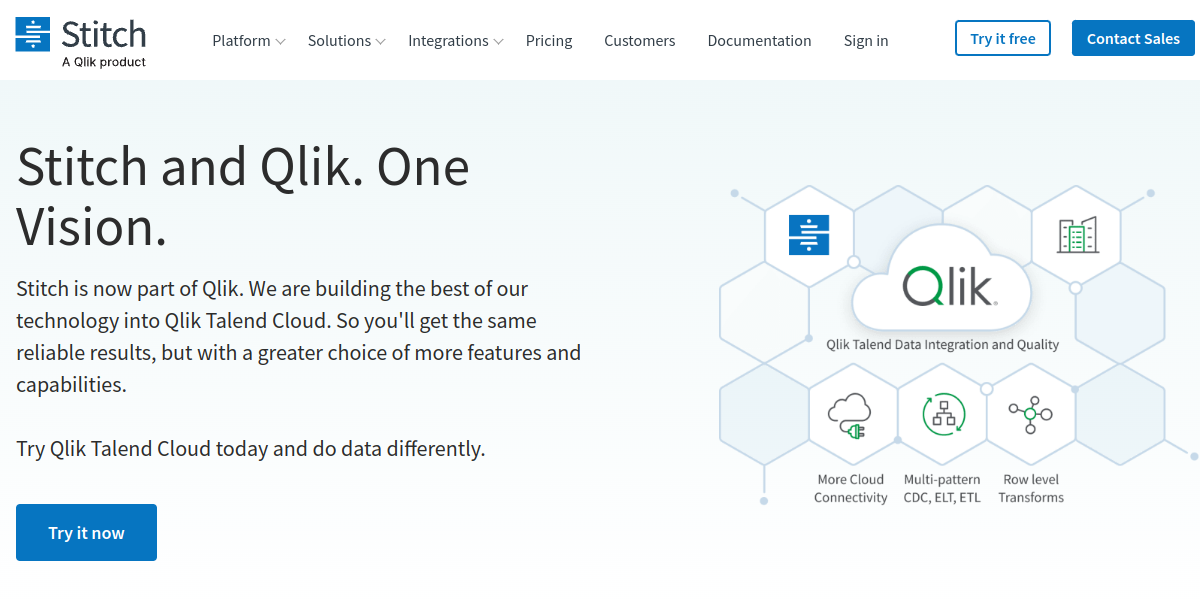
Stitch is a simple cloud ELT service from Qlik that replicates data from more than 100 sources into a warehouse. Standard starts at $100 a month for 5 million rows, covers 1 destination and 10 standard sources, and every plan includes a 14-day free trial. It is rated 4.4 out of 5 on G2 from 68 reviews.
The trade off is that Stitch only loads data and leaves transformation to other tools. It suits small teams that need simple replication and nothing else.
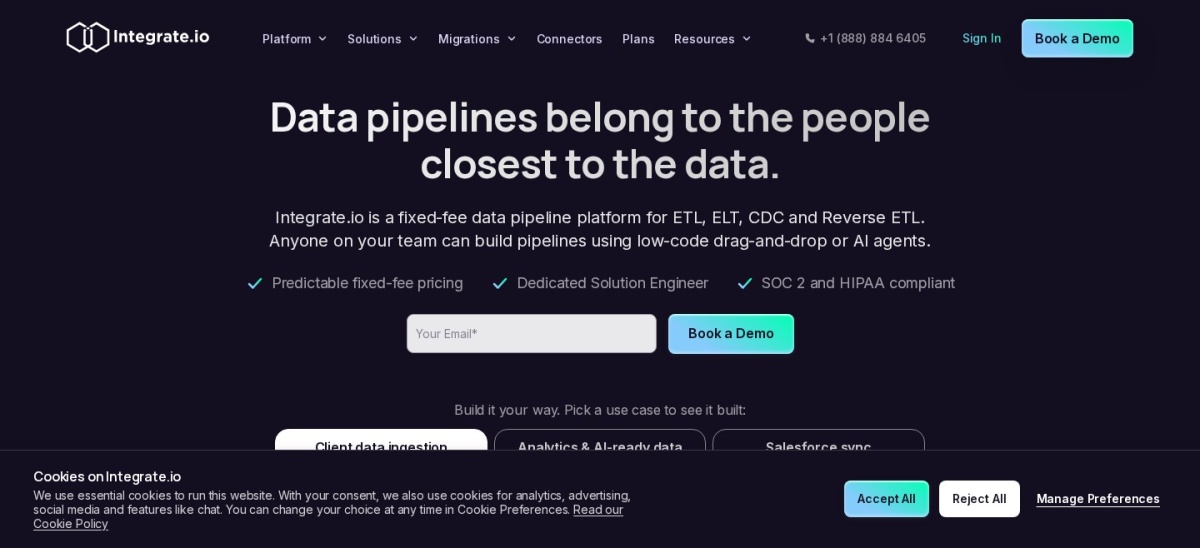
Integrate.io is a fixed-fee ETL, ELT and reverse ETL platform with unlimited data volume, connectors and users for one flat price. It covers more than 200 sources and destinations, includes 220 transformation steps with SQL and Python, and offers white-glove onboarding. It is rated 4.3 out of 5 on G2 from 213 reviews.
The trade off is the entry price. At $1,999 a month it costs more than usage-based tools at low volumes, and there is no free plan, only a 14-day trial. It suits mid-market teams that want one predictable bill.
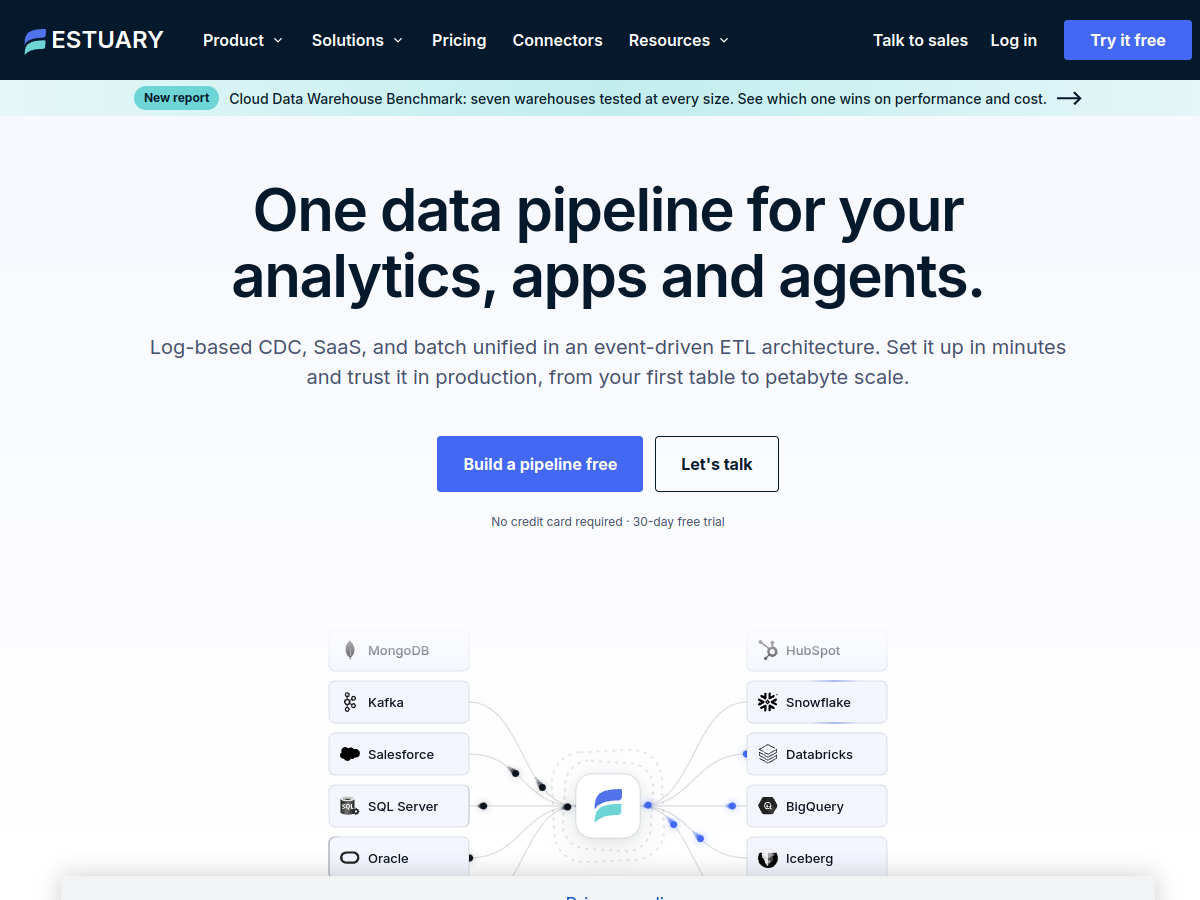
Estuary Flow is a real-time data pipeline platform built for change data capture and streaming, with connectors that sync continuously instead of on a schedule. Pricing starts at $100 per connector a month plus $0.50 per gigabyte, and a free tier covers small volumes. It is rated 4.7 out of 5 on G2 from 35 reviews.
The trade off is a thin review base and usage maths that need care at scale. It suits teams that need fresh data in minutes, not hours, and can model per-connector costs.
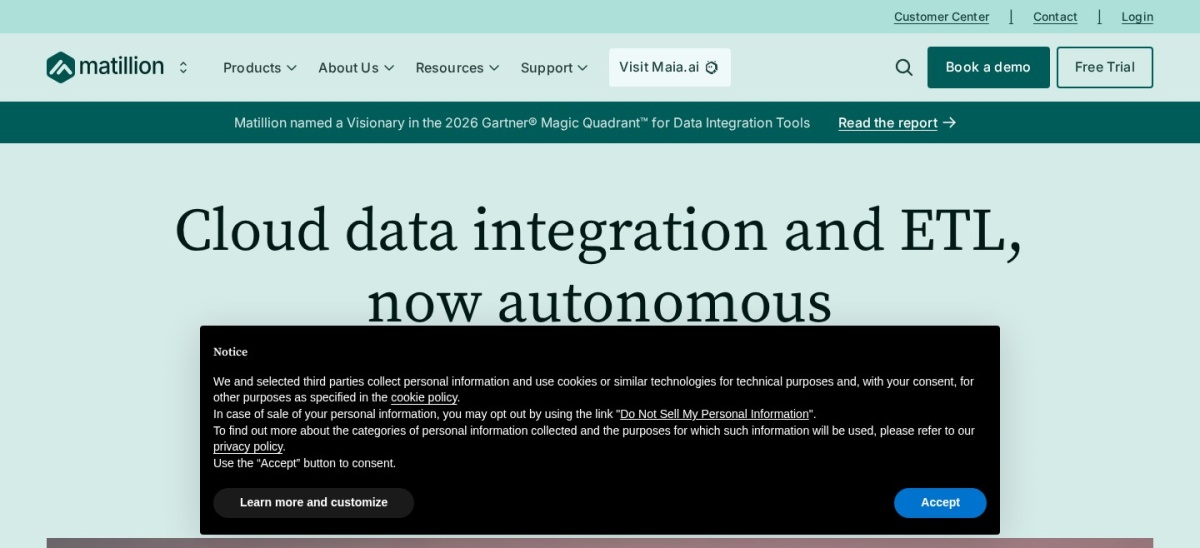
Matillion is a warehouse-native ELT platform that pushes transformation work into Snowflake, BigQuery, Databricks and Redshift instead of running its own engine. It offers a visual canvas, push-down SQL and Python, and AI agents that help build pipelines. It is rated 4.5 out of 5 on G2 from 125 reviews.
The trade off is price opacity. Matillion is quote-only and bills by credits, so a team must talk to sales before budgeting. It suits warehouse-first teams that want transformation where the data already lives.
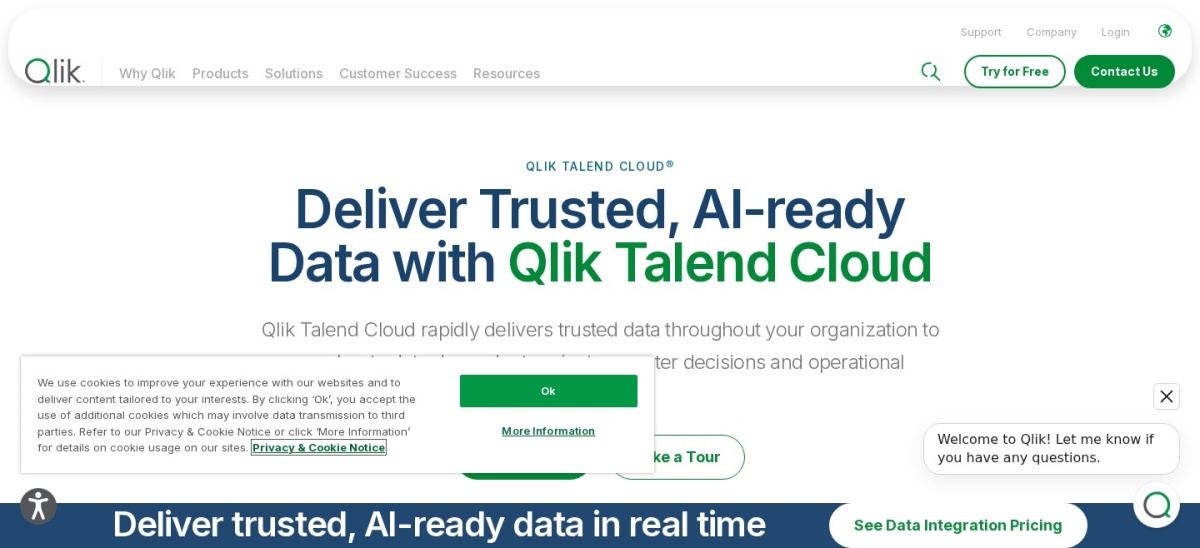
Talend is an enterprise data integration suite, now Qlik Talend Cloud, that covers ETL, data quality and governance in one platform. It suits large teams that need lineage, access controls and managed pipelines across many sources. It is rated 4.2 out of 5 on G2 from 108 reviews.
The trade off is price opacity and weight. Talend is quote-only, bills by capacity, and needs more setup than a managed loader. It suits enterprises that need governance more than a quick start.
Informatica IDMC is an enterprise data platform that covers integration, data quality, lineage and master data management at scale. Its CLAIRE AI engine helps map and clean data across cloud and on-premise systems. It is rated 4.3 out of 5 on G2 from 335 reviews.
The trade off is price opacity. Informatica is quote-only and consumption-priced, so budgeting needs a sales conversation. It suits large companies that need governance and data quality beside integration.
Billing meters: rows, events, credits or a flat fee
Every tool here bills by a different meter. Fivetran counts monthly active rows, Hevo counts events, Airbyte and Matillion count credits, and Stitch counts rows.
A flat fee wins at high volume. Integrate.io charges $1,999 a month for unlimited volume, which can beat usage billing once a pipeline grows past a certain size.
Test with real volume before you commit. Free tiers cover small loads, but the bill at production volume is what matters, so run a realistic load on the free tier first.
How we chose
We started from the best-known data pipeline and ELT tools with a public G2 rating, then kept nine that cover managed loading, open source, no-code and enterprise suites.
Prices come from each vendor's pricing page, checked on 30 November 2026, or from checks of the same pages in late November 2026. Ratings and review counts come from G2 on the same day. Where a vendor shows a sale, the list shows the regular price.
We left out tools with no verifiable G2 rating or no published entry point we could check. No vendor paid for a place, and we do not claim hands-on testing for this list.
How to choose data pipeline software
Start with your sources, then match the billing meter to your volume.
List your sources first. Check that the tool has a managed connector for each source you need. A missing connector means custom work.
Match the meter to your volume. Fivetran bills rows, Hevo bills events and Airbyte bills credits. Model the cost at your real monthly volume.
Test on the free tier. Fivetran, Airbyte, Hevo and Estuary all offer a free start. Run a realistic load before you sign anything.
Add governance only if you need it. Matillion, Talend and Informatica add lineage and quality controls, but all three are quote-only.
FAQ
What is the best data pipeline software in 2026?
Fivetran is the best data pipeline software for most teams, with more than 700 managed connectors and a free plan up to 500,000 monthly active rows. Airbyte is the best pick for teams that want open source.
How much does data pipeline software cost?
Entry prices run from free tiers through $20 a month for Airbyte Cloud, $100 for Stitch and $265 for Hevo Starter, up to $1,999 a month for Integrate.io. Enterprise suites are quote-only.
Is there free data pipeline software?
Yes. Fivetran is free up to 500,000 monthly active rows, Hevo is free to 1 million events a month, Airbyte Core is free to self-host, and Estuary has a free tier for small volumes.
Fivetran or Airbyte: which should I pick?
Pick Fivetran if you want managed connectors that just work, with no maintenance. Pick Airbyte if your engineers want open source, self-hosting or a no-code connector builder.
What is the difference between ETL and ELT?
ETL transforms data before loading it, while ELT loads raw data into the warehouse first and transforms it there. Most tools here are ELT, with transformation in the warehouse.
Which data pipeline tool is best for small teams?
Hevo Data is the best pick for small teams, with a guided no-code setup and a free plan to 1 million events. Airbyte Cloud at $20 a month suits teams with an engineer to spare.
SaaS SEO and WordPress specialist with about 8 years of experience. Rakib compares WordPress plugins, themes, hosting and software using public pricing, documentation and user reviews. See how we rank.