Fivetran is the best enterprise data integration platform for most teams, with 841 G2 reviews behind it. Airbyte suits teams that want open-source control, while Informatica fits regulated enterprises that need governance as well as movement.
How we make this list: we compare pricing pages, product documentation and public user reviews, then re-check every price before each update. No product paid for a place. Disclosure.
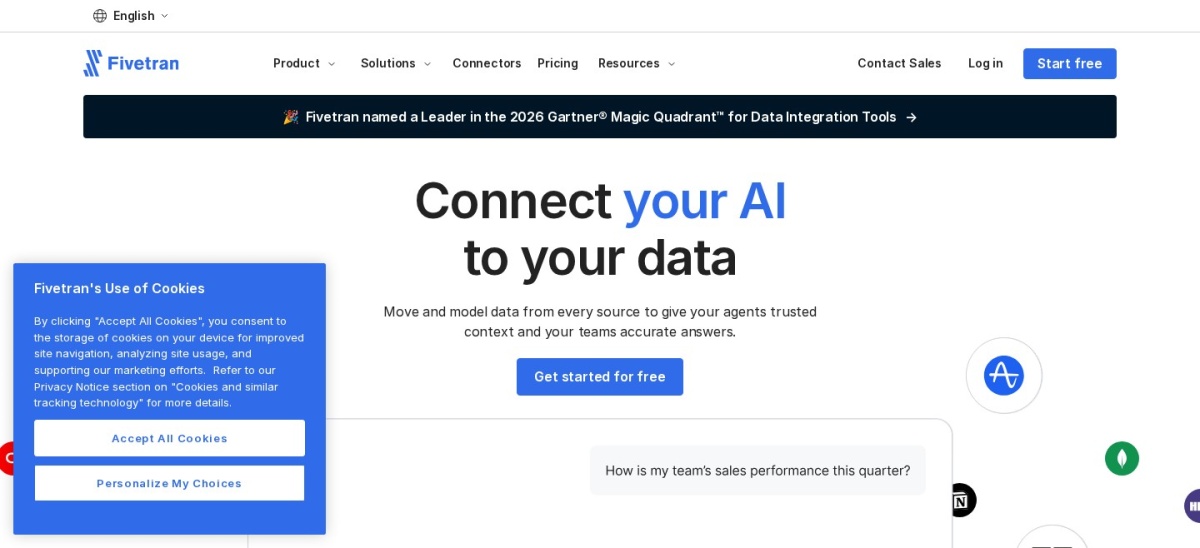
Fivetran leads with the largest review base here: 4.3/5 from 841 G2 reviews and 700-plus fully managed connectors.
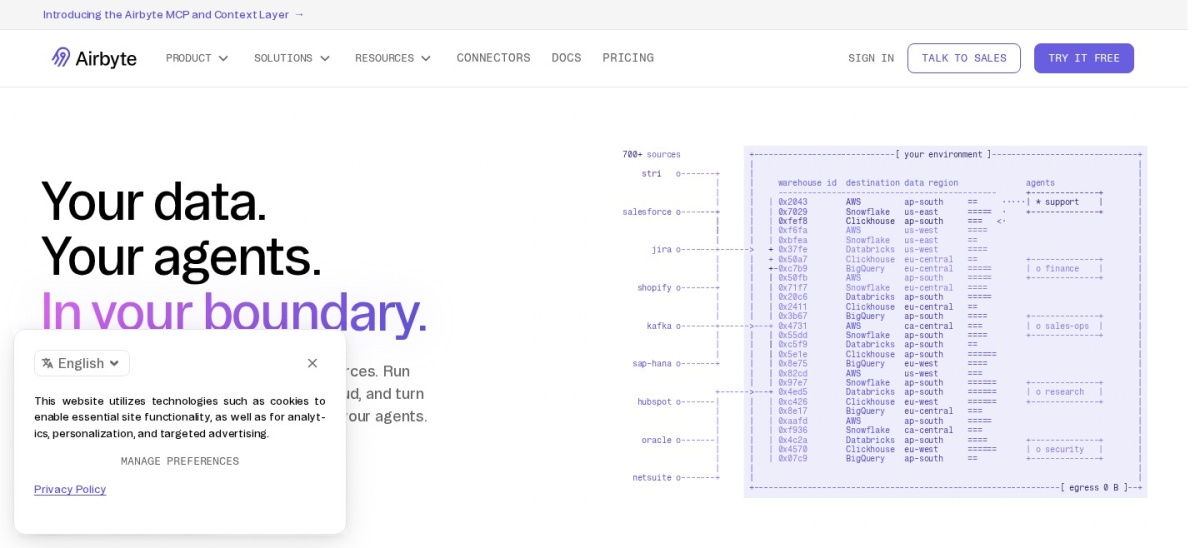
Airbyte is the open-source pick, with a free self-hosted Core edition and Cloud Standard from $20 a month.
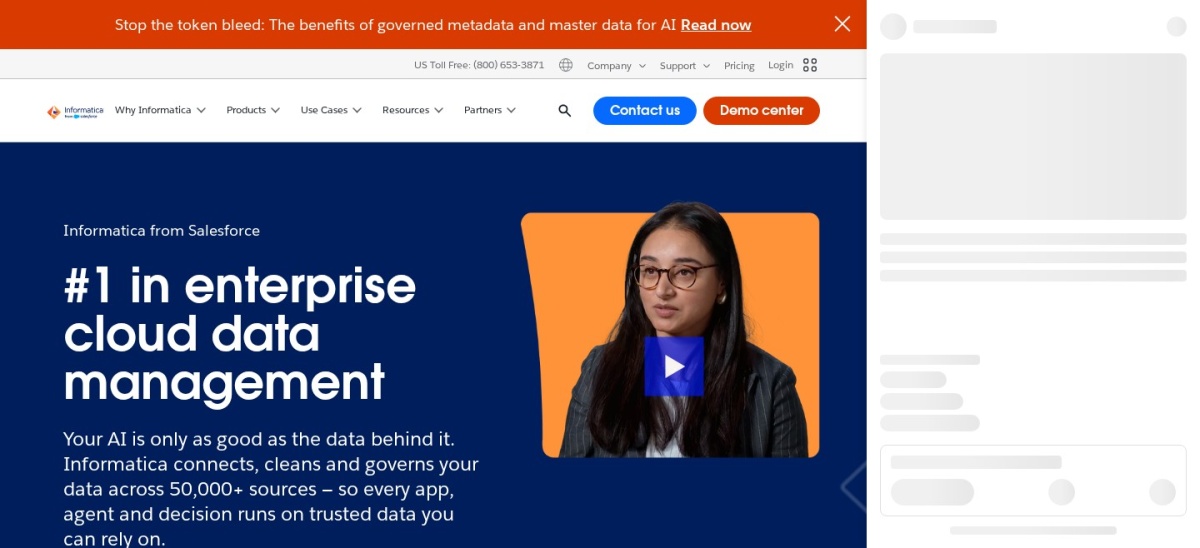
Informatica is the governance pick, adding data quality, cataloguing and master data management, but pricing is quote-only.
Hevo Data is the value pick for small teams, with a free plan for 1 million events and Starter at $265 a month.
Four of the nine platforms publish no list price, so expect quote-led deals for the enterprise suites.
What enterprise data integration should cover
Enterprise data integration means moving data from hundreds of sources into a warehouse, lake or application, then keeping it fresh as sources change. The tools in this list differ less on connectors than on billing, governance and how much engineering they need.
Billing models are the real comparison. Row-based, event-based and credit-based meters all punish different workloads, so a cheap tool for one team can be the most expensive for another.
Governance separates the suites from the loaders. Informatica and Qlik Talend add data quality, cataloguing and master data management, while Fivetran and Stitch focus on moving data reliably and fast.
Free tiers help you pilot, but watch the caps. Fivetran gives 500,000 monthly active rows free and Hevo gives 1 million events, enough to test real pipelines before any contract.
Fivetran is a fully managed ELT platform that moves data from more than 700 sources into cloud warehouses with almost no maintenance. The free plan covers 500,000 monthly active rows, and paid use is billed per connection on monthly active rows, with a $5 minimum per connection and a $12,000 annual minimum on contracts.
The trade off is cost control. Row-based billing can climb steeply on high-churn tables, and transformation runs are billed separately from syncs. It suits teams that want pipelines they never think about and will pay for reliability.
Airbyte is an open-source data integration platform with more than 700 connectors that runs as a free self-hosted Core edition or as managed Airbyte Cloud. Cloud Standard starts at $20 a month with 5 credits included, and a no-code Connector Builder creates custom connectors from API docs.
The trade off is maturity at the edges. Cloud syncs run hourly on Standard, and 15-minute syncs need the $189-a-month Plus plan. It suits engineering-led teams that want open-source control and the largest connector library.
Informatica IDMC is the broadest platform in this list, covering data integration, data quality, cataloguing, governance and master data management in one cloud service. Its CLAIRE engine recommends mappings and now adds AI-assisted pipeline design.
The trade off is price and weight. Pricing is quote-only, with enterprise deals typically running into five or six figures a year, and the platform needs a dedicated data team. It suits Fortune 500 teams standardising on one data management platform.
SnapLogic is a low-code integration platform that unifies application and data integration with prebuilt connectors called Snaps. Its AI assistant drafts pipelines from written descriptions, and the platform covers APIs, data and event-driven flows in one place.
The trade off is transparency. SnapLogic publishes no pricing, so every deal starts with a sales conversation, and smaller teams may find the platform more than they need. It suits cloud-centric teams that want app and data integration together.
Matillion is a warehouse-native ELT platform that loads data into Snowflake, BigQuery, Databricks or Redshift and pushes transformation work down into the warehouse itself. The visual designer suits less-technical users while code components satisfy engineers.
The trade off is billing. Matillion charges by credit consumption, so heavy transformations can push the bill up, and it publishes no list price. It suits cloud data teams standardised on one warehouse. Matillion rebranded its platform as Maia in early 2026.
Hevo Data is a no-code ELT platform that syncs more than 150 sources into cloud warehouses with schema detection and monitoring handled automatically. The free plan covers 1 million events a month, and Starter costs $265 a month on annual billing for 5 million events.
The trade off is scale. Event-based billing grows with volume, and the connector catalogue is narrower than Fivetran or Airbyte. It suits small and mid-size teams that want simple pipelines running within a day.
Integrate.io is a low-code data pipeline platform that covers ETL, ELT, change data capture and reverse ETL on one flat fee of $1,999 a month with unlimited data, pipelines and connectors. It adds 220-plus transformation steps and 60-second CDC cycles.
The trade off is the entry price. At $1,999 a month it costs far more than usage-based loaders for a small workload, and there is no free tier. It suits mid-market teams that want predictable costs at higher volumes.
Stitch is a simple extract-and-load service built on the open-source Singer standard, now part of Qlik. Standard starts at $100 a month for 5 million rows, with 130-plus sources, 30-minute minimum scheduling and log-based replication for major databases.
The trade off is scope. Stitch does no in-pipeline transformation by design, and Standard caps at 10 sources and one destination. It suits small teams that only need reliable replication into a warehouse.
Qlik Talend Cloud is an enterprise integration platform that pairs data integration with data quality, stewardship and governance in one suite. Its component library covers legacy systems through modern SaaS, with log-based change data capture from the Standard tier.
The trade off is cost and complexity. Pricing is quote-only, with third-party reports placing Starter at $12,000 to $30,000 a year, and the platform suits teams with dedicated data engineers. It suits regulated enterprises that need trusted data, not just movement.
What we like
Data quality and governance built in
Broad legacy and SaaS connectivity
Hybrid and on-premise deployment
Strong fit for regulated industries
Watch out for
Pricing is quote-only at every tier
Needs dedicated data engineers
Heavier setup than cloud-native loaders
Enterprise adds advanced governance and supportVisit qlik.com
Usage-based billing: what to watch
Fivetran bills per monthly active row, Hevo per event and Matillion per credit. Each meter punishes a different workload: high-churn tables hurt Fivetran and Hevo, heavy transformations hurt Matillion.
Ask for a worked example on your own volumes before signing. Fivetran publishes a $5 minimum per connection and a $12,000 annual minimum on contracts, so small accounts with many sources can still face a four-figure bill.
Flat-fee tools remove the surprise. Integrate.io charges $1,999 a month with unlimited data, which is expensive for a small workload but predictable at scale.
How we chose
We started from the data integration platforms most compared on G2 in 2026, keeping those with a verifiable G2 rating and an enterprise-grade story.
Prices and ratings were checked on 25 November 2026. Published prices come from each vendor's own pricing page or its official documentation; where a vendor publishes no price, the list says Custom.
We left out application-only integration tools and tools with no verifiable rating. No vendor paid for a place, and we do not claim hands-on testing for this list.
How to choose an enterprise data integration platform
Start with your destinations and your data volumes, then shortlist by billing fit.
List your sources and destinations first. Count the SaaS apps, databases and warehouses you must connect. A tool with 700 connectors beats a cheaper one that needs custom work for your core systems.
Model your volumes on each meter. Run your row, event and credit counts through each vendor's pricing. High-churn tables punish row billing, heavy transforms punish credit billing.
Decide if you need governance. If data quality, lineage and master data management matter, shortlist Informatica or Qlik Talend. If you only need loading, Fivetran or Airbyte will do.
Pilot on a free tier. Fivetran, Airbyte Core and Hevo all offer a free entry point. Sync a real source for two weeks before you commit to a contract.
FAQ
What is the best enterprise data integration platform?
Fivetran is the best overall pick for most teams, rated 4.3 out of 5 on G2 from 841 reviews. It offers 700-plus fully managed connectors, automated schema handling and a free plan up to 500,000 monthly active rows.
How much does enterprise data integration cost?
Entry prices run from free tiers through $20 a month for Airbyte Cloud, $100 for Stitch and $265 for Hevo Starter. Fivetran has a $12,000 annual minimum on contracts, while Informatica, Talend and SnapLogic are quote-only.
Which data integration tool is best for Snowflake?
Matillion is the strongest pick for Snowflake teams, since it pushes transformation work down into the warehouse itself. Fivetran is the best managed loader into Snowflake, with 700-plus connectors and automated schema evolution.
Is Airbyte really free?
Airbyte Core is free and open source to self-host with no volume limit. Airbyte Cloud is paid: Standard starts at $20 a month with 5 credits included, and Plus starts at $189 a month with 15-minute syncs.
What is the difference between Fivetran and Stitch?
Fivetran is the larger managed ELT platform with 700-plus sources, 15-minute syncs and built-in transformations. Stitch is simpler and cheaper, from $100 a month, but does no in-pipeline transformation and caps Standard at 10 sources.
Which platform adds governance and data quality?
Informatica and Qlik Talend Cloud add data quality, cataloguing, stewardship and master data management beside integration. The pure loaders in this list move data well but leave governance to other tools.
SaaS SEO and WordPress specialist with about 8 years of experience. Rakib compares WordPress plugins, themes, hosting and software using public pricing, documentation and user reviews. See how we rank.