Navattic is the best demo automation software for most teams, with the highest G2 score here and true HTML demos that visitors can click through on your website. Storylane is the best self-serve buy, with a free plan and a Starter tier at 40 dollars a user a month, while Consensus suits enterprise teams with the largest review base.
How we make this list: we compare pricing pages, product documentation and public user reviews, then re-check every price before each update. No product paid for a place. Disclosure.
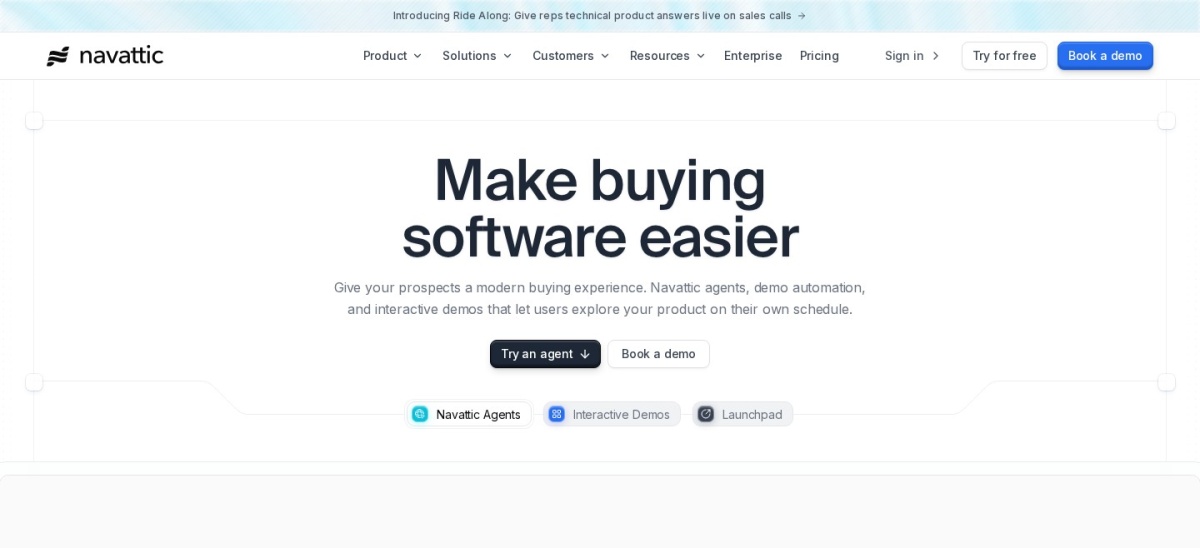
Navattic is the best pick for most teams, with a 4.8 G2 score from 1,155 reviews and true HTML demos.
Storylane is the cheapest self-serve buy, with a free plan and Starter at 40 dollars a user a month.
Consensus leads on review volume with 2,136 G2 reviews, but it publishes no price and offers no free trial.
Demoboost has a 4.8 G2 score from only 135 reviews, so treat its high score as thin evidence.
Enterprise sandboxes from Demostack and Reprise are quote-only, with reported contracts from about 31,600 dollars a year.
Saleo is now part of Consensus, so it is not ranked as a standalone tool.
What demo automation software should do
Demo automation software lets you build a product demo once and reuse it everywhere: on your website, in sales follow-ups, in technical evaluations and in onboarding, with no solutions engineer on the call. A prospect clicks through the real workflow, and your team sees who engaged and for how long.
Three formats cover most needs. Screenshot tours stitch captured screens into a guided click-through and are fastest to build. HTML demos clone the real interface, so every button works. Sandbox demos give evaluators a working copy of the product, back end included, for live trials.
Prices split the market in two. Self-serve tools publish prices from 32 dollars a user a month and include free plans, while enterprise platforms quote each account and report contracts from about 31,600 dollars a year. Match the platform to your budget first, then compare formats.
Prices in this list are the regular published prices checked in November 2026. Where a vendor publishes no price, we say so instead of guessing a rate, and a cheap starting price can hide a higher tier for the format you actually need.
Navattic is a no-code demo automation platform that captures your product's real HTML, so prospects click through a working copy of the interface instead of watching a video. Demos embed on your website, travel in sales emails, and capture leads without a call, while Copilot AI helps build and edit them. It is rated 4.8 out of 5 on G2 from 1,155 reviews.
The trade off is price visibility. Navattic publishes no dollar figures on its pricing page, so the cost of Base or Growth only appears in a sales conversation, and sandbox demos need the Growth tier. It suits marketing teams that want website-embedded HTML demos with account-level analytics.
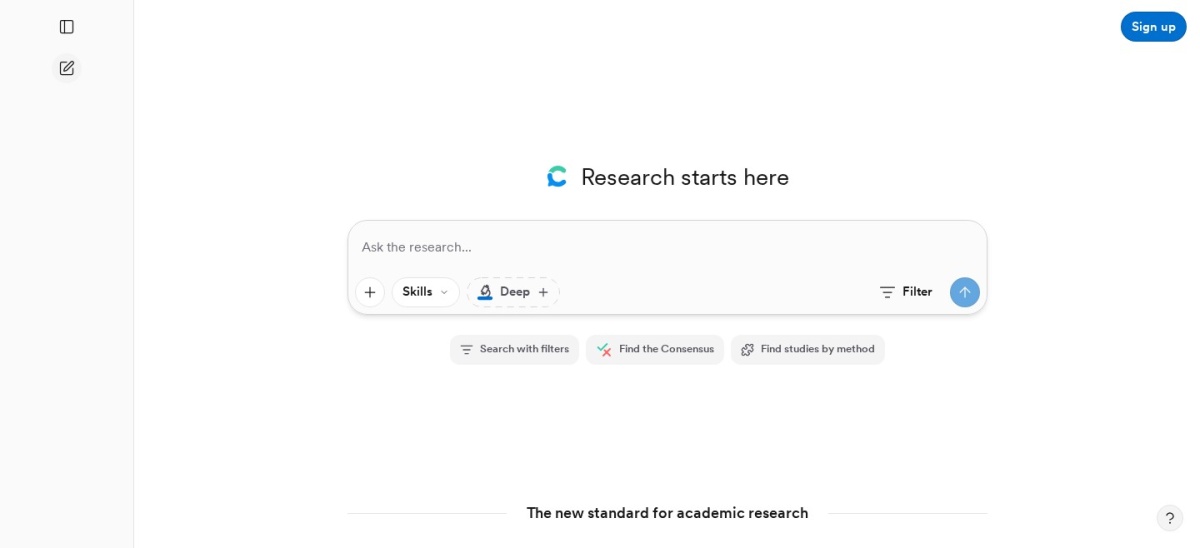
Consensus is the category creator in demo automation, turning product videos and guided tours into personalised demo experiences that buyers explore on their own schedule. Its Demolytics tracking shows which stakeholders opened, watched and shared each demo, and AI demo agents now handle parts of the conversation. It is rated 4.7 out of 5 on G2 from 2,136 reviews.
The trade off is access and price. Consensus publishes no prices and offers no free trial, so smaller teams cannot try it before a sales conversation, and reviewers call demo creation cumbersome. It suits enterprise revenue teams that run buying-committee demos at scale.
What we like
Largest review base here, 2,136
Number 1 rated in demo automation on G2
Video demos in 65-plus languages
Demolytics tracks every stakeholder
Watch out for
No published price, quote only
No free trial
Demo creation called cumbersome
Third-party reports cite a Starter tier at $600 a month for 5 usersVisit goconsensus.com
03
Storylane
4.7/5on G2 (1643 reviews, checked Nov 2026)
Paid from$40/user/mo
Best self-serve demo suite
Free planFree, 1 demo
Paid planStarter $40/user/mo
Demo typesScreenshot, video, HTML
AIMCP and RepX agent
storylane.io
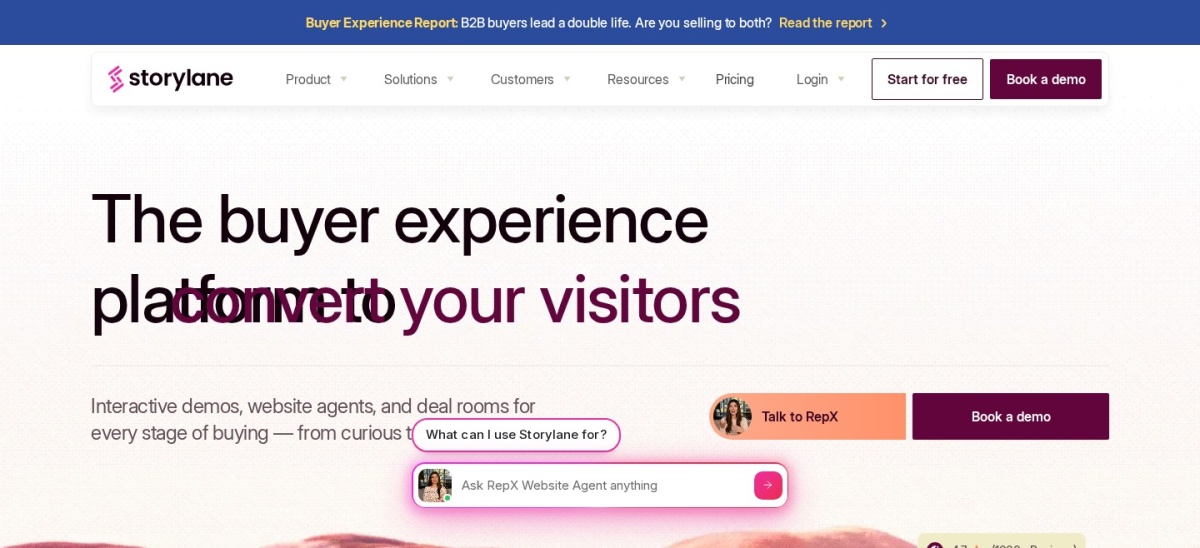
Storylane homepage, captured Nov 2026.
Storylane is the broadest self-serve demo suite here, covering screenshot tours, video walkthroughs, full HTML capture and sandbox demos in one library. Demo Hubs package tours for a specific buyer, Account Reveal de-anonymises visitors, and the Storylane MCP connects to Claude and ChatGPT. It is rated 4.7 out of 5 on G2 from 1,643 reviews.
The trade off is the tier ladder. HTML capture starts on Growth at 500 dollars a month and sandbox demos are Enterprise-only, so the 40-dollar Starter tier buys screenshot and video demos only. It suits teams that want marketing and sales demos in one platform with transparent pricing.
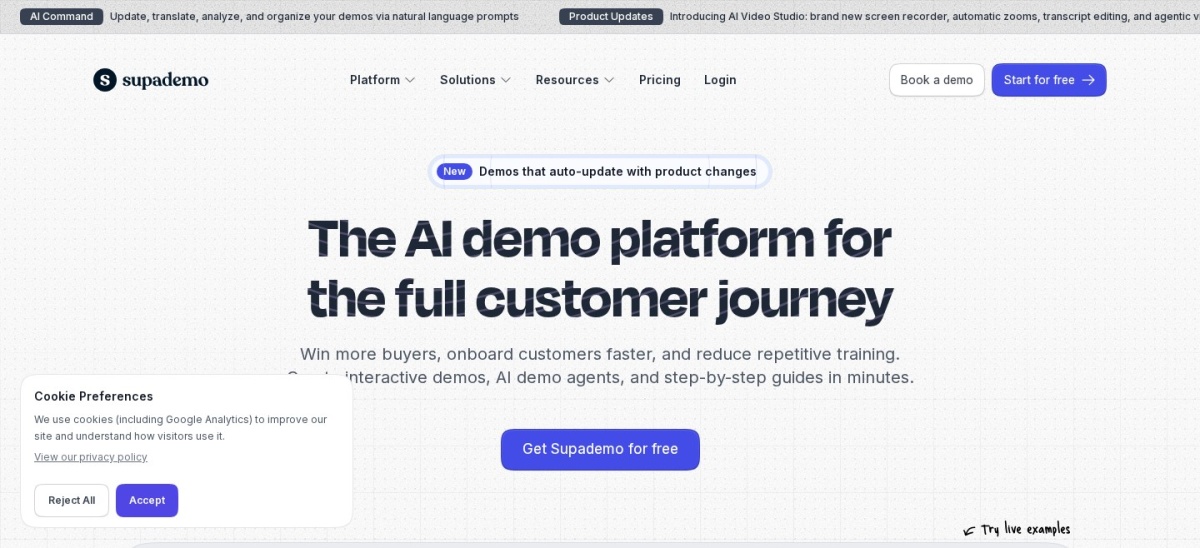
Supademo is an AI-powered platform that turns screenshots, video and HTML captures into interactive product demos in minutes. Its AI Demo Agent runs discovery conversations with buyers around the clock, and every plan carries SOC 2 Type 2 cover, including the free one. It is rated 4.7 out of 5 on G2 from 666 reviews.
The trade off is depth on the cheap tiers. HTML demos start on Business at 199 dollars a month and sandbox demos need Growth, so the 38-dollar Scale tier is screenshot and video only, and reviewers flag missing features. It suits startups shipping demos fast on a small budget.
What we like
Cheapest paid plan with an HTML path
Free plan with 5 demos
AI Demo Agent on paid plans
SOC 2 on every plan, including Free
Watch out for
HTML demos need Business at $199/mo
Sandbox needs Growth
Reviewers flag missing features
HTML demos start on Business at $199 a month billed annuallyVisit supademo.com
05
Arcade
4.6/5on G2 (188 reviews, checked Nov 2026)
Paid from$32/user/mo
For polished marketing demos
Free planFree, 1 demo + 1 video
Paid planPro $32/user/mo
Demo typesScreenshot, video, HTML
AIAvery narration, AI copy
arcade.software
Arcade homepage, captured Nov 2026.
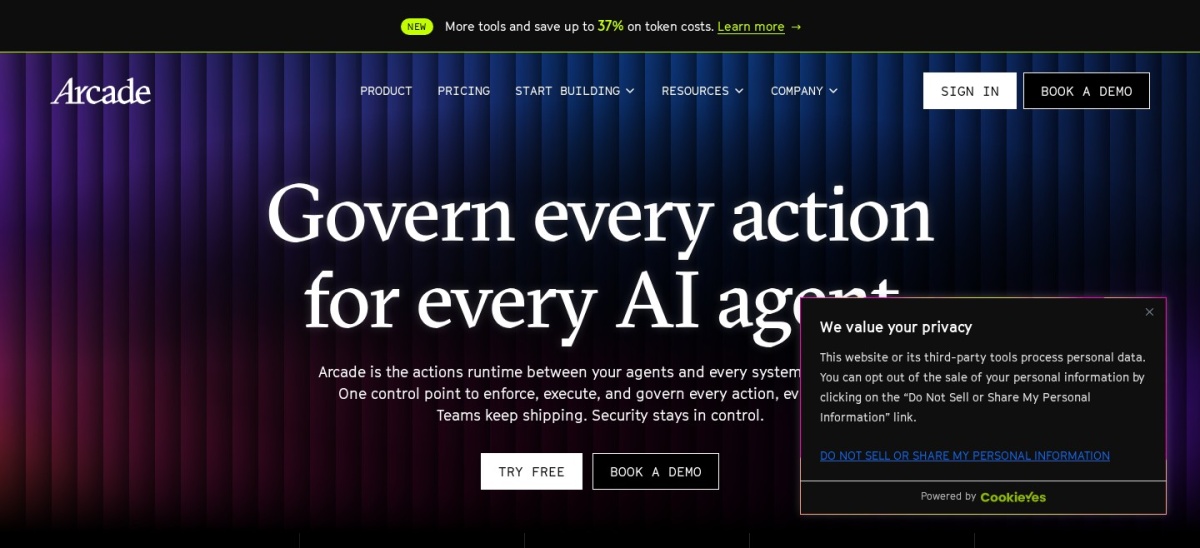
Arcade is the most polished demo tool here, building screenshot and video demos with AI narration, AI copy, translations and auto-chapters through its Avery AI and Creator Studio. Demos look on-brand out of the box, and anyone can build one in under ten minutes, per Arcade. It is rated 4.6 out of 5 on G2 from 188 reviews.
The trade off is HTML capture and pricing clarity. HTML capture sits on the higher tiers, and the vendor's current pricing page covers AI video credits rather than demo plans, so the 32-dollar Pro figure comes from Arcade's own blog. It suits marketing teams that want beautiful launch demos fast.
Demoboost is a Warsaw-built demo automation platform covering six demo formats in one place: HTML, screenshot, video, sandbox, mobile and overlay demos. Teams assemble them into demo hubs, playlists and digital sales rooms, with AI avatars and revenue intelligence analytics on the higher tiers. It is rated 4.8 out of 5 on G2 from 135 reviews.
The trade off is the thin evidence base and no trial. With 135 G2 reviews it has the smallest base among the top tools here, and there is no self-serve free trial, so you book a live demo before committing. It suits presales-led teams that want every demo format from one vendor.
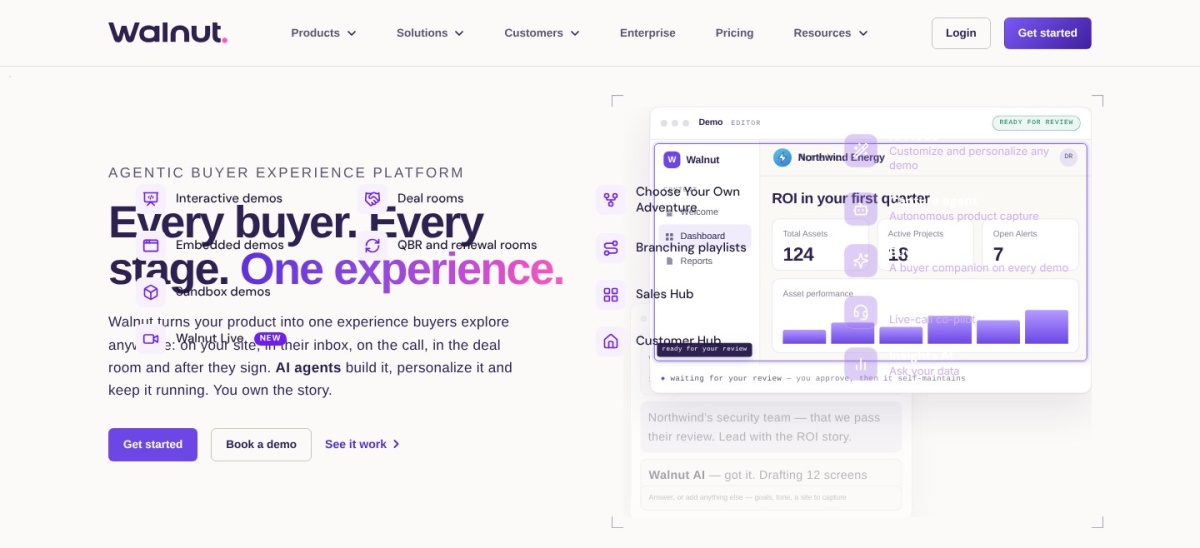
Walnut is an enterprise demo platform that turns your product into personalised interactive demos, deal rooms and playlists for each buyer. Its AI Mode drafts demos from your captured product, and Buyer Xpert answers buyer questions from approved content inside the demo. It is rated 4.5 out of 5 on G2 from 150 reviews.
The trade off is price and upkeep. There is no free plan, Ignite starts at 575 dollars a month, and sandbox demos need Accelerate at 1,550 dollars, while reviewers cite the maintenance work demos need when the product changes. It suits sales-led teams personalising demos per deal.
Demostack is a demo experience platform that clones your production environment into a high-fidelity simulation, so evaluators use a working copy of the product without touching live data. Its Live product overlays your real app, while Environment builds full sandbox replicas, and support scores 9.5 out of 10 on G2. It is rated 4.7 out of 5 on G2 from 80 reviews.
The trade off is cost and setup time. Demostack is quote-only at a reported 55,000 dollars a year, and implementation for complex products can stretch past a year, so it only fits teams with dedicated presales staff. It suits technical sales teams that need full product clones.
Reprise is an enterprise demo platform built for complex products, with Replay tours, Replicate sandboxes and Reveal overlays that inject live data into the real app. Its MCP exposes more than 100 demo-authoring tools, and governance covers SSO, roles and audit trails. It is rated 4.4 out of 5 on G2 from 175 reviews.
The trade off is the learning curve and the quote. Reprise publishes no price, with a reported median contract near 31,600 dollars a year, and reviewers rate ease of use around 7.5 against a category norm above 9. It suits large presales teams running governed demo environments.
What we like
Only live-data overlays here
Deepest sandbox cloning
MCP with 100-plus authoring tools
175 G2 reviews
Watch out for
Quote-only enterprise pricing
Steepest learning curve here
Lowest G2 score here at 4.4
Gartner Peer Insights rates it 4.7 out of 5 from 25 reviewsVisit reprise.com
HTML clones vs screenshot tours vs sandboxes
Screenshot tours are the fastest to build and the cheapest to run, which is why Storylane, Supademo and Arcade all start there. They suit marketing pages, onboarding and sales follow-ups, where the goal is a guided story rather than live exploration.
HTML clones copy the real interface, so they suit website embeds and self-serve evaluation, while sandboxes give technical buyers a working copy for trials and proof of concepts. Choose the format by buying stage: tours for awareness, HTML for evaluation, sandboxes for technical validation.
How we chose
We started from the demo automation listings on G2, then kept tools with a verifiable rating and a real demo automation focus.
We ranked by review score and review count, then by format breadth and pricing transparency. Demoboost and Demostack sit below the larger tools despite higher scores because their review bases are small, and Saleo was left out because Consensus acquired it in June 2026.
Prices come from vendor pricing pages opened on 25 Nov 2026 where possible. No vendor paid for a place, and we do not claim hands-on testing for this list.
How to choose demo automation software
Start with your monthly budget and the demo format your buyers need.
Set your monthly budget. Under 500 dollars a month, only Storylane, Supademo and Arcade are realistic buys. Above 5,000 dollars, the enterprise tools open up.
Pick the format your buyers need. Screenshot tours for quick launches, HTML clones for website embeds, sandboxes for technical evaluations.
Test the self-serve tools first. Storylane, Supademo and Arcade all have free plans, so build a real demo before signing an enterprise contract.
Confirm data and security. Ask how each platform handles prospect data and whether it offers SSO, since enterprise tools gate those behind higher tiers.
FAQ
What is the best demo automation software?
Navattic is the best pick for most teams. It is rated 4.8 out of 5 on G2 from 1,155 reviews, the highest score here, it captures true HTML demos that embed on your website, and its free Starter plan lets you publish one demo without paying.
What is the cheapest demo automation software?
Arcade has the cheapest paid plan at 32 dollars a user a month for Pro, followed by Supademo Scale at 38 dollars a creator a month and Storylane Starter at 40 dollars a user a month. All three, plus Navattic, also offer a free plan.
How much does demo automation software cost?
Self-serve tools cost 32 to 40 dollars per user or creator a month, mid-market platforms run 375 to 575 dollars a month, and enterprise tools are quote-only with reported contracts from about 31,600 dollars a year. Expect to pay more for sandbox demos and HTML capture.
What is the difference between HTML demos and screenshot demos?
An HTML demo clones the real product interface, so every button, dropdown and form works as it does in the app. A screenshot demo stitches captured screens into a guided tour, which is faster to build but breaks when a prospect clicks off the scripted path.
Do I need a sandbox demo?
Only if technical buyers need to try your product themselves. Sandboxes give evaluators a working copy with sample data, which suits complex software and long evaluations. For marketing pages and sales follow-ups, a screenshot tour or HTML demo is faster and far cheaper.
Is there a free demo automation tool?
Navattic, Storylane, Supademo and Arcade all offer free plans, with one to five demos and basic analytics. Consensus, Walnut, Demoboost, Demostack and Reprise have no free plan, though Walnut and Reprise offer a free trial.
SaaS SEO and WordPress specialist with about 8 years of experience. Rakib compares WordPress plugins, themes, hosting and software using public pricing, documentation and user reviews. See how we rank.