Splunk is the best of the Cribl alternatives for teams that want deep log analytics, with a 4.3 out of 5 G2 rating from 434 reviews and entry list pricing from $1,800 a year. Datadog suits teams that want logs beside metrics and traces, while Grafana Cloud is the cheapest paid start at $19 a month.
How we make this list: we compare pricing pages, product documentation and public user reviews, then re-check every price before each update. No product paid for a place. Disclosure.
Splunk leads for deep log search, rated 4.3 out of 5 on G2 from 434 reviews, with entry list pricing from $1,800 a year.
Datadog is the closest all-in-one replacement, with logs, metrics and traces from $15 per host a month.
Grafana Cloud is the cheapest paid start at $19 a month, and its free tier covers 50 GB of logs.
Elastic and Graylog suit teams that want open stacks, while Sumo Logic and Logz.io suit teams that want managed SaaS.
Paid plans in this list run from $19 a month to $15,000 a year, and most prices are metered, so model your own volume first.
How do you pick the right Cribl alternatives for your stack?
A Cribl alternative has to do two jobs: move telemetry and make it searchable. Cribl Stream routes, reduces and replays data before it reaches a destination, so a replacement either needs its own pipeline or a destination that charges less for the same volume.
Start from your ingest volume, not the headline price. Every tool here meters something different, hosts, gigabytes, credits or users, so list your daily GB, host count and team size first, then price each tool on those numbers. Our guide to monitoring a WordPress site shows the same volume-first thinking on a smaller scale.
Open stacks trade licence cost for running cost. Elastic and Graylog cost little or nothing to start, but you pay in cluster care, while Splunk, Datadog and Dynatrace charge more and run the platform for you.
Free tiers are a real test bed, not a demo. Grafana Cloud, New Relic and Sumo Logic all let you send production telemetry free, and two weeks on real traffic shows which limit you hit first. Our guide to reducing server response time is a good companion read once you know where the slow queries live.
Splunk is a log analytics platform built around its SPL search language, with dashboards, alerts and correlation across security and IT data. The free tier indexes 500 MB a day, and the entry Enterprise list price starts at $1,800 a year for 1 GB a day.
The trade off is cost at volume. Splunk publishes no per-GB price on its own pricing page, and the bill climbs steeply as daily ingest grows, so it suits teams with a clear ingest budget and a security or operations use case that needs deep search.
What we like
Deepest search and correlation in this list
Huge library of apps and integrations
Free tier for small setups
Strong fit for security teams
Watch out for
Per-GB billing punishes thorough logging
Official pricing page shows no list prices
Heavy to run self-managed
Paid plans add scale, support and Enterprise SecurityVisit splunk.com
02
Datadog
4.4/5on G2 (726 reviews, checked Nov 2026)
Paid from$15/host/mo
Best for logs beside metrics and traces
Free tierUp to 5 hosts
Infra Pro$15/host/mo, annual
Log ingest$0.10/GB
Log indexing$1.70 per 1M events
datadoghq.com
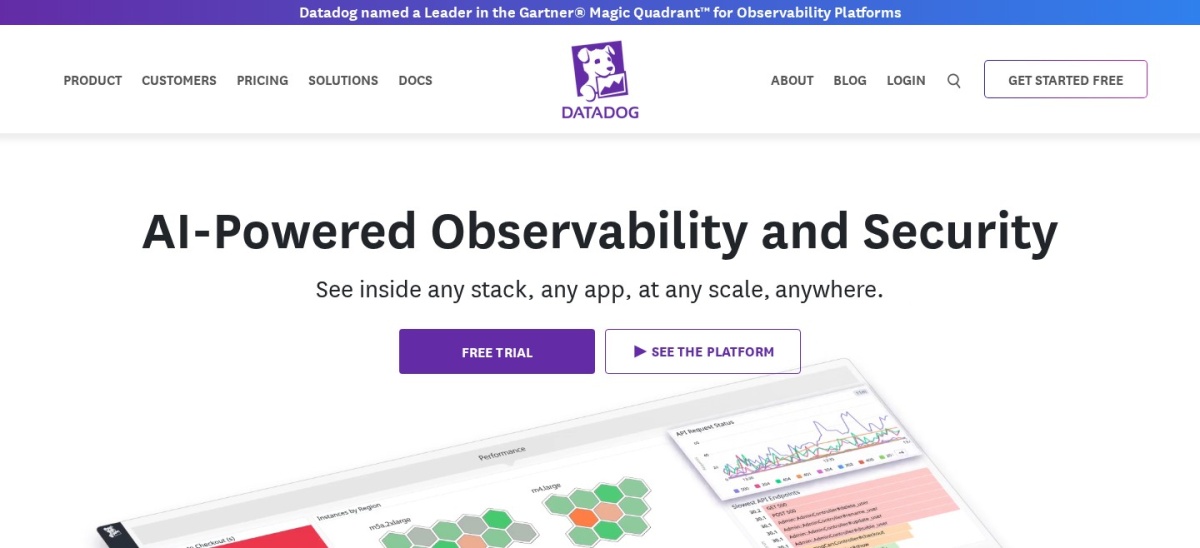
Datadog homepage, captured Nov 2026.
Datadog is a cloud observability platform that collects logs, metrics and traces through one agent, with more than 750 integrations. The free tier covers up to 5 hosts, and Infrastructure Monitoring Pro costs $15 per host a month on annual billing, with logs billed at $0.10 per GB ingested.
The trade off is the meter stack. Log indexing costs $1.70 per million events on top of ingest, so the bill grows past the host fee fast. It suits cloud-native teams that want one platform instead of a separate pipeline and analytics tool.
What we like
Single agent for logs, metrics and traces
750+ integrations
Free tier for up to 5 hosts
Fast setup for cloud stacks
Watch out for
Log indexing is a second charge on top of ingest
Bills are hard to predict at scale
Per-host pricing adds up with many hosts
Paid Pro adds 100 custom metrics per host and 15-month retentionVisit datadoghq.com
03
Elastic Observability
4.3/5on G2 (138 reviews, checked Nov 2026)
Paid from$99/mo
Best open stack for search and logs
Free tierFree Basic self-managed
Cloud Hosted Standard$99/mo
Serverless logsFrom $0.35/GB ingested
Core toolsElasticsearch, Kibana, Logstash
elastic.co
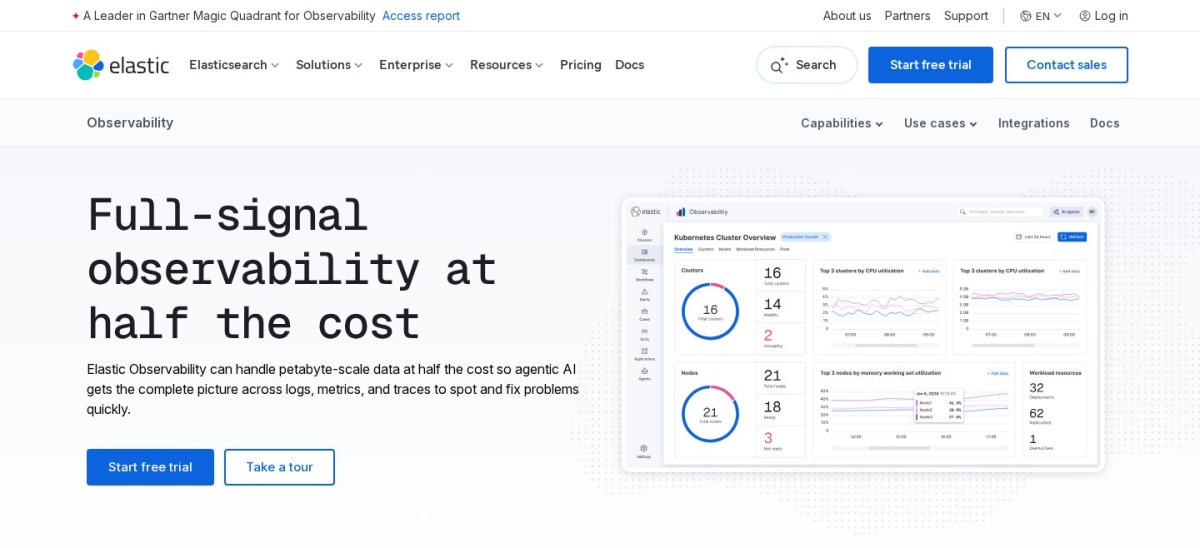
Elastic Observability homepage, captured Nov 2026.
Elastic Observability is the hosted Elasticsearch stack, with Logstash and Elastic Agent for ingest, Elasticsearch for search and Kibana for dashboards. The self-managed Basic tier is free, and Elastic Cloud Hosted Standard starts at $99 a month for a 120 GB, two-zone reference deployment.
The trade off is running cost and complexity. Self-managed clusters need care at scale, and the hosted bill rises with RAM and storage, so it suits teams that already know Elasticsearch and want deployment freedom.
What we like
Open stack with a large community
Fast full-text search over logs
Self-host or managed cloud
Serverless option bills per GB
Watch out for
Cluster care is real work at scale
Hosted price rises with resources
Learning curve for query language
Paid tiers add machine learning, alerting and supportVisit elastic.co
04
Grafana Cloud
4.5/5on G2 (168 reviews, checked Nov 2026)
Paid from$19/mo
Best value for open-standards teams
Free tier10k series, 50 GB logs
Pro fee$19/mo + usage
Metrics$6.50 per 1k series
Retention13 mo metrics, 30 days logs
grafana.com
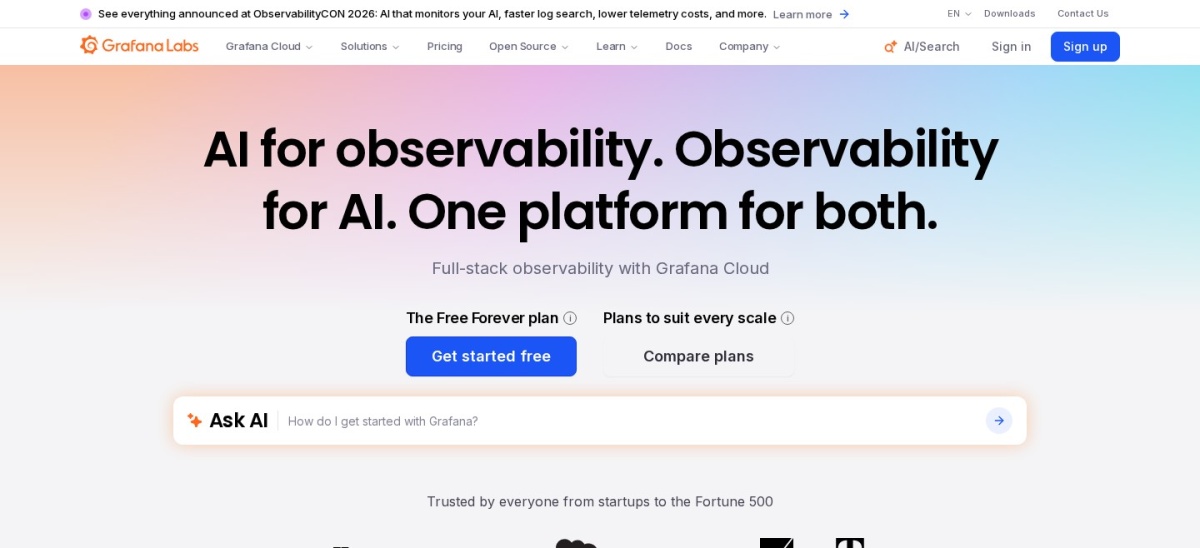
Grafana Cloud homepage, captured Nov 2026.
Grafana Cloud is the hosted version of the open-source Grafana stack, with managed metrics, logs, traces and profiles behind Grafana dashboards. The free tier includes 10,000 active metric series, 50 GB each of logs, traces and profiles, and 3 users, and Pro starts at a $19 monthly platform fee plus usage.
The trade off is metering. Metrics cost $6.50 per 1,000 active series above the allowance, and logs cost $0.05 per GB to process plus $0.40 per GB to write, so a busy app can pass the $19 fee fast. It suits teams that already know Grafana and want open standards.
What we like
Lowest paid start in this list at $19 a month
Free tier covers 10,000 series and 50 GB of logs
OpenTelemetry-native, so data stays portable
13-month retention for metrics on Pro
Watch out for
Usage above the allowance bills per series and per GB
APM-style tracing needs the Application Observability add-on
Sumo Logic is a cloud-native log analytics and security platform with dashboards, alerts and a credit-based billing model. The free tier covers 1 GB a day, and the Essentials plan lists $3.00 per ingested GB, so a 1 GB-a-month habit costs about $36 a year before retention.
The trade off is the credit system. Credits are prepaid for the year and burn at different rates for ingest, storage and queries, so costs are hard to forecast. It suits mid-market teams that want managed log analytics without running infrastructure.
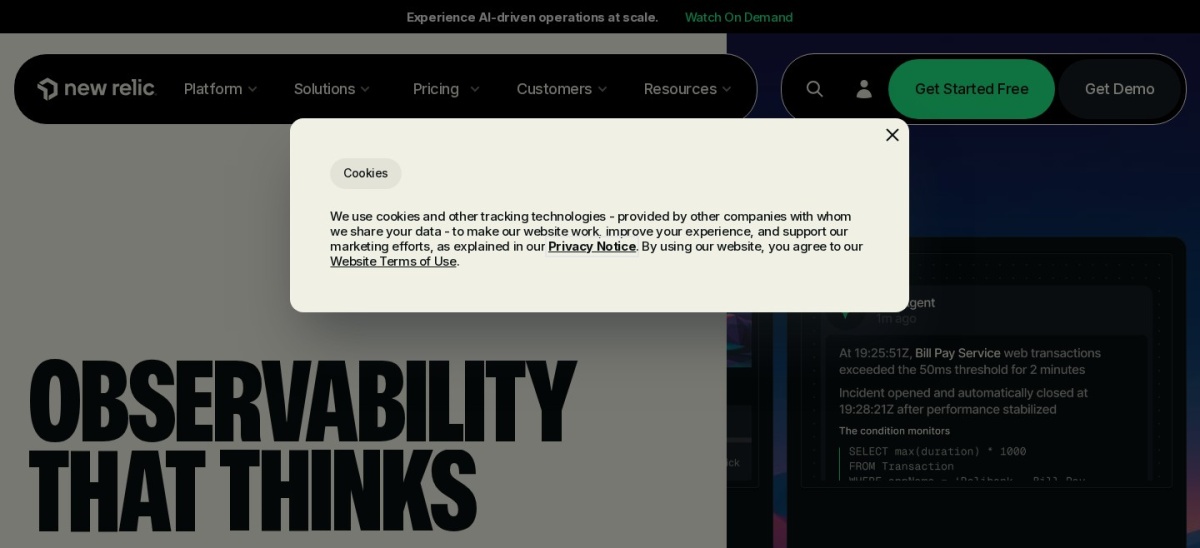
New Relic is a full-stack observability platform with logs, APM, infrastructure and browser monitoring in one console. The free tier gives 100 GB of data ingest a month and one full-platform user at no cost, and core users cost $49 a month.
The trade off is the seat model. Full-platform seats run $49 to $349 a user, and ingest beyond 100 GB costs $0.40 per GB, so the bill grows with team size. It suits teams that want generous free ingest and no per-host billing.
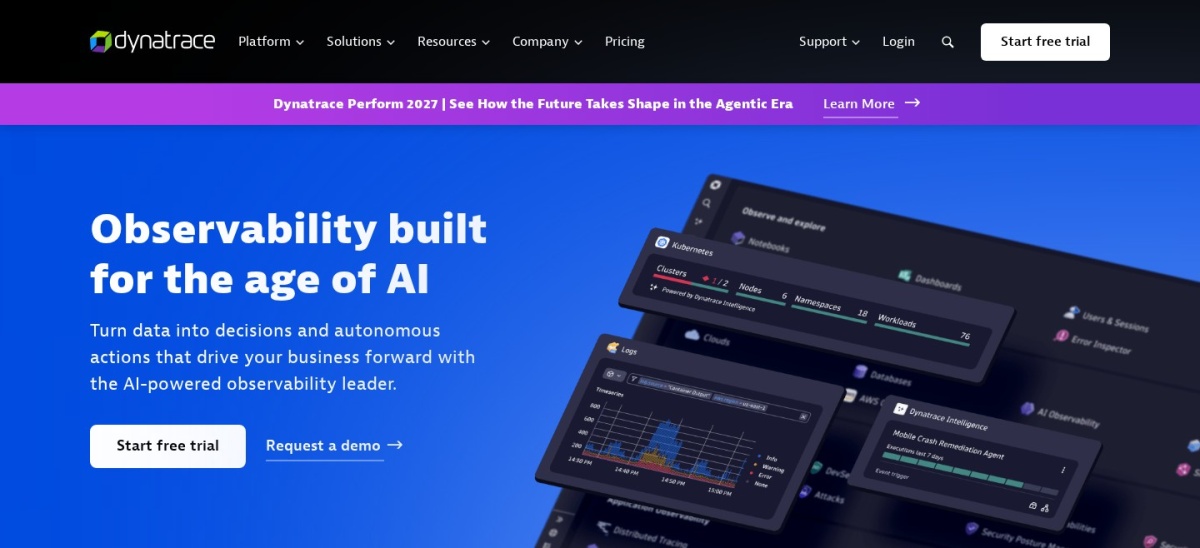
Dynatrace is an enterprise observability platform with full-stack monitoring, distributed tracing and Davis AI for automated root-cause analysis. Infrastructure Monitoring starts at $21 per host a month on annual billing, and Full-Stack Monitoring starts at $69 per host a month.
The trade off is price and complexity. There is no free plan, only a trial, and the consumption model is hard to forecast as environments scale. It suits large teams that want AI-assisted troubleshooting across a complex estate.
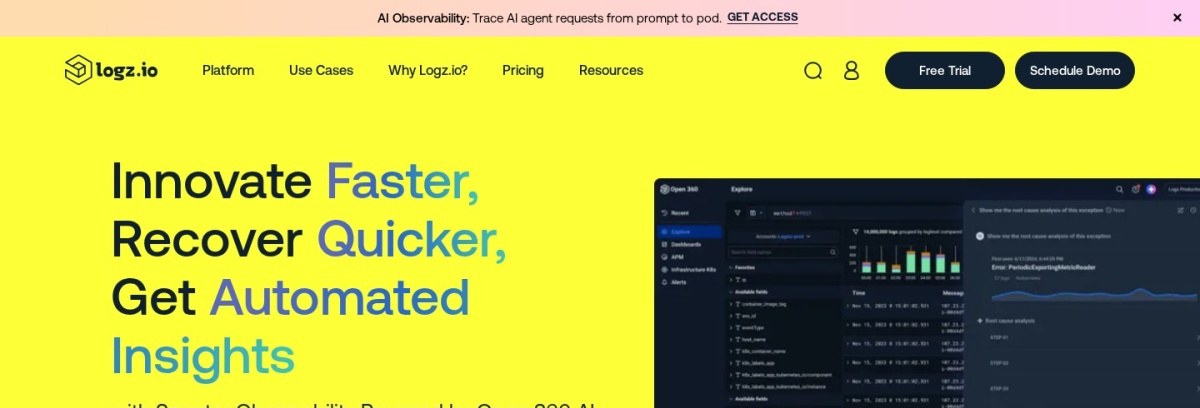
Logz.io is a managed log analytics platform built on open-source tools, with OpenSearch for logs, Prometheus for metrics and Jaeger for traces under one console. The Pro plan starts at $99 a month with log management, real-time search and basic alerts.
The trade off is retention and scale. Pro includes only 7 days of retention, and the bill rises with log volume, so it suits teams that want managed OpenSearch without running the stack themselves.
What we like
Managed OpenSearch, no self-hosting
Open-source stack underneath
AI-assisted root-cause analysis
Simple flat starting price
Watch out for
Only 7 days of retention on Pro
No free plan, trial only
Price rises with log volume
Paid Enterprise adds advanced security and supportVisit logz.io
09
Graylog
4.4/5on G2 (133 reviews, checked Nov 2026)
Paid from$15,000/yr
Best self-hosted value
Free tierGraylog Open, free
EnterpriseFrom $15,000/yr
SecurityFrom $18,000/yr
Installations60,000+ organisations
graylog.org
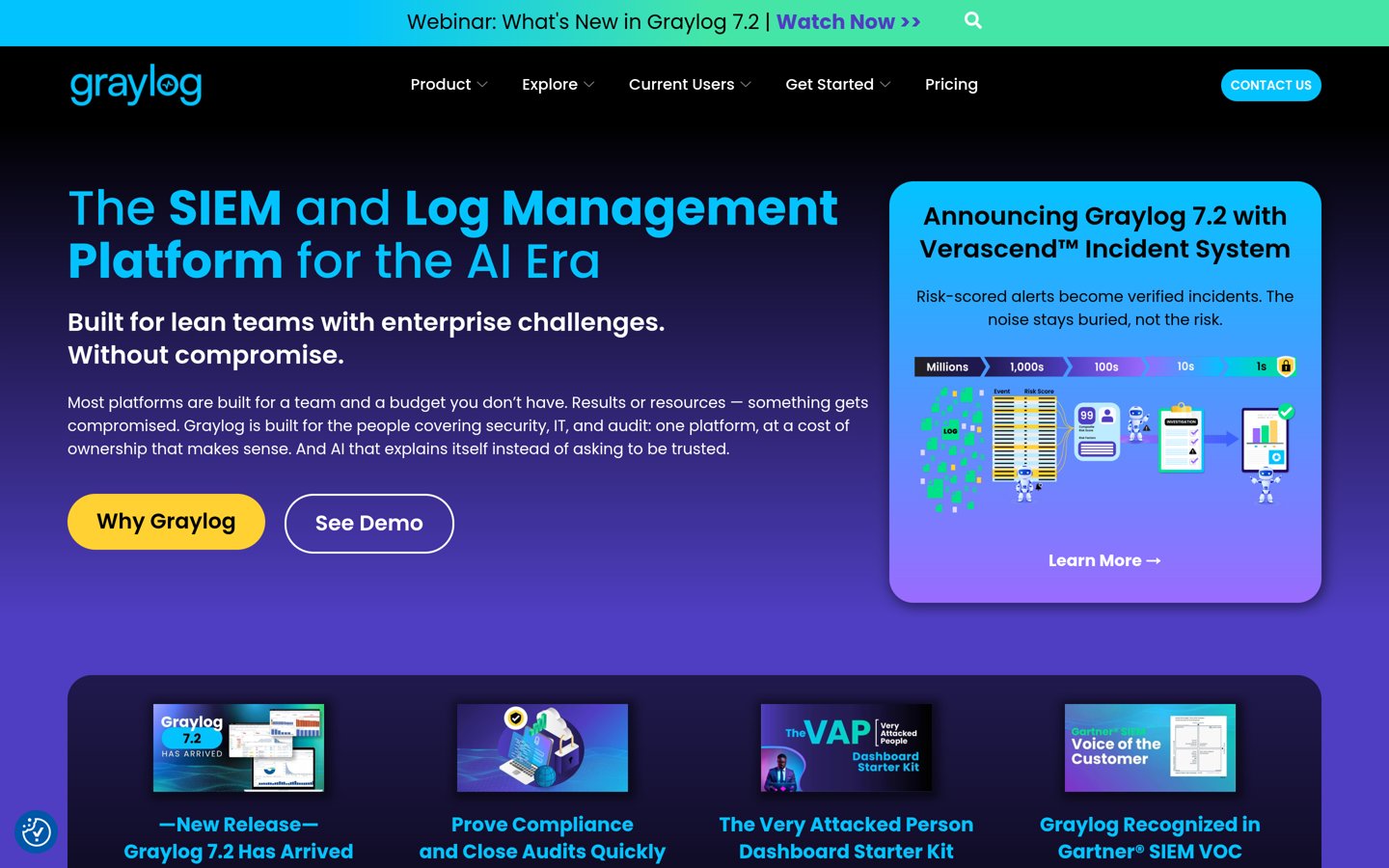
Graylog homepage, captured Nov 2026.
Graylog is an open-core log management and SIEM platform with Streams and pipeline rules for routing and enriching logs in real time. Graylog Open is free under SSPL, and Enterprise starts at $15,000 a year with flat, volume-banded licensing.
The trade off is the entry price and the work of running it. The paid licence starts far above the rest of this list, and the self-managed edition runs on OpenSearch and MongoDB underneath. It suits lean security and IT teams that self-host and want a flat licence.
Free tiers in this list are real plans, not trials. Grafana Cloud, New Relic, Sumo Logic, Elastic, Graylog and Splunk all let you run a small setup without paying.
The limits that bite first are volume and users. Splunk Free caps indexing at 500 MB a day, New Relic allows one full-platform user, and Grafana Cloud caps logs at 50 GB a month.
Dynatrace and Logz.io have no free plan, only a trial, so budget for a paid tier from the start if either is your pick.
How we chose
We started from the platforms most often named as Cribl replacements in 2026 comparisons, then kept nine with a public G2 rating, a published price and an active product.
Prices come from each vendor's pricing page or vendor-supplied G2 listing, checked on 29 November 2026, with Splunk, Elastic, Sumo Logic and Logz.io prices cross-checked against secondary pricing guides that cite the official pages. Ratings and review counts come from G2 on the same day. Where a vendor shows a sale, the list shows the regular price.
We left out tools with no published price or no public rating, including Chronosphere and several open-source collectors. No vendor paid for a place, and we do not claim hands-on testing for this list.
How to choose a Cribl alternative
Work through these four steps before you sign anything.
Count what you will be billed for. List your daily gigabytes, hosts and users, then price each tool on that count, not on its headline rate.
Decide whether you need a pipeline or a destination. If you only need to cut volume before Splunk or Datadog, a pipeline-first pick matters more than dashboards; if you are replacing the destination too, pick on search and retention.
Run the free tier on real traffic for two weeks. A trial on test data hides volume limits. Send production telemetry and watch which limit you hit first.
Check the exit cost before you commit. OpenTelemetry-native tools let you move dashboards and agents, while a closed agent ties your alerts to one vendor.
FAQ
What are the best Cribl alternatives in 2026?
Splunk is the best Cribl alternative for deep log analytics, rated 4.3 out of 5 on G2 from 434 reviews. Datadog is the best all-in-one replacement, and Grafana Cloud is the cheapest paid start at $19 a month.
What is the cheapest Cribl alternative?
Grafana Cloud is the cheapest paid start at $19 a month plus usage. Datadog is next at $15 per host a month, though log indexing adds $1.70 per million events on top.
Is there a free Cribl alternative?
Yes. Grafana Cloud, New Relic, Sumo Logic, Elastic and Graylog all have free tiers, and Splunk has a free tier that indexes 500 MB a day. Dynatrace and Logz.io offer only a free trial.
Is Splunk or Datadog better than Cribl?
They solve different problems. Cribl is a pipeline that routes and trims telemetry before it reaches a destination, while Splunk and Datadog are destinations that store and search it. Many teams run Cribl in front of Splunk or Datadog rather than replacing one with the other.
Which Cribl alternative is best for small teams?
Grafana Cloud suits small teams best, because its free tier covers 50 GB of logs and Pro starts at $19 a month. Sumo Logic is the better pick if the team wants managed log analytics with no infrastructure to run.
Splunk vs Datadog: which should I pick?
Pick Splunk if log search depth and security correlation matter most, and your ingest budget can handle per-GB billing. Pick Datadog if you want logs beside metrics, traces and APM in one console from $15 per host a month.
SaaS SEO and WordPress specialist with about 8 years of experience. Rakib compares WordPress plugins, themes, hosting and software using public pricing, documentation and user reviews. See how we rank.