Sanity is the best of the Contentful alternatives for most teams, with real-time collaboration and Growth at 15 dollars per seat a month. Storyblok suits marketing teams that want a visual editor, while Strapi is the pick for teams that want open-source software they can host themselves.
How we make this list: we compare pricing pages, product documentation and public user reviews, then re-check every price before each update. No product paid for a place. Disclosure.
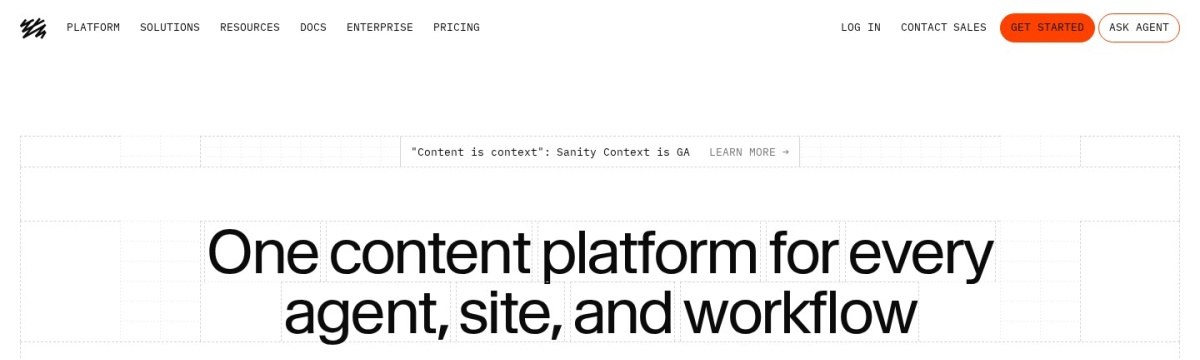
Sanity Growth costs $15 per seat a month, the cheapest paid step here, and it holds the joint-highest G2 rating at 4.7 out of 5.
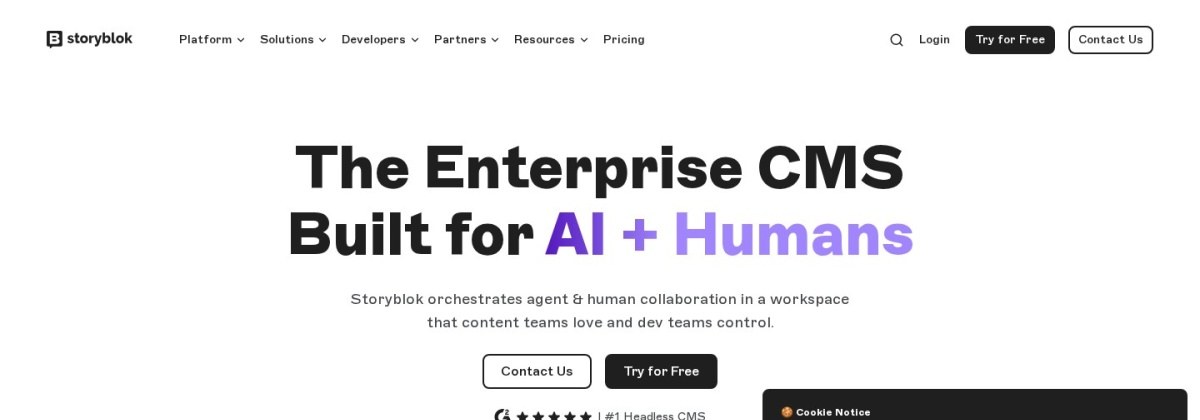
Storyblok Growth costs $99 a month with 5 seats and a visual editor marketers can use without a developer.
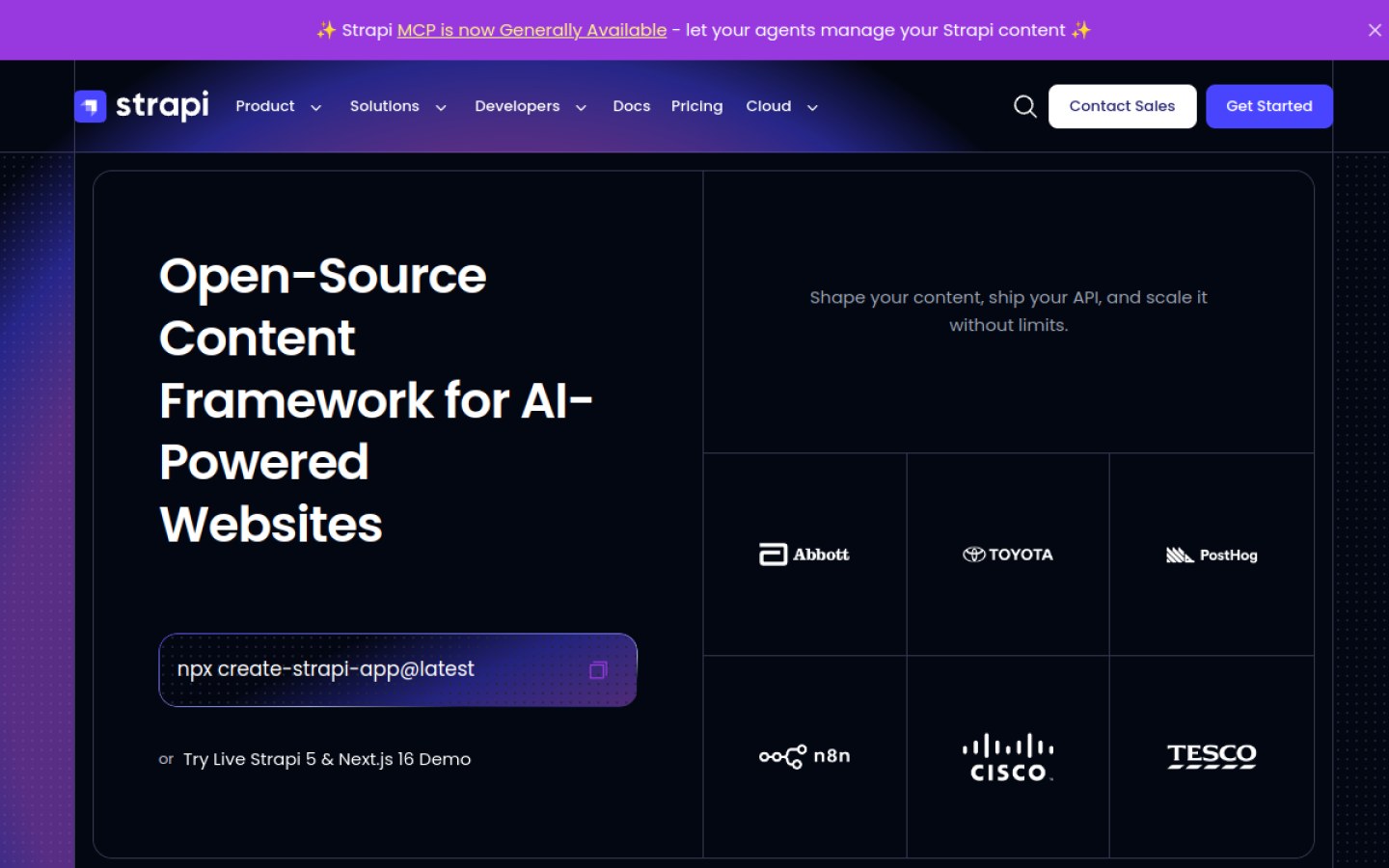
Strapi Cloud starts at $35 a month, while the self-hosted Community edition is free.
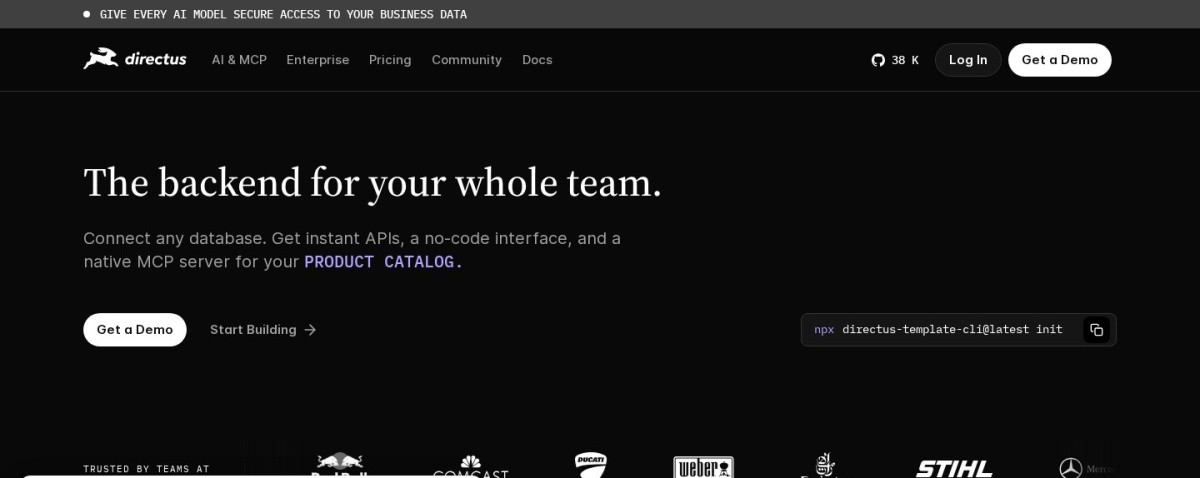
Directus Team costs $499 a month, the dearest published price here, with a free self-hosted Core tier.
Kontent.ai and DatoCMS publish no dollar prices, so get a written quote before you compare them with Sanity.
Hygraph Growth costs $199 a month and is the only pick here built around GraphQL content federation.
How do you choose the best Contentful alternative?
Contentful is the enterprise default, and its Lite plan starts at $300 a month. Teams usually leave it because the first paid step is steep, extra spaces cost $850 a month, and the Studio editor is quote-only.
The cheapest switch is Sanity at $15 per seat a month, with a free plan for 20 seats. Storyblok is the closest match for marketing teams, with a visual editor where editors build pages from components and see them in place.
Open-source tools trade hosting work for control. Strapi and Directus are free to self-host, so you pay for hosting instead of licences, while their cloud plans start at $35 and $499 a month.
Check the API limits before you migrate. Free plans cap API calls, documents and seats, and usage overages can cost more than the seat price once traffic grows.
Sanity is a headless content platform built around customizable schemas, real-time collaboration and an API-driven content database. Its free plan covers 20 seats with 2 public datasets, and Growth costs $15 per seat a month with private datasets, 25,000 documents and AI Assist.
The trade off is that Growth costs $15 per paid seat monthly, while usage overages stack on top of the seat price. The Studio is a React app configured in code, so a team needs a developer to shape it. It suits product and engineering-led teams that want structured content with unlimited locales.
Storyblok is a headless CMS combining structured content APIs with a visual editor for building website pages. Its Starter plan is free for 1 seat, and Growth costs $99 a month with 5 seats, 1 million API requests and 400GB of traffic.
The trade off is that Growth costs $99 monthly and includes 5 seats with expanded API allowances, while extra seats cost $15 each a month. It suits marketing teams assembling pages from a developer-built component library.
Strapi is an open-source headless CMS that developers can customize and host independently. Its Community edition is free to self-host, while Strapi Cloud Starter costs $35 monthly and includes 100,000 API requests, 50 GB asset storage, 50 GB asset bandwidth and unlimited database entries.
The trade off is that Strapi Cloud costs $35 per project a month for Starter, and the self-hosted route needs your own hosting and updates. It suits cost-sensitive teams whose developers self-host the CMS or run it on Strapi Cloud.
Directus is an open-source data platform that wraps any SQL database and turns it into an instant API, with REST and GraphQL plus a clean admin interface. Its Core tier is free to self-host, and Team costs $499 a month with an annual commitment, with 10 SSO seats and 50 collections.
The trade off is price. Team is $499 a month billed annually, the dearest published price in this list, and the G2 review base is small at 52 reviews. It suits data-centric teams that want a CMS layer mapped onto their own database tables.
Best for adding content management to existing apps
Basic plan$71/mo
Free planYes
Best forExisting apps
APIContent and blog APIs
buttercms.com
ButterCMS homepage, captured Nov 2026.
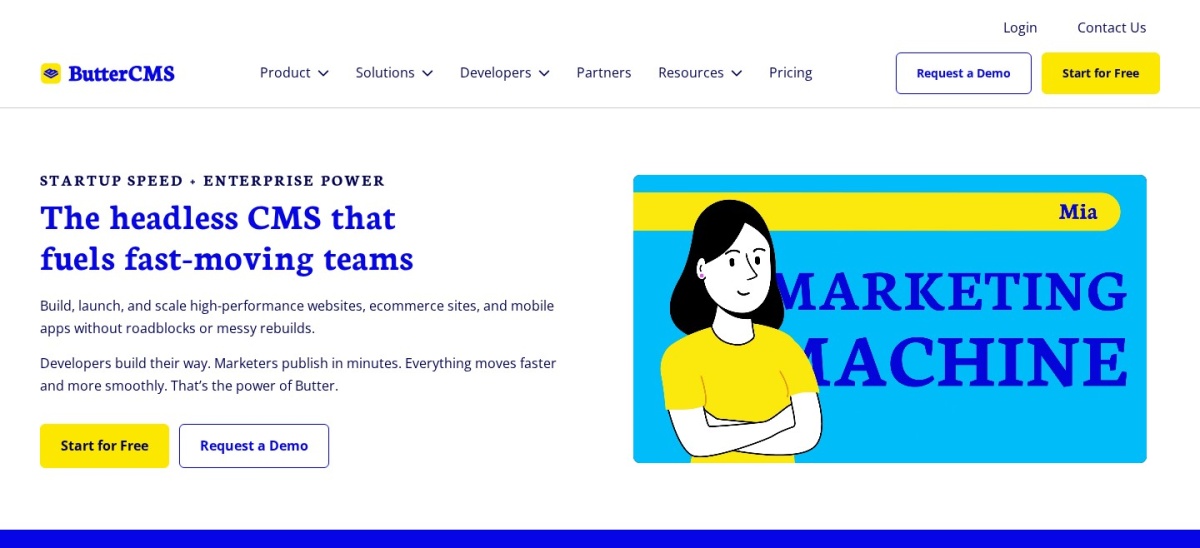
ButterCMS is a headless CMS built to drop into an existing application, with blog and page APIs that developers wire into any stack. Its Basic plan starts at $71 a month, and it is rated 4.6 out of 5 on G2 from 206 reviews.
The trade off is that ButterCMS is narrower than Sanity or Storyblok, with less visual page building and fewer content modelling tools. It suits teams that want to add a blog or pages to an app they already run.
Best for GraphQL and structured content federation
Growth plan$199/mo
Free planHobby, 3 seats
Entries10,000 on Growth
API calls1M/mo on Growth
hygraph.com
Hygraph homepage, captured Nov 2026.
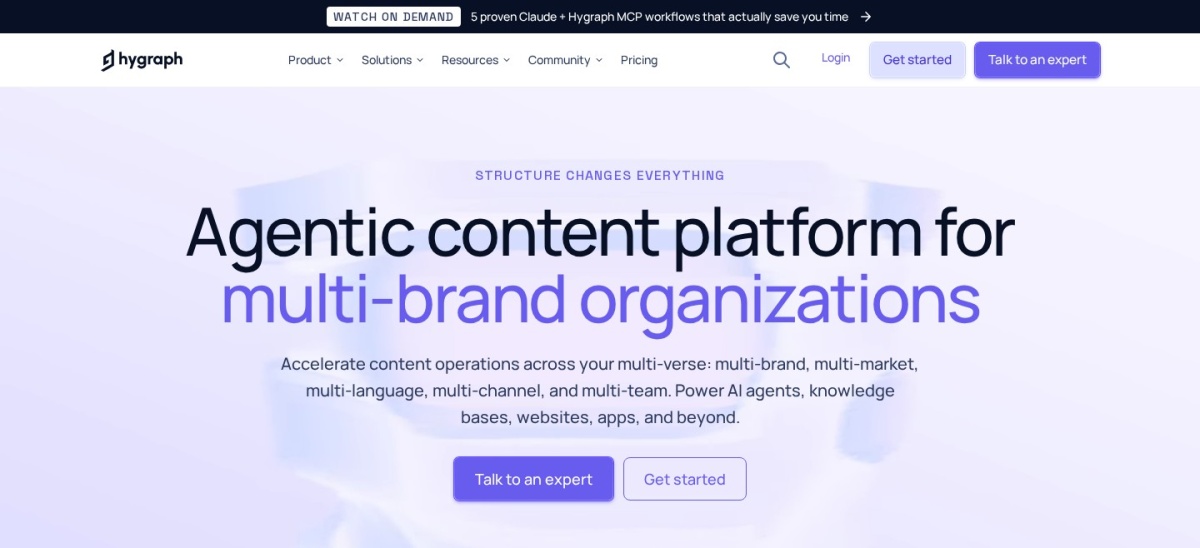
Hygraph is a GraphQL-native headless CMS for federating content from several sources into one API. Its Hobby plan is free with 3 seats, and Growth costs $199 a month with 10 seats, 10,000 entries and 1 million API calls.
The trade off is that Hygraph Growth costs $199 a month, and the GraphQL-first model needs developers who are comfortable with schemas. It suits developer teams that want to combine CMS content with data from other services.
Best affordable headless CMS for marketing websites
Starter plan$10/mo annual
Free plan1 user, 4M API calls
Page BuilderSlice Machine
API calls4M/mo on free plan
prismic.io
Prismic homepage, captured Nov 2026.
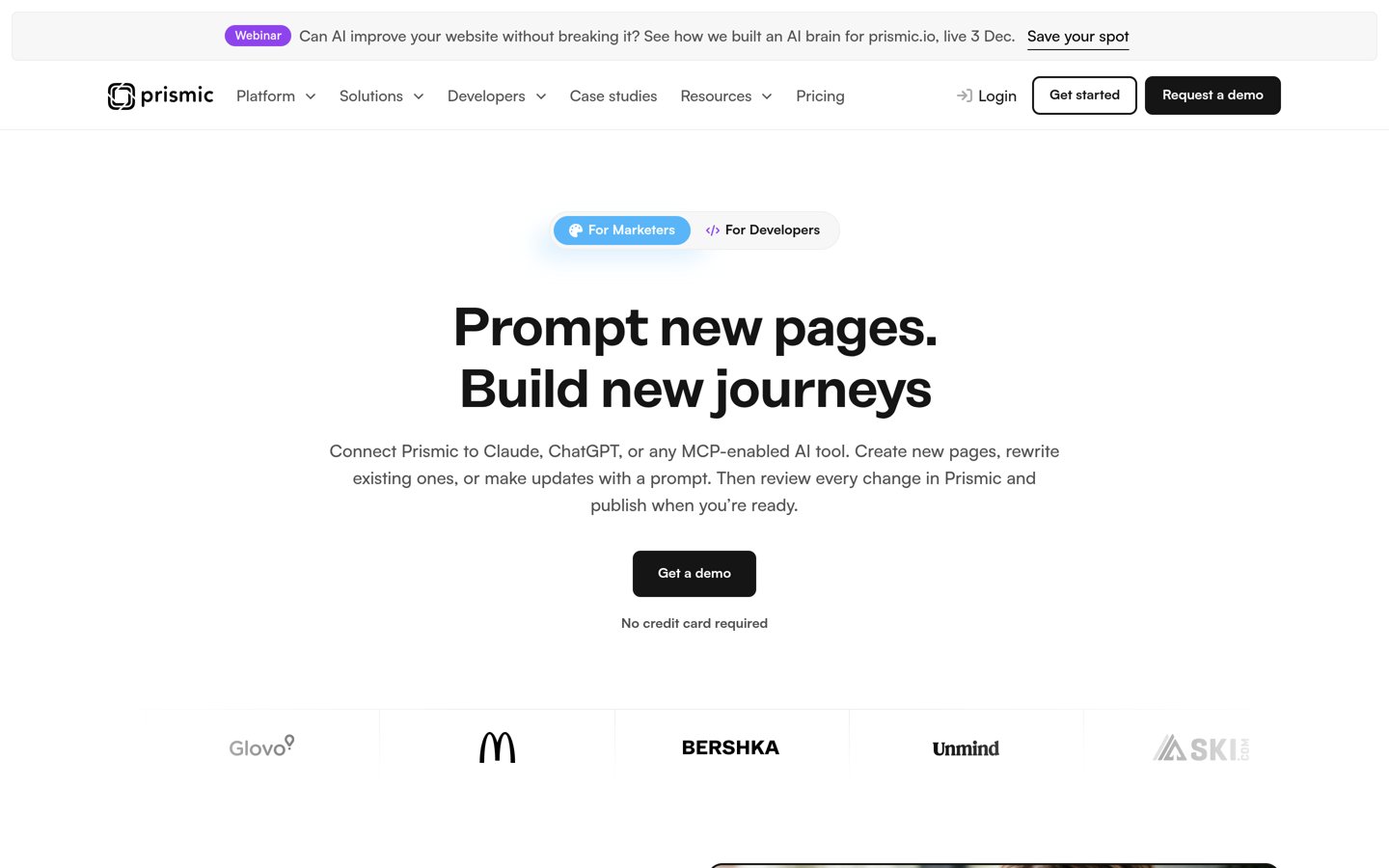
Prismic is a headless CMS for marketing websites built around its Page Builder, where editors assemble pages from reusable slices. Its free plan covers 1 user with 4 million monthly API calls, and Starter costs $10 a month billed annually.
The trade off is scale. Prismic is built for marketing sites rather than large content operations, and the free plan covers a single user. It suits small teams on Next.js that want pricing transparency and a visual page builder.
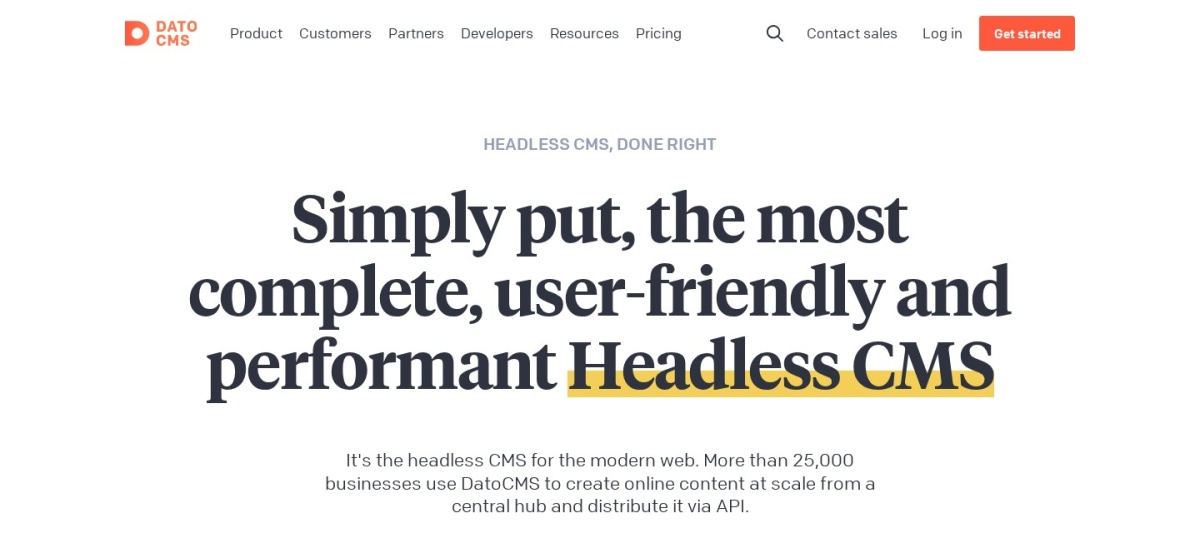
DatoCMS is an API-first, GraphQL headless CMS popular with agencies and publishers. It bundles a built-in image content delivery network and a clean editing experience, and it holds a 4.7 out of 5 G2 rating from 49 reviews.
The trade off is price clarity. DatoCMS publishes no dollar price for its paid plan, so teams must ask sales for a quote before they can compare it with Sanity or Prismic. It suits agencies that run several client sites on one plan.
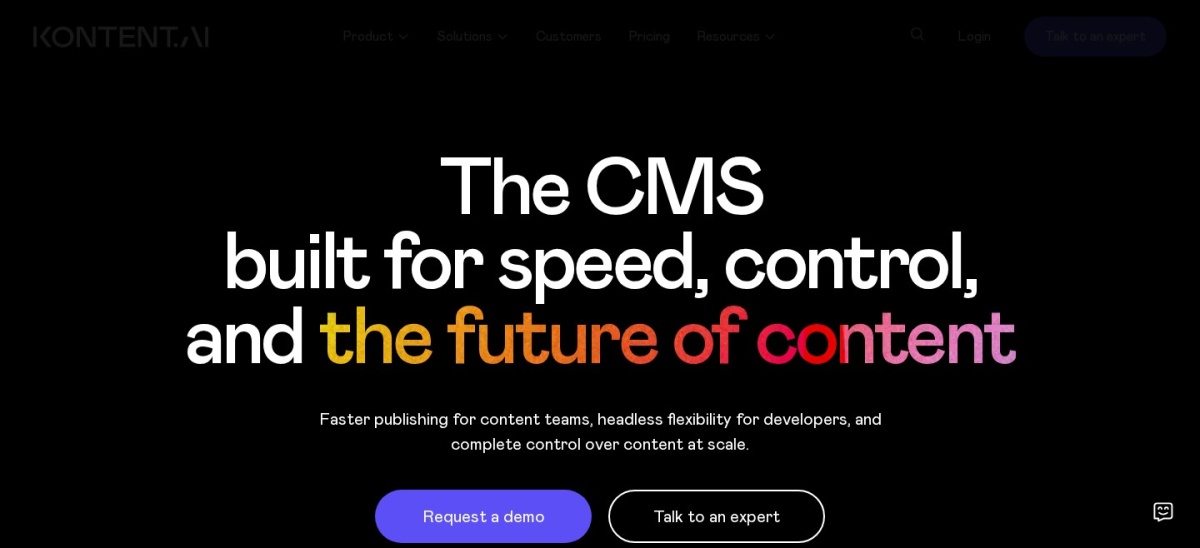
Kontent.ai is a software-as-a-service headless CMS built for governance and content operations at scale. It supports 67 languages, offers a free Developer plan, and reviewers rate it 4.3 out of 5 on G2 from 236 reviews.
The trade off is cost. Paid Scale and Enterprise pricing is quote-based through the official calculator and sales, with no published dollar rates, and buyers report starting prices near $30,000 a year. It suits mid-market teams that need strong governance and support.
Free plans cover the basics well. Most include a working editor, an API and enough seats for a small team to ship a site.
Paid plans mostly add seats, locales and usage. You get more API calls, more documents, private datasets and support that answers faster.
If your site earns money every day, the first year of a paid plan often costs less than one failed launch. Check the overage rates before you commit.
How we chose
We started from the headless CMS platforms named most often in 2026 comparisons, then kept nine established Contentful alternatives with a published price or a documented quote-only model and a public review listing.
Prices come from each vendor's pricing page, checked on 29 November 2026. Ratings come from G2 on the same day. Where a vendor shows no public price, the list says so instead of guessing one.
We left out platforms with no public review listing. No vendor paid for a place, and we do not claim hands-on testing for this list.
How to choose a Contentful alternative
Start with who edits content, then match the editor to the price.
Count your editors first. Per-seat pricing makes Sanity cheap for small teams and dear for large ones, while flat plans from Storyblok and Hygraph suit fixed teams.
Test the editor with a real page. Storyblok and Prismic let marketers build pages alone, while Sanity and Directus need a developer to shape the studio.
Check the API limits on the free plan. Free plans cap API calls, documents and seats, and overages can cost more than the seat price once traffic grows.
Price the migration, not just the plan. Moving content models, images and locales takes real work, so ask each vendor what migration help the paid plan includes.
FAQ
What is the best Contentful alternative in 2026?
Sanity is the best Contentful alternative for most teams. It costs $15 per seat a month on Growth, holds a 4.7 out of 5 G2 rating from 970 reviews, and offers real-time collaboration with unlimited locales.
How much do Contentful alternatives cost?
Paid plans start at $10 a month for Prismic Starter and $15 per seat for Sanity Growth, while Storyblok Growth costs $99 a month and Hygraph Growth costs $199 a month. Contentful Lite itself starts at $300 a month.
Which Contentful alternative is best for marketing teams?
Storyblok is the best Contentful alternative for marketing teams. Its visual editor lets editors build pages from components without a developer, and Growth costs $99 a month with 5 seats.
Is there a free Contentful alternative?
Yes. Sanity has a free plan for 20 seats, Strapi and Directus are free to self-host, and Prismic has a free plan with 4 million monthly API calls. Paid plans start from $10 a month.
Sanity or Storyblok: which Contentful alternative should I pick?
Pick Sanity if developers lead the build and you want real-time collaboration at $15 per seat. Pick Storyblok if marketers lead and you want a visual editor, at $99 a month for 5 seats.
What is the cheapest Contentful alternative?
Prismic is the cheapest paid Contentful alternative at $10 a month billed annually, and Sanity Growth at $15 per seat is cheapest for a single editor. Strapi and Directus are free if you self-host them.
SaaS SEO and WordPress specialist with about 8 years of experience. Rakib compares WordPress plugins, themes, hosting and software using public pricing, documentation and user reviews. See how we rank.