Best Telecom Expense Management Software in 2026: 7 Tools Compared
WLWPLegible EditorsLast verified 24 Nov 2026How we rank10 min read
★ Short answer
Tangoe is the best telecom expense management software for large enterprises, covering telecom, mobility and cloud spend on one platform, rated 4.1/5 on G2. Pick Calero for telecom, mobility and SaaS spend together, and Tellennium for audit-focused teams, rated 4.9/5 on G2.
How we make this list: we compare pricing pages, product documentation and public user reviews, then re-check every price before each update. No product paid for a place. Disclosure.
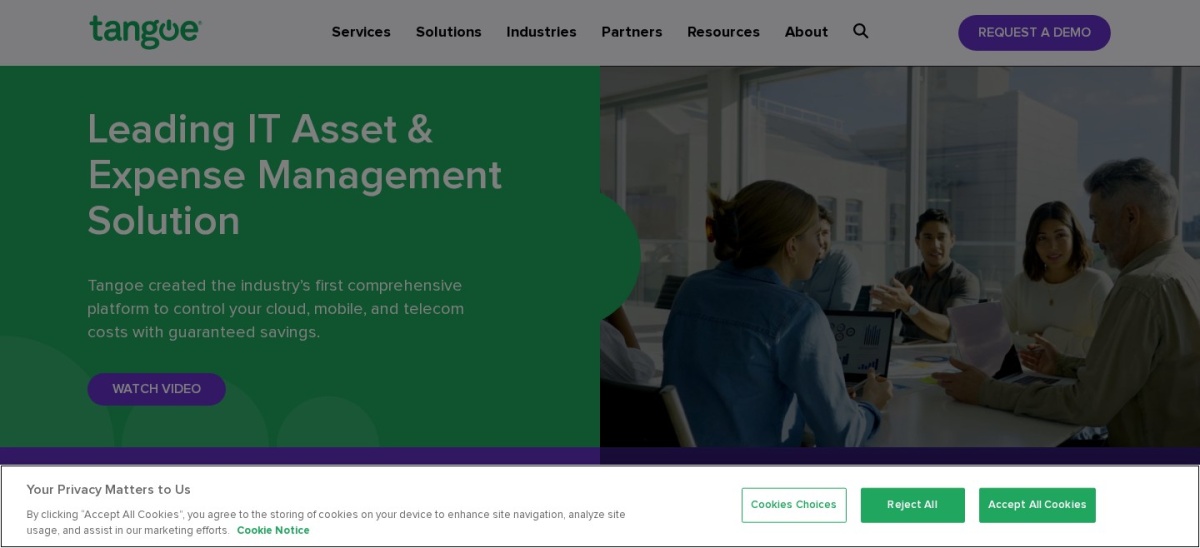
Tangoe is the broadest TEM platform, covering telecom, mobility and cloud spend, rated 4.1/5 on G2.
Calero is rated 4.3/5 on G2 and covers telecom, mobility and SaaS spend on one platform.
Tellennium and LightYear are both rated 4.9/5 on G2, the highest ratings in this list.
Sakon is rated 4.6/5 on Gartner and is built for ServiceNow shops.
No vendor publishes a price; all seven sell by quote after a demo.
What telecom expense management software should do
Telecom expense management, or TEM, is the work of auditing carrier invoices, tracking telecom inventory and allocating costs to the right department. Large companies with many carriers and countries do it with software, not spreadsheets.
Most TEM vendors sell by quote, not by published price. Expect a demo, a review of your carrier invoices, and a proposal priced on volume, sites or managed services.
The best vendors combine three jobs: invoice audit and optimisation, inventory lifecycle tracking, and bill pay. Some add mobility management and cloud spend on the same platform.
Savings usually come from billing errors and unused lines, not from the software itself. Vendors often quote typical first-year savings, so ask for the basis of the figure.
Tangoe covers the full technology expense stack. Its telecom offering includes invoice audit and optimisation, inventory and fulfilment, bill pay and invoice management, and its managed mobility services add ordering, logistics, help desk, endpoint management, device repair, BYOD and mobile buyback.
The trade off is pricing. There is no published price, and the breadth suits a large enterprise with many carriers and countries more than a 200-person company. It suits large global enterprises that want telecom, mobility and cloud spend from one provider.
Calero offers telecom expense management built on automated invoice processing, expense optimisation, contract oversight and centralised cost control. It sits on one platform with SaaS, mobility and market data management, so IT and finance can see several categories of recurring technology spend together.
The trade off is access. Pricing is by quote through a demo or a call with an expert, so bring a current carrier invoice set to the first conversation. It suits enterprises that want telecom, mobility and SaaS spend on one platform with managed mobility services.
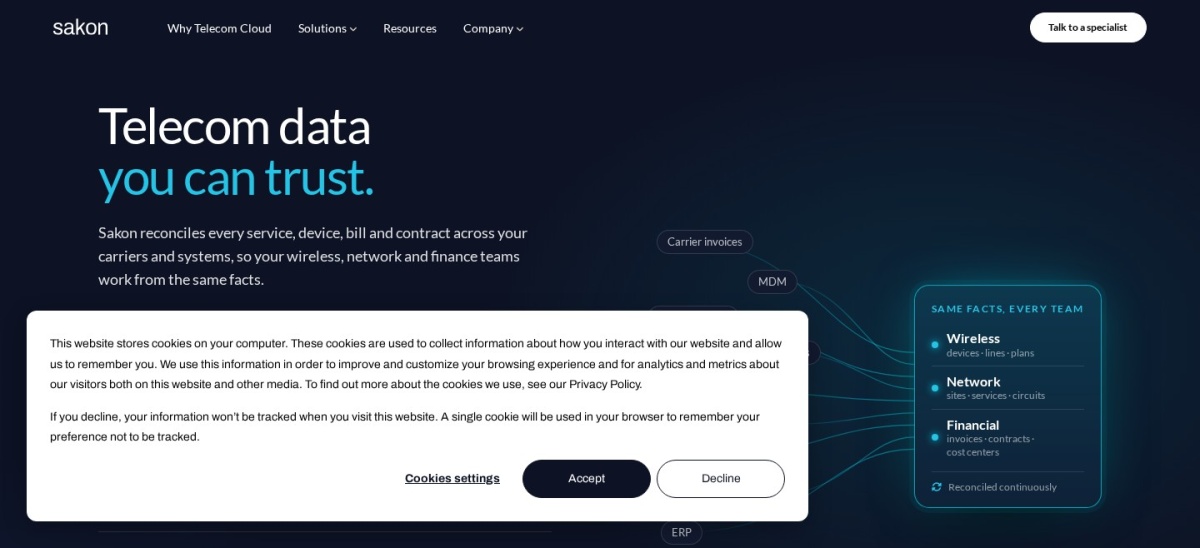
Sakon manages both wireless and network lifecycles: ordering, shipping and upgrading devices, managing carriers and plans, sourcing network services, and tracking circuits from install to disconnect. Telecom AP automation codes spend to the right cost centre, and Telecom Connect handles orders and changes inside ServiceNow.
The trade off is that pricing is quote-only, and Sakon cites typical first-year savings above 8% without publishing a price. It suits ServiceNow shops that want wireless and network lifecycle plus telecom AP automation.
What we like
Deep ServiceNow integration
Wireless and network lifecycle in one place
Telecom AP automation with cashback
Watch out for
No published pricing
Setup is a guided enterprise project
Pricing is quote-only; savings claims need checkingVisit sakon.com
04
Brightfin
4.4/5on G2 (— reviews, checked Nov 2026)
PricingCustom/yr
Best ServiceNow-native TEM
PricingQuote-only
PlatformServiceNow native
Invoice workflowsYes, automated
InventoryYes
brightfin.com
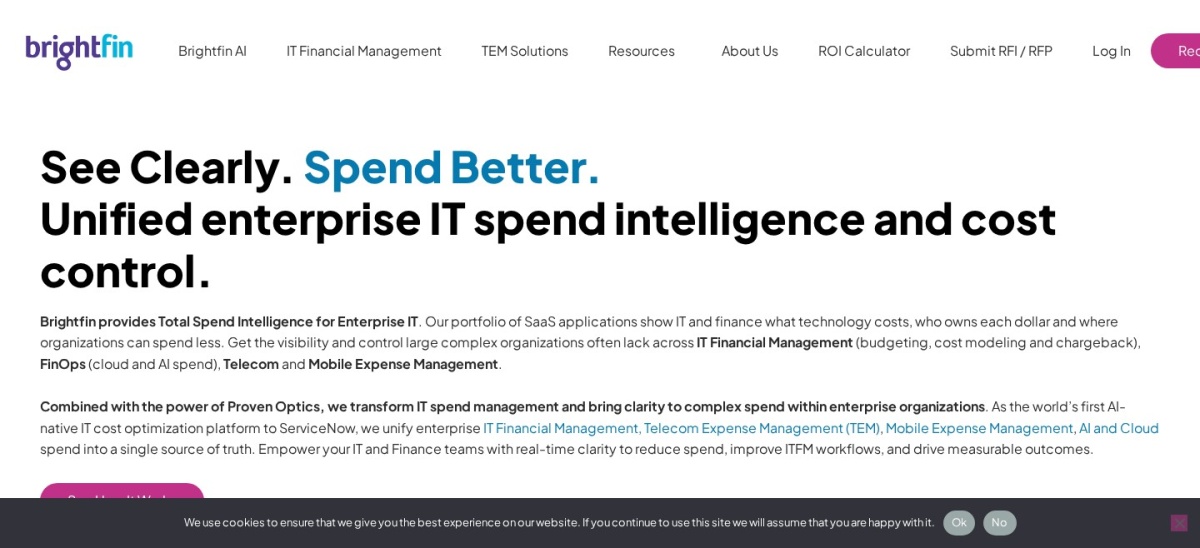
Brightfin homepage, captured Nov 2026.
Brightfin is built natively on ServiceNow, so telecom expense management runs inside the platform IT teams already use. It covers automated invoice workflows, inventory tracking and cost allocation, with native ServiceNow data models that avoid duplicate records between systems.
The trade off is scope. Brightfin is a ServiceNow app first, so teams that do not run ServiceNow will find Tangoe or Calero a better fit. It suits ServiceNow-based organizations that want TEM without a second platform.
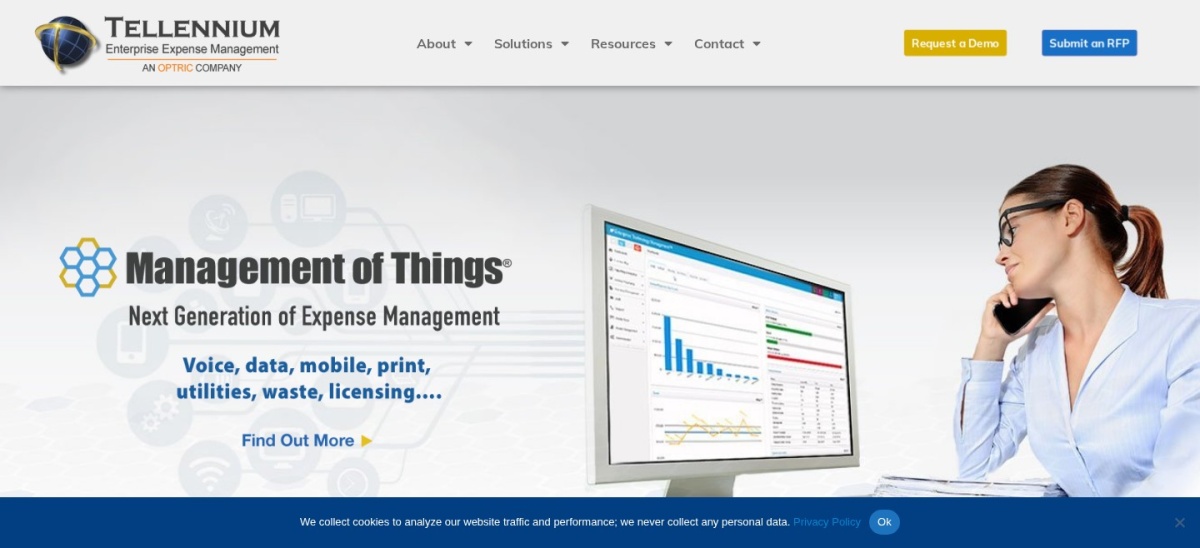
Tellennium is the audit-focused TEM vendor in this list. It starts from a verified inventory baseline, audits carrier invoices against it, and monitors compliance, which suits enterprises that suspect billing errors or need a defensible record of what they own and pay for.
The trade off is breadth. Tellennium is rated 4.9/5 on G2, but it is narrower than Tangoe or Calero, with less mobility and cloud coverage. It suits audit-focused enterprises that want invoice accuracy first.
LightYear is the modern TEM option for growing enterprises and tech-driven teams. It uses AI invoice extraction and contract variance detection to flag billing errors, with a lighter implementation than the enterprise vendors and a focus on fast onboarding.
The trade off is scale. LightYear is rated 4.9/5 on G2, but it is a newer vendor with less enterprise depth than Tangoe or Calero. It suits growing teams that want AI-driven invoice checks without a heavy project.
vCom is a mid-size TEM and managed services provider. It combines invoice audit and cost management with a vendor availability finder, a vendor ticketing portal and infrastructure monitoring, which suits companies that want a managed service rather than software alone.
The trade off is that vCom is smaller and less known than Tangoe or Calero, and pricing is quote-only. It suits mid-size businesses looking for managed telecom services with a human team behind them.
No TEM vendor in this list publishes a price. Every tool is sold by quote after a demo, usually priced on invoice volume, number of sites or managed service scope.
That makes comparison harder, so judge vendors on coverage: how many carriers and countries they audit, whether they handle mobility and cloud spend, and what savings they can show from similar clients.
Ask each vendor for a savings estimate based on your actual invoices before you sign, and check whether the fee is flat, per invoice, or a share of savings.
How we chose
We started from the telecom expense management vendors most often shortlisted by large enterprises, then kept seven that cover invoice audit, inventory and mobility.
Prices are not published by any vendor in this list, so all seven are shown as quote-only. Ratings come from G2 or Gartner, checked in November 2026.
We left out general expense management tools that do not audit carrier invoices. No vendor paid for a place, and we do not claim hands-on testing for this list.
How to choose telecom expense management software
Start with your carrier invoices and your device count, then shortlist vendors that audit those carriers and countries.
Gather your carrier invoices. Vendors price on volume, so bring a year of invoices from every carrier and country to the first call.
List your inventory. Count circuits, mobile devices and cloud licences, and note which ones are unused or unassigned.
Ask for a savings estimate. Ask each vendor to estimate savings from your actual invoices, and ask whether the fee is flat, per invoice or a share of savings.
Check the ServiceNow fit. If your IT team runs ServiceNow, Sakon and Brightfin integrate natively, which saves duplicate work.
FAQ
What is the best telecom expense management software?
Tangoe is the best pick for large enterprises, covering telecom, mobility and cloud expense management on one platform. Calero suits enterprises that also want SaaS spend and managed mobility on the same system.
How much does telecom expense management software cost?
No vendor in this list publishes a price. All seven sell by quote after a demo, priced on invoice volume, sites or managed service scope. Bring your carrier invoices to the first call.
What does TEM software actually do?
It audits carrier invoices for errors, tracks telecom inventory such as circuits and devices, allocates costs to departments, and pays bills. Some vendors add mobility management and cloud spend tracking.
Is Tangoe or Calero better?
Tangoe is rated 4.1/5 on G2 and is the broader platform, covering telecom, mobility and cloud spend. Calero is rated 4.3/5 on G2 and is stronger on invoice auditing and managed mobility services.
What is the difference between TEM and managed mobility services?
TEM covers the cost side: invoices, inventory and allocation. Managed mobility services cover the device lifecycle: ordering, logistics, help desk, repair and buyback.
Do small businesses need TEM software?
Usually not. TEM software suits companies with many carriers, sites or mobile devices. Small businesses can usually manage with a spreadsheet and an annual invoice audit.