Port is the best platform engineering tool for most teams, with a hosted catalog, self-service actions and the strongest portal rating here. Qovery is the best pick for Kubernetes delivery.
How we make this list: we compare pricing pages, product documentation and public user reviews, then re-check every price before each update. No product paid for a place. Disclosure.
Port leads for most teams, with a hosted catalog, self-service actions and a free tier for 5 seats.
Qovery holds the highest rating among the delivery tools at 4.7 out of 5 from 70 G2 reviews.
Cycloid is the cheapest paid start here, from $45 a month, with a free tier for up to 5 users.
Portainer holds the largest review base here at 4.8 out of 5 from 305 G2 reviews, with 3 nodes free.
Backstage, Humanitec, Cortex, Roadie and Configure8 have no usable G2 rating, so they are not in this list.
What platform engineering tools should cover
Platform engineering tools give developers a paved road: a catalog of services, self-service actions, golden paths and guardrails, so teams ship without filing tickets with the platform team.
The tools here split into two kinds. Port, Cycloid, OpsLevel and Northflank are portals that read what exists, while Qovery, Harness, Portainer and Spacelift are execution layers that provision infrastructure and run deployments.
Most teams past about 30 engineers end up running one of each: a portal for discovery and standards, and an execution layer for environments and delivery.
Prices vary from free open-source-adjacent tiers to $399 a month and quote-only enterprise deals, so the cheapest start depends on team size and how much you run yourself.
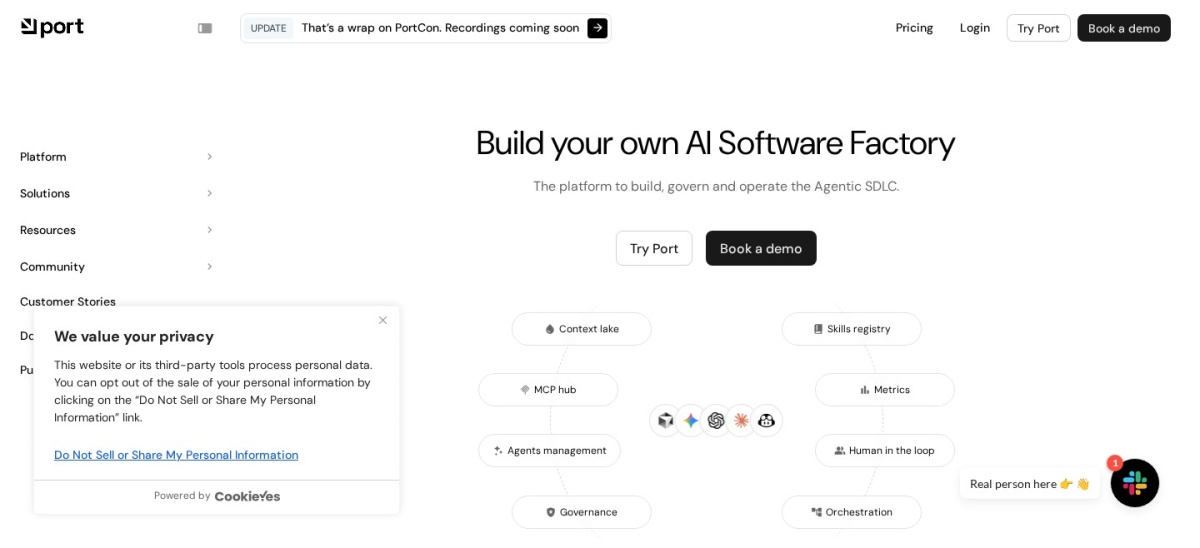
Port is the hosted developer portal for teams that want a rich catalog without running infrastructure. Its blueprint data model covers services, environments, cloud resources and teams, with self-service actions, scorecards and dashboards on top, and an AI Builder that drafts catalog models from plain language.
The trade off is seat packaging. Basic starts at $30 per seat a month billed annually, the free tier now caps at 5 seats, and Port does not provision infrastructure itself. It suits mid-size teams that want a portal running in days.
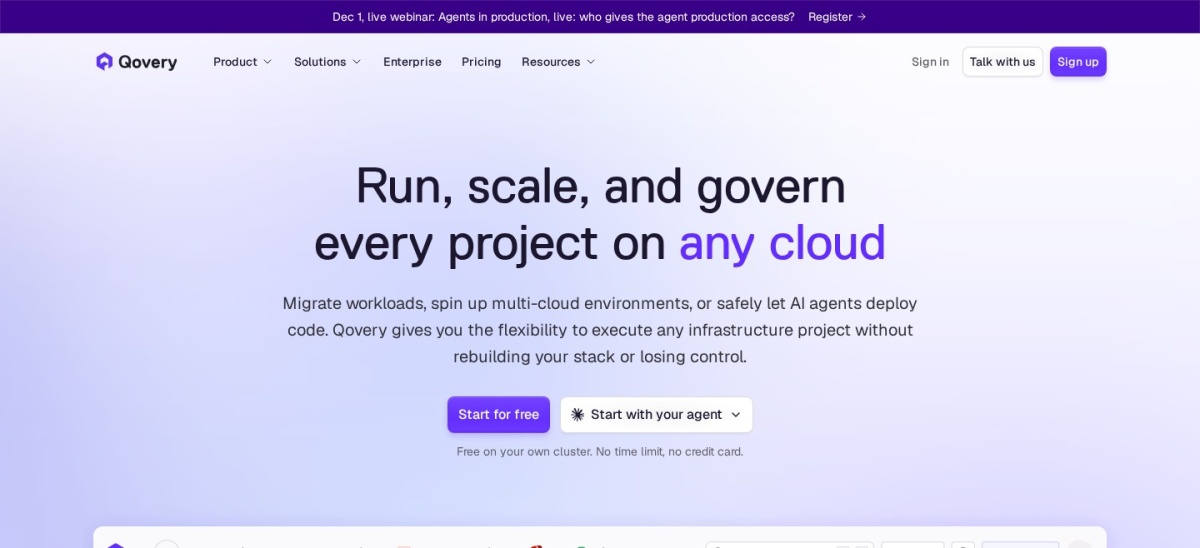
Qovery is the control plane that makes cloud deployment accessible to developers without DevOps expertise. It runs environments on demand inside your own AWS, GCP or Azure account, with preview environments, pipelines and an MCP server for AI agents, and G2 users praise its ease of use.
The trade off is price. Paid plans start from $299 a month billed yearly, which is steep for a small team, and Qovery is a delivery tool, not a catalog. It suits startups and scale-ups that deploy often.
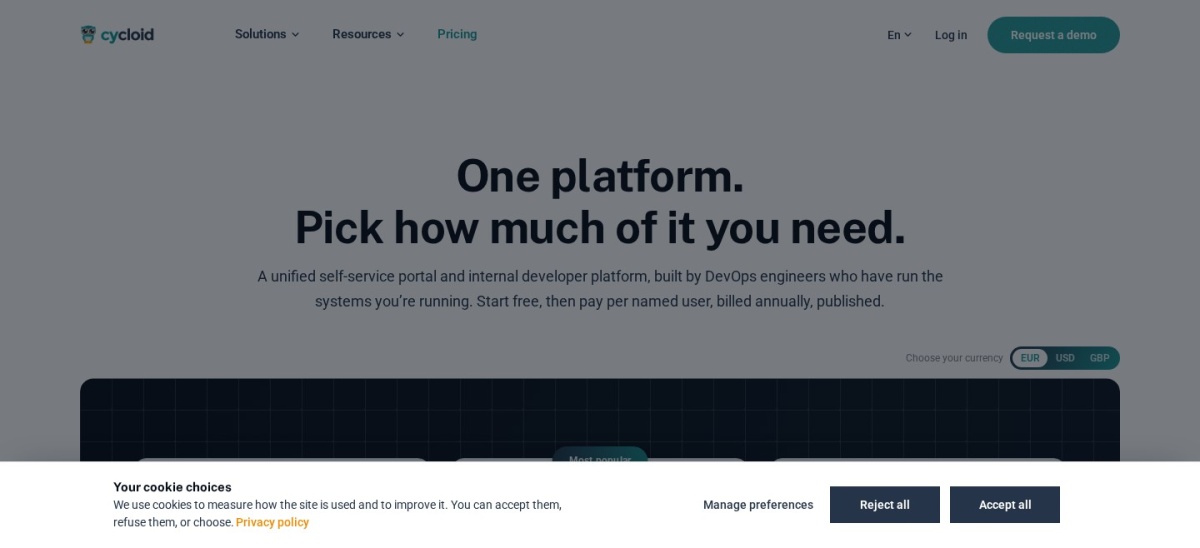
Cycloid is the unified portal and platform for teams that want developers to deploy approved infrastructure without ticket-driven handoffs. It combines a service catalog, self-service blueprints, governed deployment workflows and approvals, with a free tier for up to 5 users and paid plans from $45 a month.
The trade off is proof. Cycloid holds the highest rating here at 4.9 out of 5, but from only 32 G2 reviews, and its entry price is also quoted as $32 a month elsewhere. It suits small platform teams on a budget.
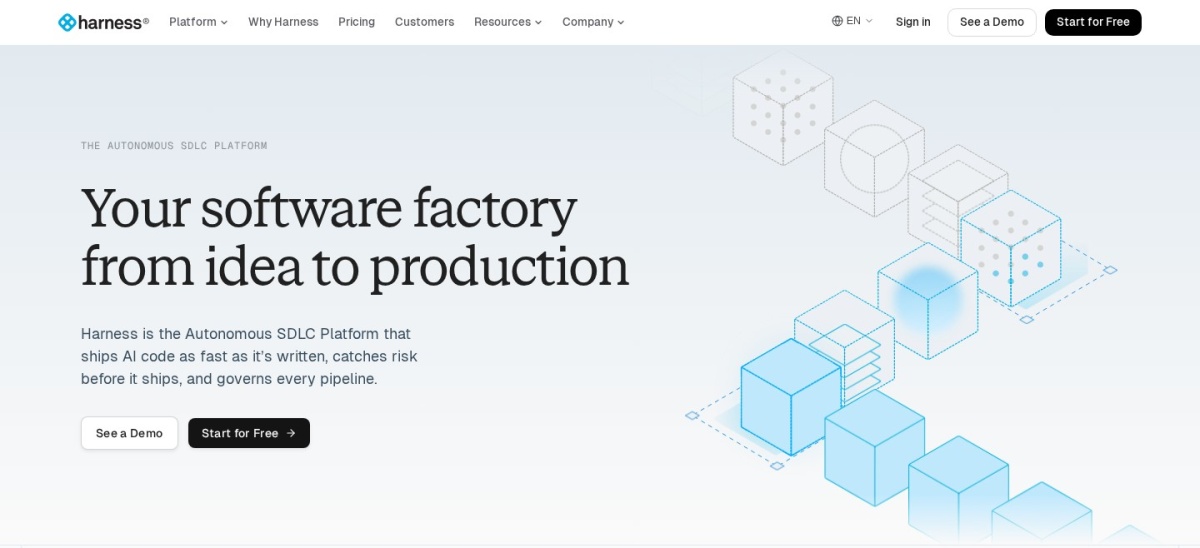
Harness Platform is the enterprise delivery platform in this list, covering CI, CD, feature flags, cloud cost and internal developer portal features in one system. It holds the second-largest review base here at 4.6 out of 5 from over 330 G2 reviews, and G2 rates it the best overall alternative to Roadie.
The trade off is price transparency. Harness is quote-only for paid plans, with module pricing that adds up, and it is built for larger organisations. It suits enterprises standardising delivery across many teams.
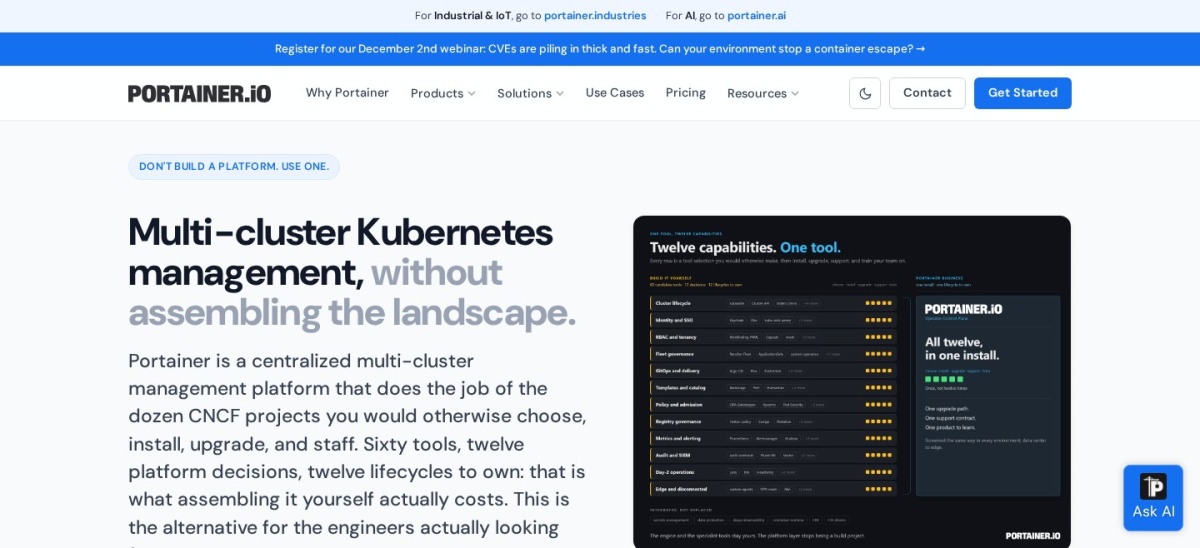
Portainer is the container management platform that gives teams a web UI for Docker and Kubernetes instead of the command line. It manages pods, deployments, Helm charts and stacks, with RBAC and external authentication so developers get cluster access without direct exposure, and 3 nodes are free.
The trade off is scope. Portainer manages containers, it does not build a service catalog or run scorecards, and it is self-hosted. It suits teams that want simple, visual container management.
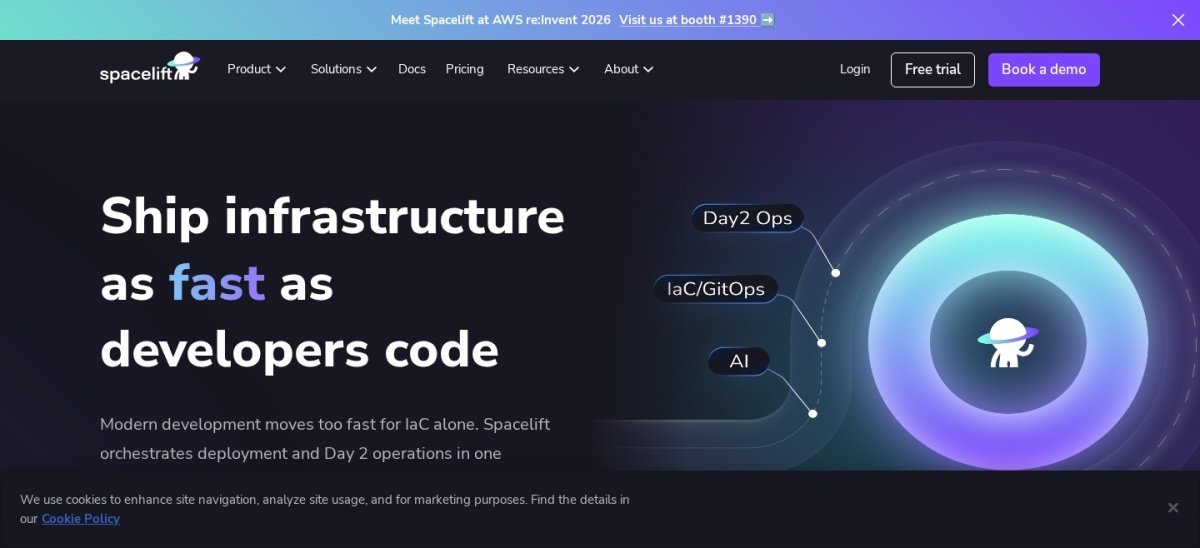
Spacelift is the infrastructure orchestration platform for teams that run Terraform, OpenTofu, Pulumi or CloudFormation. It provisions clusters and deploys what runs inside them in one workflow, behind policies, approvals and drift detection, with Kubernetes and Helm stacks in the same run.
The trade off is price and proof. Plans start at $399 a month, and the G2 base is thin at 23 reviews, though the rating is 4.8 out of 5. It suits teams that live in infrastructure as code.
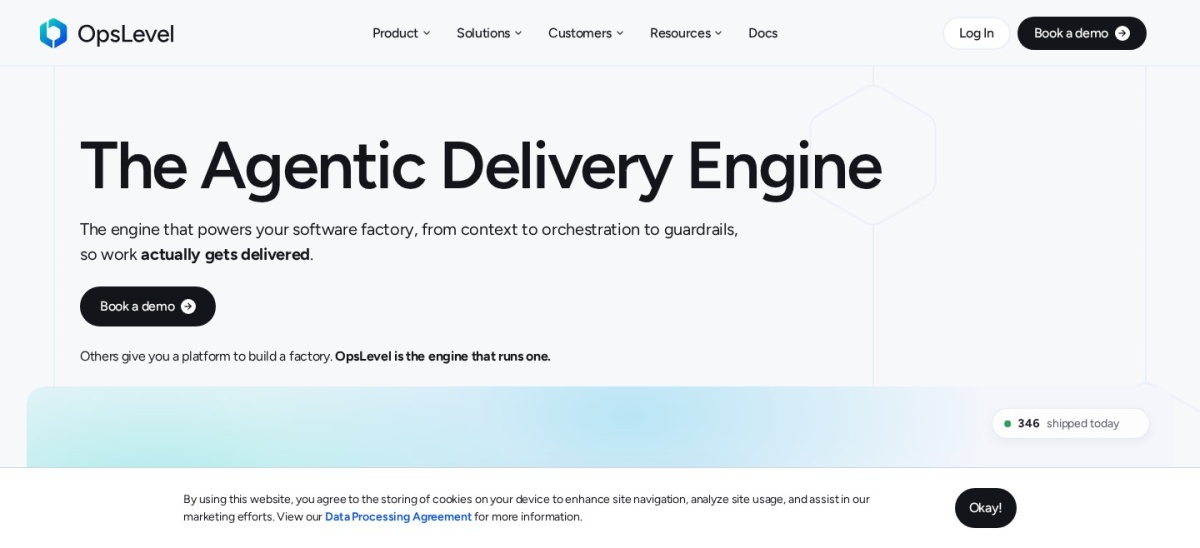
OpsLevel is the governance-first portal for teams that want service ownership, standards and scorecards in one place. Its catalog shows who owns each service, its checks turn standards into visible service health, and self-service actions let developers run approved workflows without tribal knowledge.
The trade off is proof and price. The G2 base is thin at 10 reviews, pricing is quote-only per seat, and reviewers warn that keeping the catalog current is an ongoing job. It suits teams driving a standards programme.
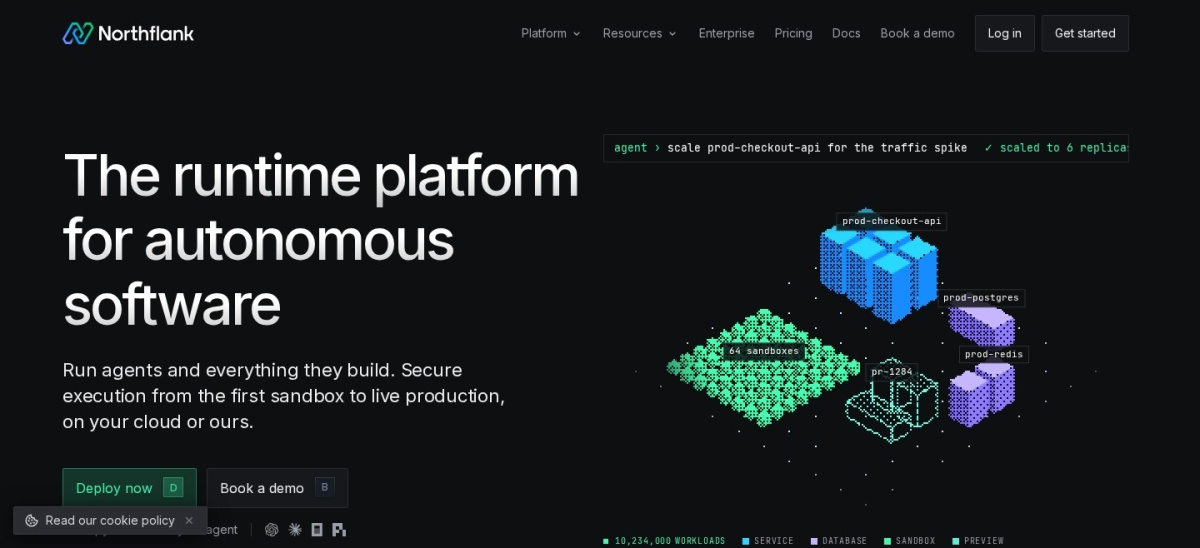
Northflank is the developer platform for building and operating applications made of microservices, databases, background jobs and scheduled tasks. It runs workloads in your cloud with preview environments and pipelines, and G2 reviewers praise how it lets developers focus on code instead of infrastructure.
The trade off is proof and pricing. The G2 base is thin at 11 reviews, and pricing is usage-based with no simple per-seat figure, so the bill depends on what you run. It suits microservices teams that want delivery without DevOps tickets.
Backstage is the open-source framework Spotify donated to the CNCF, and it is the default portal many platform teams start with. It costs nothing in licence fees, but the real cost is the team running it: guides put it at 3 to 12 dedicated engineers and over $2 million total cost over three years for a full build.
Humanitec is the orchestrator many large teams pair with a portal, with Teams from $1,979 a month and Pro from $4,950 a month. Cortex, Roadie and Configure8 round out the usual shortlist, with Roadie at $24 per developer a month and Configure8 from $19 per user a month.
None of the five has a usable G2 rating. Backstage has no G2 listing, Humanitec shows zero G2 reviews, Cortex shows a small sample with no figure, and Roadie and Configure8 show no G2 rating at all. This list only includes tools with a verifiable G2 rating, so they are out.
How we chose
We started from the internal developer platforms and delivery tools platform teams shortlist most, then kept the eight with a verifiable G2 rating and a real platform engineering job, whether portal or execution layer.
Prices come from each vendor's pricing page or from pricing pages read in November 2026, checked on 26 November 2026. Ratings come from G2 on the same day. Where a vendor shows a sale, the list shows the regular price.
We left out Backstage, Humanitec, Cortex, Roadie and Configure8 because none has a usable G2 rating. No vendor paid for a place, and we do not claim hands-on testing for this list.
How to choose a platform engineering tool
Start with the bottleneck, then match the tool to the job.
Name the bottleneck first. If developers cannot find services or owners, you need a portal such as Port or Cycloid; if environments and deploys are slow, you need Qovery, Harness or Spacelift.
Count the developers who will use it. Port Basic is sold in seat packages and Humanitec Teams caps at 5 users, so the per-seat maths changes fast past 50 engineers.
Check whether you will run it yourself. Backstage is free but needs a platform team, while Port, Qovery and Cycloid run as managed SaaS.
Trial the catalog before you buy. Load your real services into the free tier and check whether ownership, scorecards and self-service actions work on your stack.
FAQ
What is the best platform engineering tool?
Port is the best pick for most teams, with a hosted catalog, self-service actions and a 4.4 out of 5 G2 rating from 41 reviews. Qovery leads for Kubernetes delivery at 4.7 out of 5, and Cycloid is the cheapest paid start.
Is Backstage free?
Yes, Backstage is free open-source software under the CNCF, and you can run it yourself at no licence cost. The real cost is the team running it: guides put a full build at 3 to 12 engineers and over $2 million across three years.
What is the difference between Port and Backstage?
Port is a hosted developer portal you can use in days, while Backstage is an open-source framework you run and customise yourself. Port trades control for speed; Backstage trades speed for full control.
How much does Port cost?
Port has a free tier for up to 5 seats, and Basic starts at $30 per seat a month billed annually. Standard starts at $40 to $48 per seat a month depending on the source, and Enterprise is custom quoted.
What is an internal developer platform?
An internal developer platform is the paved road a platform team builds for developers: a catalog of services, templates, golden paths and guardrails that let developers ship without waiting on tickets.
Do I need a portal and a delivery tool?
Most teams past about 30 engineers run one of each. A portal such as Port or Cycloid shows what exists and who owns it, while a delivery tool such as Qovery or Spacelift provisions environments and runs deployments.
SaaS SEO and WordPress specialist with about 8 years of experience. Rakib compares WordPress plugins, themes, hosting and software using public pricing, documentation and user reviews. See how we rank.