Airbyte is the best modern data integration platform for teams prioritizing flexible architecture, offering free self-hosted deployment and managed cloud plans starting at $20 per month. Choose Skyvia for affordable no-code integration or Hevo Data for managed warehouse pipelines with integrated transformation capabilities.
How we make this list: we compare pricing pages, product documentation and public user reviews, then re-check every price before each update. No product paid for a place. Disclosure.
Airbyte Cloud starts at $20/month with 5 credits and hourly synchronization.
Skyvia offers a free integration plan covering 10,000 records per month.
Hevo Data Starter costs $299/month and supports up to 10 users.
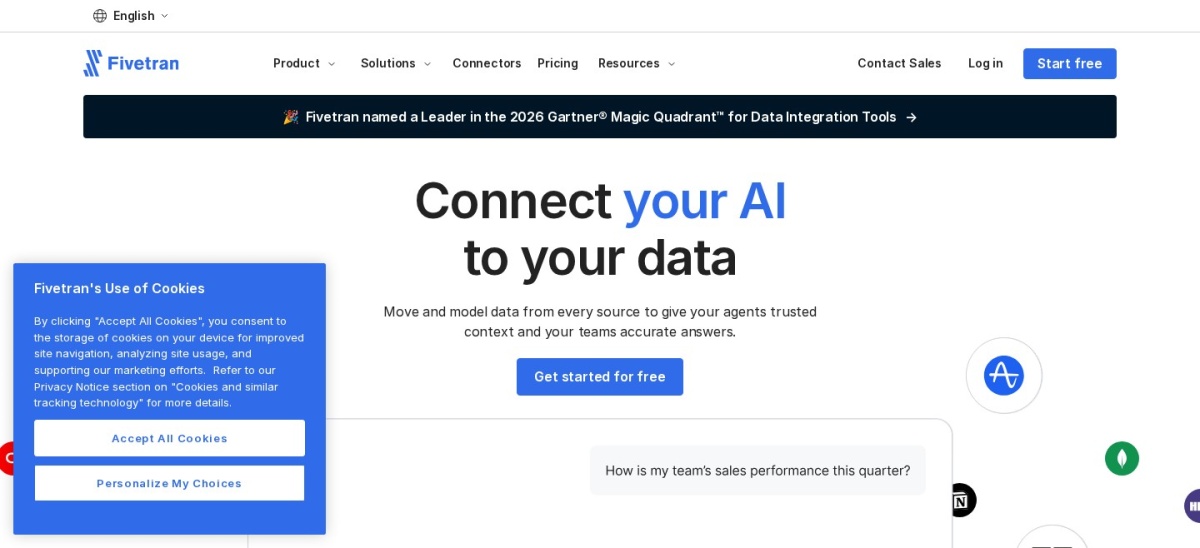
Fivetran supports 700+ managed connectors and includes 500,000 monthly active connection rows on its free plan.
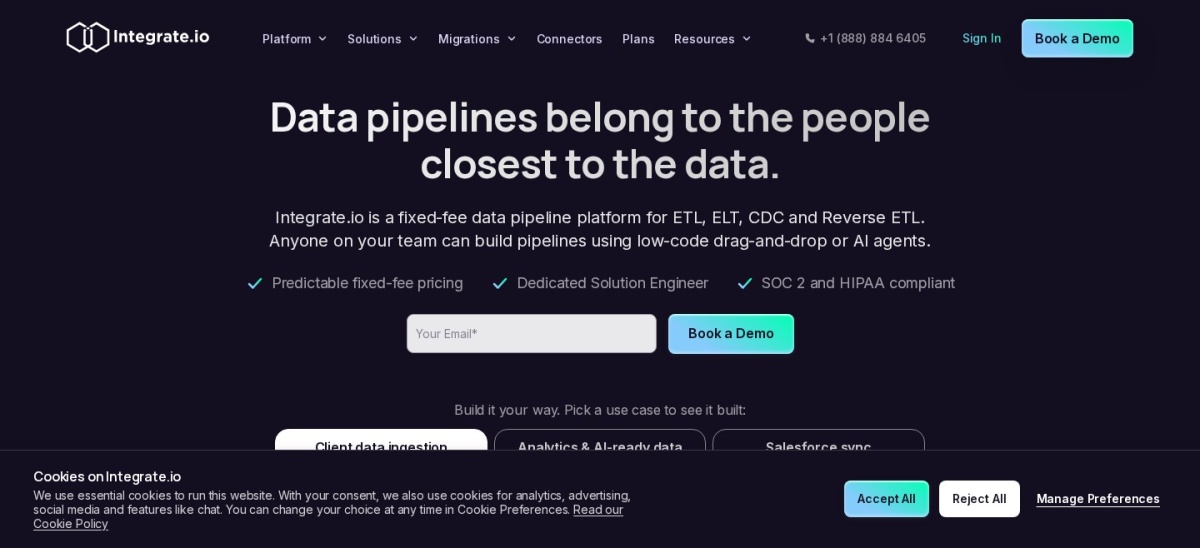
Integrate.io offers unlimited data volumes and pipelines for $1,999/month.
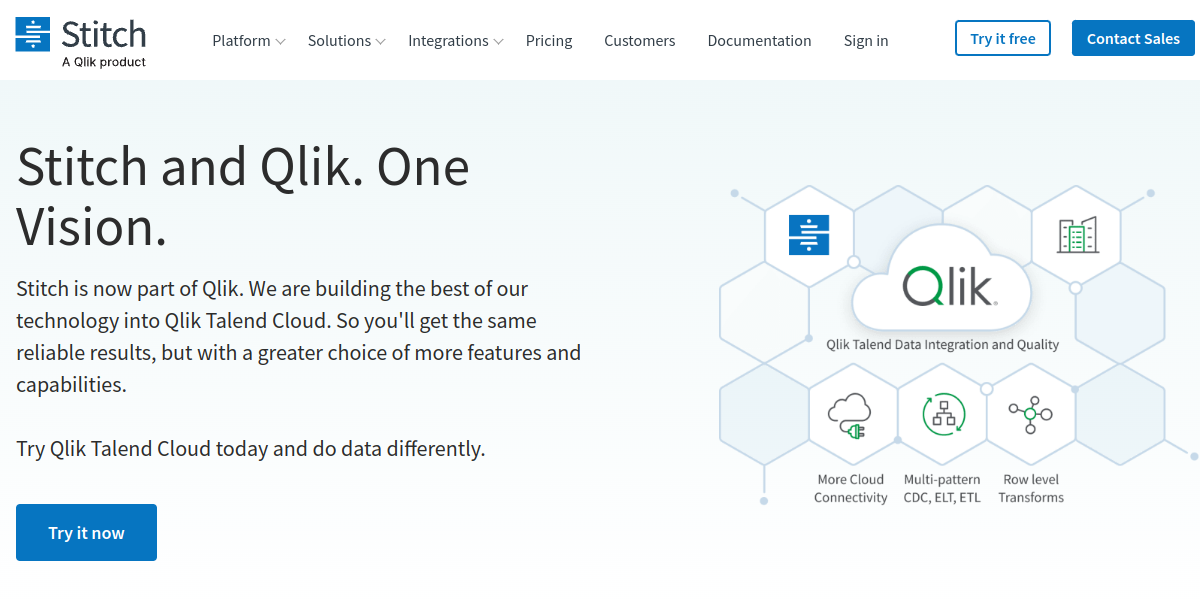
Stitch starts at $100/month with 10 standard sources and one destination.
What modern data integration architecture should include
Modern data integration architecture separates data ingestion, storage, transformation and consumption. This allows teams to replace individual components without rebuilding their entire analytics infrastructure.
Cloud-native platforms typically support ELT, where raw data reaches a warehouse before transformation. Traditional ETL remains useful when sensitive information must be filtered before loading.
Look for change data capture, incremental synchronization and automated schema management. These features reduce unnecessary processing and help maintain consistent datasets.
Deployment flexibility matters when handling regulated information. Some platforms offer managed cloud services, self-hosted infrastructure or hybrid deployment options.
Compare pricing meters carefully. Platforms may charge for processed records, active rows, events, credits or pipeline capacity. Warehouse computing and storage can introduce additional expenses.
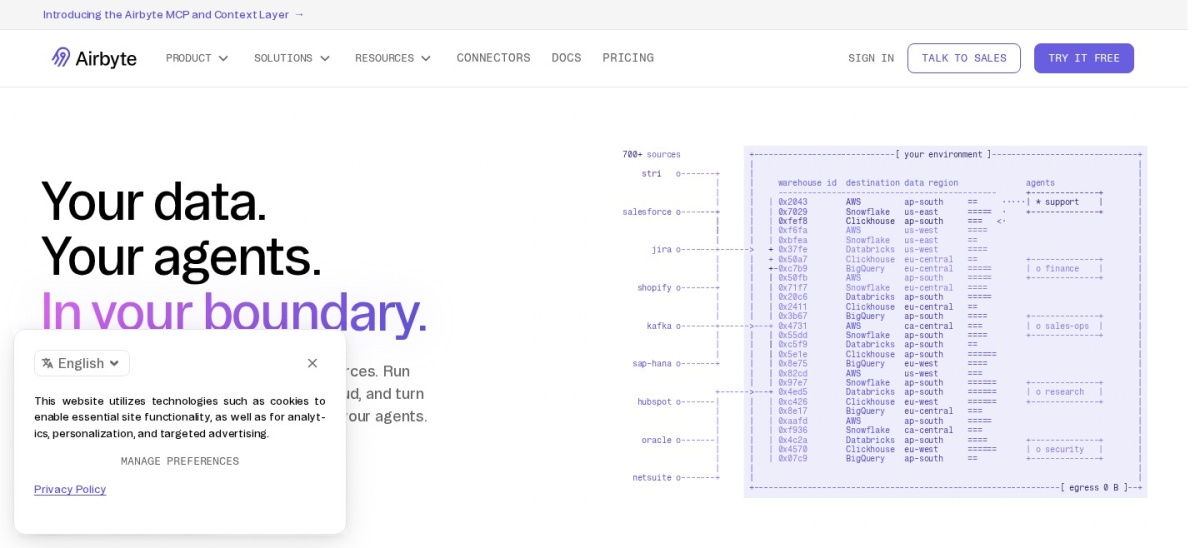
Airbyte is a data integration platform that replicates information from applications, databases and APIs into analytical destinations. Its free Core edition supports self-hosted deployment, while Cloud Standard includes 5 credits covering approximately 1 GB of synchronization.
The trade off is infrastructure maintenance for self-hosted deployments and variable consumption costs for managed pipelines. Standard starts at $20 per month. It suits engineering teams building modular data stacks with control over connector development.
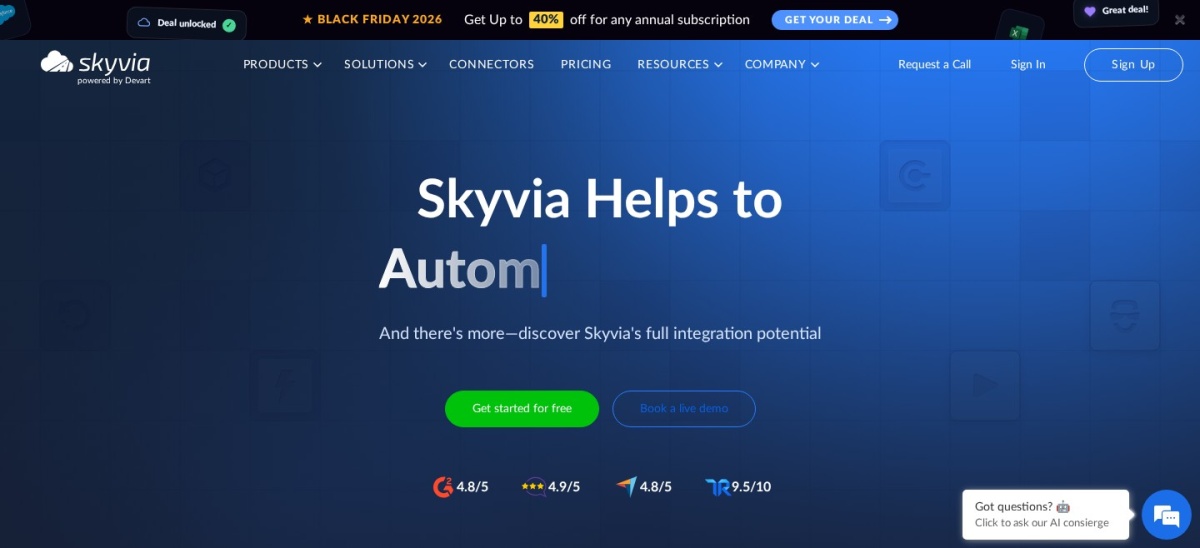
Skyvia is a cloud integration platform covering database ingestion, application synchronization and visual data mapping. Its free integration plan includes 10,000 monthly records and daily scheduling for basic workflows.
The trade off is that advanced mapping and frequent synchronization require higher subscriptions. Basic costs $99 monthly or $79 per month with annual billing; a separate Black Friday promotion is advertised. It suits smaller teams seeking visual integration without maintaining servers.
What we like
Permanent free integration plan
Visual mapping interface
Supports ETL and ELT workflows
High public review rating
Watch out for
Basic plan limits scheduling frequency
Advanced mapping requires an upgrade
Record allowances constrain larger workloads
Basic adds higher processing allowances and more scheduled integrations.Visit skyvia.com
03
Hevo Data
4.4/5on G2 (297 reviews, checked Nov 2026)
Starts at$299/mo
Best for managed warehouse pipelines
ArchitectureManaged data pipelines
Connectors210+
Starter usersUp to 10
Paid planStarter, $299/mo
hevodata.com
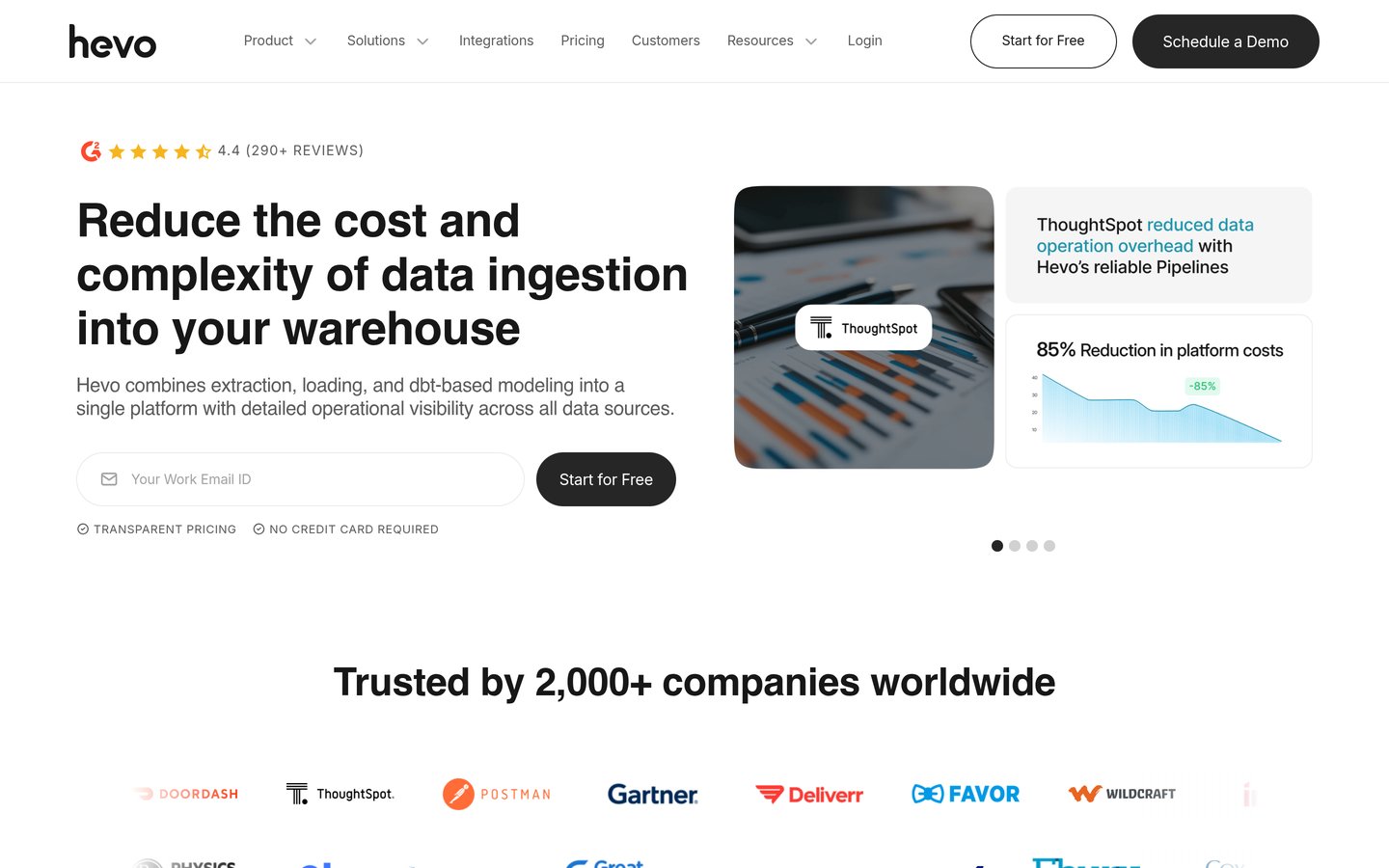
Hevo Data homepage, captured Nov 2026.
Hevo Data is a managed data integration platform combining ingestion, monitoring and transformation workflows. Starter includes hourly scheduling, dbt integration, encrypted connections and access for up to 10 users.
The trade off is that faster streaming and advanced administrative controls require higher plans. Starter costs $299 monthly, with an advertised annual billing discount. It suits analytics teams that prefer managed pipelines over maintaining their own replication infrastructure.
What we like
Managed connector infrastructure
Integrated dbt workflows
Pipeline monitoring and alerts
Round-the-clock customer support
Watch out for
Higher entry price than basic integration tools
Starter synchronization is hourly
Advanced governance requires Enterprise
Starter includes scheduled ingestion, dbt integration and technical support.Visit hevodata.com
04
Fivetran
4.3/5on G2 (857 reviews, checked Nov 2026)
PricingCustom pricing
Best for automated enterprise data replication
ArchitectureELT and replication
Managed connectors700+
Free connection allowance500,000 MAR/month
Paid planStandard, usage-based
fivetran.com
Fivetran homepage, captured Nov 2026.
Fivetran is a managed data movement platform built around automated connectors and incremental replication. Its free plan covers 500,000 monthly active rows for connections, 3,500 for activations and 5,000 monthly transformation model runs.
The trade off is usage-dependent pricing as synchronization volumes increase. Standard uses consumption-based pricing rather than a fixed subscription amount. It suits organizations that want to reduce connector maintenance and centralize data across many applications.
What we like
Extensive managed connector catalog
Automated incremental replication
Integration with dbt Core
Permanent free usage allowance
Watch out for
Monthly expenses depend on consumption
Separate usage meters complicate budgeting
Less infrastructure control than self-hosted alternatives
Standard removes free-tier usage caps and enables paid consumption.Visit fivetran.com
05
Integrate.io
4.4/5on G2 (213 reviews, checked Nov 2026)
Starts at$1,999/mo
Best for predictable high-volume integration
ArchitectureETL, ELT, CDC and reverse ETL
Data volumeUnlimited
Pipeline frequency60 seconds
Paid planCore, $1,999/mo
integrate.io
Integrate.io homepage, captured Nov 2026.
Integrate.io is a managed data pipeline platform combining ingestion, transformation, replication and delivery. Its Core subscription covers unlimited data volumes, connectors and pipelines, with scheduling as frequent as every 60 seconds.
The trade off is the substantial fixed subscription cost for smaller workloads. Core costs $1,999 per month. It suits established data teams processing large or unpredictable volumes that prefer a fixed platform fee.
What we like
Predictable flat-rate subscription
Unlimited data volumes
Multiple integration architectures
Visual transformation workflows
Watch out for
Expensive for small datasets
Advanced workflows have a learning curve
Some integrations require additional configuration
Stitch is a managed data loading platform focused on moving application and database records into analytical storage. Standard starts with 5 million monthly rows, one destination, 10 standard sources and five users.
The trade off is limited destination flexibility and reliance on separate tools for advanced transformation. Standard starts at $100 per month. It suits smaller analytics teams building conventional warehouse-centered data architectures.
What we like
Straightforward pipeline configuration
Published entry-level pricing
Managed data loading
Suitable for warehouse-first architecture
Watch out for
Standard includes only one destination
Pricing increases with row volume
Limited built-in transformation capabilities
Standard includes managed ingestion, scheduling and extraction logs.Visit stitchdata.com
07
Boomi
4.4/5on G2 (516 reviews, checked Nov 2026)
PricingCustom pricing
Best for enterprise hybrid integration architecture
ArchitectureiPaaS and data integration
DeploymentCloud and hybrid
API managementAvailable
Paid planContact sales
boomi.com
Boomi homepage, captured Nov 2026.
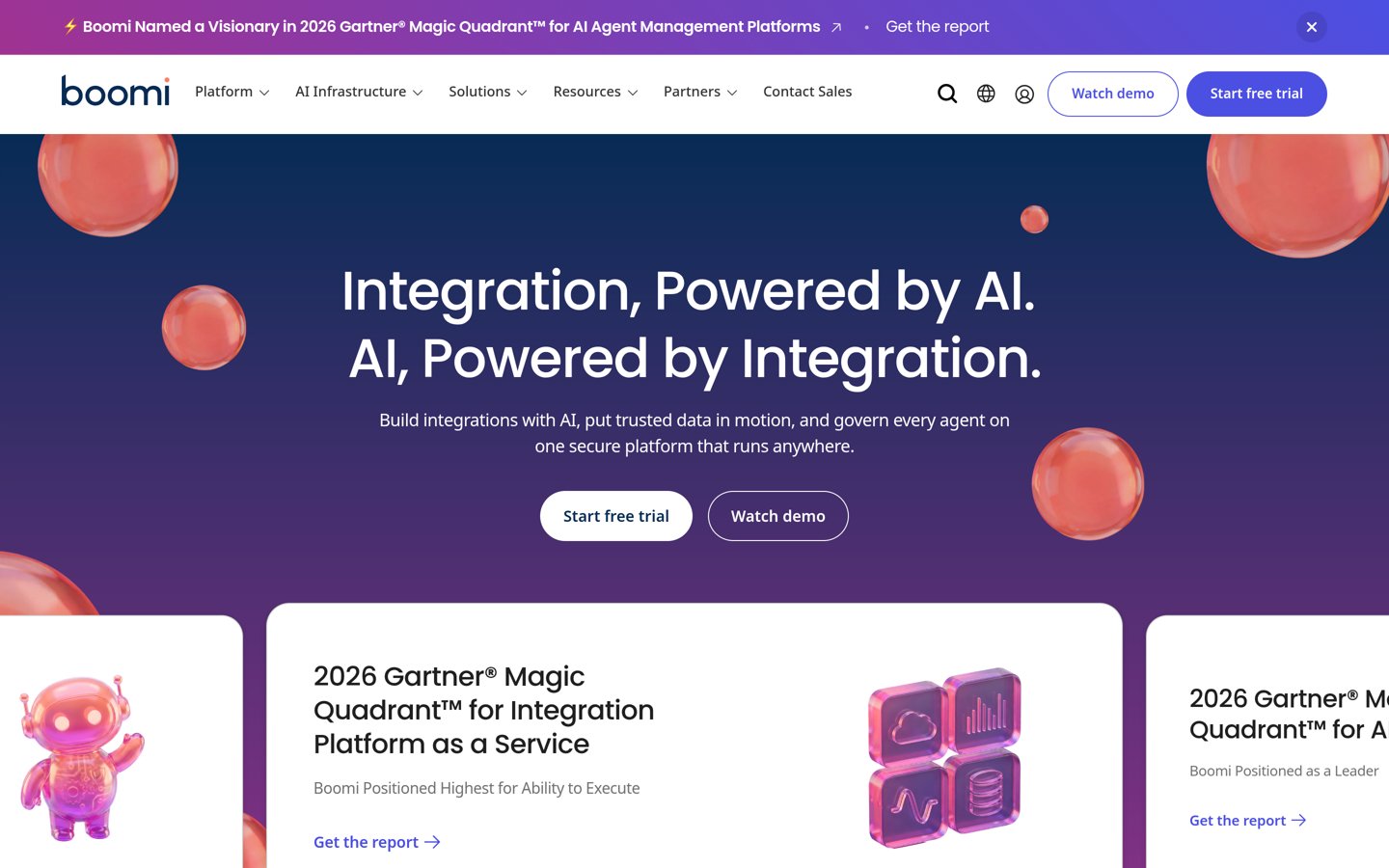
Boomi is an enterprise integration platform combining application connectivity, data management, APIs and workflow automation. The vendor reports more than 30,000 customers, and its platform supports integration across cloud and existing enterprise environments.
The trade off is that enterprise deployments can require considerable configuration and commercial planning. Comparable subscription pricing requires a vendor quote. It suits organizations connecting business applications, APIs and distributed data infrastructure.
What we like
Hybrid integration capabilities
Visual workflow development
Enterprise API management
Broad application integration coverage
Watch out for
Limited pricing transparency
Complex enterprise implementation
Potentially excessive for simple warehouse loading
Paid editions provide enterprise integration and automation capabilities.Visit boomi.com
ETL vs ELT in modern integration architecture
ETL transforms information before loading it into the destination. This approach is useful when datasets require validation, masking or filtering before reaching analytical storage.
ELT loads source information first and uses destination computing resources for transformation. It works particularly well with scalable cloud warehouses and modular analytics pipelines.
Modern platforms increasingly combine these approaches with change data capture and reverse ETL. Choose capabilities based on workload requirements rather than architectural terminology alone.
Understanding the total cost of modern data integration
Integration subscriptions represent only part of the overall cost. Destination storage, warehouse computing, network transfers and transformation execution may generate separate charges.
Consumption-based platforms work well when data volumes remain predictable. Fixed-price platforms may offer better financial visibility for organizations with fluctuating workloads.
Self-hosted platforms remove some subscription expenses but introduce infrastructure maintenance, monitoring and engineering responsibilities.
How we chose
We selected established integration platforms covering cloud-native ingestion, ETL, ELT, replication and hybrid deployment. Rankings prioritize architectural flexibility, pricing accessibility, connector coverage and operational requirements.
Prices and ratings were reviewed against official vendor pricing pages and G2 product profiles. The requested editorial check date is 22 Nov 2026, although source retrieval occurred after that date and historical pricing snapshots were not independently confirmed. Annualized prices use regular monthly rates, while custom pricing entries are not free plans.
We excluded products without sufficient public review evidence or relevant integration capabilities. We also avoided assigning estimated subscription prices to consumption-based and quote-based platforms. No vendor paid for a place, and we do not claim testing for this list.
How to choose a modern data integration platform
Evaluate your existing infrastructure, data movement requirements and operational budget before selecting an integration architecture.
Identify your sources and destinations. Check connector compatibility with databases, business applications, warehouses and analytical storage systems.
Select the appropriate integration architecture. Choose ETL for pre-load transformation, ELT for warehouse-native processing or CDC for incremental database replication.
Calculate total ownership costs. Include platform subscriptions, consumption charges, destination computing, infrastructure maintenance and engineering resources.
Review operational and security requirements. Evaluate monitoring, failure recovery, deployment control, encryption, access management and support availability.
FAQ
What is the best modern data integration platform?
Airbyte is our top choice for flexible deployment and modular data integration architecture. Its free self-hosted edition and managed cloud offering accommodate different infrastructure requirements and engineering capabilities.
What defines modern data integration architecture?
Modern architecture separates ingestion, storage, transformation and consumption into independent components. It commonly includes cloud-native processing, incremental replication, automated orchestration and monitoring to support scalable analytical workloads.
What is the difference between ETL and ELT?
ETL transforms information before loading it into a destination. ELT loads information first and performs transformations using destination computing resources. ELT is particularly common in cloud warehouse architectures.
Are there free modern data integration platforms?
Yes. Airbyte provides a free self-hosted edition, while Skyvia and Fivetran offer free plans with usage restrictions. Infrastructure, destination computing and additional consumption can still generate costs.
What is change data capture in data integration?
Change data capture identifies modifications in source databases and transfers changed records instead of repeatedly copying entire tables. This approach can improve data freshness and reduce unnecessary processing.
Is a managed data integration platform better than self-hosting?
Managed platforms reduce infrastructure maintenance and connector administration. Self-hosting provides greater deployment control but requires engineering resources for updates, security and monitoring. The better option depends on organizational requirements.
How much does modern data integration software cost?
Entry-level subscriptions can be relatively inexpensive, while enterprise platforms may require substantial recurring commitments. Compare actual processing volumes, connector requirements and warehouse expenses rather than relying exclusively on advertised starting prices.
SaaS SEO and WordPress specialist with about 8 years of experience. Rakib compares WordPress plugins, themes, hosting and software using public pricing, documentation and user reviews. See how we rank.