Weights & Biases is the best MLOps platform for collaborative model development, with a 4.5/5 G2 rating from 83 reviews and paid plans starting at $60 per month. Choose Comet for affordable experiment management or Roboflow for computer vision model development and deployment.
How we make this list: we compare pricing pages, product documentation and public user reviews, then re-check every price before each update. No product paid for a place. Disclosure.
Weights & Biases starts at $60 per month through CoreWeave Forge.
Comet Pro costs $19 per user per month and includes 500GB of storage.
Roboflow Core starts at $39 per month with 20 monthly credits.
TrueFoundry offers a free Developer plan for up to 3 users.
Databricks has a 4.6/5 G2 rating from 1,426 reviews.
What to look for in an MLOps platform
MLOps platforms help machine learning teams organize experiments, reproduce training runs, deploy models and maintain production systems. They reduce the manual work involved in moving models from development to production.
Experiment tracking and model versioning are essential for reproducibility. Teams should be able to identify which datasets, parameters and code versions produced a particular model.
Deployment and monitoring capabilities vary considerably. Some platforms specialize in model development, while others provide managed infrastructure, inference endpoints and production monitoring.
Compare subscription fees with infrastructure and usage charges. Storage, GPU resources, inference requests and additional users can increase the total cost beyond the advertised starting price.
Weights & Biases is an experiment tracking and model management platform now offered through CoreWeave Forge. Its free plan includes experiment logging, asset management and AI application evaluation, while Pro starts at $60 per month.
The trade off is that collaboration and automation features require the paid plan, which is intended for early-stage teams with fewer than 50 employees. It suits machine learning engineers who need reproducible experiments and shared model development workflows.
What we like
Detailed experiment comparisons
Centralized model and artifact management
Free individual development plan
AI application evaluation features
Watch out for
Usage can increase overall costs
Larger organizations require enterprise licensing
Pro adds team permissions, automated workflows and priority support.Visit wandb.ai
02
Comet
4.1/5on G2 (37 reviews, checked Nov 2026)
Paid from$19/mo
Best for affordable experiment management
Billing unitPer user
Free storage100GB
Pro storage500GB
Pro training allowance1,500 hours
comet.com
Comet homepage, captured Nov 2026.
Comet is a machine learning experiment management platform that combines training metrics, model versioning and dataset management. Its free MLOps plan includes 100GB of storage and core experiment tracking features.
The trade off is that the $19 per user monthly Pro plan supports teams of up to 10 users, with advanced production monitoring reserved for Enterprise. It suits research groups and growing ML teams that want structured experiment records.
What we like
Affordable entry-level subscription
Dataset and model versioning
Custom experiment visualizations
Generous free storage allowance
Watch out for
Pro has a team size limit
Advanced production monitoring requires Enterprise
Pro increases storage and training allowances and adds email support.Visit comet.com
03
Roboflow
4.7/5on G2 (161 reviews, checked Nov 2026)
Paid from$39/mo
Best for computer vision MLOps
Entry planCore
Free monthly credits10
Core monthly credits20
DeploymentCloud and self-hosted inference
roboflow.com
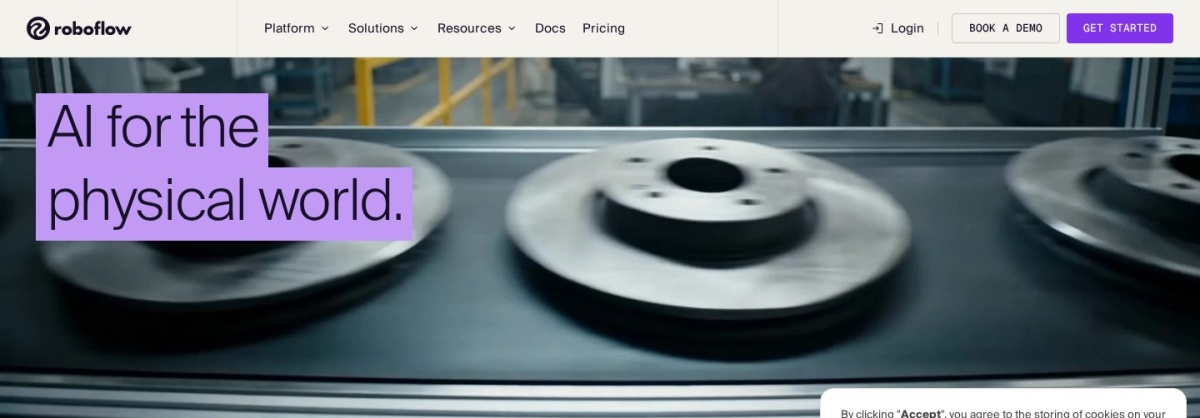
Roboflow homepage, captured Nov 2026.
Roboflow is a computer vision platform for preparing image datasets, training models and deploying inference workflows. Its free tier includes 10 monthly credits, while the $39 Core plan provides 20 credits.
The trade off is its computer vision specialization and credit-based billing, which can increase costs beyond $39 per month. It suits teams building object detection, image classification and visual inspection applications.
Core increases monthly credits for training and inference.Visit roboflow.com
04
TrueFoundry
4.6/5on G2 (59 reviews, checked Nov 2026)
Paid from$25/mo
Best for AI infrastructure and deployment
Free users3
Paid planPro
Billing unitPer user
Pro budget rules10
truefoundry.com
TrueFoundry homepage, captured Nov 2026.
TrueFoundry is an AI infrastructure platform for deploying, observing and governing production AI applications. Its Developer plan supports up to 3 users, while Pro costs $25 per user per month.
The trade off is that infrastructure and model-provider charges are separate from the $25 subscription. It suits engineering teams that need deployment automation and centralized controls rather than a standalone experiment tracker.
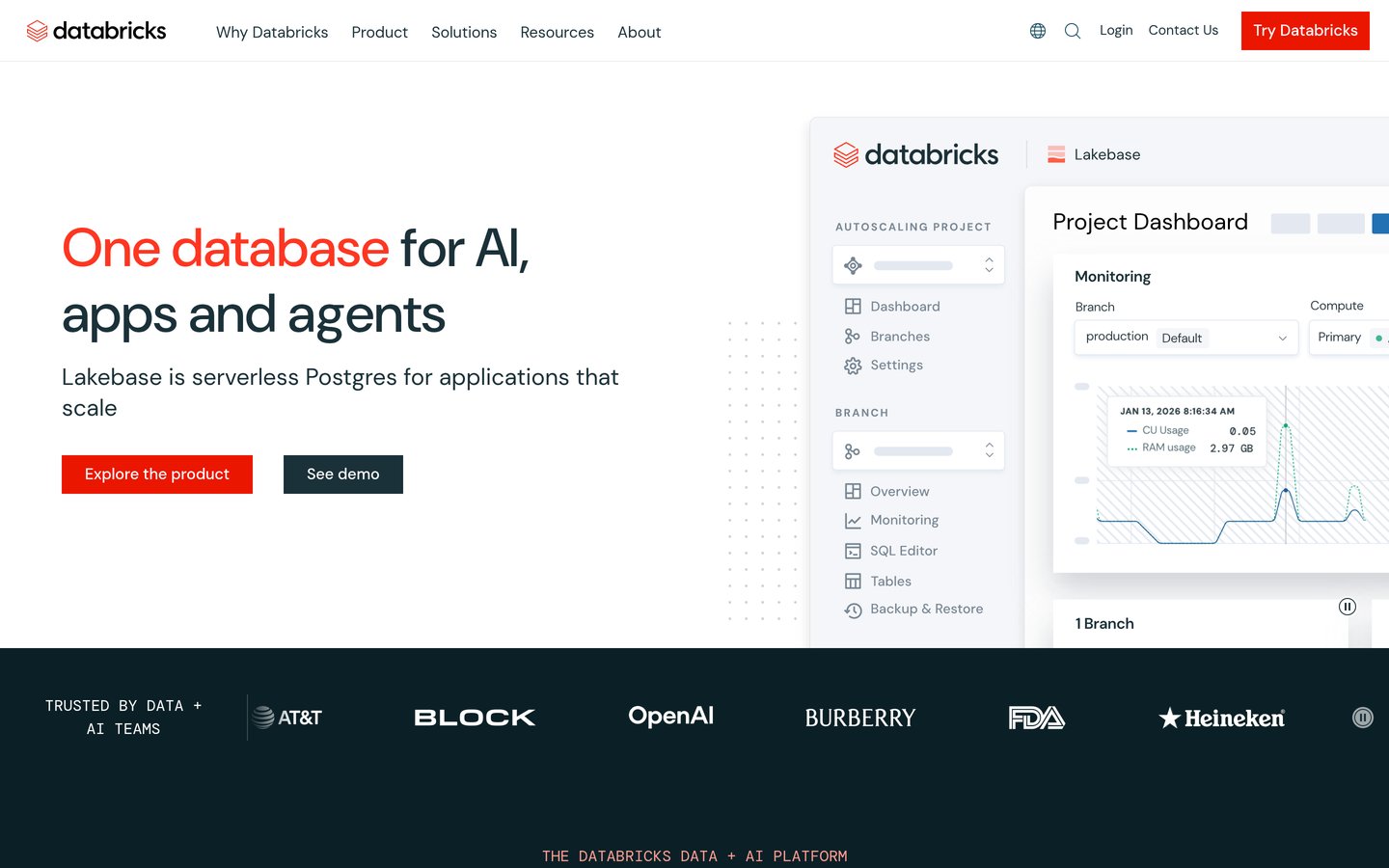
Databricks is a data and AI platform that combines data engineering, machine learning and analytics. With 1,426 G2 reviews, it has an established user community and supports model development through MLflow and centralized data governance.
The trade off is usage-based pricing without a fixed annual subscription cost, making budgeting dependent on workload and infrastructure requirements. It suits enterprises that want to manage data pipelines and machine learning within the same environment.
What we like
Integrated data and ML workflows
MLflow experiment tracking
Centralized governance
Multiple cloud environments
Watch out for
Variable infrastructure costs
Complex for smaller ML projects
Paid usage supports commercial workloads, compute and production services.Visit databricks.com
06
Domino
4.3/5on G2 (28 reviews, checked Nov 2026)
PricingCustom pricing
Best for governed enterprise data science
Managed editionDomino Cloud
Cloud admin licenses5
Cloud service accounts5
Self-managed deploymentAvailable
domino.ai
Domino homepage, captured Nov 2026.
Domino is an enterprise AI platform for collaborative data science, model deployment and governance. Its managed Cloud subscription includes 5 administrator licenses, 5 service accounts and access to managed infrastructure.
The trade off is custom subscription pricing that requires a vendor quote, with advanced governance and infrastructure capabilities available through additional options. It suits large organizations managing sensitive data and complex model development processes.
What we like
Managed and self-managed deployments
Centralized model development
Model monitoring and version management
Enterprise support options
Watch out for
No public fixed subscription price
More complex than individual experiment trackers
Paid subscriptions provide managed or self-managed enterprise AI environments.Visit domino.ai
07
Amazon SageMaker
4.3/5on G2 (57 reviews, checked Nov 2026)
PricingCustom pricing
Best for AWS-native machine learning
InfrastructureAWS
Model trainingManaged
Model deploymentManaged endpoints
BillingUsage-based
aws.amazon.com
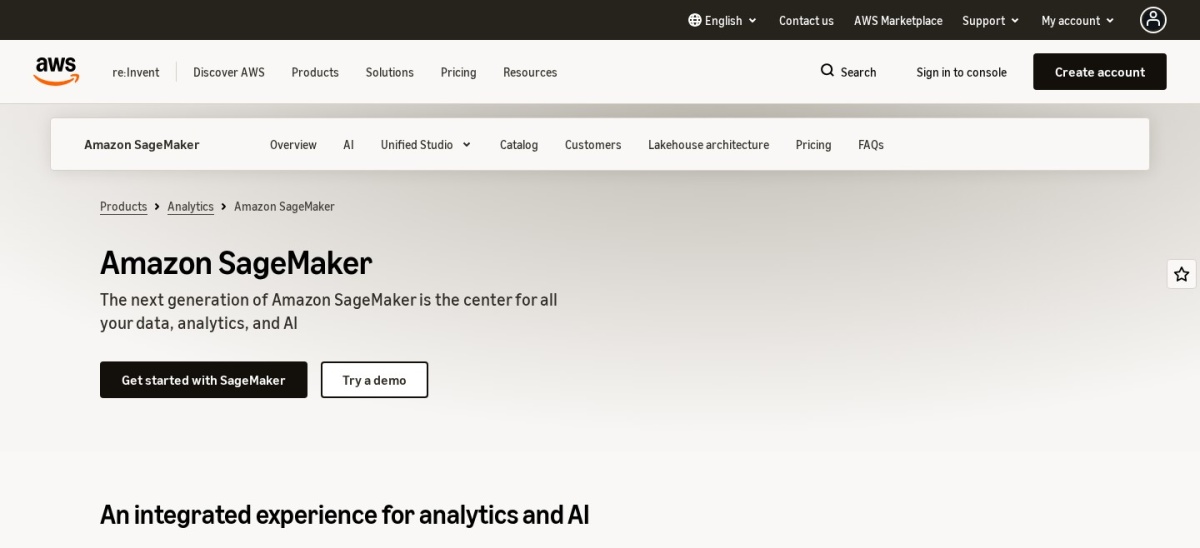
Amazon SageMaker homepage, captured Nov 2026.
Amazon SageMaker is a managed machine learning service for preparing data, training models and running production inference. It holds a 4.3/5 G2 rating from 57 reviews and integrates with the broader AWS infrastructure ecosystem.
The trade off is consumption-based pricing rather than a fixed subscription, with charges varying by training, storage and inference resources. It suits ML engineering teams already using AWS that need flexible infrastructure for production models.
What we like
Managed training infrastructure
Production inference endpoints
Integration with AWS services
Supports different ML frameworks
Watch out for
Costs depend on resource consumption
Requires familiarity with AWS infrastructure
Paid usage covers training, deployment and other selected ML resources.Visit aws.amazon.com
How much does an MLOps platform cost?
Fixed-price subscriptions in this comparison start at $19 per user per month for Comet. TrueFoundry starts at $25 per user per month, while Roboflow offers a credit-based subscription starting at $39 per month.
Enterprise platforms may require negotiated contracts or charge according to resource consumption. Calculate expected training hours, inference traffic, storage and team size before comparing subscription costs.
How we chose
We selected established MLOps products using public G2 reviews, official pricing pages and documented capabilities. The comparison covers experiment management, model development, deployment, monitoring and enterprise governance.
The editorial check date is 22 Nov 2026. Prices and ratings were retrieved from the public sources below, but historical values for that exact date could not be independently confirmed. Annual prices represent starting subscription costs before additional usage, and zero represents variable or quote-based pricing rather than a free commercial subscription.
We excluded discontinued services, products with insufficient public reviews and standalone tools that do not cover substantial parts of the ML lifecycle. ClearML was excluded because its opened G2 profile contained only 13 reviews. No vendor paid for a place, and we do not claim testing for this list.
How to choose the best MLOps platform
Evaluate your machine learning lifecycle, infrastructure requirements and expected operating costs before selecting a platform.
Identify your ML lifecycle requirements. Determine whether you need experiment tracking, dataset versioning, automated training, production deployment or continuous monitoring.
Check framework and infrastructure compatibility. Confirm that the platform supports your existing ML frameworks, cloud infrastructure, deployment environments and data storage systems.
Calculate the complete operating cost. Include user subscriptions, computing resources, model inference, storage and additional usage charges when comparing vendors.
Review governance and collaboration controls. Check model approval workflows, access permissions, audit records and deployment restrictions against your organization's requirements.
FAQ
What is the best MLOps platform overall?
Weights & Biases is our top pick for collaborative machine learning development. It combines experiment tracking, model management and AI application evaluation, making it suitable for teams that prioritize reproducible development workflows.
What is the best free MLOps platform?
Comet and Weights & Biases both offer free plans for experiment tracking and model development. Roboflow also provides a free monthly credit allowance for teams building computer vision applications.
What is the difference between MLOps and DevOps?
DevOps focuses on automating software development, testing and deployment. MLOps extends these practices to machine learning by addressing dataset versioning, model training, experiment reproducibility, performance monitoring and model retraining.
Can MLOps platforms detect model drift?
Many MLOps platforms provide production monitoring tools that identify changes in input data or model behavior. Availability varies by vendor and subscription, so confirm drift detection and alerting capabilities before purchasing.
Do small teams need an MLOps platform?
Small teams can benefit from experiment tracking and model versioning before adopting more advanced deployment automation. Free or entry-level subscriptions help establish reproducible workflows without requiring a substantial initial infrastructure investment.
SaaS SEO and WordPress specialist with about 8 years of experience. Rakib compares WordPress plugins, themes, hosting and software using public pricing, documentation and user reviews. See how we rank.