PandaDoc is the best AI tool for proposal creation for most teams, pairing reusable templates, pricing tables and e-signatures with a 4.7/5 G2 rating from 3,703 reviews. Pick Proposify for polished branded proposals, or Qwilr for interactive web proposals with built-in payments.
How we make this list: we compare pricing pages, product documentation and public user reviews, then re-check every price before each update. No product paid for a place. Disclosure.
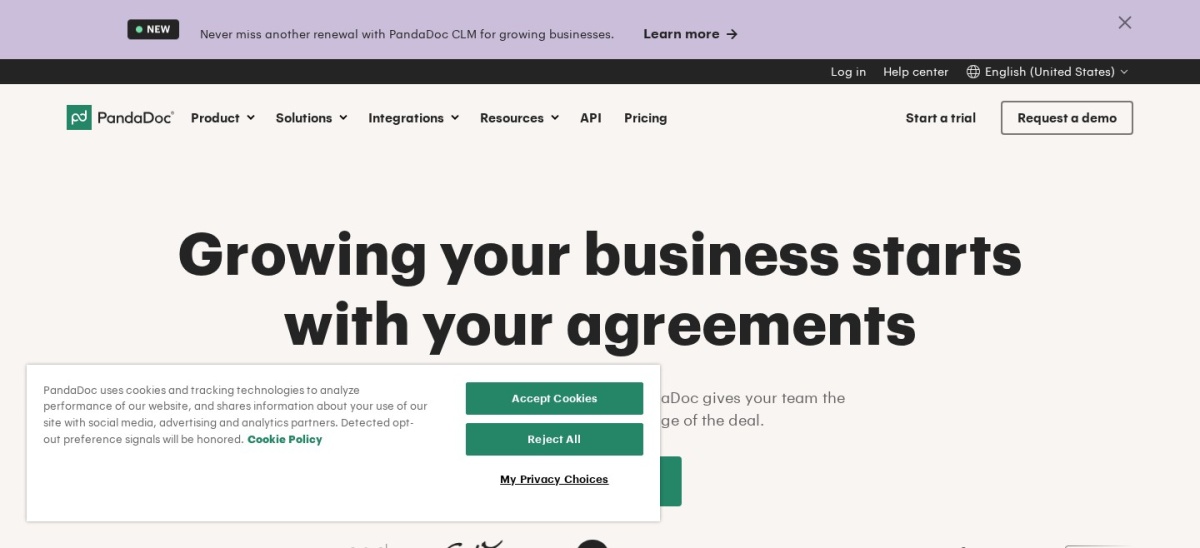
PandaDoc leads on breadth: templates, pricing tables, payments and e-signatures, rated 4.7/5 on G2 from 3,703 reviews.
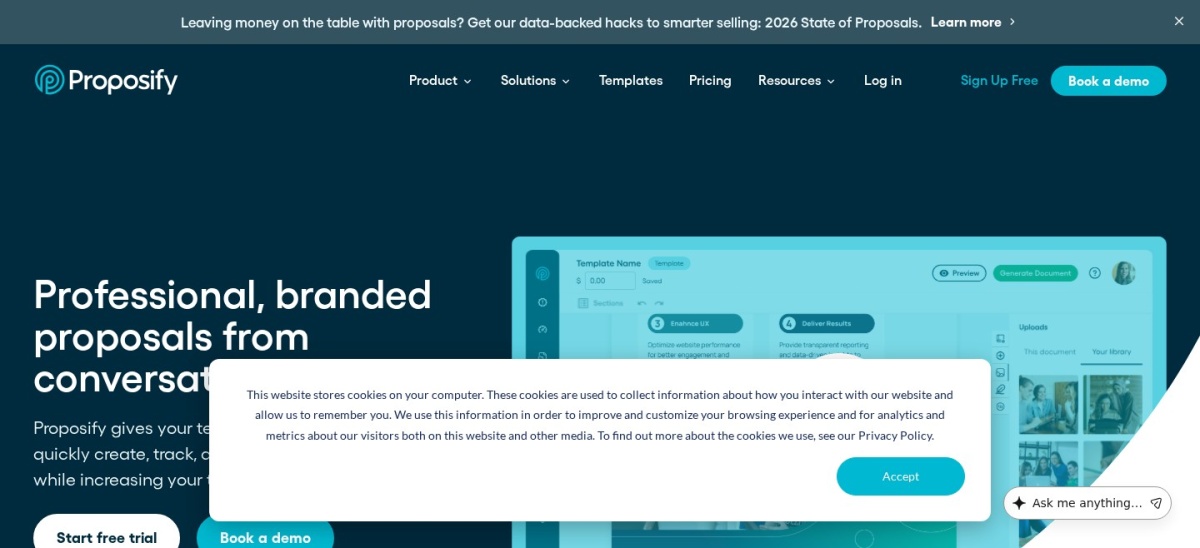
Proposify's Build plan costs $39 a user a month billed yearly and includes AI drafting, a content library and unlimited documents.
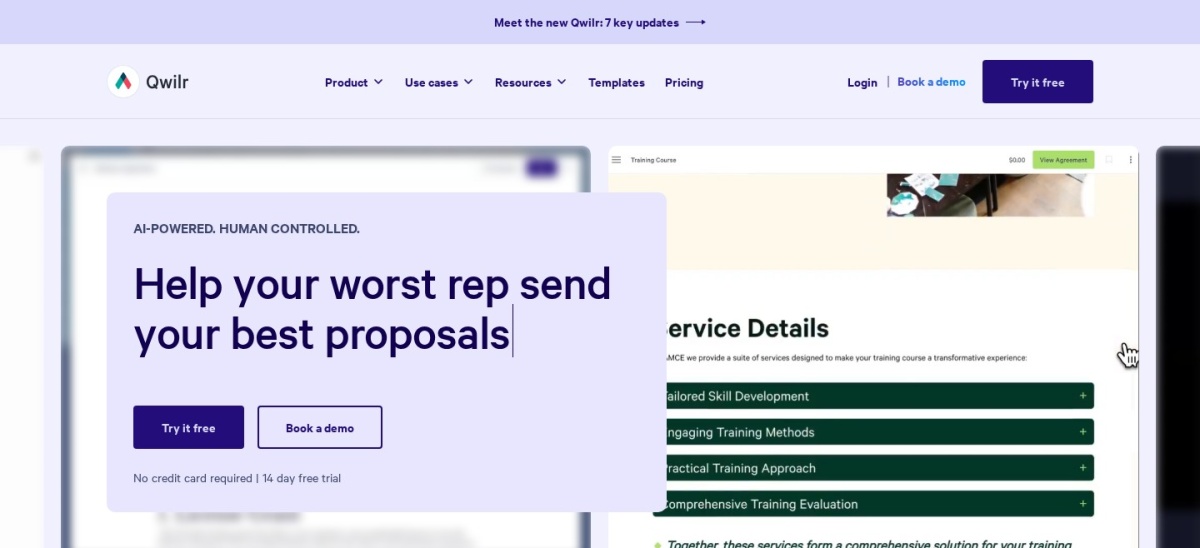
Qwilr turns proposals into interactive web pages at $35 a user a month, with e-signatures and payments on the same page.
Better Proposals is the cheapest paid plan at $13 a user a month billed yearly, with signatures and payment collection built in.
Loopio and Responsive are the enterprise picks for RFPs: Loopio is quote-only, and Responsive starts at $10,000 a year.
What to look for in an AI proposal tool
A proposal tool should do more than format a document. It should reuse approved content, pull prices from a table, track when a buyer opens it and collect a signature without a second app.
AI drafting is the newest part. In these tools it usually means drafting from a prompt or from your own content library, then a person edits the result. Our guide on adding an AI chatbot to WordPress shows the same pattern on a website: the AI drafts, a person checks.
Pricing is mostly per user per month, billed yearly. The cheapest paid plan here is $13 a user a month, while the enterprise RFP tools start at $10,000 a year or quote-only, so the gap is wide.
Free plans are thin in this category. Only PandaDoc offers a free plan, and it covers e-signatures rather than full proposals, so most teams should budget for at least one paid seat.
PandaDoc is a document platform that covers proposals, quotes, contracts and e-signatures in one flow. The free eSign plan covers 5 documents a month, and Starter at $19 a user a month adds unlimited documents, templates and pricing tables for a team that sends proposals every week.
The trade off is that the proposal features worth paying for sit above Starter. CRM workflows, approval workflows and payments need Business at $49 a user a month. It suits sales teams that want one tool from first draft to signed deal.
What we like
Largest review base in this list at 3,703 G2 reviews
Free eSign plan for light use
Templates, pricing tables and payments in one flow
Deep CRM integrations with HubSpot and Salesforce
Watch out for
Business at $49 a user a month is a big jump from Starter
Pay-as-you-go Launch plan caps documents at 60 a year
Proposify is a proposal tool built around branded templates, a content library and e-signatures. Build at $39 a user a month billed yearly includes unlimited documents and signatures, AI drafting, an MCP server and integrations, with 1 collaborator seat.
The trade off is price. Build costs $49 a user a month on monthly billing, and the next tier, Grow, is $65 a user a month billed yearly. It suits agencies and sales teams that send polished proposals every week.
What we like
Polished templates with a shared content library
AI drafting included on the entry plan
Page-level analytics show what buyers read
4.6/5 on G2 from 1,148 reviews
Watch out for
No free plan, only a trial
Grow at $65 a user a month is a steep step up
Editing and customisation draw the most complaints in G2 reviews
Qwilr is a proposal platform that turns proposals into interactive web pages instead of static PDFs. Starter at $35 a user a month billed yearly includes the editor, e-signatures, QwilrPay, page analytics and HubSpot, Pipedrive and Zoho CRM links.
The trade off is branding. Custom fonts and white labelling sit on the Enterprise tier at $59 a user a month, and Salesforce needs that tier too. It suits teams that want buyers to sign and pay on the same page.
What we like
Proposals look like web pages, not PDFs
Signatures and payments on the same page
Page analytics show buyer engagement
4.6/5 on G2 from 917 reviews
Watch out for
No free plan, only a 14-day trial
Custom fonts and Salesforce need Enterprise
Monthly billing raises Starter to $49 a user a month
GetAccept is a digital sales room platform that puts proposals, quotes, e-signatures and buyer engagement in one shared space. eSign at $25 a user a month covers unlimited e-signatures, templates and contract management, and Professional at $49 adds deal rooms and GetAccept AI.
The trade off is the seat minimum. Professional is billed yearly with a 5-user minimum, so a small team pays for 5 seats to get deal rooms and AI. It suits B2B teams running multi-stakeholder deals.
Better Proposals is a proposal tool built for freelancers and small teams, with templates, digital signatures and payment collection in one flow. Starter costs $13 a user a month billed yearly, or $19 a month on monthly billing, and covers up to 10 proposals a month.
The trade off is scale. Starter is a single seat, and multi-user accounts, Zapier and API access need higher tiers. It suits a solo consultant or small agency that wants a client to accept and pay in one step.
What we like
Cheapest paid plan in this list at $13 a user a month
Signatures and payment collection built in
Simple editor with suggested content
14-day trial with no card required
Watch out for
Only 51 G2 reviews, the smallest base here
Starter caps proposals at 10 a month
Prices differ across pages: $13 annual or $19 monthly
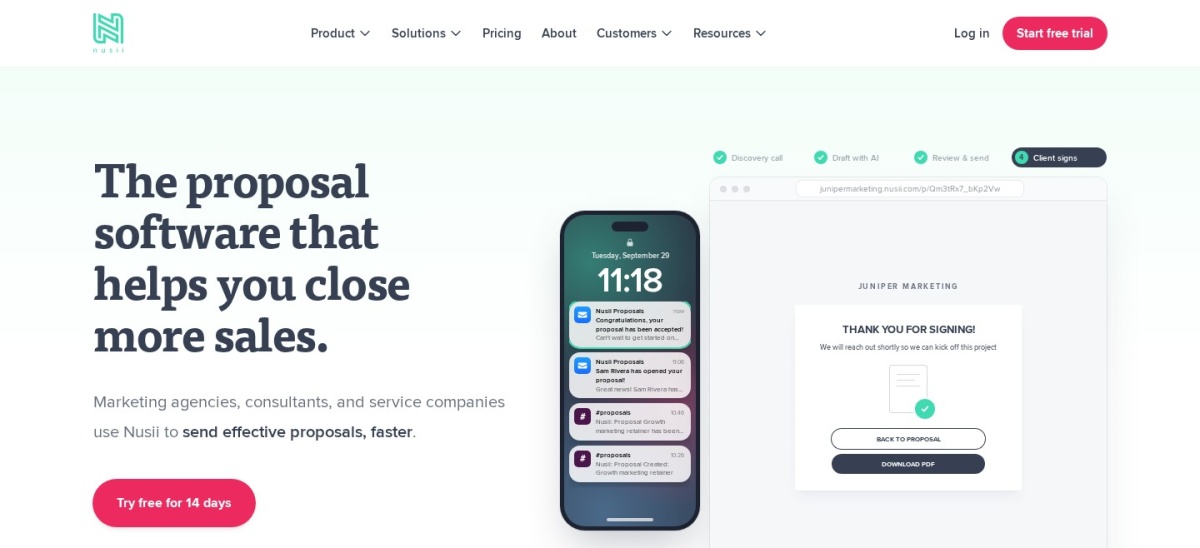
Nusii is a proposal tool for agencies, consultants and service companies that sends proposals as web pages with a client link. Freelancer at $29 a month covers 1 user, 5 active proposals and online signing, and its homepage shows an AI step that drafts a proposal before review.
The trade off is the small review base. Nusii scores 4.7 out of 5 on G2, but from only 26 reviews, and payments and CRM links start on Agency at $49 a month. It suits small agencies that want simple, flat pricing.
Proposable is a simple proposal tool with customisable web templates, a content library and real-time alerts when a buyer opens a proposal. Solo at $19 a user a month covers one user, and Team at $39 adds more seats and features.
The trade off is momentum. Recent G2 reviewers mention platform reliability and a lack of updates as reasons for switching away. It suits a small team that wants a quick, simple proposal flow.
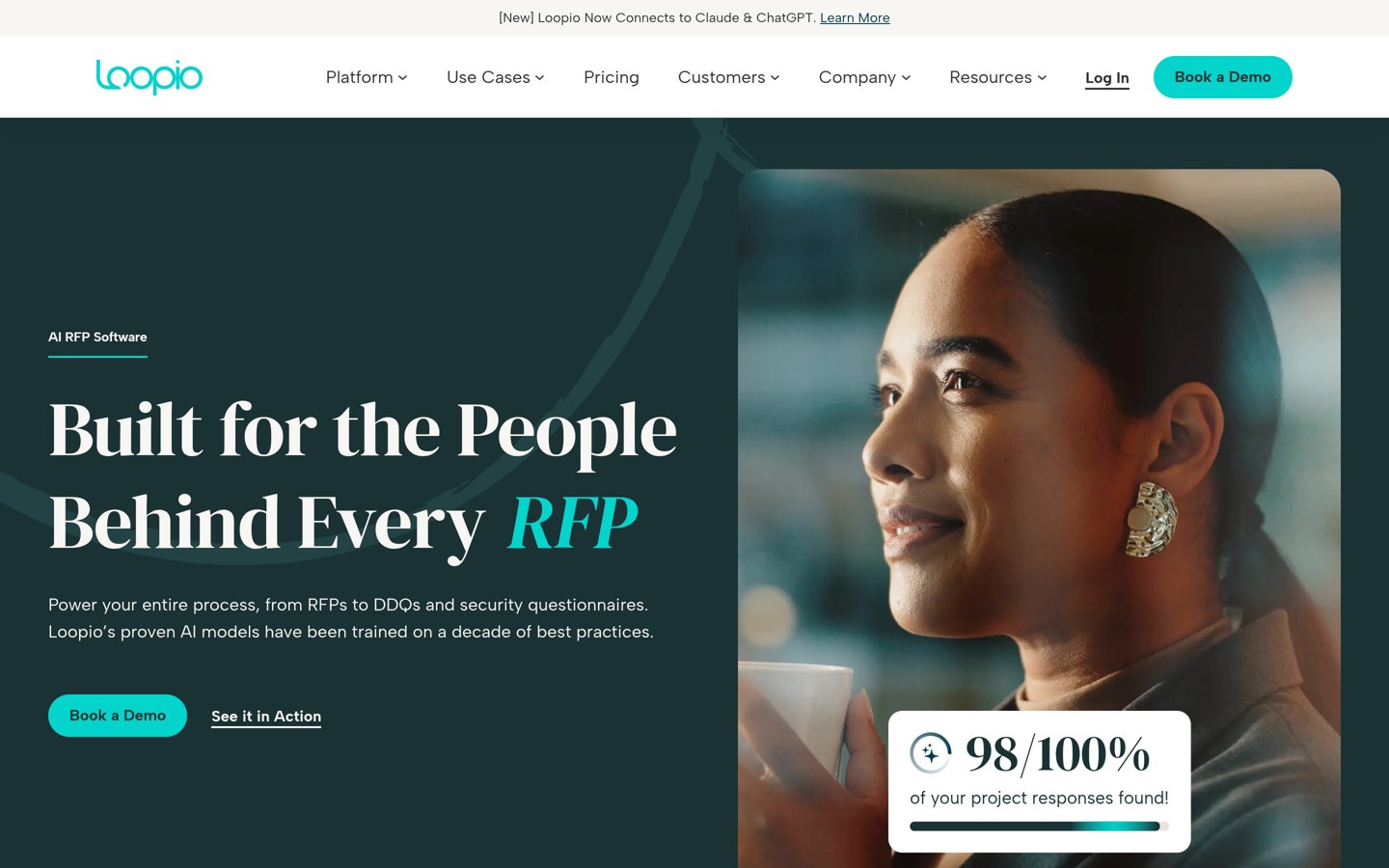
Loopio is an RFP response platform built around a central library of approved answers. Its Magic feature fills in answers from that library, and a Close the Loop workflow feeds winning answers back in, so the library stays current.
The trade off is price. Loopio publishes no prices, and third-party procurement data puts the median contract near $24,318 a year, with Foundations starting near $20,000 a year for 10 seats. It suits teams with a dedicated proposal manager.
What we like
Strongest content library governance here
Magic auto-fill from approved answers
9.7/10 G2 score for customer support
Watch out for
No published price; every deal is a custom quote
Seat-based pricing gets costly as more experts join
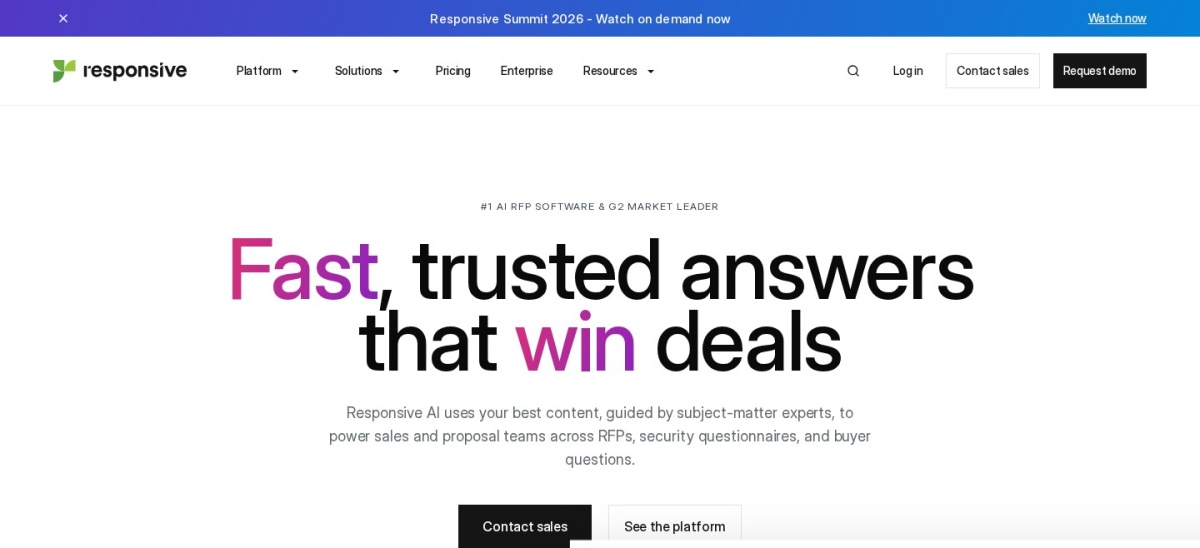
Responsive is an enterprise response platform for RFPs, RFIs, security questionnaires and buyer questions. Formerly RFPIO, its Emerging plan starts from $10,000 a year and includes a content library with unlimited storage, Responsive AI agents and unlimited guest collaborators.
The trade off is the bill beyond the platform fee. User licences and add-ons are charged separately, and Growth and Enterprise are quote-only, so the total is well above $10,000 a year. It suits large teams answering questionnaires at volume.
What we like
Broadest scope here, including RFQs and buy-side requests
In these tools, AI drafting usually means a first draft from a prompt, a template or your own content library. Proposify, Qwilr, GetAccept, Loopio, Responsive and Nusii all list AI drafting or AI assistance on their own pages.
The draft is a starting point, not a finished proposal. Prices, dates, scope and client names still need a person to check, because the AI can only reuse what your library or prompt gives it.
If AI is your main reason for buying, check which plan includes it before you pay. In several tools here, the AI features sit on a higher tier than the entry plan, as with Qwilr and GetAccept.
How we chose
We started from the proposal tools with the largest review bases on G2, then kept nine that cover solo freelancers, sales teams and enterprise RFP teams.
Prices come from each vendor's pricing page, checked on 24 November 2026, using the regular annual-billed price, not sale or first-year offers. Ratings and review counts come from G2 on the same day. Where a vendor publishes no price, the list says so and gives the third-party estimate only in the text.
We left out tools with no published price and no usable estimate, and tools with fewer than 20 G2 reviews. No vendor paid for a place, and we do not claim hands-on testing for this list.
How to choose an AI proposal tool
Start with who sends proposals and how often, then match the tool to that volume.
Count your proposals per month. A freelancer sending 5 a month fits Nusii or Better Proposals, while a team sending 50 needs unlimited documents on Proposify or PandaDoc.
Check which plan holds the AI features. AI drafting is on the entry plan at Proposify, but on higher tiers at Qwilr and GetAccept, so read the plan table before you buy.
Test the signature and payment step. Send a trial proposal to yourself and sign it. The tools that collect payment on acceptance save a separate invoicing step.
Price the seats, not the headline. Per-user tools charge for everyone who edits, while Nusii charges a flat monthly fee and Responsive charges a platform fee plus licences.
FAQ
What is the best AI tool for proposal creation?
PandaDoc is the best pick for most teams. It covers templates, pricing tables, payments and e-signatures in one flow, and it holds a 4.7 out of 5 rating on G2 from 3,703 reviews. Its free eSign plan covers 5 documents a month.
Which AI proposal tool is cheapest?
Better Proposals is the cheapest paid plan at $13 a user a month billed yearly, or $19 on monthly billing. PandaDoc is next at $19 a user a month for Starter, and it is the only tool here with a free plan.
Do these tools write the whole proposal for me?
No. The AI drafts from a prompt or your content library, and a person still checks prices, dates, scope and client names. The draft saves time on structure and wording, but the final proposal is yours to approve.
What is the best proposal tool for RFPs?
Loopio is the best fit for dedicated RFP teams, with a governed content library and Magic auto-fill, but it is quote-only. Responsive is the enterprise alternative, with Emerging starting from $10,000 a year.
Can I collect payment when a client accepts?
Yes, with several tools here. PandaDoc, Qwilr, GetAccept, Better Proposals and Nusii all collect payment on acceptance, though on some tools that needs a higher tier, so check the plan table first.
Is there a free AI proposal tool?
Not a full one. PandaDoc has a free eSign plan for 5 documents a month, but full proposals need a paid plan. The other tools offer free trials of 14 days instead of a free plan.
SaaS SEO and WordPress specialist with about 8 years of experience. Rakib compares WordPress plugins, themes, hosting and software using public pricing, documentation and user reviews. See how we rank.