Hugging Face leads for open-model breadth and deployment flexibility, with a 4.4 G2 rating across 92 reviews and a $9/month PRO plan. Claude suits long-context text analysis at $17/month on Pro, while ChatGPT fits general-purpose language workflows starting at $20/month.
How we make this list: we compare pricing pages, product documentation and public user reviews, then re-check every price before each update. No product paid for a place. Disclosure.
Hugging Face offers a free tier plus a $9/month PRO account and holds a 4.4 rating from 92 G2 reviews.
Claude holds a 4.7 G2 rating across 2,234 reviews, with paid plans starting from $17/month.
ChatGPT carries a 4.6 rating across 5,497 G2 reviews and starts at $20/month on annual billing.
spaCy is free and open source under the MIT license and rates 4.5 across 21 G2 reviews.
IBM Watson Natural Language Understanding includes a free Lite tier of 30,000 items/month and Standard usage starting at $0.003 per item.
What to look for in natural language processing software
Choosing natural language processing software starts with separating managed APIs, open-source libraries, and hosted model hubs. Managed cloud services handle scaling and compliance out of the box, while open libraries give teams full control over custom pipelines.
Pricing models vary sharply across the category. Subscription tiers charge flat monthly or per-seat fees, whereas inference and language APIs bill per character, token, or text item with volume discounts.
Match the tool to your workload rather than chasing raw model size. Entity extraction, sentiment scoring, classification, and retrieval need different trade-offs around latency, data privacy, and ongoing engineering time.
Check usage caps, idle compute billing, and custom model fees before committing. A low entry price can rise quickly once endpoints stay running continuously or custom models are deployed.
For structured entity and sentiment extraction on IBM Cloud
Usage-based (free tier, then per item)
Free plan
4.2/5
Price ladder: cheapest paid plan per year
List prices, USD, checked Nov 2026
spaCyFree
Amazon ComprehendFree
Azure AI LanguageFREEUsage-based
IBM Watson NLUFREEUsage-based
Hugging FaceFREE$108
ClaudeFREE$204
ChatGPTFREE$240
The 7 best natural language processing software
01
Hugging Face
4.4/5on G2 (92 reviews, checked Nov 2026)
Paid from$9/mo
Best for open-source model hubs and hosted deployment
Entry paid tier$9/mo PRO
Free tierYes
Team tier$20/user/mo
G2 rating4.4 (92)
huggingface.co
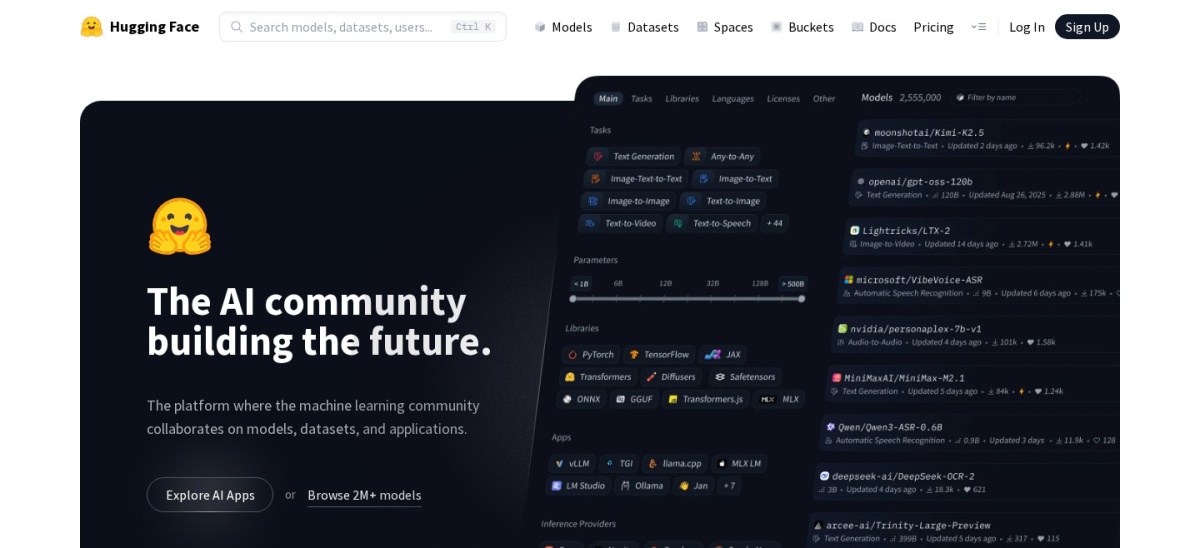
Hugging Face homepage, captured Nov 2026.
Hugging Face is a hub for machine learning models, datasets, and Spaces alongside inference tooling, with a free tier and a $9/month PRO account. PRO includes 1 TB of private storage, $2/month in inference credits, and 8x ZeroGPU quota.
The trade off is that dedicated GPU endpoints and extra storage add variable costs above the $9/month PRO plan. It suits ML engineers who want model portability and hosted demos without building everything from scratch.
What we like
Large catalog of open models, datasets, and interactive Spaces
Affordable $9/month PRO tier with higher storage and quota
Supports both serverless routing and dedicated endpoints
Watch out for
Dedicated GPU endpoints bill hourly and can add up
Model choice requires teams to run their own evaluations
PRO adds 1 TB private storage, $2 monthly inference credits, and 8x ZeroGPU quota.Visit huggingface.co
02
Claude
4.7/5on G2 (2,234 reviews, checked Nov 2026)
Paid from$17/mo
Best for long-context analysis and structured writing
Paid plan entryFrom $17/mo
Free tierYes
G2 rating4.7 (2,234)
FocusLong-context NLP
claude.com
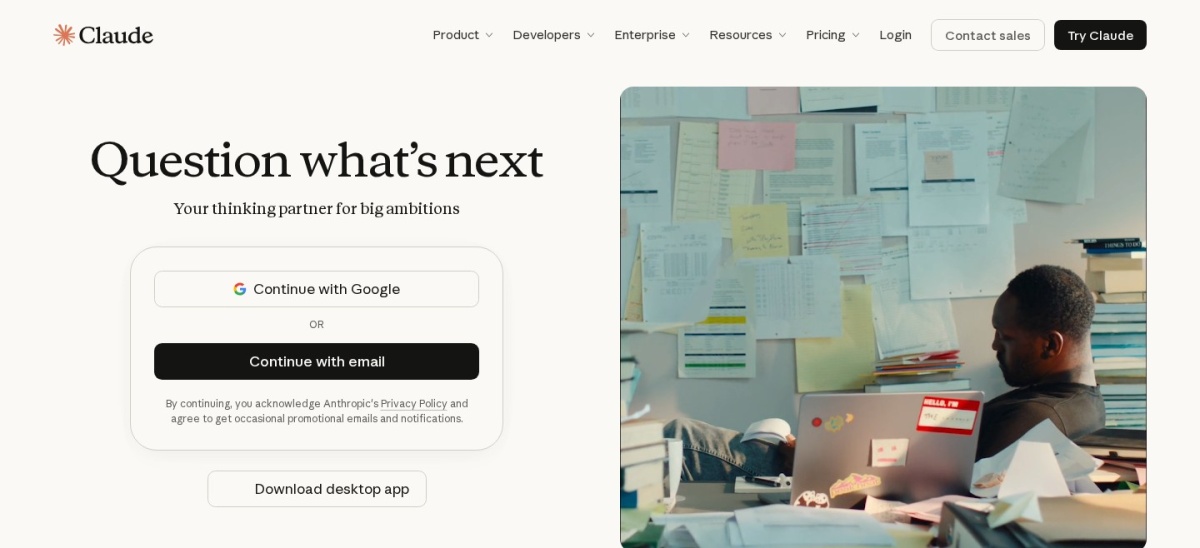
Claude homepage, captured Nov 2026.
Claude is an AI assistant built around long-context comprehension, structured reasoning, and clear text generation, offering a free tier and paid plans starting from $17/month. Reviewers frequently highlight its tone and ability to work through dense documents.
The trade off is message caps on lower tiers starting from $17/month and fewer native media generation features than some rivals. It suits analysts, writers, and developers working with lengthy documents and code.
What we like
Strong handling of long documents and multi-step reasoning
Clear, structured outputs with natural phrasing
Free tier available before upgrading
Watch out for
Usage limits can interrupt heavy sessions
Less focused on image or video generation
Paid plans expand usage capacity and access to advanced reasoning features.Visit claude.com
03
ChatGPT
4.6/5on G2 (5,497 reviews, checked Nov 2026)
Paid from$20/mo
Best all-around language assistant for everyday tasks
Standard seat$20/mo annual
Free tierYes
G2 rating4.6 (5,497)
Primary useGeneral NLP tasks
openai.com
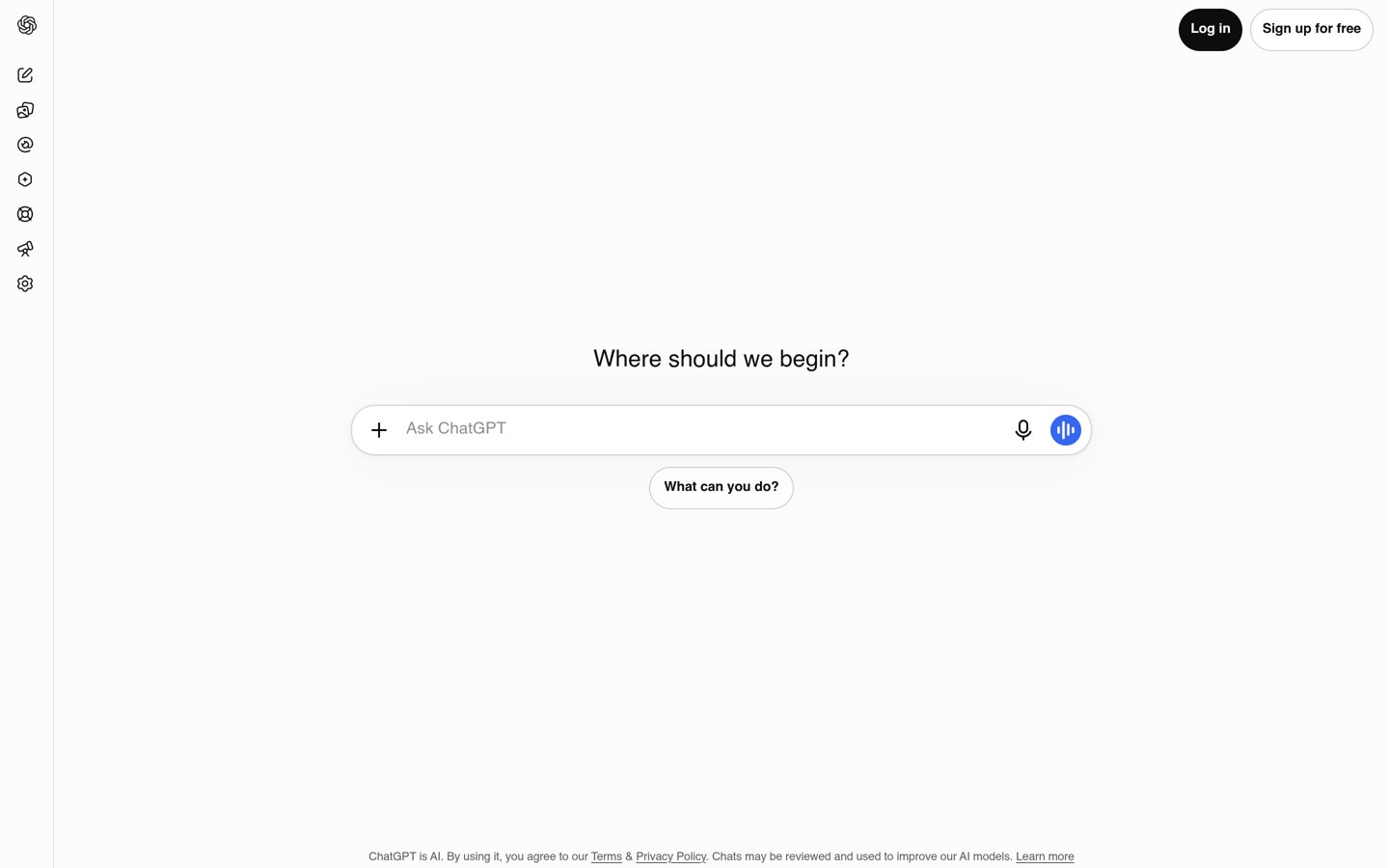
ChatGPT homepage, captured Nov 2026.
ChatGPT is a general-purpose AI assistant from OpenAI used for drafting, summarization, search, and coding, with a free option and a $20/month standard seat when billed annually. It carries a 4.6 rating across 5,497 G2 reviews.
The trade off is paying $20/month on annual billing (or $25/month monthly) for higher limits and reviewing outputs for factual slips. It suits teams and individuals wanting one broad tool for varied text tasks.
What we like
Wide versatility across writing, research, and coding
Large review base confirming broad everyday adoption
Includes search, projects, and voice capabilities
Watch out for
Responses still require human fact-checking
Monthly billing costs more than annual seat pricing
Standard paid seats raise usage limits and unlock broader workspace and model features.Visit openai.com
04
spaCy
4.5/5on G2 (21 reviews, checked Nov 2026)
PriceFree
Best free open-source Python library for custom pipelines
PriceFree (MIT)
LanguagePython
G2 rating4.5 (21)
DeploymentSelf-hosted
spacy.io
spaCy homepage, captured Nov 2026.
spaCy is a Python library for tokenization, part-of-speech tagging, dependency parsing, and named entity recognition, released free under the MIT license. It holds a 4.5 rating across 21 G2 reviews.
The trade off is having no hosted SaaS or vendor support plan, as it is free and self-managed. It suits Python engineers building fast, customizable production NLP pipelines.
What we like
Free and open source with a permissive MIT license
Built for speed and structured production pipelines
Supports pretrained models across many languages
Watch out for
Requires Python engineering and infrastructure setup
No managed cloud endpoint included out of the box
No paid SaaS tier; free to use and extend in your own environment.Visit spacy.io
05
Amazon Comprehend
4.3/5on G2 (86 reviews, checked Nov 2026)
PriceFree
Best managed NLP API for AWS-native workloads
Base unit rate$0.0001 / 100 chars
Topic modeling$1.00 / job
G2 rating4.3 (86)
EcosystemAWS
aws.amazon.com
Amazon Comprehend homepage, captured Nov 2026.
Amazon Comprehend is an AWS managed NLP service for entity extraction, sentiment analysis, syntax parsing, and topic modeling, billed per 100-character unit starting at $0.0001. It holds a 4.3 rating from 86 G2 reviews.
The trade off is usage-based billing where active custom endpoints and jobs cost extra—such as $1.00 per topic modeling job—and total spend scales with volume. It suits AWS teams extracting insights from large text sets.
What we like
Pretrained models for sentiment, entities, and PII detection
Integrates directly with AWS permissions and data stores
No need to train baseline models from scratch
Watch out for
Custom endpoints and jobs add separate charges
Nuanced domain phrasing can still need manual review
PricingUsage-based (free tier, then pay-as-you-go)
Best managed text analytics for Microsoft Azure stacks
Billing modelPay-as-you-go
Free tierYes (throttled)
G2 rating4.3 (78)
EcosystemMicrosoft Azure
azure.microsoft.com
Azure AI Language homepage, captured Nov 2026.
Azure AI Language is a managed Microsoft service for sentiment detection, key phrase extraction, summarization, and custom language models, offering a free tier and pay-as-you-go pricing. It rates 4.3 out of 5 across 78 G2 reviews.
The trade off is usage throttling once free-tier limits are hit and pay-as-you-go charges across text records, training, and hosting. It suits teams already standardized on Microsoft Azure infrastructure.
What we like
Broad text analysis features including PII redaction and Q&A
Supports both prebuilt models and custom domain training
Fits naturally into Azure security and cloud workflows
Watch out for
Free tier stops or throttles once monthly limits are reached
Custom training and hosting add separate cost dimensions
Best for structured entity and sentiment extraction on IBM Cloud
Lite plan30,000 items/mo free
Standard tier 1$0.003 / NLU item
Custom model$800 / mo
G2 rating4.2 (35)
cloud.ibm.com
IBM Watson Natural Language Understanding homepage, captured Nov 2026.
IBM Watson Natural Language Understanding extracts entities, keywords, categories, sentiment, and semantic roles from text, starting with a free Lite plan of 30,000 NLU items/month. Standard pay-as-you-go starts at $0.003 per NLU item for the first 250,000 items.
The trade off is multi-feature requests multiplying item counts at $0.003 per item and custom models costing $800/month. It suits organizations running text analysis on IBM Cloud.
What we like
Generous 30,000-item monthly free Lite tier for testing
Clear tiered volume rates as usage scales past 250,000 items
Extracts structured entities, relations, and keywords
Watch out for
Enabling multiple features per text unit increases billable items
Custom entity and relation models carry a high monthly fee
Standard pay-as-you-go scales past the free Lite limit with tiered volume rates.Visit cloud.ibm.com
How we chose
We built this shortlist from established natural language processing platforms, APIs, and libraries widely used for text analysis, language understanding, and generation across developer and business workflows.
All pricing figures, plan details, and G2 ratings and review counts were checked on 22 Nov 2026 against vendor documentation and public review pages.
We excluded discontinued standalone tools whose domains redirect to parent platforms—such as MonkeyLearn redirecting to Medallia—as well as products lacking verifiable pricing or active review profiles. No vendor paid for a place, and we do not claim testing for this list.
How to pick the right NLP tool in 4 steps
Follow these four steps to narrow down the right option for your stack:
FAQ
What is the difference between NLP libraries and hosted NLP APIs?
Libraries like spaCy run in your own code and environment for free, giving full control over pipelines. Hosted APIs and assistants like Amazon Comprehend, Azure AI Language, or IBM Watson run on cloud infrastructure and bill by usage or subscription.
Is Hugging Face free to start with?
Yes, Hugging Face has a free tier for exploring models, datasets, and Spaces. Its PRO plan costs $9/month and adds higher storage, inference credits, and ZeroGPU quota.
How does IBM Watson Natural Language Understanding price usage?
IBM offers a free Lite plan up to 30,000 NLU items per month. Standard pay-as-you-go starts at $0.003 per NLU item for the first 250,000 items, with lower per-item tiers at higher volume.
How does Amazon Comprehend calculate costs?
Amazon Comprehend charges by usage units—such as $0.0001 per 100-character unit on base analysis—plus separate charges for features like topic modeling at $1.00 per job or custom endpoints.
Should small teams start with a subscription assistant or a cloud API?
Teams focused on drafting, summarizing, and analyzing documents interactively often start with a subscription assistant like Claude or ChatGPT. Teams automating pipelines inside existing apps usually prefer an API or library.
Why do cloud NLP bills sometimes exceed early estimates?
Extra charges often come from always-on endpoints, custom model training or hosting, or multiplying features per document. Testing with realistic batch sizes helps spot those costs early.
SaaS SEO and WordPress specialist with about 8 years of experience. Rakib compares WordPress plugins, themes, hosting and software using public pricing, documentation and user reviews. See how we rank.