Kiva is the best fundraising platform for very early startups that need a small loan, with 0 percent interest and no equity given up. Kickstarter is the best for product launches, Republic is the best for equity raises from everyday investors, and Honeycomb is the best for debt crowdfunding.
How we make this list: we compare pricing pages, product documentation and public user reviews, then re-check every price before each update. No product paid for a place. Disclosure.
Kiva is the top-rated platform here at 4.8 out of 5 on G2, with 0 percent interest microloans up to 15,000 dollars for early founders.
Kickstarter is the best launchpad for a physical product, with a 5 percent platform fee and all-or-nothing funding that protects backers.
Republic, Seedrs and Wefunder sell equity under SEC rules, with success fees of about 6 to 7 and a half percent of the amount raised.
StartEngine was dropped from this list because its homepage blocks every screenshot service we tried, and F6S was dropped for the same reason.
Indiegogo ended flexible funding in October 2025, so every new campaign is now all or nothing, just like Kickstarter.
What to look for in a fundraising platform
A fundraising platform is a website that helps a startup raise money from many small backers or investors at once. Some sell equity, some pre-sell a product for rewards, some collect donations, and some arrange loans. The model you pick decides what you give up and what rules apply.
Equity crowdfunding runs under SEC Regulation Crowdfunding, which lets a private company raise up to 5 million dollars in a year from the general public, including investors who are not accredited. The platform takes a percentage of the raise, and the company files a Form C with the SEC.
Rewards crowdfunding is different: backers pre-order a product, the founder keeps all the equity, and the campaign doubles as market validation. It works best for hardware and creative products with something shippable to offer.
Fees run from 0 to about 7 and a half percent of the amount raised, plus payment processing of about 3 percent. Budget the full campaign, not just the platform cut: video production, legal review and marketing often cost more than the fee itself.
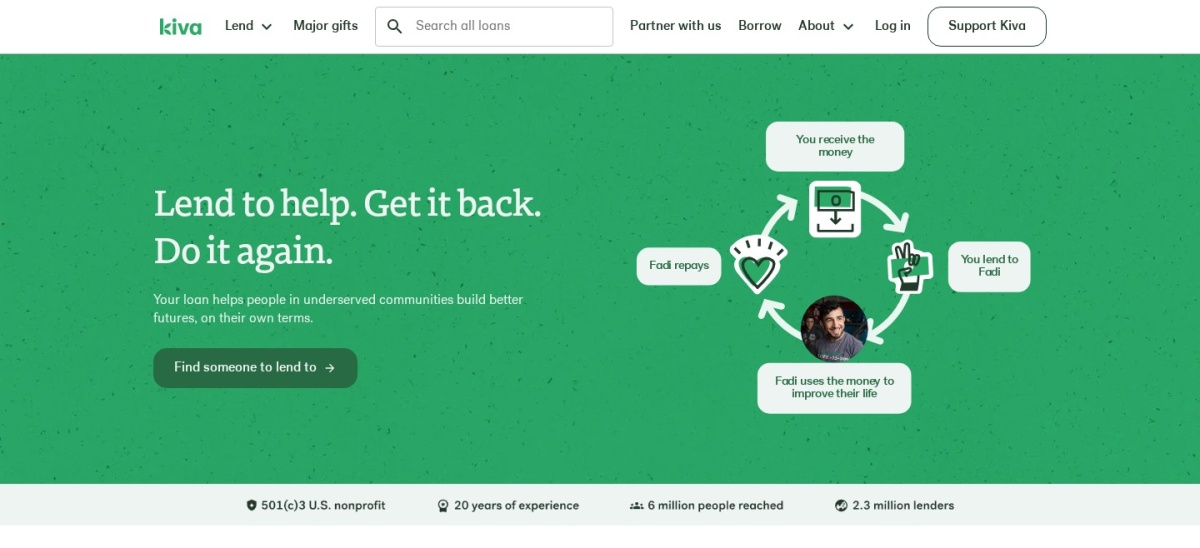
Kiva is a nonprofit that lends to entrepreneurs in underserved communities, with 0 percent interest loans up to 15,000 dollars for United States borrowers. Founders apply, tell their story, and a crowd of lenders funds the loan, which is repaid over months. It holds a 4.8 out of 5 G2 rating from 20 reviews.
The trade off is size and scope. Loans top out at 15,000 dollars, so Kiva funds a first step, not a full seed round, and it is a loan, not equity, so the money must be repaid. The G2 rating also rests on only 20 reviews, and Kiva serves small businesses rather than venture-scale startups.
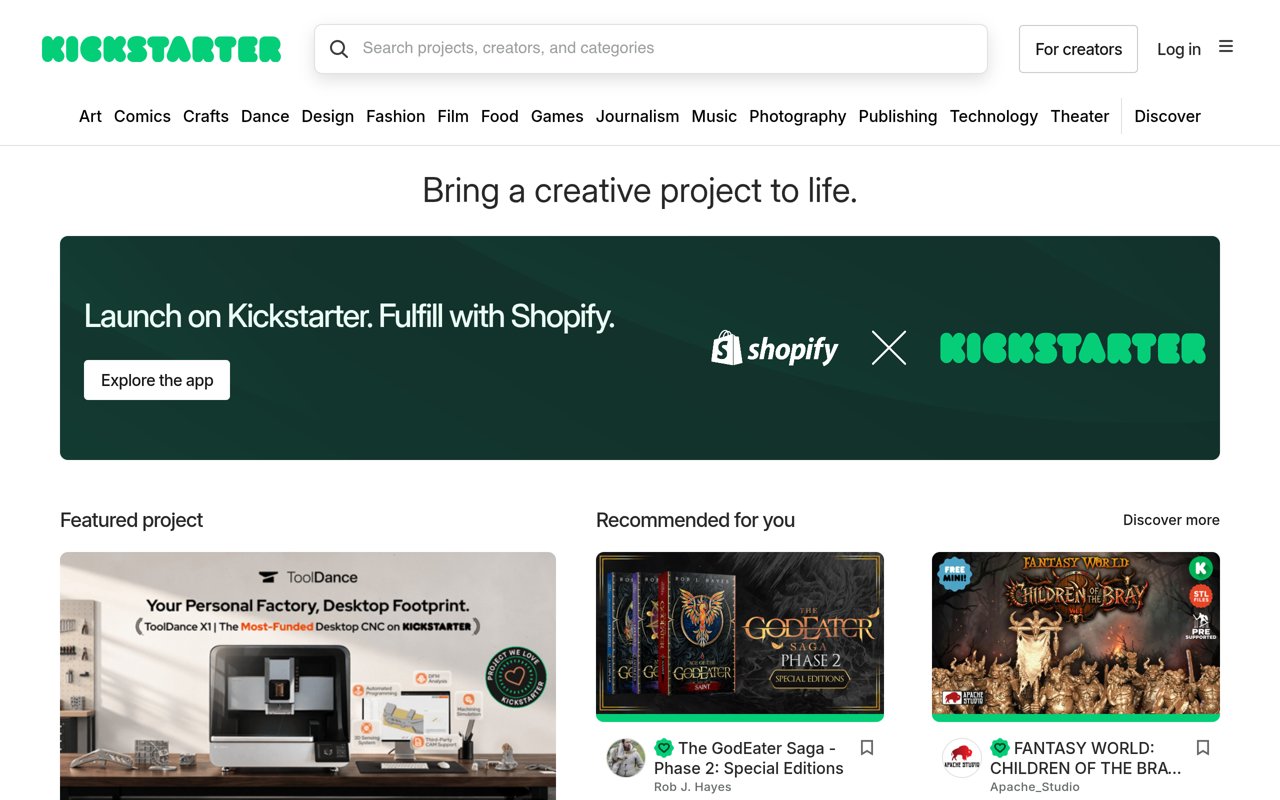
Kickstarter is the original crowdfunding platform and still the best launchpad for a physical product, game or creative project. Backers pledge money for rewards, not shares, so founders keep 100 percent of their equity. It holds a 3.8 out of 5 G2 rating from 20 reviews.
The trade off is the all-or-nothing model and the category limits. A project only collects if it hits its goal, which protects backers but leaves failed campaigns with nothing, and service businesses and apps rarely fit. Kickstarter charges 5 percent plus 3 percent and 30 cents per pledge, and fulfillment is the hard part.
3.6/5on Trustpilot (389 reviews, checked Nov 2026)
Pricing6% feeof funds raised
Best curated equity raises
Free planNo
Issuer fee~6% cash + 2% securities
Investor fee2.5% admin, min $5
Minimum investment$50
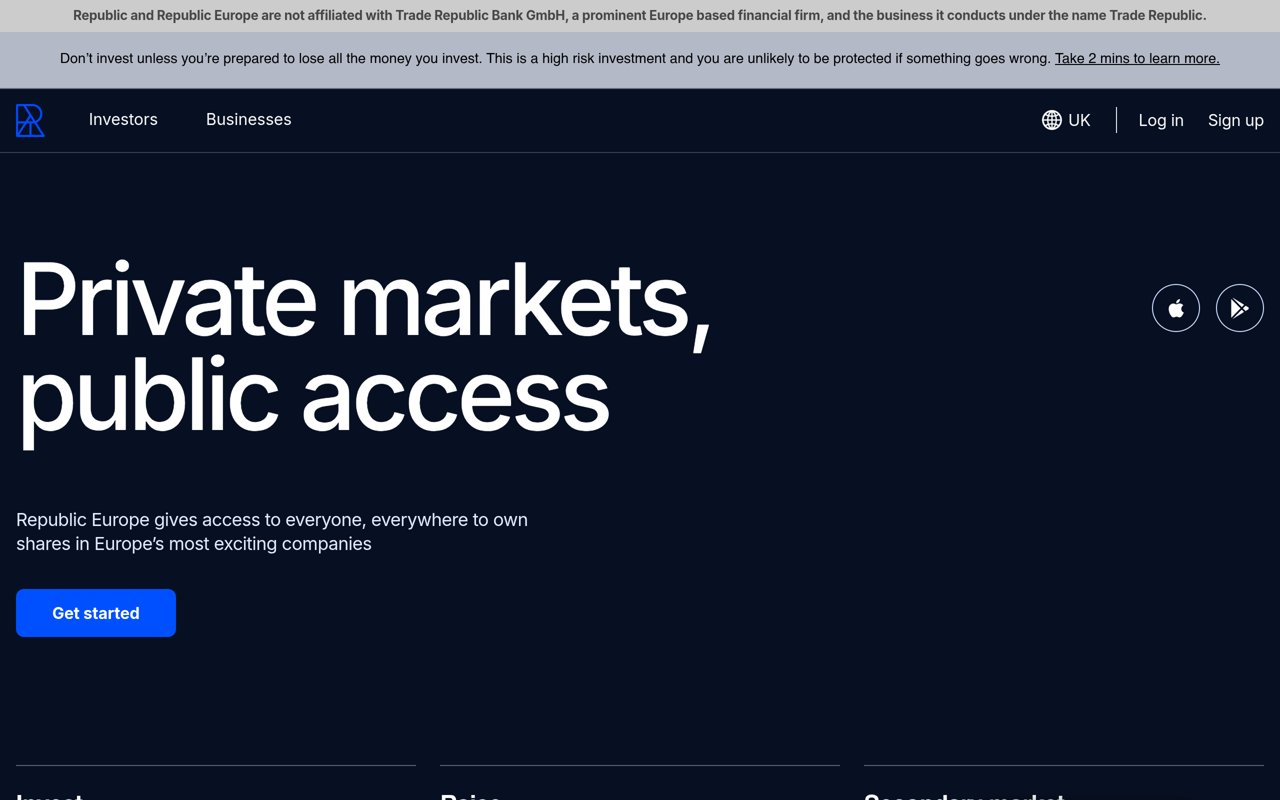
republic.com
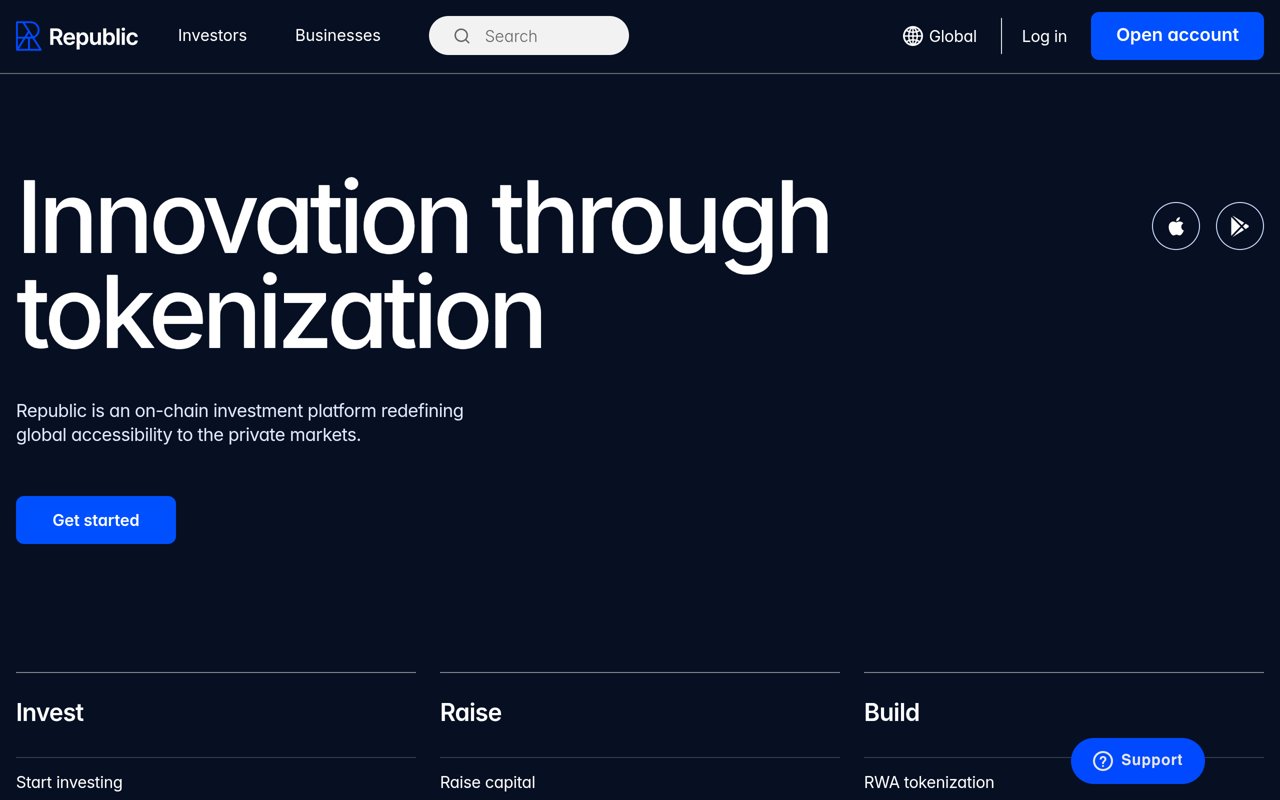
Republic homepage, captured Nov 2026.
Republic is the heavyweight of startup equity crowdfunding, describing itself as an on-chain investment platform for private markets, with 2 billion dollars in capital deployed and 3 million community members. Startups raise through Reg CF, Reg D and Reg A-plus offerings. It holds a 3.6 out of 5 Trustpilot rating from 389 reviews.
The trade off is selectivity and cost. Republic accepts only a small share of applicants, historically well below 10 percent, and charges issuers about 6 percent in cash plus 2 percent in securities, with some sources citing 7 percent cash. A successful campaign still demands serious marketing effort from the founding team.
3.4/5on Trustpilot (24,413 reviews, checked Nov 2026)
PriceFree
Best donation fundraising
Free planYes, no platform fee
Processing2.9% + $0.30
Recurring donations+5% per gift
Funding modelKeep what you raise
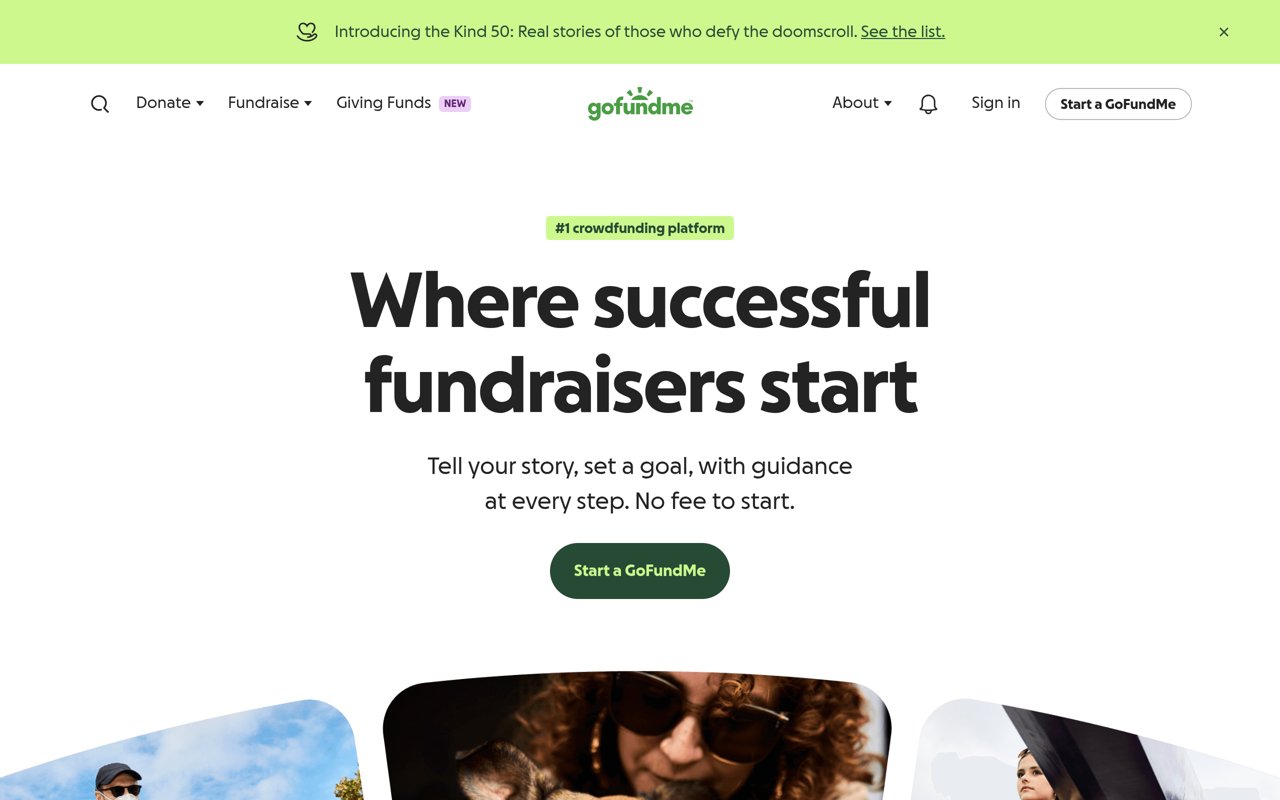
gofundme.com
GoFundMe homepage, captured Nov 2026.
GoFundMe is the largest donation crowdfunding platform, where founders raise money from supporters without giving up equity or selling shares. There is no platform fee for United States fundraisers, only payment processing of 2.9 percent plus 30 cents per donation. It holds a 3.4 out of 5 Trustpilot rating from more than 24,000 reviews.
The trade off is the model. GoFundMe suits donations and community support, not investment: backers get no shares, no rewards and no return, so it cannot fund a company that needs real capital. It also skews toward personal causes, and recurring donations carry an extra 5 percent fee.
3.3/5on Trustpilot (3,757 reviews, checked Nov 2026)
Pricing6% feeof funds raised
Best UK and EU equity raises
Free planNo
Success fee6% of funds raised
Processing0.5%
Completion fee£2,500
seedrs.com
Seedrs homepage, captured Nov 2026.
Seedrs is a UK equity crowdfunding platform that lets everyday investors buy shares in growth businesses, with a nominee structure that keeps the crowd as one legal shareholder. It was acquired by Republic in 2023 and now operates as Republic Europe. It holds a 3.3 out of 5 Trustpilot rating from 3,757 reviews.
The trade off is fees and geography. Seedrs charges a 6 percent success fee plus a 0.5 percent payment processing fee and a 2,500 pound completion fee, and it serves UK and European companies, not United States startups. Investors also pay 2.5 percent on investments and 5 percent on profit at exit.
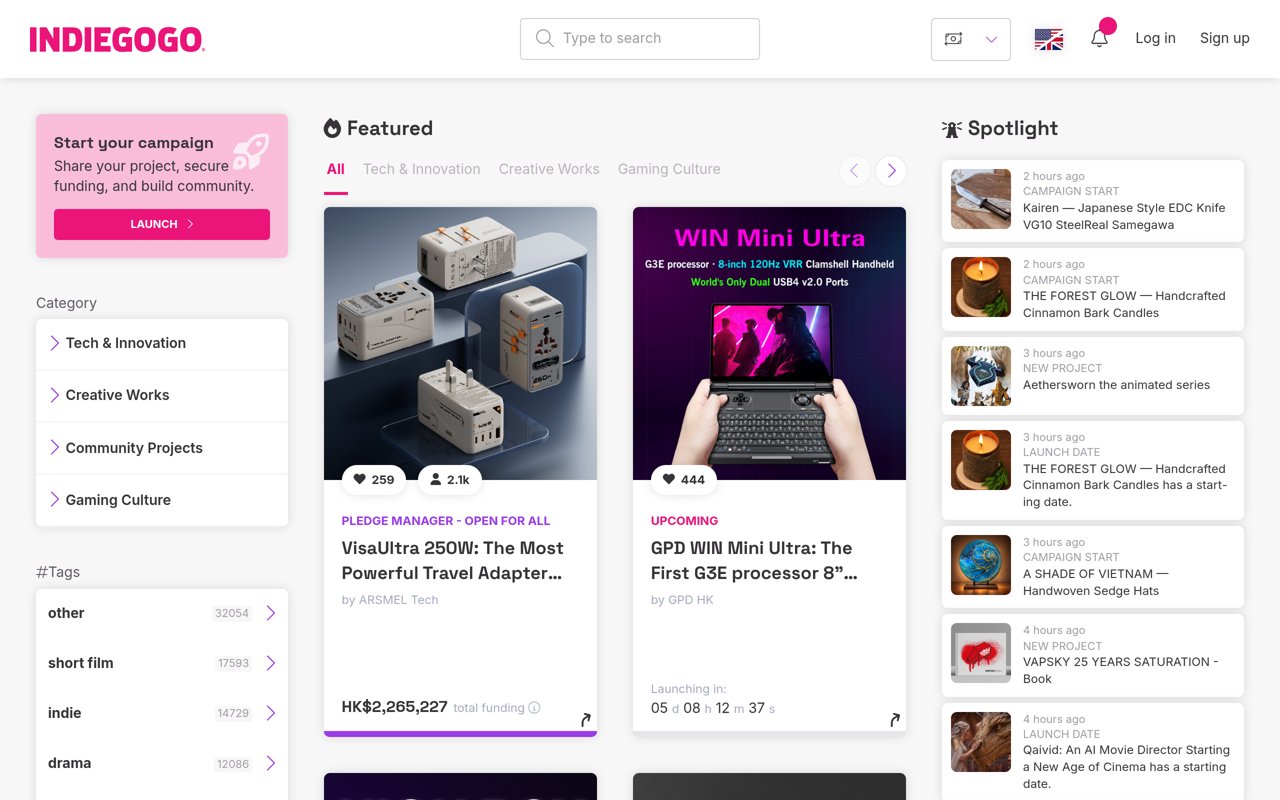
Indiegogo is a rewards crowdfunding platform with strong tech and innovation categories, plus pledge managers, late pledges and marketing tools built for product launches. Its backer community runs into the millions, and checkout supports more than twenty payment methods. It holds a 3.1 out of 5 G2 rating from 35 reviews.
The trade off is the funding model change. Indiegogo ended flexible funding in October 2025, so every new campaign is now all or nothing, just like Kickstarter, and older guides that promise flexible funding are out of date. It charges 5 percent plus 3 percent and 20 cents per transaction, with no equity option.
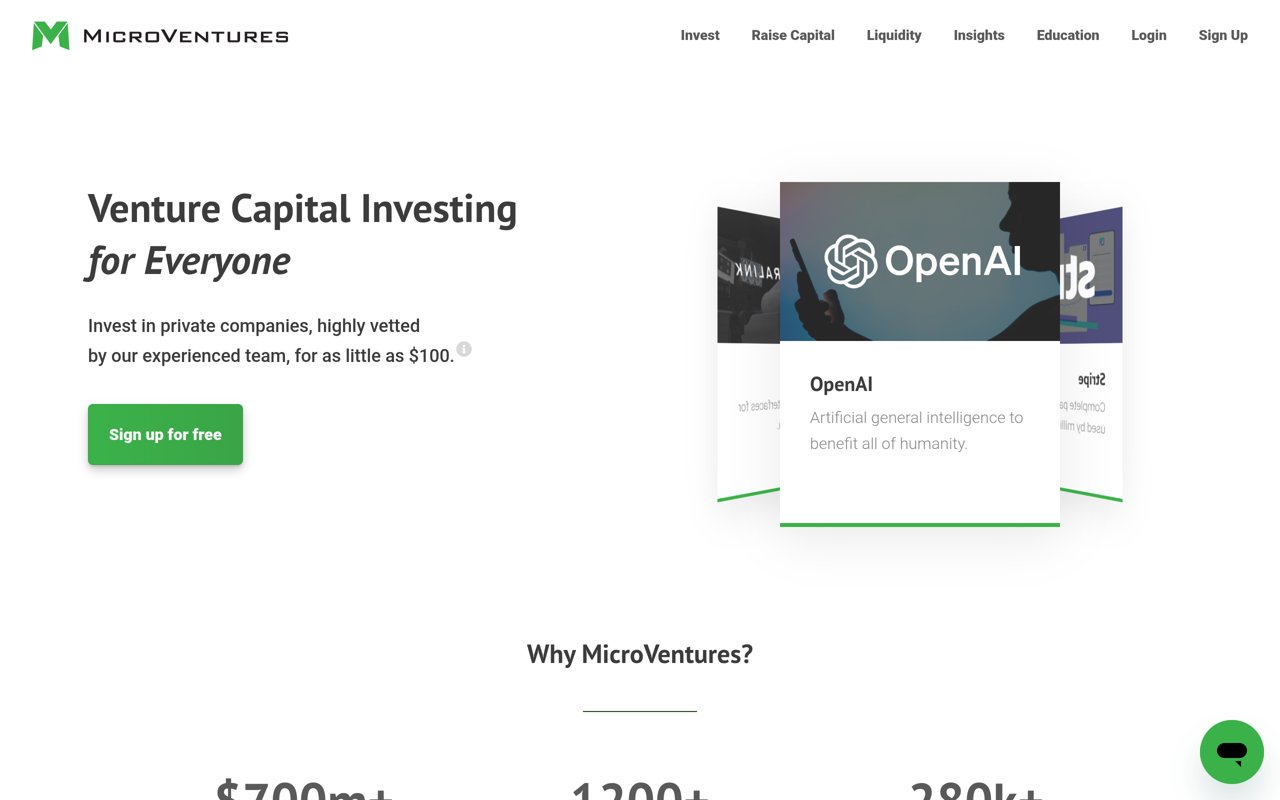
MicroVentures is a full-service investment bank offering private-market investments, including late-stage startup shares in companies like OpenAI, Stripe and Neuralink. Its team vets every offering, with 700 million dollars transacted across 1,200 offerings. It holds a 2.7 out of 5 Trustpilot rating from 14 reviews.
The trade off is fit and the thin rating. MicroVentures is not a place to launch a seed round: it serves companies far enough along that secondary or late-stage demand exists, and many offerings are limited to accredited investors. Its Reg CF channel is also close to dormant, with only 4 filings in 2025.
2.2/5on Trustpilot (113 reviews, checked Nov 2026)
PricingCustom/campaign
Best debt crowdfunding
Free planNo
Investor rates6-14% interest
Minimum investment$100
Deals in last year196
honeycombcredit.com
Honeycomb Credit homepage, captured Nov 2026.
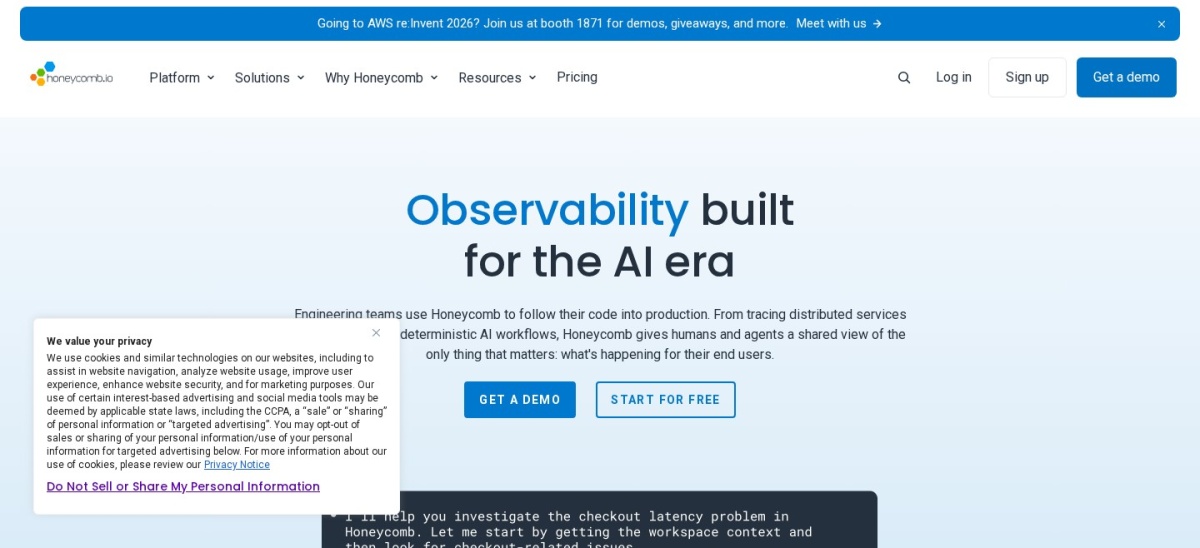
Honeycomb Credit is a debt crowdfunding platform that connects small businesses seeking expansion loans with community members who want to invest local. Investors fund loans at 6 to 14 percent interest, starting at 100 dollars, under Regulation Crowdfunding. It holds a 2.2 out of 5 Trustpilot rating from 113 reviews.
The trade off is the low rating and default risk. Trustpilot reviewers mostly complain about late repayments and defaults, and older secondaries cite a 4.5 out of 5 score from 92 reviews, so the rating has fallen sharply. Honeycomb filed the most Reg CF deals of any portal in the year to Q3 2026, with 196 offerings.
1.7/5on Trustpilot (384 reviews, checked Nov 2026)
Pricing7.5% feeof funds raised
Best community rounds
Free planNo
Success fee7.5% of funds raised
Minimum investment$100
Founders funded4,409
wefunder.com
Wefunder homepage, captured Nov 2026.
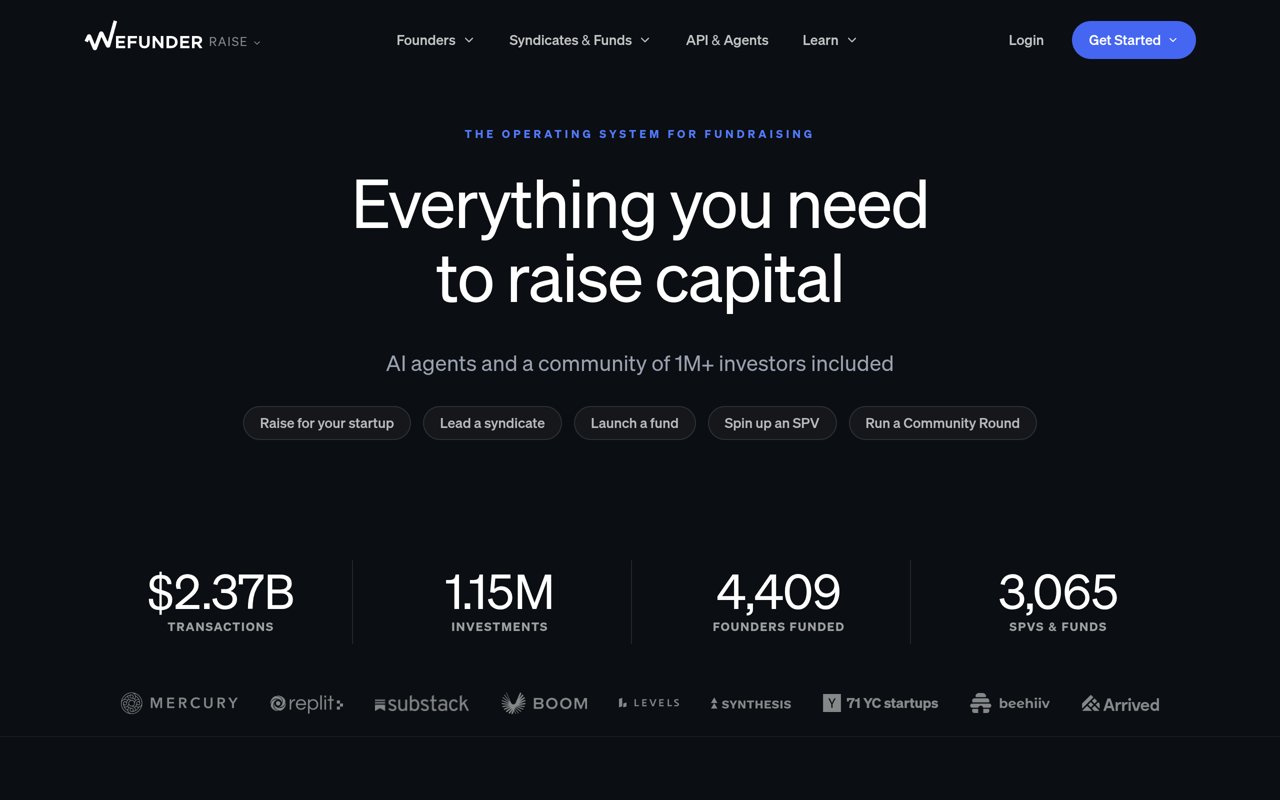
Wefunder is the largest equity crowdfunding platform by volume, calling itself the operating system for fundraising, with 2.37 billion dollars in transactions and 4,409 founders funded. Investors commit through an SPV that appears as one line on the cap table. It holds a 1.7 out of 5 Trustpilot rating from 384 reviews.
The trade off is the very low Trustpilot score. At 1.7 out of 5, Wefunder has the lowest rating on this list, with complaints about support and communication, though it also has the highest Reg CF volume at 99.4 million dollars in 2024. It charges issuers a 7.5 percent success fee, with no direct fee for most investors.
We started from the fundraising platforms with verifiable G2 or Trustpilot ratings, then kept 9 with published scores. Ratings were collected in November 2026, and every entry here has a G2 or Trustpilot score.
We compared fundraising model, fees, minimums, investor reach and review base. Top picks combine a real rating with a clear model, such as 0 percent loans, rewards launches or regulated equity raises.
StartEngine and F6S were dropped because their homepages block every screenshot service we tried, and Crowdcube was dropped for the same reason. Kiva and Honeycomb replace them. Netcapital has no verifiable G2, Capterra or Trustpilot rating, and AngelList has pivoted to fund infrastructure.
How to choose a fundraising platform
Start with what you are selling, then check fees, rules and audience.
Decide what you are selling. Equity, rewards, donations and loans need different platforms and different rules. Choose based on what the money is for: a product launch or the company itself.
Check the fee math before you launch. Add the platform fee, payment processing and legal costs together, then work out what you keep from a 100,000 dollar raise. Fees of 5 to 7 and a half percent plus processing add up fast.
Bring your own crowd. No platform brings the crowd for you. Founders with large email lists and social followings raise far more, so build the audience before you open the round.
Talk to a securities attorney. Equity raises need SEC filings, disclosures and a clean cap table. A short call with a securities attorney before you launch is cheaper than fixing a filing later.
FAQ
What is the best fundraising platform for startups?
For equity fundraising from everyday investors, Republic, Seedrs and Wefunder lead under SEC Regulation Crowdfunding. Kiva is the best for a small 0 percent loan, Kickstarter is the best for product launches, and Honeycomb is the best for debt crowdfunding. Match the platform to what you are selling.
How much does it cost to raise money on these platforms?
Equity platforms typically charge 6 to 7 and a half percent of the amount raised, plus payment processing and legal costs. Kickstarter and Indiegogo charge 5 percent plus about 3 percent processing, GoFundMe charges no platform fee, and Kiva charges 0 percent interest. Budget the full campaign, not just the platform cut.
Can anyone invest in a startup on these platforms?
Yes, under Regulation Crowdfunding, everyday investors can buy into startups for as little as 100 dollars on Wefunder and Republic. Non-accredited investors face annual limits based on income and net worth, and pre-IPO offerings on MicroVentures are mostly limited to accredited investors. Startup investments are speculative and illiquid.
What is the difference between equity and rewards crowdfunding?
Equity crowdfunding sells shares in your company to investors who share the upside, which works for any business model but adds compliance and hundreds of stakeholders. Rewards crowdfunding pre-sells a product, so backers get the product and you keep all your equity. Many hardware startups do both in sequence.
How much can a startup raise under Regulation Crowdfunding?
Regulation Crowdfunding lets a private company raise up to 5 million dollars in a 12-month period from the general public, including investors who are not accredited. Larger raises use Regulation A-plus, which Republic also supports, with limits up to 75 million dollars for some offerings.
Is startup crowdfunding risky for investors?
Yes, very. Most early-stage companies fail, and startup shares are illiquid, so investors can lose everything they put in. Wefunder reports a 6.4 percent portfolio failure rate and Republic 7.3 percent, counting only formal failures. Never invest money you cannot afford to lose.
SaaS SEO and WordPress specialist with about 8 years of experience. Rakib compares WordPress plugins, themes, hosting and software using public pricing, documentation and user reviews. See how we rank.