Mercury is the best fintech company for business banking for most startups, with a free base account, treasury tools and FDIC sweep coverage up to $5 million. Bluevine is the best for small businesses that want interest and cash deposits, while Relay is the best for managing many accounts.
How we make this list: we compare pricing pages, product documentation and public user reviews, then re-check every price before each update. No product paid for a place. Disclosure.
Mercury is the best for startups, with a free base account, treasury tools and FDIC sweep coverage up to $5 million.
Bluevine is the best for small businesses that want interest, with up to 3 percent APY on Premier and cash deposit support.
Relay is the best for many accounts, with up to 20 checking accounts free on Starter and 50 on Scale.
Novo and Rho charge nothing at all, with no paid plan, and both are rated 4.0 or higher on Trustpilot or G2.
Brex Premium at $12 a user a month is the cheapest paid plan with a published price in this list.
What to check before opening a fintech business account
Fintech business banking is not the same as a bank. Mercury, Relay, Novo, Brex, Rho, Ramp, Lili and Found are fintech platforms whose accounts are held at partner banks, so your deposits are covered by FDIC insurance through those banks, not by the fintech itself.
FDIC coverage varies a lot. Mercury and Novo sweep up to $5 million, Brex up to $6 million through its Vault sweep, while Rho covers $250,000 per bank, so check the limit if you hold large balances.
Cash deposits are a weak spot. Mercury takes no cash deposits at all, and most others rely on partner networks, so a business that handles cash daily should check the deposit options first.
Paid plans mostly add limits and tools. More accounts, higher APY, bill pay and treasury features sit behind the first paid tier, while the free plan covers the basics well.
4.1/5on Trustpilot (2,417 reviews, checked Nov 2026)
Paid from$29.90/mo
Best fintech for business banking overall
FDIC coverageUp to $5M, sweep
Free planYes
Cash depositsNo
Paid planPlus, $29.90/mo
mercury.com
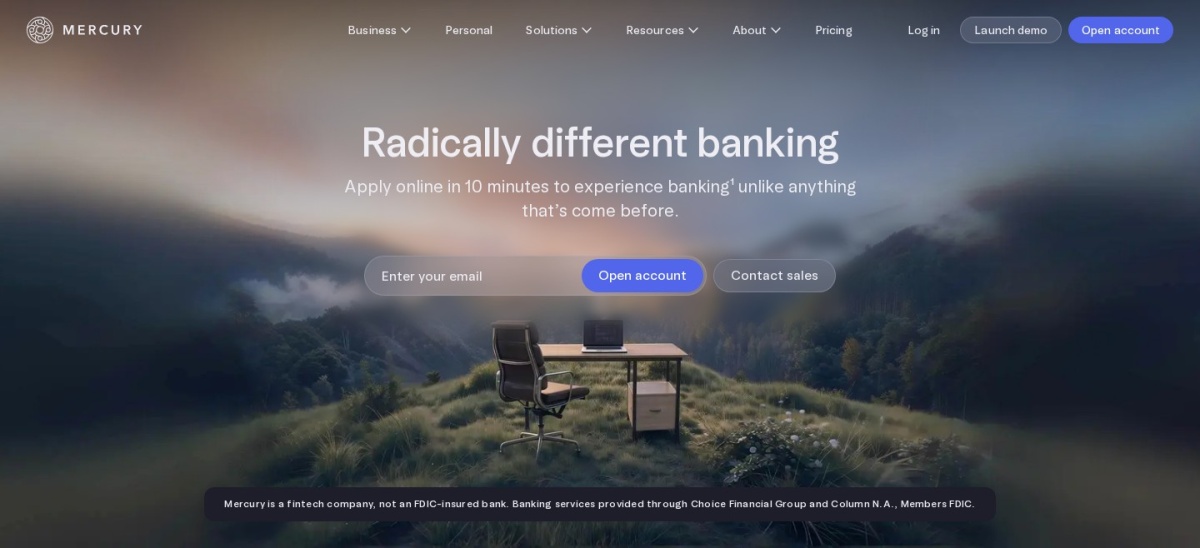
Mercury homepage, captured Nov 2026.
Mercury is a fintech banking platform for startups, with checking, treasury, cards and bill pay in one dashboard. The base account is free, Plus costs $29.90 a month billed annually, and deposits sweep up to $5 million in FDIC coverage through Choice Financial Group and Column N.A.
The trade off is cash. Mercury takes no cash deposits at all, so a business that handles cash daily will need another account. It suits venture-backed startups and tech companies that run on wires and cards.
What we like
Free base account with treasury tools
FDIC sweep up to $5 million
Rated 4.1 out of 5 on Trustpilot from 2,417 reviews
4.7/5on Trustpilot (11,875 reviews, checked Nov 2026)
Paid from$30/mo
Best for small businesses
FDIC coverageUp to $3M
Free planYes, Standard
APYUp to 3% on Premier
Paid planPlus, $30/mo
bluevine.com
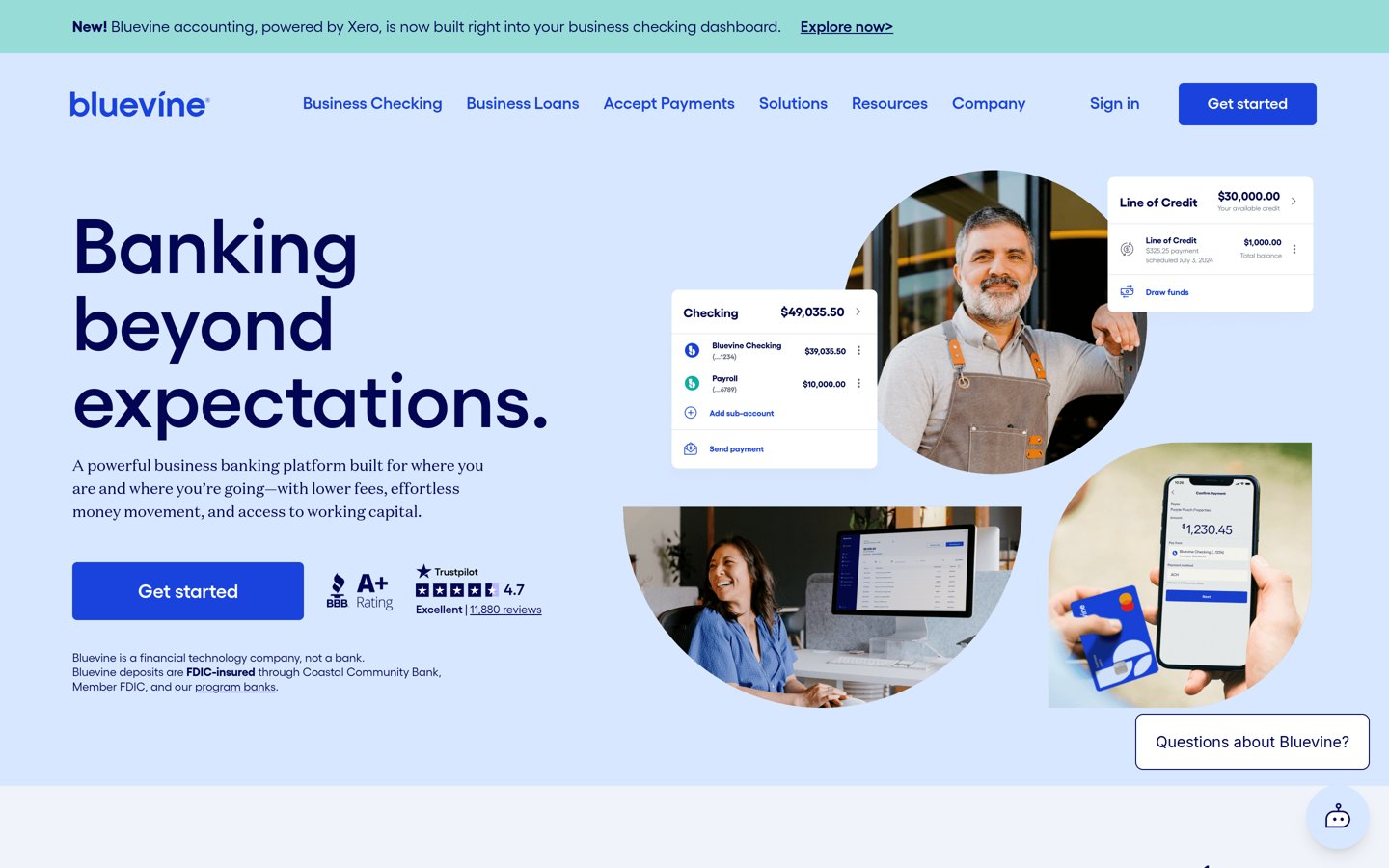
Bluevine homepage, captured Nov 2026.
Bluevine is a fintech banking platform for small businesses, with checking, credit and payments in one place. Standard is free, Plus costs $30 a month and Premier $95 a month, both waivable, and APY runs from 1.3 percent on Standard to 3 percent on Premier.
The trade off is the fee waiver. Plus and Premier cost $30 and $95 a month unless you meet the balance or activity waiver, so check the waiver rules. It suits small businesses that want interest and cash deposits.
What we like
Highest APY in this list, up to 3 percent
Cash deposits supported
Rated 4.7 out of 5 on Trustpilot from 11,875 reviews
4.3/5on Trustpilot (3,722 reviews, checked Nov 2026)
Paid from$30/mo
Best for many accounts
FDIC coverageUp to $3M
Free accountsUp to 20
APYNone on checking
Paid planGrow, $30/mo
relayfi.com
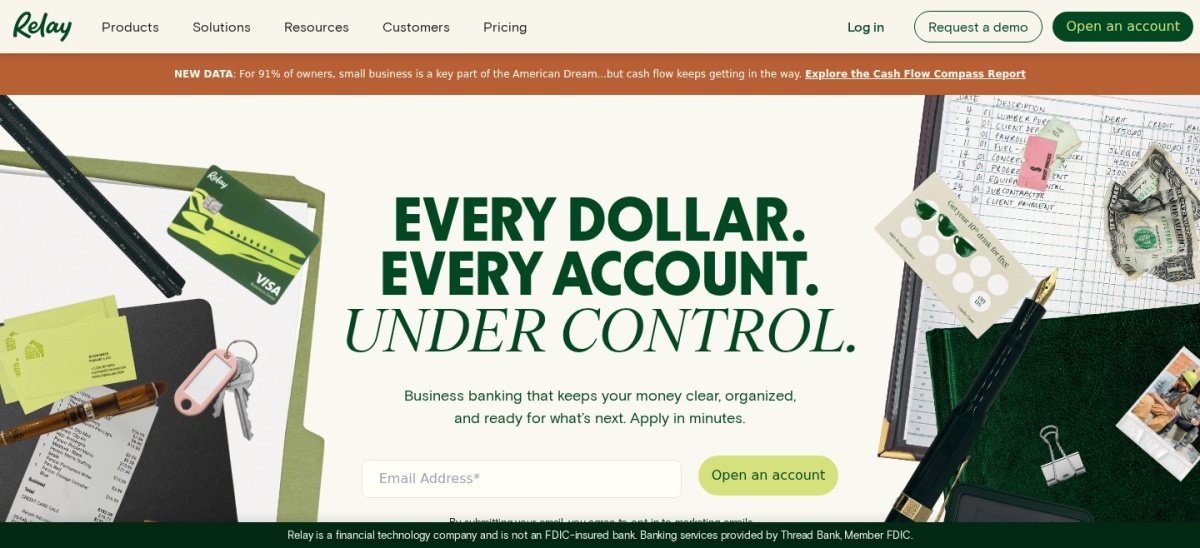
Relay homepage, captured Nov 2026.
Relay is a fintech banking platform built around multiple accounts, with up to 20 checking accounts free on Starter and 50 on Scale. Grow costs $30 a month and Scale $120 a month, with FDIC coverage up to $3 million through Thread Bank.
The trade off is interest. Relay pays no APY on checking, so a business that holds large balances earns nothing. It suits agencies, property managers and franchises that separate money per client or location.
What we like
Up to 20 checking accounts free
Strong for agencies and property managers
Rated 4.3 out of 5 on Trustpilot from 3,722 reviews
4/5on Trustpilot (4,498 reviews, checked Nov 2026)
PriceFree
Best free fintech business account
FDIC coverageUp to $5M, sweep
Free planYes, fully free
InvoicingYes, included
Paid planNone
novo.co
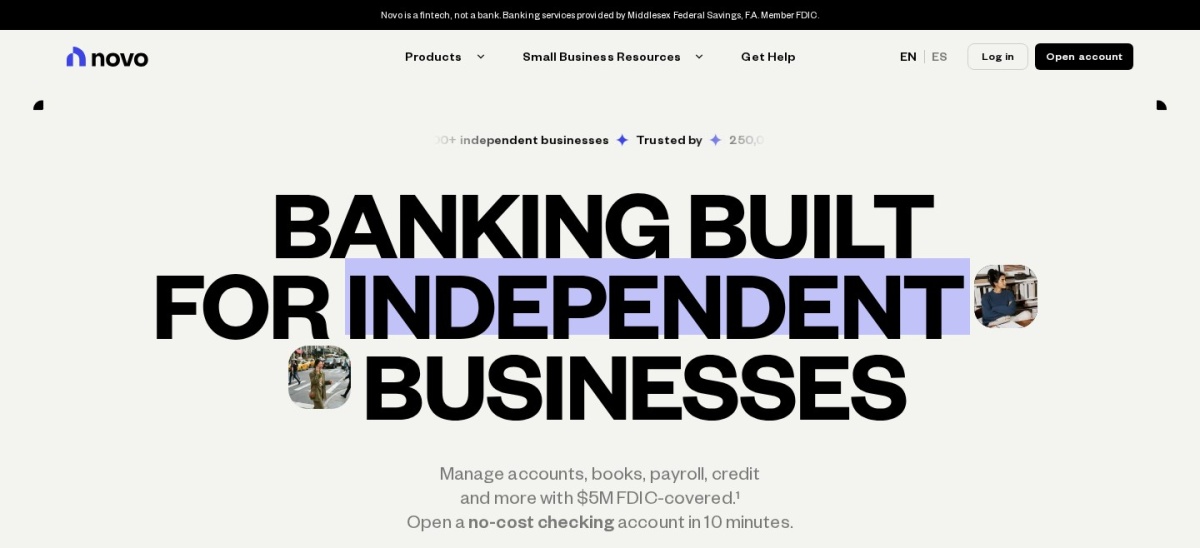
Novo homepage, captured Nov 2026.
Novo is a fintech banking platform for small businesses and freelancers, with checking, invoicing and reserves in one app. There is no paid plan at all, so every feature is free, and deposits are covered up to $5 million through a sweep with Middlesex Federal Savings.
The trade off is the lack of paid features. Novo has no premium tier with higher limits or treasury tools, so growing businesses may outgrow it. It suits freelancers and small businesses that want one free account.
What we like
Fully free, no paid plan at all
FDIC sweep up to $5 million
Rated 4.0 out of 5 on Trustpilot from 4,498 reviews
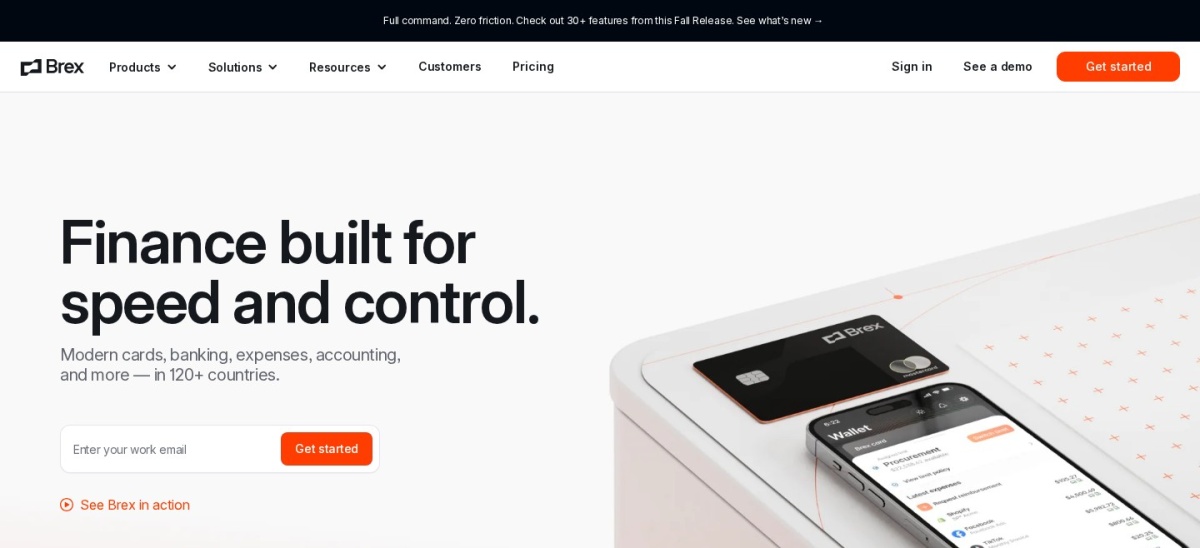
Brex is a fintech platform for corporate cards, spend management and business banking in one system. Essentials is free and Premium costs $12 a user a month, with FDIC coverage up to $6 million through its Vault sweep, and Capital One closed its acquisition of Brex in April 2026.
The trade off is the per-user price. Premium costs $12 a user a month, so the bill grows with the team, and the banking features sit behind the card platform. It suits growing companies that want cards, expenses and banking together.
What we like
Cards, expenses and banking in one system
FDIC sweep up to $6 million
Rated 4.8 out of 5 on G2 from 1,665 reviews
Watch out for
Premium bills per user, so costs grow with the team
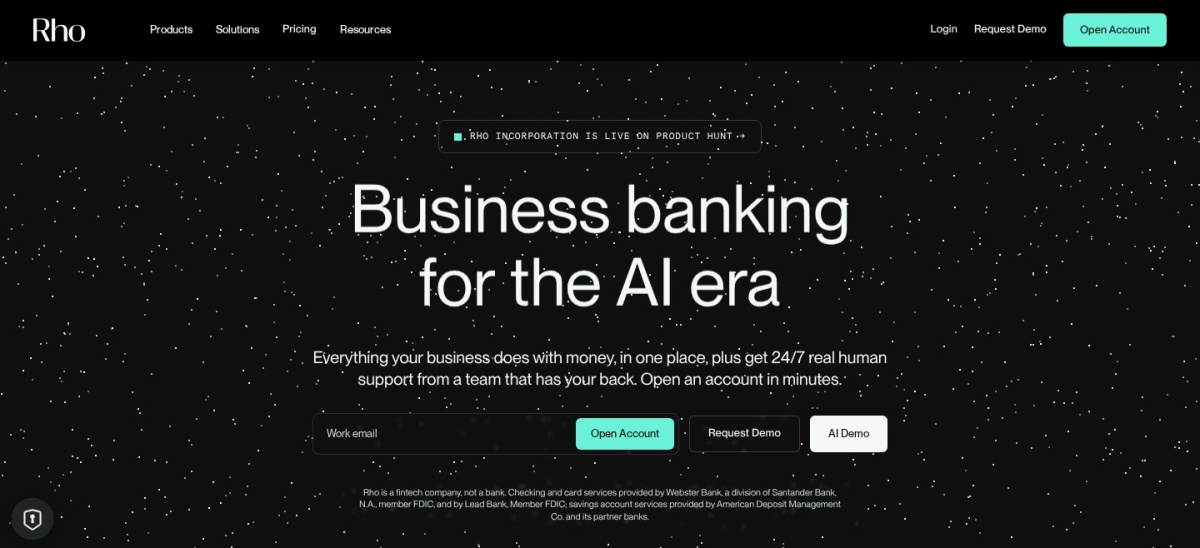
Rho is a fintech banking platform for finance teams, with checking, cards, AP and treasury in one dashboard. There is no paid plan at all, so every feature is free, and deposits are covered up to $250,000 per bank through Lead Bank and Webster Bank.
The trade off is the FDIC limit. Rho covers $250,000 per bank, far less than the $5 million sweeps at Mercury and Novo, so large balances need care. It suits finance teams that want a free treasury platform.
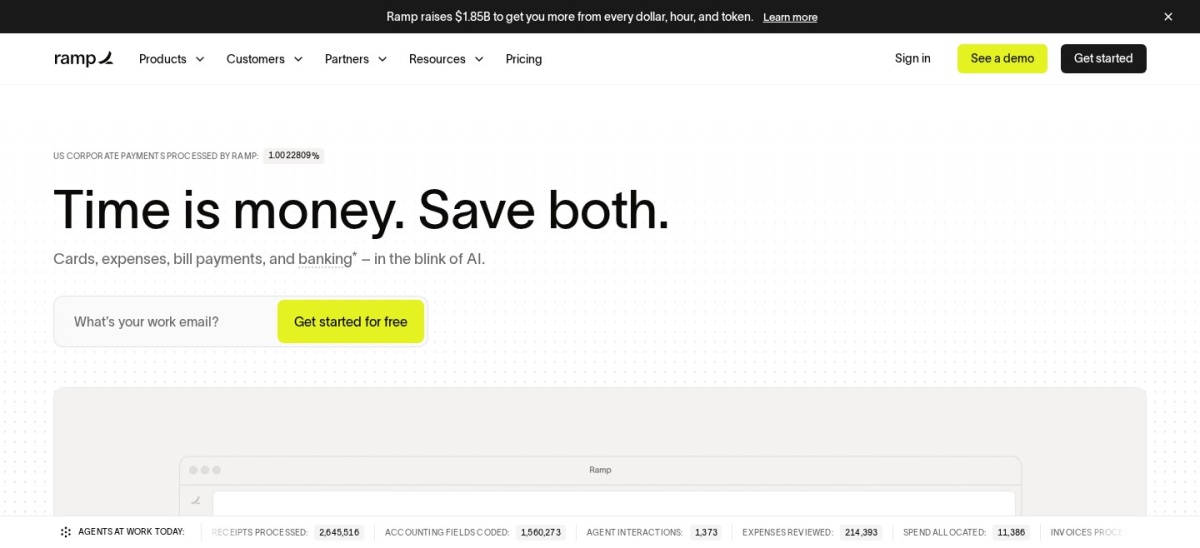
Ramp is a fintech platform for corporate cards, spend management and business banking, built for high-growth companies. The free plan covers cards and expenses, Plus costs $15 a user a month plus a platform fee, and checking pays 2 percent APY.
The trade off is the platform fee. Plus costs $15 a user a month plus a platform fee, so the total is higher than the headline rate. It suits fast-growing companies that want strict spend controls and real-time insights.
What we like
Strong spend controls and real-time insights
Checking pays 2 percent APY
Rated 4.8 out of 5 on G2 from 2,583 reviews
Watch out for
Plus adds a platform fee on top of the per-user price
4.7/5on Trustpilot (4,511 reviews, checked Nov 2026)
PriceFree
Best for freelancers
FDIC coverageUp to $3M
Free planYes
Tax toolsYes, built in
Paid planPrice not confirmed
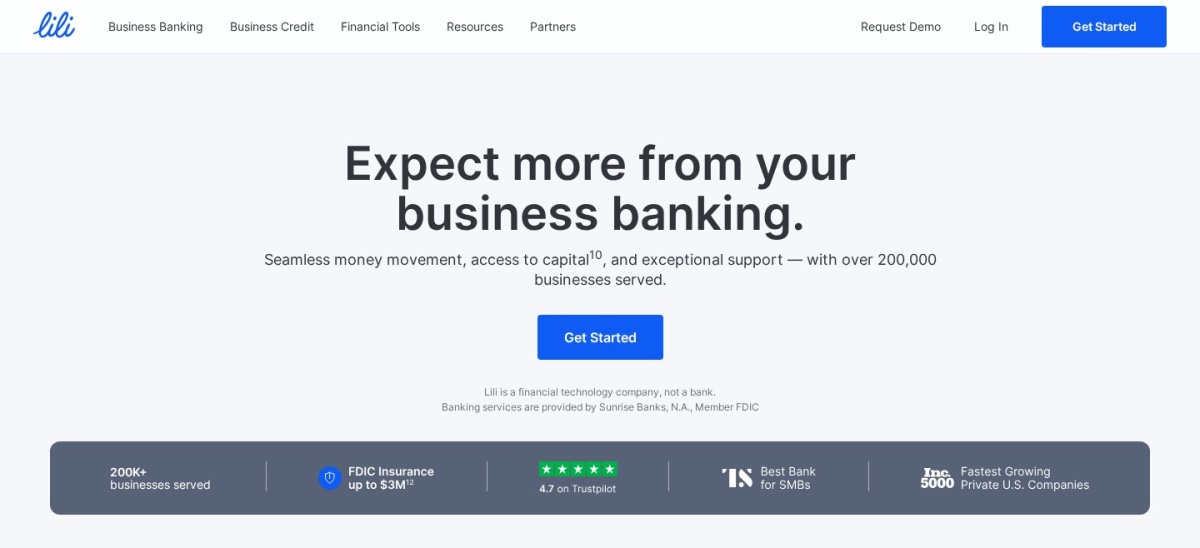
lili.co
Lili homepage, captured Nov 2026.
Lili is a fintech banking platform for freelancers and sole traders, with checking, tax tools and invoicing in one app. The base plan is free, and deposits are covered up to $3 million in FDIC insurance through its partner banks.
The trade off is the paid price. Lili sells paid tiers, but the price was not confirmed on its pricing page today, so the listicle shows the free plan only. It suits freelancers who want tax and invoicing tools with their account.
What we like
Tax and invoicing tools built in
FDIC coverage up to $3 million
Rated 4.7 out of 5 on Trustpilot from 4,511 reviews
Watch out for
Paid tier price not confirmed today
Built for freelancers, not larger teams
Paid tiers add more tax and invoicing toolsVisit lili.co
09
Found
4.6/5on Trustpilot (1,398 reviews, checked Nov 2026)
Paid from$35/mo
Best for self-employed banking
FDIC coverage$250K via Lead Bank
Free planYes
BookkeepingYes, built in
Paid planPlus, $35/mo
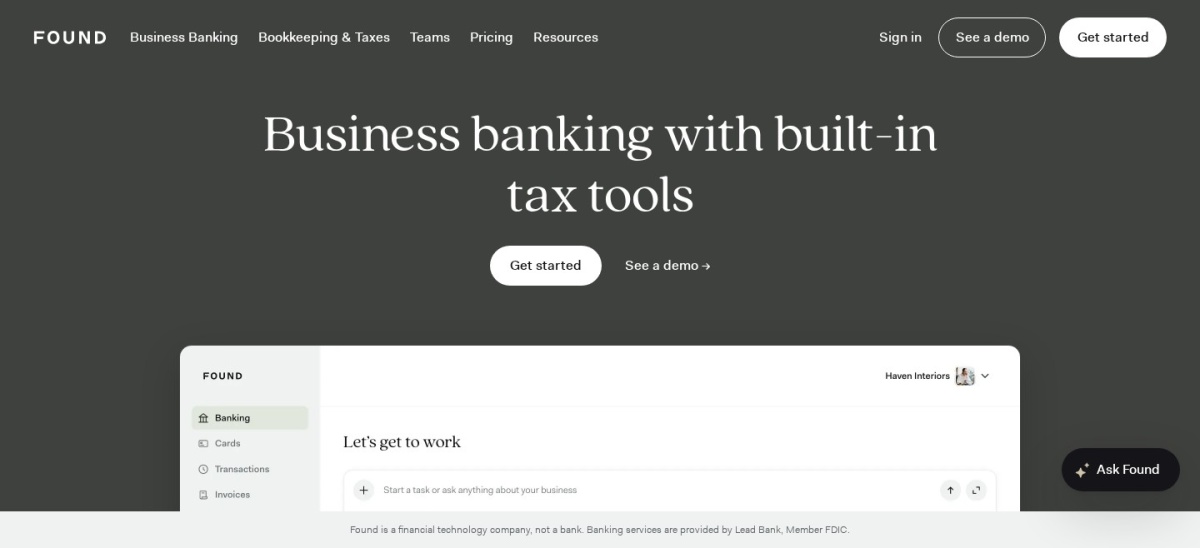
found.com
Found homepage, captured Nov 2026.
Found is a fintech banking platform for self-employed people, with checking, bookkeeping, tax and invoicing in one app. The base plan is free, Plus costs $35 a month and Pro $80 a month, with Plus paying 1.5 percent APY up to $20,000 and Pro 2.5 percent uncapped.
The trade off is the price of the paid tiers. Plus at $35 a month is dearer than the free plans elsewhere, so it only pays if you use the tax and bookkeeping tools. It suits self-employed people who want banking and bookkeeping together.
What we like
Bookkeeping and tax tools built in
Plus pays 1.5 percent APY up to $20,000
Rated 4.6 out of 5 on Trustpilot from 1,398 reviews
Free plans cover the basics well. Most include a checking account, debit cards, transfers and basic bill pay, so a small business may never need to pay.
Paid plans mostly add limits and yield. More accounts, higher APY and treasury tools sit behind the first paid tier.
The cheapest paid plan is not always the cheapest at your size. Brex Premium at $12 a user a month costs $144 a year for one user, while Mercury Plus at $29.90 a month costs $359 a year, so count your users before you pick.
If you hold under $250,000 and use one account, a free plan is enough. Larger balances and multi-account setups are where the paid plans earn their keep.
How we chose
We started from the fintech business banking platforms most often named for startups and small businesses, then kept those with a verifiable G2 or Trustpilot rating and a published price.
Prices come from each vendor's pricing page, checked in November 2026. Found Plus at $35 a month and Brex Premium at $12 a user a month were read in the vendors' own page text today; the other prices are corroborated by November 2026 reads of the vendor pages. Ratings come from G2 or Trustpilot on the same day.
We left out tools without a verifiable rating. No vendor paid for a place, and we do not claim hands-on testing for this list.
How to choose a fintech company for business banking
Start with how much cash you hold and how many accounts you need, then match the platform to that shape.
Name your balance and account count. A startup holding $50,000 in one account needs a different platform than an agency holding $500,000 across 20 accounts, so write both numbers down before you compare.
Check the FDIC coverage and the partner bank. Confirm who holds your deposits and the sweep limit. Mercury and Novo sweep up to $5 million, while Rho covers $250,000 per bank.
Test the free plan with a real payment. Open the account, send a payment and check the mobile app. Check cash deposits too, since Mercury takes none and most others rely on partner networks.
Move your balance only after the first month. Run payroll and one vendor payment through the new account first. Move the full balance only after the first month runs clean.
FAQ
What is the best fintech company for business banking?
Mercury is the best fintech company for business banking for most startups. It offers a free base account, treasury tools and FDIC sweep coverage up to $5 million, and it is rated 4.1 out of 5 on Trustpilot from 2,417 reviews.
Is Mercury a bank?
Mercury is not a bank. It is a fintech platform whose accounts are held at Choice Financial Group and Column N.A., so deposits are covered by FDIC insurance through those partner banks, up to $5 million with the sweep.
Which fintech business account pays the most interest?
Bluevine pays the most interest in this list, with up to 3 percent APY on its Premier plan. Found Pro pays 2.5 percent uncapped, and Ramp checking pays 2 percent, so compare the plan cost against the yield on your balance.
Is there a free fintech business bank account?
Yes. Mercury, Bluevine, Relay, Novo, Brex, Rho, Ramp, Lili and Found all offer a free base plan. Novo and Rho charge nothing at all, while the others sell paid tiers for higher limits and more features.
Which fintech is best for multiple business accounts?
Relay is the best fintech for multiple business accounts. Its Starter plan covers up to 20 checking accounts for free, and Scale covers 50, which suits agencies and property managers that separate money per client.
Does Brex still offer business banking?
Yes. Brex offers business accounts with a free Essentials plan and Premium at $12 a user a month. Capital One closed its acquisition of Brex in April 2026, and Brex continues to operate as a separate brand.
SaaS SEO and WordPress specialist with about 8 years of experience. Rakib compares WordPress plugins, themes, hosting and software using public pricing, documentation and user reviews. See how we rank.