Weights & Biases is the best experiment tracking software for most ML teams, with a free plan for up to 5 seats and the highest review volume in this list. Pick Comet for LLM observability at $19 per user a month, or ClearML for a full open-core MLOps platform at $15 per user a month.
How we make this list: we compare pricing pages, product documentation and public user reviews, then re-check every price before each update. No product paid for a place. Disclosure.
Weights & Biases leads at 4.5/5 on G2, with a free plan for up to 5 seats and Pro at a flat $60 a month for up to 10 seats.
Comet pairs experiment tracking with LLM observability from $19 per user a month, with drift monitoring bundled.
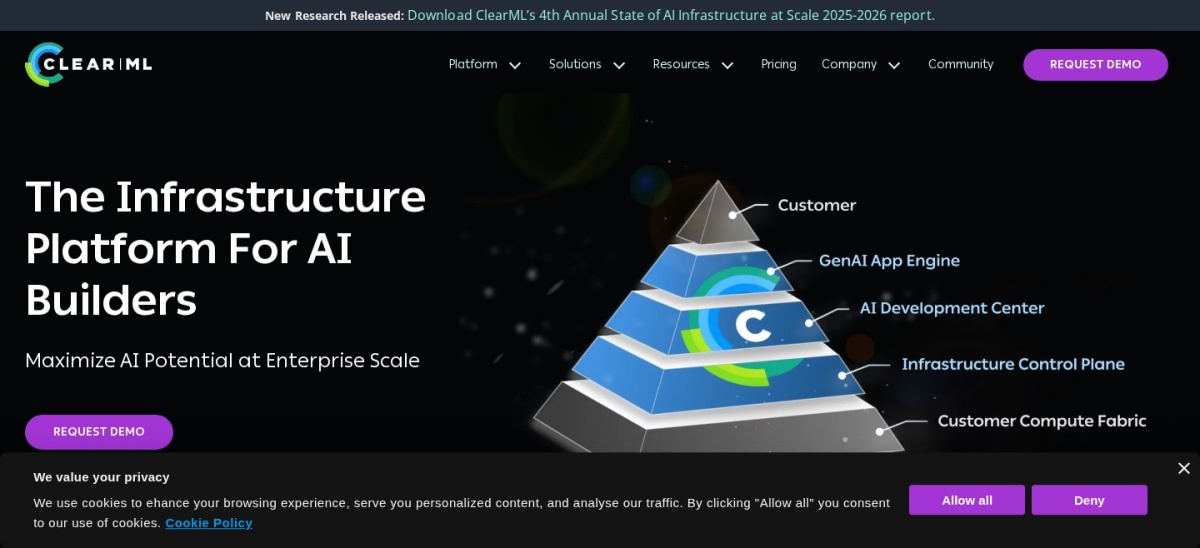
ClearML is the value platform: tracking plus orchestration and serving from $15 per user a month, with a free self-hosted core.
DagsHub is rated 4.8/5 on G2, built around data versioning as well as experiments.
Valohai tops the ratings at 4.9/5 on G2 but sells by quote only, so budget for a sales conversation.
What experiment tracking software should cover
ML teams lose time when runs, datasets and model versions live in different places. Experiment tracking records the code, config, metrics and artifacts behind every training run so results can be compared and reproduced.
A good tracker should log runs with a few lines of code, compare them side by side with charts, and version the datasets and models behind each result. A built-in model registry matters once a model moves toward production.
Free plans are genuinely usable here. Most tools on this list let a small team track runs for nothing, and the cheapest paid plans start at $15 to $19 per user a month. Our guide on choosing AI tools for small teams shows the same free-first pattern in nearby categories.
Open-source tools such as DVC cost nothing to run but need your own infrastructure. Hosted tools cost more and remove that work, which is the real trade-off in this category.
Weights & Biases is the most polished hosted experiment tracker, with run comparison charts, hyperparameter sweeps, artifact versioning and a model registry in one place. The free plan covers up to 5 seats with 5 GB of storage a month, and the platform now includes Weave for LLM tracing.
The trade off is the price shape. Pro costs a flat $60 a month for up to 10 seats, which is cheap for a full team, but teams over 50 people move to a custom Enterprise quote. It suits teams that want the category default without running servers.
Comet is an experiment tracking platform that also covers model monitoring and LLM evaluation through its open-source Opik tooling. The free plan covers basic tracking, and Pro at $19 per user a month adds the model registry, dataset versioning and drift monitoring.
The trade off is review volume. Comet is rated 4.2 out of 5 on G2 from 35 reviews, a smaller base than Weights & Biases, and its interface is plainer. It suits teams that want tracking and LLM evaluation in one bill.
ClearML is an open-core platform that goes past tracking into pipeline orchestration, data versioning, GPU scheduling and model serving. The self-hosted core is free under Apache 2.0, and the hosted Pro plan costs $15 per user a month, the lowest paid price here.
The trade off is the review base. ClearML is rated 4.7 out of 5 on G2, but from only 13 reviews, so the score is thin evidence. It suits teams that want one platform for the whole ML workflow at a low price.
What we like
Lowest paid plan in this list
Covers orchestration and serving, not just tracking
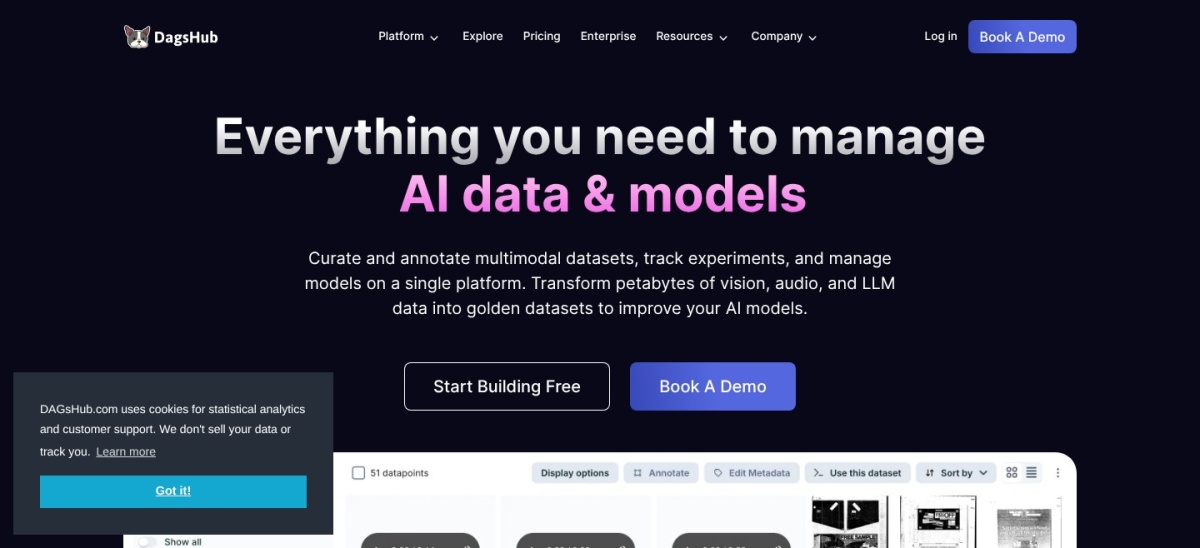
DagsHub is a platform for data versioning, experiment tracking and model management in one place, with built-in support for DVC and MLflow experiments. The free Individual plan covers unlimited public repositories, and the Team plan costs $99 per user a month billed yearly.
The trade off is price. DagsHub is rated 4.8 out of 5 on G2, but its paid plan costs far more per seat than Comet or ClearML. It suits teams whose main pain is versioning large datasets, not just logging runs.
What we like
Highest-rated tracker in this list on G2
Strong data versioning and lineage
Works with DVC and MLflow out of the box
Watch out for
Team plan is pricey per seat
Free plan limits private projects to 2 collaborators
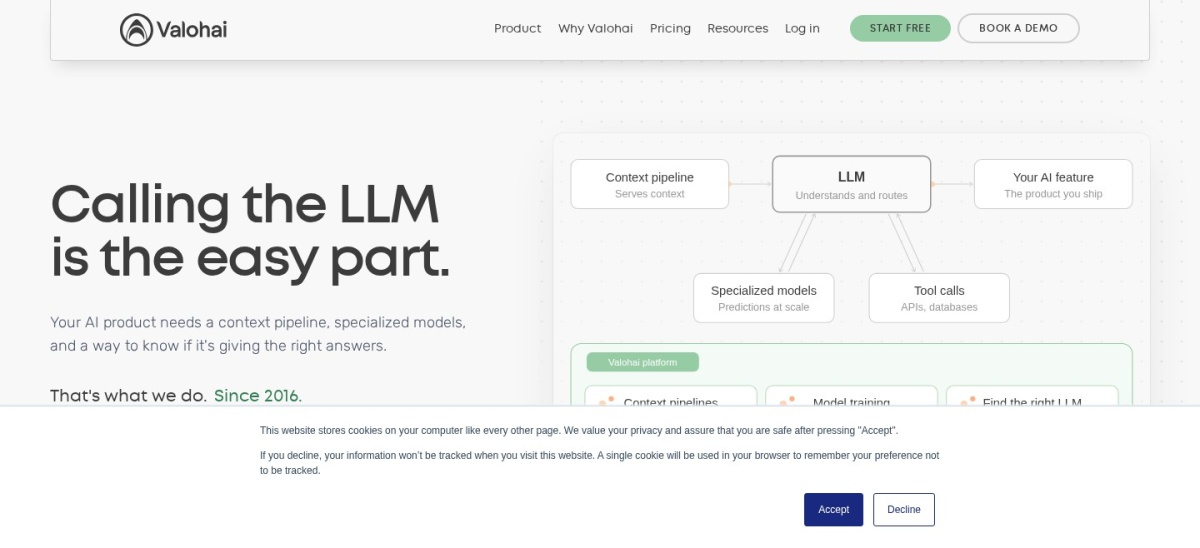
Valohai is an MLOps platform that versions every experiment and training run automatically, so any result can be reproduced with its full lineage of data and artifacts. It is rated 4.9 out of 5 on G2 from 26 reviews, the highest score in this list.
The trade off is pricing. Valohai publishes no list price and sells by quote, so you cannot budget it without a sales conversation. It suits teams in regulated work where reproducibility and audit trails matter most.
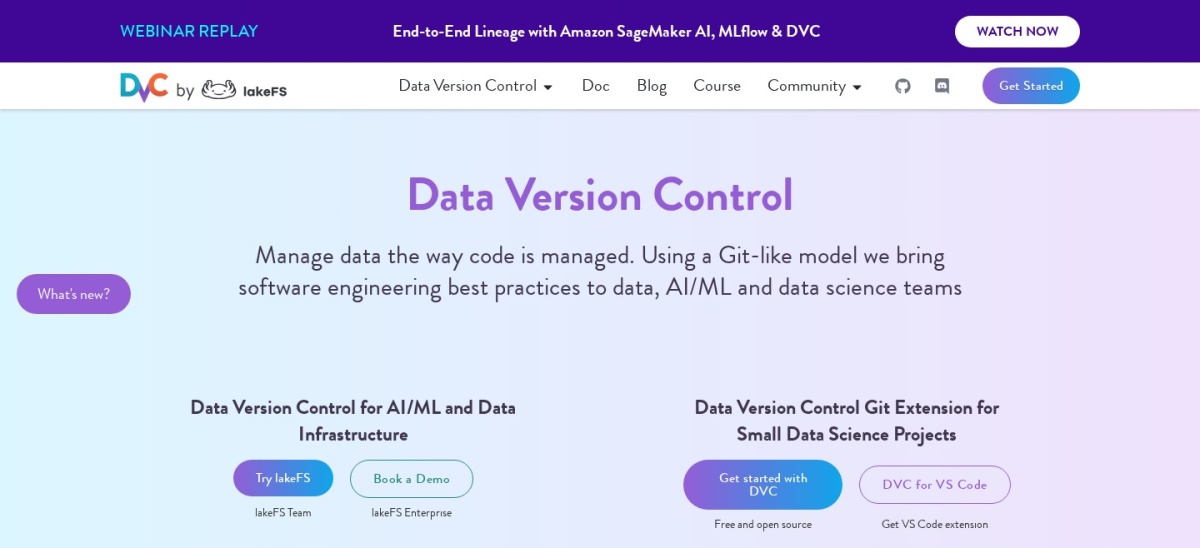
DVC is a free open-source tool that brings Git-style version control to datasets, models and experiments, with plots and metadata tracking built in. It is rated 4.7 out of 5 on G2 from 11 reviews and runs on your own storage, so there is no license cost at all.
The trade off is that DVC is a command-line tool, not a hosted dashboard, so teams must set up their own storage and sharing. It suits engineering-led teams that want versioning without a vendor bill.
What we like
Completely free under an open-source license
Git-native versioning for data and models
Works with any cloud storage
Watch out for
No hosted dashboard included
Steeper learning curve than hosted tools
No paid plan; hosted DVC Studio is separateVisit dvc.org
07
Domino Data Lab
4.3/5on G2 (28 reviews, checked Nov 2026)
PricingCustom/yr
Best for enterprise governance
Free planNo
Model governanceYes
Experiment trackingYes
Paid planCustom quote
domino.ai
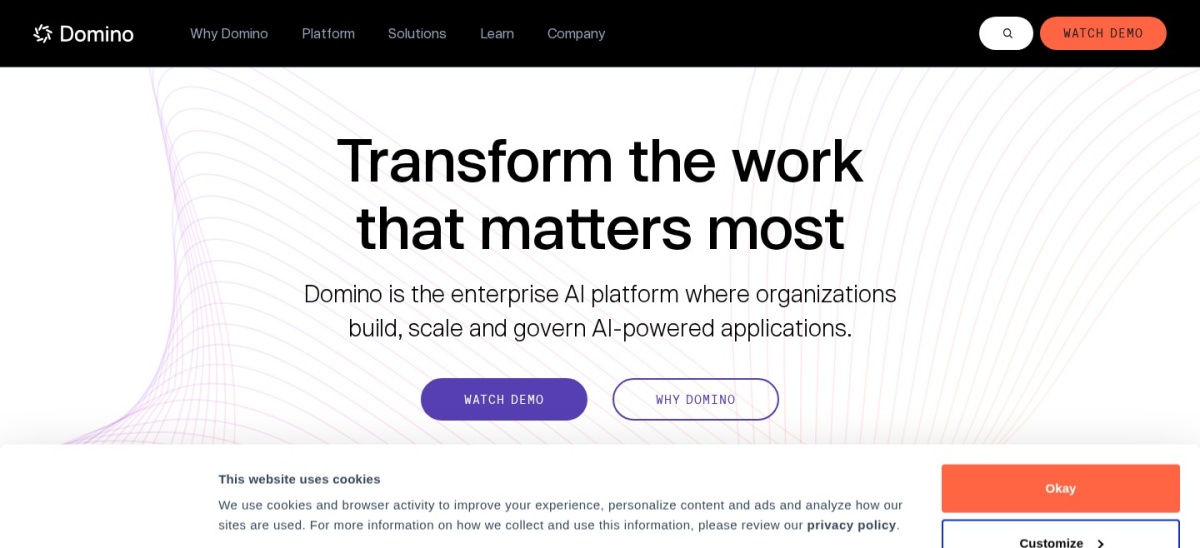
Domino Data Lab homepage, captured Nov 2026.
Domino Data Lab is an enterprise AI platform for developing, deploying and governing models, with experiment tracking as one part of a wider system. It is rated 4.3 out of 5 on G2 from 28 reviews and is built for regulated enterprises running hybrid and multi-cloud setups.
The trade off is access. Domino sells enterprise subscriptions only, with no self-serve checkout and no published list price. It suits large regulated teams that need governance more than a standalone tracker.
Open-source tools such as DVC and the ClearML core cost nothing in license fees and keep your data on your own infrastructure.
Hosted tools such as Weights & Biases and Comet remove the setup and maintenance work, but the bill grows with seats and storage.
If your team is small and technical, start free and self-host. If you need collaboration, sweeps and a registry without DevOps work, a hosted plan is the faster route.
How we chose
We started from the experiment tracking tools that appear on most 2026 shortlists, then kept those with a verifiable rating on G2 and a published price or a clear quote-only model.
Prices come from each vendor's pricing page, checked on 25 November 2026. Ratings and review counts come from G2 on the same day. Where a vendor shows a sale, the list shows the regular price.
We left out Neptune.ai, whose hosted service shut down in March 2026, and MLflow, which has no verifiable rating on G2, Capterra or Trustpilot. No vendor paid for a place, and we do not claim hands-on testing for this list.
How to choose experiment tracking software
Start with how your team already works, then pick the tracker that fits that workflow.
Decide hosted or self-hosted first. Hosted tools are faster to start; self-hosted tools keep data in-house and cost nothing in licenses.
Check the free plan limits. Seat caps, storage caps and private project limits decide whether free stays free for your team.
Make sure the registry is included. Tracking without a model registry leaves a gap when a model moves toward production.
Price the whole team, not one seat. Per-seat prices multiply fast, so cost the plan for every data scientist who will log runs.
FAQ
What is the best experiment tracking software for ML teams?
Weights & Biases is the best pick for most ML teams. It is rated 4.5 out of 5 on G2, has a free plan for up to 5 seats, and covers tracking, sweeps, artifact versioning and a model registry in one hosted product.
Is there a free experiment tracking tool?
Yes. DVC is completely free and open source, ClearML offers a free self-hosted core, and Weights & Biases, Comet and DagsHub all have free plans. Free plans usually cap seats, storage or private projects.
What happened to Neptune.ai?
Neptune.ai was acquired by OpenAI in December 2025 and its hosted service shut down on 5 March 2026. Former users were directed to export and migrate their data, so it is not included in this list.
How much does experiment tracking software cost?
Paid plans in this list start at $15 per user a month for ClearML Pro and $19 per user a month for Comet Pro. Weights & Biases Pro is a flat $60 a month for up to 10 seats, while Valohai and Domino sell by quote only.
Do I need a model registry as well as tracking?
Most teams do once a model moves toward production. A registry records which model version is live, who approved it and what data trained it. Weights & Biases, Comet and ClearML all include one.
Can I track experiments with open-source tools only?
Yes. DVC covers data and model versioning with experiment plots, and the ClearML core adds hosted-style tracking you run yourself. The trade-off is setup and maintenance work that hosted tools remove.
SaaS SEO and WordPress specialist with about 8 years of experience. Rakib compares WordPress plugins, themes, hosting and software using public pricing, documentation and user reviews. See how we rank.