Whova is the best event registration platform for conferences, combining registration with the strongest attendee app in this list and the highest G2 rating here. Eventbrite is the best pick for public ticketed events, with free listing for free events and a built-in discovery marketplace.
How we make this list: we compare pricing pages, product documentation and public user reviews, then re-check every price before each update. No product paid for a place. Disclosure.
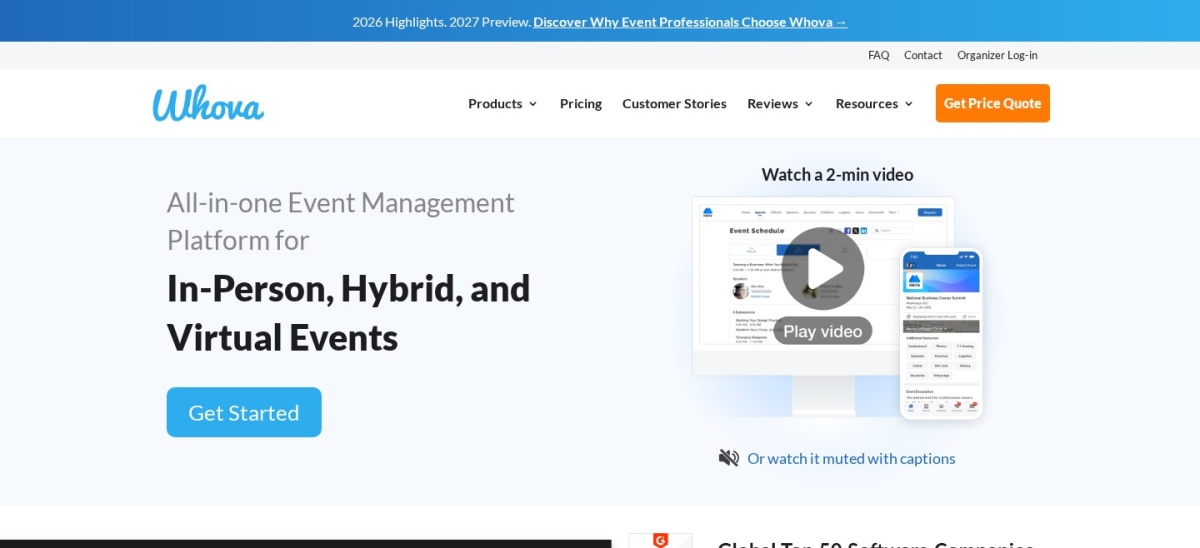
Whova is the best event registration platform for conferences, with a 4.8 out of 5 G2 rating from 1,925 reviews.
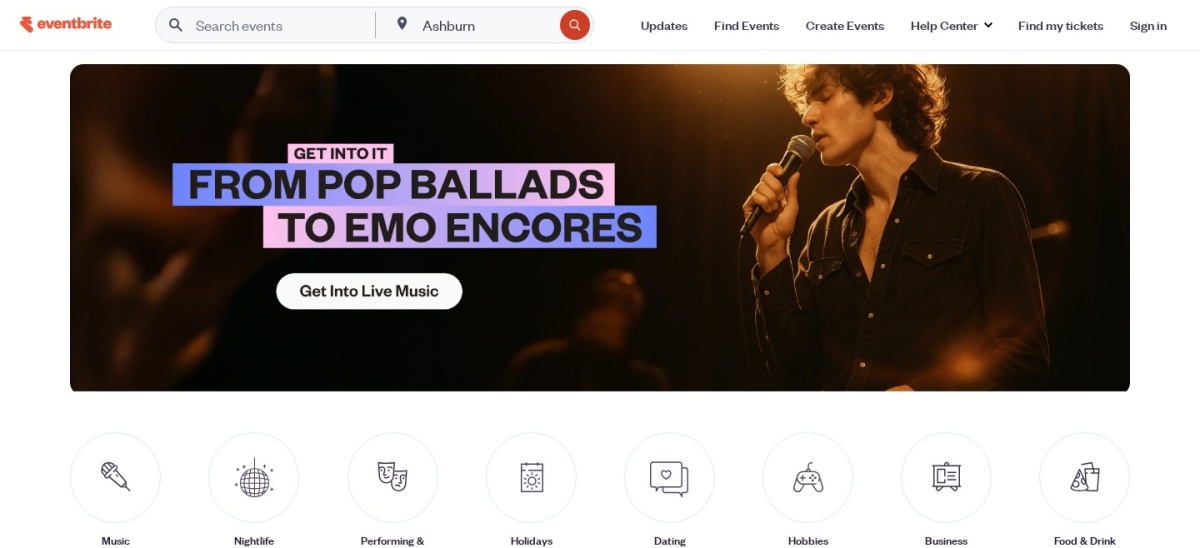
Eventbrite is the best pick for public ticketed events, free for free events with a 3.7 percent plus $1.79 fee on paid tickets.
RegFox has the cheapest per-registrant fees, at $0.99 plus 1 percent capped at $4.99.
Subscription platforms such as Swoogo and Bizzabo charge no per-ticket fees but cost five figures a year.
Ticket Tailor charges a flat fee per ticket instead of a percentage, which wins on expensive tickets.
What event registration platforms should do
Event registration platforms sell tickets, collect attendee data and check people in. The pricing models split three ways: per-ticket fees, flat per-registrant fees, and annual subscriptions, and the model matters more than the feature list.
Per-ticket platforms cost nothing upfront and scale with success, which suits occasional events. Subscription platforms charge five figures annually regardless of volume, which is expensive for one workshop and cheap for a 20-event program. Our guide to event management software compares the wider planning market.
The crossover point decides everything. If your annual ticket revenue times the fee percentage is less than a subscription quote, stay per-ticket. If it is more, go subscription.
Whova is the conference platform that combines registration with the strongest attendee app in this list. Attendees register, get QR check-in and printed badges, then use the agenda, networking, live polls and exhibitor tools in one place, which is why it holds a 4.8 out of 5 G2 rating from 1,925 reviews.
The trade off is the platform quote. Registration charges 3.0 percent plus $0.99 per paid ticket with no fee on free tickets, but the platform itself is sold by custom quote per event, typically a few thousand dollars, and exhibitor lead retrieval costs extra. It suits conferences, association meetings and academic events.
What we like
Registration plus a genuinely good attendee networking app
3.0% + $0.99 is cheaper than Eventbrite per ticket
Eventbrite is the default for public events because free events cost nothing and setup takes minutes. Its marketplace puts your event in front of people already browsing for things to do, and the organizer app handles check-in from a phone, with an optional Pro plan adding email marketing from $15 a month.
The trade off is the fee stack. Paid tickets cost 3.7 percent plus $1.79 in service fees plus 2.9 percent payment processing, which is over $20 on a $500 ticket, and Eventbrite typically does not return service fees on refunds. It suits public events, workshops and community gatherings where discovery matters.
RegFox is the budget pick because its fee structure is the cheapest in this list: $0.99 plus 1 percent per paid registrant, capped at $4.99, with no platform or licensing fees. On a $500 ticket that is $4.99 versus more than $20 on Eventbrite, and for nonprofits, schools, camps and small businesses the savings are immediate.
The trade off is polish. RegFox has fewer native integrations, a more utilitarian attendee experience and no built-in discovery marketplace, and SMS and email automation cost extra. It suits organizers whose job is collecting registrations and payments without giving away margin.
What we like
Lowest effective fees in the category
The $4.99 cap saves real money on expensive tickets
No licensing or upfront fees
Watch out for
Smaller brand with fewer integrations
Attendee-facing design is functional rather than polished
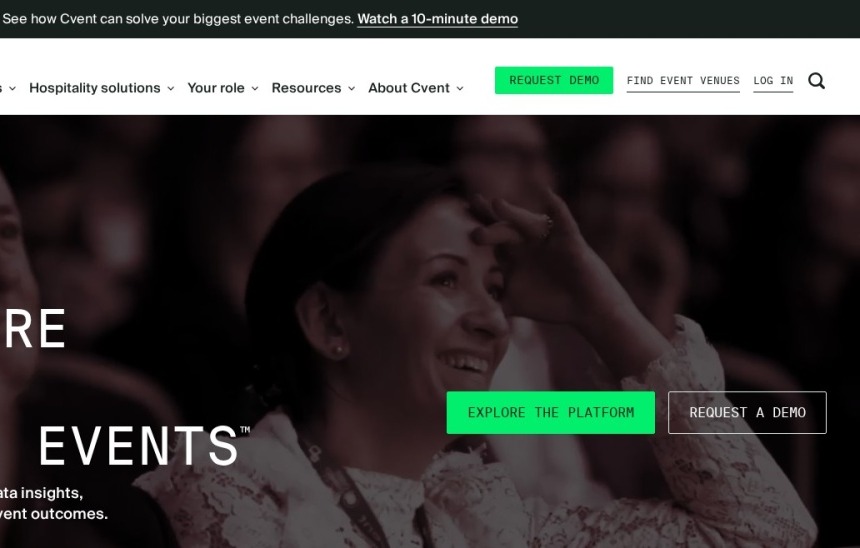
Cvent is the enterprise standard for event registration, and no other platform handles a 5,000-person global conference with the same depth, from call-for-papers to housing blocks to appointment scheduling. Venue sourcing is integrated, which alone justifies the platform for companies running many events.
The trade off is enterprise friction. Third-party estimates put annual costs from $15,000 upward plus per-registrant fees and significant onboarding costs, with long sales cycles and implementation projects. It suits corporations, associations and government agencies running large or many events a year.
What we like
Deepest feature set for complex enterprise events
Venue sourcing built in
Global scale and compliance
Watch out for
Five-figure annual contracts plus per-registrant fees
Long implementation
Overkill for simple events
Deepest feature set for complex enterprise eventsVisit cvent.com
05
Swoogo
4.9/5on G2 (214 reviews, checked Nov 2026)
PricingCustom/yr
For custom registration workflows
PricingQuote, $11,800/yr reported
Fees$0 per-ticket fees
LogicConditional, multi-track
Free planNo
swoogo.com
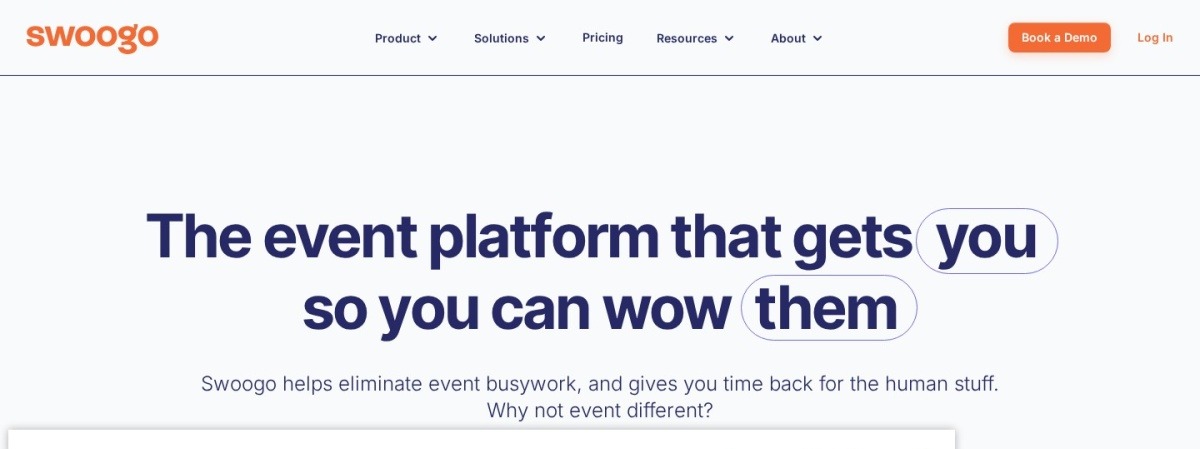
Swoogo homepage, captured Nov 2026.
Swoogo is the registration specialist for organizations with complex, conditional logic. Multi-track setups, custom workflows and tiered access that would need workarounds elsewhere are native here, and event planners consistently praise how quickly complex registration paths can be built.
The trade off is the quote and the ecosystem. Pricing is quote-based, with third-party reports putting entry around $11,800 a year, and the broader ecosystem of integrations and attendee app is thinner than the giants. It suits organizations running complex events where the registration logic itself is the hard part.
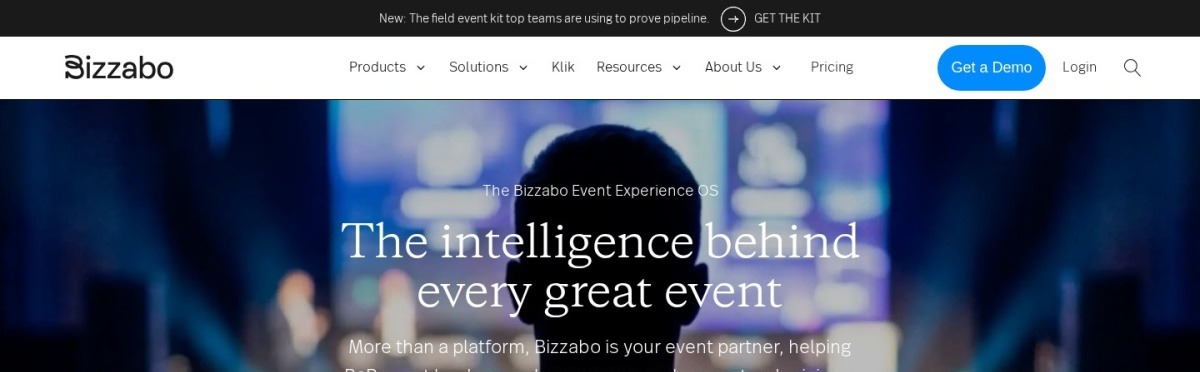
Bizzabo is the event platform for B2B marketing organizations running event programs: field marketing events, user conferences and executive dinners. Its subscription model charges zero per-ticket fees, which makes the math attractive once ticket revenue passes a threshold, and integrations with Salesforce, HubSpot and Marketo tie event data into the marketing funnel.
The trade off is the commitment. Subscription pricing is estimated around $18,000 per year and up, which smaller teams and one-off events will find hard to justify. It suits B2B companies where events are a pipeline channel.
What we like
$0 per-ticket fees on subscription plans
Strong marketing and CRM integrations
Polished attendee experience
Watch out for
Subscription pricing starts in the five figures annually
Aimed at marketing teams, less suited to associations
Annual commitment is hard to justify for one-off events
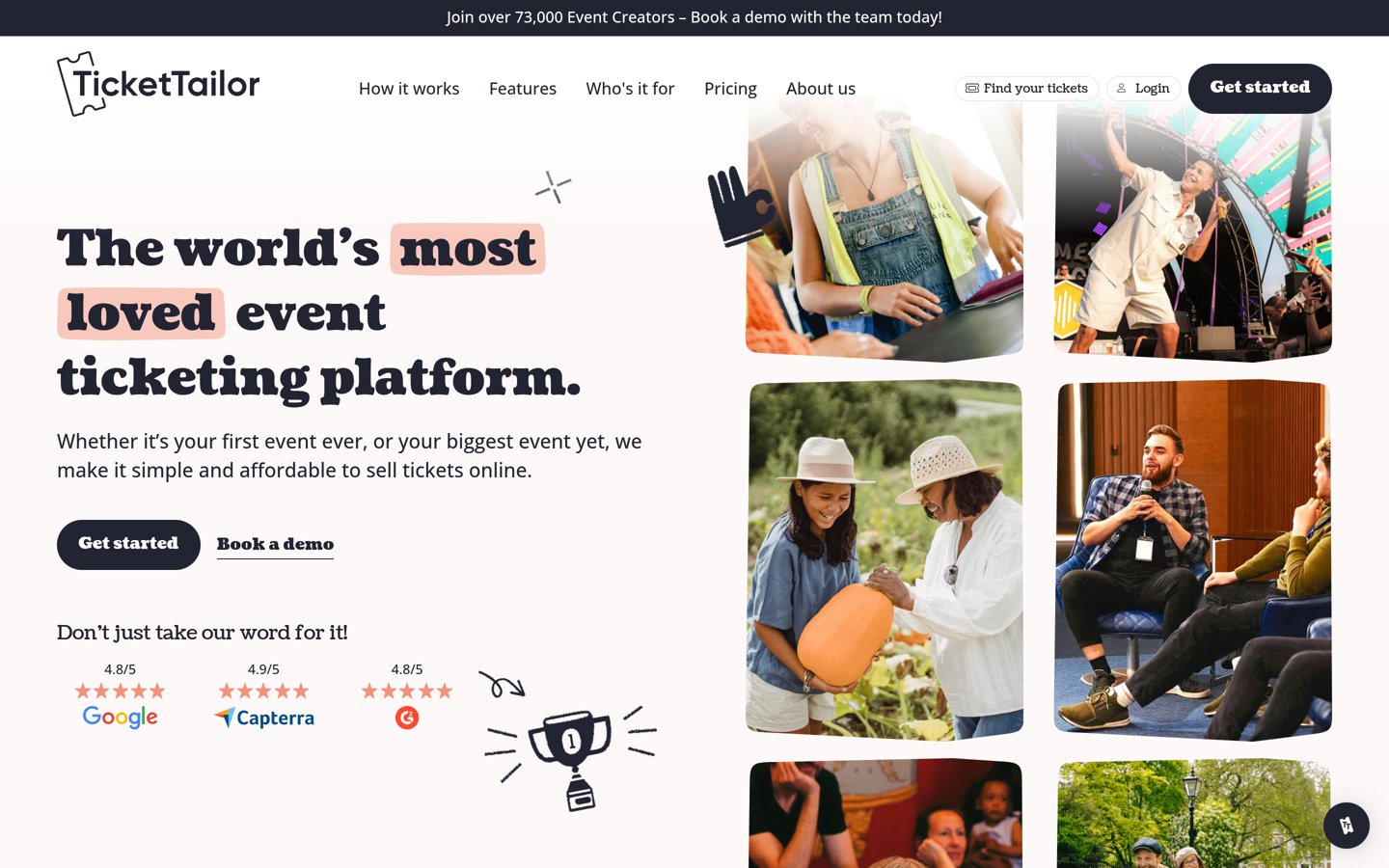
Ticket Tailor is the anti-Eventbrite ticketing platform: a flat fee per ticket sold, no percentage of your revenue, and your branding throughout instead of theirs. The vendor lists prices in pounds, at 60 pence per ticket pay as you go or from 22 pence with prepaid credits, and free events cost nothing up to 5,000 tickets a year.
The trade off is scope. Ticket Tailor is ticketing-focused rather than a full event management suite, with no discovery marketplace and no Whova-level attendee app. It suits independent organizers selling directly to their own lists, especially on higher-priced tickets.
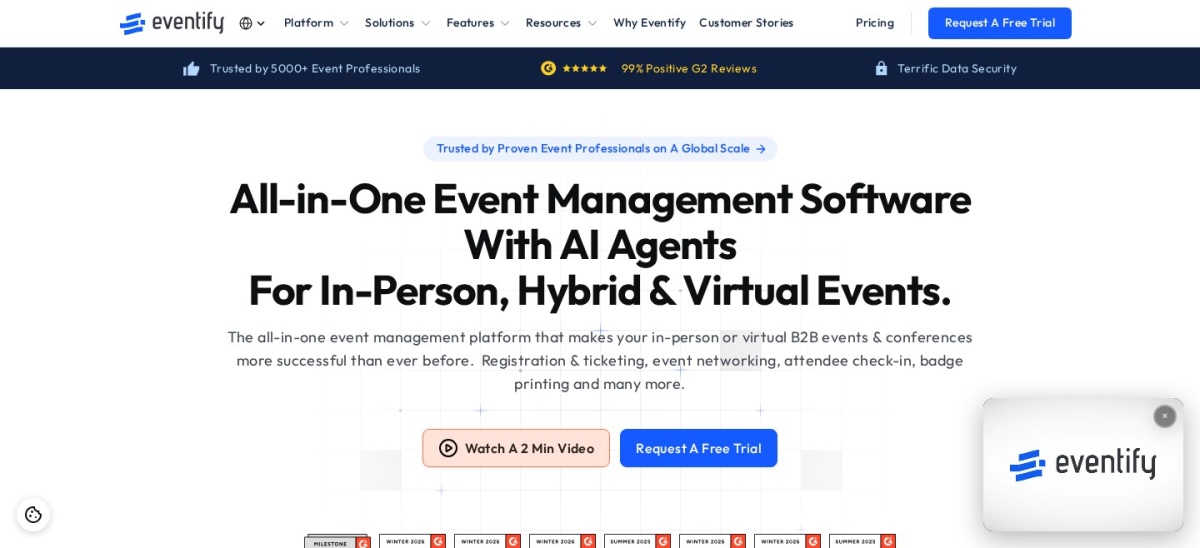
Eventify is an all-in-one event management platform with ticketing built in, so organizers can sell tickets, publish a branded event page, scan tickets and print badges without stitching together separate tools. It charges a flat $1 per ticket for paid tickets instead of a percentage, so costs do not climb as ticket prices rise, and free tickets cost nothing.
The trade off is the review base. Its 4.8 out of 5 G2 rating rests on 69 reviews, and it has no populated Capterra listing yet. It suits multi-event organizations and associations that want registration, ticketing and check-in in one platform.
Per-ticket fees vs subscriptions: the math that matters
Per-ticket platforms such as Eventbrite, Whova and RegFox cost nothing upfront and scale with success, which suits occasional events and uncertain attendance. But the percentage cut grows with ticket price: selling 500 tickets at $400 on Eventbrite means roughly $8,000-plus in fees.
Subscription platforms such as Bizzabo, Swoogo and Cvent charge five figures annually regardless of volume, which is expensive for one workshop and cheap for a 20-event program.
RegFox fee cap and Ticket Tailor flat pricing exist precisely for the middle ground where percentages hurt but subscriptions are overkill. Run your numbers before you shortlist; the answer is usually obvious.
What to check before you buy
Model your total cost at your actual numbers before comparing features. Take your expected ticket price, ticket count and free-versus-paid mix, then calculate the all-in cost, service fees, processing fees and platform subscription, for two or three platforms.
Verify payout timing and refund policies in writing: when you receive funds, what happens to fees on refunded tickets, and who pays chargebacks. Eventbrite typically does not return service fees on refunded tickets.
Check the attendee experience on mobile, since most registrations happen on phones, and confirm check-in tooling works offline at the venue. Finally, confirm data export and ownership terms; your attendee list is a business asset.
How we chose
We started from the registration platforms that appear most often in 2026 comparisons, then kept those with a verifiable rating on G2.
Prices come from each vendor's pricing page, checked on 25 November 2026, except where noted. Eventbrite's fees were confirmed on the vendor's own pricing page. Whova, RegFox, Ticket Tailor and Eventify fees rest on November 2026 reads of vendor pricing pages and dated third-party comparisons, and are flagged in our notes. Cvent, Bizzabo and Swoogo publish no prices, so they are listed as quote-only with reported annual figures.
We left out tools with no verifiable rating on G2, Capterra or Trustpilot, including Nunify, Weezevent, Splash and Luma. No vendor paid for a place, and we do not claim hands-on testing for this list.
How to choose an event registration platform
Start with your ticket price and volume, then pick the pricing model that makes the bill predictable.
Model your cost at real numbers. Take your ticket price, ticket count and free-versus-paid mix, then calculate the all-in cost for two or three platforms before comparing features.
Pick the pricing model first. Per-ticket suits occasional events, flat fees suit expensive tickets, and subscriptions suit programs with many events a year.
Test registration on a phone. Most registrations happen on mobile, so run the whole checkout on a phone and check the confirmation and reminder emails.
Confirm check-in works offline. QR scanning and badge printing must work without venue Wi-Fi. Ask the vendor directly and test it at a small event first.
FAQ
What is the best event registration platform?
Whova is the best event registration platform for conferences, with registration plus the strongest attendee app here and a 4.8 out of 5 G2 rating. Eventbrite is the best pick for public ticketed events, with free listing and a built-in discovery marketplace.
How much does event registration software cost?
Free events cost nothing on Eventbrite and Ticket Tailor. Paid ticket fees run from RegFox at $0.99 plus 1 percent per registrant, capped at $4.99, to Eventbrite at 3.7 percent plus $1.79 per ticket. Subscriptions start around $11,800 a year for Swoogo and $15,000-plus for Cvent.
Should attendees or organizers pay the ticket fees?
Most platforms let you choose. Passing fees to attendees is standard for public events, while absorbing them is common for corporate and high-touch events where the ticket price is part of the brand experience.
Can I sell tickets without per-ticket fees?
Yes. Subscription platforms such as Bizzabo and Swoogo charge no per-ticket fees, and Ticket Tailor uses flat per-ticket pricing instead of percentages. The trade-off is the upfront subscription commitment, which only pays off above a certain volume.
Do I need an attendee app or just registration?
For simple ticketed events, registration plus email is enough. For multi-day conferences with agendas, networking and sponsors, an attendee app such as Whova meaningfully improves the experience and sponsor value.
SaaS SEO and WordPress specialist with about 8 years of experience. Rakib compares WordPress plugins, themes, hosting and software using public pricing, documentation and user reviews. See how we rank.