Parseur is the best pick for most teams, with AI and template parsing, a free plan and the widest attachment support. Mailparser suits fixed-format emails, and Parsio suits layouts that keep changing, in a comparison of eight tools on price, accuracy and public ratings, with prices checked on 25 November 2026.
How we make this list: we compare pricing pages, product documentation and public user reviews, then re-check every price before each update. No product paid for a place. Disclosure.
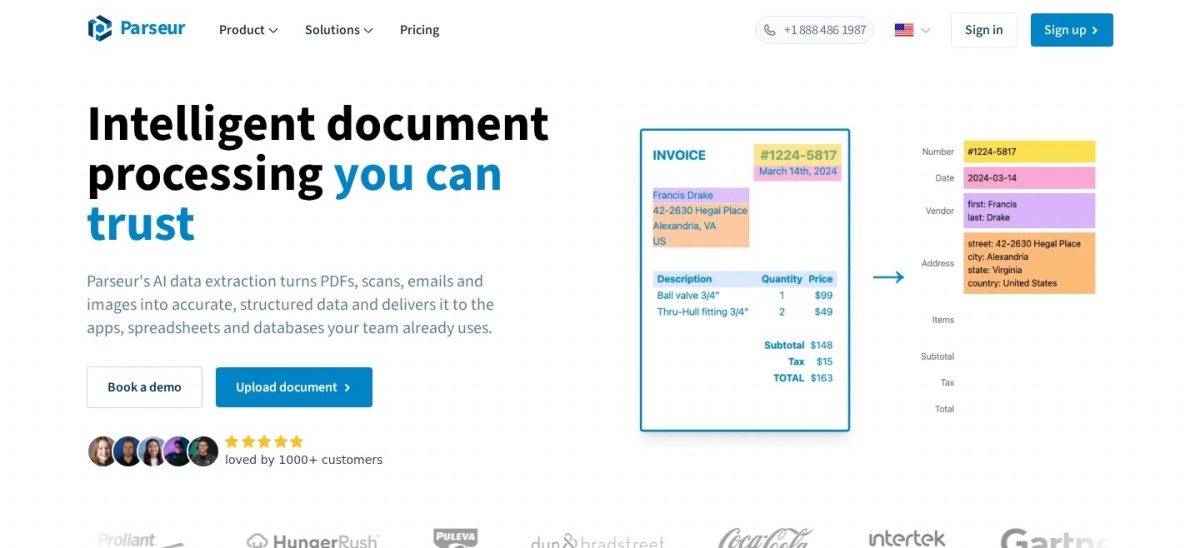
Parseur is the best all-round email parser, with AI and template engines and a free plan of 20 pages a month.
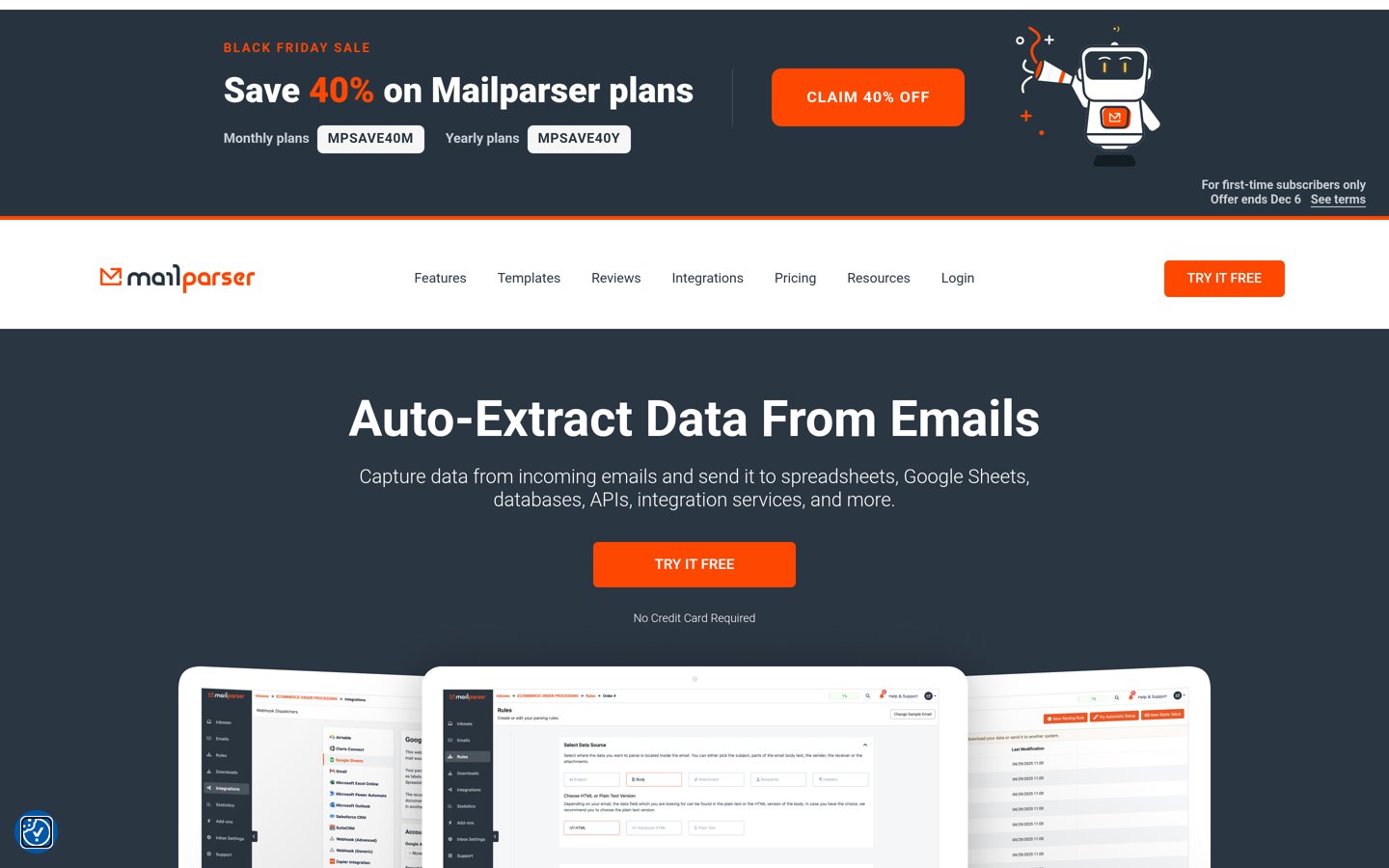
Mailparser is the cheapest reliable pick for fixed-format emails, from $29.95 a month.
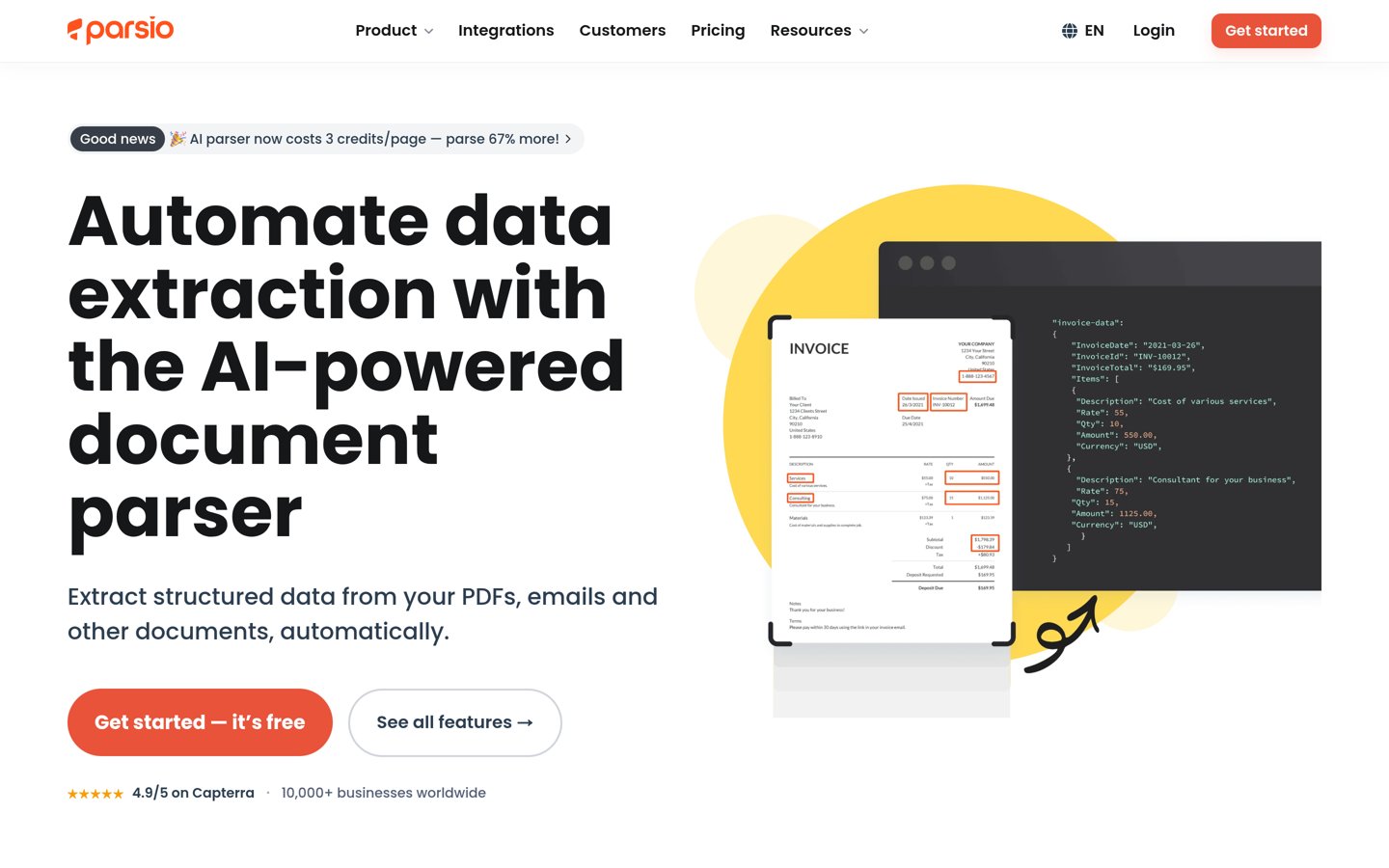
Parsio is the cheapest AI option, from $29 a month, with a 4.7 out of 5 Capterra rating.
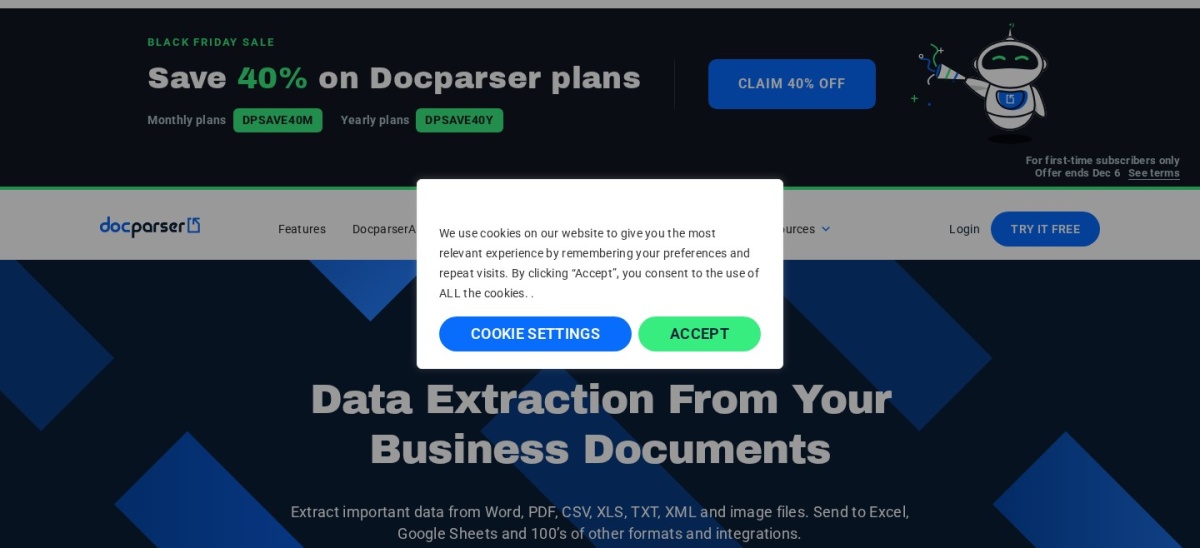
Docparser is the best pick for PDF-heavy workflows, from $39 a month.
Rossum starts at $18,000 a year, so it only fits high-volume invoice teams.
What to look for in an email parser
An email parser reads incoming emails and turns them into structured rows in a spreadsheet, CRM or database, without anyone retyping data. The core job is simple: point it at a mailbox, tell it which fields to pull out, and let it process every new message the same way.
The big split is rules versus AI. Rule-based parsers like Mailparser and Docparser are fast and predictable when every email arrives in the same format, but they break when a sender changes a layout. AI parsers like Parseur, Parsio and Airparser adapt to new layouts, but cost more per page and need more checking.
Pricing is volume-based almost everywhere, so count your emails first. Most tools sell credits or pages, and a long PDF can cost several credits while a plain email costs one. Our guide to data extraction software covers the wider tools that pull data from documents of any kind.
Parseur is the AI-powered email and document parser that combines two engines: an AI engine that finds fields you name in plain English, and a template engine for fixed layouts. It handles the widest range of attachments here, including scanned images through OCR, and the free plan covers 20 pages a month.
The trade off is the per-page price and the thin review base. At $39 a month for 100 pages on annual billing it costs more per page than Mailparser, and the 4.9 G2 rating rests on 16 reviews. It suits teams that parse varied emails and documents without code.
Mailparser is the rule-based email parser that extracts data from email bodies, subjects and attachments with rules you set in a visual editor, then sends the result to spreadsheets, CRMs and APIs. It holds a leading share of the email parsing market and its rules are the easiest here to set up.
The trade off is scope and the thin review base. It reads PDF, Word, Excel and CSV attachments but not images or scanned documents, and the 4.6 G2 rating rests on 12 reviews. It suits teams whose emails always arrive in the same format.
Docparser is the rule-based document parser from the same team as Mailparser, built for structured PDFs and Word files like invoices, purchase orders and contracts. One credit parses up to five pages, which makes it generous at volume, and zonal OCR with table extraction turns documents into rows.
The trade off is rigidity. It is strictly rule-based, so accuracy drops when layouts vary, and there is no free plan, only a 14-day trial. It suits small businesses parsing standard invoices and forms into business workflows.
Parsio is the AI email and document parser that works from a text prompt, with template, AI and GPT engines on every plan including the free Sandbox. It parses PDFs, emails and attachments without templates, and at $29 a month it undercuts most competitors at low volumes.
The trade off is credit math and mixed reviews. GPT parsing costs 5 credits a page, so real costs are hard to predict, and while Capterra rates it 4.7 from 234 reviews, Trustpilot gives it 1.6 from 37. It suits teams that want AI parsing on a budget.
4.6/5on Software Advice (40 reviews, checked Nov 2026)
Starts at$33/mo
Best AI parser for unstructured data
Cheapest paid planFrom $33/mo
Free planNo, trial credits
ParsingGPT-powered AI
Credits1 per email or page
airparser.com
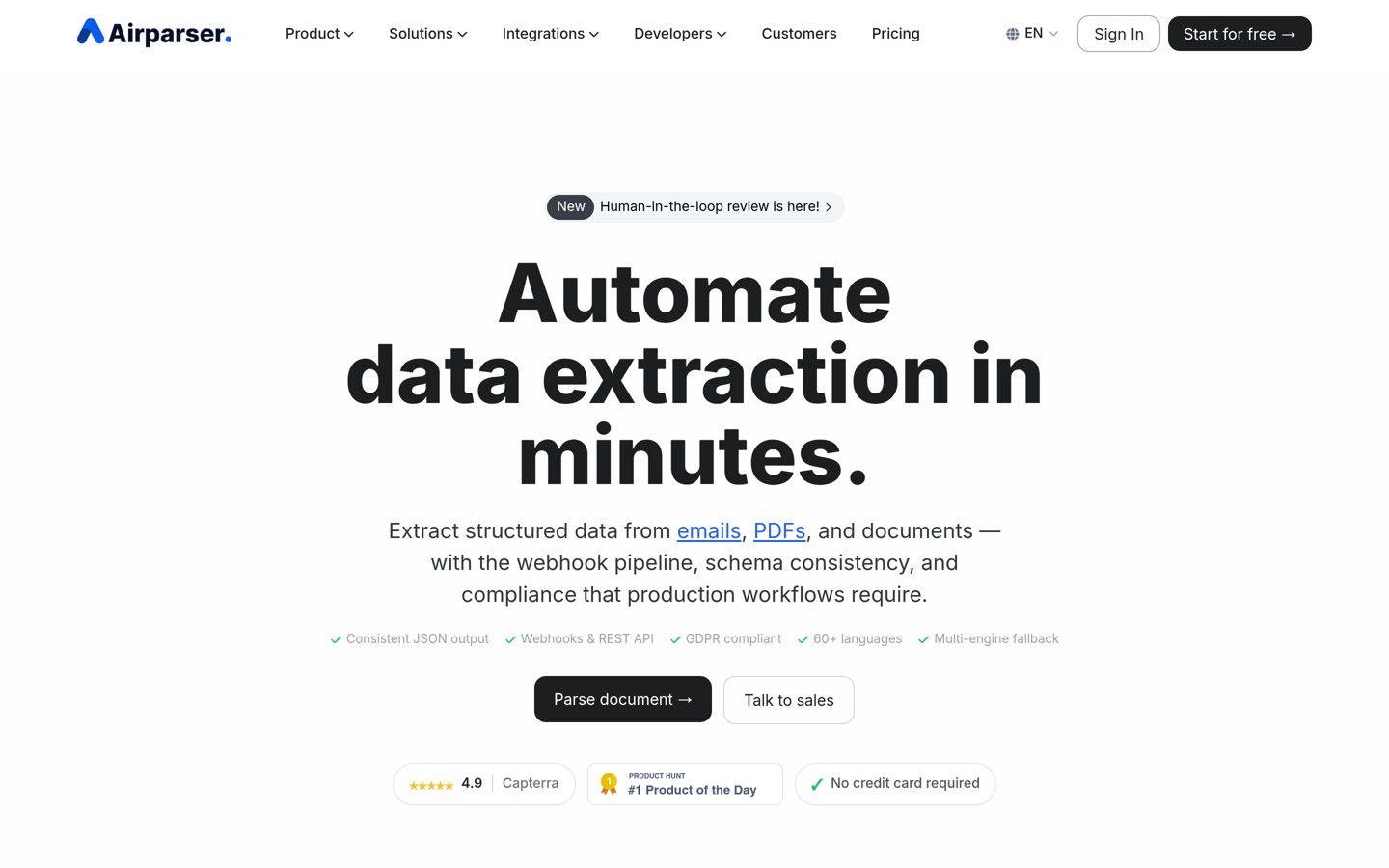
Airparser homepage, captured Nov 2026.
Airparser is the GPT-powered email and document parser that lets AI decide which fields to extract, with one credit per parsed email, document or PDF page and no multipliers. It handles unstructured content that breaks rule-based parsers, with webhooks, schema consistency and GDPR compliance built in.
The trade off is the young review record. The 4.6 rating comes from Software Advice across 40 reviews, and there is no free plan, only trial credits. It suits teams parsing messy, unstructured mail where templates keep failing.
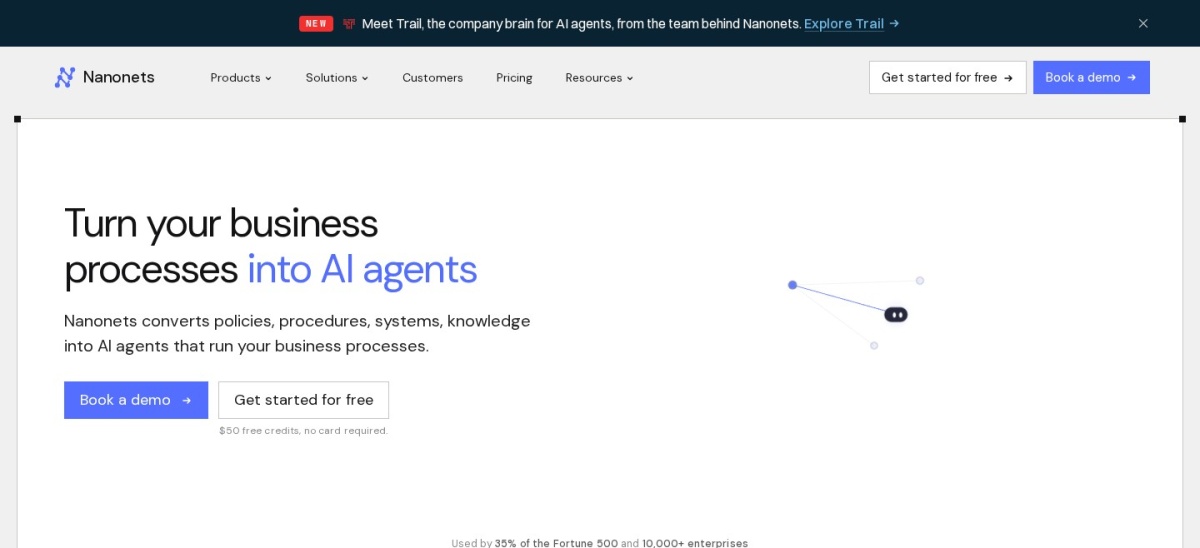
Nanonets is the intelligent document processing platform that reads invoices, purchase orders and forms with AI agents, then applies business rules, handles exceptions and posts results into SAP, Salesforce or QuickBooks. It starts with $50 in free credits, then costs $100 a month for 100 credits.
The trade off is complexity and cost. It is a full workflow platform, not just a parser, so small teams pay for depth they do not need, and per-block pricing takes care to forecast. It suits larger teams automating document-heavy processes end to end.
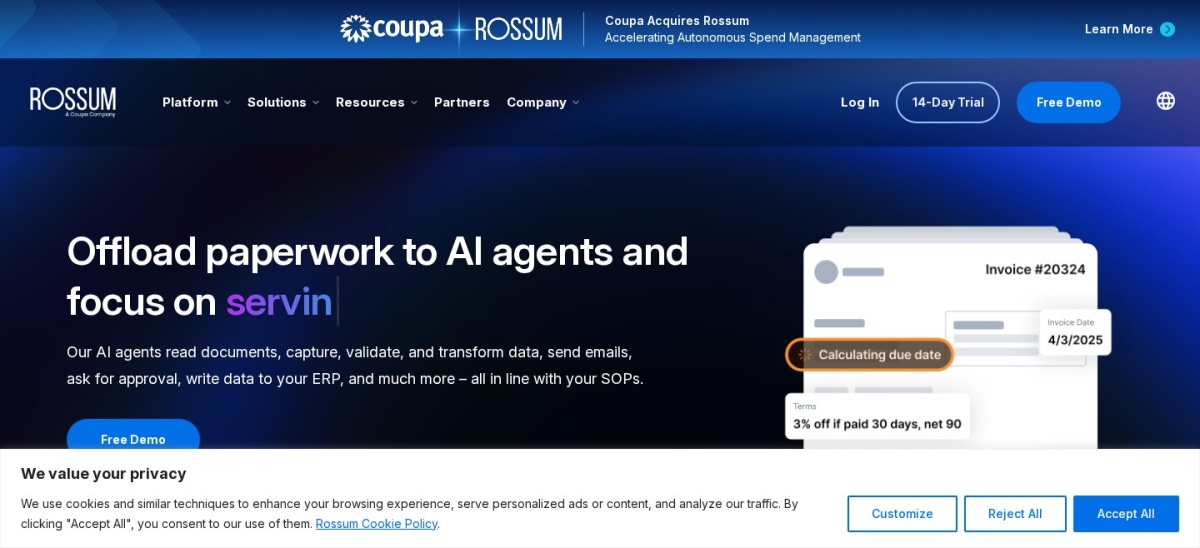
Rossum is the document AI platform built around invoices and transactional documents, reading them, validating data against master records and posting clean transactions to your ERP. It is the default pick when an accounts payable team wants invoice capture specifically, not a general parser.
The trade off is the price and the narrow focus. Entry pricing starts at $18,000 a year with no free plan, and it is built for invoices rather than general email parsing. It suits finance teams automating high-volume invoice flows.
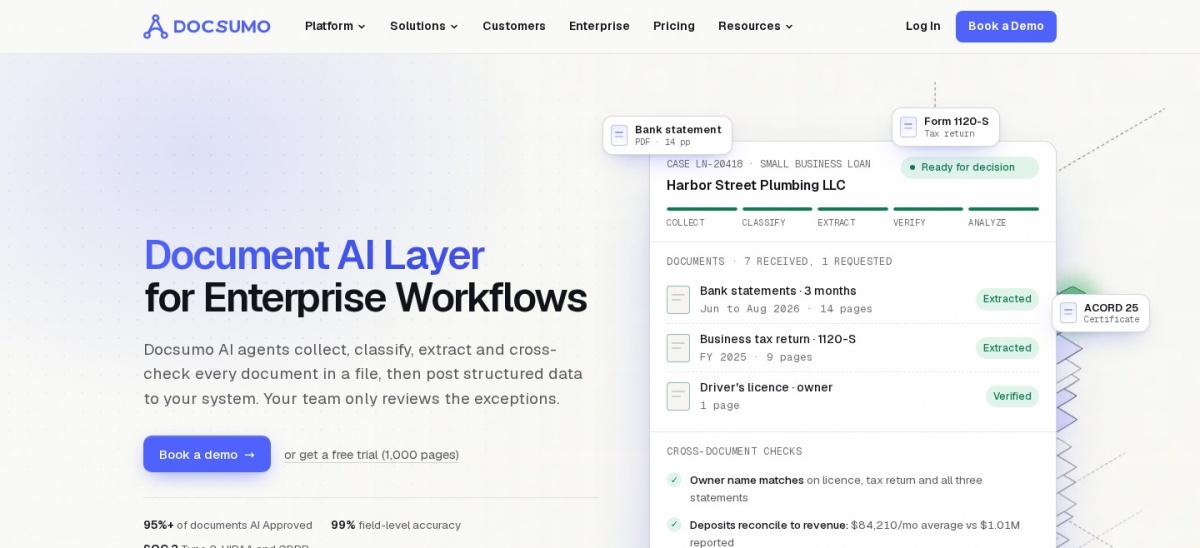
Docsumo is the no-code document AI platform that classifies and extracts data from invoices, bank statements and forms, with a free tier covering up to 1,000 pages a month. It suits small operations teams that want generous free usage before any commercial conversation.
The trade off is the opaque paid pricing. No paid starting price is published, so budgeting needs a sales conversation, and the platform is document-first rather than email-first. It suits teams whose parsing starts with documents, not the inbox.
Rule-based parsing wins when your mail is uniform. Order confirmations, lead notifications and form submissions arrive in the same template every time, so a rule you set once keeps working. Mailparser and Docparser are built for exactly this, and both are cheaper than the AI tools at low volume.
AI parsing wins when layouts vary. Supplier invoices, forwarded emails and scanned attachments change shape constantly, and a template breaks on every new variant. Parseur, Parsio and Airparser read the fields you name in plain language and adapt, which saves the maintenance that rule-based tools demand.
Test with your own mail before you pay. Send ten real emails through the free plan or trial and check the output row by row, because accuracy on your formats matters more than any benchmark.
How we chose
We started from the email parsers with a G2, Capterra or Trustpilot listing and kept those with a verifiable rating and a real parsing product, covering rule-based tools, AI tools and enterprise document platforms.
Prices come from each vendor's pricing page, checked on 25 November 2026. Parseur, Docparser and Nanonets prices were read on their official pricing pages. Ratings and review counts come from G2, Capterra or Software Advice on the same day. Where a vendor shows a first-year discount, the list shows the regular price.
We left out tools with no verifiable rating on G2, Capterra or Trustpilot. No vendor paid for a place, and we do not claim hands-on testing for this list.
How to choose an email parser
Start with your email format, then match the parser to how much it changes.
Count your monthly email volume first. Most parsers bill per page, credit or email, so a tool that looks cheap at 100 emails a month can be dear at 5,000. Count real volume before comparing prices.
Check whether your formats change. Fixed templates suit rule-based tools like Mailparser and Docparser, while varying layouts need an AI parser like Parseur, Parsio or Airparser.
Test with ten real emails. Send your actual mail through the free plan or trial and check every field in the output, because accuracy on your formats matters more than a benchmark.
Confirm the destination. Check the parser sends data where you need it, whether that is Google Sheets, a CRM, a webhook or an API, before you commit to a paid plan.
FAQ
What is the best email parser software?
Parseur is the best pick for most teams, with AI and template parsing, a free plan of 20 pages a month and the widest attachment support. Mailparser suits fixed-format emails, and Parsio suits layouts that keep changing.
How much does email parser software cost?
Paid plans start at $29 a month for Parsio, $29.95 for Mailparser, $39 for Parseur and Docparser, and $100 for Nanonets. Rossum starts at $18,000 a year, so it only fits high-volume invoice teams.
Is there a free email parser?
Yes. Parseur has a free plan of 20 pages a month, Nanonets starts with $50 in free credits, and Parsio has a free Sandbox with 30 credits a month. Mailparser and Docparser offer free trials instead of free plans.
What is the difference between rule-based and AI parsing?
Rule-based parsing follows fixed rules you set for one layout, which is fast and predictable until the layout changes. AI parsing reads the fields you name in plain language and adapts to new layouts, but costs more per page and needs more checking.
Can an email parser read PDF attachments?
Yes. Parseur, Docparser, Parsio, Airparser, Nanonets, Rossum and Docsumo all read PDF attachments, with OCR for scanned pages. Mailparser reads PDF, Word, Excel and CSV attachments but does not support images or scanned documents.
Do I need to write code to use an email parser?
No. All eight tools here are no-code, with visual template builders or plain-language AI field naming. Parseur also offers Python post-processing on its larger plans for teams that want it.
SaaS SEO and WordPress specialist with about 8 years of experience. Rakib compares WordPress plugins, themes, hosting and software using public pricing, documentation and user reviews. See how we rank.