Fivetran leads for fully managed ELT, Airbyte is the cheapest managed start with a free self-hosted edition, and Skyvia has the highest G2 rating in this list. We compared nine tools on price, connector range, sync speed and public ratings, with prices checked on 25 November 2026.
How we make this list: we compare pricing pages, product documentation and public user reviews, then re-check every price before each update. No product paid for a place. Disclosure.
Fivetran is the managed ELT standard, with 700+ connectors and a free plan to 500,000 MAR a month.
Airbyte Cloud starts at $20 a month, and the self-hosted Core edition is free.
Hevo Data Starter is $265 a month on its pricing page, with a free plan to 1 million events.
Skyvia has the highest G2 rating here at 4.8 from 328 reviews.
Meters differ: rows, events, credits and gigabytes, so price the same volume on each tool.
What to look for in ELT tools
ELT tools move data from business apps and databases into a warehouse, where it is transformed for reporting. They replace hand-built scripts with managed pipelines that handle schema changes, retries and incremental loads, so analysts work with fresh data instead of stale exports.
Pricing is the hardest part to compare, because every vendor meters something different. Fivetran bills monthly active rows, Hevo counts events, Airbyte sells credits and Estuary charges per gigabyte. The cheapest tool for a small volume can be the dearest at scale, so model your own volume before choosing. Our guide to data migration software covers the tools that move data between systems.
Sync speed matters too. Batch tools refresh hourly or daily, which is fine for reporting, while streaming tools capture database changes in under a second for live dashboards. Check the fastest sync on the plan you would actually buy, not the headline figure.
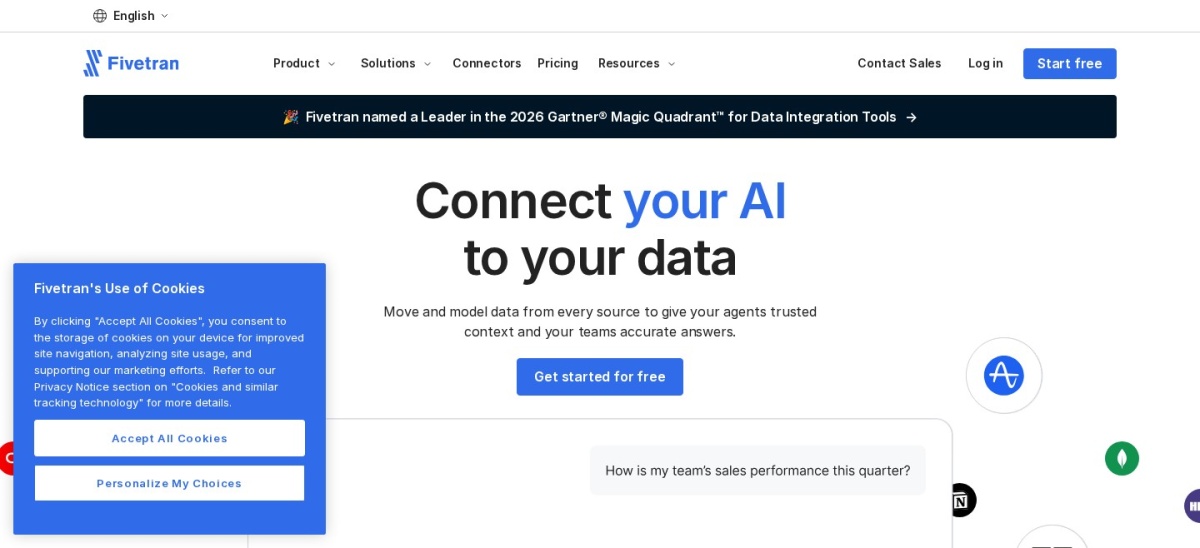
Fivetran is the fully managed ELT platform that moves data from more than 700 sources into a warehouse with almost no maintenance, handling schema changes, retries and incremental syncs itself. It covers SaaS apps, databases and files, syncs as often as every 15 minutes on Standard, and now includes dbt transformation under the same company after the June 2026 merger with dbt Labs.
The trade off is the meter. Monthly Active Rows pricing means wide tables and frequent updates push the bill up, and paid plans carry a $5 base charge per connection plus a $12,000 annual minimum on contracts. It suits teams that need managed reliability for business-critical pipelines and can budget by volume.
Best open-source ELT with a free self-hosted edition
Cheapest paid planStandard, $20/mo
Free planYes, self-hosted Core
Connectors700+
Sync frequency1 hour
airbyte.com
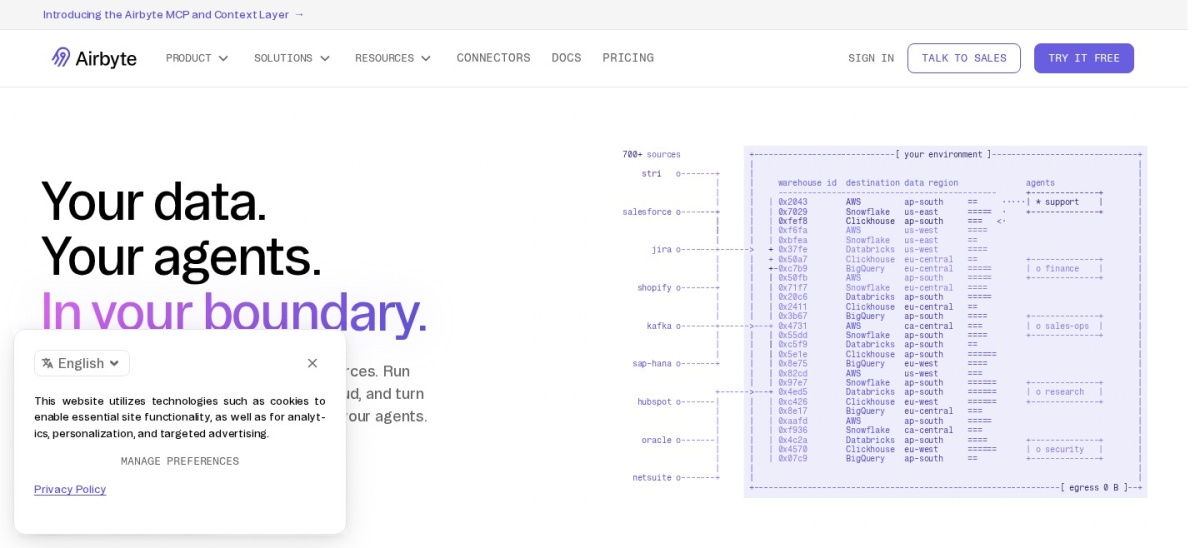
Airbyte homepage, captured Nov 2026.
Airbyte is the open-source ELT platform with more than 700 connectors, available as a free self-hosted edition or as a managed cloud service. The cloud plans bill by credits, with API sources at 6 credits per million rows and databases at 4 credits per gigabyte, and the Connector Builder lets teams add sources the catalog does not cover.
The trade off is uneven connector quality. Community connectors can be buggy and need babysitting, support on the lower cloud tiers is slow, and the credit model takes a spreadsheet to forecast. It suits data teams that want the widest free catalog and are happy to self-host or pay by volume.
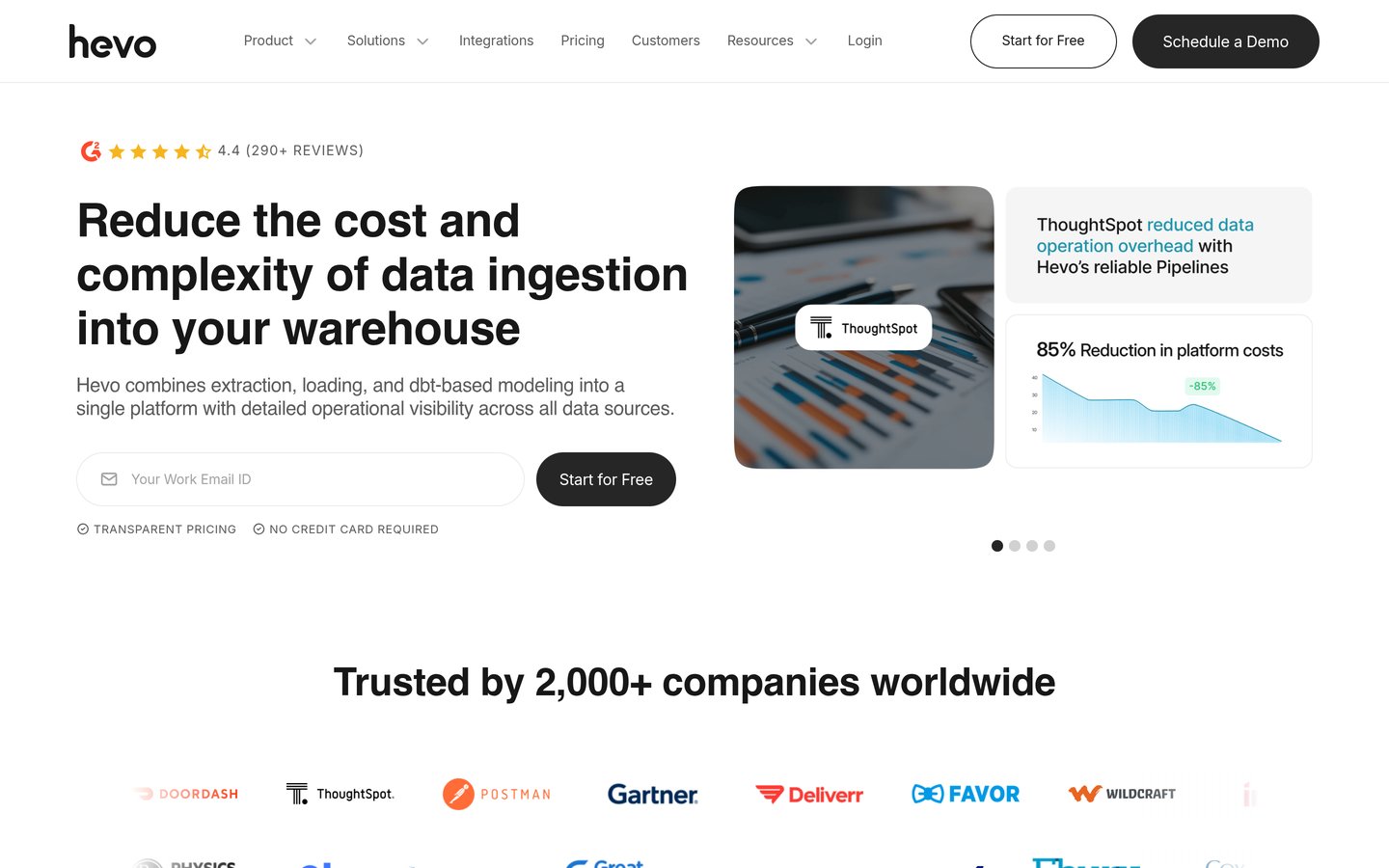
Hevo Data is a no-code ELT platform that loads data from more than 200 sources into a warehouse with point-and-click pipelines and built-in transformations. It supports real-time replication, automatic schema detection and dbt integration, and its free plan covers 1 million events a month.
The trade off is event-based cost at scale. Every insert, update and delete counts as an event, so busy tables burn through the quota and overage charges apply. It suits mid-market teams that want managed pipelines without writing code.
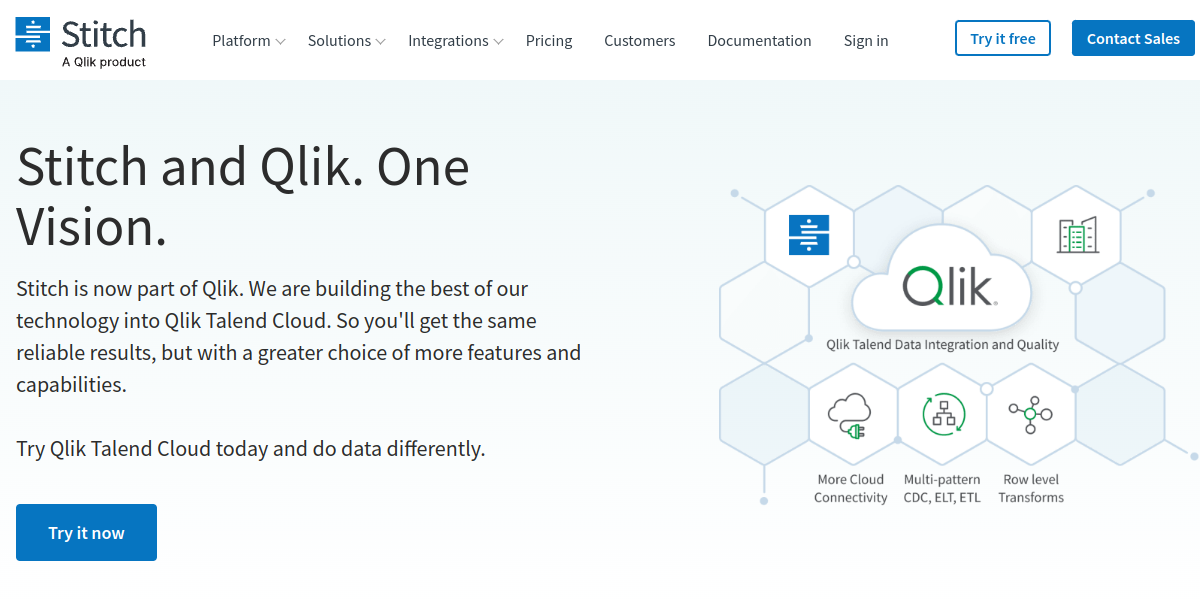
Stitch is the simplest ELT service in this list, a Talend product that loads data from SaaS apps and databases into a warehouse on plain row-based pricing. Standard starts at $100 a month for 5 million rows with one destination and 10 standard sources, and every plan includes SOC 2 Type II compliance.
The trade off is scope. Stitch does loading only, with no built-in transformation beyond post-load webhooks, and the row tiers get expensive as volume grows. It suits small teams with straightforward loads and a handful of sources.
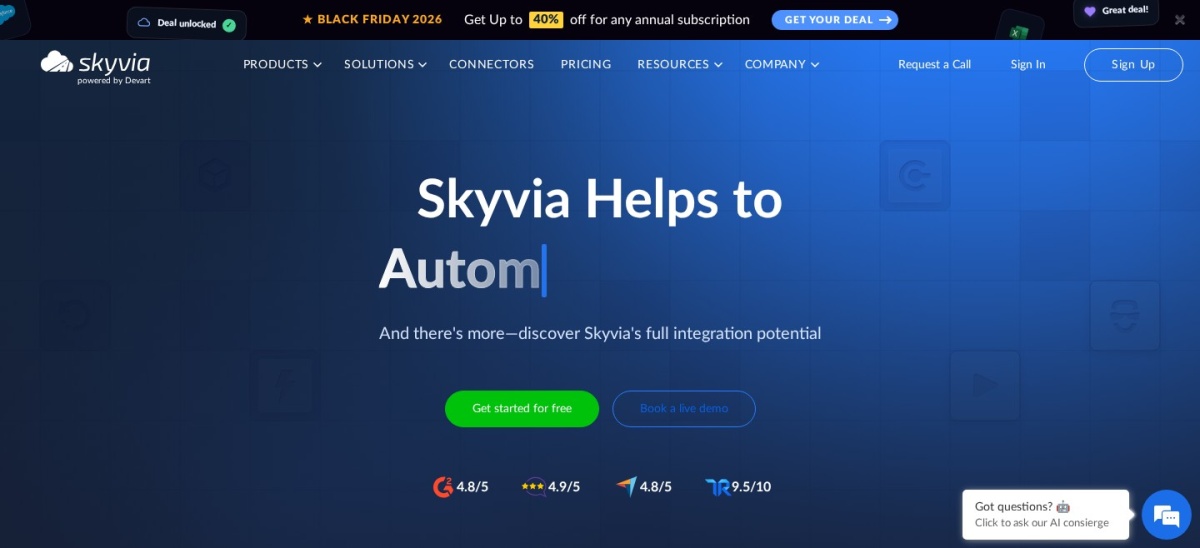
Skyvia is a no-code data integration platform that covers ETL, ELT, reverse ETL, backup and data sync in one place, with more than 200 connectors. The free plan covers 10,000 records a month, paid plans start at $79 a month on annual billing, and every plan includes unlimited users.
The trade off is pace. The Basic plan syncs only once a day, and heavier workloads need the Standard or Professional tiers for hourly or minute-level runs. It suits business users who want integration and reverse ETL without writing code.
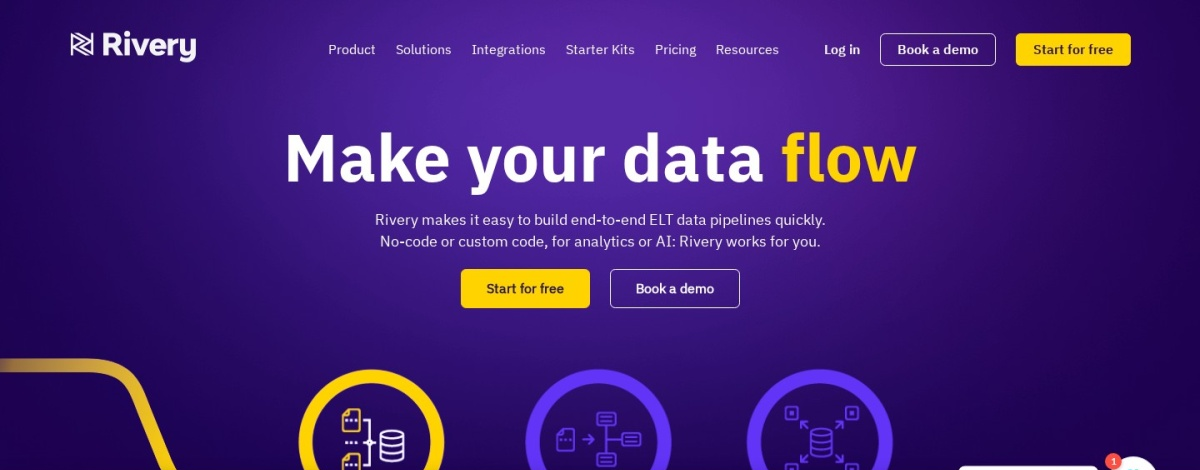
Rivery is a fully managed ELT platform that combines ingestion, transformation and workflow orchestration in one place, so teams do not need a separate scheduler. It covers SaaS apps, databases and files, and its credit-based pricing charges by data volume processed.
The trade off is the quote-first buying process for larger deals and a credit model that needs volume estimates up front. It suits teams that want ingestion, transformation and scheduling in a single platform.
What we like
Ingestion, transformation and orchestration in one
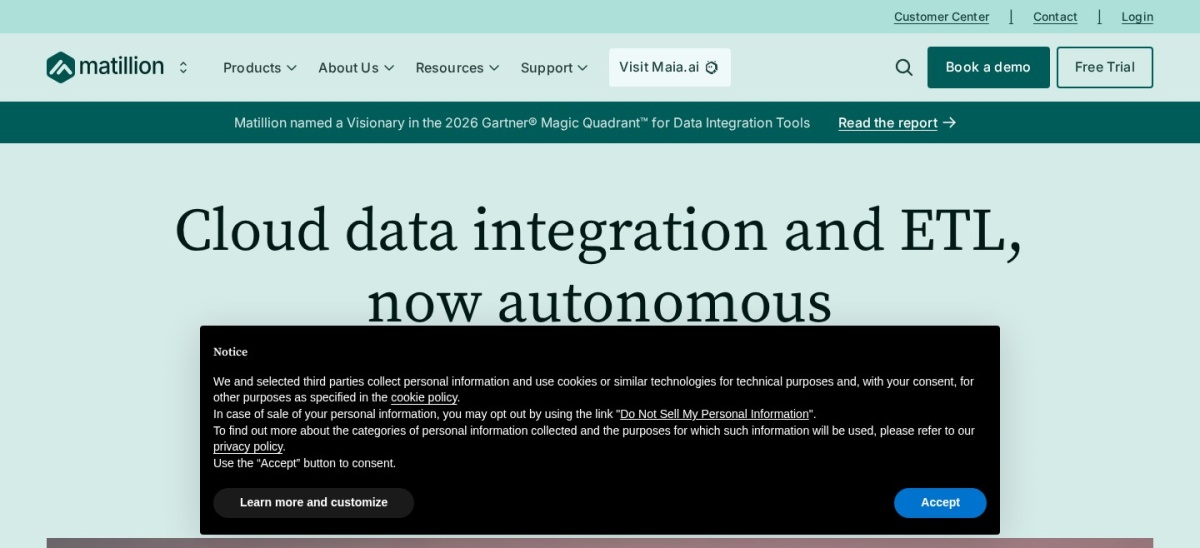
Matillion is a warehouse-native ELT platform whose pipelines run inside Snowflake, Databricks, BigQuery or Redshift, with a visual designer and AI-assisted pipeline building under the Maia brand. It suits analytics engineering teams whose warehouse is the center of their data stack.
The trade off is fit and pricing. It is built for the big four warehouses, so teams landing data elsewhere need another tool, and pricing is credit-based with no published starting figure. It suits data teams standardized on a modern cloud warehouse.
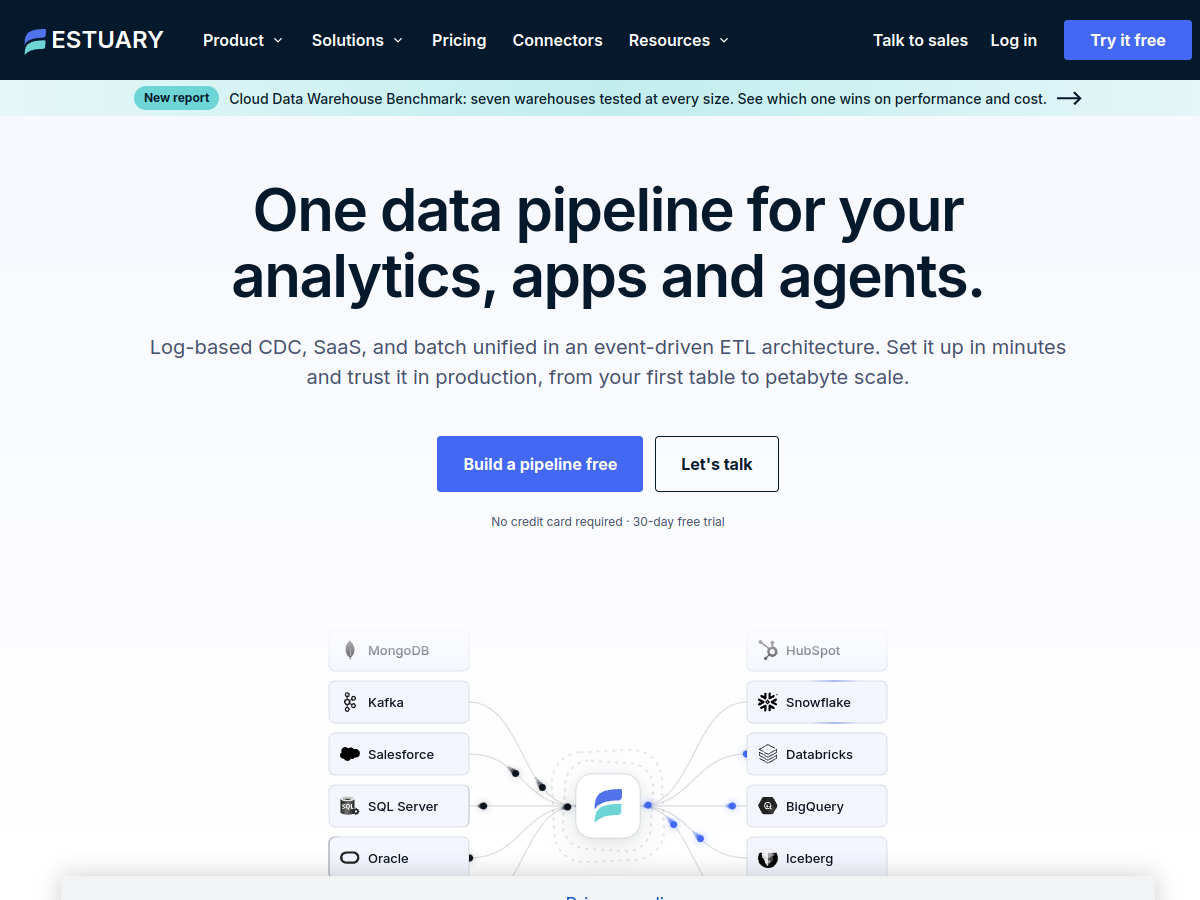
Estuary Flow is a streaming-first ELT platform built for real-time change data capture, with sub-100-millisecond latency and exactly-once delivery. Its free plan covers 10 GB a month across two connector instances, and paid usage bills at $0.50 per gigabyte plus $100 per connector instance a month.
The trade off is complexity and double metering. The interface has a steep learning curve, and the gigabyte rate applies when data is captured and again at each materialization. It suits teams where live dashboards or fraud checks need fresh data.
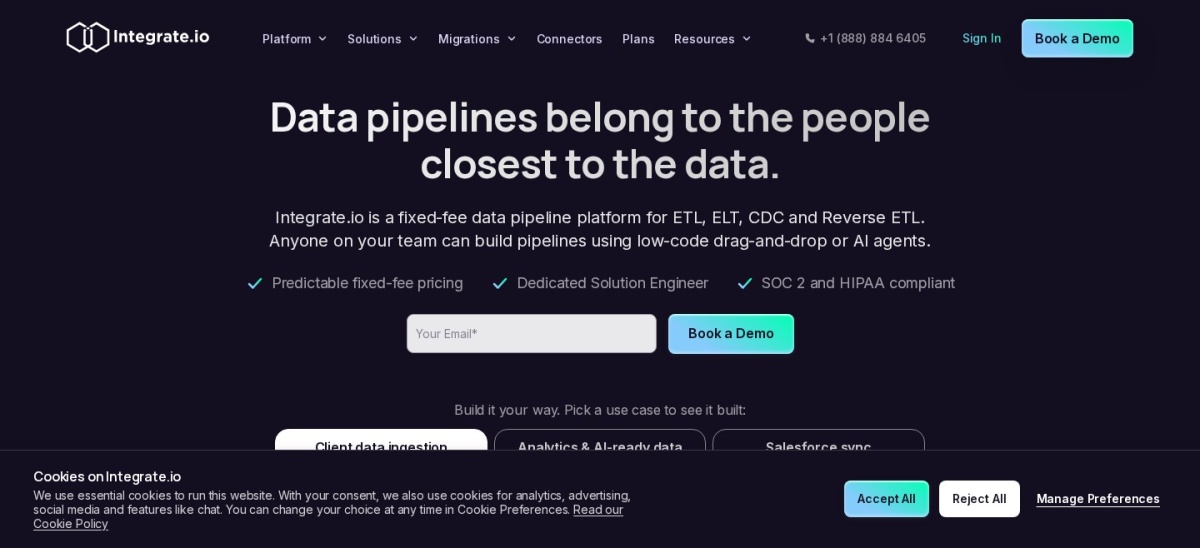
Integrate.io is a cloud ETL and ELT platform with fixed-fee pricing: the Core plan costs $1,999 a month with unlimited data volume, pipelines and connectors. It covers ETL, ELT, change data capture and reverse ETL, with a visual designer plus SQL and Python components.
The trade off is the entry price. At $1,999 a month it is far above the self-serve tools here, so it only pays for teams whose volume would cost more on usage-based meters. It suits larger teams that want a predictable bill.
Fivetran bills Monthly Active Rows, so a row changed ten times in a month still counts once, but wide tables with many changed rows add up fast. Its $5 base charge applies to every paid connection, and annual contracts start at $12,000 a year.
Hevo counts events, Airbyte sells credits, Estuary charges per gigabyte, and Stitch charges per row tier. A pipeline moving 10 million rows a month costs a different amount on each meter, so run the same volume through every pricing page before you choose.
Integrate.io is the exception: one fixed fee of $1,999 a month covers unlimited volume, which suits teams whose data grows faster than their budget. Rivery and Matillion use credit models with no simple starting price, so budget them from a quote.
How we chose
We started from the ELT tools with a G2 listing and kept those with a verifiable rating and a real data-loading product, covering managed services, open-source options and streaming platforms.
Prices come from each vendor's pricing page, checked on 25 November 2026. Fivetran, Airbyte, Hevo Data, Stitch and Skyvia prices were read on their official pricing pages. Ratings and review counts come from G2 on the same day. Where a vendor shows a first-year discount, the list shows the regular price.
We left out tools with no verifiable rating on G2, Capterra or Trustpilot. No vendor paid for a place, and we do not claim hands-on testing for this list.
How to choose an ELT tool
Work out your volume first, then match the meter to the way your data actually moves.
Work out your monthly volume first. Count the rows, events or gigabytes you move each month, because every vendor meters something different and the cheapest tool at one volume can be the dearest at another.
List your sources and destinations. Check the connector catalog for every source you need, including databases, SaaS apps and files, and confirm the destination warehouse is supported.
Match sync speed to the job. Hourly or daily batch syncs suit reporting, while live dashboards and fraud checks need streaming capture like Estuary Flow.
Start on a free plan or trial. Load one real pipeline on the free tier or trial and watch the first bill before committing to an annual contract.
FAQ
What is the best ELT tool for data integration?
Fivetran is the best pick for most teams, with more than 700 managed connectors, automated schema handling and a free plan to 500,000 MAR a month. Airbyte suits teams that want a free self-hosted edition, and Skyvia suits business users who want no-code pipelines with reverse ETL.
How much do ELT tools cost?
Managed ELT starts at $20 a month for Airbyte Cloud, $79 for Skyvia Basic and $100 for Stitch Standard, while Fivetran and Estuary bill by usage with free tiers. Hevo Data starts at $265 a month, and Integrate.io charges a fixed $1,999 a month. Always price your own volume, because the meter differs.
Is there a free ELT tool?
Yes. Airbyte Core is free to self-host with no licence fee, Fivetran has a free plan to 500,000 MAR a month, and Estuary Flow is free to 10 GB a month. Hevo Data and Skyvia also have free plans, with 1 million events and 10,000 records a month respectively.
What is the difference between ETL and ELT?
ETL transforms data before loading it into the warehouse, while ELT loads raw data first and transforms it inside the warehouse. ELT suits cloud warehouses with cheap compute, because the warehouse does the heavy work. All nine tools in this list follow the ELT pattern.
Which ELT tool is best for small teams?
Airbyte Cloud is the cheapest managed start at $20 a month, and its free self-hosted edition costs nothing but server time. Skyvia is the simplest no-code option with a free plan, and Stitch suits teams with a handful of sources and straightforward loads at $100 a month.
How does Fivetran pricing work?
Fivetran bills Monthly Active Rows, the distinct rows inserted, updated or deleted in a month, with a $5 base charge per connection on paid plans. The free plan covers 500,000 MAR a month, and Standard rates start near $500 per 1 million MAR, with annual contracts from $12,000 a year.
SaaS SEO and WordPress specialist with about 8 years of experience. Rakib compares WordPress plugins, themes, hosting and software using public pricing, documentation and user reviews. See how we rank.