AWS Database Migration Service is the best data migration software for moving databases into AWS, with free schema conversion and continuous replication. Azure DMS is free for offline migrations, and Fivetran is the best managed ELT pick for ongoing movement.
How we make this list: we compare pricing pages, product documentation and public user reviews, then re-check every price before each update. No product paid for a place. Disclosure.
AWS DMS is the best pick for moving databases into AWS, with free schema conversion, continuous replication and a 4.1 out of 5 G2 rating from 50 reviews.
Azure DMS Standard tier is free for offline migrations, and Premium 4-vCore is free for 183 days — but the classic service retired in March 2026.
Fivetran, Airbyte and Hevo lead ongoing movement into warehouses, while AWS DMS and Azure DMS lead one-time database moves into their own clouds.
Usage-based pricing is where migration budgets die. Fivetran bills per monthly active row and Hevo per event, so model your real volume before committing.
Qlik Talend Cloud and Matillion target enterprises and sell on request, but both offer free trials.
What to look for in data migration software
Data migration breaks into two jobs: one-time moves between databases, and ongoing replication that keeps systems in sync. AWS DMS and Azure DMS lead the first job, while Fivetran, Airbyte and Hevo lead the second for analytics teams.
Change data capture is what makes a migration safe. CDC reads the source database log and replays changes to the target, so the cutover happens with minimal downtime instead of a weekend outage.
The billing unit decides the real cost. MAR, credits, events, rows and instance-hours do not map cleanly to each other, so model your own volume before signing. Our guide to database software covers the warehouses these tools feed.
Cloud-native services are the cheapest way in. Azure DMS Standard is free for offline migrations, AWS DMS has a free tier, and Airbyte Core is free to self-host — but each one only moves data into its own world.
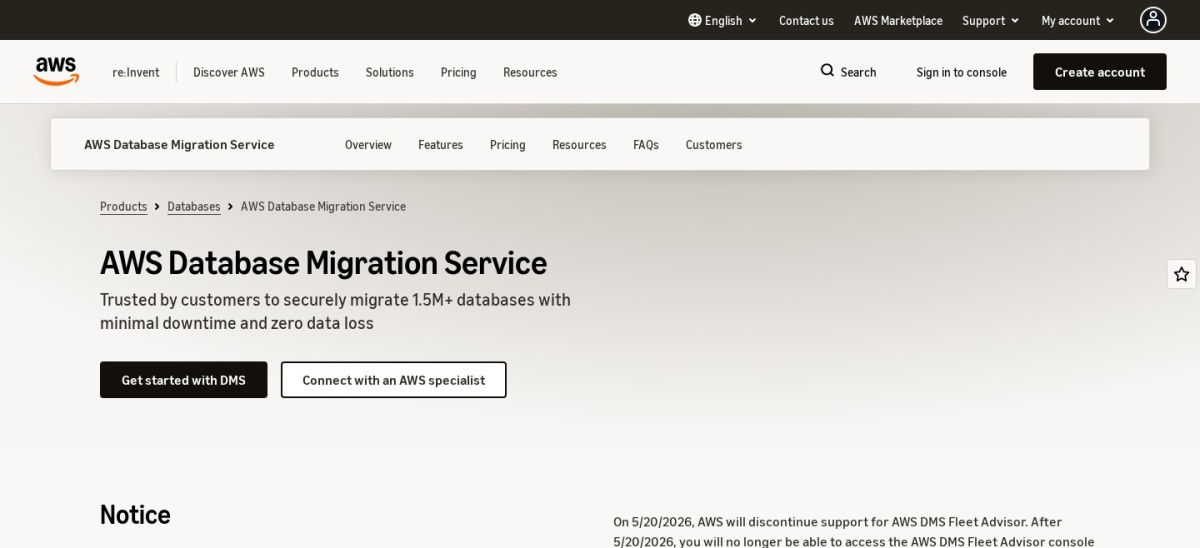
AWS Database Migration Service homepage, captured Nov 2026.
AWS Database Migration Service is the standard way to move databases into AWS, from Oracle to Aurora, SQL Server to RDS, or on-premises MySQL to the cloud. Schema conversion is built in and free, and change data capture keeps source and target in sync during cutover.
The trade off is that it is AWS-only. DMS moves databases into AWS targets, not between other clouds, and pricing is pay as you go by instance hour or serverless capacity. It suits teams migrating databases into AWS with minimal downtime.
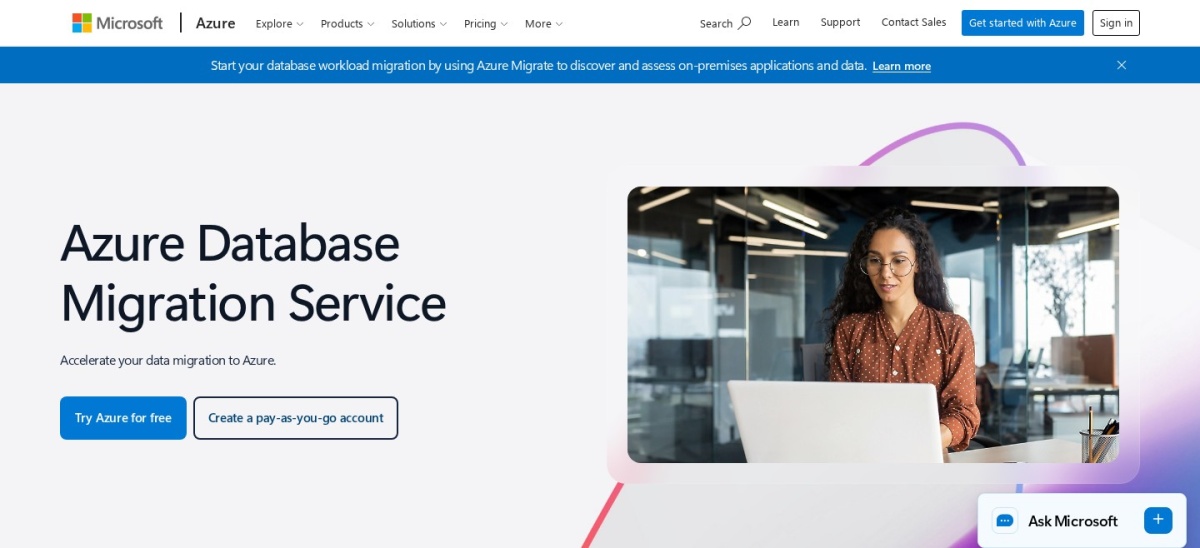
Azure Database Migration Service homepage, captured Nov 2026.
Azure Database Migration Service is a fully managed service for moving operational databases and data warehouses into Azure. The Standard tier supports offline migrations and is free, while Premium adds online migration for business-critical workloads that need minimal downtime.
The trade off is the classic service retirement. Microsoft's retirement notice says the classic service for SQL Server scenarios is not supported after 15 March 2026, so new projects should use the current service. It suits teams moving SQL Server into Azure.
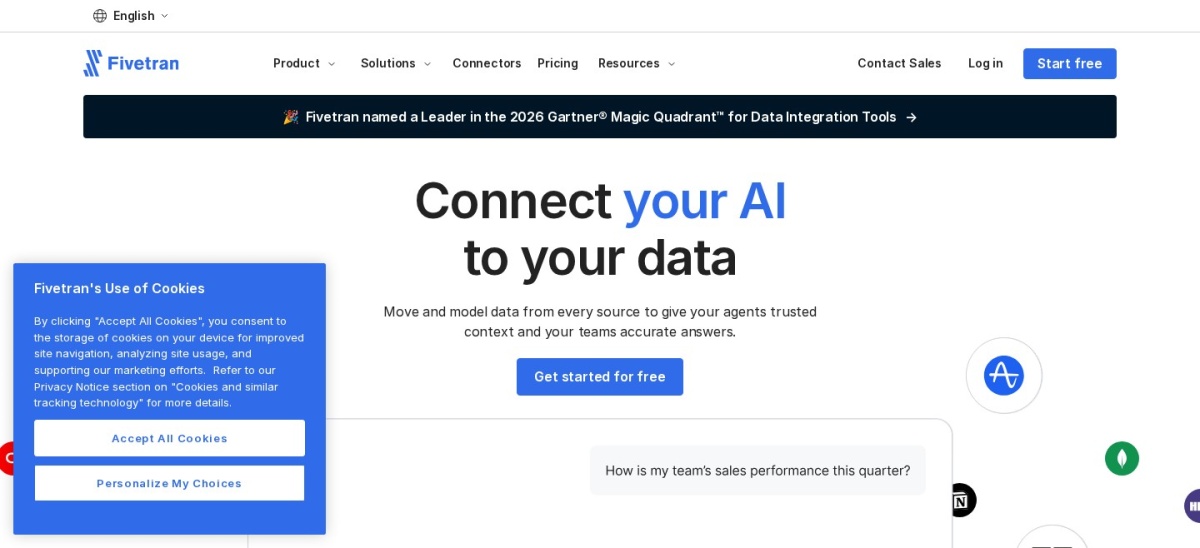
Fivetran is a fully managed ELT platform that moves data from applications and databases into warehouses and lakes, then keeps it in step with change data capture or scheduled syncs. Point it at a source and a warehouse, and the sync runs, schema changes get absorbed, and failures retry themselves.
The trade off is the bill. Fivetran charges per monthly active row per connection, with a $5 base charge on every paid standard connection, and costs climb fast once several connectors are moving. It suits analytics teams that want hands-off pipelines.
Airbyte is an open-source data movement platform with more than 600 connectors, free to self-host or $20 a month on Cloud Standard. It moves data from applications and databases into warehouses and lakes on scheduled syncs, and its Standard price rose from $10 to $20 on 21 September 2026.
The trade off is self-hosting effort. The free Core edition costs nothing but demands engineering time, and Cloud credits add up with volume. It suits low-volume teams that want connector flexibility without a big bill.
Hevo Data is a no-code pipeline platform that moves data from more than 150 sources into warehouses without data engineers. The interface builds pipelines in minutes, schema mapping is automatic, and monitoring shows pipeline health without a separate observability stack.
The trade off is event-based billing. Hevo charges per event, so the bill follows your real data volume, and the free tier rarely survives first contact with production data. It suits small teams that want simple, transparent billing.
Stitch is a simple row-based ELT tool that moves data from applications and databases into one warehouse destination. It is the simplest pick for one warehouse, with transparent row-based pricing from $100 a month for 5 million rows.
The trade off is scope. Stitch suits one warehouse destination and simple pipelines, and teams that outgrow it move to Fivetran or Airbyte. It suits small teams that want the simplest possible ELT.
Qlik Talend Cloud is an enterprise data integration suite that handles migration as part of governed data pipelines across cloud, on-premises and hybrid estates. It suits large teams that need migration inside a governed platform rather than a standalone mover.
The trade off is the sales process. Talend is quote-only and capacity-based, with a 14-day free trial and no credit card needed. It suits large governed data estates that can work with a quote.
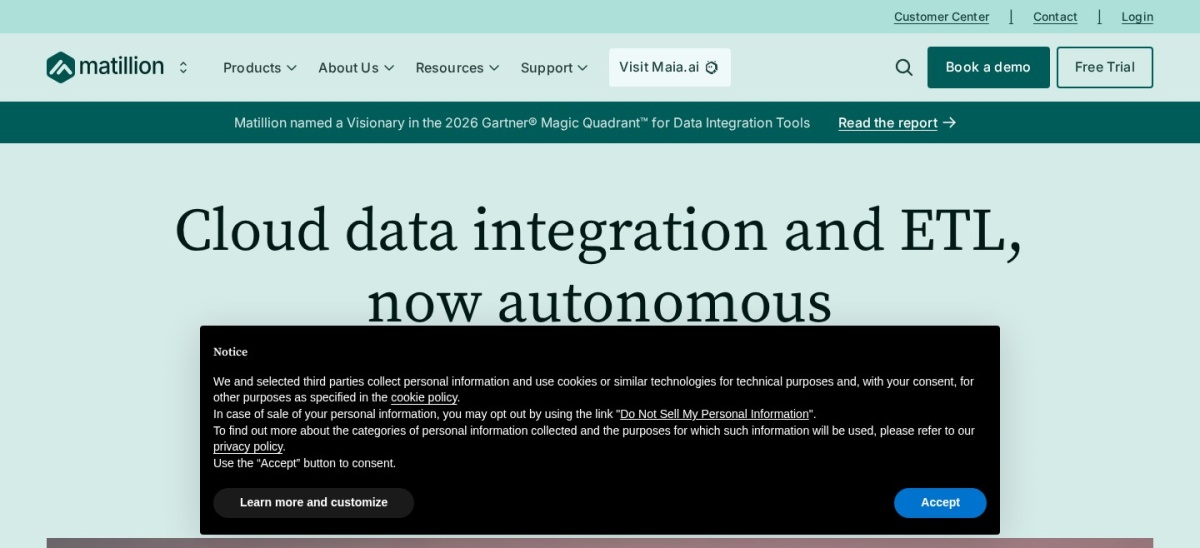
Matillion is a cloud-native ELT platform that migrates and transforms data inside cloud warehouses such as Snowflake and Databricks. It suits larger teams that want migration and transformation in one cloud-native tool rather than a standalone mover.
The trade off is pricing clarity. Matillion prices by credits with no public dollar rate, and the platform is built for cloud warehouses. It suits larger teams that can work with a quote.
A one-time move copies a database to a new server, cloud or engine, then you switch the app and the job ends. AWS DMS, Azure DMS and Google DMS are built for this job.
Ongoing replication keeps two systems in sync for months or years, usually feeding a warehouse for analysis. Fivetran, Airbyte, Hevo and Stitch are built for this job.
Pick by job first. A database move needs schema conversion and CDC; a warehouse feed needs connectors and scheduling. Buying the wrong class costs months.
How we chose
We started from the data migration tools most commonly shortlisted for database moves and warehouse feeds, then kept the eight with a verifiable G2 rating, a live product and migration as a core job.
Prices come from each vendor's pricing page, checked on 25 November 2026. AWS DMS and Azure DMS prices were confirmed on their vendor pricing pages today; Fivetran, Airbyte, Hevo and Stitch prices were confirmed on vendor pages on 25 November 2026 in our data integration research.
We left out Google Database Migration Service and Oracle GoldenGate, which have no verifiable G2 rating with a review count. No vendor paid for a place, and we do not claim hands-on testing for this list.
How to choose data migration software
Start with the job — one-time move or ongoing feed — then check the target cloud.
Name the job. A one-time database move needs schema conversion and CDC. An ongoing warehouse feed needs connectors and scheduling. The job picks the tool class.
Start with your target cloud. Moving into AWS starts with DMS, into Azure with Azure DMS. Warehouse feeds start with Fivetran, Airbyte or Hevo.
Model the usage bill. Fivetran bills per monthly active row and Hevo per event, so model your real volume before committing. Free tiers rarely survive production.
Test the cutover. Run a trial migration and measure downtime. See our database software guide for the warehouse side of the move.
FAQ
What is the best data migration software?
AWS Database Migration Service is the best data migration software for moving databases into AWS, with free schema conversion and continuous replication. Fivetran is the best managed ELT pick for ongoing movement into warehouses.
How much does data migration software cost?
Azure DMS Standard is free for offline migrations, and AWS DMS starts from $0.0186 an hour for its smallest instance. Fivetran charges $5 a connection plus usage, Airbyte Cloud starts at $20 a month, and Hevo starts at $265 a month.
What is the difference between migration and replication?
Migration is a one-time move of a database to a new server, cloud or engine, ending when you switch the app. Replication keeps two systems in sync continuously, usually feeding a warehouse for analysis over months or years.
Is Azure Database Migration Service free?
Yes, the Standard tier is free for offline migrations, and Premium 4-vCore is free for 183 days from service creation. After that, Premium is billed hourly. Note that the classic service for SQL Server scenarios is not supported after 15 March 2026.
What is change data capture?
Change data capture, or CDC, reads the source database log and replays inserts, updates and deletes to the target. It keeps source and target in sync during cutover, so the migration finishes with minimal downtime.
Can I migrate data for free?
Yes, for small jobs. Azure DMS Standard is free for offline migrations, AWS DMS has a free tier with $100 in credits, and Airbyte Core is free to self-host. Large migrations still need paid capacity and planning.
SaaS SEO and WordPress specialist with about 8 years of experience. Rakib compares WordPress plugins, themes, hosting and software using public pricing, documentation and user reviews. See how we rank.