Klaviyo is the best ecommerce automation tool for email and SMS flows, with deep segmentation and more than three hundred integrations. Make and Zapier connect the rest of the store, while Omnisend is the cheapest ready-made option for small shops.
How we make this list: we compare pricing pages, product documentation and public user reviews, then re-check every price before each update. No product paid for a place. Disclosure.
Klaviyo leads for lifecycle marketing: 4.6 out of 5 on G2 from 1,372 reviews, free to 250 profiles, paid from $20 a month.
Omnisend is the value pick: 4.6 out of 5 on G2 from 1,267 reviews, free for 500 contacts, Standard from $16 a month.
Make is the cheapest connector at $9 a month billed yearly, with visual branching Zapier does not show on one canvas.
Zapier connects the widest stack at 8,000-plus apps, but task costs grow fast with volume.
Shopify Flow is free with any Shopify plan, but it has no G2, Capterra or Trustpilot rating, so it is not ranked here.
What ecommerce automation should do
Ecommerce automation removes repetitive store work: tagging orders, sending cart recovery emails, syncing inventory, updating customers and flagging fraud. The best tools trigger on real store events and act without a person watching.
Three kinds of tool dominate. Email and SMS platforms like Klaviyo and Omnisend run lifecycle marketing, connectors like Make and Zapier join Shopify to the rest of the stack, and internal tools like Shopify Flow run rules inside the store itself.
Shopify Flow deserves a note here. It is free with any Shopify plan and holds 4.7 out of 5 from more than 15,000 reviews on the Shopify App Store, but it has no G2, Capterra or Trustpilot rating, so it cannot be ranked in this list. Shopify stores should try it before paying for a connector.
Pick the wrong category and you pay twice: buying Zapier for what Shopify Flow does free, or buying Klaviyo when Omnisend would cover most of the same flows. Match the tool to the job, not the brand.
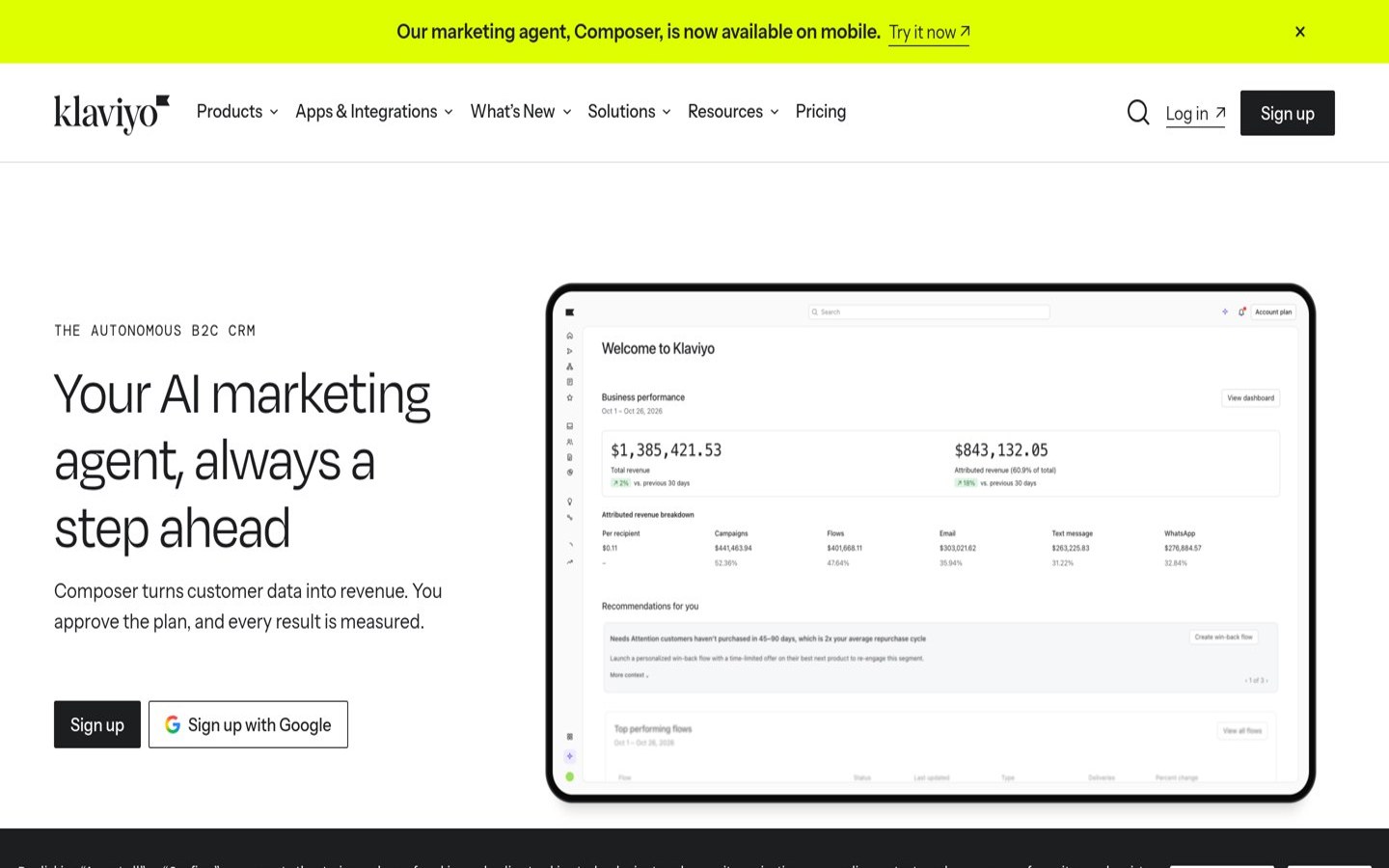
Klaviyo is the leading email and SMS marketing platform for ecommerce brands, with flows for abandoned carts, post-purchase follow-ups and win-backs, plus segmentation, predictive lifetime value and churn risk in one customer profile. It connects to Shopify, WooCommerce and more than 350 other tools.
The trade off is price as you grow. The free plan covers 250 active profiles, and paid email starts at $20 a month, but costs climb steeply with list size, and reviewers cite billing and support as the top complaints. It suits DTC brands that live on email and SMS revenue.
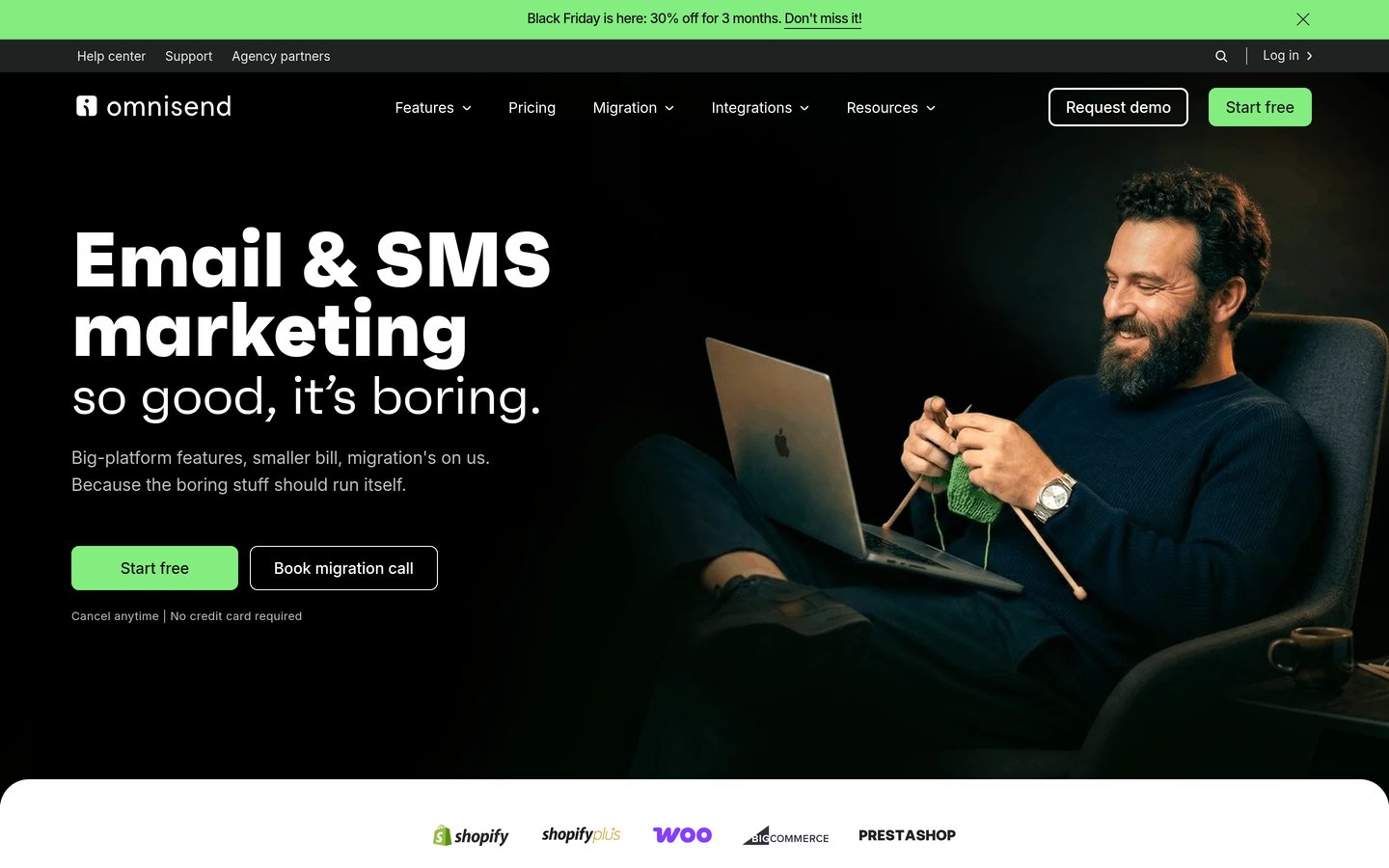
Omnisend is an all-in-one email and SMS platform for ecommerce with pre-built workflows for welcome series, cart recovery and post-purchase emails, plus push notifications. It is the affordable alternative to Klaviyo, with a free plan for 500 contacts and Standard from $16 a month.
The trade off is depth. Omnisend is easier to set up and cheaper than Klaviyo, but its segmentation is shallower and it has fewer advanced features. It suits small stores that want ready-made workflows without a big bill.
Make is a visual automation platform that connects apps with branching scenarios you can see on one canvas, from syncing Shopify orders to accounting to updating inventory across channels. The free plan covers 1,000 operations a month, and Core starts at $9 a month billed yearly for 10,000 operations.
The trade off is setup. Make handles complex logic and conditional routing better than Zapier, but scenarios take longer to build and there is less ecommerce context built in. It suits mid-volume stores that need branching workflows.
Zapier is the widest automation connector in this list, linking Shopify to CRM, accounting, helpdesk, fulfilment and analytics with multi-step Zaps, paths and filters. The free plan covers 100 tasks a month, and Professional starts at $19.99 a month for 750 tasks.
The trade off is cost at volume. Task usage grows with workflow volume, so a busy store can outgrow the entry plan fast, and Trustpilot reviews skew negative on billing. It suits non-technical teams that need niche apps connected quickly.
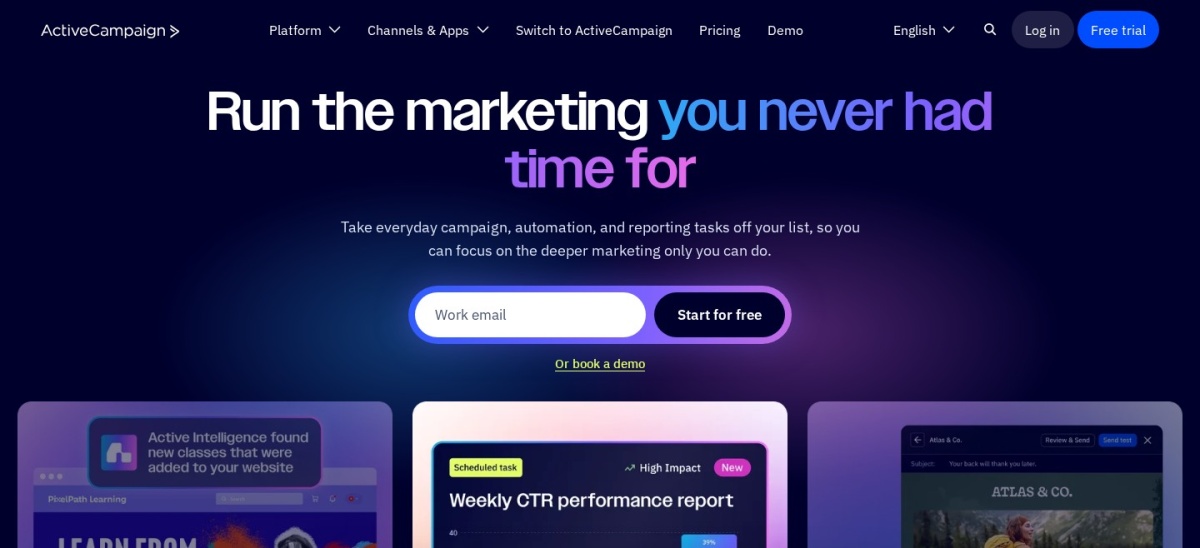
ActiveCampaign is a marketing automation platform with a built-in CRM that covers email, SMS and sales automation for ecommerce and B2B alike. Its automation builder is the most mentioned strength on G2, and Starter costs $15 a month for 1,000 contacts, with real ecommerce features from Plus at about $49 a month.
The trade off is price as lists grow. Reviewers mention pricing can climb as contact lists grow, and the ecommerce features that matter sit on the Plus plan. It suits stores with longer sales cycles that also need a CRM.
Drip is an ecommerce email platform with a flat entry price of $39 a month for 1,000 to 2,500 people, covering workflows, segmentation and onsite popups without per-contact surprises at the low end. It holds 4.4 out of 5 on G2 from 480 reviews.
The trade off is breadth. Drip covers email well but has fewer native integrations than Klaviyo at 90-plus, and no SMS product of its own. It suits stores that want predictable email pricing and a simpler stack.
Workato is an enterprise automation platform that connects apps, data and AI agents across a whole business, with recipes, bots and governance for large teams. It holds 4.7 out of 5 on G2 from 777 reviews, the joint-highest score here, and suits mid-market and enterprise retailers.
The trade off is price and weight. Workato sells by quote with enterprise pricing, so it is overkill for a small store that only needs cart emails or order syncing. It suits larger retailers automating across departments.
Marketing automation covers messages: welcome series, cart recovery, post-purchase and win-back flows. Klaviyo, Omnisend, ActiveCampaign and Drip live here, and they price by contacts.
Orchestration connects apps: orders to accounting, inventory to channels, support tickets to Slack. Make, Zapier and Workato live here, and they price by tasks, operations or quote.
Store operations run inside Shopify: auto-tagging, fraud rules, inventory triggers and B2B price tiers. Shopify Flow does this free, so check it before buying a connector for in-store jobs.
How we chose
We started from the ecommerce automation tools that appear most often in buyer discussions and comparison round-ups, then kept those with a verifiable rating on G2 or Capterra.
Prices come from vendor listings and comparisons, checked on 25 November 2026. Ratings and review counts come from G2 on the same day. Where a vendor shows a sale, the list shows the regular price.
We left out tools with no verifiable G2, Capterra or Trustpilot rating, including Shopify Flow, n8n, MESA, Gorgias, ShipStation and KREV. No vendor paid for a place, and we do not claim hands-on testing for this list.
How to choose ecommerce automation
Start with the job you want automated, then check the price meter behind it.
Name the job first. Email flows, app connections and in-store rules are different jobs. Pick the category before you compare tools.
Check Shopify Flow first. If you run Shopify, its free Flow app covers tagging, fraud rules and inventory triggers before you pay for anything.
Read the price meter. Email tools charge per contact, connectors per task or operation. Estimate your monthly volume before you pick a plan.
Test the free tier on real orders. Run the free plan on live store events for two weeks and check the logs before you pay for a year.
FAQ
What is the best ecommerce automation software?
Klaviyo is the best ecommerce automation tool for email and SMS flows, with the deepest segmentation and 350-plus integrations. It holds 4.6 out of 5 on G2 from 1,372 reviews, with a free plan for 250 profiles.
Is Shopify Flow free?
Yes. Shopify Flow is free with any Shopify plan, from Basic to Plus, and it automates tagging, order rules, inventory alerts and fraud checks inside the store. It has no G2 rating, so it is not ranked in this list.
What is the cheapest ecommerce automation tool?
Make is the cheapest paid connector at $9 a month billed yearly for 10,000 operations. Omnisend Standard is $16 a month for 500 contacts, and Klaviyo, Omnisend, Make and Zapier all have free plans.
Zapier or Make: which is better for ecommerce?
Make is better for complex branching workflows you want to see on one canvas, at $9 a month. Zapier connects more apps at 8,000-plus and is easier for non-technical teams, from $19.99 a month.
Do I need Klaviyo or will Omnisend do?
Omnisend covers most of the same flows for less money, with easier setup and a free plan for 500 contacts. Klaviyo wins on segmentation depth, predictive analytics and integrations, so bigger brands usually pick it.
What does ecommerce automation actually automate?
Common jobs include abandoned cart emails, post-purchase follow-ups, order tagging, inventory alerts, fraud flags, review requests and syncing orders to accounting or a CRM. Most stores run two or three tools side by side.
SaaS SEO and WordPress specialist with about 8 years of experience. Rakib compares WordPress plugins, themes, hosting and software using public pricing, documentation and user reviews. See how we rank.